July 21, 2026
Private aviation has evolved well beyond booking a single flight and hoping for the best. Today's travelers have structured options that deliver consistency, cost predictability, and guaranteed access - and understanding these options is the first step toward flying smarter.
Private jet packages are bundled ways to access private aviation without the full burden of owning an aircraft outright. They fall into four main categories: on-demand private jet charter, jet card programs, membership or subscription models, and fractional jet ownership. Each model serves a different travel profile, and choosing the right one depends on frequency, group size, and budget.
BlackJet Fractional Jet Ownership focuses on two structured programs rather than ad-hoc, one-off charter flights. The Reserve Fleet offers high-quality, pay-as-you-fly access with minimal upfront capital. The Equity Fleet provides fractional ownership of a specific aircraft share, complete with equity, tax advantages, and priority scheduling.
What separates private jet packages from booking a single charter flight? Predictable pricing, guaranteed aircraft availability, consistent service standards, and cabin reliability. A one-off private jet charter service can vary widely in cost and quality depending on the route, operator, and season. Structured packages eliminate much of that uncertainty.
The core question every prospective client should answer: How often do you fly, and how many people usually travel with you? Private jet travel benefits from access to approximately 5,000 airports across the United States and globally, and private jets reduce transit time through the use of private terminals. The right package unlocks those advantages consistently.
This article covers the main types of private jet packages, how charter pricing and structured program costs compare, real-world trip scenarios, and how BlackJet designs its Reserve and Equity Fleet programs to match different travel needs.
Private jet packages fall into four main categories, each offering a unique blend of flexibility, commitment, and cost certainty:
On-demand private jet charter: Pay per trip with no long-term commitment. Clients request a route, receive quotes across aircraft options, and confirm. On-demand charter is ideal for occasional travelers who fly fewer than 25 hours annually.
Jet card programs: Jet cards allow prepayment for flight hours, typically in blocks of 25, 50, or 75 hours. Rates are locked for a specific aircraft class, and contracts generally run 12–36 months.
Membership and subscription models: Annual or monthly fees grant preferred pricing, capped hourly rates, or shuttle-style access on popular routes. These sit between charter flexibility and ownership structure.
Fractional aircraft ownership: Fractional ownership covers shared access to an aircraft. Clients purchase an equity share (such as 1/16 or 1/8), gaining a set number of annual flight hours with the management company handling operations.
Private jet options span from turboprops and light jets for short charter flights to super-midsize and large-cabin jets for transcontinental and international flights. High-net-worth individuals flying 10–25 hours per year often start with charter or a jet card. Those logging 25–150 hours annually typically find the sweet spot in fractional ownership or structured membership packages.
BlackJet's Reserve Fleet behaves like a high-end jet card without large upfront deposits, while its Equity Fleet functions as classic fractional ownership with aircraft equity and potential tax advantages.
On-demand charter is the most flexible private jet package - and the least predictable in terms of cost and availability. Here is how it works:
Booking process: A client requests a route and travel dates. The operator or charter broker sources aircraft types across categories - turboprop, light jet, midsize, super-midsize, or large cabin. The client receives quotes, confirms, and pays per trip. Charter brokers simplify the booking process for private jet travel, and booking a private jet can be done within three hours of contract signing. Charter services can accommodate last-minute trips within three hours as well.
Pricing drivers: Billable flight hours, aircraft category, repositioning legs (when the plane must fly empty to the departure city), airport landing and handling fees, overnight crew costs, and peak-day surcharges all influence charter costs.
Example: A one-way private jet charter from New York Teterboro (TEB) to Miami Opa-Locka (OPF) on a light jet covers roughly 1,050 nautical miles and takes about 2.5 hours. Hourly charter rates for light jets in 2025–2026 ranged between approximately $8,000 and $14,000 per hour, placing the total trip cost between $20,000 and $35,000. Chartering a private jet to Miami can cost $2,500 or more depending on aircraft size and routing.
Charter flights eliminate crowded airports and long waits. Chartering offers flexibility for both planned and spontaneous travel, and savvy travelers can save 30–75% with empty leg flights when available. Chartering offers tailored experiences and scheduling flexibility that commercial aviation simply cannot match.
However, there are trade-offs: no guarantee of the same aircraft from trip to trip, variable charter pricing, and possible availability issues during holidays or at a moment's notice during peak periods.
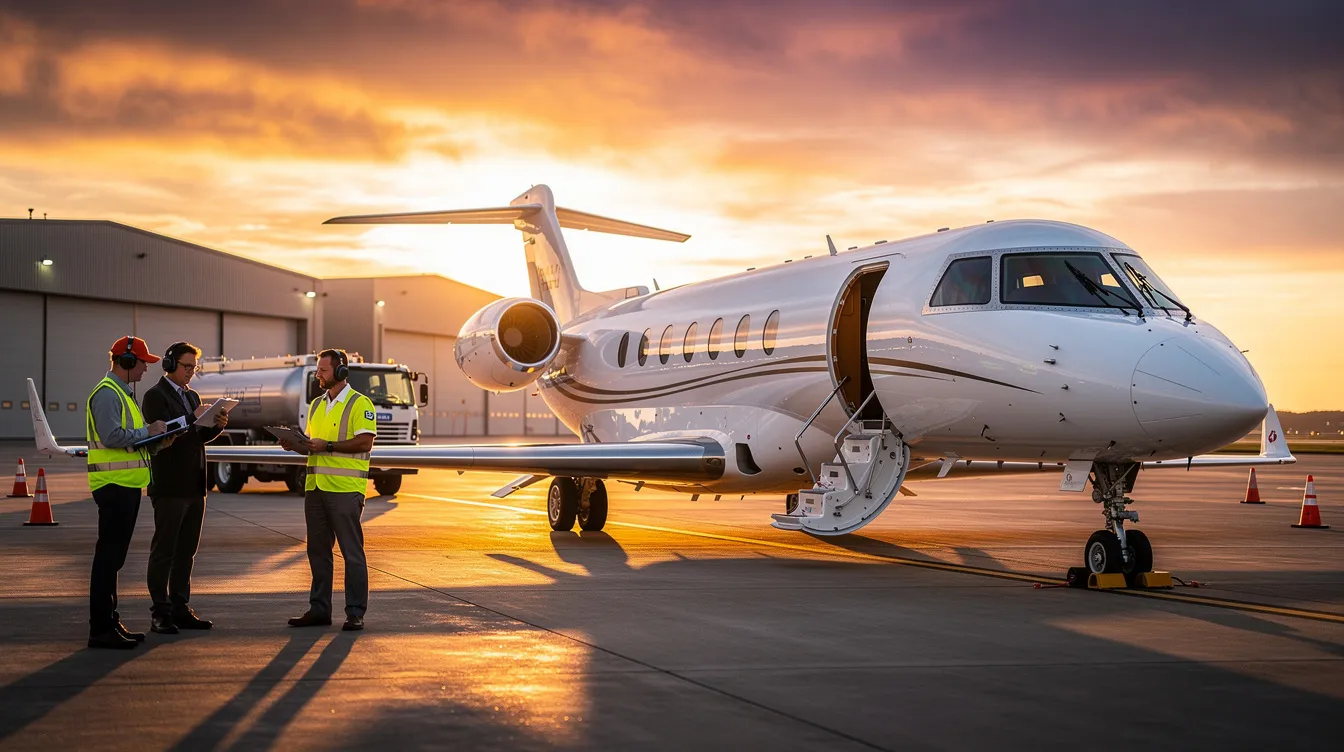
Jet cards occupy the middle ground between ad-hoc charter and full fractional ownership. They give frequent flyers locked-in rates and availability guarantees without an equity commitment.
A jet card program is a prepaid block of flight hours - commonly 25, 50, or 75 hours - at a fixed hourly rate for a specific aircraft class. A client purchasing a 50-hour midsize jet card, for example, locks in that rate for the contract term regardless of seasonal demand.
Key benefits include:
Guaranteed availability with a specified call-out time, often 24–48 hours
Fixed charter pricing per hour, removing seasonal cost surprises
Simplified billing with a single blended hourly rate covering most fees
Typical contract rules include peak-day restrictions, minimum daily flight-hour segments (often 1.0–1.5 hours), and expiry windows. Cost factors include membership fees, hourly rates, and landing fees, and it is important to consider aircraft availability and flexibility in contracts before signing.
Practical scenario: A business owner based in Dallas flies to Chicago twice per month. Each leg takes about 2.5 hours, totaling roughly 50 annual flight hours. A 50-hour midsize jet card at approximately $9,800 per hour locks in around $490,000 in annual flight costs - predictable and competitive versus booking each charter flight separately at fluctuating rates.
BlackJet's Reserve Fleet differs from traditional jet cards: clients avoid large non-refundable deposits, benefit from transparent per-hour pricing, and gain access to multiple aircraft types across both the Reserve and Equity fleets.
Fractional jet ownership is the most structured form of private jet package and the closest alternative to full ownership - without the full financial burden. Travelers new to this model often benefit from a concise fractional jet ownership glossary of key terms that clarifies concepts like shares, management fees, and billed flight hours before they commit.
What it is: Buying an equity share (1/16, 1/8 fractional jet ownership, or 1/4) of a specific aircraft type, typically yielding 25–200 hours of annual use. The management company handles all operations, maintenance, and crew staffing.
What it includes: Guaranteed access to an aircraft or fleet, fixed hourly operating costs, monthly management fees covering insurance, hangar, and scheduling infrastructure, and a defined service area (continental United States, parts of Canada, Caribbean, and Mexico). Prospective owners should understand the full cost structure of fractional jet ownership so these inclusions and exclusions line up with their budgets.
BlackJet's Equity Fleet model: Clients select aircraft types matched to their route profiles - light jet, midsize, or super-midsize. BlackJet sources new or near-new aircraft, manages custom interior specifications, and operates fleet interchange so owners are not tied to a single tail number. Potential U.S. tax benefits such as bonus depreciation under Section 168(k) may apply for qualifying business travel - always consult a tax advisor and review a detailed guide to the tax implications of fractional jet ownership with your advisors.
Private jet travel provides secure environments for business meetings, and fractional ownership ensures that environment remains consistent flight after flight. Many buyers also evaluate fractional jet ownership financing options to align capital outlay with their broader investment and cash-flow strategies. Key advantages over other packages include priority scheduling, a reliable cabin experience, stronger cost predictability year over year, and alignment with travelers logging 25–150 hours annually.
Example: A company based in Los Angeles acquires an Equity Fleet share in a super-midsize jet in 2026, yielding approximately 100 annual hours. The team flies regularly between KLAX, KLAS (Las Vegas), KDEN (Denver), and KORD (Chicago). Fixed monthly management fees and locked hourly rates simplify budgeting compared to chartering each leg independently, and leadership can weigh these benefits against the broader investment case for fractional jet ownership.
Non-equity memberships fill the gap between occasional charter users and committed fractional owners. These programs provide consistent access without requiring clients to purchase an aircraft share, and a side-by-side comparison of fractional jet ownership versus membership programs can clarify which structure best fits a given travel profile.
Annual or monthly fee models grant preferred charter pricing, capped hourly rates, or shuttle-style access on frequently traveled routes. Clients discover new efficiencies compared to booking ad-hoc charter flights, especially when they benchmark these options against the top fractional jet ownership programs and other structured solutions in the market.
Aircraft flexibility allows members to access multiple aircraft types - from turboprops for short hops to large-cabin jets for long-haul private flights - often with flexible scheduling windows.
Deposit-based vs. pay-as-you-fly: Deposit memberships may secure lower hourly rates, while pay-as-you-go models prioritize liquidity and low commitment. Private jet charters allow travelers to fly on their own schedule under either structure, similar in spirit to floating fleet options in fractional ownership programs that trade fixed tails for broader access and flexibility.
Private jet packages often include personalized catering and flexible departure times, delivering a premium experience that adjusts to the client's preferences rather than the other way around.
BlackJet's Reserve Fleet functions similarly to a membership program for clients who want high-quality aircraft management and competitive hourly rates without purchasing equity.
Example: A family based in Miami travels regularly during school breaks to New York, Aspen, and the Bahamas. A membership-style package guarantees availability during peak holiday weeks - exactly when ad-hoc charter availability is tightest. Families benefit from predictable pricing and consistent aircraft quality across every trip.
Aircraft selection directly affects cost, comfort, range, and how many people can fly on each trip. Private jets can accommodate 2 to 200 passengers depending on the category, so matching the ideal aircraft to the mission matters.
Turboprops: 4–6 seats, efficient for hops under 500 nautical miles
Very light jets: Very light jets like the Phenom 100 seat 2 to 4 passengers, with limited range but low operating costs
Light jets: 6–8 seats, moderate range around 1,200–1,800 miles, widely used for regional business travel
Midsize jets: Midsize jets typically accommodate 6 to 9 passengers with better baggage capacity and ranges up to 2,500 miles
Super-midsize jets: 8–10 seats, transcontinental range, enhanced cabin comforts
Large-cabin / long-range jets: Up to 14+ seats; the Bombardier Challenger 650 has a maximum range of 4,011 nautical miles, while the Gulfstream G650 has a range of 7,000 nautical miles for intercontinental routes
Concrete examples: A 5-passenger board meeting from Houston to Atlanta (~750 nautical miles) suits a light jet. A 10-person executive retreat from New York to Jackson Hole (~1,500 nautical miles) requires a super-midsize aircraft to carry the team and luggage comfortably.
Aircraft type is built into many private jet packages. Fractional ownership often ties the owner to a cabin class, while charter allows flexibility to change size trip by trip. BlackJet's aviation experts help clients select the best aircraft aligned with primary routes, typical group sizes, and baggage profiles - whether that means golf equipment for leisure trips or product samples for corporate demos.
Understanding all the details behind pricing prevents surprises and helps clients compare packages accurately. Here are the main cost components:
Base hourly rate: Determined by aircraft category, speed, range, and cabin amenities
Fuel surcharges: Variable with market prices; some programs cap these, others pass them through
Landing and handling fees: Charges per takeoff and landing, plus terminal and customs fees for international flights
Crew costs: Salaries, duty-time limits, and overnight hotels when required for multi-day trips
Positioning legs: When the aircraft must deadhead to the departure airport
Catering and ground transport: Often available as add-ons or included in premium programs
Cost structures by package type:
Charter: Per-trip billing with no fixed costs until flight day - but charter pricing fluctuates
Jet cards: All-in hourly rates that include most fees except fuel surcharges and taxes
Fractional ownership: Capital acquisition cost, fixed monthly management fees, plus per-hour operating rates
Memberships: Annual dues plus discounted per-hour rates
2025 industry averages for hourly rates in the U.S. provide useful benchmarks. Turboprop charter prices range from $1,200 to $5,000 per hour. Light jets start at $4,000 per hour for charter services. Midsize jets averaged approximately $9,800 per hour. Super-midsize jets ran about $12,400–$12,500 per hour. Ultra-long range jets start at $12,000 per hour for charter. Overall, luxury private jet rental rates range from $2,000 to over $20,000 per hour depending on aircraft class. Jet card pricing grew only about 1.7% in 2025, lagging inflation at 2.7%.
Guaranteed availability and flexible scheduling - confirming flights with 24–48 hours' notice - typically command a 10–20% premium over market-rate charter quotes. BlackJet structures its Equity Fleet (starting from approximately $500,000 per share) and Reserve Fleet (starting from around $a 250,000 commitment) so frequent flyers can balance upfront investment against predictable operating expenses.
Real-world scenarios show how different private jet packages perform under specific travel patterns.
A family of 4–6 based in New York plans to fly to Miami and the Caribbean six to eight times over 2026–2027. Each round trip runs 4–6 hours, totaling roughly 30–40 annual flight hours. On-demand charter would be expensive and unreliable during holiday peaks. A 25-hour light jet card covers part of the usage but may require supplemental bookings. A small fractional share through BlackJet's Equity Fleet or Reserve Fleet access provides consistency and peak-day availability - without overpaying for each leg. Private jets allow travelers to land closer to their final destination, reducing ground transit to final locations like resort areas or island airports.
A regional sales team of 7–9 passengers travels monthly between Chicago, Minneapolis, and Kansas City. Each round trip averages about 4 hours, yielding roughly 48 annual flight hours. A midsize or super-midsize fractional share supports large groups efficiently, and BlackJet can design a blended package combining Equity Fleet for core usage with Reserve Fleet for overflow missions.
Executives flying quarterly from Los Angeles to London and Singapore need large-cabin or ultra-long-range jets. A combination of fractional ownership plus supplemental air charter for destinations beyond the primary aircraft's range keeps costs controlled while maintaining a seamless experience across every journey.
Private jet travelers can check in 15–30 minutes before departure in each of these scenarios - a stark contrast to the hours spent navigating commercial terminals. BlackJet models these scenarios using actual flight history and corporate growth plans to recommend the most cost-effective package.
When travel needs exceed standard business jet capacity, specialized charter options come into play. For owners who already participate in shared aircraft structures, it becomes even more important to understand the essential contract terms in fractional jet ownership that govern how their primary access integrates with occasional large-group or special-mission flying.
Large group charter: For parties of 18–70+ passengers - sports teams, board delegations, investor roadshows - operators may deploy regional airliners or VIP-configured commercial aircraft. Platforms like Jettly connect travelers to over 20,000 aircraft worldwide, providing access to a range of configurations. Travelers can access hundreds of additional airports with charter flights beyond what commercial airlines serve.
Multi-leg missions: Private jet charter services can design itineraries with multiple city stops in a single day, overnight positioning, and flexible scheduling tailored to event timelines across any country or destination.
Special missions: Board meetings across three locations in one day, site inspections, shareholder roadshows, or medical travel where time and privacy matter most. Complex itineraries like these also heighten the relevance of liability and insurance coverage in fractional jet ownership, ensuring risks are appropriately managed across every leg.
Pricing considerations: Large-group private charter contracts often include minimum usage blocks, customized catering, and branding options that differ from standard packages.
While BlackJet primarily focuses on fractional jet ownership and Reserve Fleet access, its advisory team can coordinate large-group charter solutions when clients' needs exceed typical business jet capacity. Over time, some clients may also choose to sell a fractional jet ownership share as their travel patterns evolve or as they transition into different access models.
Practical logistics often drive the final decision on which private jet package to choose.
Most structured packages offer call-out times of 12–48 hours. Blackout or peak days - averaging 35–40 per year - may require additional lead time or carry surcharges. Busy periods like December holidays should be booked well in advance. Jettly offers instant pricing for private jet charters, reflecting a broader industry trend toward speed and transparency.
Fuel stops typically add 30–40 minutes on longer routes. Minimum daily flight hours (often 1.0–1.5 hours) may apply in jet card and fractional contracts. Charter options range from short 30-minute hops to flights spanning entire continents.
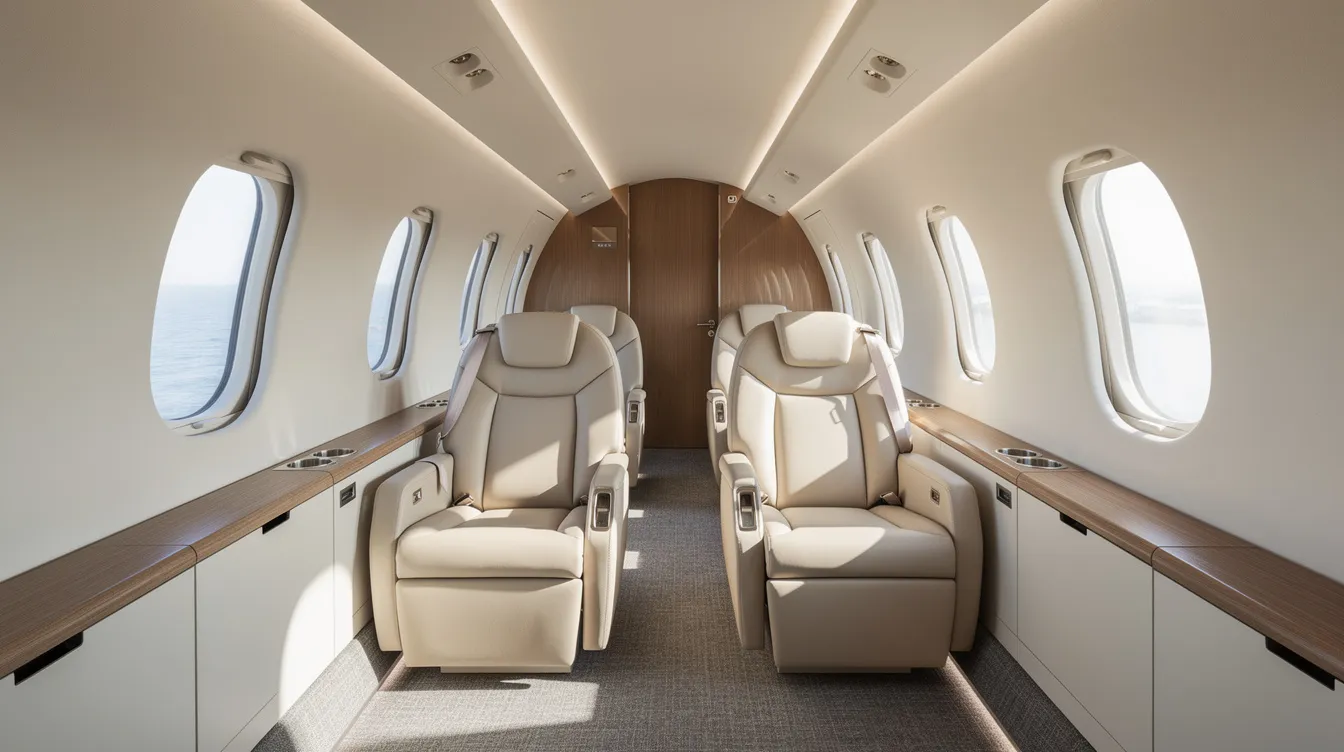
Modern private jets in the U.S. and Europe generally include Wi-Fi, enclosed lavatories, complimentary snacks and beverages, and concierge-arranged upgraded catering or ground transport. The flying experience aboard a well-managed fleet delivers unparalleled convenience compared to commercial alternatives.
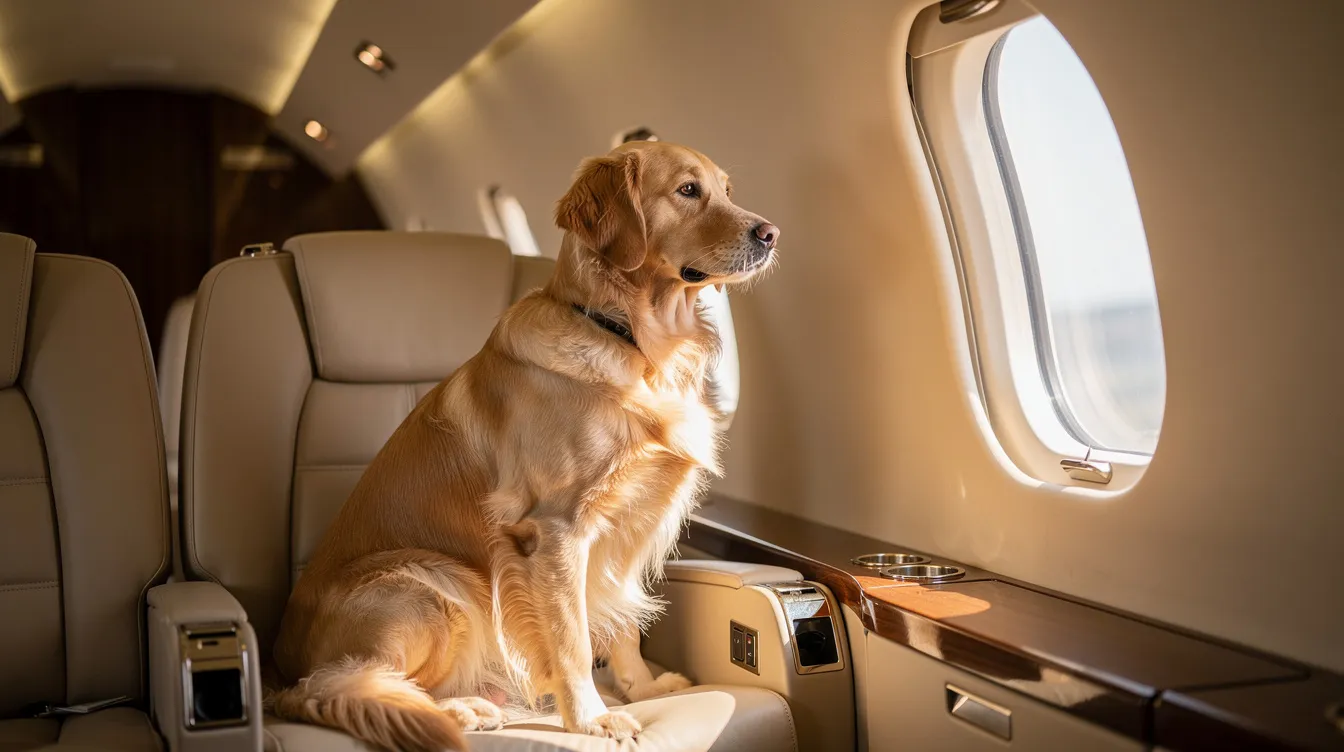
Most operators allow pets with prior notice. Specific rules depend on the aircraft, operator, and whether the flight involves international regulations. Families traveling with pets should confirm policies during the booking process.
Private jets offer enhanced privacy compared to commercial flights. Established operators and fractional providers safeguard client identities, flight details, and payment information through strict confidentiality protocols. Safety records should be verified when choosing private jet operators - reputable programs maintain rigorous maintenance and crew training standards to ensure passengers travel safely, and sample aircraft fractional ownership contracts often spell out these operational and safety obligations in detail.
Private jet packages sit between two extremes: buying an entire plane and flying commercial. Understanding where each option excels helps clients embark on the right path.
Full ownership provides maximum control over the aircraft but becomes inefficient under roughly 200–250 annual flight hours due to fixed costs - crew salaries, hangar fees, insurance, and maintenance accumulate whether the plane flies or not. The history of private aviation shows that most owners underutilize their aircraft.
Fractional ownership, jet cards, and charter allow clients to pay only for hours flown (plus structured fees), avoiding the full financial and managerial burden. This makes private aviation accessible at a fraction of the cost, with prices scaling to actual usage.
Versus commercial travel, private packages save meaningful time. Access to secondary airports closer to origin and destination, no TSA lines, departures on the client's schedule, and direct routing to smaller cities all compress travel days. Chartering private jets allows access to over 25 airports in Morocco alone - a reminder of how global reach extends well beyond major hubs. Private jet charters provide direct access to over 25 airports in Morocco, making even complex international itineraries convenient.
Example: A Boston–Cleveland–Nashville–Boston business day via commercial requires connections, layovers, and likely an overnight hotel stay. On a light jet or midsize jet package, the same itinerary completes in a single day with hours of productive time recaptured - no book of connecting flights needed.
BlackJet serves as a strategic advisor, helping clients explore where they sit on this spectrum today and how their package can evolve as travel volume changes over time.
Fractional ownership involves purchasing an equity share in a specific aircraft, providing guaranteed access, fixed costs, and potential tax benefits. Jet cards are prepaid blocks of flight hours with fixed hourly rates but do not confer ownership or equity.
Most private jet packages offer call-out times ranging from 12 to 48 hours. On-demand charters can sometimes accommodate bookings within three hours, but availability may vary during peak periods.
Yes, most private jet operators allow pets with prior notice. Specific policies depend on the aircraft and route, especially for international travel. Additional fees may apply for pet cleaning or accommodations.
Many private jet packages offer personalized catering and ground transportation as add-ons or included services. Clients can customize these amenities based on preferences and trip requirements.
Private jet packages typically offer greater cost efficiency for travelers flying fewer than 200–250 hours annually by avoiding high fixed costs like crew salaries, maintenance, and hangar fees inherent in full ownership.
The right private jet package transforms private aviation from an occasional luxury into a predictable, efficient part of business and family life. BlackJet Fractional Jet Ownership helps clients design custom packages - whether Reserve Fleet, Equity Fleet, or a blend - that match real flight patterns, budget expectations, and risk tolerance.
An initial consultation typically includes:
Review of the past 12–24 months of travel plans and flight history
Projected flight hours for the next 3–5 years
Analysis of typical routes, how many people usually travel, and baggage or equipment needs
Discussion of U.S. tax and accounting considerations with the client's advisors
Cost comparison of current charter or jet card spending against a structured fractional model using real numbers
Clients who currently book ad-hoc charter or hold a jet card are encouraged to compare those costs against BlackJet's Reserve Fleet and Equity Fleet models. The difference in cost predictability, aircraft consistency, and schedule control often justifies the transition.
Ready to explore the smarter way to fly private? Visit FractionalJetOwnership.com to request a personalized analysis or speak with a BlackJet aviation specialist about building your next trip - and every trip after it - into a package that works as hard as you do.
