
May 3, 2026
Between 2024 and 2026, private jet startups are increasingly moving away from pure charter toward fractional jet ownership and membership programs. U.S. private jet flights rose by over 40% in 2021 alone, and global private aviation hours are projected to exceed 5 million annually by 2026. This shift reflects growing demand from executives and high-net-worth travelers seeking alternatives to commercial aviation disruptions—and for those looking to travel for fun as well as business. Private jet startups allow clients to push beyond the limits of traditional travel, opening the sky to new levels of comfort and accessibility.
The aviation industry is characterized by a high barrier to entry due to significant upfront financial requirements.
Starting an airline or private aviation company is a tough, capital-intensive venture that involves navigating fierce competition and various operational challenges. You’ll face regulatory approvals, including FAA Part 135 certification, significant upfront capital requirements, rigorous safety oversight, and established competition from players like NetJets, Flexjet, Vista Global, Wheels Up, and XO. The aviation industry is characterized by a high barrier to entry due to significant upfront financial requirements—but for entrepreneurs with the right plan, the opportunity remains compelling. Compared to commercial aviation, private jet startups can offer more flexibility, privacy, and time savings for discerning travelers. A successful private jet operation requires a sound business plan that outlines operational strategy, target markets, and financial projections.
BlackJet Fractional Jet Ownership fits into this landscape as a fractional ownership and membership platform rather than a traditional charter broker. Through its Equity Fleet and Reserve Fleet models, it offers clients structured access tailored to their actual flight needs. This article walks through the regulatory environment, business planning, fleet strategy, financing, operations, and go-to-market approach specifically for launching a private jet startup.

If you’re interested in the world of private jet membership or ownership, now is the perfect time to join a program that can truly treat you to a luxurious experience. Don’t wait—explore your options and discover how private jet startups can elevate your travel beyond the ordinary.
Private jet operations are subject to a complex framework of regulations, standards, and guidelines that govern commercial aviation. In the United States, operating flights for hire on an on-demand basis under FAR Part 135 is a common entry point for new aviation companies. The regulatory approval and certification process, including obtaining an Air Operator’s Certificate (AOC), involves multiple steps and strict oversight. Part 91K governs fractional ownership programs specifically, allowing shared ownership with at least 25 flight hours per year per owner, distinct from Part 121’s stricter scheduled airline requirements.
Airlines must operate within a framework of regulations, standards, and guidelines, including international agreements that govern airspace access and operations. For cross-border flights, startups must align with EASA requirements in the European Union and Transport Canada’s CAR 702 for Canadian operations. Navigating these regulations requires significant resources, including access to industry data, support services, and operational guidance to facilitate business development and compliance.
Key compliance areas include:
Compliance Area | Description |
|---|---|
Safety Management Systems (SMS) | FAA-mandated since 2018, requiring hazard identification and risk mitigation |
Crew training and duty limits | Pilots are limited to 1,000 flight hours per year with specific rest mandates |
Maintenance requirements | Continuous airworthiness programs with Phase 1-5 checks, as well as effective supply chain management to ensure timely procurement of OEM parts and maintenance components |
Insurance minimums | Starting at $5-10 million per occurrence for passenger protection |
To register an aircraft in the U.S., the company’s CEO and at least 75% of the voting stock must be held by U.S. citizens. You must petition the FAA for an Air Operator’s Certificate (AOC) to operate charter flights in the U.S. Having a dedicated team to manage regulatory, safety, and operational tasks is essential for ongoing compliance and efficient operations.
Many modern startups rely on asset-light structures, partnering with certified operators rather than owning aircraft outright. Environmental pressures are also mounting—emerging trends in aviation include the use of Electric Vertical Takeoff and Landing (eVTOL) vehicles and Sustainable Aviation Fuel (SAF) to promote sustainability. NetJets, for example, committed to 10% SAF by 2025. Weather remains a critical factor, as it can significantly impact flight scheduling, safety, and overall profitability.
A successful private jet startup requires a sound business plan that you must complete before launch, outlining the operational, financial, and marketing strategies necessary for sustainability. Between 2024 and 2026, investors and regulators demand realistic projections grounded in market data.
Core strategic decisions include:
Decision Area | Key Considerations |
|---|---|
Target client profile | Executives flying 25-150 hours per year |
Primary geographies | U.S. East Coast, Texas-California corridor, transatlantic |
Service model | Fractional ownership, jet card, on-demand charter, or hybrid |
Fractional jet ownership creates more predictable revenue than pure charter. A typical 1/16th share equals approximately 50 flight hours per year, with minimum commitment terms of 3-5 years. The U.S. private jet market reached $28 billion in 2025, with fractional capturing a roughly 25% share.
The operational environment for private jet operations includes considerations such as fuel price volatility, labor intensity, and government regulations. Your financial elements should cover aircraft acquisition costs, management fees, hourly operating costs (fuel at 30%, crew at 25%, maintenance at 20%), technology platform development ($2-5 million), and marketing budgets at 10-15% of revenue.
Use realistic utilization assumptions: 300-400 flight hours per aircraft per year for fractional programs versus 600-800 hours for heavy charter. BlackJet’s Equity Fleet and Reserve Fleet structures demonstrate how a startup can segment offerings—Equity for owners seeking tax benefits and priority access, Reserve for frequent flyers preferring pay-as-you-go flexibility.
A private jet startup business plan tailored to fractional aircraft ownership should include:
Executive Summary: Define your raise amount, aircraft count at launch, and break-even targets (e.g., 350 hours per plane), grounded in a clear view of the total cost of fractional jet ownership.
Market Analysis: Document post-2020 surge data—4.2 million hours in 2022, growing to 5.5 million by 2025 according to WingX research.
Competitive Landscape: NetJets holds approximately 70% U.S. fractional share; Wheels Up has 100,000+ members.
Operational Planning:
Fleet composition across light, midsize, and super-midsize categories
Base locations at hubs like TEB, HOU, and VNY
Part 135 operator partnerships
24/7 dispatch strategy
Pricing Structure: 1/16th shares at $800K-$1.2M plus $5K-$8K per hour; jet cards at $1M deposit for 200 hours with 5-10% fuel surcharges, supported by a detailed understanding of the total cost of fractional jet ownership.
Risk Analysis: Fuel volatility (Jet-A forecast at $6-8 per gallon through 2026), pilot shortages affecting 80% of operators, regulatory changes, and mitigation through Reserve Fleet overflow capacity, including evaluating floating fleet options in fractional ownership to enhance flexibility.
Fleet selection defines a private jet startup’s value proposition, cost structure, and availability guarantees. Analyze typical mission profiles: U.S. domestic business travel averages 800nm stage length with 4-8 passengers on city pairs like New York-Miami or Dallas-Aspen.
When acquiring or leasing airplanes for your fleet, consider common aircraft types by category:
Category | Models | Price Range | Hourly Cost | Range |
|---|---|---|---|---|
Light | CJ3+, Phenom 300 | $8-9M | $4,500-5,000 | 1,900-2,000nm |
Midsize | Hawker 800XP, XLS+ | $13-14M | $6,000 | 2,500nm |
Super-midsize | Challenger 350, G280 | $24-26M | $8,500 | 3,200nm |
Large cabin | G450, Global 6000 | $40-50M | $11,000 | 4,300-6,000nm |
Fractional programs typically standardize on 2-4 types for 20% savings in parts and training. Membership programs tap broader partner networks for more choice and extended fleet options. The trade-off between newer, fuel-efficient jets (15% lower fuel costs) and older aircraft with 40% lower capex but higher maintenance risk requires careful analysis, especially considering the production line and its impact on new aircraft delivery timelines—for example, when assessing fractional ownership of a HondaJet versus other light jets.
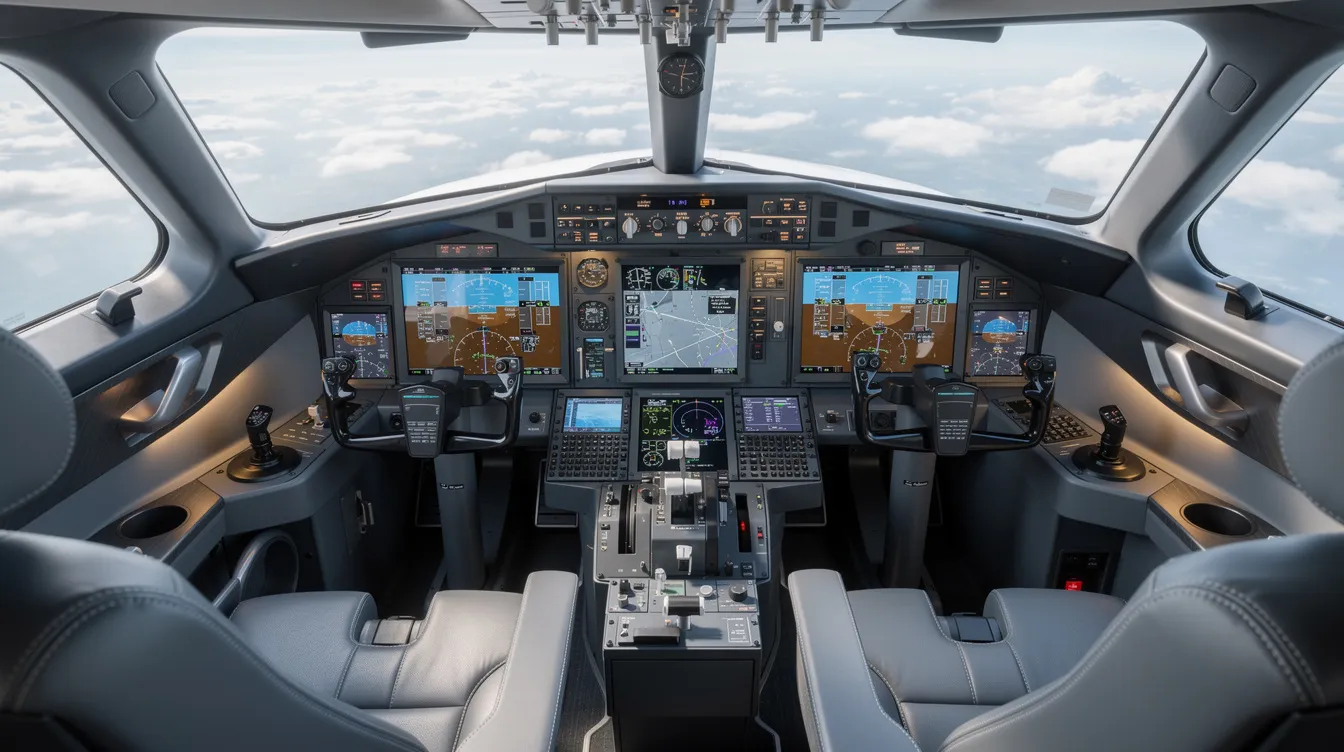
BlackJet focuses on sourcing aircraft to suit 25-150-hour annual usage bands, prioritizing types performing well across both business and leisure routes. Aircraft are equipped with advanced onboard systems and cargo handling solutions to ensure passenger comfort and operational efficiency
Operational complexity in aviation includes managing safety checks, pilot scheduling, and maintenance tracking to ensure regulatory compliance. Most startups outsource these functions:
Function | Typical Cost/Details |
|---|---|
Maintenance scheduling | C-checks running $1M per 18 months for midsize jets |
Crew management | Partnerships with training academies at approximately $100K per pilot annually, and a strong focus on highly qualified, extensively trained pilots and crews |
Flight operations control | 24/7 dispatch with ForeFlight integration |
Hangar arrangements | $50K-$150K monthly per slot at premium airports |
A fractional ownership provider like BlackJet typically provides turnkey management: regulatory compliance, insurance, maintenance oversight, and scheduling on behalf of shareowners and members. Digital tools, including maintenance tracking platforms and an app that allows users to manage flight bookings and travel details easily and securely, as well as owner apps showing aircraft availability, have become standard.
Proactive maintenance planning prevents flight cancellations during peak periods like Thanksgiving or Christmas travel, when utilization can exceed 450 hours monthly.
Three primary paths exist for a private jet startup: buying aircraft outright, leasing, or accessing aircraft via management contracts.
Some companies are adopting aircraft management models that allow for fleet charter services without owning the planes themselves.
Direct purchase builds balance-sheet equity with residual values around 70% after five years, but requires $20-50M per large aircraft. Operating leases at approximately $200K monthly for a Challenger eliminate residual risk. Some companies are adopting aircraft management models that allow for fleet charter services without owning the planes themselves—this asset-light approach dominates among startups. To acquire or lease aircraft, startups typically need to contact manufacturers, lessors, or service providers for detailed information and to set up an account, which is necessary to access goods, services, or ongoing support, often benchmarking against the best fractional jet ownership programs for investors.
Aircraft availability in 2024-2026 presents challenges: new Gulfstream deliveries have 18-24 month backlogs with 300+ orders pending, and pre-owned inventory is down 20%. This favors launches in Q3-Q4 when supply improves.
BlackJet’s Equity Fleet concept pools client capital—eight owners at 1/16th shares can fund a $10M aircraft while gaining guaranteed access and priority scheduling.
Standard financing routes include a range of structures that should be evaluated alongside dedicated fractional jet ownership financing options:
Financing Route | Typical Terms/Details |
|---|---|
Equity investment | Angel investors and family offices targeting 20-30% IRR |
Aviation loans | 4-6% interest on 70% loan-to-value ratios |
Operating leases | Through aviation lessors |
Owner-placed aircraft | Management contracts at 8-10% fees |
Directional cost examples: late-model light jets run $6-10 million, midsize $12-18 million, super-midsize or large cabin $20-50+ million. Most startups begin with 1-3 aircraft totaling $20-40 million, often aligning aircraft commitments with flexible fractional, lease, and reserve fleet programs.
Fractional structures leverage client capital effectively: owners pay for their share plus monthly management and hourly usage fees, offsetting operating costs. Sophisticated investors scrutinize cash-flow projections, break-even load factors (targeting 65%+), and contracted flight hours before committing, weighing the broader investment benefits and considerations of fractional jet ownership.
Private jets are considered depreciating assets, which require strategic maintenance management, a clear understanding of fractional jet ownership terminology and structures, and revenue generation to mitigate value loss. New production aircraft offer factory warranties, the latest avionics (Garmin G3000 with ADS-B compliance), and lower maintenance ($400 per hour for the first five years). A 2025 Phenom 300E runs approximately $9 million.
Pre-owned 2019 models may cost $6 million but risk $500K in surprise maintenance and can introduce additional liability and insurance considerations in fractional ownership. Due diligence steps include:
Pre-purchase inspections (50-100 test flight hours)
Non-destructive testing at approximately $50K
Logbook reviews via CAMP
Engine program enrollment verification (JSSI at $300-500 per hour)
A balanced strategy involves newer flagship models in the Equity Fleet with carefully vetted pre-owned aircraft in Reserve or partner networks. BlackJet emphasizes aircraft with strong maintenance histories to support availability commitments while helping owners navigate tax implications for fractional jet ownership.
The core product of a private jet startup is how access is packaged. Fractional jet ownership means clients purchase a legal share (1/8, 1/16, or 1/32), gaining rights to specific flight hours plus tax and depreciation benefits. Membership or jet card programs involve initiation fees plus fixed hourly rates without taking equity, and clients can easily sign up online or with personalized assistance to join these programs; founders should compare fractional ownership versus membership models carefully when designing their offer.
The cost of private jet memberships can vary significantly, with some plans starting at around $17,500 annually, plus additional hourly flight fees depending on the aircraft used. Private jet travel can be more cost-effective than traditional commercial flights for certain routes, especially when considering time saved and convenience, provided contracts clearly spell out essential fractional ownership and membership terms.
Membership-based private aviation companies often provide access to a network of aircraft, allowing members to choose from various planes and pay only for flights taken. Regional platforms are emerging as well, such as fractional jet ownership programs in Atlanta. Wheels Up members have access to an extensive fleet of over 1,250 private planes located throughout the United States and Europe.
BlackJet’s Equity Fleet provides fractional ownership with priority access, tax advantages, and customized aircraft sourcing. The Reserve Fleet offers flexible, non-ownership access for supplemental flying, complementing its broader suite of comparable private aviation programs.
Members enjoy guaranteed availability of aircraft with no need for empty leg repositioning fees or long-term commitments. Common commitments include guaranteed aircraft with 24-48 hours’ notice, peak day restrictions (2-5 blackout days annually), and defined service areas.
Sophisticated scheduling systems match client requests to available aircraft, balancing owner flights, member flights, and charter backfill. This maximizes fleet utilization while minimizing repositioning costs, averaging $3K per hour.
Service standards differentiating premium providers include 24/7 concierge, ground transportation coordination, catering options ($50-200 per person), pet-friendly policies, and privacy protections. Wheels Up offers a range of membership privileges, including exclusive experiences through its Wheels Down program, concierge services, and hosted events at premier lifestyle locations.
BlackJet uses both Equity and Reserve Fleet capacity to absorb last-minute requests and seasonal demand spikes for 25-150-hour annual flyers.
Even the best fleet and financing structure fail without a clear acquisition strategy for high-net-worth individuals and corporate travel decision-makers. Clients seeking to fly with convenience and luxury appreciate the seamless experience private aviation offers, from flexible scheduling to access to a wide range of aircraft.
Practical channels include:
Private banking and wealth management partnerships
Corporate travel departments
Family office networks
Industry conferences (NBAA-BACE draws 10,000+ attendees)
Referrals from existing owners (driving 20% of acquisitions)
Content and education-led marketing work effectively: whitepapers comparing fractional ownership versus charter, webinars on private jet cost structures, and case studies of companies optimizing executive travel. Focusing on secondary airports can provide a competitive advantage by enabling clients to avoid congested major airports and reach closer destinations.
Geographic rollout typically starts with strong hubs—New York, South Florida, Texas, Southern California—before expanding to regional markets such as fractional jet ownership in Orlando. With a global network, private jet startups can serve clients anywhere in the world, ensuring international reach and flexibility. Third-party safety ratings (ARGUS Platinum, Wyvern Wingman) and transparent protocols prove critical for reputation.
Digital platforms are being utilized to sell seats on shared charters or to offer access to empty leg flights, which are repositioning flights without passengers. Modern startups leverage technology for booking, communication, and fleet optimization.
Typical digital touchpoints include web and mobile booking interfaces, owner dashboards showing remaining hours and upcoming flights, and real-time trip status updates. AI algorithms are increasingly used in aviation for real-time pricing, predictive maintenance, and optimized flight planning, even for region-specific offerings like fractional jet ownership in Pittsburgh.
High-net-worth and corporate clients value a frictionless experience: fast quotes (under 2 minutes), transparent pricing, minimal paperwork via eSign contracts, and consistent communication before, during, and after each flight.
Fractional jet ownership involves purchasing a share of an aircraft, granting rights to a set number of flight hours annually, along with tax and depreciation benefits. Jet card memberships offer access to a fleet without ownership, where members pay annual fees plus hourly rates, providing flexibility without long-term commitments.
Starting a private jet startup usually requires significant capital, often between $20 million and $50 million for initial aircraft acquisition and operational setup. Additional costs include regulatory compliance, staffing, maintenance, technology development, and marketing.
Operators must obtain FAA Part 135 certification and an Air Operator’s Certificate (AOC). Additionally, the company must comply with fractional ownership regulations under Part 91K if applicable and meet U.S. citizenship ownership requirements.
Startups use sophisticated scheduling systems that balance owner and member flights, charter backfill, and maintenance downtime. They often maintain 24/7 dispatch teams and use digital platforms for real-time aircraft availability and booking management.
Secondary airports offer less congestion, faster boarding and deplaning, more convenient locations closer to final destinations, and often lower fees. This enhances client experience by reducing travel time and improving operational efficiency.
A successful private jet startup requires strong regulatory foundations, a realistic business plan, smart fleet and financing decisions, and carefully designed fractional ownership and membership products. For entrepreneurs and investors, building a platform combining Equity Fleet fractional ownership with Reserve Fleet on-demand access offers a flexible, capital-efficient path into private aviation.
Those considering launching a private jet startup or structuring a fractional program should seek specialized guidance on regulation, tax treatment, aircraft sourcing, and sample fractional ownership contract structures, as well as clear strategies for selling or exiting a fractional share. The future belongs to operators who prioritize efficiency, flexibility, and smart ownership models.
Ready to explore the smarter way to structure a private jet startup or fractional program? Visit FractionalJetOwnership.com to discover how BlackJet Fractional Jet Ownership can support your vision and help you create a sustainable private aviation business.
