July 9, 2026
If you have ever searched "private jet Wikipedia" looking for a comprehensive, encyclopedia-style resource on business aviation, you know how quickly the subject becomes complex. This guide is designed to span the full landscape of private jets-from the smallest very light jets to converted airliners-while also highlighting modern access models that are making private flying more attainable than ever.
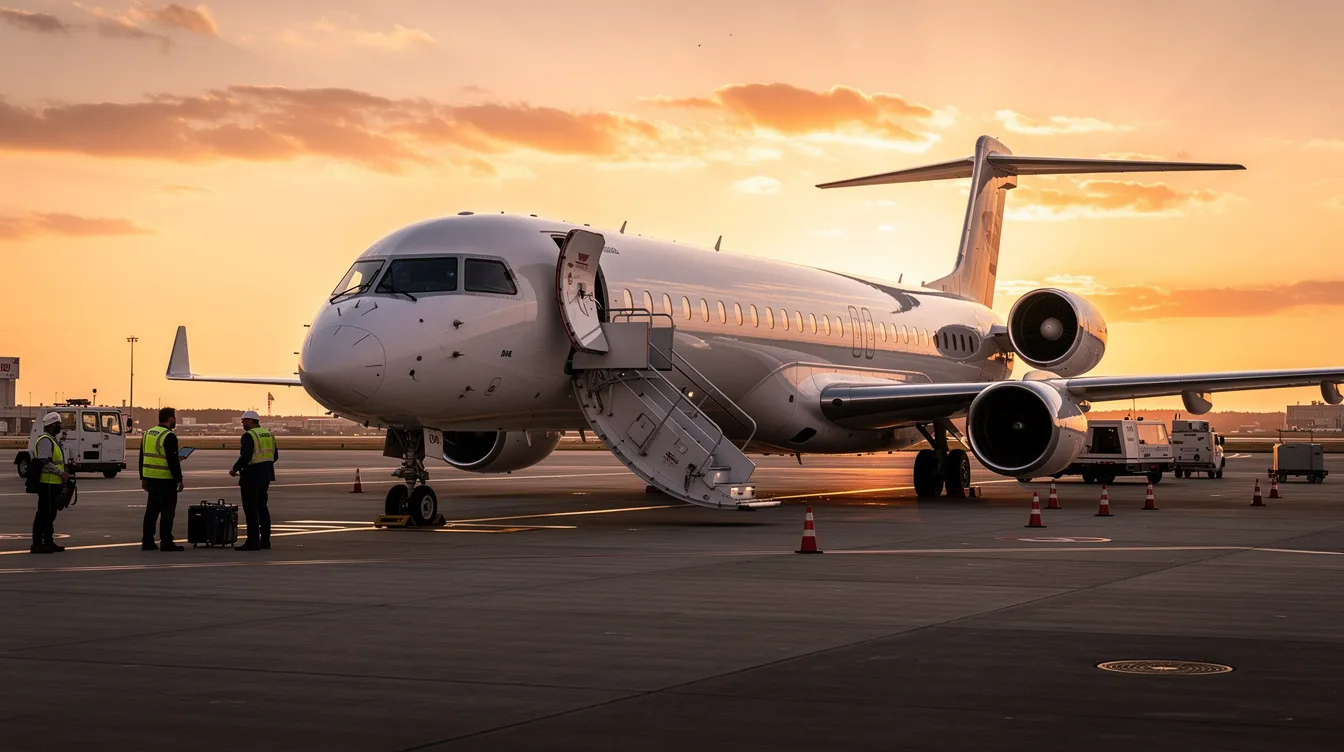
A private jet is a turbine-powered aircraft designed to transport small groups of people for personal, corporate, or government travel, distinct from scheduled commercial aviation. The term private aircraft covers a broad spectrum: light jets, mid-size jets, super-mid-size jets, heavy jets, and large converted airliners like Boeing Business Jets. Private jets typically carry 4 to 20 passengers, and they prioritize speed, efficiency, and personal comfort above all else.
Key advantages include schedule flexibility, point-to-point routing, access to airports not accessible by commercial airlines, privacy, and significant time savings. Private jets often cater to business executives, government officials, or VIPs who need an effective air travel tool that operates on their terms.
Business travel – executive multi-city trips, board meetings, site visits
Government and VIP transport – diplomatic missions, head-of-state travel
Medical evacuation – air ambulance and organ transport
Charter and leisure – vacation flights, event travel, family trips
Time-critical cargo – high-value or sensitive shipments
The beginning of business aviation traces back to piston and turboprop aircraft in the 1940s–1950s, such as the Beechcraft Model 18. The jet era arrived when the Learjet 23 first flew in 1963, offering unprecedented speed and convenience. Cessna's Citation series followed in the 1970s, and long-range platforms from Gulfstream, Bombardier, and Dassault reshaped the market through the 1980s and 1990s. Boeing Business Jets entered production in the late 1990s, bringing airliner-based luxury to private aviation.
A critical change came with the shift from owner-flown aircraft to professionally managed corporate fleets and fractional ownership programs from the late 1980s onward.
1960s–1970s: First-generation light jets (Learjet 23, Citation I), focus on regional speed
1980s–1990s: Larger long-range jets (Gulfstream IV, Challenger), rise of fractional models
2000s–2020s: Ultra-long-range jets (Global 7500, G650ER), jet cards, sustainable fuels, global fleet expansion
Private jets are grouped into classes based on cabin size, maximum takeoff weight, passenger capacity, and range. The term "long range" generally refers to intercontinental capability above roughly 5,000 nautical miles (nmi). Here is a list of the main categories:
Very light jets (VLJs): ~4–6 seats, ~1,000–1,300 nmi range (Eclipse 550, Phenom 100)
Light jets: ~6–8 seats, ~1,800–2,500 nmi (Phenom 300E, Citation CJ4)
Mid size jets: ~7–9 seats, ~2,000–3,000+ nmi (Citation XLS+, Legacy 450)
Super mid-size jets: ~8–12 seats, ~3,500–5,500 nmi (Challenger 3500, G280)
Heavy jets: ~10–19 seats, up to ~7,500+ nmi (G650ER, Global 7500)
Bizliners: ~18–50+ seats, 6,000–10,000+ nmi (BBJ MAX, ACJ320)
Very light jets represent the smallest class of business jets, with a maximum takeoff weight of 10,010 lb and seating for 4–6 passengers. They are often certified for single-pilot operation and can use very small airports with short runways.
Range: ~1,000–1,200 nmi
Examples: Eclipse 550, Cirrus Vision SF50, Embraer Phenom 100 (entered service 2008)
Ideal for: Short-haul regional trips, owner-pilots, lower-cost charter solutions serving small community airports in the United States and Europe
Light jets typically accommodate 6–8 passengers over 1,953 nmi, making them one of the most popular categories in private aviation. Private jets in this class can operate from smaller regional airports, unlike commercial aircraft, offering ease of access for regional and medium-distance flights.
Examples: Cessna Citation CJ3+/CJ4, Embraer Phenom 300E, HondaJet HA-420
Cruise speed: Mach ~0.75–0.80
Ownership models: Many fractional jet ownership and membership programs use light jets to serve clients flying 25–75 hours per year on regional routes
Mid-size jets offer larger cabins with stand-up headroom, enclosed lavatory facilities, and refreshment centers, providing room for productive work or comfortable rest. They are considered a strong choice for transcontinental flights within large countries.
Passengers: 7–9; Range: 2,000–3,000+ nmi
Examples: Hawker 800XP, Cessna Citation XLS+, Citation XR, Embraer Legacy 450
Typical mission: New York to Miami nonstop, or coast-to-coast U.S. routes
Common in: Corporate flight departments and fractional aircraft ownership programs where clients routinely fly coast-to-coast
Super mid-size jets can accommodate 10–11 passengers over 3,420 nmi, bridging the gap between mid-size jets and full heavy intercontinental aircraft. They are often suitable for transatlantic missions such as New York to London.
Range: ~3,500–5,500 nmi; Cruise: high-altitude performance (FL450–510) for smoother rides
Examples: Gulfstream G280, Bombardier Challenger 3500, Cessna Citation Longitude
Key features: Lower cabin altitude reduces fatigue; advanced connectivity and cabin design improvements
Routes: Ideal for Europe-to-Middle East, U.S. coast-to-coast, and select transatlantic city pairs
Heavy jets are the most expensive class of private jets, optimized for long-range intercontinental missions. Their cabins feature multiple seating zones, lie-flat beds, full galleys, and cabin space for 10–19 passengers.
Gulfstream G650ER: ~7,500 nmi range, Mach 0.85 cruise, entered service 2014
Bombardier Global 7500: ~7,700 nmi range, four-zone cabin, the world's longest-range business jet in service
Dassault Falcon 8X: Versatile ultra-long-range design with trijet configuration
Typical operators: Multinational corporations, heads of state, ultra-high-net-worth individuals flying routes like Los Angeles to Hong Kong nonstop
These are among the largest business jets available before stepping into converted airliners.
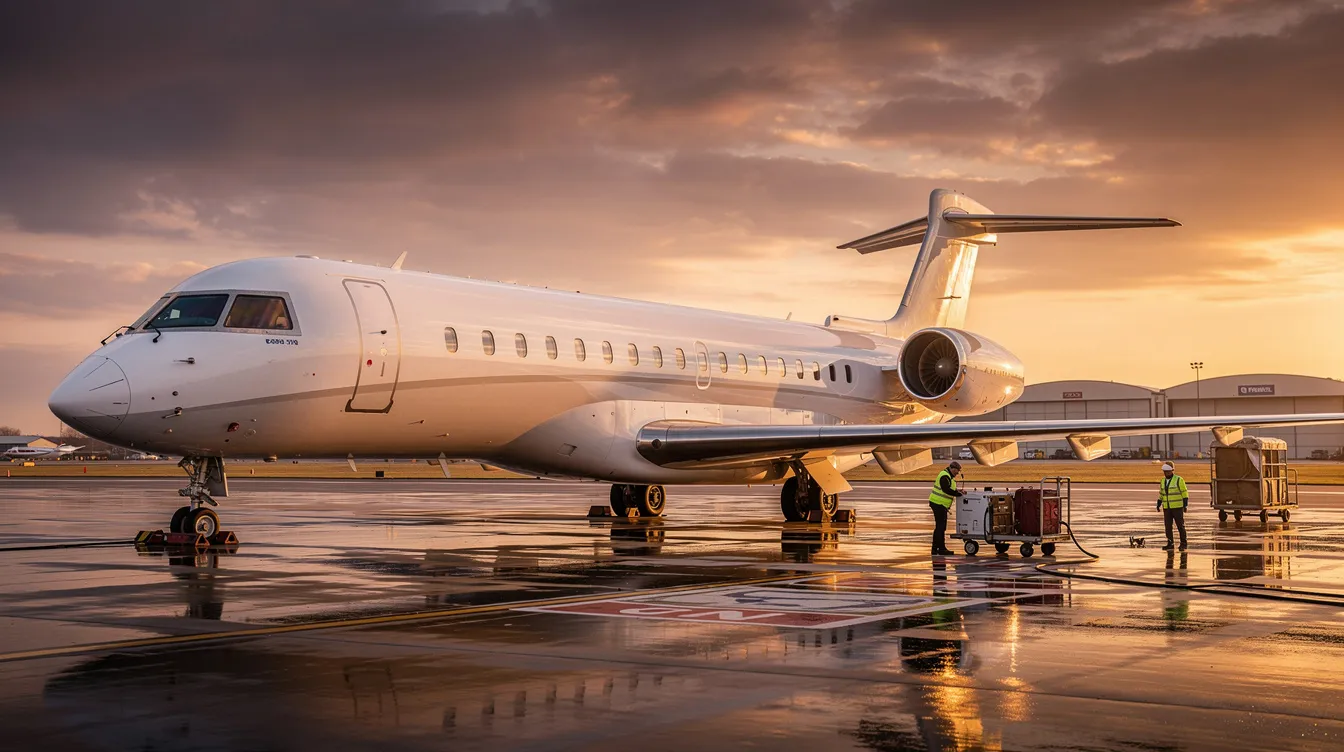
Business airliners can be converted into private jets for VIPs, and Boeing Business Jets represent the most prominent example. Based on Boeing 737, 787, and 777 airframes, BBJ variants are configured as ultra-large luxury aircraft or governmental transports.
Current production: BBJ MAX series with range over 6,000 nmi, lower cabin altitude, optional auxiliary fuel tanks
Out-of-production: BBJ1 (737-700 based), BBJ2 (737-800 based), BBJ3 (737-900ER based)-each offering trade-offs between increased cabin space and range
BBJ 787-8: Range ~9,960 nmi with approximately 25 passengers, based on Boeing's widebody platform
Typical operators: Governments, Fortune 100 companies, VIP charter firms-these aircraft sit at the very top end of private aviation in both size and cost
The distinction between business aircraft-primarily jets and high-performance turboprops-and other private aircraft like piston singles and helicopters matters when selecting the right tool for the mission.
Turboprops: More fuel efficient for short sectors, cheaper hourly operating costs, able to use unimproved runways
Business jets: Higher speed, greater comfort at longer ranges, better cabin altitude
Helicopters: Point-to-point within metro areas, no runway required, but limited range and speed
BlackJet Fractional Jet Ownership focuses on jet solutions rather than piston aircraft, offering clients access to professionally managed turbine fleets.
Private aviation operates on-demand, tailored to the passenger's schedule, enabling mission profiles impractical on commercial airlines. Flying private can improve productivity through quiet, private environments for business work, and private jets can avoid crowded terminal security lines, saving time.
Multi-city executive travel: A CEO visiting manufacturing sites in Denver, Houston, and Chicago in a single day using a mid-size jet
Family leisure: Direct flights from Canada to Caribbean destinations on a schedule that suits the family
Sports and entertainment: Team travel and tour logistics
Government and VIP movements: Secure, private transport for officials
Medical evacuation: Air ambulance configurations for urgent patient transport
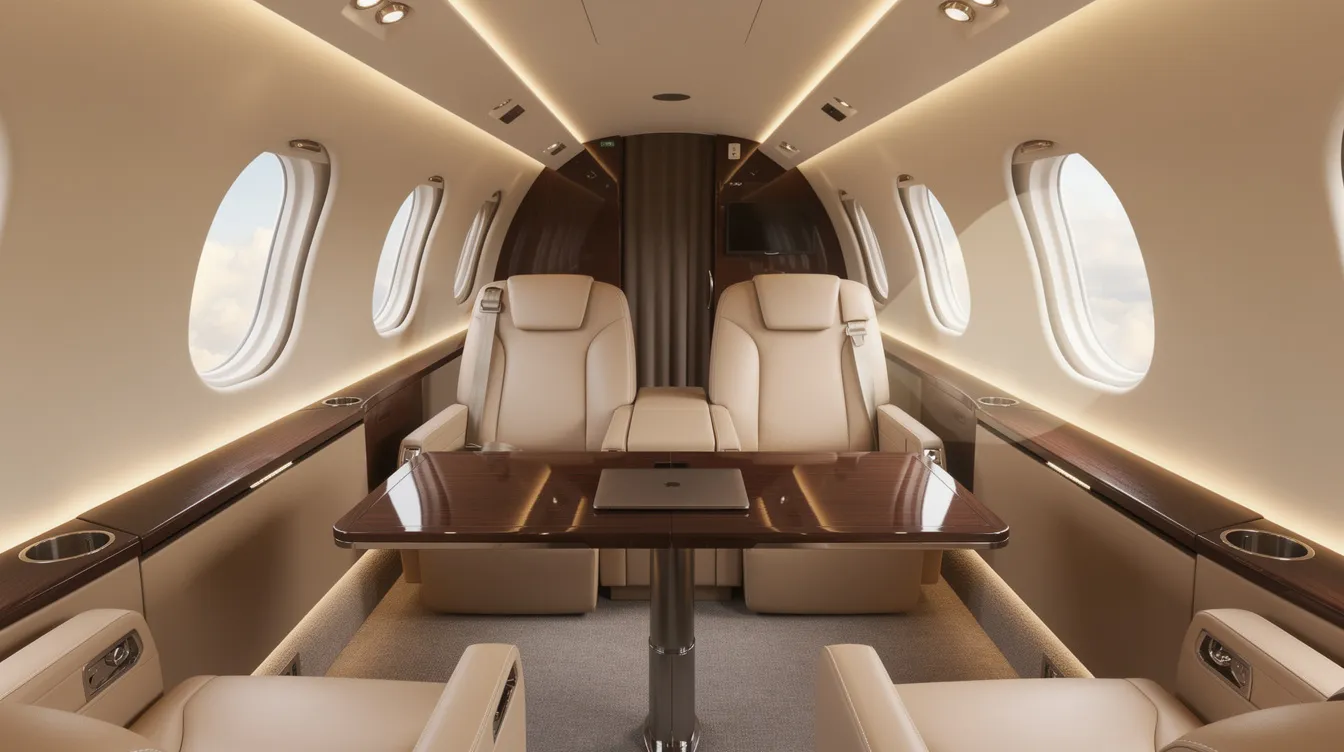
Cabin configuration scales dramatically across classes. Private jets often include amenities like high-speed internet and entertainment systems, and they offer personalized service and customizable cabin layouts. Private jets can operate at higher altitudes for smoother flights, and modern long-range aircraft maintain cabin altitude as low as 4,000–6,000 ft, reducing fatigue during extended travel.
VLJs/Light jets: Basic seating, modest baggage, simple lavatory
Mid size/Super mid-size: Stand-up cabin, work tables, enclosed lavatory, refreshment center
Heavy jets/Bizliners: Multiple zones (lounge, bedroom), full galley, shower, crew rest area
Key consideration: Evaluate your usual flight duration, passenger count, and need for workspace when selecting an aircraft class
Private jets are operated under regulatory frameworks such as FAA Part 91 (private operations) and Part 135 (charter/air taxi) in the United States. Private aviation emphasizes privacy and customized experiences for passengers, with every flight tailored to individual needs.
On-demand charter: Reactive booking subject to availability
Corporate fleet: Pre-planned trips with dedicated aircraft
Fractional/Reserve programs: Guaranteed availability within notice windows, priority allocation
Peak travel: Holidays and major events limit availability-predictable access through structured programs becomes especially valuable
BlackJet Fractional Jet Ownership handles all operational details for clients, from aircraft sourcing to trip coordination, offering ease that allows travelers to focus solely on their itinerary
Private jets can be accessed through charter services or fractional ownership, among other models. Here is how they compare: in shared arrangements, an aircraft fractional ownership sample contract typically defines how rights and responsibilities are divided:
Full ownership: High capital outlay, full control, best above ~200 hours per year
Fractional ownership: Shared equity, shared fixed costs, professionally managed-ideal for 50–150 hours per year and worth assessing as a fractional jet ownership investment with specific benefits and considerations.
Jet cards/Membership: Pre-purchased hours at fixed rates, no equity-suited for 25–75 hours per year
On-demand charter: No commitment, pay per flight-best for infrequent or unpredictable travel, and some owners eventually choose to sell a fractional jet ownership share when shifting between these access models
BlackJet Fractional Jet Ownership offers both Equity Fleet (true fractional ownership) and Reserve Fleet (flexible, non-equity access), providing options for different travel profiles.
Fractional ownership allows shared access to private jets without full ownership costs. Multiple owners purchase equity shares in a specific aircraft type and receive a guaranteed number of flight hours per year, commonly 25, 50, 75, or 100+ hours, and it helps to understand essential terms related to fractional jet ownership before committing to a program. The management company handles crewing, maintenance, insurance, and scheduling.
Fleet access: Owners use their "home" aircraft or comparable jets within the fleet when scheduling requires it, and some programs employ floating fleet options in fractional ownership to increase flexibility
Tax benefits: In the U.S., fractional shares may qualify as depreciable 5-year MACRS property with bonus depreciation for qualified business use, but buyers must also understand essential contract terms in fractional jet ownership agreements before signing
Commitment bands: Structured around annual usage, making costs predictable
BlackJet Equity Fleet: Offers priority access, custom aircraft sourcing, and ownership benefits tailored to each client's needs, which may include nuanced tax implications for fractional jet owners depending on usage and structure
Membership and jet card programs function as non-equity ways to access private aviation. Clients pre-purchase flight hours or deposits that lock in hourly rates and service guarantees without the responsibilities of ownership.
BlackJet Reserve Fleet: A pay-as-you-go or pre-funded structure offering guaranteed availability and predictable pricing, serving travelers who might otherwise consider options like 1/8th fractional jet ownership for around 100 hours per year
Best for: Travelers flying 25–75 hours per year who value flexibility over asset ownership
Practical example: Booking a light jet for a same-day business trip to Miami, or reserving a mid-size jet for a week-long family vacation
vs. Ad-hoc charter: Greater price stability, better aircraft condition, priority access during peak periods
The primary cost elements in private aviation span acquisition, operations, and management:
Acquisition: Light jets may cost several million dollars; heavy jets and bizliners can reach tens of millions
Hourly operating costs: Fuel, maintenance, engine reserves-scaling significantly with aircraft size
Fixed costs: Crew salaries, hangarage, insurance, navigation fees
Management fees: In fractional programs, these convert unpredictable expenses into fixed monthly charges, and robust liability coverage in fractional jet ownership is a critical component of the overall cost and risk profile
Cost-efficiency threshold: Fractional ownership typically becomes advantageous above ~50–75 hours per year vs. charter; full ownership above ~200 hours, but buyers should also evaluate fractional jet ownership financing costs and benefits before deciding on a structure
Private jets generate thousands of tons of CO2 emissions annually and have a disproportionate carbon footprint compared to commercial flights. Private jet travelers can fly over 350,000 km each year, and tracking projects for private jets have gained widespread media attention, with social media accounts monitoring celebrity aircraft movements.
Industry responses: Adoption of Sustainable Aviation Fuel (SAF), fuel-efficient engine technologies, carbon offset programs, and optimized flight planning
Shared models help: Fractional ownership and membership programs increase average load factors and aircraft utilization, reducing per-passenger emissions compared to under-utilized sole-ownership jets.
Ongoing challenges: SAF supply constraints, cost premiums, and balancing privacy with environmental accountability
Business aviation operates under strict regulatory frameworks worldwide. In the United States, FAA Part 91 governs private operations while Part 135 covers charter services with higher oversight standards.
Aircraft certification: Manufacturer compliance, type certificates, supplemental type certificates for modifications
Crew standards: Pilot licensing, recurrent training, duty-time limits
Operator audits: Reputable fractional providers employ third-party safety audits (e.g., ARGUS, Wyvern) and standardized procedures
Key insight: Safety culture and maintenance quality are often more important than the specific age of an aircraft when evaluating private aviation options
The global business jet fleet numbers roughly 17,000–22,000 active aircraft, with North America-primarily the United States and Canada-accounting for over 70% of registered jets and departures. Europe holds roughly 10–20%, while the fastest growth is occurring in Asia-Pacific, the Middle East, and Latin America.
Fleet growth: Up approximately 25% in regions like Southeast Asia since 2019
Popular routes: NY–FL, LA–NY domestically; increasing cross-border flows globally
Demand drivers: Globalized business, emerging wealth, and expanded access through fractional and membership models.
Geopolitical factors: Fuel costs, environmental regulation, and currency fluctuations influence delivery schedules across the world
Selecting the right aircraft class and access model requires evaluating several factors. Unlike a Wikipedia page that was last edited by anonymous contributors, the right answer here depends entirely on your specific travel profile.
If you fly 25–50 hours per year on regional routes, a light jet via Reserve Fleet or jet card is likely most efficient.
If you fly 75–150 hours with frequent long legs, fractional ownership of a mid-size or super mid-size jet offers the best balance of cost and the ability to fly nonstop
If you fly 200+ hours and want full control and full ownership with a dedicated tail number may justify the capital.
Consider: Average stage length, number of passengers, runway constraints at preferred small airports, and budget.
BlackJet Fractional Jet Ownership serves as an advisor that can help prospective users discover the right option and design a custom solution based on real travel data.
BlackJet Fractional Jet Ownership is positioned between full private jet ownership and ad-hoc charter, offering structured access to professionally managed fleets.
Equity Fleet: True fractional ownership with potential tax benefits, priority access, and custom aircraft sourcing, similar in spirit to leading fractional jet ownership programs for smart investors
Reserve Fleet: Flexible, non-equity access with predictable hourly rates and guaranteed availability
Client profiles: High-net-worth individuals, executives, and companies flying approximately 25–150 hours per year
Value propositions: Time savings, cost predictability, operational simplicity-no need to manage crew, maintenance, or scheduling
Coverage: Primary operations based in the United States with access to global routes
The private aviation industry continues to evolve, with several trends offering the ability to reshape how people fly. Next-generation fuel-efficient engines, advanced composites, and cabin connectivity improvements are already entering service. The Bombardier Global 8000, for example, is pushing speed, altitude, and range benchmarks further.
Hybrid-electric and electric aircraft: Research is ongoing, though realistic timelines span a decade or more for certification
Supersonic business jets: Concepts exist but face significant regulatory hurdles
Evolving business models: More flexible fractional programs, dynamic pricing, and app-based booking for light jets
Sustainability integration: SAF adoption, carbon accountability, and higher utilization through shared ownership models
Fractional jet ownership offers a compelling balance between the convenience of private jet travel and the financial and operational efficiencies of shared use. It provides high-net-worth individuals and corporations with predictable access to a range of aircraft types while minimizing the complexities of full ownership. With options like BlackJet Fractional Jet Ownership’s Equity and Reserve Fleets, travelers can tailor their private aviation experience to their unique needs, whether prioritizing flexibility, cost control, or tax benefits.
As private aviation continues to evolve, fractional ownership remains a smart, accessible solution for those seeking the benefits of private jet travel without the full capital commitment. To explore how fractional jet ownership can transform your travel experience and unlock new levels of convenience and efficiency, visit FractionalJetOwnership.com today.
