May 1, 2026
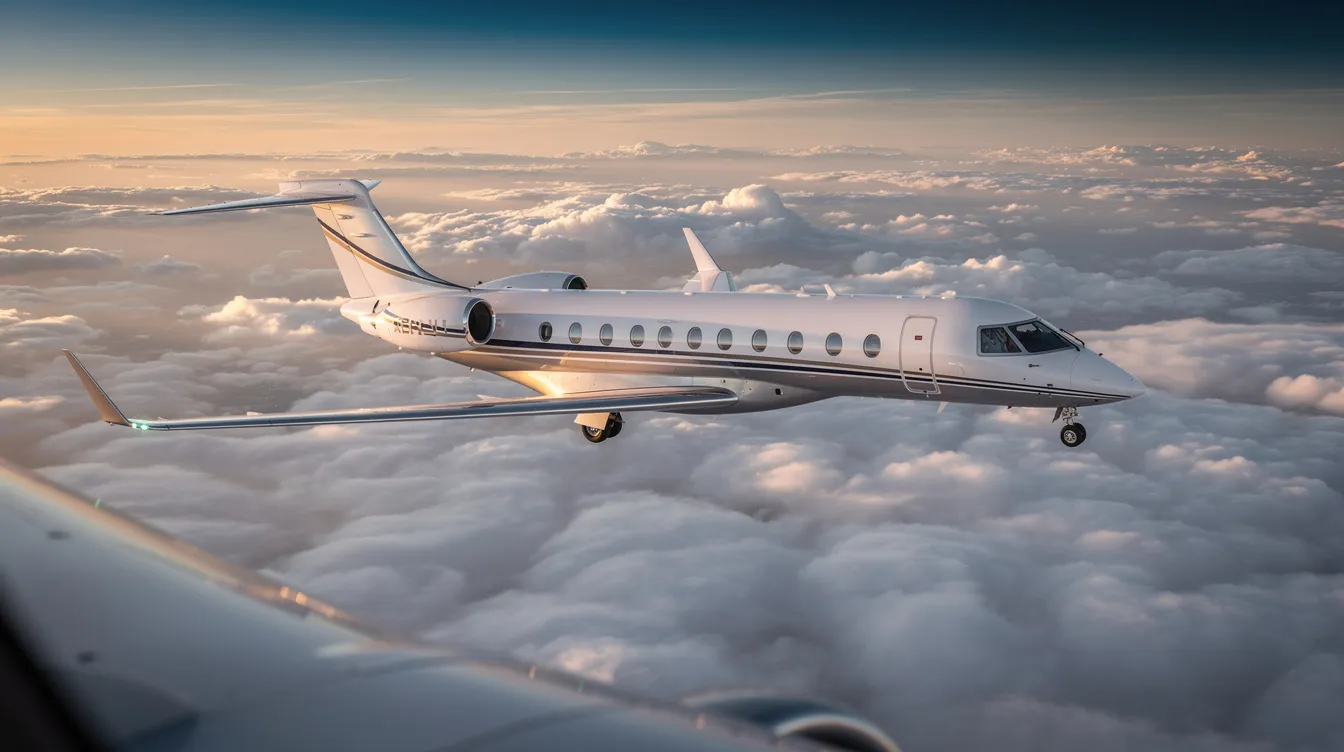
Private jet manufacturers are the companies whose engineering decisions, manufacturing expertise, and design philosophy shape the aircraft carrying you across the country or around the world. The aircraft you fly in represents decades of innovation from a select group of these manufacturers. Understanding who builds these aircraft—and what distinguishes one manufacturer from another—matters far more than many travelers realize.
This guide is for prospective private jet buyers, fractional ownership clients, and anyone interested in understanding the leading private jet manufacturers and their aircraft. We cover the major manufacturers, their signature products, and how these differences impact ownership and usage decisions.
For charter users flying occasionally, the specific manufacturer may seem like a minor detail. But for those exploring fractional ownership, jet card programs, or full ownership, the choice of manufacturer directly influences operating costs, cabin comfort, range capabilities, and long-term asset value. The private jet industry continues to grow, with 712 business jets shipped in 2022, indicating a strong recovery in private aviation. Industry forecasts project 8,683 private jet deliveries over the next decade, driven by increasing demand for convenience and reliable access.
The global business aviation market is led by about a dozen manufacturers based in Europe, North America, and Latin America, including Dassault, Gulfstream, Bombardier, Embraer, and Cessna. These companies produce everything from very light jets seating four passengers to ultra-long range flagships capable of connecting New York to Hong Kong nonstop—and even converted commercial airframes serving as flying boardrooms for heads of state.
BlackJet Fractional Jet Ownership works with clients to navigate this landscape, matching mission profiles and budgets to specific aircraft types across manufacturers. This article breaks down the major players, their signature products, and how these differences translate into real-world decisions for private aircraft access.
Aircraft manufacturers are active in the business aviation cluster across three primary regions, each contributing distinct design philosophies and market strengths.
Gulfstream Aerospace (Savannah, Georgia) — large cabin and ultra-long-range specialists
Bombardier (Montreal, Canada) — Challenger and Global series for intercontinental missions
Textron Aviation (Wichita, Kansas) — the parent company of both Cessna and Beechcraft, managing and integrating their aircraft offerings; Cessna Citation and Beechcraft King Air dominate light jets and turboprops.
Honda Aircraft Company (Greensboro, North Carolina) — very light jet innovator
Dassault Aviation (France) — Falcon series with military-grade engineering heritage
Pilatus Aircraft (Switzerland) — rugged turboprops and versatile jets for demanding operations
Piaggio Aerospace (Italy) — distinctive high-speed turboprops
Airbus Corporate Jets (France/Germany) — VIP airliner conversions from commercial aircraft
Embraer Executive Jets (Brazil) — modern light and midsize jets with strong efficiency metrics
Boeing Business Jets (United States) — wide-body bizliner conversions
Most fractional ownership fleets in the United States draw heavily from Bombardier, Gulfstream, Embraer, and Cessna aircraft, reflecting their balance of capability, support infrastructure, and residual value performance. BlackJet’s Reserve Fleet, Equity Fleet, and Lease Program are structured around these proven platforms to match different flying profiles and commitment levels. are structured around these proven platforms to match different flying profiles and commitment levels.
Dassault Aviation manufactures the Falcon series jets and is recognized for utilizing military-grade engineering for performance and safety. Founded in 1929, the company built its reputation in military aircraft before entering business aviation. Dassault Aviation entered the private jet market in 1963 with the Falcon 20, leveraging its military aircraft expertise to produce high-performance business jets.
This heritage informs every current Falcon: fly-by-wire flight controls, precision aerodynamics, and cabin engineering that prioritizes both quiet operation and operational flexibility.
Falcon 2000LXS — Super midsize/large category, strong transcontinental performer
Falcon 900LX — Large cabin trijet, approximately 4,750 nm range
Falcon 6X — Certified 2023, extra-wide cabin, approximately 5,500 nm range
Falcon 7X/8X — Long range trijets, 8X offering approximately 6,450 nm
Falcon 10X — Ultra long range program targeting approximately 7,500 nm, mid-2020s entry
Falcon aircraft excel on missions requiring runway performance at challenging airports while maintaining long-range capability. While some business jets face operational restrictions based on runway length or noise regulations, Falcon models are engineered to minimize such operational restrictions at demanding airports. Corporate travelers flying transatlantic routes from secondary European cities or accessing mountain destinations often find Falcons particularly well-suited. The wide body cabin space on newer models like the 6X delivers stand-up height and wide seating configurations uncommon in the super midsize jets category.
Gulfstream Aerospace is renowned for ultra-long-range jets with iconic oval windows, high-speed performance, and premium comfort. The company, now owned by General Dynamics, traces its origins to the late 1950s with the Gulfstream I turboprop. The Gulfstream II had its first flight in 1966, marking a significant milestone in business jet history as one of the earliest large business jets.
Today, Gulfstream defines the premium end of large jets and ultra-long-range aircraft, with maximum cruise speed capabilities approaching Mach 0.925 on flagship models.
G280 — Super midsize, approximately 3,600 nm range
G400/G500 — Large cabin, long-range performers
G600 — Long-range successor to the G550, approximately 6,600 nm
G700 — Certified around 2024, flagship ultra-long-range with approximately 7,500 nm
G800 — Targeting 8,000+ nm range, certification window 2025-2026
These aircraft owners benefit from strong residual value levels compared to market averages, reflecting consistent demand from corporate flight departments and high-net-worth individuals. The G700 and G800 compete directly with Bombardier’s Global 7500 and Global 8000 for routes like New York–Hong Kong or Los Angeles–Sydney that require maximum range without refueling stops.
Many fractional ownership clients gravitate toward Gulfstream-class aircraft when global access and cabin prestige are priorities.
Bombardier is a major player in luxury business aviation, particularly known for the Global 7500 and Challenger series. The company transformed into a pure-play business jet manufacturer after exiting commercial aviation and discontinuing the Learjet line in 2021. This strategic focus has concentrated resources on two primary families serving charter operators and fractional programs alike.
Challenger 3500 — Super midsize, modern cabin, strong charter economics
Challenger 650 — Large cabin workhorse, approximately 4,000 nm range, excellent for U.S.-Europe positioning
Global 5500/6500 — Long-range large cabin aircraft
Global 7500 — Certified 2018, approximately 7,700 nm range, multiple cabin zones
Global 8000 — Among the world’s fastest business aircraft at Mach 0.94, approximately 8,000 nm range
Bombardier Aerospace differentiates through features like Smooth Flex Wing technology for ride quality and the advanced Vision flight deck. Global 7500 and 8000 cabins include dedicated crew rest areas and up to four distinct living spaces—configurations supporting long-haul flights where passengers work, dine, and sleep in separate zones.
Challenger and Global aircraft remain staples in North American fractional programs, fitting common mission profiles like New York–Los Angeles, Miami–Aspen, or transcontinental executive jet shuttles.
Textron Aviation dominates the light to midsize market with versatile, reliable, and efficient aircraft, particularly known for the Cessna Citation series. With headquarters in Wichita, Kansas, the company combines Cessna’s business jet expertise with Beechcraft’s turboprop heritage under one umbrella.
The private jet manufacturing industry began to take shape in the 1960s, with key players like Gulfstream, Cessna, and Learjet emerging as significant manufacturers. Today, Textron commands approximately 43.9% of the global business jet fleet when combining Cessna, Beechcraft, and legacy Hawker brands.
Citation M2 Gen2 — Entry-level light jet, owner-flown friendly
CJ3+/CJ4 Gen2 — Popular light jets for regional and transcontinental missions
Citation XLS Gen2 — Super midsize, approximately 2,100 nm range
Latitude — Midsize with flat-floor cabin, approximately 2,700 nm
Longitude — Super midsize, roughly 3,500 nm range at 483 knots cruise
King Air 260/360/360ER — Turboprop benchmarks for short-field performance, corporate shuttles, and special missions
Citations and King Air aircraft are especially attractive for fractional and membership programs serving 300–1,200 nm missions within the United States. Lower operating costs per flight hour, a broad service network across FBOs nationwide, and access to smaller airports make these platforms ideal for small and midsize companies seeking predictable aircraft operation without large-jet overhead.
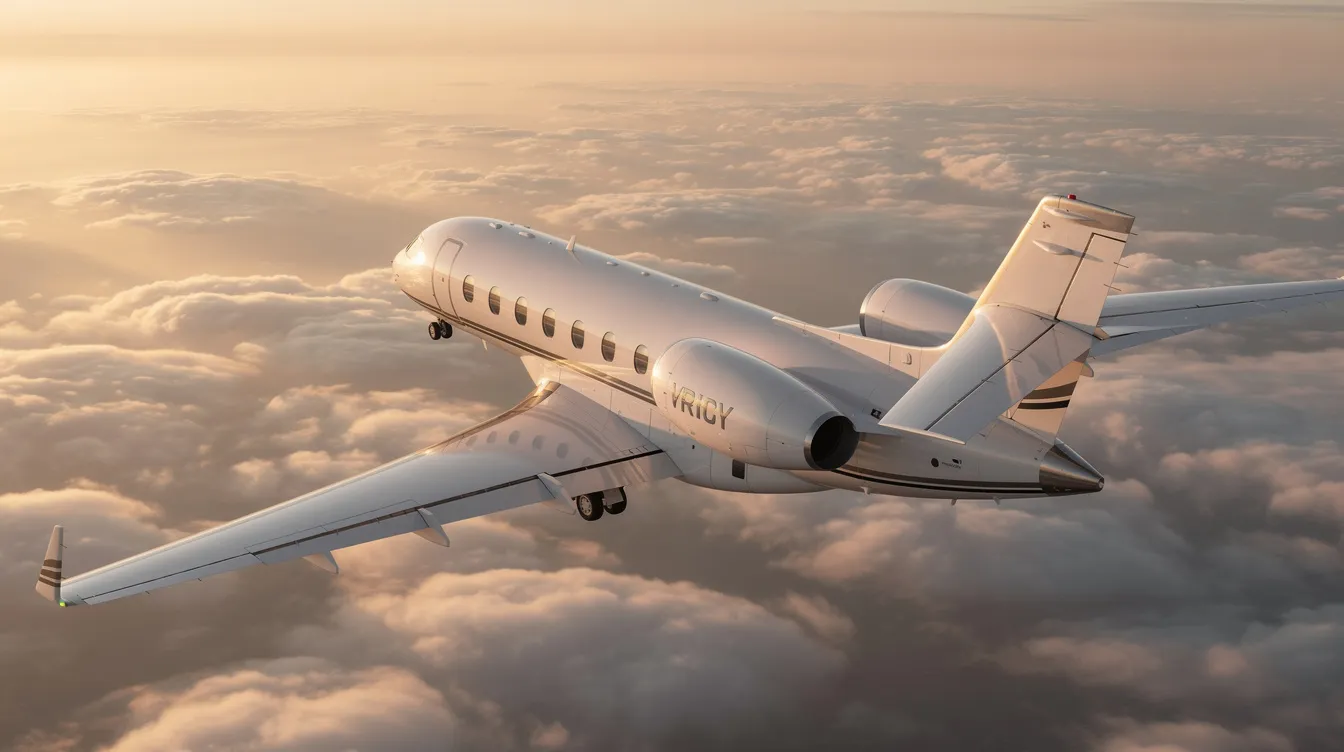
Embraer Executive Jets is noted for producing modern jets, especially the Phenom and Praetor series, which are recognized for high reliability and ergonomic design. As the world’s fourth-largest aircraft manufacturer by volume, Embraer entered business aviation in the early 2000s and quickly established market leadership in the light jet category.
The Phenom 300 series by Embraer has been the world’s best-selling light jet for multiple consecutive years, according to General Aviation Manufacturers Association delivery data.
Phenom 100EX — Very light jet entry point, approximately 1,200 nm range
Phenom 300E — Light jet leader, approximately 2,010 nm range, 6-8 passengers
Praetor 500 — Midsize, approximately 3,340 nm range, fly-by-wire controls
Praetor 600 — Super midsize, approximately 4,018 nm range, flat-floor cabin
Embraer’s design philosophy emphasizes fuel efficiency, advanced avionics, and competitive maintenance intervals. These executive jets have become popular aircraft choices for both owner-operators and fractional fleets, particularly for missions like New York–Florida, Los Angeles–Chicago, or intra-Europe routes.
BlackJet incorporates Embraer aircraft into Reserve Fleet and Equity Fleet strategies for clients flying 25–150 hours annually who need modern technology without large cabin overhead costs, a profile that often aligns well with 1/8 fractional jet ownership structures offering around 100 flight hours per year.
Pilatus Aircraft built its reputation on rugged platforms capable of operating from short runways and demanding environments. Beginning with the PC-6 Porter utility aircraft, the company evolved toward modern business platforms that balance comfort with operational flexibility.
PC-12 NGX: Single-engine turboprop with stand-up cabin, large cargo door, and approximately 1,800–2,000 nm range. Ideal for regional corporate trips, mountain airports, and mixed cargo-passenger configurations. Operating economics undercut most light jets while providing access to facilities that conventional jets cannot reach.
PC-24: Pilatus produces the PC-24, which is capable of landing on unpaved surfaces and offers luxury cabin comfort. This flagship model combines light jet speed with turboprop field performance—operating from runways as short as 2,690 feet and some small unpaved runways that would ground traditional jets.
PC-12 and PC-24 aircraft serve clients who value access and aircraft operation flexibility over maximum cruise speed. Remote corporate sites, adventure destinations, and mountainous geography make these platforms particularly valuable, especially within floating fleet fractional ownership models where diverse aircraft are dispatched to match demanding field conditions.
Piaggio Aerospace represents one of Italy’s oldest aviation firms, with early 20th-century roots in aircraft production and extensive experience manufacturing components for major engine makers, including Pratt & Whitney.
The P.180 Avanti and Avanti EVO feature a distinctive pusher-configured twin turboprop design with canard surfaces, delivering near-light-jet speeds while maintaining turboprop fuel efficiency:
Cruise speeds around 400+ knots
Range approximately 1,700–1,900 nm depending on configuration
Stand-up cabin with efficient cabin space utilization
While Piaggio’s global fleet remains smaller than competitors like Textron or Embraer, the Avanti maintains a loyal following among operators prioritizing speed, efficiency, and personalized service on shorter runway length requirements.
Airbus Corporate Jets and Boeing Business Jets create luxurious corporate versions of commercial airliners for VIP transportation. These “bizliners” derive from iconic airliners, offering vastly larger aircraft cabins—often three times the floor area of traditional large aircraft—at the cost of higher operating expenses and runway length restrictions.
ACJ319neo/ACJ320neo/ACJ321neo — Based on A320neo family, intercontinental range
ACJ TwoTwenty — Based on A220-100, approximately 5,650 nm range, cabin roughly three times larger than typical large jets
BBJ MAX 7/8/9 — Based on 737 MAX, ranges exceeding 6,000 nm
BBJ 787 Dreamliner — Wide-body, approximately 8,000+ nm range
BBJ 777X — Ultra-long-range capability, 12–15 hour nonstop flights
These new aircraft from Boeing Company and Airbus serve governments, heads of state, and large corporate groups requiring bedroom configurations, conference facilities, or capacity for entourages beyond what traditional business jets accommodate, relying on These new aircraft from Boeing Company and Airbus serve governments, heads of state, and large corporate groups requiring bedroom configurations, conference facilities, or capacity for entourages beyond what traditional business jets accommodate, relying on highly trained pilots and cabin crews to provide safe, discreet, and seamless service on complex international itineraries. to deliver safe, discreet, and seamless service on complex global itineraries.
Private jets are renowned for offering amenities typically reserved for five-star hotels, including spacious, convertible seating for sleeping or working, high-speed internet, gourmet kitchens, and advanced avionics for smooth navigation. On Bizliner platforms, luxury features in private jets often include personalized interior design, flat beds, in-flight chefs, and premium service options, creating a mobile sanctuary for travelers.
ACJ and BBJ aircraft rarely appear in standard fractional programs due to acquisition costs and specialized requirements. However, BlackJet can arrange access through vetted operator partners for specific high-profile group missions or transporting cargo with passengers on dedicated charters.
Honda Aircraft Company developed the HondaJet concept starting in the late 1990s, achieving first flight in 2003 and FAA certification of the HA-420 in 2015. Production in Greensboro, North Carolina, represents Honda’s entry into aerospace.
The HondaJet is notable for its Over-the-Wing Engine Mount, which maximizes cabin space and minimizes noise. The current HondaJet Elite II offers:
Seating for approximately 5–6 passengers
Range around 1,500 nm
Cruise speed in the low 400-knot range
Excellent efficiency on short regional routes
Honda’s planned Echelon light jet (development targeting mid-2020s) projects transcontinental U.S. range with 1 pilot plus 4–10 passenger capacity, positioning above current very light jet offerings.
Very light jets typically accommodate 4-6 passengers and are designed for shorter flights, with a maximum takeoff weight lighter than 12,500 pounds; they are often an entry point into private aviation for travelers beginning to explore fractional jet ownership terminology and concepts. This small jet category serves as an entry point to private aviation or supplements larger fleet aircraft for 1–3 hour flights with 2–4 passengers.
Historical context: In 1963, the Learjet 23 was developed, becoming the first private jet and revolutionizing air travel for businesspeople. The concept of private jet travel began in the late 1950s and early 1960s, marking the birth of modern business aviation that continues evolving through manufacturers like Honda today.
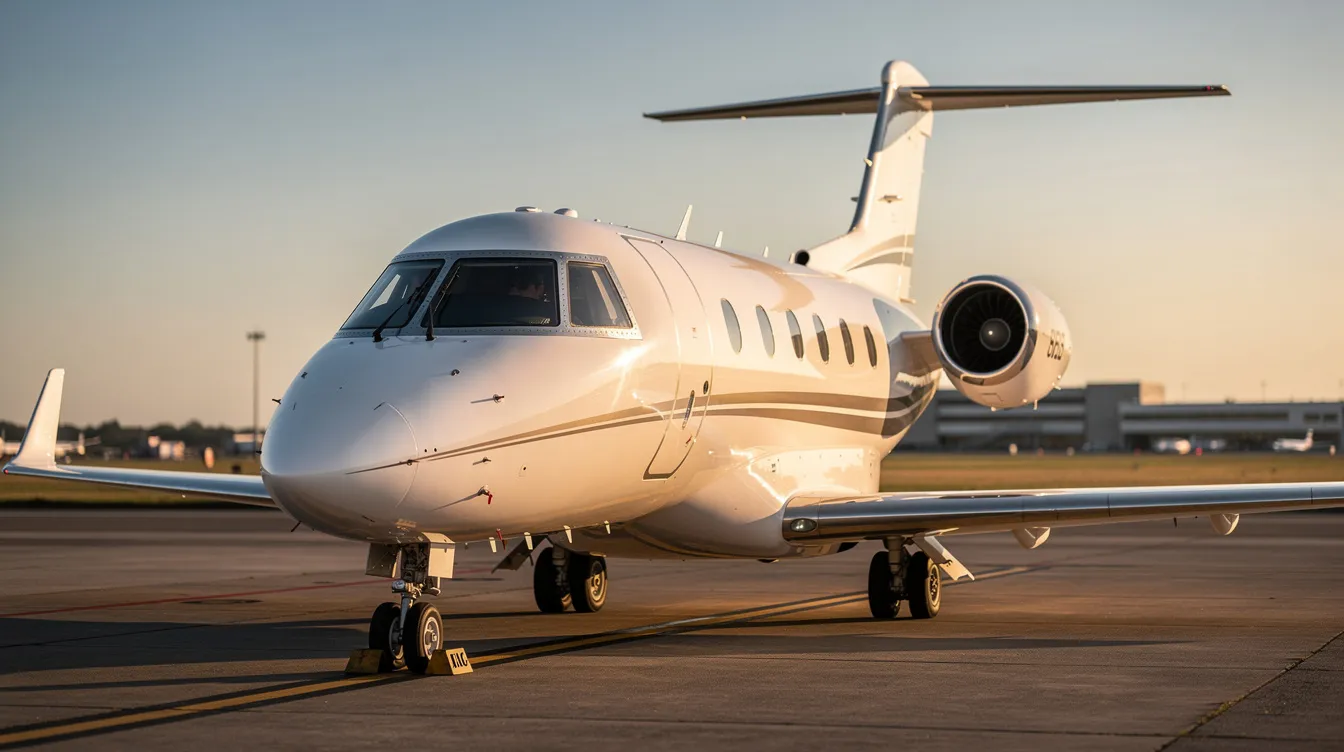
Private jets produce their performance through partnerships between airframe and engine OEMs. Major business jet engine suppliers include Pratt & Whitney Canada, Rolls-Royce, Honeywell, GE Aerospace, and Safran.
Many Cessna Citations use Pratt & Whitney PW500/PW600 series turbojet engines
Gulfstream's large cabins frequently incorporate Rolls-Royce engines
Embraer Praetor/Phenom models use Pratt & Whitney Canada powerplants
Engines mounted in various configurations affect noise, maintenance access, and cabin comfort
Engine choice influences fuel efficiency, climb performance, maintenance service intervals, and operating cost per flight hour, all of which feed directly into the total cost calculations for fractional jet ownership. Many private jets feature noise-reducing cabins and custom climate control systems, enhancing passenger comfort and focus during flights—capabilities directly tied to engine and nacelle engineering.
Manufacturers increasingly certify fleets for sustainable aviation fuel (SAF) blends. Bombardier, Gulfstream, Dassault, Embraer, and HondaJet have conducted demonstration flights using higher SAF concentrations, addressing growing regulatory and client interest in reducing greenhouse gas emissions.
BlackJet monitors both airframe and engine reliability when selecting aircraft for Reserve Fleet and Equity Fleet offerings, ensuring clients access proven powerplant combinations.
For one-off charters, manufacturer matters less than aircraft type and availability. But fractional ownership and membership programs make a manufacturer a strategic decision affecting costs, performance, and long-term asset value, especially when comparing fractional ownership versus membership structures for access to specific aircraft families.
Understanding how different aircraft map to your routes is only one piece; buyers also need a clear view of the full cost structure of fractional jet ownership when comparing manufacturers and cabin classes.
Light and mid-size jets (Textron, Embraer, some Bombardier) are often ideal for 25–75 hours annually, primarily domestic missions.
Large and ultra-long-range jets (Gulfstream, Dassault, Global series) suit clients with frequent intercontinental missions or 100+ annual flight hours
Super midsize jets combine transatlantic capability with the speed and comfort of a wide-body, high-altitude aircraft, typically accommodating 10-11 passengers over a range of 3,420 nautical miles
Manufacturer reputation and support network influence uptime and dispatch reliability. North America accounts for approximately 61% of global demand, meaning U.S.-based manufacturers like Textron and Gulfstream maintain particularly dense service infrastructure domestically.
Ownership Model Considerations: Fractional ownership allows multiple parties to share the costs and usage of a single jet, with each party owning a share of the aircraft and entitled to a certain number of flight hours, making it attractive for those evaluating fractional jet ownership as an investment rather than purely an expense. Chartering is a pay-per-flight model that provides flexibility for users who may not want to purchase a private jet outright, making it a popular choice for one-time or infrequent travelers. Jet cards offer prepaid hours on specific aircraft types, making them a popular option for occasional travelers who want guaranteed access without the commitment of ownership.
BlackJet’s Reserve Fleet (pay-as-you-go across multiple clients and aircraft) and Equity Fleet (fractional share ownership) structures accommodate different mission profiles, tailoring manufacturer and model selection to each client’s actual travel patterns.
Smart buyers evaluate manufacturer capabilities beyond brand recognition, and many also analyze fractional jet ownership financing options and liability coverage considerations in fractional jet ownership to align aircraft selection with capital structure, risk management, and cash-flow preferences:
Factor | What to Assess |
|---|---|
Range | Does the aircraft cover your typical routes nonstop? |
Cabin Size | Passenger count, baggage, and ability to work/rest? |
Runway Performance | Access to secondary airports near your destinations? |
Operating Cost | Fuel burn, crew requirements, maintenance intervals |
Support Network | Maintenance services availability where you fly? |
Residual Value | How well does the model hold value over 5-10 years? |
Technology | Avionics sophistication, connectivity, safety systems |
The average 5-year residual value level across business jets hovers around mid-50% of the original list price. However, popular aircraft from Gulfstream, Bombardier Global series, and Embraer Phenom/Praetor models often outperform this benchmark due to strong demand.
Business jets can be categorized according to their size, including Very Light Jets (VLJs), Light Jets, Midsize Jets, Super Midsize Jets, Large Jets, and Ultra Long Range Jets.
Very Light Jets (VLJs): Typically accommodate 4-6 passengers and are designed for shorter flights, with a maximum takeoff weight lighter than 12,500 pounds (5,700 kg).
Light Jets: Slightly larger than VLJs, suitable for short to medium-range flights.
Midsize Jets: Offer more cabin space and range than light jets, ideal for medium-length trips.
Super Midsize Jets: Combine transatlantic capability with the speed and comfort of a wide-body, high-altitude aircraft, typically accommodating 10-11 passengers over a range of 3,420 nautical miles.
Large Jets: Provide spacious cabins and longer range for intercontinental travel.
Ultra Long Range Jets: Capable of nonstop flights between continents, offering maximum range and luxury.
Rather than assuming one manufacturer dominates all segments, evaluate specific aircraft families against your mission requirements.
Safety records across reputable manufacturers meet rigorous FAA and EASA certification standards. Differences lie more in support quality, avionics preferences, and how operators manage the aircraft than in fundamental safety performance, all of which should be reflected in well-structured fractional ownership contract terms.
Private jets contribute significantly to carbon emissions, with some individuals traveling over 350,000 km annually and generating thousands of tons of CO2 emissions. Growing regulatory pressure and client awareness are driving manufacturer innovation.
The European Commission has set a target for aviation to reduce greenhouse gas emissions by at least 55% by 2030 as part of its climate neutrality goals for 2050. Manufacturers are responding through:
More efficient engines with improved bypass ratios
Aerodynamic refinements, including advanced winglet designs
Lighter composite materials reduce empty weight and fuel burn
Certification for higher SAF blends across fleets
In response to the environmental impact of private jets, many operators now offer carbon offset programs to mitigate their carbon footprint. BlackJet incorporates fuel efficiency into aircraft selection, balancing client comfort and mission range with a preference for modern, efficient types when available.
Sustainability represents an evolving differentiator—meaningful progress continues, though fully electric long-range jets remain developmental rather than operational today, a factor existing owners may weigh when selling a fractional jet ownership share and transitioning into newer, more efficient aircraft types.
BlackJet Fractional Jet Ownership serves as an independent advisor, helping clients evaluate aircraft across manufacturers based on actual usage patterns rather than brand marketing alone, and can also help clients interpret sample fractional ownership contract structures when comparing programs.
Initial needs analysis—annual hours, typical routes, passenger counts
Mission modeling for specific legs (New York–Miami, Dallas–Los Angeles, transatlantic)
Comparison across manufacturers and models meeting those requirements
Structured recommendation with total cost projections
BlackJet structures Reserve Fleet access for flexible, no-equity usage across proven aircraft types. Equity Fleet solutions provide fractional ownership in specific aircraft from preferred manufacturers, with consideration for support infrastructure, maintenance availability, residual values, and the tax implications of fractional jet ownership under U.S. guidelines.
The focus remains on performance and total cost of ownership rather than favoring any single manufacturer. Whether mission requirements point toward a Phenom 300E for regional travel, a Challenger 650 for coast-to-coast flights, or a Gulfstream G700 for intercontinental access, BlackJet tailors recommendations to client priorities.
Textron Aviation commands the largest share of the global business jet fleet at approximately 43.9% when combining Cessna Citation, Beechcraft, and legacy Hawker brands. Embraer’s Phenom 300E has led the light jet category for multiple consecutive years.
Bombardier’s Global 8000 reaches speeds near Mach 0.94, making it among the fastest purpose-built business jets. Gulfstream’s G700 and G800 cruise near Mach 0.925, also positioning them at the top of speed rankings.
The Bombardier Global 8000 and Gulfstream G800 both target approximately 8,000 nm range, enabling routes like New York–Singapore or Los Angeles–Sydney nonstop with reserves.
All major manufacturers meet stringent FAA and EASA certification standards. Safety differences between reputable OEMs are minimal—operational management, maintenance practices, and crew training influence safety outcomes more than airframe origin.
North American fractional programs draw heavily from Bombardier (Challenger, Global), Gulfstream (G280 through G700), Embraer (Phenom, Praetor), and Textron (Citations). Selection depends on program structure and target mission profiles, as well as how each provider ranks among the top fractional jet ownership programs for service quality and value.
No single private jet manufacturer suits every traveler. The right choice depends on mission profile—how far you fly, how often, with how many passengers—along with budget constraints and cabin preferences.
Understanding the strengths of Gulfstream, Bombardier, Dassault, Embraer, Textron, and others helps clients make informed decisions about fractional ownership versus charter, jet cards, or building their own fleet. Think first about aircraft category and annual utilization, then narrow to manufacturer and specific model.
Commercial airlines cannot match the flexibility, privacy, and efficiency that the right private aircraft delivers for consistent business travel. Whether you’re evaluating an entry-point light jet or positioning for ultra-long-range global access, the path forward starts with understanding both your requirements and the manufacturers who build aircraft to meet them.
Ready to explore the smarter way to fly private? Visit FractionalJetOwnership.com to learn how fractional ownership can transform your travel experience—with guidance on which aircraft and manufacturer best fit your specific needs, whether you’re consideringExploreVisit FractionalJetOwnership.com to discover how fractional ownership can enhance your travel experience. Whether you're interested in fractional jet ownership in cities like Atlanta, Nashville, Orlando, Phoenix, or Pittsburgh, find expert guidance to help you select the right aircraft and manufacturer for your unique needs. Explore your options today by visiting FractionalJetOwnership.com. by visiting FractionalJetOwnership.com. Discover how fractional ownership can elevate your travel experience with expert guidance tailored to your needs and preferences.
