
May 1, 2026
This guide is designed for travelers, business executives, and aviation enthusiasts interested in understanding private plane charter rates for 2025–2026. It explains what factors influence pricing, who benefits from chartering versus ownership, and why understanding these rates is crucial for making informed travel decisions.
Private plane charter rates in the United States typically range from about $2,000 to $18,000 or more per flight hour in 2025–2026. A charter flight allows travelers to rent the entire aircraft for their exclusive use, offering privacy and flexibility compared to commercial flights. That spread reflects the dramatic difference between a turboprop suited for regional hops and an ultra-long-range jet capable of crossing oceans nonstop. Private jet charter costs typically range from $2,000 to $14,000 per hour, depending on the aircraft type and other factors such as distance and time of travel.
For travelers weighing their options, here is a quick snapshot of where current market rates land. Turboprops start around $2,000 per flight hour. Light jets typically command $3,500 to $5,500 per hour. Midsize jets run $4,500 to $7,000 hourly, while super midsize jets push $6,000 to $9,000. Heavy jet and ultra long range jets top out between $9,000 and $18,000 per hour—sometimes higher for flagship aircraft like the Gulfstream G650 or Bombardier Global 7500. Private jet charter prices, private jet prices, and private jet rental prices can vary widely, but leading platforms now provide transparent flight cost estimates to help travelers compare options and manage budgets.
These figures represent base hourly rates. The final cost of a private jet charter is influenced by several factors, including the size of the aircraft, flight distance, and additional services requested. Taxes, landing fees, crew logistics, and positioning charges can add meaningfully to your invoice, a topic explored in detail below.
Many private jet companies offer on-demand flights, providing flexible, tailored charter flight options that can be arranged quickly to suit your schedule. On-demand charter remains the entry point for occasional private flyers—those logging fewer than 25 flight hours annually. For higher-frequency travelers, typically executives and family offices flying 25 to 150 hours per year, fractional jet ownership or membership programs like BlackJet Fractional Jet Ownership often deliver better long-term economics, guaranteed aircraft availability, and fewer pricing surprises; models such as 1/8 fractional jet ownership shares can provide around 100 hours of annual access while spreading fixed costs among multiple owners.
When comparing value, it's important to consider that chartering a private jet can sometimes be more cost-effective than purchasing a first-class ticket or coach ticket on a commercial airline, especially for small groups or specific routes. In these cases, travelers may save money by booking a private charter instead of multiple premium seats. Renting the entire aircraft is also ideal for business trips, special events, or reaching remote destinations where commercial service is limited.
This guide breaks down how private plane charter rates are calculated, what drives cost variations trip-to-trip, and when transitioning from pure charter to a structured ownership model makes financial sense.
What you will learn:
Typical 2025–2026 charter rate ranges by aircraft category
How flight distance, routing, and seasonality affect your quote
Common add-on fees that increase total charter cost by 20–40%
When on-demand charter makes sense vs. fractional ownership
Key questions to ask before booking any private jet service

Most private jet charter pricing follows a straightforward model: multiply an aircraft-specific hourly rate by the estimated flight time to determine the total flight cost, then add applicable taxes and fees. Unlike commercial flights with fixed ticket prices, private charter operates more like a variable utility where real-time market dynamics influence what you ultimately pay.
The private jet cost is influenced by several factors, including the type of aircraft, flight distance, time of travel, and additional services requested. Here is how 2025–2026 U.S. market rates break down by category:
Aircraft Category | Typical Seats | Range (nm) | Approx. Hourly Rate |
|---|---|---|---|
Turboprop | 4–6 | Up to 1,500 | $2,000–$3,500 |
Very Light Jet | 4–5 | Up to 1,500 | $2,500–$4,000 |
Light Jet | 6–8 | 1,500–2,300 | $3,500–$5,500 |
Midsize Jet | 7–9 | 2,200–3,500 | $4,500–$7,000 |
Super Midsize Jet | 8–10 | 3,000–4,200 | $6,000–$9,000 |
Heavy/Large Cabin Jet | 10–16 | 3,500–6,000 | $8,000–$14,000 |
Ultra-Long-Range Jet | 12–19 | 6,000–7,800 | $12,000–$18,000+ |
Light jets can accommodate six to nine passengers and are suitable for both short and medium-haul flights, offering enhanced speed and range capabilities.
To ground these numbers in reality, consider a few route examples:
Example Route Costs
For easier comparison, here is a table summarizing three common charter routes:
Route | Aircraft Type | Flight Time | Estimated Cost |
|---|---|---|---|
New York (Teterboro) to Miami | Light Jet | ~2.5 hours | $9,000–$15,000 all-in |
Los Angeles to Las Vegas | Light Jet | ~1 hour | $2,500–$4,500 |
Chicago to Dallas | Midsize Jet | ~2.5 hours | $15,000–$25,000 |
A 3-hour flight on a light jet typically costs $8,000 to $12,000, making this category popular for regional business travel and weekend getaways.
Understanding the difference between a “base hourly rate” and “billable flight time” is essential. Billable Flight Time includes not just time in the air but also ground taxiing and positioning fees. Most operators calculate billable time from engine start to engine shutdown, not wheels-up to wheels-down. This means your 2-hour airborne segment might bill as 2.3 hours once taxi time is factored in.
Additionally, aircraft operators often impose daily minimums—typically 2 to 3 hours per day for midsize jets and larger. If you fly a 45-minute hop, you may still be billed for 1.5 or 2 hours depending on the operator’s policy.
Booking a private jet flight offers flexibility and convenience, but unlike fractional ownership programs that offer fixed program rates and guaranteed access regardless of demand, charter pricing fluctuates trip-to-trip. During peak periods or from limited-supply markets, the same aircraft might command a 20–30% premium over baseline rates. This variability is manageable for sporadic travelers but creates budgeting challenges for those flying frequently.
Four primary factors shape what you pay to charter a private jet:
Aircraft type and cabin size – Larger aircraft carry higher ownership, fuel, and crew costs. For short-haul missions, regional charter services often utilize smaller aircraft optimized for efficiency and can leverage smaller regional airports, making travel more cost-effective and flexible.
Flight distance and routing – Longer routes require more fuel and potentially crew overnights.
Departure and destination positioning – Remote airports may require costly ferry flights.
Seasonality and demand – Peak periods tighten supply and push rates upward.
Understanding these drivers helps travelers compare quotes intelligently and recognize when a jet card or fractional solution might deliver better long-term value. The following subsections break down each factor in practical terms.
Aircraft type significantly affects charter pricing; smaller jets generally have lower hourly rates compared to larger, more luxurious jets. The relationship is straightforward: bigger cabins require more fuel, additional crew members, and higher acquisition costs—all of which translate to elevated hourly rates.
Here is how 2025–2026 hourly rates typically align with aircraft size:
Turboprops ($2,000–$3,500/hour): Ideal for regional travel under 500 nautical miles with 4–6 passengers, including fractional-friendly models such as the TBM 850 turboprop ownership programs
Very Light Jets ($2,500–$4,000/hour): Very Light Jets (VLJs) are compact aircraft designed for shorter trips, accommodating four to seven passengers, and ideal for regional travel, with popular options like HondaJet fractional ownership opportunities
Light jets ($3,500–$5,500/hour): Light jets can accommodate six to nine passengers and are suitable for both short and medium-haul flights, offering enhanced speed and range capabilities
Midsize jets ($4,500–$7,000/hour): Midsize jets provide a balance between cabin space and range capabilities, typically seating seven to nine passengers and are well-suited for longer flights
Super midsize jets ($6,000–$9,000/hour): Super midsize jets offer increased comfort and extended range compared to midsize jets, accommodating eight to ten passengers with additional amenities; examples include Falcon 2000EX fractional share programs
Heavy/Large cabin jets ($8,000–$14,000/hour): Designed for long-range travel with stand-up cabins and full amenities, such as Falcon 900LX long-range fractional ownership options
Ultra long range jets ($12,000–$18,000+/hour): Capable of nonstop transcontinental and intercontinental missions
Newer, high-performance models command premiums over older airframes. Clients often pay a 15–25% premium for aircraft manufactured within the last five years. A 2023 Challenger 3500, for instance, might quote 15% higher than a 2015 Challenger 350 due to improved fuel efficiency, updated avionics, and refreshed cabin technology.
When to use each category:
Turboprop or VLJ: Shorter flights under 500 miles, 2–4 passengers, cost-conscious missions
Light jet: Day trips up to 1,500 miles, small business groups, time-sensitive travel, especially for city-focused programs like fractional jet ownership in Orlando
Midsize: Coast-to-coast with one fuel stop, stand-up cabin space, 6–8 passengers, or stepping up to long-range models such as Falcon 6X fractional ownership solutions
Super midsize: Nonstop transcontinental, enhanced productivity features, larger groups, and strong appeal in markets like fractional jet ownership in Seattle
Heavy/Ultra-long-range: International flights, maximum cabin space, 10+ passengers, well-suited to coastal hubs offering fractional jet ownership in Portland
Matching aircraft to mission avoids overpaying for unused range or aircraft weight capacity. BlackJet Fractional Jet Ownership helps clients lock in access to a right-sized aircraft category through Equity and Reserve fleet structures, smoothing out per-hour costs across an annual flying profile.
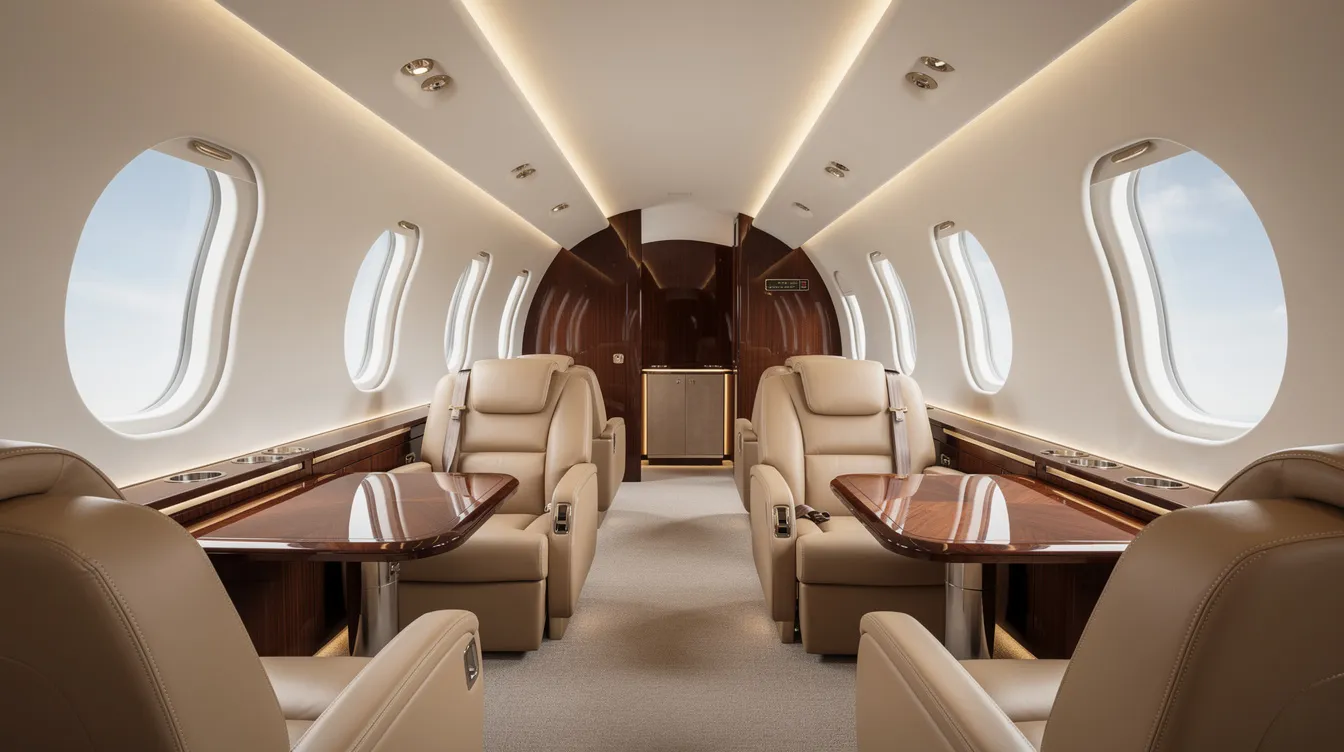
Costs are largely based on total flight hours and distance covered. Charter providers calculate estimated flight time using great-circle distance adjusted for forecast winds, air traffic routing, and potential weather deviations.
Longer flights typically require larger aircraft with higher fuel capacities, which increases the overall cost of the charter. A New York to Los Angeles trip on a heavy jet—approximately 5 hours—might run $50,000 or more at base rates. Extend that to New York to London at 7+ hours on an ultra-long-range aircraft, and you approach $100,000 before fees.
Beyond raw distance, complexity matters. Shorter flights often trigger minimum billing thresholds. Most operators have a 2-hour daily minimum charge, meaning a quick 45-minute business hop still bills at 2 hours. Multi-stop itineraries compound this effect, as each leg may carry its own minimum.
Example scenarios:
Chicago to Washington, DC (light jet, ~1.5 hours actual): Likely billed at 2-hour minimum, approximately $7,000–$11,000
Dallas multi-city tour (4 stops in one day): Each short leg might trigger 1-hour minimums, pushing total billable time well beyond actual airborne hours
Round-trip pricing is typically more cost-effective for short stays. Booking a same-day return often eliminates crew overnight fees and reduces repositioning exposure compared to one-way segments booked separately, a strategy frequently used in city-focused offerings like fractional jet ownership in Phoenix.
Complex routings also introduce short leg fees—surcharges of $1,000 to $3,000 for segments under 60 minutes—to compensate for disproportionate maintenance cycles and high-intensity operations.
For executives running recurring multi-city itineraries, a fractional program offers more predictable economics. BlackJet’s Equity Fleet, for example, provides consistent hourly rates across a defined aircraft class regardless of routing complexity.
Aircraft positioning—sometimes called “ferry flights” or “deadhead legs”—refers to flights needed to move an aircraft to or from your starting or ending airport. Positioning fees are associated with flying the aircraft to the pickup location, and these charges can add 20–50% to your total cost on remote routings.
Flying between major business aviation hubs often reduces or eliminates positioning. Airports like Teterboro (TEB) near New York, Van Nuys (VNY) near Los Angeles, Dallas Love Field, and Miami-Opa Locka maintain robust aircraft inventory, minimizing ferry distance for departing passengers, similar to how regional programs such as fractional jet ownership in Pittsburgh leverage local basing to control costs.
Concrete example: A traveler wants to fly from Santa Fe to Aspen. If the nearest available light jet is based in Dallas, the operator may charge full hourly rates for the 1.5-hour positioning leg from Dallas to Santa Fe before the revenue flight begins. Starting from Denver or Albuquerque—where more aircraft are based—could eliminate $4,000 to $8,000 in positioning charges.
Repositioning fees may apply if an aircraft must travel to a departure location. Here is how to minimize exposure:
Use flexible departure airports: If multiple regional airports work for your schedule, the broker can source aircraft already positioned nearby
Book round-trips: Returning the aircraft to its origin reduces or eliminates repositioning on your legs
Fly from hub airports: Choosing less congested airports can reduce handling fees by 15% or more, though major hubs offer better aircraft availability
Consider flexible timing: Departing a day earlier or later may align with aircraft already moving through your region
BlackJet’s nationwide Equity and Reserve fleet is designed to reduce clients’ exposure to positioning charges by basing aircraft where members actually fly, including regional hubs served by fractional jet ownership in Nashville. This strategic deployment means fewer surprise ferry fees for regular travelers.
Peak travel seasons and holidays can lead to increased demand for private jet charters, resulting in higher prices during those times. During Thanksgiving week, Christmas through New Year’s, major sporting events like the Super Bowl, and cultural moments like Art Basel Miami, charter demand spikes while aircraft supply remains fixed, particularly in leisure markets that also support fractional jet ownership in Orlando.
High-demand periods can trigger surge pricing premiums of 20–50%. A light jet that quotes $4,500 per hour in mid-October might command $5,500 to $6,500 during peak Thanksgiving travel. Availability also tightens—popular aircraft types book weeks in advance, leaving last-minute travelers with limited options or older equipment.
Slot-controlled airports amplify the challenge. Teterboro near New York, Aspen in winter, and Van Nuys near Los Angeles impose restrictions that extend crew duty days and compress scheduling windows. Operators may require longer daily minimums or add congestion surcharges during these periods.
Peak vs. off-peak considerations:
Peak periods: Thanksgiving week, December 20–January 3, Super Bowl weekend, Art Basel Miami, spring break weeks
Peak day surcharges: Often $500–$2,000 per leg at high-demand destinations
Off-peak advantages: Booking private jet charters during off-peak times can help travelers avoid higher prices associated with peak travel seasons, leading to potential savings
Flexible scheduling: Departing Tuesday or Wednesday instead of Friday or Sunday can yield meaningfully lower quotes
Many fractional programs define peak day policies upfront, giving owners greater pricing transparency even when demand spikes. BlackJet’s program structures, for instance, establish clear rules around peak-period access so members know what to expect before booking.
Understanding how private aviation segments its fleet helps travelers match aircraft to mission while managing costs. Here is how common charter aircraft are organized by category, including typical seating, range, and 2025–2026 hourly rates.
Category | Typical Seats | Range (nm) | Example Models | Approx. Hourly Rate |
|---|---|---|---|---|
Turboprop | 4–8 | 1,000–1,800 | Pilatus PC-12, King Air 350 | $2,000–$3,500 |
Very Light Jet | 4–5 | 1,000–1,500 | Embraer Phenom 100, HondaJet | $2,500–$4,000 |
Light Jet | 6–8 | 1,500–2,300 | Citation CJ3+, Phenom 300 | $3,500–$5,500 |
Midsize Jet | 7–9 | 2,200–3,500 | Learjet 75, Citation Latitude | $4,500–$7,000 |
Super Midsize | 8–10 | 3,000–4,200 | Challenger 350, Praetor 500 | $6,000–$9,000 |
Large Cabin | 10–16 | 4,000–6,000 | Gulfstream G450, Falcon 900 | $8,000–$14,000 |
Ultra-Long-Range | 12–19 | 6,000–7,800 | Gulfstream G650, Global 6500 | $12,000–$18,000+ |
Large cabin jets are designed for long-range travel, providing spacious interiors for nine to sixteen passengers, ideal for business and leisure travel. Ultra-long-range jets can carry passengers on nonstop flights over vast distances, typically accommodating ten to nineteen passengers with luxurious amenities.
These ranges represent indicative U.S. market averages. Individual quotes vary based on aircraft age, operator reputation, regional demand, and specific amenities. A newly refurbished Gulfstream G600 quotes differently than a 15-year-old Gulfstream G450, even though both fall into similar cabin size categories.
Fractional programs like BlackJet effectively turn those volatile ranges into more predictable “program rates” for owners and members. Rather than facing market-rate fluctuations each trip, fractional participants enjoy consistent hourly pricing across their ownership term, though it’s important to understand the total cost of fractional jet ownership, including acquisition, management, and operating fees, and the nuances of fractional jet ownership financing, costs, and benefits.
The base hourly rate quoted for a private charter typically covers the aircraft itself, two-pilot crew, standard insurance, and baseline fuel assumptions. BlackJet emphasizes highly trained pilots and crews dedicated to safety and service as a core part of this value. However, additional fees associated with private jet charters—collectively referred to as private jet rental costs—can include landing fees, catering, and taxes, which can increase the overall cost by 20-40% beyond the base hourly rate.
Usually included in base rate:
Aircraft and crew (two pilots minimum)
Standard liability insurance
Basic fuel at prevailing rates
Light snacks and beverages on some aircraft
Ground handling at the origin FBO
Typically itemized separately:
Airport landing fees
Ramp and handling charges
U.S. Federal Excise Tax and segment fees
Crew overnight accommodations
Deicing (seasonal)
Premium in-flight catering
Ground transportation arrangements
International permits and handling
Wi-Fi connectivity fees
Flight attendants on larger aircraft
Fuel surcharges can add 10–15% on top of the base rate due to geopolitical supply shocks. When jet fuel prices spike, operators pass through these additional costs to charter clients. Fractional programs often absorb some fuel volatility within their program rates, providing greater cost predictability.
Some jet card or membership programs bundle more of these ancillary costs into a single, predictable hourly rate—similar to how BlackJet structures Reserve and Equity fleets for owners.
Several line items appear on domestic charter invoices beyond the base hourly rate.
Airport landing fees range from $100 to $1,500 per flight, depending on the airport and aircraft size. Smaller regional airports often charge $100–$300, while major gateways like JFK, Miami International, and LAX can push $1,000–$1,500 for larger aircraft based on aircraft weight and airport authority fee schedules.
Ramp and handling fees from fixed base operators (FBOs) typically run $100 to $500 per flight. Many FBOs waive handling charges with a minimum fuel purchase, so experienced operators often plan fuel stops strategically.
U.S. Federal Excise Tax applies at 7.5% on domestic air transportation of persons. A Federal Excise Tax of 7.5% is applied to all domestic flights within the United States. This passenger tax adds meaningfully to longer, more expensive flights.
Segment fees currently run approximately $4.50 per passenger per leg, adding up on multi-stop itineraries with larger groups.
Additional fees for private jet charters can include ramp and handling fees, which range from $100 to $500 per flight, and segment fees of $4.50 per passenger per leg. Reputable brokers and aircraft operators typically incorporate these charges into fully itemized “all-in” quotes.
Charter economics shift when itineraries require aircraft and crews to remain away from base or involve very short flight segments.
Crew overnight fees add $200 to $600 per crew member per night when the aircraft must remain overnight at your destination. Crew overnight accommodation fees can add between $200 and $600 per crew member to the total charter cost. A two-night business trip with a two-pilot crew could add $800 to $2,400 in crew salaries and accommodation expenses.
Short leg fees compensate operators for high fuel burn and maintenance cycles on very brief flights. Segments under 60 minutes often bill at a 1.0 to 1.5-hour minimum, regardless of actual airborne time.
Daily minimums commonly apply for midsize jets and larger. Most operators have a 2-hour daily minimum charge, meaning a quick out-and-back business trip billing only 1.5 hours actual flight time may be billed for 2 to 3 hours, depending on operator policy.
Example scenario: An executive needs a 45-minute flight from Chicago to Detroit for a morning meeting, returning the same afternoon. Actual airborne time totals 1.5 hours round-trip. With a 2-hour daily minimum and short-leg adjustment, the invoice might reflect 3 to 4 billable hours rather than 1.5.
How to minimize these costs:
Structure round-trips rather than separate one-ways
Extend trips to justify keeping aircraft overnight vs. multiple repositions
Consolidate short hops into fewer, longer legs where possible
Review the operator's minimum policies before booking
Fractional owners often encounter more predictable minimum usage rules that can be optimized across their annual flying profile, reducing the per-trip impact of these charges.
Winter operations in colder regions—the Northeast U.S., Midwest, Canada, and Northern Europe—frequently require deicing before departure. This safety-critical process removes ice and snow from aircraft surfaces and applies protective fluid to prevent re-accumulation during taxi and takeoff.
Deicing Cost Ranges by Aircraft Size
Aircraft Size | Deicing Cost Range |
|---|---|
Light jets | $1,500–$3,500 per application |
Midsize jets | $2,500–$5,000 per application |
Super midsize/Heavy jets | $5,000–$10,000 per application |
Large cabin jets in heavy icing | Up to $15,000 or more |
Hangar fees offer an alternative to repeated deicing. Storing aircraft in a heated hangar overnight costs approximately $500 to $1,500 per night, but it can eliminate morning deicing requirements and reduce weather-related delays.
Key winter cost drivers:
Deicing fluid volume (proportional to aircraft size)
Number of deicing cycles if conditions persist
Hangar availability at smaller airports
Ground delays during active precipitation
Experienced aviation advisors help select airports and departure times that reduce weather-related expenses when possible. Flying from airports with robust deicing infrastructure and hangar capacity minimizes both cost and delay risk during winter months, a key consideration in coastal programs such as fractional jet ownership in Virginia Beach.
International flights may incur additional costs ranging from $500 to $5,000 or more, which cover landing permits, customs, and immigration fees. Cross-border operations involve regulatory requirements that domestic flights avoid.
International regulatory fees:
Overflight permits for traversing foreign airspace
Landing permits at international destinations
Customs and immigration coordination
International handling fees at foreign FBOs
Navigation charges levied by air traffic authorities
Flights entering or departing the U.S. carry per-passenger international arrival and departure assessments. Segments to Alaska and Hawaii may also trigger additional fees.
Premium service upgrades:
Bespoke catering: $250 to $2,000+ per leg depending on complexity
Chauffeured ground transportation arrangements
On-board flight attendants for larger aircraft or extended flights
Concierge services for accommodation, dining, and event access
Connectivity:
Some operators include Wi-Fi in base rates
Others charge per megabyte or per flight hour
Transoceanic routes may carry premium satellite connectivity fees
These additional services and handling requirements contribute to why international private jet travel commands a higher total charter cost relative to domestic operations of similar duration, and they are often factored into regional ownership solutions like fractional jet ownership in Portland.
The fundamental question for regular private flyers: Does on-demand charter or structured ownership make more sense?
On-demand charter suits travelers flying under approximately 25 hours annually. Pay per trip, avoid capital commitments, and accept the variability of market pricing and availability, or consider flexible floating fleet options within fractional ownership or location-specific solutions like fractional jet ownership in Austin if your usage begins to climb.
For travelers logging 25 to 150 hours per year, fractional jet ownership or structured membership often delivers superior economics and experience. Fractional Ownership involves purchasing a share of a specific aircraft and incurs high upfront costs along with monthly management fees. To get comfortable with key concepts and terminology, travelers can review a comprehensive fractional jet ownership glossary of essential terms. BlackJet Fractional Jet Ownership provides predictable hourly rates, priority aircraft availability, and potential tax advantages through its Equity Fleet and Reserve Fleet programs, all governed by detailed aircraft fractional ownership agreements that define rights and responsibilities among co-owners and incorporate essential contract terms in fractional jet ownership that investors should review carefully.
Charter vs. Fractional vs. Jet Card comparison:
Factor | On-Demand Charter | Jet Card | Fractional Ownership |
|---|---|---|---|
Upfront Capital | None | Prepaid deposit | Equity share purchase |
Hourly Rate | Market variable | Fixed program rate | Fixed program rate |
Availability | Not guaranteed | Guaranteed (terms vary) | Guaranteed access |
Peak Pricing | Surge premiums apply | Defined policies | Defined policies |
Aircraft Consistency | Varies by trip | Fleet standard | Specific share aircraft |
Tax Benefits | None | None | Depreciation potential |
Charter’s flexibility comes at the price of unpredictable costs and limited control. Fractional ownership trades some flexibility for cost certainty and operational reliability, particularly in markets supported by structured programs like fractional jet ownership in Phoenix.
On-demand charter excels for occasional travelers with irregular patterns. If you rent a private jet two or three times annually for family vacations or one-off special events, charter avoids unnecessary commitments.
Ideal charter user profiles:
Occasional leisure travelers: 2–3 family trips per year, totaling 10–15 hours
Special event attendees: One-time trips to weddings, sporting events, or destination celebrations
Exploratory users: Testing private aviation before committing to membership
Variable mission profiles: Each trip requires different aircraft types or destinations
Charter avoids upfront capital commitments, long-term contracts, and monthly management fees. You pay only for trips flown plus associated taxes and fees.
Booking a one-way aircraft trip can offer discounts of 40–75% if flying on an empty leg. Empty leg flights are discounted one-way flights that occur when a private jet is returning to its home base or repositioning for another charter, allowing travelers to save significantly on costs.
Sharing the cost of a private jet charter with fellow passengers can reduce expenses by 40-70%, making private aviation more accessible for groups traveling together.
Example economics: A traveler flying 10–15 hours annually on a light jet at $4,500 per hour pays roughly $45,000–$67,500 in annual charter costs. At this usage level, on-demand charter typically remains the most economical choice versus fractional ownership’s acquisition costs and monthly fees.
Higher-frequency travelers—executives flying 2–3 times monthly, corporate teams visiting multiple facilities, or families with regular bi-coastal patterns—often find fractional jet ownership a more cost-effective investment than accumulated charter trips, particularly in key markets such as Atlanta, where demand and aircraft availability are strong.
Fractional Ownership involves purchasing a share of a specific aircraft and incurs high upfront costs along with monthly management fees. However, these fixed costs are spread across multiple owners, resulting in lower effective hourly rates for consistent flyers; understanding the complete cost of fractional jet ownership is essential before committing, as is knowing how to sell or transfer a fractional jet ownership share if your travel needs change.
Profiles suited for fractional:
Executives with recurring weekly or bi-weekly travel
Companies needing predictable aviation budgets
Families maintaining bi-coastal or seasonal residence patterns
Travelers frustrated by inconsistent charter availability
BlackJet’s Equity Fleet allows participants to own a fractional share of a specific aircraft category, providing guaranteed access and custom aircraft sourcing. The Reserve Fleet offers pay-as-you-go hours without full ownership costs—a bridge between traditional charter and fractional ownership that maintains predictable program rates, similar to distinctions explored in fractional jet ownership vs. membership program comparisons and broader guides to top fractional jet ownership programs for smart investors.
High-frequency flyers may benefit from potential tax advantages associated with fractional jet ownership, including depreciation deductions, but should also understand essential liability and insurance coverage in fractional jet ownership to properly manage shared legal and financial risks. Individual tax circumstances vary; consult qualified advisors regarding specific benefits.
Cost comparison scenario: A 75-hour-per-year executive chartering at market rates might total $450,000 or more annually (including fees and peak surcharges). A structured fractional program with BlackJet could run $300,000 to $375,000 for comparable access—plus improved availability guarantees and fewer surprise invoices.

Not all charter quotes are structured identically. Sophisticated travelers compare more than headline hourly rates.
Key elements to verify:
Aircraft age and specifications: Year of manufacture, recent cabin refurbishments, equipment condition
Safety credentials: ARG/US, Wyvern, IS-BAO certification levels
Inclusions vs. exclusions: What the base rate covers vs. itemized separately
Positioning charges: Whether ferry flights to your departure point are included or additional
Minimums: Daily and per-leg minimum billable flight time policies
Peak surcharges: How peak-day and high-demand period pricing works
Request fully itemized “all-in” estimates showing base hourly rate multiplied by estimated billable flight hour, plus all taxes, fees, and surcharges. This prevents surprise invoices when the final cost arrives.
Clients flying 25+ hours annually should gather their past 12–24 months of charter invoices before exploring fractional options. This actual spend data provides the baseline for meaningful comparison against fractional program economics with BlackJet and local offerings such as fractional jet ownership in Seattle.
Before finalizing any private jet rental, clarify these essential points:
Pricing and billing:
Ask how billable flight time is calculated (engine-on vs. wheels-up)
Ask whether repositioning legs is charged and at what rate
Ask what the minimum daily hours apply
Ask how deicing and international handling fees are quoted
Aircraft and crew standards:
Ask the year of manufacture and the most recent cabin refurbishment
Ask about Wi-Fi availability and any connectivity charges
Ask about pilot experience requirements and training programs
Ask whether flight attendants are available or required for your aircraft type
Policies and flexibility:
Ask about cancellation and change policies
Ask how peak-period availability and pricing work
Ask about crew fees for extended ground time or multi-day trips
Ask whether empty leg opportunities might align with your routing
BlackJet serves as an advisory partner helping clients navigate these questions and, where appropriate, transition from ad-hoc charter into strategic ownership structures that better match their travel patterns, whether through national programs or city-focused options like fractional jet ownership in Austin.
Private plane charter rates in 2025–2026 span $2,000 to $18,000+ per flight hour, depending on aircraft category, with additional fees potentially increasing total charter cost by 20–40% or more. Understanding these economics—and the drivers behind rate variability—empowers travelers to make informed decisions about how they access private aviation.
For occasional flyers logging fewer than 25 hours annually, on-demand charter remains practical. The flexibility to pay per trip without long-term commitments outweighs the uncertainty of fluctuating prices for this segment.
For predictable travelers in the 25–150 hour range, fractional jet ownership or membership often delivers lower effective hourly costs, guaranteed aircraft availability, and operational consistency that pure charter cannot match. BlackJet Fractional Jet Ownership’s Equity Fleet and Reserve Fleet programs address precisely this need—transforming volatile charter economics into predictable, manageable aviation access.
Consider reviewing your last 12–24 months of charter spend. Compare actual costs against what structured ownership might offer. The analysis often reveals that the right ownership structure saves money while improving the overall private jet travel experience.
Ready to explore the smarter way to fly private? Visit FractionalJetOwnership.com to learn how fractional ownership can complement or replace your current charter strategy.
