May 1, 2026
Understanding private plane rates has never been more important for executives, entrepreneurs, and frequent travelers weighing their aviation options. Whether you’re considering your first private jet flight or evaluating a shift from commercial airlines, the 2026 market presents both opportunities and complexities worth examining.
This guide breaks down exactly what you can expect to pay across different aircraft types, usage models, and routes—complete with real-world examples and the factors that move quotes up or down. For many travelers, the convenience and flexibility to rent a private jet for various travel needs make on-demand booking an attractive choice. Chartering a private jet is often more cost-effective than owning one, especially for those flying less than 150-200 hours per year, since ownership comes with high fixed costs like maintenance, crew salaries, and insurance. In fact, private jet ownership involves not only the initial purchase price but also ongoing expenses that can exceed the purchase cost over time, making chartering a more appealing option for infrequent flyers.
Private plane rates in 2026 range roughly from $2,500 to $14,000+ per flight hour, depending on aircraft size and usage model. The cost to charter a private jet varies based on factors like aircraft size, flight distance, and specific requirements; for example, a turboprop suited for regional charter flights sits at the lower end, while an ultra-long-range jet capable of nonstop transcontinental travel commands premium pricing. The model you choose—on-demand private jet charter, jet card membership, or fractional ownership—further shapes your effective hourly cost.
Here are the current 2026 hourly rate bands across major aircraft categories:
Aircraft Category | Hourly Rate Range | Typical Use Case |
|---|---|---|
Turboprops | $2,500–$3,200 | Regional trips under 2 hours |
Light Jets | $2,900–$3,800 | 2-3 hour domestic routes |
Midsize Jets | $4,500–$6,500 | Transcontinental U.S. travel |
Super Midsize Jets | $6,000–$8,500 | Coast-to-coast with stand-up cabins |
Heavy Jets | $8,500–$11,000 | Long-haul flights, some transatlantic |
Ultra Long Range Jets | $11,000–$14,000+ | Intercontinental nonstop |
VIP Airliners | $16,000–$25,000+ | Corporate groups, government travel |
These rates typically include the entire aircraft, professional crew, standard fuel, and basic insurance. However, they often exclude taxes, deicing, in-flight catering, and aircraft positioning—line items that can add 20–40% to your total charter cost. Private jet charter costs can increase by 20-40% due to additional expenses such as airport fees, taxes, and other operational costs that are not included in the base hourly rate.
BlackJet Fractional Jet Ownership fits into this landscape by offering predictable, program-level rates rather than ad-hoc private charters with variable pricing. Through the Reserve Fleet (pay-as-you-go hours at pre-negotiated rates) and Equity Fleet (fractional ownership with guaranteed access), BlackJet provides the cost stability that frequent flyers and corporate finance teams need.
The rest of this article will compare on-demand charter costs to fractional jet ownership and membership models, with real-world route examples and 2026 U.S. and global context to help you make informed decisions.
When people search for “private plane rates,” they often assume a single number applies universally. In reality, private jet charter costs vary dramatically based on the pricing model you use. Understanding the difference between on-demand charter, jet card memberships, and fractional aircraft ownership is essential before comparing specific hourly figures.
On-Demand Charter
Pay per trip with fully variable pricing
No commitment required
Rates fluctuate based on aircraft availability, demand, seasonality, and route
Best for occasional leisure travel or testing private aviation before committing
Jet Card / Membership
Buy hours in advance or deposit funds for semi-fixed hourly rates
Typically 25–75 hours per year
Reduced exposure to last-minute price spikes
Pre-negotiated rates provide medium predictability
Fractional Ownership
Purchase an equity share (e.g., 1/16th for ~50 hours/year)
Contractual hourly and fixed monthly fees
Guaranteed aircraft availability with notice windows
Potential U.S. tax benefits for business use
Feature | On-Demand Charter | Jet Card / Membership | Fractional Ownership |
|---|---|---|---|
Typical Commitment | None | 1–3 years | 3–5 years |
Ideal Annual Hours | 0–25 | 25–75 | 50–150+ |
Rate Predictability | Low | Medium | High |
Best For | Occasional flyers | Moderate frequency | Frequent business and leisure travel |
Capital Requirement | Pay per trip | Deposit or prepaid hours | Equity investment |
BlackJet’s Reserve Fleet operates like a high-end, membership-backed charter with predictable, pre-negotiated rates—ideal for those flying 25–75 hours annually who want consistency without ownership. The Equity Fleet is a classic fractional ownership option offering priority scheduling, guaranteed availability, and potential depreciation benefits for business owners.
The sections that follow will examine actual dollar figures and direct cost drivers for each model.
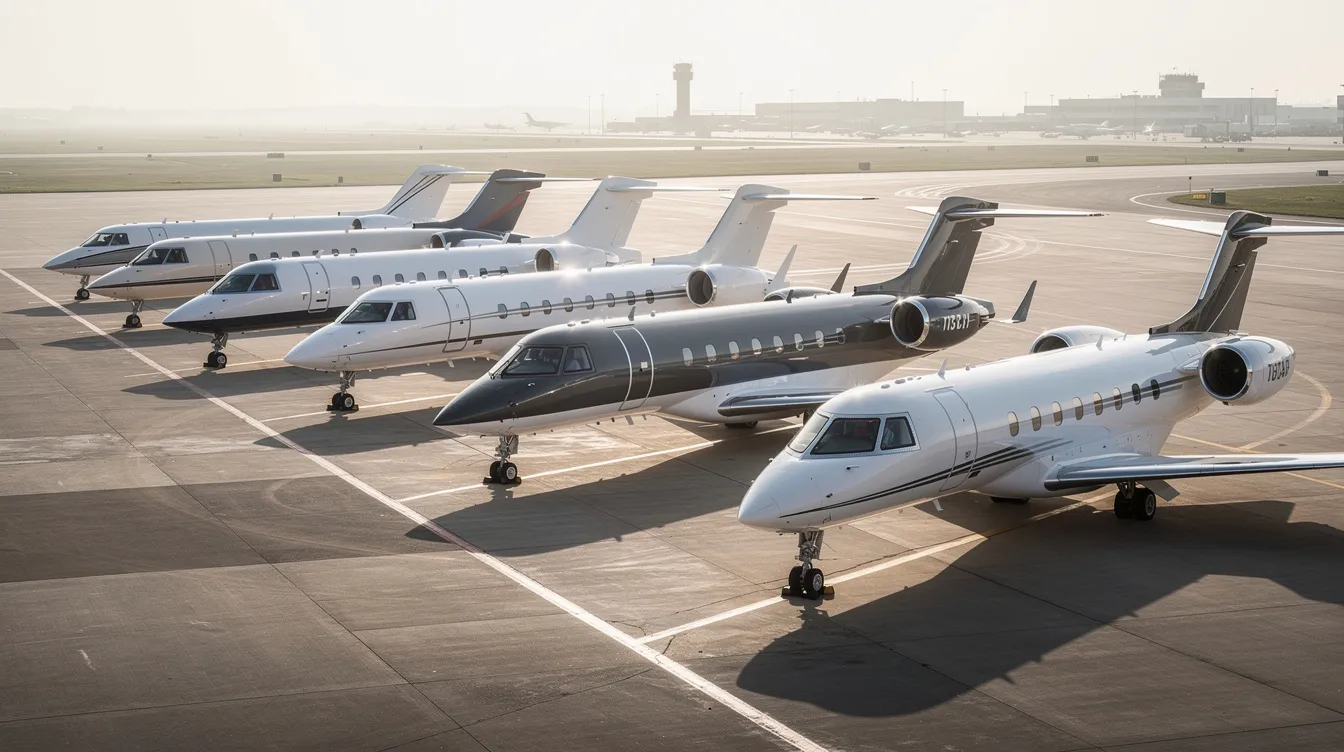
Aircraft size and maximum range are the single biggest drivers of private jet price. The 'billable flight hour' is the standardized metric used to calculate private jet rental costs, and this rate varies by aircraft category. A super light jet for shorter flights costs a fraction of what a heavy jet commands for long-haul flights. Shorter flights generally cost less than longer ones, as longer flights consume more fuel and incur higher operational costs. Turboprops are generally the most affordable aircraft category, followed by light, midsize, and heavy jets. Here’s what the 2026 U.S. market looks like across each category.
Hourly Rate: $2,500–$3,200
Turboprops offer the most affordable private aviation entry point. They’re ideal for regional charter flights under two hours, such as Dallas–Houston or Boston–Nantucket. These aircraft typically accommodate 6 to 8 passengers and have a range of approximately 1,075 to 1,845 nautical miles, providing efficient access to smaller regional airports that larger jets cannot service due to runway limitations.
Hourly Rate: $2,900–$3,800
Light jets seat 4–8 passengers comfortably for flights up to three hours. Popular routes include New York–Chicago and Los Angeles–Aspen. Very light jets are designed for 2 to 4 passengers and have a range of about 1,178 to 1,300 nautical miles, offering a cost-effective option for small groups. The improved fuel efficiency of newer models like the Phenom 300E has helped stabilize costs despite rising fuel prices.
Hourly Rate: $4,500–$6,500
A midsize jet balances cabin space with impressive range for transcontinental capability. These aircraft are frequently used for New York–Miami or Dallas–Tulum routes. Cabin space allows passengers to work comfortably during flight time.
Hourly Rate: $6,000–$8,500
Super midsize jets provide stand-up cabins and coast-to-coast U.S. capability. Routes like New York–Los Angeles become comfortable working environments. These aircraft represent the sweet spot for executives needing productivity during longer domestic flights.
Hourly Rate: $8,500–$11,000
Heavy jets serve coast-to-coast routes and some transatlantic sectors. Their larger cabin space accommodates sleeping areas and conference setups. The Challenger 650 and similar aircraft handle international flights requiring customs and immigration coordination. Large jets can accommodate 10 to 16 passengers and typically have a range of 3,000 to 4,728 nautical miles, making them ideal for longer flights with more passengers.
Hourly Rate: $11,000–$14,000+
These aircraft are essential for intercontinental private jet travel without fuel stops. New York–London, Los Angeles–Tokyo, and similar sectors require the ultra-long range capability these jets provide. Crew rest requirements and augmented crew on long duty days contribute to higher operational costs.
Hourly Rate: $16,000–$25,000+
VIP airliners serve corporate groups, sports teams, and government delegations requiring maximum cabin space. These aircraft operate more like private commercial flight configurations with significantly higher aircraft weight and operational costs.
Industry forecasts indicate a 10–15% increase in private plane rates from 2024 to 2026, driven primarily by fuel prices and operational costs. Sustainable Aviation Fuel (SAF) programs, while environmentally positive, have added modest cost pressure as aircraft operators invest in greener fuel options.
Program rates within fractional or membership models typically sit within these hourly bands but structure fees differently—distinguishing between occupied hours (when you’re aboard) and non-occupied positioning time, plus standardized fuel surcharge calculations.
Beyond aircraft type, several operational details can move a private jet charter quote up or down by 20–40% for the same route and date. Understanding these factors helps you anticipate costs and evaluate whether a quote reflects fair market pricing.
Longer routes mean more billable flight hours—the most straightforward cost driver.
Taxi time and air traffic delays can increase billable flight time beyond actual airborne hours. A 3-hour airborne sector might be billed as 3.5 hours after accounting for taxi and holds.
Shorter flights generally cost less than longer ones, as longer flights consume more fuel and incur higher operational costs.
Short legs under 60–90 minutes often trigger short leg fees or daily minimums. Most operators require a minimum booking of at least two flight hours per day. A 45-minute flight might still be billed as a minimum 2-hour day, significantly increasing your effective hourly cost.
Busy airports like JFK, LAX, and London Heathrow carry higher landing fees and fixed base operator charges than smaller executive fields.
Landing and handling fees vary by airport and are influenced by aircraft weight. A landing at Miami International might exceed $1,000 for larger jets, while a regional airport charges $200–$400.
Airport authority fees and ramp handling vary significantly. Premium FBOs at major hubs charge more for ground transportation coordination, hangar space, and concierge services.
If the plane must reposition from another location to provide private jet service, you may pay for those “empty leg” hours.
Conversely, booking empty leg flights can significantly reduce the cost of private jet travel, offering discounted one-way fares when a jet is repositioning to another destination.
Holidays, major events, and winter weekends in ski destinations drive rate spikes of 20–50%. Peak periods include:
Thanksgiving and Christmas–New Year
Super Bowl weekend
Art Basel Miami (early December)
Major golf tournaments (Masters, U.S. Open)
Davos World Economic Forum
Traveling on weekdays, particularly Tuesdays or Wednesdays, may reduce flight costs by 15–20%.
A midsize jet from New York to Miami in mid-April might run $28,000 round-trip. That same aircraft during Christmas week could exceed $45,000—same flight distance, dramatically different private jet rental prices.
One-way flights typically cost more per mile than same-day round-trips because the operator must reposition the aircraft.
Multi-day layovers add crew overnight costs of $200–$600 per crew member per night.
Final billing may include additional variable costs such as overnight crew stays, specialized catering, or extended landing fees.
Daily minimums (often 2–3 billable hours per day for jets) apply regardless of actual flight time. A quick morning hop followed by an afternoon return might be billed as two separate daily minimums rather than combined hours.
Routes like New York–London or Miami–São Paulo add layers of cost, including:
Overflight permits ($500–$2,000+)
International handling and customs coordination
Government fees and head taxes
Enhanced crew logistics for long duty days
Expect $500–$5,000+ in added charges depending on the countries involved. Eurocontrol fees, overseas handling, and higher FBO costs at European hubs (London, Paris, Zurich) add materially to transatlantic trips.
Fractional programs like BlackJet’s Equity Fleet mitigate this variability by locking in contractual hourly rates and standardizing many ancillary fees. Reserve Fleet access similarly reduces exposure to last-minute repositioning premiums and seasonal spikes.
Many charter quotes display an attractive hourly rate, but the final invoice includes additional services and fees that materially affect the total charter cost. Airport fees and surcharges are a significant component of total private jet operation costs and can impact overall pricing, as they are often added alongside other operational expenses like fuel surcharges and landing fees. Understanding these line items helps you compare quotes accurately and avoid hidden fees.
Range: $100–$1,500 per landing
High-density airports like JFK or Miami International often exceed $1,000 for larger jets.
Smaller executive fields typically charge $200–$500.
Round-trip flights incur landing fees at each destination airport.
Range: $100–$500 per stop
Fixed base operator charges cover ground services, marshaling, and basic amenities.
Some FBOs waive fees when minimum fuel is purchased—typically 100+ gallons for light jets, more for larger aircraft.
Federal Excise Tax (FET): 7.5% on most domestic charters
Segment fee: $4.50 per passenger per leg on U.S. flights
International head tax: ~$19.70 per passenger per international segment to/from the U.S.
Alaska/Hawai’i head tax: ~$9.90 per passenger for those routes
These taxes apply to most charter flight operations and add up quickly for groups and multi-leg itineraries.
Range: $200–$600 per crew member per night
Multi-day trips with overnight layovers require crew accommodations and per diem.
A two-pilot crew on a three-night trip could add $1,200–$3,600 to your invoice.
Range: $1,500–$15,000+
Deicing costs depend on aircraft size and the severity of conditions.
A light jet in light frost might cost $1,500; a heavy jet in a significant snowstorm can exceed $10,000.
Hangar fees of $500–$1,500 per day during winter help avoid deicing costs entirely.
Added when individual legs fall under 60–90 minutes or total daily hours fall below operator minimums.
Many jet operators require 2 billable flight hours per day, regardless of actual flight distance.
Range: $500–$5,000+ per trip
Permits, customs, and immigration coordination vary significantly by country.
Caribbean destinations may add $500–$1,500; transatlantic trips to Europe typically run $2,000–$4,000 in permit and handling fees.
Wi-Fi charges: $2–$9/MB on certain operators (some offer on-demand flights with unlimited Wi-Fi included)
Premium in-flight catering: $250–$2,000+ per leg
Chauffeured ground transportation: $200–$1,000+ per reservation
BlackJet’s structured programs aim to reduce these surprises by bundling many items into predictable hourly and monthly charges. For corporate finance teams budgeting 25–150 flight hours per year, this predictability transforms private aviation from a variable expense to a manageable line item.
When evaluating any quote, treat this section as an educational checklist. A “too low” hourly rate that doesn’t explicitly account for these elements likely conceals direct costs that will appear on your final invoice.
Clients often search for private plane rates by city pair—“NYC to LA private jet cost” or “how much to fly private to Aspen.” Here are realistic 2026 ballpark trip prices for common routes, assuming standard catering, no severe weather operations, and weekday travel unless noted.
Route | Aircraft Type | Flight Time | Approximate Cost |
|---|---|---|---|
New York (TEB) → Boston (BOS) | Light jet (Citation CJ3+) | 1 hour each way | $9,000–$12,000 same-day round-trip |
Los Ángeles (VNY) → Aspen (ASE) | Super light jet (Phenom 300E) | 2.5 hours each way | $18,000–$24,000 round-trip (peak ski season add 30%+) |
New York (TEB) → Miami (OPF) | Midsize jet (Citation XLS+) | 3.5 hours each way | $25,000–$35,000 round-trip over 3 days |
Dallas (DAL) → Napa (APC) | Super midsize (Challenger 3500) | 4 hours each way | $40,000–$55,000 long weekend |
New York (TEB) → Los Angeles (VNY) | Heavy jet (Gulfstream G450) | 5.5 hours each way | $60,000–$85,000 round-trip |
New York (TEB) → London (Farnborough) | Ultra long range (Global 6500) | 7 hours each way | $80,000–$120,000+ round-trip |
New York–Boston:
4 passengers
Standard catering
No repositioning
Weekday departure
LA–Aspen:
Winter season pricing
Expect 20–40% higher during Christmas week
New York–Miami:
3-day trip with crew overnight
Weekend rates are 15–25% higher
New York–London:
International permits, handling, and customs included
Eurocontrol fees add $1,500–$2,500
When flying private through BlackJet’s Equity Fleet, similar trips benefit from predetermined occupied hourly rates and standardized international surcharges. The route costs become predictable components of your annual aviation budget rather than variable surprises.
A BlackJet Reserve Fleet member can use one program to cover both domestic and international flights without shopping multiple aircraft operators for each route. This eliminates the time spent requesting quotes, comparing inclusions, and negotiating—a more efficient alternative for executives managing complex travel schedules.
Fractional aircraft ownership and structured membership programs exist specifically to convert volatile trip-by-trip charter rates into predictable, contracted hourly pricing. Resources comparing fractional jet ownership vs membership programs can help clarify which model best aligns with your flying habits and budget. For frequent flyers, this shift transforms private aviation from a speculative expense to a manageable budget line.
When you buy a fractional share, you purchase equity in a specific aircraft—typically in increments like 1/16th, 1/8th, or 1/4th of the aircraft. Each share corresponds to a contracted number of flight hours per year, and understanding structures like 1/8th fractional jet ownership clarifies how share size translates into annual access:
1/16th share: ~50 hours/year
1/8th share: ~100 hours/year
1/4th share: ~200 hours/year
A dedicated fractional jet ownership glossary can be helpful if you’re new to concepts like share size, occupied hours, and management fees.
Initial Acquisition Cost: Your equity investment in the aircraft. This creates an ownership position that may qualify for depreciation and bonus depreciation under current U.S. tax law (consult a tax advisor for your specific situation and review dedicated guidance on tax implications for fractional jet owners).
Monthly Management Fees: Cover crew salaries, hangar fees, insurance, scheduled maintenance, and administrative overhead. These fees remain consistent regardless of how much you fly that month and are a key component when calculating the total cost of fractional jet ownership.
Occupied Hourly Rate: Billed only when you or your guests are aboard. This rate is typically contracted for multiple years, providing insulation from market volatility and fuel surcharge fluctuations and forming a major part of the overall cost of fractional jet ownership.
A U.S. business purchasing a 1/16th share in a super midsize jet in 2026 might commit to ~50 hours/year at an occupied hourly rate comparable to—or lower than—ad-hoc charter. The occupied hourly rate locks in predictability, while the equity position creates potential tax benefits through depreciation deductions, especially when paired with thoughtful fractional jet ownership financing.
Equity Fleet (Fractional Ownership)
Priority access to a specific class of aircraft
Guaranteed availability with 24–72 hour notice windows
Custom aircraft sourcing for specific configuration preferences
Potential U.S. tax benefits tied to business use and aircraft depreciation
Multi-year rate protection reduces exposure to fuel prices and market volatility
BlackJet’s fractional jet ownership programs are built around this Equity Fleet structure to deliver predictable, program-level pricing.
Reserve Fleet (Membership / Shared-Use)
Pay-as-you-go hours at pre-negotiated hourly rates
No equity purchase required
Ideal for those flying 25–75 hours/year
Predictability without long-term ownership commitments
Access to vetted aircraft operators and consistent service standards
Travelers can compare BlackJet’s private aviation programs—including Reserve Fleet, Equity Fleet, and lease options—to align cost structure with their expected flight hours.
Seasonal charter spikes (30–50% during holidays)
Repositioning surcharges (empty leg hours billed to you)
Uncapped daily minimums (surprise 3-hour minimum days)
Last-minute aircraft substitutions at higher rates due to aircraft availability issues
Hidden fees appear after the flight
Entrepreneurs with multi-city operations: Predictable costs across varied route patterns support business planning, especially when you evaluate the best fractional jet ownership programs against your expected network of cities.
Family offices: Fractional ownership provides asset ownership benefits while outsourcing operational complexity, typically structured through a detailed aircraft fractional ownership contract.
Regional executives: Frequent short-haul travel benefits from guaranteed availability and consistent crew logistics, supported by programs that prioritize highly qualified private jet pilots and crews.
Mid-market corporations: Finance teams gain the predictability needed for annual budgeting when total private jet cost becomes a known variable.
The “break-even” point between chartering a private jet, using a jet card, and fractional ownership depends on three factors: annual flight hours, consistency of usage, and your need for guaranteed availability.
Under ~25 Hours/Year
An on-demand charter or an entry-level membership typically proves most economical.
The overhead of ownership or fractional programs (fixed fees, management charges) outweighs per-hour savings at this volume.
Consider empty leg flights when your schedule allows flexibility.
Sharing the cost of a private jet charter among multiple passengers can lead to savings of 40-70%, making private aviation more accessible for groups, while some travelers may also explore floating fleet fractional ownership options for added flexibility without full ownership.
25–75 Hours/Year
Structured membership or Reserve Fleet-style programs become attractive, including regional offerings like fractional jet ownership in Orlando for Southeast-based travelers.
In practice, many clients evaluate city-specific solutions such as fractional jet ownership in Atlanta when most trips originate from a single metro area.
For some, that may include niche options like owning a fractional share of a TBM 850 turboprop through specialized programs that blend efficiency with lower operating costs.
75+ Hours/Year
Fractional ownership or Equity Fleet programs typically offer the best value and convenience.
Guaranteed aircraft access and priority scheduling support frequent, time-sensitive travel.
Ownership benefits such as equity, potential tax advantages, and personalized aircraft configurations become more compelling.
Corporate flight departments often prefer fractional ownership for budgeting and operational control.
The primary factors include aircraft size and type, flight duration and distance, airport fees, taxes, repositioning costs, and peak demand periods. Additional services like catering and ground transportation also affect the total price.
Charter costs are pay-per-use with variable pricing, ideal for infrequent flyers. Fractional ownership involves upfront equity investment plus fixed fees but provides guaranteed availability and potentially lower hourly rates for frequent flyers.
Yes, fees such as landing charges, crew overnight expenses, deicing, and federal excise taxes can add 20–40% to the base hourly rate. Transparent programs like BlackJet’s fractional ownership help mitigate unexpected costs.
Absolutely. Empty leg flights occur when jets reposition without passengers and offer significant discounts, sometimes up to 75% off standard charter rates, though they require flexibility in scheduling.
Most operators require a minimum of two billable flight hours per day, even if your actual flight is shorter, which can impact effective hourly costs.
Understanding private plane rates in 2026 requires a comprehensive look at aircraft categories, pricing models, and operational variables. Whether choosing on-demand charter for occasional travel or fractional ownership for frequent flights, aligning your usage patterns with the right program is key to maximizing value and convenience.
BlackJet Fractional Jet Ownership offers tailored solutions that bring predictability and efficiency to private aviation, helping clients avoid the surprises common in ad-hoc charters. With options spanning Reserve Fleet memberships to Equity Fleet ownership, travelers can select a model that fits their flying frequency and budget while enjoying the privacy, flexibility, and time savings private jets uniquely provide.
Ready to explore the smarter way to fly private? Visit FractionalJetOwnership.com to learn how fractional ownership can transform your travel experience.
