
May 23, 2026
In 2026, private plane search has become an essential step for executives, business owners, and discerning travelers seeking efficient, flexible, and personalized air travel. With advancements in digital platforms and expanding aircraft networks, finding the right private jet no longer requires prolonged negotiations or guesswork. Instead, travelers can quickly compare options by route, aircraft type, mission profile, and cost, ensuring that each flight aligns perfectly with their needs.
Private aviation offers significant advantages over commercial air travel, including access to over 5,000 airports worldwide, reduced travel time by 2-3 hours per trip, and the ability to avoid crowded terminals and rigid schedules. Whether considering on-demand charter, jet card programs, or fractional ownership, understanding how to conduct a smart private plane search empowers travelers to optimize their journeys for convenience, comfort, and cost-efficiency.
This guide explores the evolving landscape of private plane search, detailing how to choose the right aircraft, interpret search results, and select the best access model for your travel habits. By leveraging BlackJet Fractional Jet Ownership’s expertise and technology, travelers can transform their private aviation experience into a seamless, transparent, and sustainable solution tailored to their unique lifestyle and business demands, supported by a clear understanding of essential fractional jet ownership terminology.
A smart private plane search is no longer just about finding the lowest quote; it is about matching route, timing, aircraft type, passenger needs, and long-term access model.
Private jet travel can save travelers 2-3 hours of net time per trip by accessing over 5,000 airports, allowing for more direct routes and avoiding typical aviation delays associated with commercial flights.
Frequent flyers using 25–150 flight hours per year often gain better cost efficiency, priority access, and planning control through fractional ownership, Reserve Fleet access, or structured membership programs.
This guide explains how to search by route, aircraft type, and mission profile, and how private jet categories affect comfort, range, baggage capacity, and private jet cost.
Readers seeking a tailored strategy can contact BlackJet Fractional Jet Ownership through FractionalJetOwnership.com for a personalized private aviation analysis.
Private aviation demand remains strong in 2026. The 2026 AIN FBO Survey reported nearly 3.9 million private jet departures globally in the most recent year surveyed, with fractional demand helping drive overall flight volume. For executives and family offices, the appeal is practical: private jets can use smaller regional airports to avoid congestion associated with major commercial hubs.
Travelers using private jets can often arrive at the airport just 15-30 minutes before departure, significantly reducing the time spent in security lines and crowded terminals compared to commercial flights. That means travelers can avoid crowded terminals, long security lines, hub connections, and fixed routes that rarely match real business schedules.
Private jets provide the flexibility to fly to a wider range of destinations, including smaller airports that are not serviced by commercial airlines, enhancing overall travel convenience. Private aviation also allows tailored schedules and direct nonstop options, which can lead to increased productivity and a more comfortable journey for travelers.
Digital private plane search has evolved quickly. Online charter aggregators and brokers can be used to compare live inventory and pricing for private plane options. Private plane search has evolved to utilize real-time digital platforms that allow travelers to quickly compare availability, aircraft types, and estimated pricing, significantly reducing the time required for booking.
The challenge is that more data does not always mean better decisions. A one-time private flight search may return dozens of private planes, aircraft operators, and charter flights, but it may not explain runway limits, crew duty rules, weather risk, repositioning charges, or whether the same trip would be better served through fractional jet ownership, which is typically governed by detailed aircraft fractional ownership contracts.
BlackJet Fractional Jet Ownership helps clients move beyond random private jet charter searches. Instead of treating every private flight as a new negotiation, BlackJet builds a structured private aviation plan using Reserve Fleet access, Equity Fleet ownership, and data from actual flight history.
Every effective private plane search starts with three inputs:
Route: Departure and arrival cities, preferred airports, and alternate airports.
Timing flexibility: Exact departure times, date windows, peak-day needs, and overnight stays.
Mission profile: Passenger count, luggage, pets, equipment, privacy needs, and trip purpose.
The process of searching for private planes can be done by entering details such as departure and arrival airports, dates, passenger count, and special requirements into a digital platform, which then returns a filtered set of aircraft options. Those flight details may include aircraft category, estimated charter costs, cabin size, maximum range, and availability.
Typical search filters include turboprop, light jets, midsize jets, super midsize, heavy jet, ultra long range, and VIP airliner. High-quality advisors also consider runway length, elevation, weather, fuel stops, customs, crew rest, and ground transportation.
For example, a search for New York Teterboro (TEB) to Dallas Love Field (DAL), 6 passengers, 3 nights, and full-size luggage may show multiple aircraft options. A light jet may be less expensive but tight on range and baggage. Midsize jets or super midsize business jets may provide the right aircraft for comfort, nonstop capability, and better schedule reliability.
Most travelers begin with a city pair and date. From there, they refine by aircraft type, cabin class, price, and availability.
Consider Los Angeles Van Nuys (VNY) to Aspen (ASE) for 4–6 passengers on a winter weekend. Aspen’s elevation and runway environment can rule out some aircraft categories, especially when weather, runway contamination, passenger load, and luggage are part of the mission. Certain midsize jets may face payload or performance limits, while larger jets or selected super midsize aircraft may offer better operating margins.
Indicative 2026 U.S. route ranges may look like this, though they are not guaranteed quotes:
Route | Common Aircraft Category | Indicative Charter Estimate |
|---|---|---|
NYC → Miami | Light or midsize jet | ~$20,000–$40,000 one way |
Chicago → Vail | Midsize or super midsize | ~$25,000–$45,000 |
Dallas → Napa | Super midsize or heavy jet | ~$30,000–$60,000 |
Route-based private plane search should not stop at the headline number. It is important to ask for a fully transparent quote from charter providers to avoid unexpected charges. Repositioning, de-icing, peak-day premiums, landing fees, crew overnight expenses, and taxes can materially change the final price.
BlackJet advisors refine route searches to reduce surprises. For frequent flyers, this may mean moving repeat routes into Reserve Fleet or Equity Fleet planning rather than sourcing every trip through ad hoc charter flights.
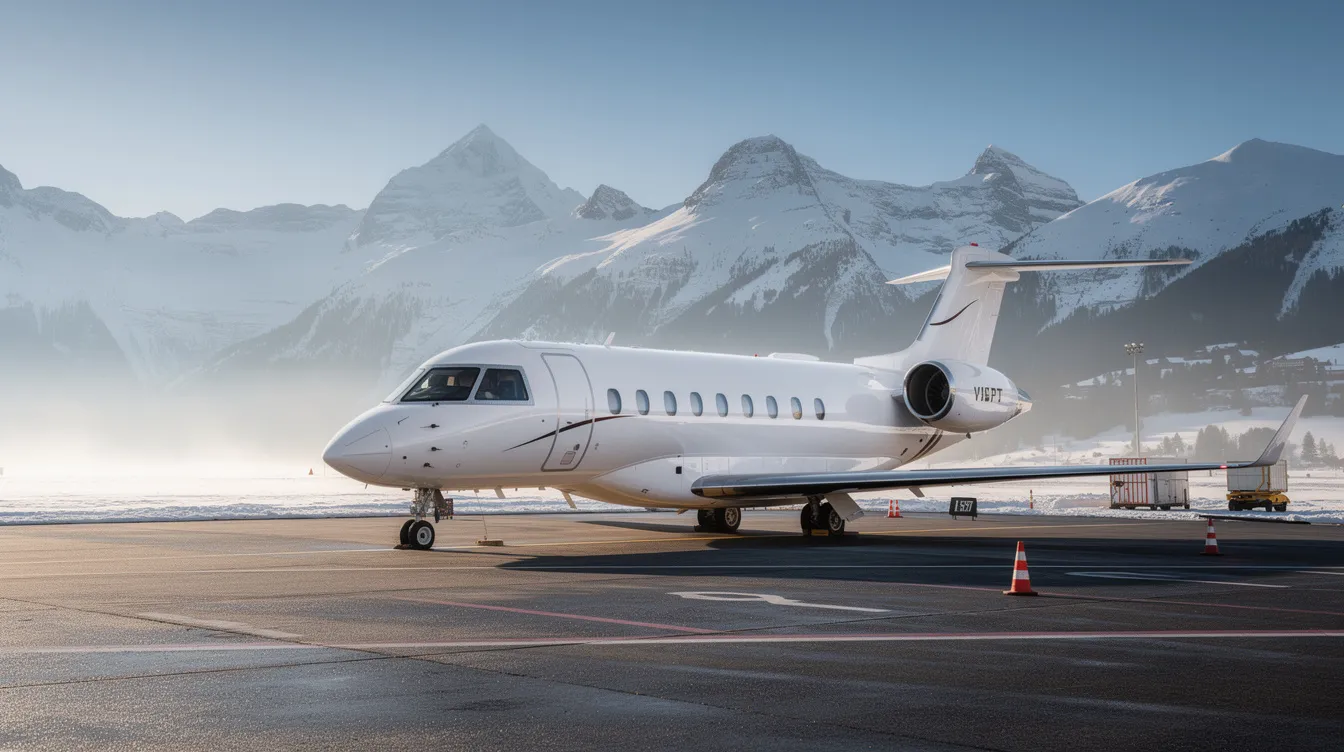
Some travelers search by specific aircraft or cabin class because they already know what works for their needs. A corporate team may prefer a Challenger 3500, Praetor 500, Gulfstream G450, or Global 6500 because of cabin familiarity, luggage space, Wi-Fi, or passenger comfort.
Aircraft-type search helps compare:
Range in nautical miles
Cruise speed
Cabin height and width
Baggage capacity
Runway performance
Cabin features such as lie-flat seats
Aircraft types, such as very light jets versus heavy cabin jets, determine the capacities for passengers and luggage. Private jets have varying non-stop flying ranges that can affect destination accessibility without refueling stops.
For shorter hops, turboprops like the Pilatus PC-12 can be ideal. For 2–3-hour trips, a Citation CJ4 or Phenom 300 may be more efficient. For intercontinental trips, ultra-long-range aircraft such as the Global 6500 are designed for nonstop global travel.
BlackJet’s Equity Fleet and Reserve Fleet can be tailored around preferred aircraft types. This is especially valuable for corporations standardizing travel policies across business and leisure travel, corporate travel, and executive mobility.
Mission-based search starts with a better question: What does this trip need to achieve? The best answer may not be the cheapest jet or the largest aircraft.
Common missions include:
Executive roadshows across 3 cities in 2 days
Family vacations with pets, skis, golf clubs, or family members
Urgent same-day client meetings
Transatlantic board meetings
Leisure trips to seasonal airports with limited airline service
A New York–London board meeting may justify an ultra-long-range jet with lie-flat seating, high-speed connectivity, and crew support. A regional U.S. multi-stop itinerary may be better served by a turboprop or light jet that can land close to each meeting.
This approach helps BlackJet recommend fractional aircraft ownership, Reserve Fleet access, or on-demand charter based on yearly flight hours and route patterns. For frequent flyers, mission-based planning usually produces the best balance of cost, time efficiency, and comfort, and often raises questions about fractional jet ownership as an investment.
Private jet categories help simplify comparisons among thousands of individual aircraft types. These jets are classified based on size, range, and passenger capacity into groups such as light jets, midsize jets, heavy jets, and ultra-long-range jets.
Each category affects passenger capacity, range, luggage, runway access, hourly rates, and total trip cost. In private jet categories, the aircraft type matters as much as the hourly number.
BlackJet fractional ownership programs can be structured by cabin class, matching members to the category that aligns with most annual trips. This avoids overbuying larger jets when most flights are short, or underbuying when international range is essential, and should be evaluated alongside a full view of the total cost of fractional jet ownership.
Turboprop aircraft are typically used for shorter flights and can seat between 6 and 10 passengers, offering a cost-effective option for regional travel. Aircraft such as the Pilatus PC-12 and King Air 350 are useful for smaller airports, short runways, and regional business aviation.
Light jets generally accommodate 4 to 8 passengers and are best suited for short to medium-range flights. They are common for medium-range flights, day trips, quick weekend getaways, and last-minute meetings where airport access and competitive pricing matter more than cabin size.
For members flying 25–50 hours per year on shorter routes, Reserve Fleet access to turboprops and light jets may be more economical than a jet card built around larger aircraft. This can also reduce waste when the mission does not require a stand-up cabin or long-range performance, and it’s worth comparing these options using a framework like fractional jet ownership vs membership programs.
Midsize jets typically accommodate 6 to 9 passengers and offer a range of about 2,000 to 3,500 nautical miles.Examples include the Citation XLS+ and Learjet 60, which provide more cabin space and baggage room than light jets.
Super midsize jets such as the Praetor 500 and Challenger 3500 add more range, stand-up cabins, improved amenities, and stronger nonstop capability. Routes such as New York–Denver or Chicago–San Jose often fit this category well.
For executives flying 50–150 hours per year, midsize and super midsize aircraft categories often deliver the strongest mix of comfort, range, and cost efficiency. That makes them popular targets for BlackJet Equity Fleet shares, where understanding the total cost of fractional jet ownership becomes critical for budgeting and program selection.
Heavy jets accommodate 10 to 19 passengers and are engineered for long-distance travel, often surpassing 4,000 nautical miles, making them ideal for intercontinental journeys. These jets typically feature spacious cabins, enclosed lavatories, galleys, and lie-flat seating.
Ultra-long-range jets can fly distances exceeding 6,000 nautical miles and are capable of carrying larger groups, making them well-suited for global travel. In everyday private plane search, ultra-long range aircraft and long-range jets are typically considered for New York–London, Los Angeles–Tokyo, the Middle East, or Asia-Pacific missions.
VIP-configured airliners, including Airbus ACJ, Boeing BBJ, or regional ATR 42-500 style charters, support groups, sports teams, roadshows, and shared flights requiring 20+ seats. BlackJet helps determine whether an occasional on-demand charter or a fractional share in a large-cabin aircraft is more cost-effective for global needs.
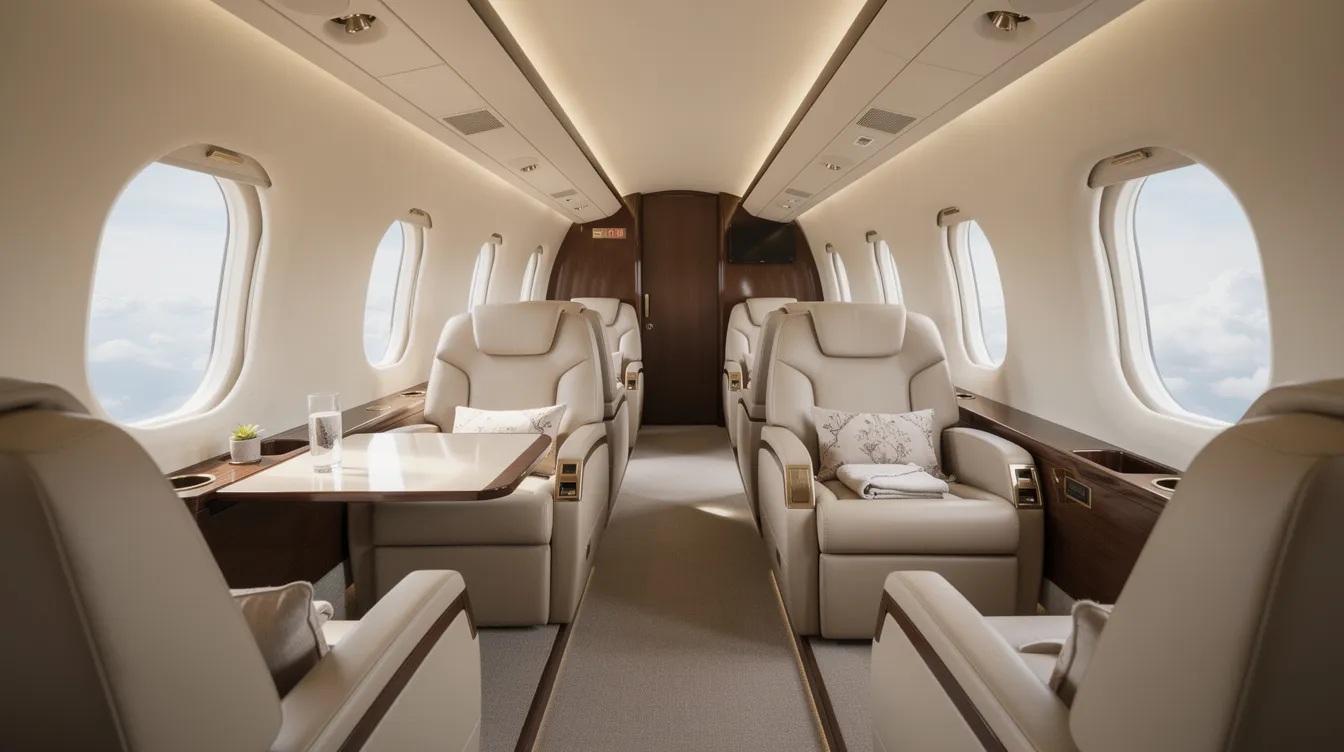
Private plane search solves the immediate question of “what can fly this trip?” The larger question is “what access model should support the next 12–60 months of travel?” For some owners, this may include evaluating floating fleet options in fractional ownership to maximize flexibility across aircraft types and regions.
The three main models are (alongside leading market offerings covered in guides to the best fractional jet ownership programs):
On-demand private jet charter
Jet card programs and membership programs
Fractional aircraft ownership through an Equity Fleet model
BlackJet Fractional Jet Ownership offers Reserve Fleet access for flexible, no-ownership flying and Equity Fleet access for clients who want ownership-level priority, tax planning opportunities for fractional jet owners, and professional aircraft management.
On-demand charter works best for occasional flyers using roughly 5–20 hours per year. It allows travelers to choose aircraft types trip by trip without long-term commitments.
The benefits are flexibility, broad aircraft options, and the chance to use empty leg flights. Empty leg flights offer significant discounts, often 50-90% off standard charter prices, by allowing travelers to book entire jets that would otherwise fly empty, but they do not address the essential contract terms in fractional jet ownership that become important as usage grows.
The drawbacks are variable pricing, limited guaranteed availability, and repeated booking work. Prices for renting a private jet can start at around $1,100 per hour, depending on flight length, aircraft size, and market rates, with typical costs ranging from $2,000 to over $18,000 per hour.
Charter costs vary significantly, influenced by factors such as flight duration, aircraft category, seasonal demand, and additional charges including taxes and landing fees. The pricing model for private jet charters combines fixed expenses like crew salaries and maintenance with variable costs that depend on the number of flight hours.
For business travelers moving above 25–30 annual hours, repeated private jet charter services can become less predictable than structured private charter programs or fractional ownership, and over time some owners may eventually evaluate selling a fractional jet ownership share as their travel patterns or capital plans change.
Jet card programs provide prepaid access to aircraft at fixed hourly rates, often by category such as light, midsize, super midsize, or heavy. Jet cards provide guaranteed access to private jets at fixed hourly rates, allowing users to book flights without the complexities of ownership.
Typically requiring a minimum deposit of $50,000 to $150,000 for 10-25 hours, jet cards offer predictable pricing and flexibility for frequent flyers. Jet card programs often include benefits such as guaranteed availability during peak periods and reduced administrative burdens compared to traditional charter services, but unlike fractional programs, they typically do not involve shared ownership structures with dedicated liability coverage in fractional jet arrangements.
BlackJet’s Reserve-style access offers similar predictability while avoiding full ownership overhead and management complexity. For executives flying 25–75 hours per year in the United States and key global hubs, this can be a practical middle ground.
Fractional aircraft ownership means purchasing a share, such as 1/16th or 1/8, in a specific aircraft category or program. The share translates into defined annual flight hours, priority scheduling, and access to professional management.
The benefits include ownership-level control, potential U.S. tax advantages where applicable, predictable access, and less administrative burden than full private jet ownership, while fractional jet ownership financing options can help align capital outlay with expected usage.
In 2026, private plane search is more than just finding a flight—it’s about crafting a personalized travel strategy that maximizes efficiency, flexibility, and comfort. BlackJet Fractional Jet Ownership empowers executives, business owners, and frequent travelers to access a curated fleet of private jets with transparent pricing, rigorous safety standards, and sustainable options. Whether you choose on-demand charter, a jet card program, or fractional ownership, BlackJet’s expert guidance and innovative technology simplify the booking process and ensure seamless journeys tailored to your unique needs.
By leveraging BlackJet’s Reserve and Equity Fleet models, travelers gain direct access to a broad range of aircraft types, flexible routing options, and priority scheduling, transforming how private aviation supports business and leisure travel. With access to thousands of airports worldwide and real-time flight tracking, your travel becomes more predictable, productive, and enjoyable.
Ready to explore the smarter way to fly private? Visit FractionalJetOwnership.com to learn how fractional ownership can transform your travel experience and unlock the full potential of private aviation.
