March 6, 2026
Las Vegas remains one of the busiest private aviation destinations in the United States. From high-stakes business meetings and major conventions to championship fights and headline residencies, the demand for private jet flights to Las Vegas continues to grow each year.
Known as the entertainment capital of the world and consistently ranked among the most visited cities, Las Vegas attracts private jet travelers seeking world-class shows, vibrant nightlife, and luxury experiences.
But what does a private plane to Vegas cost? The answer depends on aircraft type, routing, seasonality, airport fees, and whether the flight is booked as a charter, jet card, or ownership arrangement. This guide explains private jet cost considerations clearly, compares options, and outlines how to evaluate the smartest way to fly to Las Vegas.
Typical one-way charter pricing depends on aircraft category, route, and repositioning needs. Hourly rates translate into round-trip totals and vary more by aircraft size than by operator.
For short regional routes, a turboprop or light jet may suffice. For longer nonstop flights from Texas or the East Coast, midsize, super-midsize, or heavy jets are often required.
Private aviation pricing is largely determined by:
Aircraft hourly rate
Flight time
Positioning requirements
Airport and FBO fees
Seasonal demand
Base rates for chartering a private jet often exclude fuel surcharges and landing fees, which typically range from $150 to $500. Additionally, a statutory 7.5% Federal Excise Tax applies to all domestic U.S. charter flights and should be factored into the total cost.
Flights around peak events such as CES, championship fights, or Formula 1 races command higher prices, making early booking essential during these periods to secure availability and better rates.
Understanding these components helps estimate the real private jet cost before requesting a quote.
Aircraft category remains the largest driver of any private jet charter price. Each step up in cabin size, speed, and range increases hourly operating costs, which typically range from $2,000 to $14,000+ per billable flight hour.
Turboprops often start around $2,000–$3,000 per flight hour, making them ideal for short regional hops under two hours. They are cost-effective for smaller groups traveling from Southern California or nearby Western states.
They typically seat 4–8 passengers and operate from shorter runways, increasing airport flexibility.
For very short routes like Los Angeles to Las Vegas, turboprop or light jet costs can be as low as $2,500 to $4,810 one-way.
Light jets commonly range $3,500–$6,000 per flight hour. They balance speed and economy and are frequently used for routes like Los Angeles to Las Vegas or Phoenix to Las Vegas.
Cabins usually seat 4–7 passengers and offer limited baggage capacity.
Smaller light jets for groups of 6–7 passengers typically cost between $2,500 and $4,000 per hour.
Midsize and super-mids typically cost $5,500–$9,000 per flight hour, reflecting greater range, cabin height, and baggage space. These aircraft are common for routes from Denver, Dallas, Houston, or Chicago.
They often seat 6–10 passengers comfortably.
Heavy jets and large jets, as well as VIP-configured airliners, generally start at $8,000–$15,000+ per hour. Heavy jets for larger groups (10–16 passengers) range from $8,500 to $13,000+ per hour. Long-range jets or VIP airliners can cost $10,000 an hour or more for charter flights to Las Vegas. These aircraft offer transcontinental range, full standing cabins, and flight attendants.
They typically accommodate 8–16+ passengers and are preferred for large executive teams or international arrivals.
While exact pricing fluctuates based on demand and aircraft availability, these examples reflect common ranges in the U.S. private aviation market.
A one-way light jet from Los Angeles to Las Vegas typically starts around $4,900–$7,000, depending on aircraft model and seasonal demand. The cost of chartering a private jet from Los Angeles to Las Vegas starts at around $4,900 for a very light jet.
Flight time averages about one hour, but repositioning can affect total cost.
Short-haul flights from Los Angeles to Las Vegas cost approximately $2,500 to $9,000 using turboprop or light jets.
A one-way light jet from Denver to Las Vegas often runs $9,000–$15,000. High-altitude performance requirements and longer flight time influence pricing.
The cost of a private jet flight from Denver to Las Vegas can range from $9,060 for a turboprop to $28,700 for a heavy jet.
Empty-leg opportunities occasionally reduce this route’s cost.
A midsize jet one-way from Houston to Las Vegas commonly falls between $20,000–$40,000, depending on aircraft selection and demand windows.
Longer stage lengths significantly increase hourly cost impact.
Cross-country flights from New York to Las Vegas can exceed $15,000 to $33,700, depending on aircraft type and availability.
Generally, renting a private plane to Las Vegas costs between $2,500 and $25,000+ for a one-way trip, depending on aircraft and route.
Several factors directly influence the cost of a private plane to Vegas.
This remains the largest cost driver. Larger cabins require more fuel, higher maintenance reserves, and larger crews.
Popular aircraft for private charters to Las Vegas include the Cessna Citation series and Bombardier Learjets, which cover a range of light to midsize jets.
If the aircraft must travel empty (deadhead) to pick up passengers, positioning fees can add thousands to the total trip cost.
Landing charges, ramp fees, and handling costs vary across airports. During peak events, Las Vegas airport fees increase substantially.
Harry Reid International (LAS) is the main gateway to Las Vegas, but it may have higher landing and handling fees.
Alternate airports such as Henderson Executive Airport (HND), dedicated to general aviation and located 10 miles south of the Strip, and North Las Vegas Airport (VGT), located 6 miles from downtown, offer competitive fees and less congestion.
Boulder City Municipal Airport (BLD) is another option with lower fees but farther from the Strip.
Events such as CES, championship fights, Formula 1 races, and New Year’s Eve significantly elevate charter pricing due to limited aircraft availability.
Crew overnight accommodations, per diem, and minimum duty requirements—including adequate crew time for rest and recovery—may add fixed costs to multi-day itineraries.
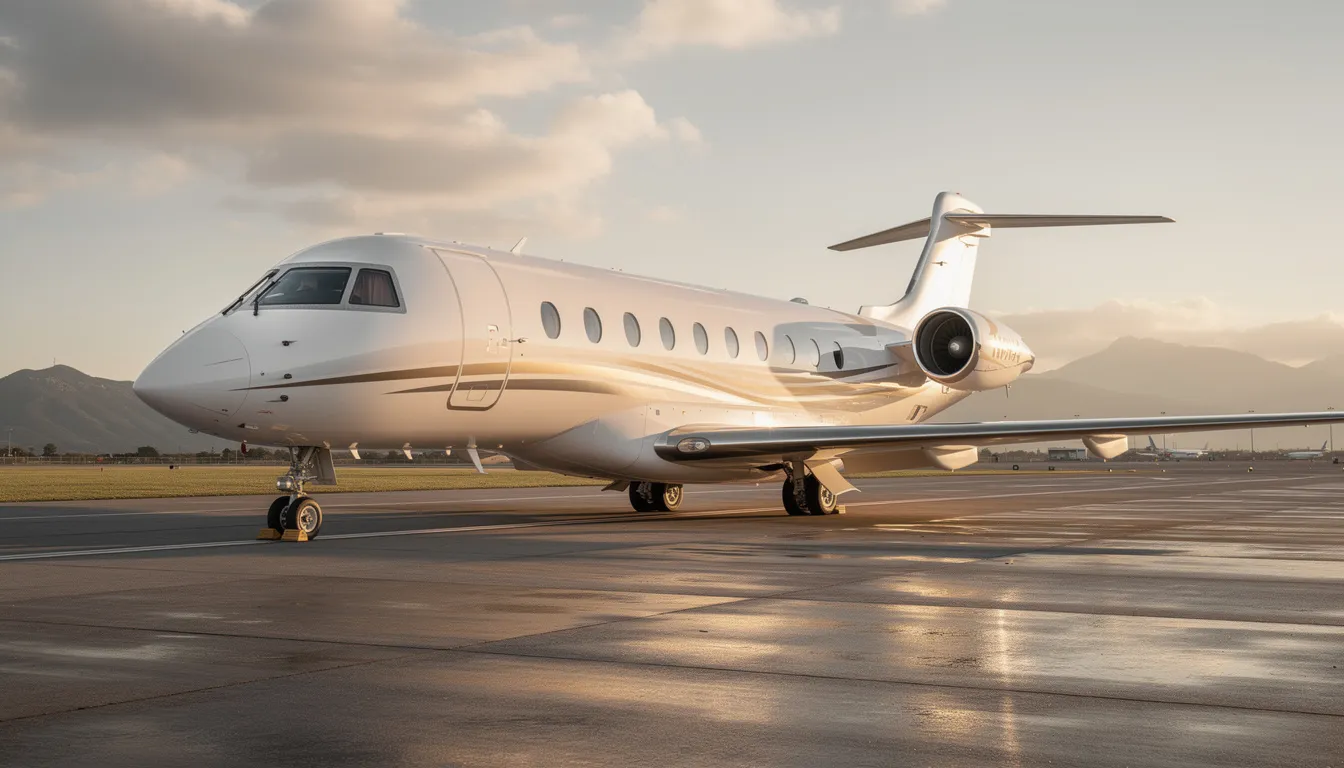
Selecting the correct aircraft category helps avoid unnecessary upgrades or baggage overage fees. The choice of aircraft for chartering to Las Vegas depends on the number of passengers and the desired travel experience, and a charter broker can help recommend the most suitable aircraft based on your needs. Additionally, aircraft age is also a consideration, as it can impact maintenance, comfort, and performance, even though age alone is not a safety risk.
4–7 passengers
Limited baggage
Best for short-haul routes
6–9 passengers
Greater luggage capacity
Suitable for longer nonstop legs
8–16+ passengers
Larger baggage holds
Full cabin amenities and flight attendants
Matching passenger count and luggage needs to aircraft capacity prevents unnecessary cost escalation.
Different private aviation models produce very different cost structures.
When you charter a private jet, you can choose from a range of private charter options tailored to your needs, whether for business or leisure. Jet charters offer flexible booking, luxury amenities, and the convenience of private travel, making them an attractive alternative to jet cards or full ownership. These services allow travelers to enjoy personalized, on-demand flights to destinations like Las Vegas, with the added benefits of privacy, comfort, and customized scheduling.
Charter flights are booked per trip with no long-term commitment. They are ideal for occasional flyers who value flexibility but may experience price variability.
Jet card programs offer fixed hourly rates and guaranteed availability. They often reduce Las Vegas cost volatility, particularly during peak periods.
Fractional jet ownership spreads acquisition and fixed costs among multiple owners. Participants purchase a share of an aircraft and commit to a set number of annual flight hours.
This model offers predictable pricing, consistent aircraft access, and operational efficiency without full ownership responsibilities. Travelers considering this option should understand the complete cost of fractional jet ownership, including acquisition expenses, management fees, and hourly operating rates.
Full ownership includes aircraft purchase, crew salaries, maintenance, insurance, hangar, and management costs. It typically becomes economical only for flyers exceeding 200–300 annual flight hours.
Private jets can be chartered from various airports near Las Vegas, including the following airports: McCarran International Airport (now Harry Reid International), Henderson Executive Airport, North Las Vegas Airport, and Boulder City Municipal Airport.
Closest to the Strip. Multiple full-service FBOs, including Signature Flight Support and Atlantic Aviation. McCarran International Airport is the most convenient airport for private jet arrivals and departures in Las Vegas. Higher landing, parking, and ramp fees during peak events.
Popular among private jet travelers. Lower congestion and typically faster ground processing. Often more privacy-focused.
Convenient access to downtown and competitive FBO handling rates. Strong option for general aviation traffic.
Farther from the Strip, but often lower fees and quicker ramp access for certain operators.
Selecting an alternate airport can meaningfully reduce overall trip cost.
Private jet clients can often have luxury ground transportation arranged upon arrival in Las Vegas, including limo services that may drive them right up to their private jet, or even allow clients to drive their own car to the plane.
Private jet services can also arrange helicopter lifts in Las Vegas for added convenience and time savings.
Private aviation allows customization, but additional services increase the total cost.
In-flight Wi-Fi is common and increasingly available free of charge on U.S. domestic flights.
Spacious cabins provide exceptional comfort and luxury, offering generous interior space for a relaxing and high-end travel experience.
Gourmet catering and premium beverages can add several hundred to several thousand dollars; custom gourmet meals can add $600 to $2,000 per leg for in-flight catering.
Ground transportation, helicopter transfers, and security services add post-landing expenses.
You can bring pets on private jet flights, but policies, requirements, and potential fees vary by operator.
Special requests such as pet transport, medical equipment, or oversized sports gear may carry fees.
When it comes to private jet charter flights to Las Vegas, safety and security are always at the forefront. Reputable private jet charter companies understand that passengers expect not only luxury and convenience, but also the highest standards of safety and peace of mind throughout their journey.
Choosing a trusted charter broker or operator is essential. Leading private jet charter providers work exclusively with air carriers that meet or exceed rigorous industry standards, such as FAR Part 135 or 121 certifications. These regulations ensure that every private jet flight is operated by highly trained crew members and maintained to the strictest safety protocols. Whether you’re flying on a light jet, a very light jet, or a larger aircraft, you can be confident that your flight is in the hands of experienced professionals.
One of the key advantages of flying privately is the enhanced security and privacy offered by private jet airports and terminals. Instead of navigating crowded commercial airlines and lengthy security lines, passengers enjoy access to private terminals (FBOs) at airports like Harry Reid International Airport, Henderson Executive Airport, North Las Vegas Airport, and Boulder City Municipal Airport. These facilities provide discreet, streamlined check-in and personalized screening, allowing you to board your aircraft quickly and comfortably.
Private jet airports in Las Vegas are designed with the traveler’s experience in mind. From secure ground transportation to attentive ground handling and in-flight catering, every detail is managed to ensure a seamless journey. Crew members undergo continuous training and adhere to strict safety procedures, while aircraft are subject to regular maintenance and inspections to guarantee airworthiness.
Selecting the right aircraft for your charter flight is another important aspect of safety and comfort. Private jet rental prices in Las Vegas can vary depending on the type of aircraft, flight duration, and the number of passengers flying. Whether you choose a nimble light jet for a quick hop or a spacious heavy jet for a larger group, your charter broker will recommend the right aircraft to match your needs and ensure a safe, enjoyable flight.
Several strategies help reduce private jet costs.
Book empty-leg flights when timing is flexible. Savings may range from 25–75%. If you are getting quotes significantly lower than standard rates, ask if you are being offered an empty leg flight.
Travel midweek and avoid major Las Vegas event windows.
Split a larger cabin among multiple passengers.
Use alternate airports like Henderson Executive or North Las Vegas when appropriate.
Consider a jet card or fractional aircraft ownership for predictable pricing over time.
Booking a private jet in advance can help secure the best schedule and pricing for your journey.
Many operators can arrange a private jet flight with as little as 4–6 hours’ notice under normal conditions.
However, peak weekends and large conventions require booking weeks or months in advance. Jet card members and repeat clients typically receive faster confirmations and reduced repositioning exposure.
Federal regulations require minimum crew rest periods. Scheduling must comply with duty and rest rules.
Baggage allowances vary by aircraft type. Heavy jets allow significantly more checked luggage than light jets.
Certain events may require coordinated arrival slots and parking approvals.
Domestic U.S. flights have no currency limits. International arrivals must clear customs at approved facilities. When flying internationally by private jet, you may also need to follow specific procedures, such as obtaining landing and takeoff slots at foreign airports.
When requesting a private jet charter or evaluating fractional jet ownership options, operators will typically ask for:
Exact passenger count
Departure airport
Preferred dates and time windows
Cabin amenities and catering needs
Wi-Fi requirements
Special baggage or pet requests
One-way, round-trip, or multi-leg routing
Flexibility for empty-leg opportunities
Many operators and charter companies offer pricing estimators that can provide quotes based on your specific destination and preferred aircraft type. During the quoting process, operators strive to offer competitive rates and deliver a high-quality private jet service, ensuring transparency and value for your travel needs.
Providing complete details allows operators to minimize repositioning costs and structure the most efficient itinerary.
The cost of a private plane to Vegas varies widely depending on aircraft selection, route length, airport fees, and booking timing. For occasional travel, charter flights provide flexibility. For consistent access with predictable pricing, jet cards or fractional jet ownership often offer stronger long-term value.
Las Vegas is among the most visited cities for private jet travelers, and Las Vegas private jet services offer unparalleled convenience for both business and leisure. Private flights and private travel provide access to exclusive experiences and attractions such as Wynn Las Vegas, Las Vegas Motor Speedway, and the scenic Mojave Desert. Leading operators have expertise in arranging private flights to visited cities and tailoring each journey to client preferences, ensuring a premium, personalized experience.
As demand for private aviation across the United States continues to rise, understanding these cost drivers ensures smarter decision-making and greater travel efficiency.
Ready to explore the smarter way to fly private? Visit https://www.fractionaljetownership.com/ to learn how fractional ownership and structured private aviation solutions can transform your Las Vegas travel experience.
