
August 9, 2026
Semi private flights have carved out a distinct niche in air travel, filling the gap between crowded commercial terminals and the six-figure costs of chartering an entire aircraft. For travelers who value their time but aren't ready to commit to full private jet ownership, semi private jet flights offer a practical middle path: per-seat pricing, private terminal access, and a cabin shared with only a handful of other passengers.
Semi private flights offer many comforts of private aviation, including private terminals, fewer passengers, fast boarding, and spacious seating, at per-seat pricing that often falls between business class and full charter rates.
Routes like Los Angeles to Las Vegas and New York to Miami are core semi private corridors in the United States, with flight time as short as one hour on West Coast hops.
Semi private sits between private charter (full aircraft control) and commercial flights (lowest cost) on the spectrum of air travel. Fractional jet ownership occupies a higher tier, providing guaranteed access and long-term economics.
Frequent travelers logging 25 to 150 hours per year often graduate from semi private to fractional jet ownership for predictable scheduling, tax benefits, and full privacy.
Definition and Core Features
Semi-private flights bridge commercial airlines and full private jet charters. They allow travelers to book individual seats on shared jets, rather than chartering the entire aircraft. Typically, semi-private flights accommodate 4 to 15 passengers, offering a more exclusive and comfortable experience than commercial airlines, but at a lower cost than full private jet charters.
How Semi Private Flights Operate
Flying semi private means purchasing your own seat on a smaller aircraft, typically seating 4 to 30 passengers, that can utilize private terminals rather than main commercial concourses. Semi private flights bridge commercial airlines and full private jet charters by combining per-seat tickets and fixed routes with private aviation perks like short check-in times and quieter cabins.
Semi private flights operate as a scheduled service with fixed schedules and routes similar to commercial flights, but the experience on board and on the ground diverges sharply. Passengers can book individual seats, and the aircraft types range from 8-seat Pilatus PC-12 turboprops to 30-seat Embraer ERJ-135 regional jets configured with business-class-style layouts. Semi private flights typically use light jets and turboprops, accommodating 4 to 15 passengers on most operators, though some carriers fly up to 30-seat configurations.
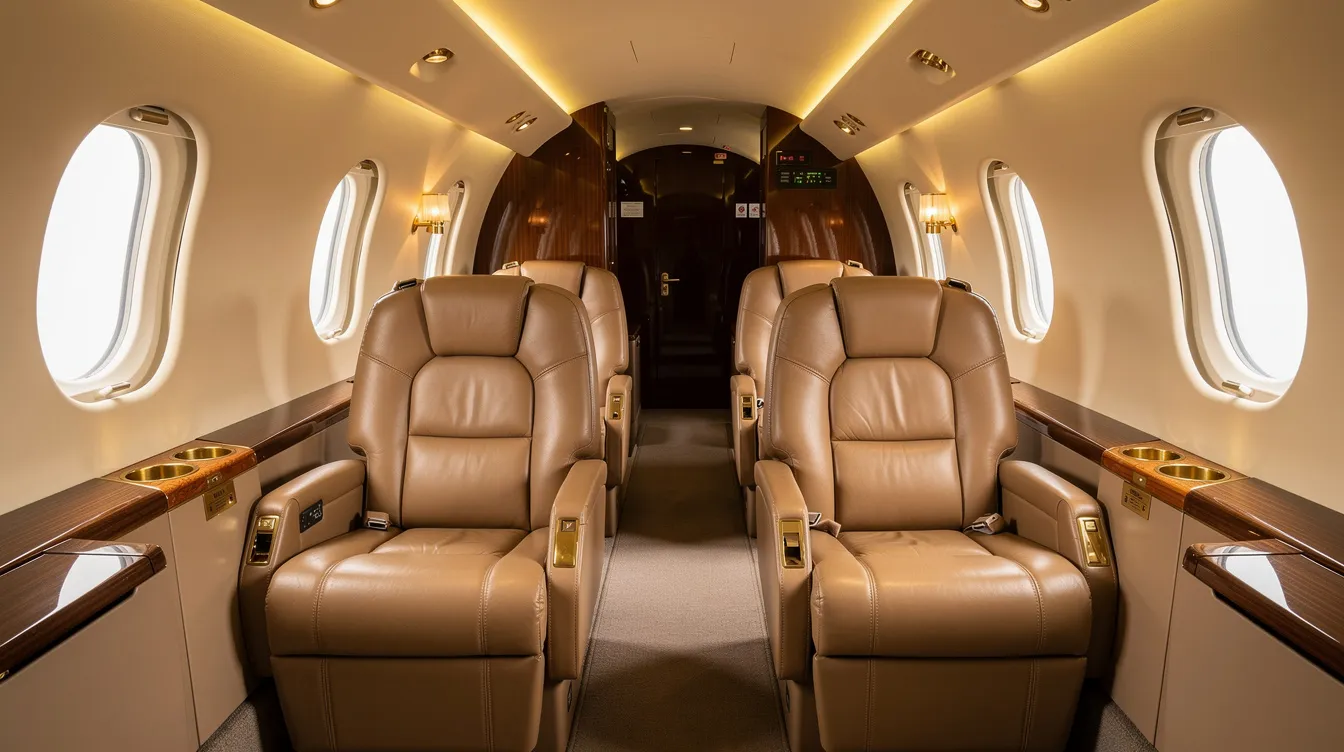
Light jets are designed for short hops and seat 4 to 7 passengers comfortably. Midsize jets can accommodate up to 9 passengers, super midsize jets seat up to 10, and large jets carry a maximum of 14 passengers. These smaller aircraft provide a more spacious and comfortable cabin experience compared to commercial airlines, with amenities similar to private jets, including leather seating, wi-fi, and personalized service.
This model differs from a full private charter, where you book the entire aircraft and control the departure time and route. It also differs from fractional aircraft ownership, where you purchase a share of a specific aircraft and receive a guaranteed number of flight hours per year, a model defined by specific fractional jet ownership terms and concepts. Semi private is the entry point: accessible per-seat pricing with many of the tangible benefits of a private flight experience.
After 2020, more travelers began seeking alternatives to crowded airline terminals and unpredictable delays. Semi private airlines emerged as a practical solution: arrive 20 to 30 minutes before departure, skip long security lines, and board directly from a private lounge.
Security screenings for semi-private flights are fast and non-invasive, often conducted at smaller, less crowded airports with simpler procedures. The result is a private experience without chartering a whole plane.
Semi private flights offer a more spacious and comfortable cabin experience than commercial economy or even premium economy. Fewer passengers result in more legroom and comfort, and onboard amenities often include complimentary drinks, snacks, wi-fi on many routes, and leather seating.
JSX, one of the most visible semi private carriers, reports a Net Promoter Score above 85 across millions of passengers, suggesting that satisfaction runs high.
This model has also served as a "trial run" of the private flight experience. Many travelers sample semi private travel on a leisure route, then begin asking whether fractional ownership or charter makes sense for their regular business travel. For BlackJet Fractional Jet Ownership, this pipeline of newly interested private aviation consumers represents a growing audience.
The gap between semi private and commercial air travel is most obvious at the terminal. Semi private operators depart from private fixed-base operators (FBOs) instead of crowded commercial terminals, and passengers utilize private terminals to skip much of the airport congestion.
This means:
No gate-to-gate walks
No overhead bin battles
No jet bridges
Smaller airports have shorter wait times for takeoff, further speeding travel. Access to these smaller airports also saves time on ground transportation, as they are often closer to city centers than major commercial hubs.
Check-in times illustrate the difference clearly: passengers can arrive just 30 minutes before departure for a semi private flight, compared to the 60 to 90 minutes recommended for commercial flights. Onboard, the seat pitch and width are closer to business or first class than economy, and the crew-to-passenger ratio is far higher, enabling attentive service throughout the flight.
Semi private flights offer more flexible scheduling options than commercial airlines, though the route networks are narrower.
Example: Los Angeles to Las Vegas
Semi private: 1 hour flight, depart from Van Nuys or a dedicated terminal, arrive 30 minutes before departure
Commercial: Arrive at least 90 minutes early, navigate TSA, walk to the gate, often deal with delays
The door-to-door time savings on a semi private flight can reach 2 hours or more on a round trip, even before factoring in ground transportation time saved by using smaller airports closer to city centers.
Pricing often ranges from first class pricing levels down to premium economy, depending on the route and operator, but the experience is closer to private jet travel than anything a commercial airline offers.
Semi private, private charter, and fractional aircraft ownership sit on a spectrum of control, privacy, and cost. Each serves a different usage pattern, and the high cost of full private charter is one reason semi private appeals to occasional travelers.
Semi Private Flights:
Per-seat pricing model across fixed or limited routes
Less control over schedule and specific aircraft
Excellent for occasional trips and leisure hopping (e.g., weekends to Las Vegas or seasonal flights to Aspen)
Prices start as low as $39 per seat on select routes, typically ranging from $209 to $1,800 one way
Los Angeles to Las Vegas semi-private flights cost between $500 and $1,200 per seat
Private Charter:
Book the entire aircraft
Complete control over departure times, routes, and often the preferred aircraft type
Costs between $1,300 and $3,000 per hour
Light jet charter from Los Angeles to Las Vegas: $4,500 to $7,000 one way
Midsize jets: $7,500 to $12,000
Fractional Jet Ownership:
Buy a share (e.g., 1/16 or 1/8) for a set number of hours per year
Priority access and custom aircraft sourcing
Predictable hourly rates and potential tax advantages in the United States
Best suited for 25 to 150 hours of flying annually
For infrequent leisure trips, semi private delivers strong value. For executives and companies with regular, recurring travel needs, fractional ownership offers better long-term economics and guaranteed availability that semi private schedules cannot match.
Semi private routes concentrate on high-demand leisure and business corridors where commercial service is frequent but airport friction is high.
West Coast:
Los Angeles to Las Vegas is the flagship corridor
Other routes: LA to Aspen, San Diego to Las Vegas, and routes into Southern California from neighboring states
Many operators depart from secondary airports like Van Nuys near Los Angeles or Henderson Executive Airport and North Las Vegas Airport near Las Vegas
East Coast:
New York to Miami and New York to Palm Beach are staples
Operators often use Westchester County Airport near New York to avoid the congestion of JFK or LaGuardia
Certain semi private flights access exclusive airports not served by commercial airlines, providing travelers a faster path to destinations like Martha's Vineyard or Caribbean destinations during peak seasons
Europe:
London to Paris is a popular semi private route, but the bulk of the industry's growth remains in U.S. domestic corridors
Smaller airports consistently have shorter wait times for takeoff, compounding the time savings from faster check-ins.
The booking process for semi private flights is straightforward:
Search available flights on a provider's platform
Select a route and date
Pay for your seat
Blade allows booking semi private flights via app or website, while other operators use dedicated booking portals. Most providers display pre scheduled flights on core routes as a scheduled service with set departure times, and passengers choose from that set schedule. It is also possible to buy all remaining seats to simulate a private flight for your group.
Booking details typically include clear information about luggage restrictions, arrival times at the private terminal, and cancellation rules. Baggage policies for semi-private flights are typically more relaxed than commercial airlines, often including no checked bag fees on many operators, but weight and size caps per passenger apply.
Travelers should:
Review limits on the number of checked and carry-on bags
Pre-declare oversized items like golf clubs or skis well before departure
On the day of travel, the process is simple:
Drive to the FBO or dedicated lounge to utilize private terminals for faster boarding and less crowding
Present identification
Pass through a brief security check
Semi private flights operate from private fixed-base operators, so there are no connecting flights to worry about, no long terminal walks, and no overhead-bin scrambles.
Passengers arrive 15 to 30 minutes before departure for semi private flights, spend a few minutes in a small lounge with complimentary refreshments, and then board directly from the apron or a short walk to the aircraft. The entire curb-to-seat process at a well-run FBO takes a fraction of the time required at a commercial terminal.
Semi private flights also allow pets on board, enhancing convenience for travelers who would otherwise face restrictive pet policies on commercial airlines.

Semi private pricing bridges the gap between premium commercial seats and private charter. Semi private flights can start around $39 per seat on select short routes during off-peak windows, though more typical prices for semi private flights range from $209 to $1,800 one way depending on route length, demand, and operator.
JSX flights start at $209 for one-way trips on shorter routes. Booking a semi private flight can be more affordable than business class on certain corridors while helping travelers avoid the high cost of booking an entire private jet.
Ticket prices usually include:
A set luggage allowance
Standard snacks and drinks
Wi fi on many aircraft
Additional fees may apply for changes, overweight bags, or peak-day surcharges. Each operator sets its own policies, so reviewing fare rules before purchase is essential.
How does annual cost compare across models?
A traveler taking four to six semi private round trip flights per year might spend $5,000 to $15,000 depending on routes
Regular private chartering on recurring routes could cost $50,000 to $100,000 or more annually
A fractional ownership share for someone flying 25 to 150 hours per year involves capital, monthly management fees, and hourly operating costs, and may be financed through dedicated fractional jet ownership financing options, but delivers guaranteed access, full privacy, and potential tax benefits that semi private cannot
The key question is annual flight hours and route patterns. Semi private is a cost effective option for occasional leisure and low-frequency business travel. Once usage stabilizes and exceeds 25 hours per year, fractional aircraft ownership typically delivers better per-hour economics with more flexible scheduling options and no dependency on seat availability.
Semi private travel fits certain trip profiles better than others. The following types of travelers benefit most from semi private flights:
Leisure groups heading to destinations like Las Vegas, Aspen, or Miami for weekends and events
Entrepreneurs and executives who occasionally travel between major hubs but don't yet fly private 25 or more hours per year
Families looking for a calmer, crowd-free alternative to peak-season commercial flights
First-time private aviation users exploring private travel
Frequent travelers who value membership programs offering perks like volume discounts and priority booking
Semi private is not ideal for:
Very remote destinations beyond semi private networks
Highly irregular schedules that demand last minute flights from any city
Flyers seeking ownership-level tax advantages and full control over aircraft selection
For those travelers, fractional jet ownership as a cost-effective alternative to full aircraft ownership or on-demand charter is the appropriate solution.
Frequent semi private flyers often reach a tipping point. Once someone is booking semi private several times per quarter, the total annual spend and time constraints begin to argue for a model with guaranteed access and more control; that is where fractional ownership steps in.
Semi private and fractional programs are complementary rather than mutually exclusive. A well-designed private aviation strategy can incorporate both.
BlackJet offers two primary models, including structures similar to floating fleet options in fractional ownership. The Reserve Fleet provides pay-as-you-go access with guaranteed availability and no ownership stake, suitable for variable usage. The Equity Fleet provides fractional ownership shares with potential tax benefits, higher priority access, and long-term asset participation, and can be structured in sizes such as 1/8 fractional jet ownership with around 100 hours per year. Companies manage scheduling and aircraft operations in fractional ownership plans, so the owner's role is limited to choosing when and where to fly private.
Example Use Case:
A corporate traveler might use fractional ownership for core business routes requiring firm schedules and guaranteed aircraft
The same traveler could use semi private flights for occasional personal trips to popular leisure destinations like Las Vegas or Miami
This blended approach captures the cost benefits of semi private for leisure while maintaining the control and privacy of fractional ownership for business.
The advantages of fractional ownership over relying solely on semi private are concrete:
Predictable hourly rates independent of seat demand
Full privacy with no other passengers you don't know
More flexible scheduling options than fixed semi private schedules
Travelers currently using semi private several times a quarter should evaluate whether transitioning part of that flying to a fractional ownership program could reduce effective cost per hour while improving control.
Semi private operators in the United States must comply with FAA standards that apply broadly across commercial and private aviation. Many semi private carriers operate under Part 135 charter rules, which require rigorous maintenance standards, management structure, pilot training, and operations manuals. Aircraft with 10 or more passenger seats under Part 135 must maintain continuous airworthiness maintenance programs.
Beyond regulatory compliance, independent safety credentials like ARGUS ratings (Gold, Platinum), Wyvern Wingman designation, and IS-BAO certification provide access to additional vetting layers. The accident rate for Part 135 operators averaged about 1.04 accidents per 100,000 flight hours in 2022; operators with higher safety ratings tend to show lower incident histories.
Small passenger loads enable more individualized attention and better service, but the onboard experience is structured compared to fully bespoke fractional or charter flights. BlackJet's broader position is that safety vetting, operator selection, and aircraft management are central benefits of working with a professional private aviation advisor rather than assembling options independently.
Semi private travel is simple but benefits from a bit of planning.
Tips for a Smooth Experience:
Book early for peak weekends, such as major events in Las Vegas or ski season to Aspen
Review luggage policies weeks in advance to avoid surprises at the terminal, especially for oversized sporting equipment
Arrive 20 to 30 minutes before departure to enjoy the lounge and ensure smooth boarding
Review booking policies by airline before purchasing tickets
Business travelers synchronizing semi private segments with meetings should build in modest buffers. Semi private operates as a scheduled service, but with fewer departures than commercial airlines, so a missed flight may mean waiting hours for the next available flights. Semi private flights offer access to smaller, less crowded airports, which helps reduce the total travel day, but frequency remains a constraint.
Track your annual semi private spend and hours flown. Once patterns stabilize around 25 to 150 hours per year, evaluate switching part of that flying to a fractional aircraft ownership solution. BlackJet Fractional Jet Ownership can help design a blended strategy: fractional ownership for core routes, charter for irregular trips, and semi private for opportunistic leisure flying, while also guiding you through essential contract terms in fractional ownership agreements.

Semi private flights are a strong entry point into private aviation, offering many private flight advantages on key routes like Los Angeles to Las Vegas and New York to Miami. For a more affordable alternative to chartering an entire aircraft, the per-seat model delivers genuine time savings and a better service level than commercial flights.
For travelers or companies flying regularly, semi private is just one tool. Fractional jet ownership and structured membership programs deliver better control, availability, and potential tax benefits for those logging consistent hours. Reviewing your recent travel plans, including number of trips, typical party size, key routes, tolerance for fixed schedules, and privacy requirements, is the first step in determining the right model.
Ready to explore the smarter way to fly private? Visit FractionalJetOwnership.com to request a consultation on how BlackJet Fractional Jet Ownership can complement or upgrade your current semi private flying.
For routes with congested airports, such as those serving New York, Los Angeles, and Las Vegas, semi private often saves 1 to 2 hours per trip by shortening check-in and security time. For travelers who value time, privacy, and a calmer environment, the incremental cost over a commercial ticket is justified on business-critical trips or high-pressure weekends. For very price-sensitive trips, commercial flights remain cheaper, especially when booked far in advance. The exclusive experience and time recaptured are the primary reasons many travelers choose semi private over commercial.
Most semi private operators do not participate in traditional airline frequent flyer programs used by major commercial carriers. Some semi private or private aviation providers offer their own credits, memberships, or volume discounts instead of miles. Surf Air, for example, offers subscription-based membership pricing with discounted seat access. Confirm loyalty options directly with your chosen provider and weigh overall value, including time saved and flexible scheduling options, beyond points alone.
Booking windows vary by operator and route. Peak routes like Los Angeles to Las Vegas on event weekends or New York to Miami during holidays often sell out days or weeks ahead because semi private operates as a scheduled service. Book as soon as travel plans are firm for peak dates. Some midweek or off-peak flights may have seat availability closer to departure. Travelers requiring guaranteed access on specific dates and times should consider fractional ownership or charter as a more reliable solution than depending on available flights.
Semi private networks are strongest on domestic and near-international routes, such as U.S. to Mexico or Caribbean destinations, with clear demand patterns. For intercontinental routes, full private charter or fractional ownership remains the primary solution due to aircraft range requirements and customs and immigration logistics. Travelers planning frequent international private aviation should discuss long-range needs with a fractional advisor like BlackJet to determine the right aircraft type and access model.
Each semi private operator sets its own change and cancellation rules, which often grow stricter as departure approaches or on high-demand dates. Review fare rules carefully before purchase and consider flexible options where available, especially for business travel prone to last-minute shifts. Structured private aviation solutions like fractional ownership or jet membership programs offer more predictable change policies and priority rebooking when schedules shift, which is one reason frequent travelers often migrate from semi private to ownership-based models.
Semi private flights provide a compelling alternative for travelers seeking the balance between the affordability of commercial airlines and the exclusivity of private jets. With advantages like shorter check-in times, access to smaller airports, enhanced privacy, and per-seat pricing, semi private flights deliver a premium travel experience without the full commitment or cost of private jet ownership.
For occasional leisure trips or business travel on popular routes such as Los Angeles to Las Vegas or New York to Miami, semi private offers significant time savings and comfort. However, for frequent flyers or those requiring greater flexibility and control, fractional jet ownership remains the superior long-term solution, especially when you understand how to sell a fractional jet ownership share if your needs change.
Ultimately, semi private flights open the door to private aviation for a broader audience, making private jet benefits more accessible and practical, and paving the way toward structured arrangements built on an aircraft fractional ownership sample contract. Travelers interested in exploring this smarter middle ground can benefit from consulting with experts at BlackJet Fractional Jet Ownership to tailor the best private aviation strategy to their unique needs.
Ready to elevate your travel experience? Visit FractionalJetOwnership.com to learn how fractional ownership and semi private flights can transform the way you fly.
