
May 1, 2026
In 2024, major airlines reported delay spikes exceeding 25%, leaving business travelers stranded in terminals across the United States. For executives whose time carries significant value, these disruptions represent more than inconvenience—they translate directly into lost productivity and missed opportunities. Private aviation offers a fundamentally different experience: predictable departures, direct routing, and schedules that adapt to you rather than the reverse, delivering the true advantage of a private flight—exclusivity, flexibility, and efficiency.
This guide is designed for business executives, family offices, and corporate travel managers considering private aviation solutions.
Shared aircraft ownership, also called fractional aircraft ownership, provides a practical middle path between chartering flights ad hoc and purchasing an entire jet. In this model, multiple owners purchase undivided interests in a single aircraft, sharing both costs and guaranteed access to flight hours. The advantage of shared aircraft ownership lies in its ability to offer premium amenities, cost efficiencies, and predictable access compared to traditional airline services or full ownership. BlackJet Fractional Jet Ownership specializes in these arrangements, serving both individuals and corporations through its Equity Fleet and Reserve Fleet programs. For those with regional or remote travel needs, smaller planes within these fleets provide the versatility to access airports that larger jets cannot, making them ideal for short or less accessible routes.
We will cover how shared aircraft ownership works, compare it to other private aviation models, outline costs, discuss operational and tax considerations, and help you determine if this approach fits your travel needs.
Consider a CEO averaging 80-120 flight hours annually between headquarters and regional facilities. Full ownership might require $10-15 million upfront plus $2-3 million in annual operating costs. A fractional share delivers the same reliability at a fraction of the capital outlay—without managing pilots, maintenance, or hangar logistics. This guide explains how shared ownership works, what it costs, key tax considerations, and when it makes more sense than charter or whole aircraft ownership.
The structure is straightforward: each owner purchases an undivided interest in a specific aircraft—typically 1/16, 1/8, or 1/4—based on an 800 occupied-hours-per-year model for the plane, with a 1/8 fractional ownership share commonly translating to about 100 hours of annual use. Most formal programs use a Limited Liability Company (LLC) to hold the aircraft title, protecting individual owners from the liabilities of others, but participants should still understand essential liability and insurance coverage in fractional jet ownership.
Share Size | Approximate Annual Hours |
|---|---|
1/16 | 50 hours |
1/8 | 100 hours |
1/4 | 200 hours |
The management company—in this case, BlackJet—handles everything a traditional flight department would: crew scheduling, aircraft maintenance, hangar arrangements, insurance, and regulatory compliance, relying on rigorously vetted
Fractional owners don’t need their own professional pilots or operations staff. The management fee increases with the size of the share purchased, reflecting a pro-rata share of fixed costs such as hangar, insurance, and administrative expenses.
Flights typically operate under FAA Part 91K or Part 135 standards, while many shared aircraft operate under FAA Part 91 (non-commercial) rules, distinctions that appear frequently in fractional jet ownership terminology guides. Importantly, owners don’t always fly on “their” tail number. The fractional provider matches aircraft from the program fleet to each mission, maximizing availability across the partnership. Owners in fractional programs can typically upgrade or downgrade their aircraft to different models or cabin classes based on their specific trip needs, especially in floating fleet fractional ownership structures that allow providers to optimize aircraft deployment.
The agreement commonly runs three to five years, with most fractional ownership programs requiring a five-year commitment. Early exit options or extensions are generally available at additional cost. At the entire term’s end, the aircraft or share is sold and residual value returns to owners under the agreement’s agreed formula.
In joint ownership arrangements, one partner may handle maintenance and scheduling for all parties involved. However, over half of all shared ownership issues arise from scheduling conflicts and availability, particularly during peak travel periods. Joint ownership can also create legal risks, especially if one owner violates regulations by charging illegal fees. Therefore, a formal Co-Ownership Agreement is essential to clearly define scheduling priorities, maintenance authority, and exit strategies to avoid legal disputes, and many buyers review an aircraft fractional ownership sample contract before committing.
Understanding what shared aircraft ownership is not helps clarify its advantages. The main advantage of shared aircraft ownership is that it combines guaranteed access, cost efficiency, and flexibility—offering a strategic benefit over other private aviation models.
Fractional ownership vs. aircraft timeshare: Understanding how each is defined in fractional jet ownership glossaries and terminology guides can clarify regulatory and financial differences.
Fractional ownership involves true co-ownership with equity in a specific aircraft.
Timeshares under FAR 91.501(d) function as wet leases with limited cost reimbursement—typically corporate arrangements, not retail products.
Fractional vs. ad-hoc charter: Many travelers initially discover fractional models when researching the best private aviation alternatives to charter.
Charter offers no guaranteed availability and variable pricing per trip.
Aircraft types and conditions vary based on the market.
Fractional provides predictable access to the same type of aircraft.
The fractional ownership model typically includes a network effect that reduces expensive empty legs, making it more efficient than charter services, which often incur higher costs due to deadheading.
Fractional vs. jet card programs: For many travelers, the choice comes down to fractional jet ownership vs. membership programs and how each aligns with their flying patterns and capital preferences.
Jet cards allow users to prepay for fixed blocks of flying hours without acquiring equity in a specific aircraft.
However, they typically lack tax ownership benefits or resale value.
Hourly rate premiums often run 10-20% higher than fractional.
Fractional vs. full ownership: When weighing fractional jet ownership as an investment against buying an entire aircraft, it’s important to consider capital at risk, depreciation, and liquidity.
Whole aircraft ownership means single-tail control but 100% responsibility for pilot fees, insurance, hangar ($50,000-$150,000/year), and crew salaries ($300,000-$500,000).
Downtime risk during maintenance falls entirely on one owner.
BlackJet’s Equity Fleet serves as the shared-ownership solution, while its Reserve Fleet offers pay-as-you-go access for flying beyond owned hours or for clients who prefer flexibility without ownership, fitting within BlackJet’s broader suite
The U.S. market offers several variations on the fractional theme, including offerings from some of the top fractional jet ownership programs alongside boutique providers like BlackJet.
Classic fractional ownership: Partners purchase an equity share in a specific aircraft type (e.g., 1/8 of a Challenger 3500) with guaranteed annual hours and residual value at term end, making fractional jet ownership as an investment an appealing alternative to whole-aircraft acquisition.
Equity-based fleet programs: Clients hold a share in a specific jet while accessing a broader managed fleet for mission flexibility. BlackJet’s Equity Fleet operates this way, enabling custom aircraft sourcing while maintaining fleet-wide availability. Comprehensive aircraft management is central to these programs, optimizing fleet use and ensuring seamless service for owners and buyers, often across providers, before choosing a structure.
Non-equity membership models: No ownership stake, but guaranteed or priority access to a managed fleet with hourly fees, complementing BlackJet’s. These suits vary demand patterns without capital commitment and should be weighed against the full cost profile of fractional ownership.
Hybrid structures: A business might own a fractional share for core annual flying (75-150 hours) and supplement with a Reserve Fleet-style arrangement for peak travel or overflow, making it especially important to understand key fractional ownership terms that govern how these structures interact.
Structure | Capital Outlay | Predictability | Tax Benefits | Flexibility |
|---|---|---|---|---|
Classic Fractional | High | High | Yes | Moderate |
Equity Fleet | Moderate-High | High | Yes | High |
Membership/Reserve | Low | Moderate | No | High |
Hybrid | Variable | High | Partial | Very High |
Fractional ownership cost breaks into four components, which together form the framework for understanding the complete cost of fractional jet ownership.
Initial investment: A one-time capital payment to purchase the aircraft share. For a 1/8 share in a midsize jet, expect a low seven-figure investment in current markets—significantly less than the $12-16 million for the plane itself, but still a major component in the overall cost of fractional ownership.
Monthly management fee: Covers fixed costs, ts including hangar, crew salaries, training, insurance, scheduled maintenance, and fleet management, all of which need to be captured in total cost of ownership calculations. Fees scale proportionally with share size—typically $20,000-$50,000 monthly for a 1/8 interest. The monthly management fee covers operating expenses you’d otherwise manage directly; understanding the total cost of fractional jet ownership means evaluating these fixed charges alongside hourly and residual value factors.
Occupied hourly rate: A fixed per-hour charge when the aircraft is in use, covering fuel, maintenance reserves, engine reserves, and baseline catering, and forming a key part of the complete cost of fractional jet ownership. Rates remain constant regardless of hours used—typically $4,000-$8,000 for super-midsize aircraft.
Incidentals: De-icing, special catering, international handling, and ground transportation are billed separately with receipts.
Sample scenario (100 hours/year, super-midsize): This is roughly equivalent to a 1/8th fractional jet ownership structure, which commonly allocates about 100 flight hours per year to each owner.
Initial investment: $1.5-2 million
Annual management: $400,000-$600,000
Potential savings vs. equivalent charter: 20-30%
BlackJet models side-by-side cost comparisons for prospective clients based on their planned 25-150 flight hours, applying frameworks similar to those in a complete guide to fractional jet ownership costs.
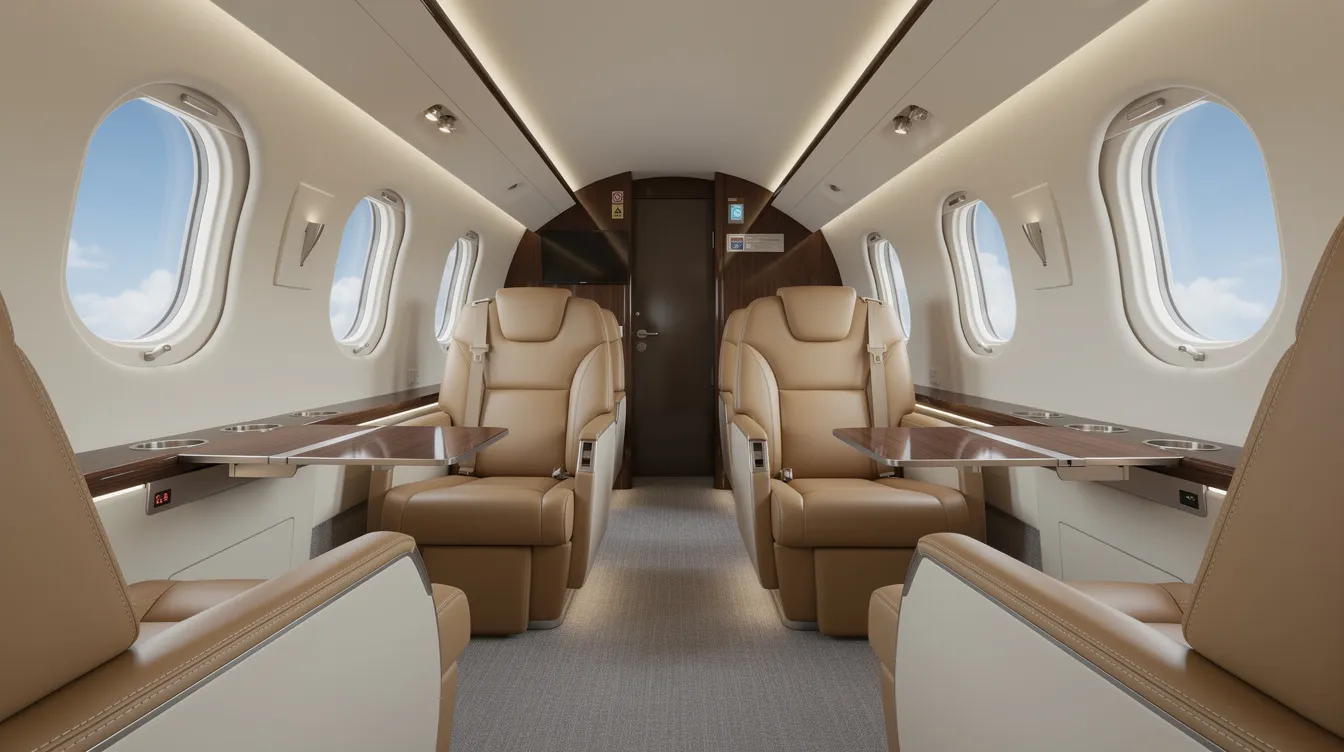
The operational feel of owning a private jet fleet—without actually managing one—defines the fractional experience, with professionally managed delivery of consistent safety and service standards.
Guaranteed access: Fractional owners receive an aircraft when they request it, subject to notice requirements (typically 24-72 hours) and peak-day rules, factors that directly influence the total cost structure of a fractional program. This availability separates fractional from charter’s uncertainty and is often enhanced in floating fleet-based programs that allow more dynamic aircraft assignment.
Fleet interchange: Trade between aircraft types based on mission needs. Flying solo to a nearby city? Use a light jet. Bringing the executive team cross-country? Upgrade to a large cabin, with hour conversion formulas managing the exchange.
Simultaneous trips: Need two jets departing the same morning for a multi-city board meeting? The fleet accommodates requests that single-plane ownership cannot, supported by coordinated training to common standards.
24/7 scheduling: The management company handles planning, routing, crew assignment, and regulatory compliance, relying on dedicated. Clients simply schedule and arrive. No flight department overhead. No pilot training coordination.
This section is informational only. Consult aviation tax counsel or your CPA for situation-specific advice.
Fractional owners are generally considered aircraft owners for U.S. federal tax purposes, which creates a range of tax implications for fractional jet owners to evaluate with advisors. This status potentially enables depreciation—including bonus depreciation (available through 2026 under Section 168(k))—when the aircraft serves qualifying business use, and a detailed overview of tax implications for fractional jet owners can help clarify available deductions and compliance requirements.
Key considerations: In addition to tax planning, buyers should understand essential fractional ownership contract terms that define scheduling, costs, and exit options.
Residual value: At term end, share value depends partly on fleet utilization and shapes your strategy if you later sell your fractional jet share. Fractional fleets often log 1,000-1,200 hours annually, which can accelerate depreciation.
State taxes: Sales and use tax exposure varies by delivery location and flight patterns; some states treat fractional ownership favorably.
Federal excise tax: FET at 7.5% typically applies to the occupied hourly rate, with the provider handling remittance.
Structuring: Personal vs. business use, entity type (LLC, S-corp), and meticulous flight logging all affect allowable deductions, as explained in more depth in analyses of tax implications for fractional jet owners.
BlackJet works alongside clients’ legal and tax advisors to align ownership structures with corporate or family-office strategies, ensuring that essential contract terms in fractional jet ownership are fully understood before signing.
Shared ownership fits a specific slice of the private aviation market—not every traveler, and it tends to overlap with the clientele targeted by the best-known fractional jet programs.
Ideal candidates: Many of these ideal users benefit from first reviewing fractional jet ownership terminology and concepts so they can evaluate programs with confidence.
Business owners and executives flying 25-150 hours annually who want to fully understand fractional jet ownership terminology and concepts before committing capital.
Family offices with recurring travel to second homes that may benefit from or similar aircraft optimized for regional missions.
Corporate flight departments seeking fleet expansion without full aircraft purchase.
Companies with regular routes between U.S. cities, manufacturing sites, or regional offices that want access to one of the best fractional jet ownership programs without building an in-house flight department.
Under 25 hours/year: Charter or Reserve Fleet membership often proves more economical, as outlined in comparisons of fractional ownership versus membership programs.
Over 200-300 hours/year: Compare fractional to whole aircraft ownership or dedicated corporate fleet, treating fractional jet ownership as an investment decision alongside other capital allocations.
Review your last 12-24 months of air travel—routes, frequencies, passengers—to assess alignment with shared ownership economics and determine whether fractional jet ownership financing would support your capital and cash-flow objectives.
BlackJet Fractional Jet Ownership operates as a focused specialist in fractional and membership models rather than a generalized charter marketplace, offering clearly defined Equity Fleet: Clients acquire an equity share in a specific aircraft with priority access. BlackJet handles custom aircraft sourcing, delivering predictable costs and potential tax benefits. Prospective buyers often consult a fractional jet ownership terminology guide to understand program details before committing.
Reserve Fleet: A pay-as-you-go structure offering guaranteed access without ownership—ideal for supplementary demand or variable schedules, and an option some owners choose after selling a fractional jet ownership share or transitioning from another program.
Both programs feature 24/7 operations support, guaranteed availability parameters, and mission-matching across light, midsize, and super-midsize private jets, all delivered by highly trained. BlackJet designs solutions for individuals and corporate accounts alike, including multi-aircraft strategies and integration with existing flight departments, and can walk prospects through.

Use this checklist when evaluating any fractional provider, and pair it with a rigorous review of total fractional jet ownership cost models and a complete guide to cost components:
Commitment terms: What’s the contract length? What are early exit provisions and penalties? How is residual value calculated, and what process applies if you sell your fractional jet ownership share?
Availability guarantees: What notice is required in floating fleet-style fractional programs versus single-aircraft structures? Are there peak-day restrictions? What happens if preferred aircraft types are unavailable, particularly in floating fleet-style fractional programs?
Total cost transparency: What’s the initial purchase price, management fee, occupied hourly rate, and fuel treatment, and how do these line up with a complete guide to fractional ownership costs? How are incidentals billed, and what role might fractional ownership financing options play in your overall economics?
Safety standards: Does the program operate under Part 91K or Part 135, and how are they vetted and trained? What are the pilot experience minimums, including training protocols? Are there third-party safety ratings?
Flexibility provisions: Can you upgrade or downgrade share size? Switch aircraft types? Layer in non-ownership flying for peaks, or sell your fractional ownership share and transition to another program if needs change?
Shared aircraft ownership delivers the operational feel of a private fleet—predictable access, mission-matched aircraft, professional management—without the full capital and administrative weight of owning an entire jet. For high-net-worth individuals and companies in the United States flying 25-150 hours annually, fractional aircraft ownership often proves more efficient than relying on charter availability or commercial airline schedules.
Start by gathering your last year of travel data and engaging tax and legal advisors to understand the implications of becoming an aircraft owner through a fractional share.
Ready to explore the smarter way to fly private? Visit FractionalJetOwnership.com to discover BlackJet’s Equity Fleet and Reserve Fleet solutions and request a personalized cost and routing analysis. Reclaim your time, increase control over business and family travel, and fly private in a more strategic way through shared aircraft ownership.
