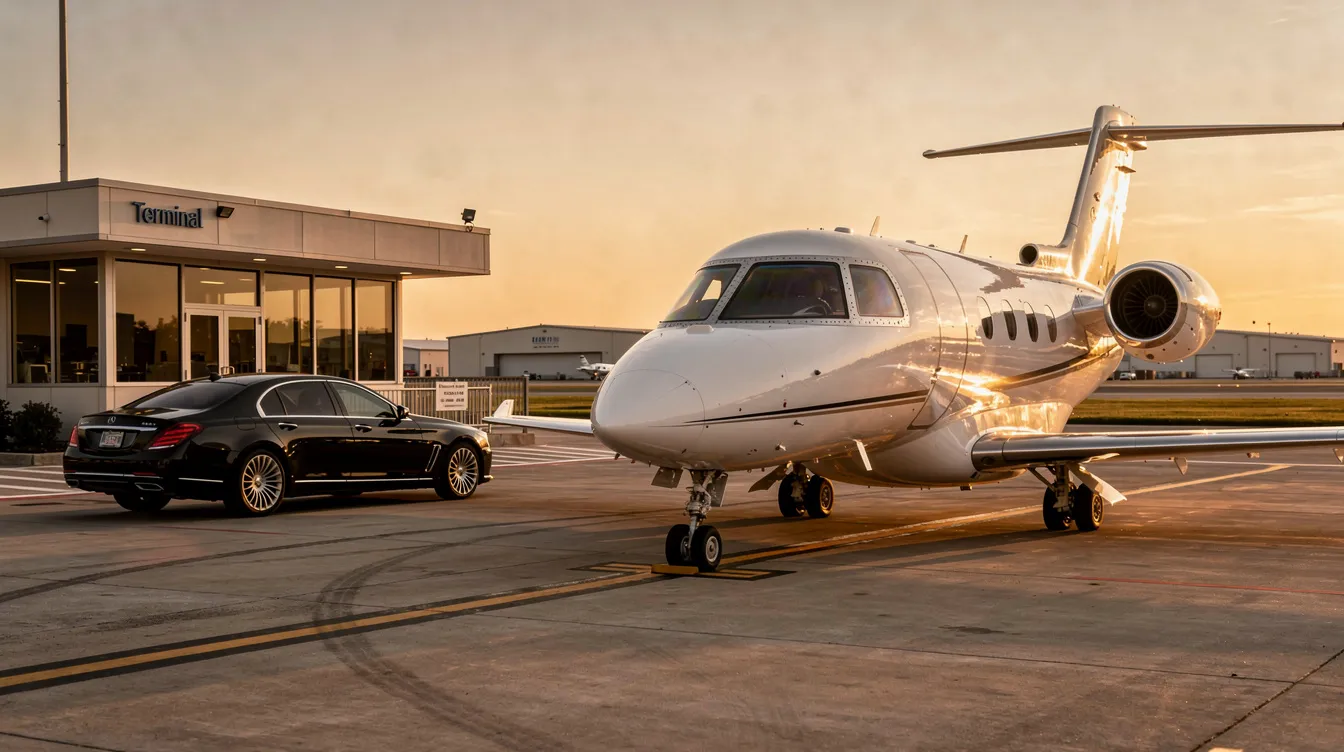
July 7, 2026
Picture this: a managing partner in New York needs to attend a 2 p.m. board meeting in Miami and return by dinner. On a commercial flight, the round trip eats up an entire day. On a light jet departing from Teterboro (TEB), the same trip takes roughly half that time, with productive work happening in both directions.
Small aircraft flights-spanning piston aircraft, turboprops, very light jets, and light jets-are reshaping how executives and families travel in 2026. These aircraft can operate from over 5,000 smaller airports across the United States that commercial airlines never touch, connecting travelers to airports closer to their actual destinations. Whether departing from White Plains (HPN), Van Nuys (VNY), or Dallas Love Field (DAL), the math is straightforward: small aircraft cut travel time by 2–4 hours per trip on regional routes.
This guide is written from the perspective of BlackJet Fractional Jet Ownership, serving business and high-net-worth travelers flying 25–150 hours per year. Here is what it covers:
Aircraft types: From entry-level pistons to cabin-class light jets
Time savings: Real route comparisons with concrete numbers
Cost models: Full ownership, fractional ownership, jet cards, and on-demand charter
Safety and sustainability: What matters and what does not
BlackJet's approach: How Equity Fleet and Reserve Fleet programs serve consistent travelers
Small aircraft flights are an excellent option for efficiently reaching regional destinations, saving 2–4 hours per leg versus commercial flying on routes under 1,000 nm.
New York to Boston takes approximately 90 minutes door-to-door by light jet versus roughly 4 hours via commercial travel. Los Angeles to Las Vegas runs about 90 minutes privately versus 3.5 hours with major airlines.
For travelers logging 25–150 flight hours per year, private charter, jet cards, and fractional ownership programs are typically more cost-efficient than full private aircraft ownership.
Small aircraft-especially modern turboprops and light jets-deliver the best value per seat for groups of 3–8 passengers on regional missions.
BlackJet Fractional Jet Ownership specializes in providing access to very light jets, light jets, and selected turboprops with transparent pricing and guaranteed availability.
Small aircraft flights eliminate the biggest time sinks in commercial travel: TSA security lines, layovers at congested hubs, and long ground transfers. Traveling by private jet eliminates security lines and layovers entirely, replacing them with a 15–30 minute arrival at a private terminal before departure.
Private flights allow direct access to airports closer to destinations. Consider these door-to-door comparisons:
New York–Boston: ~95 minutes via light jet (TEB to BED) vs ~4 hours commercially
Los Angeles–San Francisco: ~80 minutes privately vs ~3.5 hours with airlines
NYC–Miami: Private jets save 4–6 hours on this route compared to commercial carriers
London–Geneva: ~90 minutes from Farnborough (FAB) vs 4+ hours including Heathrow transfers
Small aircraft flights offer flexibility in scheduling and route selection that larger commercial aircraft simply cannot match. The cabin experience reinforces this advantage: no middle seats, a quiet work environment with Wi-Fi, the ability to hold confidential meetings, bring pets, and customize catering. For executives flying 2–4 regional legs per week, accumulated annual time savings can exceed 200–300 hours.
The following comparison illustrates typical time and cost differences across popular routes:
Route | Distance | Aircraft Type | Block Flight Time | Door-to-Door (Private) | Door-to-Door (Commercial) | Charter Cost Range |
|---|---|---|---|---|---|---|
New York (TEB) – Boston (BED) | ~190 nm | Light jet | ~45 min | ~95 min | ~4 hrs | $6,000–$9,500 |
Los Angeles (VNY) – Las Vegas (HND) | ~230 nm | VLJ / Light jet | ~50 min | ~90 min | ~3.5 hrs | $5,500–$8,000 |
Dallas (DAL) – Houston (HOU) | ~225 nm | Turboprop | ~55 min | ~100 min | ~3 hrs | $4,500–$7,000 |
London (FAB) – Nice (NCE) | ~530 nm | Light jet | ~1 hr 45 min | ~2.5 hrs | ~5+ hrs | $12,000–$18,000 |
Key observations: |
Ground time-not flight time-dominates commercial trips. Airport transfers, security, and boarding often add 2–3 hours that vanish when flying from secondary airports.
Using airports like TEB or VNY instead of JFK or LAX can reduce black-car transfers by 30–60 minutes each way.
Commercial flights still make financial sense for solo travelers on well-served nonstop routes with low-cost options.
BlackJet Jet Card or fractional owners can pre-plan these trips for predictable costs and a guaranteed aircraft category.
Small aircraft include piston, turboprop, VLJ, and light jets. They typically have a maximum takeoff weight of 12,500 pounds or less and can operate from shorter runways than large airliners-often 3,000–5,000 feet versus 7,000+ feet for commercial equipment.
Piston aircraft: 2–4 passengers, 110–180 KTAS cruise speed, used primarily for flight training, personal travel, and very short hops.
Turboprops: 6–9 passengers, 260–320 KTAS, the workhorses for regional business missions and remote access.
Very light jets (VLJs): 4–6 passengers, 300–400 KTAS, bridging the gap between props and full cabin classes of jets.
Light jets: 6–8 passengers, 420–450 KTAS, the core platform for regional private aviation with ranges of 1,300–1,700 nm.
These categories complement rather than replace larger super-midsize and heavy jets used for transcontinental and intercontinental travel. BlackJet clients most often fly turboprops, VLJs, and light jets, while entry-level pistons serve mainly the owner-pilot and flight school community.
Piston-powered aircraft remain the gateway to small plane flying. These 2–4 seat airplanes are built for personal use, pilot training, and very short regional hops under 500 nm. Small aircraft are widely used for pilot training, and piston aircraft are where most pilots log their first flight hours.
Notable models include:
Cessna 172 Skyhawk: ~130 KTAS, ~500 nm range, the world's most-produced personal aircraft
Cirrus SR22T: ~180 KTAS, ~900 nm range, equipped with whole-airframe parachute
Piper PA-28 series: A flight training and recreational staple
Diamond DA40/DA50: Modern diesels with excellent fuel efficiency
Piston aircraft typically seat 2–4 passengers and fly 500–1,000 nm. Piston aircraft charter costs range from $800 to $2,000 per hour, with very low direct operating costs compared to turbine types. However, they are rarely part of premium charter services or fractional fleets due to limited cabin space, speed, and weather capability. BlackJet focuses on turbine aircraft to meet the performance and comfort expectations of its clientele.
Turboprops are 6–9-seat light aircraft ideal for 300–800 nm trips. They can land on shorter and sometimes unpaved runways that jets cannot access, making them essential for accessing locations with limited transportation infrastructure.
Standout models include:
Pilatus PC-12 NGX: ~285 KTAS, ~1,800 nm range, single-engine turboprops at their finest
Beechcraft King Air 260/360: ~310 KTAS, ~1,600 nm range, twin-engine reliability
Daher TBM 960: ~330 KTAS, ~1,500 nm range, the fastest single-engine turboprop in production
Turboprops can carry 6–9 passengers with a range of 1,700–1,800 nm. Typical missions include investor roadshows across the Texas triangle, oil and gas site visits in North Dakota, and ski trips into mountain airfields like Telluride or Truckee.
Turboprop hourly rates average between $1,500 and $3,000, making modern turboprops the most cost-efficient choice per seat for groups of 4–7 travelers on routes under 600 nm. Many BlackJet trips in this range can be optimized with turboprops to reduce cost while maintaining schedule reliability. For a deeper look, see our guide to understanding turboprop charter rates.
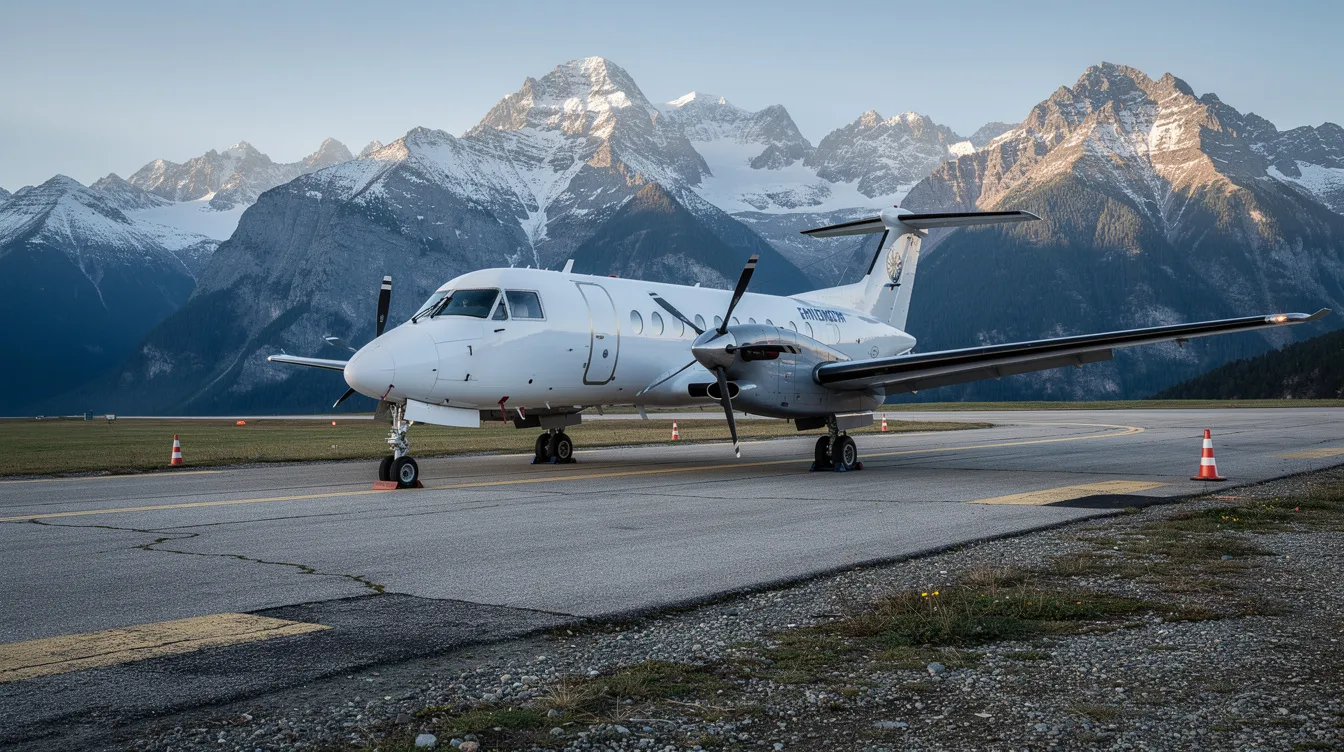
Very light jets are compact, pressurized jets seating about 4–6 passengers. They deliver jet-speed travel for 300–800 nm missions at operating costs well below those of larger jets.
Key models include:
Embraer Phenom 100EV: ~390 KTAS, ~1,178 nm range
Cessna Citation M2 Gen2: ~400 KTAS, ~1,300 nm range (entry light jet / VLJ crossover)
Eclipse 550: ~375 KTAS, ~1,125 nm range
Very Light Jets seat 4–6 passengers and cruise at 300–400 KTAS. Their strengths include lower operating costs than larger jets and the ability to use shorter runways, making them ideal for shuttle-style business routes like Los Angeles to Las Vegas or Milan to Nice. Limitations include smaller baggage holds, fewer cabin amenities, and sometimes no fully enclosed lavatory. For VLJ pricing details, BlackJet can help match these aircraft to frequent executive commuters flying 1–3 person teams on short, predictable routes.
Light jets are the backbone of regional private jet travel, accommodating 6–8 passengers with the right aircraft for routes from 400 to 1,700 nm.
Leading models include the HondaJet Elite II, Embraer Phenom 300E, and Citation CJ3+. Most light jets cruise at 420–450 KTAS with real-world ranges of 1,300–1,700 nm, covering routes like New York to Miami, Chicago to Dallas, and London to Ibiza nonstop. Light jets accommodate 6–8 passengers and have ranges of 1,300–1,700 nm.
Cabin features include enclosed lavatories, full-length spacious cabin layouts, Wi-Fi, power outlets, and reasonable baggage capacity for golf bags or ski equipment. The cabin size accommodates executive teams or families comfortably.
Light jets typically charge $2,500 to $4,500 per flight hour in the U.S. as of 2025–2026, depending on the specific aircraft and demand period. BlackJet's Equity Fleet and Reserve Fleet programs often center on light jets due to their ideal balance of speed, range, cost, and passenger comfort.
Here is a quick-reference guide to small aircraft frequently seen in private charter and fractional fleets:
Cessna 172: 4 seats, ~130 KTAS, ~500 nm. Personal flying and flight training. Almost exclusively owner-flown.
Cirrus SR22T: 4 seats, ~180 KTAS, ~900 nm. Owner-pilot cross-country trips (e.g., weekend Napa getaway from Los Angeles).
Pilatus PC-12 NGX: 9 seats, ~285 KTAS, ~1,800 nm. Charter and fractional workhorse. Ideal for New York to Toronto or multi-stop Texas tours.
TBM 960: 6 seats, ~330 KTAS, ~1,500 nm. Fastest single-engine turboprop. Popular with owner-pilots and select charter operators.
Cirrus Vision Jet: 5 seats, ~300 KTAS, ~1,200 nm. Air taxis and owner-pilots. Great for Los Angeles to Napa or similar short flights.
HondaJet Elite II: 6 seats, ~422 KTAS, ~1,547 nm. Charter and fractional programs. Efficient for routes like Dallas to Denver.
Phenom 300E: 8 seats, ~453 KTAS, ~1,971 nm. Dominant in fractional and charter fleets. Perfect aircraft for New York to Miami.
Citation CJ3+: 7 seats, ~415 KTAS, ~1,875 nm. A staple of charter services and corporate flight departments.
For a comprehensive look at options across categories, explore our types of private jets and prices guide.
Published maximum ranges assume light payloads, ideal winds, and minimal fuel reserves. Real-world ranges are typically 10–20% lower. Modern light aircraft can cover hundreds or over a thousand nautical miles without refueling, but practical range depends on passenger count, baggage, and weather conditions.
Realistic range bands:
Piston singles: 400–700 nm
Turboprops: 800–1,600 nm
VLJs: 600–1,000 nm
Light jets: 1,000–1,700 nm
Practical examples: New York to Chicago (~650 nm) is comfortable for any light jet. New York to Denver (~1,350 nm) is possible nonstop in a Phenom 300E but may require payload trade-offs. New York to London requires at least a super-midsize or ultra-long-range aircraft, well beyond small aircraft capability.
BlackJet advisors help match aircraft type and range to client trip profiles, including when to step up to larger jets for longer missions. Most small aircraft are not used for oceanic crossings due to ETOPS and North Atlantic procedural requirements.
Three major cost contexts drive small aircraft economics: owning outright, chartering on demand, and using structured programs like fractional ownership or jet cards. Costs scale with aircraft size, annual utilization in flight hours, fuel costs, crew requirements, and aircraft maintenance cycles.
Charter hourly ranges in 2025–2026:
Piston aircraft: $800–$2,000/hr
Turboprops: $1,500–$3,000/hr
Light jets: $2,500–$4,500/hr
Heavy jets: $8,500–$15,000 per hour (for contrast)
A traveler flying 50 hours per year is best served by jet cards or on-demand charter. At 150 hours, fractional ownership starts making financial sense as a fractional jet ownership investment. Above 250–300 hours, full ownership may become the most economical path. BlackJet specializes in eliminating hidden fees through inclusive pricing within its Reserve and Equity Fleet structures. For detailed charter cost breakdowns, explore our dedicated guide.
Full ownership requires 200–300 flight hours annually to justify the fixed cost base. Those fixed costs include hangar fees, insurance, aircraft maintenance reserves, crew salaries, recurrent training, and fuel, and they should be compared against the total cost of fractional jet ownership when evaluating alternatives.
Concrete benchmarks at ~200 hours per year:
Entry piston (used Cirrus SR22T): ~$80,000–$120,000/year all-in operating costs (excluding acquisition)
Used turboprop (2015 PC-12): ~$250,000–$400,000/year in total running costs
New light jet (Phenom 300E): Easily exceeds $400,000–$700,000 per year in total running costs, excluding capital and depreciation
Major maintenance events-phase inspections, hot section inspections-create a lumpy cash flow that complicates budgeting. BlackJet's fractional ownership (Equity Fleet) allows clients to avoid full-ownership burdens while retaining benefits like potential tax deductions through the Equity Fleet structure.
On-demand charter allows booking flights without long-term commitments. A client selects a specific aircraft or aircraft category for a single trip, pays the quoted price, and walks away with no ongoing obligation.
Pricing factors include aircraft type, route length, repositioning legs, peak vs off-peak dates, airport fees, international handling, and Federal Excise Tax in the U.S.
Costed examples:
2-hour turboprop flight (Dallas–Houston): ~$4,500–$7,000
2-hour light jet flight (NYC–Boston): ~$6,000–$9,500
A New York to Miami light jet charter costs approximately $20,000 to $30,000 (~3.5 hours block time)
Charter flights offer flexible scheduling compared to scheduled regional flights. However, cons include price variability, limited aircraft availability during holidays, and no guaranteed aircraft type. BlackJet can arrange private charter flights but positions its structured programs as better solutions for consistent travelers.
Jet card memberships offer prepaid hours at fixed hourly rates, purchased by cabin class rather than a specific tail number. This model smooths the pricing volatility inherent in ad hoc charter.
Typical features include guaranteed availability with 24–48 hours' notice, instant pricing on core routes, and predictable costs per flight hour. The ideal user profile is executives or leisure travelers flying 25–80 hours per year on predictable routes-think New York to Florida, Texas intra-state, or California corridor trips.
Compared to an ad hoc charter for the same missions, jet cards often deliver 10–20% savings through volume commitment and eliminate the need for a charter broker on every trip. BlackJet's Reserve Fleet membership fits this space, offering transparent pricing, flexible access to light jets and turboprops, and no aircraft management burden.
Fractional ownership means purchasing a share-typically 1/16, 1/8, or 1/4-of a specific aircraft, entitling the owner to a set number of annual flight hours. A 1/16 share provides roughly 50 hours per year; a 1/8 fractional jet ownership share approximately 100 hours. For clients new to the model, a concise fractional jet ownership glossary can clarify key terms before committing to any program. Contracts commonly run 3–5 years.
Fractional ownership typically involves a $500,000+ upfront investment for light jet shares. Cost components include this initial equity, monthly management fees ($8,000–$13,000 for light jets), hourly occupied flight charges (~$2,900–$3,500/hr), and potential residual value at contract end.
Advantages include guaranteed availability, consistent cabin type, predictable budgeting, and potential U.S. tax benefits such as bonus depreciation for qualifying business use. BlackJet's Equity Fleet fractional programs are designed for 50–150 hours/year small jet users who want ownership economics without the complexity of whole-aircraft management, and they can be paired with fractional jet ownership financing strategies for clients who prefer to preserve capital.
Factor | Full Ownership | Fractional Ownership | Jet Card / Membership | On-Demand Charter |
|---|---|---|---|---|
Ideal Annual Hours | 250–400+ | 50–200 | 25–100 | Under 50 |
Capital Commitment | $3M–$12M+ | $250K–$1.2M | $50K–$500K deposit | None |
Contract Length | Indefinite | 3–5 years | 1–2 years | Per trip |
Cost Predictability | Low (variable maintenance) | High | High | Low |
Aircraft Choice | Your tail number | Guaranteed category | Guaranteed category | Subject to availability |
Typical User | Corporate flight depts, UHNWIs | Executives, family offices | Frequent business travelers | Occasional flyers |
For travelers deciding between longer-term ownership commitments and more flexible access, comparing fractional jet ownership vs membership programs can help clarify which structure aligns best with their usage profile.
For a 75-hour-per-year light jet user: full ownership is too expensive (ownership costs are spread across too few hours), fractional ownership offers strong predictability and tax benefits, jet cards provide simplicity with good pricing, and charter offers flexibility but unpredictable rates. BlackJet advisory teams help clients model these scenarios using their actual 12–24-month travel data. For a detailed comparison, see our fractional jet ownership vs jet cards analysis.
Legal commercial operations in the U.S. require FAA Part 135 certification for charter or Part 91K for fractional programs. In Europe, operators must hold EASA Air Operator Certificates. Professionally operated small aircraft follow Part 135 regulations, which mandate strict pilot qualifications, maintenance standards, and duty-rest rules. Operators must meet rigorous maintenance standards under EASA regulations for European operations, and fractional co-owners rely on well-drafted aircraft fractional ownership contracts to allocate operational responsibilities within these regulatory frameworks.
Tiny piston aircraft (e.g., Cessna 150) rarely appear in certified charter due to economics, with exceptions in Alaska or remote tourism. Charter fleets typically start with cabin-class twins, turboprops like the King Air, and light jets like the Citation CJ series.
BlackJet only partners with Part 135 and Part 91K operators who pass independent audits. Safety reputation and regulatory compliance should be the primary filters when choosing any provider.
The size of an aircraft is not a reliable indicator of safety; operator practices matter more. Safety in private aviation is fundamentally about maintenance culture, crew standards, and operational discipline.
Key safety pillars:
Pilots complete recurrent training every 6–12 months, including simulator sessions covering emergency procedures
Standardized operating procedures and conservative weather minimums
Rigorous maintenance schedules exceeding manufacturer requirements
Independent auditing programs: ARGUS Platinum certification represents the top 10% of safety practices, alongside Wyvern Wingman and IS-BAO.
Single-pilot certified aircraft like the Vision Jet or TBM 960 operate under different crew requirements than dual-pilot light jets commonly used in charter. Weather conditions-icing, thunderstorms, crosswinds-drive go/no-go decisions, and professional operators cancel or delay rather than push limits.
BlackJet partners only with top-tier operators, reviewing pilot experience minimums and providing clients with transparency on operator credentials upon request.
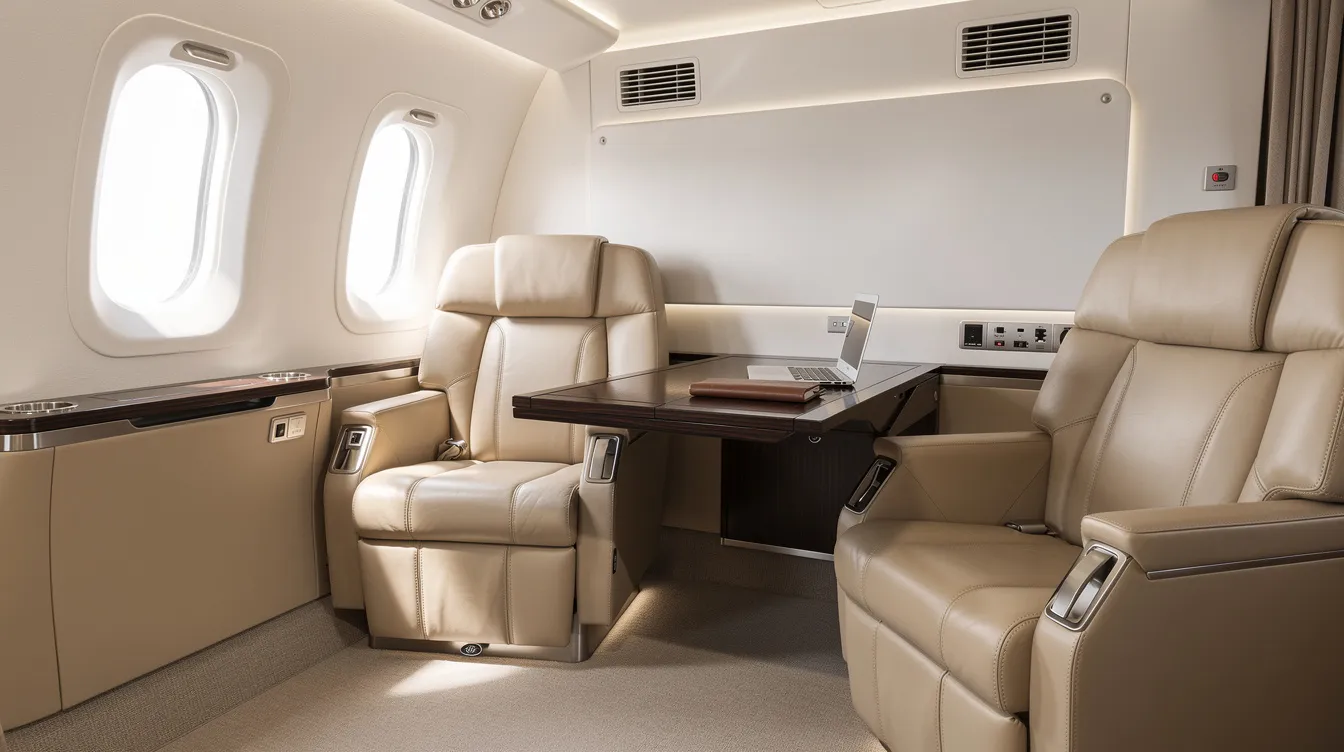
Typical cabins in turboprops, VLJs, and light jets feature club seating, fold-out tables, power outlets, and inflight Wi-Fi in roughly 70–80% of newer aircraft. The cabin space is optimized for 3–7 passengers-ideal for executive teams or families without the anonymity of larger commercial aircraft.
In-flight amenities include catering from snacks to fully prepared meals, seamless baggage handling, and car-to-aircraft transfers at the private terminal. Executives routinely use flight time for confidential meetings, board presentations, and calls that would be impractical during commercial flying.
BlackJet coordinates amenities based on client profiles, whether that means child-friendly catering, pet accommodations, dietary preferences, or a quiet "office in the sky" meeting setup.
Small aircraft are used for transporting supplies to remote communities, but their greatest value for BlackJet clients lies in time-critical business and high-value leisure missions.
Concrete scenarios:
Three-city Texas investor tour: Dallas → Houston → Austin → Dallas in a King Air, completing all meetings in a single day without overnight stays
Same-day negotiation: New York to Chicago in a Phenom 300E, departing at 7 a.m. and home by 8 p.m.
California wine country weekend: Los Angeles to Napa via VLJ, 80 minutes gate to gate
Florida–Bahamas family hop: Naples to Nassau in a light jet, avoiding Miami's commercial hub
Small aircraft enable 2–4 meetings in different cities within a single day. BlackJet consultants map client destinations to aircraft classes and airport options to minimize wasted time and cost, factoring in runway length and field performance when choosing between turboprops and jets.
The shift from analog gauges to integrated glass cockpits-Garmin G1000 NXi, G3000, Collins Pro Line Fusion-has transformed situational awareness and safety in small aircraft. Safety-enhancing technologies now standard in newer models include synthetic vision, terrain awareness and warning systems (TAWS), traffic collision avoidance (TCAS), envelope protection, and autothrottle.
Notable innovations include autoland capability in the Cirrus Vision Jet and TBM 960. Whole-airframe parachutes in Cirrus aircraft have achieved over 95% survival rates in deployment events. These technologies reduce pilot workload and improve safety, particularly in instrument conditions.
BlackJet maintains a preference for newer or well-upgraded aircraft with modern avionics suites as part of its quality standards.
Flying small makes environmental sense when aircraft size matches passenger count. A PC-12 turboprop burns roughly 70–90 gallons per hour versus 180–220 gallons per hour for older midsize jets. Using a light jet instead of a heavy jet for 3–4 people dramatically reduces per-passenger emissions.
Sustainable aviation fuel availability is growing at major FBOs in Los Angeles, New York, and London, though cost premiums and supply remain variable. Carbon offset programs are now offered by many operators as optional or built-in add-ons for premium clients, supporting corporate ESG reporting. More direct routings enabled by small aircraft can further cut fuel burn versus hub-and-spoke commercial itineraries.
BlackJet offers sustainable aviation fuel options where available and coordinates emissions offsetting on client flights upon request.
Business missions tend to be time-critical, multi-city, and sometimes last-minute. Companies use small jets to connect secondary cities, avoid overnight hotel stays, and protect executive productivity. Corporate flight departments sometimes supplement their own fleets with fractional or membership programs for overflow and niche missions.
Leisure travelers follow different patterns: ski trips to Aspen (ASE) or Jackson Hole (JAC), beach getaways to Naples (APF) or the Bahamas, and destination weddings where private air travel brings guests closer to resorts. Small aircraft access over 5,000 airports not served by commercial airlines, making these trips far more efficient.
BlackJet adapts aircraft choice and onboard services to the purpose of each trip, from quiet office setups to child-friendly catering.
Traveling with pets on turboprops and light jets is straightforward-dogs and cats ride in the cabin, not the cargo hold. Weight limits and carrier recommendations vary by aircraft, and BlackJet advisors pre-screen aircraft for pet policies.
Families with children benefit from flexible schedules, private boarding, and the ability to bring car seats, strollers, and extra luggage. Special equipment-golf clubs, skis, camera gear, medical devices-fits in baggage holds whose dimensions vary by aircraft category. Turboprops or larger light jets are preferable when baggage is bulky or pets are large, ensuring no surprises on departure day.
Standard charter lead times run 24–72 hours, with same-day departures possible from major hubs. During peak periods-Thanksgiving, Christmas, major sporting events-aircraft availability tightens significantly. Fractional owners and jet card members receive priority access during these windows.
BlackJet Jet Card and fractional clients should give 48–72 hours' notice for core routes like New York to Florida or California corridor flights. The booking process follows a clear sequence: trip request, aircraft options with pricing, confirmation, passenger details, and catering/ground transportation coordination.
Pre-booking recurring flights-such as Monday morning and Thursday evening executive shuttles-locks in optimal aircraft and pricing.
The U.S. is uniquely suited to small aircraft flights, with over 5,100 public-use airports compared to just a few hundred with scheduled airline service. Key regional patterns include the Northeast corridor (New York–Boston–Washington), Texas triangle, West Coast (LA–San Francisco–Seattle), and Florida–Caribbean routes, all well served by leading fractional jet ownership programs.
European equivalents include London to Geneva, Paris to Nice, and Zurich to Milan, using GA-friendly airports like Farnborough (FAB) and Le Bourget (LBG). Small aircraft are essential for accessing locations with limited transportation infrastructure, whether a ranch in Montana or a factory in rural Germany.
BlackJet's operator network supports both U.S. domestic and select international missions. Think in terms of "city pairs" and "airport pairs" rather than airline hubs.
U.S. business users may benefit from bonus depreciation and Section 179 deductions for qualifying aircraft used predominantly for business purposes. Fractional ownership units-including BlackJet's Equity Fleet shares-can provide depreciable assets under certain structures, as the IRS defines the minimum fixed-wing fractional share at 1/16, but the tax implications for fractional jet owners require careful planning with qualified advisors.
Common pitfalls include hobby-loss rules, passive-activity limitations, and the need for contemporaneous documentation of business purpose for each flight. Personal versus business use must be tracked carefully.
Disclaimer: This is not tax or legal advice. Individual situations vary, and readers should consult aviation-savvy CPAs for specific guidance.
Whole-aircraft owners carry hull and liability insurance with typical coverage limits running into the millions, and annual premiums vary by aircraft type and pilot experience. Charter clients and fractional owners are typically covered under the operator's policies but should review liability limits and certificates of insurance.
Corporate travel managers and family offices should review contractual protections, including indemnities, limitations of liability, and essential fractional jet ownership contract terms before committing to any provider. BlackJet works with operators who maintain robust insurance policies and clear documentation for corporate compliance teams, and prospective fractional owners should pay close attention to essential liability coverage in fractional jet ownership when evaluating program terms.
Safety depends on operator practices, crew training, and maintenance-not engine type. Both can be equally safe under professional management.
Yes, on regional international routes. Turboprops and light jets regularly fly U.S.–Caribbean, U.S.–Canada, and intra-European routes. Oceanic crossings require larger jets.
Most light jets have both. Many VLJs and turboprops have Wi-Fi but may have limited or no enclosed lavatories.
Modern turboprops and jets are pressurized and fly at altitudes that minimize turbulence. Cabin noise in current-generation aircraft is comparable to that of a quiet office.
Absolutely. That is the core advantage-operating from smaller airports that commercial carriers never serve, often minutes from the final destination.
BlackJet offers two core models: Equity Fleet (fractional ownership of specific jets) and Reserve Fleet (pay-as-you-go hours with membership-style access), designed for travelers logging 25–150+ hours per year.
BlackJet analyzes a client's historic and projected flight patterns-routes, passenger count, seasonality-to recommend the right mix of very light jets, light jets, and turboprops. Benefits include predictable access, professionally managed aircraft, vetted operators, and transparent pricing for both regional and longer-range missions.
Example scenario: A mid-market private equity firm with offices in New York, Boston, Washington, and Chicago uses BlackJet's Equity Fleet for weekly executive shuttles on light jets, supplemented by Reserve Fleet turboprop access for quarterly site visits to portfolio companies in smaller markets.
BlackJet positions itself as a strategic aviation partner rather than a one-off charter broker, focusing on long-term efficiency and risk management.
Clients interact with BlackJet through a web portal, dedicated account managers, and phone/email support. The quoting process delivers side-by-side aircraft category options with response times measured in hours, not days.
Operational support includes real-time flight tracking, FBO coordination, catering orders, and car-to-plane transfers. For complex multi-leg trips, BlackJet handles multi-city itineraries and last-minute changes while maintaining clarity on any incremental costs.
The service style is professional, discreet, and consultative-suited to executives, family offices, and corporate travel managers who value substance over spectacle.
Technology CEO, West Coast (2023–2025): Previously chartering ad hoc between San Francisco, Los Angeles, and Las Vegas (~80 hours/year). Switched to BlackJet Reserve Fleet, reducing per-hour costs by approximately 15% while gaining guaranteed availability and instant pricing on corridor routes via VLJ and light jet.
Manufacturing company, Midwest (2024–2025): A CEO and operations team flying ~120 hours/year across six Midwest plant locations. Transitioned from a mix of commercial flights and random charter to an Equity Fleet 1/8 share in a Phenom 300E, supplemented by turboprop charter for short-runway facilities. Annual time savings exceeded 250 hours across the team.
Bi-coastal family, New York and Florida (2024–2026): Previously flying commercial between Westchester and Naples (~60 hours/year). Joined BlackJet's Jet Card program on light jets, cutting door-to-door travel time from 6+ hours to under 3 hours per trip, with pet-friendly cabin arrangements and predictable costs.
Small aircraft flights-especially on turboprops, VLJs, and light jets-deliver strategic advantages in time, access, and productivity that commercial alternatives simply cannot match for regional travel.
The right access model depends on annual flight hours, typical route lengths, passenger count, tolerance for price variability, and interest in ownership benefits.
Chartering small aircraft can save 2–4 hours on regional trips, and those savings compound into hundreds of hours annually for frequent travelers.
Auditing your last 12–24 months of travel data is the single most valuable step toward determining whether a structured private aviation program makes financial sense for your needs.
Ready to explore the smarter way to fly private? Visit FractionalJetOwnership.com to schedule a consultation with BlackJet experts about fractional ownership, Reserve Fleet memberships, or a hybrid strategy tailored to the way you actually travel.
BlackJet Fractional Jet Ownership exists to help clients choose the right aircraft and access model for their real-world missions-not the most expensive option, but the smartest one.
