September 6, 2026
What if you could own a share of a private jet the same way some travelers buy into a vacation property-but with real equity, flexible scheduling, and access to a managed fleet? That is exactly what a private jet timeshare delivers. This guide breaks down how fractional jet ownership works, what it costs, and who benefits most from this model in 2026.
When people search for a timeshare for private jets, they are almost always looking at fractional ownership programs. Fractional aircraft ownership allows individuals to buy a share of a private jet-typically ranging from 1/16 to 1/2 of a specific aircraft or fleet pool-divided among multiple owners rather than purchasing the entire plane. That ownership stake converts into a defined number of annual flight hours. A fractional share typically provides 50 to 200 flight hours annually, depending on the share size purchased.
Unlike a vacation timeshare that grants usage rights to a hotel room or condo, private jet fractional ownership includes a true equity interest. You hold an undivided interest in the aircraft, and fractional jet owners share in its residual value while benefiting from structured exit options at the end of the contract term.
BlackJet Fractional Jet Ownership is a U.S.-based provider helping frequent flyers and companies access private aviation without full aircraft ownership. Whether the mission is a 2-hour hop from New York to Miami or a 3-hour midsize jet flight from Los Angeles to Dallas, a fractional ownership program scales to match real-world travel patterns.
Traditional hotel and condo timeshares emerged in the 1960s, offering buyers fixed weeks at specific resort locations with limited flexibility and often no real asset ownership. Fractional ownership of aircraft launched in private aviation in the late 1980s and operates on a fundamentally different model-one built around equity, flexibility, and measurable usage.
A registered interest in a specific aircraft model or fleet pool replaces the concept of a fixed calendar week in a single location. Private jet timeshare contracts are measured in flight hours or program days, and fractional ownership typically requires a commitment of 3–5 years with structured exit and resale options. Vacation timeshares, by contrast, can be notoriously difficult to resell.
Dimension | Traditional Timeshare | Private Jet Timeshare |
|---|---|---|
Ownership | Usage license, no equity | Undivided equity in aircraft |
Usage unit | Fixed calendar weeks | Annual flight hours |
Flexibility | Locked to one location | Any origin/destination |
Contract term | Often perpetual, hard to exit | 3–5 years, defined buy-back |
Resale value | Typically poor | Fair-market-value mechanisms |
Buying fractional shares means acquiring an equity position in a managed fleet. The operator handles aircraft purchasing, maintenance, crew, insurance, and scheduling. Owners book trips through a dedicated scheduling team or app, and a specific aircraft type is assigned based on mission needs.
Common share sizes and their approximate number of flight hours break down as follows:
1/16 share - approximately 50 flight hours per year
1/8 share - approximately 100 flight hours per year
1/4 share - approximately 200 flight hours per year
Hours are debited based on occupied flight time (passengers on board, takeoff to landing). Repositioning or empty leg flights are typically handled by the operator and may carry separate surcharges depending on program terms.
BlackJet's Equity Fleet provides fractional jet ownership with priority access, asset ownership, and potential tax benefits. Its Reserve Fleet offers a non-equity, pay-as-you-go model for travelers who need flexibility without a long term commitment. Many clients combine both: an Equity share for core usage and Reserve hours for spillover trips.
Fractional owners enjoy guaranteed aircraft availability with 4–6 hours' notice in many programs. Contracts for fractional ownership commonly include rules for peak travel days and notice requirements, and backup aircraft are deployed when the primary tail number is unavailable. Owners can access a diverse fleet of aircraft types with fractional ownership, and the ability to interchange flight hours across different aircraft classes adds operational flexibility. Guaranteed access is a key benefit that separates fractional programs from on demand charter.
A jet timeshare is designed to be cost effective for travelers flying roughly 25–150 flight hours per year-the range where full aircraft ownership carries too much financial burden and charter lacks predictable costs. Fractional ownership involves costs across three layers: an initial share purchase, fixed monthly management fees, and an occupied hourly rate for each hour flown.
Acquisition cost: Initial acquisition costs range from $275,000 to over $1.2 million depending on aircraft class, share size, and model year. A 1/16 share of a light jet typically starts around $275,000–$400,000, while midsize and large-cabin shares run significantly higher.
Monthly management fee: The monthly management fee covers fixed ownership costs such as crew salaries and training, hangar fees, insurance, scheduled maintenance, dispatch, and concierge support. Monthly management fees typically range from $8,000 to $15,000, though they can exceed $15,000 for larger cabin classes. Fixed monthly management fees cover costs like crew, hangar, and insurance in fractional ownership, which means fractional owners share operational costs, reducing the financial burden compared to sole aircraft owners.
Hourly rate: Hourly flight fees range from $1,800 to over $8,000 depending on aircraft type. This occupied hourly rate includes fuel, maintenance reserves, catering basics, and cleaning. Extras such as deicing, international fees, fuel surcharges, and landing fees at certain airports are usually billed separately.
The right model depends on annual flight hours, mission profile, and need for guaranteed availability. Here are the general thresholds:
Under ~25 hours/year: Private jet charter or jet card programs typically offer better cost efficiency.
50–150 hours/year: Fractional ownership often becomes the most cost efficient path, locking in lower hourly costs and predictable budgeting.
250+ hours/year: Whole aircraft ownership begins to amortize fixed costs more effectively.
Fractional ownership may not be ideal for those who fly less than 50 hours per year. But for those in the sweet spot, the math shifts quickly. Typical charter rates for a midsize jet run $4,000–$7,000 per hour, while fractional programs can save 25% on hourly rates for round trips through contractually fixed pricing. Fractional ownership reduces costs compared to full aircraft ownership while offering guaranteed access with as little as 4–6 hours' notice-an advantage that ad-hoc chartered flights rarely match.
Scenario: A business owner flies New York to Chicago twice a month (roughly 5 hours round-trip per visit) plus quarterly leisure trips to Florida (adding ~20 hours annually). That totals approximately 140 flight hours per year. At average charter rates of $5,500 per hour, the annual spend approaches $770,000 with no equity, no scheduling priority, and fluctuating availability. A fractional share locks in lower ongoing costs, predictable costs month-to-month, and an ownership stake that retains resale value.
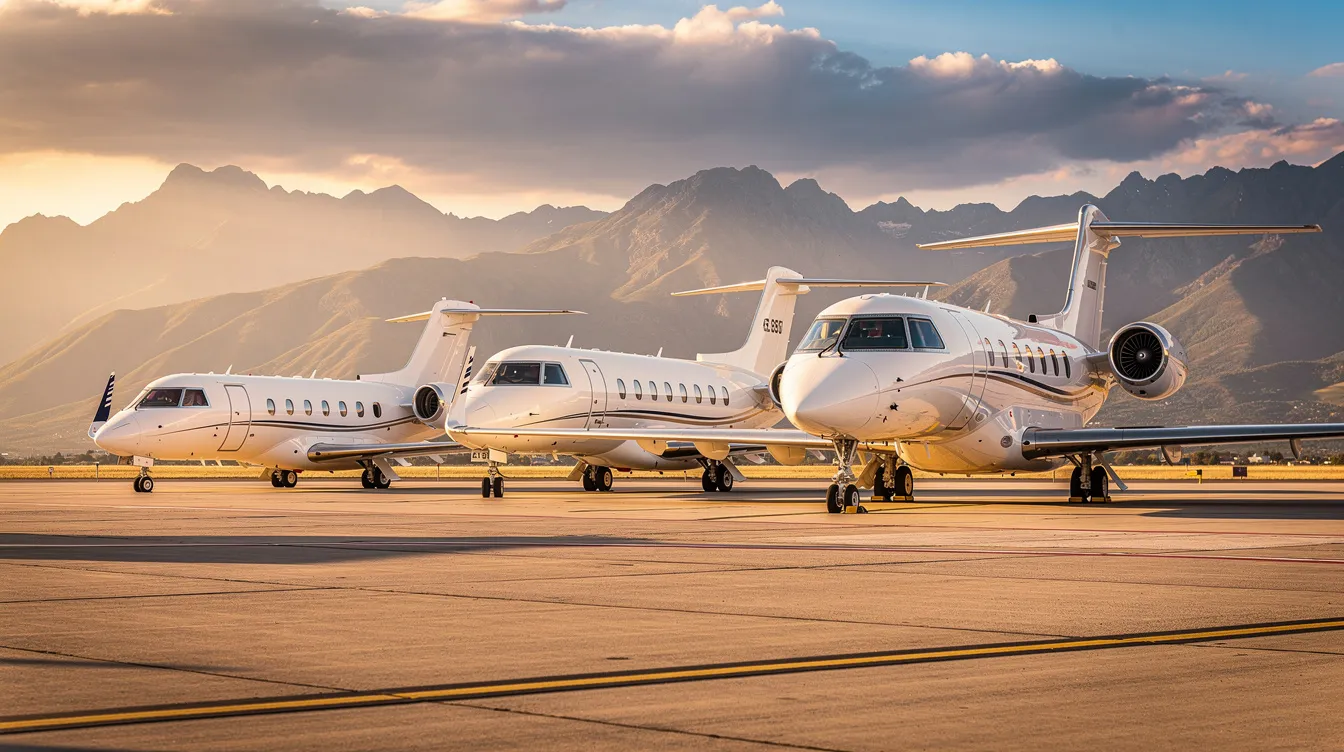
Selecting the right specific aircraft model is central to both cost and comfort in fractional ownership programs. Most fractional programs offer a diverse fleet spanning four major categories.
Light jets such as the Embraer Phenom 300E and Citation CJ3 seat 4–7 passengers with a range of roughly 1,500–2,100 nautical miles. They are ideal for 2–3 hour regional flights and carry a lower hourly rate. Learn more about light jets in fractional programs.
Midsize jets like the Hawker 800XP and Citation XLS+ offer greater cabin height, longer range (~2,500–3,000 nautical miles), and more comfort for cross-country flights. These remain efficient for frequent flyers who need private jet travel across multiple U.S. regions.
Super-midsize and long-range aircraft such as the Challenger 350 and Gulfstream G450 handle coast-to-coast and transatlantic missions without fuel stops. For those considering ultra long range aircraft, super midsize jets dominate fractional fleets in 2026 for good reason. Heavy jets serve larger groups and intercontinental routes.
Newer aircraft in fractional ownership are more fuel-efficient, and BlackJet can structure a fractional ownership program around a preferred aircraft type while offering interchange options when mission needs change.
Beyond cost, the real value of a private jet timeshare lies in reliability, time savings, and integrated professional management. Fractional programs remove the operational burdens that come with full ownership-no managing pilots, no coordinating maintenance, no navigating regulatory compliance on your own.
Operational management in fractional ownership includes upkeep, pilot management, and compliance. Fractional ownership flights operate under FAA Part 135/91 standards, and reputable programs hold ARGUS Platinum and Wyvern Wingman certifications to ensure safety compliance. Stage 3 IS-BAO certification represents the highest safety standards in business aviation, and providers conduct proprietary internal audits of pilots and maintenance.
Scheduling works through 24/7 operations support. BlackJet's unmatched service model includes concierge coordination for ground transport, catering, and last-minute schedule changes-differentiating the experience from ad-hoc charter.
Example: A CEO needs an early-morning meeting in Dallas, then a same-day return to San Francisco. With a fractional share, the aircraft and crew are on standby, the private plane is positioned overnight, and the return flight is confirmed before the meeting begins. Lost productivity from commercial aviation delays and connections disappears.
Sustainability is also a core pillar for many private aviation providers. Fractional ownership programs often include carbon offsets for every flight, and BlackJet ensures every journey is carbon neutral at no extra cost. Partnerships with sustainability organizations enhance aviation's eco-commitment across the industry.
For discerning travelers evaluating private aviation needs in the United States, here is how the main models compare. Chartering offers pay-as-you-go access to private jets with no upfront costs but variable pricing. Jet cards provide prepaid access without ownership commitments and are ideal for flyers under 75 hours per year. Full aircraft ownership gives aircraft owners complete control but demands full responsibility for crew salaries, maintenance, hangar fees, and regulatory compliance.
Fractional jet ownership sits in the middle: equity, predictable access, and lower complexity than owning an entire private plane. Availability and scheduling rules should be assessed when choosing a fractional ownership program, as they vary across business jet companies.
Factor | Charter | Jet Card | Fractional Ownership | Full Ownership |
|---|---|---|---|---|
Upfront costs | None | Deposit/prepay | $275K–$1.2M+ | $3M–$75M+ |
Best for (hrs/yr) | Under 25 | 25–75 | 50–200 | 250+ |
Hourly costs | Highest | Moderate | Locked, lower | Lowest marginal |
Equity | None | None | Yes | Yes |
Scheduling priority | Low | Medium | High | Full control |
Tax treatment varies and readers should consult qualified U.S. tax advisors. That said, fractional aircraft ownership may provide tax advantages such as depreciation benefits when the aircraft interest is used predominantly for business. Under IRS regulations, aircraft classified as listed property may qualify for accelerated depreciation when business use exceeds 50%, though bonus depreciation rules have shifted in recent years.
Operating costs tied to legitimate business travel-fuel, maintenance, insurance-may also be deductible. Careful documentation of personal data processed through flight logs is essential for separating business and personal use.
At the end of a 3–5 year term, typical exit options include selling back to the provider at fair market value, listing the fractional share on a resale market, or rolling into a newer specific aircraft model. BlackJet assists clients with long-term planning, including fleet upgrades and designing programs that align with both private travel goals and financial objectives.
Not every traveler needs fractional ownership-but for the right profile, the significant advantages are hard to replicate with any other model.
Executive and Founder: A U.S.-based CEO flying 80–120 hours per year between New York, Chicago, and San Francisco. Market demand for their time means guaranteed availability and productivity on board outweigh the initial investment. A midsize or super-midsize fractional share keeps ongoing expenses predictable.
Family and Lifestyle: A family using 40–70 hours per year for ski trips to Colorado, Caribbean vacations, and school-break travel. Cost effective access, privacy, and schedule control matter more than maximizing every hour. A light jet share combined with Reserve Fleet access for longer leg flights covers both scenarios.
Corporate Flight Department Supplement: A company with one wholly owned aircraft that needs overflow capacity or a different aircraft type for regional hops. A fractional share eliminates the need for a second asset purchase while maintaining consistent service standards.
BlackJet builds tailored fractional ownership programs that align with each use case, matching share size, aircraft type, and Reserve Fleet solutions to real-world travel patterns.
If you fly private today-or are considering it-start by quantifying your annual flight hours and most-traveled routes. Gather 12–24 months of travel data: origins, destinations, passenger counts, and total hours. This baseline allows BlackJet to model charter rates versus fractional ownership versus jet card programs side by side.
A no-obligation consultation with BlackJet Fractional Jet Ownership covers cost comparisons, aircraft options, and potential tax considerations tailored to your situation.
Ready to explore the smarter way to fly private? Visit FractionalJetOwnership.com to explore fractional ownership program details and schedule a private briefing.
A well-structured private jet timeshare removes the complexity of full ownership while preserving what matters most to frequent flyers in 2026: equity, scheduling priority, and predictable costs. For those who value their time as much as their capital, fractional ownership remains the most efficient path to private jet travel.
