May 4, 2026
Flying private doesn’t always mean booking a jet. For regional trips under 800 miles, turboprop aircraft offer a compelling alternative that balances cost, convenience, and access to smaller regional airports that jets simply can’t reach. But how much should you actually budget? This guide breaks down turboprop charter rates for 2026, explains what drives pricing, and helps you determine whether on-demand charter or a more structured ownership approach makes sense for your travel patterns. Unless you plan to fly extensively—typically over 150 hours per year—owning your own private plane is usually not financially sensible, as chartering a private plane avoids the significant expenses of maintenance, crew, and insurance associated with ownership.
Most U.S. turboprop charters in 2026 range from roughly $1,200 to $2,800 per billable flight hour for popular models like the King Air 90, King Air 200, King Air 350, and Pilatus PC-12 NGX. Premium configurations with upgraded interiors, newer airframes, and enhanced avionics can push rates to $3,200 or higher per hour, particularly on peak demand dates like holiday weekends or major events.
In practical terms, a typical 300–400 mile regional trip—equating to about 1.2–1.5 flight hours each way—will often price between $4,000 and $8,000 all-in when you factor in repositioning fees, landing fees, crew overnight expenses, and applicable taxes. This all-in estimate reflects the private jet charter cost for a private jet flight, with turboprop charter rates generally ranging from $1,200 to $3,000 per hour. Smaller aircraft like turboprops contribute to lower private jet charter costs for regional private jet flights, making them a more economical choice compared to jets for shorter routes.
These figures represent U.S. domestic Part 135 charter averages. Exact quotes for a private jet flight vary significantly by operator, aircraft age, season, and specific routing. For travelers flying 25–150 hours annually on regional routes, BlackJet Fractional Jet Ownership can help compare on-demand turboprop charter against fractional and membership options that may deliver lower effective hourly costs and guaranteed aircraft availability.

A turboprop is a turbine-powered aircraft where a gas turbine engine drives a propeller rather than producing direct jet thrust. While turboprops are highly efficient for regional private flights under approximately 800 nautical miles, jet engines—found in larger, faster, and more luxurious private jets—deliver greater speed and range but come with higher hourly rates and operating costs. Turboprops typically offer cruise speeds of 260–320 knots with superior efficiency.
Turboprops are a type of smaller aircraft, sitting below light jets in speed and extensive range but winning decisively on three fronts: cost, fuel consumption, and runway requirements. Most turboprops need only 2,500–3,500 feet of runway compared to 4,000+ feet for jets, opening access to hundreds of smaller airports that jets simply cannot use. Their status as smaller aircraft allows turboprops to operate from shorter runways, providing better access to regional airports closer to your actual destination and making them especially cost-effective for regional travel.
Same-day business trips between secondary cities (Dallas Love Field to Midland, Teterboro to Martha’s Vineyard)
Weekend escapes to destinations like Napa, Aspen, The Hamptons, or Nantucket
Corporate shuttle routes connecting regional offices
Access to remote airports with limited runway length
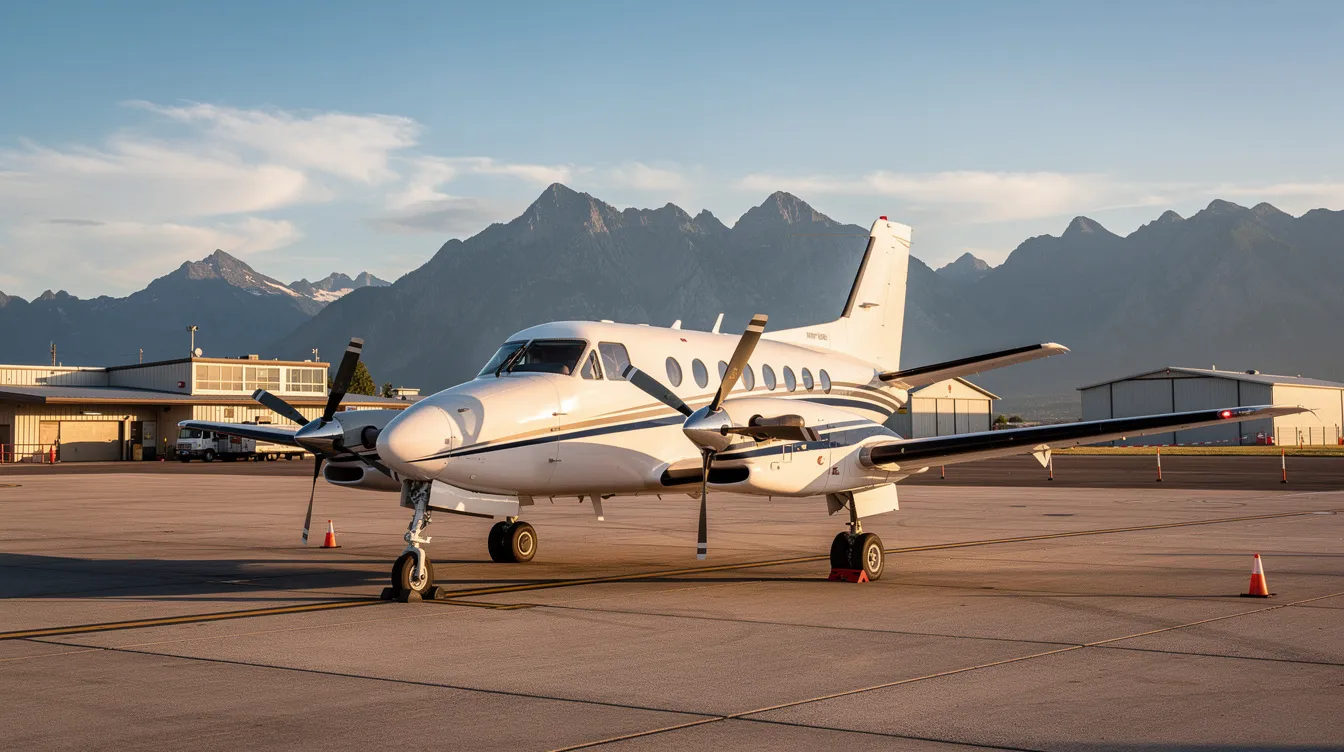
Popular charter turboprop models include the single-engine Pilatus PC-12 and PC-12 NGX (6–9 seats with cargo door), twin-engine Beechcraft King Air C90 (6–7 seats), King Air 200/250 (7–9 seats), King Air 350i (8–9 executive seats), and the Beechcraft 1900 for larger groups (up to 19 seats). Turboprops are the most economical option in private aviation for short regional trips under 500 miles, and they excel for short-distance trips, providing cost efficiency compared to private jets.
For travelers regularly flying these regional routes, BlackJet’s fractional ownership or Reserve Fleet access can offer lower effective hourly charter rates and guaranteed availability compared with ad hoc charter. Stratos Jets is also recognized as a trusted provider of luxury private jet charters, offering comprehensive services for a range of travel needs.
The hourly rate forms the core line item in any turboprop charter quote. The type of aircraft is the single most important cost driver in private jet charter pricing, with turboprops being the most affordable option in the private aviation spectrum.
Here’s what to expect for typical 2026 U.S. turboprop charter rates by class:
Aircraft Category | Example Models | Hourly Rate Range |
|---|---|---|
Entry-level single-engine | Cessna Caravan, older PC-12 | $1,200–$1,900/hr |
Premium single-engine | Pilatus PC-12 NG/NGX | $1,700–$2,400/hr |
Smaller twins | King Air C90, B100 | $1,400–$2,100/hr |
Mid-size twins | King Air 200/250 | $1,800–$2,500/hr |
Large twins | King Air 350/350i, Beechcraft 1900 | $2,200–$3,200+/hr |
Executive turboprops | Premium configurations | $2,500–$3,500/hr |
Chartering a turboprop aircraft costs between $1,800 and $3,500 per hour based on 2026 market projections, with specific models showing predictable ranges. Hourly rates for turboprop aircraft can vary, with specific models like the King Air 90 costing between $1,800 and $2,400 per hour, while the Pilatus PC-12 ranges from $2,000 to $2,800 per hour.
The King Air 350i seats 8–9 passengers in club configuration, cruises at 288 knots, and offers a 1,806 nm maximum range—ideal for longer regional missions or transcontinental hops. The Pilatus PC-12 NGX excels as a single-engine workhorse with 9 seats, a flat-floor cabin with a cargo door for skis or golf bags, and renowned dispatch reliability.
Newer airframes, upgraded leather interiors, Wi-Fi capability, and strong safety ratings from ARGUS or Wyvern typically push rates toward the top of these ranges. These hourly numbers exclude applicable taxes, airport handling charges, crew overnights, and catering, which can add 15–30% to the base hourly total. Additionally, fixed base operators (FBOs) provide essential ground services and may charge additional fees for aircraft handling and ramp services, with costs varying by location and aircraft size. Hangar fees for overnight aircraft storage may also apply, especially during certain seasons or trips, and these fees depend on the airport, aircraft size, and duration of stay. When calculating your total private jet charter cost, be sure to account for these potential additional expenses beyond the base hourly rate.
Understanding that “hourly rate × billable flight time” is only the starting point prevents sticker shock when your final invoice arrives. Total charter cost layers in aircraft positioning, minimums, and various fees that can significantly impact your budget.
Billable flight hours for turboprops typically run from wheels-up to wheels-down, plus any positioning legs required to reach your departure airport. Many operators enforce a 1.0–1.5-hour minimum per flight segment or a 2-hour daily minimum to cover fixed operational costs like crew duty time.
Flight distance and routing: Direct great-circle routes are ideal, but ATC vectors, terrain avoidance (mountain flying to Aspen), or weather deviations can add 10–20% to flight time
Aircraft positioning fees: Empty segments to reach your departure or return to the operator’s base, often billed at full rate if over one hour
Airport selection: Major hubs like LAX or JFK charge $500–$1,500 in landing fees plus handling charges, while smaller regional airports like White Plains or Trenton-Mercer may total $200–$500
Trip pattern: Same-day round-trips minimize crew member overnight expenses (including per diems, overnight accommodations, meals, and sometimes hangar fees, typically $450–$650/night × 2 pilots), while multi-day layovers add significantly
The total cost of a private jet charter includes not only the hourly rate but also additional fees such as repositioning fees, crew overnight expenses, airport handling charges, and applicable taxes, which can add 20–40% to the base rate. A 7.5% Federal Excise Tax is applied to all domestic U.S. charter flights, adding to your bottom line.
A weekend turboprop charter from Van Nuys (VNY) to Napa County (APC)—approximately 280 nm at 1.3 hours each way—might break down as:
Billable flight time: 2.6 hours × $2,200/hr = $5,720 base
VNY landing/handling: $300
APC fees: $250
Crew overnight (2 nights × $450): $900
Fuel/deicing estimate: $450
Federal Excise Tax (7.5%): ~$540
Total: approximately $8,160
Real quotes for this route typically range $6,500–$9,500 based on operator, aircraft age, and timing. In 2026, budgeting 1.4x to 1.6x the hourly rate is suggested to account for additional fees beyond the base charter cost. One-way trips are often more expensive than round trips due to repositioning fees, so same-day returns offer better value.
Empty legs—repositioning flights offered at significant discounts—can provide substantial cost savings for travelers with flexible schedules. However, booking empty legs requires flexibility due to scheduling uncertainties and real-time availability, as these flights are dependent on operator needs and may change with little notice.
Two clients flying the same route can receive vastly different private jet charter quotes depending on timing, demand, and aircraft specifics. Factors influencing private jet charter costs include flight time and distance, aircraft type, peak demand scheduling, and additional services like catering and ground transportation. Renting a private plane is generally more economical than owning one unless you fly extensively, as ownership involves significant additional expenses such as maintenance and insurance that are avoided with charter services.
Aircraft age and cabin configuration: Post-2015 airframes with refurbished interiors, Garmin G3000 avionics, and Wi-Fi command 15–25% premiums over older aircraft
Fuel prices and fuel surcharges: Jet-A prices fluctuating in 2025–2026 trigger surcharges of $100–$300/hr. Fuel surcharges can be 10-15% of the base rate, with prices approximately $3.99 per gallon as of early 2026
Peak dates and seasonal market demand: Ski season to Aspen or Vail, summer weekends to Nantucket, and major events like CES in Las Vegas can spike rates 15–30%
Geography and regional pricing: Northeast corridor routes from Teterboro or Van Nuys see higher baselines than Midwest routes due to slot costs and operational costs
Operator safety certifications: ARGUS Platinum, Wyvern Wingman, or IS-BAO Stage II/III operators charge 10–20% more but deliver lower cancellation rates and consistent service.
Minimum hour requirements: A 40-minute hop may still be billed as 1.0–1.5 hours to cover fixed costs
A midweek King Air 200 charter flight from Teterboro to Nantucket (200 nm, 1.0-hour flight) mightcost $2,1000/hr × 2.0-hour round-trip minimum = $4,200 + $1,200 fees/tax = approximately $6,000. The same route on a peak Friday–Sunday in summer could surge to $2,700/hr × 2.5 hours = $6,750 + $1,800 fees = approximately $9,300.
BlackJet typically steers clients toward operators with consistent safety and pricing policies rather than chasing the single lowest quote.
Many travelers compare a turboprop quote to a light jet, especially on routes of 300–800 miles. The cost and time gap is often smaller than expected—and sometimes favors the turboprop when total door-to-door time is considered. Smaller aircraft like turboprops are particularly efficient for regional travel, offering operational savings and better access to smaller airports.
Private jet rental prices typically range from $1,800 to $18,000 per billable flight hour, depending on the aircraft type and mission profile. Here’s how the categories compare:
Aircraft Type | Hourly Rate | Cruise Speed | Runway Needed | Best Range |
|---|---|---|---|---|
Turboprop (King Air 250, PC-12) | $1,700–$2,500/hr | 260–300 kts | 3,000 ft | Under 800–1,000 nm |
Light jet (Citation CJ3+, Learjet 75) | $2,600–$3,800/hr | 400–450 kts | 4,000+ ft | 500–1,500 nm |
Midsize jet (Citation XLS+, Hawker 800XP) | $3,800–$5,500/hr | 430–470 kts | 5,000+ ft | 1,500–2,500 nm |
Light and midsize jets are equipped with jet engines, which provide higher speeds and longer ranges, but also contribute to higher hourly rates compared to turboprops and other smaller aircraft.
Turboprops are estimated to burn 50-90 gallons of fuel per hour, compared to 200-300 gallons for light jets, translating to significantly lower operating costs.
Turboprop: 1.3 billable flight hours × $2,100/hr ≈ $2,730 + fees = ~$3,730 total
Light jet: 0.9–1.0 hours × $3,200/hr ≈ $2,880–$3,200 + higher fees (longer runway airports) = ~$4,500–$5,200 total
Turboprop aircraft are generally more economical than larger jets, making them a popular choice for regional travel due to their lower operating costs and ability to access smaller airports. For regional flights, turboprops often deliver 20–40% savings with only modest extra flight time.
Turboprops can use smaller, closer airports—East Hampton instead of Islip, Truckee instead of Reno—saving car service and ground transportation time that can offset slower cruise speeds. This access to remote airports often makes the turboprop faster door-to-door despite lower airspeed.
For clients flying 25–150 hours per year on mixed regional and longer flights, BlackJet programs allow using turboprops for short legs and jets for longer flights within a single membership, optimizing overall private jet cost. Chartering a private plane is typically more economical for most travelers than owning one, as it avoids the significant ongoing expenses of maintenance, insurance, and management associated with private plane ownership.

Understanding actual route pricing helps budget realistically for your specific trip. Here are four popular regional routes with typical 2026 turboprop charter cost estimates:
New York (TEB) to Boston (BOS), same-day return: $5,500–$7,000.
Add-ons: Fixed base operators (FBOs) may charge handling and ramp fees, which vary by airport and aircraft size.
Dallas (DAL) to Houston (HOU), overnight: $6,500–$8,500.
Add-ons: Overnight trips may incur hangar fees for aircraft storage and crew member overnight expenses, including per diems and accommodations. FBOs may also charge additional handling and ramp fees.
Los Ángeles (VNY) a Las Vegas (LAS), weekend: $8,000–$10,500.
Add-ons: Weekend or multi-day trips often include hangar fees, crew member overnight costs (lodging, meals, per diems), and variable FBO fees for ground support and ramp services.
Chicago (MDW) to Minneapolis (MSP), day trip: $6,000–$7,800.
Add-ons: FBO handling and ramp fees may apply, depending on the airport.
When estimating total turboprop charter rates, remember that crew member costs (such as overnight per diems and accommodations), hangar fees, and FBO charges are important variables that can significantly affect your final price.
Distance: ~200 nm | Flight time: ~1.0 hour each way
Aircraft: King Air 200 or Pilatus PC-12
Billable hours: 2.0–2.5 hours (including minimums)
Base hourly cost: $2,200–$2,800
Add-ons: TEB/ACK landing/handling ($800–$1,500), Federal Excise Tax
Total estimate: $5,500–$9,000, depending on season and demand
Distance: ~280 nm | Flight time: ~1.3 hours each way
Aircraft: King Air 350i or PC-12 NGX
Billable hours: 2.6 hours
Base hourly cost: $2,000–$2,400
Add-ons: Landing fees ($550), crew overnight for weekend ($900+), 7.5% FET
Total estimate: $7,700–$10,000 for weekend round-trip
Distance: ~260 nm | Flight time: ~1.2 hours each way
Aircraft: King Air 250 or PC-12
Billable hours: 2.4 hours
Base hourly cost: $1,900–$2,300
Add-ons: Lower fees at these regional airports (~$400), applicable taxes
Total estimate: $5,300–$7,000 for same-day business round-trip
Distance: ~220 nm | Flight time: ~1.0 hour each way
Aircraft: King Air 200 or PC-12
Billable hours: 2.0 hours
Base hourly cost: $2,100–$2,600
Add-ons: Summer seasonal demand premium, handling charges ($600)
Total estimate: $5,500–$8,000 demand-adjusted for summer weekends
These estimates are illustrative to help set realistic budget expectations. Contact BlackJet for a tailored analysis factoring in exact dates, passenger count, preferred aircraft type, and any additional services like catering.

On-demand turboprop charter serves occasional flyers well, but frequent regional travelers may reduce their effective private jet rental cost and improve predictability through fractional jet ownership as a cost-effective alternative or structured membership access. While some consider whether to own a private plane, it's important to note that unless you fly more than 150 hours per year, chartering a private plane is typically far more cost-effective. Owning your own private plane involves significant ongoing expenses—such as maintenance, crew, and insurance—that are avoided with private plane charter services.
Flying fewer than ~25 flight hours per year
Travel schedules are highly irregular or unpredictable
Testing flying private before committing capital
One-off trips to unique destinations
Travelers comparing long-term access structures may want to review the best fractional jet ownership programs alongside turboprop charter options to align costs with expected flight hours.
Flying 25–150 hours annually, especially on recurring regional routes
Guaranteed aircraft availability and consistent hourly rates matter
Interest in potential tax benefits from owning an aircraft share (U.S. bonus depreciation may apply for qualifying business use)
Desire for simplified scheduling without shopping for quotes for every private flight, especially when programs leverage floating fleet options in fractional ownership to boost aircraft availability
For prospective buyers evaluating structured access models, understanding the cost of fractional jet ownership is essential before comparing it with turboprop charter pricing.
Model | Commitment | Cost Structure | Best For |
|---|---|---|---|
On-demand charter | None | Variable private jet charter rates, no obligation | < 25 hrs/year |
Reserve Fleet (BlackJet) | Deposit | Fixed hourly, priority access | 25–75 hrs/year |
Equity Fleet (BlackJet) | Ownership share | Lower effective hourly, tax benefits | 75–150 hrs/year |
A firm flying Dallas to Midland twice monthly (24 round-trips, ~60 hours annually) might spend $140,000/year at $2,300/hr all-in for private charter. A 1/8 fractional turboprop share through BlackJet could reduce the effective hourly rate to $1,600–$1,800 with added benefits of aircraft availability guarantees and management simplicity.
A typical charter hourly rate for turboprops starts around $1,500 to $3,200 as of 2025-2026, with the most common aircraft like the King Air series and Pilatus PC-12 falling between $1,800 and $2,800 per hour. In 2026, typical charter rates for turboprop aircraft range from $1,500 to $3,500 per billable flight hour, depending on configuration and operator.
Yes, turboprops typically cost 30–50% less per hour than light jets for routes under 800 nm. A turboprop might run $2,000–$2,500/hr versus $2,600–$3,800/hr for a comparable light jet, with similar door-to-door times on shorter flights due to the turboprop’s runway advantages. Jets are powered by jet engines, which provide higher speed and range, but this also results in higher hourly charter rates compared to turboprops.
Most turboprops have a maximum range of 800–1,800 nm, but jets become more time-efficient around 1,000–1,500 n,m where their speed advantage compounds. For longer flights requiring international flights or transcontinental range, light or midsize jets justify the higher cost.
Beyond safety, prospective owners should understand the essential contract terms in fractional jet ownership when comparing turboprop charter with equity-based access models.
Modern turboprops have excellent safety records, with fatality rates under 0.1 per 100,000 hours among professional Part 135 operators. BlackJet works exclusively with vetted ARGUS and Wyvern-certified operators, rs maintaining rigorous crew training and maintenance standards.
Yes, for short-range international flights such as U.S.–Caribbean, U.S.–Mexico, or intra-European segments under 800 nm. Longer international routes favor jets for payload, range, and flight time efficiency. Note that international fees and landing permits add complexity.
Professional crews, modern avionics, and Flight Into Known Icing (FIKI) certification mitigate most weather concerns. Turboprop engines and propeller systems handle icing conditions well, and operating at lower altitudes sometimes means smoother rides, des avoiding jet stream turbulence.
Empty legs are repositioning flights that occur when an aircraft needs to return to its base or move to another location for its next booked trip. These flights are often offered at significant discounts compared to standard charter rates, making them a cost-saving option for flexible travelers. However, booking an empty leg requires flexibility, as scheduling and real-time availability can change with little notice.
Chartering a private jet flight offers a high level of comfort, privacy, and convenience, with tailored schedules and direct access to smaller airports. The overall experience is designed to maximize efficiency and luxury, whether you choose a turboprop or a jet. BlackJet advisors help clients select turboprops versus jets on a trip-by-trip basis to optimize cost, cabin space, and schedule.
Turboprop charter rates for 2026 typically range from $1,200 to $3,000 per hour at the base level, with total charter cost for regional trips commonly falling between $4,000 and $10,000, depending on aircraft size, routing, seasonal demand, and fees. The type of aircraft, departure airport location, and trip timing remain the primary factors moving quotes up or down.
For regional private jet travel under 800 miles, turboprops consistently deliver the best value proposition—combining lower hourly rates, fuel efficiency, and access to smaller airports closer to your destination. Whether you’re flying to close a deal, reach a vacation home, or connect with family, turboprop charter offers a practical entry point to private aviation without the tens of thousands in costs associated with larger aircraft.
For individuals and companies flying 25–150 hours annually, it’s worth modeling not just per-trip charter costs, but also the total cost of fractional jet ownership and membership structures that can stabilize costs over time and eliminate the hassle of shopping quotes for every flight.
Ready to compare turboprop charter rates with smarter long-term options? Visit FractionalJetOwnership.com to explore how BlackJet’s fractional ownership and Reserve Fleet programs can lower your effective cost per hour and simplify every trip.
BlackJet can review your recent charter invoices or planned routes and provide a side-by-side cost analysis—helping you decide whether to continue with on-demand turboprop charter or transition to a structured ownership or membership solution that delivers efficiency, predictability, and control over your travel schedule.
For those seeking additional options, Stratos Jets is also recognized as a trusted provider of luxury private jet charters, known for its exceptional client support and comprehensive services.
