
May 2, 2026
The idea of an “Uber for private jets”—using an app to book private flights as easily as a car ride—has captured the imagination of travelers and investors alike. After 2015, multiple startups launched digital platforms promising app-based booking, transparent pricing, and instant access to available aircraft, revolutionizing air travel and private aviation solutions. High-net-worth individuals in the United States and Europe embraced these services for popular routes like New York to Miami, Los Angeles to Las Vegas, and London to Nice.
This guide compares on-demand private jet booking apps—often called “Uber for private jets”—with traditional fractional jet ownership models. It is designed for travelers, business executives, and families exploring private aviation options, helping you understand the benefits, limitations, and costs of each approach. The topic matters because access to private aviation is changing rapidly, with new technology making cost transparency and convenience more attainable than ever before. Whether you’re considering your first private flight or evaluating long-term solutions for frequent travel, understanding these models will help you make informed decisions about how to fly private effectively.
Yet the reality of private aviation is far more complex than ground transportation. Maintenance checks, crew duty limits, and regulatory requirements—managed by charter operators—mean that true instant takeoff remains elusive. Regulation and security are also far more stringent in private aviation, setting it apart from ground ridesharing. From BlackJet Fractional Jet Ownership’s perspective, these apps offer convenience for occasional travelers but lack the predictability that frequent flyers and corporations demand. Understanding the difference between ad-hoc app bookings and structured fractional aircraft ownership is essential for anyone considering how to fly private effectively.
The concept of an “Uber for private jets” involves a digital platform that aggregates available aircraft, allowing customers to choose and reserve a seat or the entire plane in real-time, similar to how rideshare apps function. Private jet rideshare allows passengers to book individual seats on private jets instead of chartering the entire aircraft, often through mobile apps or websites. Rideshare flights typically operate on pre-scheduled routes or are filled dynamically, matching travelers with similar itineraries. The rideshare model in private aviation is designed to make flying private more accessible and affordable, allowing travelers to enjoy the benefits of private flying without the high costs associated with chartering an entire jet.
Most platforms connect users with FAA Part 135 or 91K operators, and flights are operated by FAA-certified charter companies to ensure safety, compliance, and professionalism. Rideshare flights typically operate on pre-scheduled routes or are filled dynamically, matching travelers with similar itineraries. The rideshare model in private aviation is designed to make flying private more accessible and affordable, allowing travelers to enjoy the benefits of private flying without the high costs associated with chartering an entire jet. Compared to airlines, private jets can access airports not served by traditional airlines and must comply with similar or even stricter regulatory standards.
Semi-private shared seats on scheduled routes: Book a seat on a private jet with other travelers on set routes.
Full charters: Clients book the entire aircraft for privacy and flexibility in scheduling.
Empty leg deals: Discounted repositioning flights when jets return empty.
Hybrid memberships: Programs that combine elements of each model.
While the idea of an on-demand aviation service is appealing, the complexities of private aviation—such as maintenance checks, pilot scheduling, and regulatory requirements—make it challenging to create an instant booking experience comparable to rideshare services.
Booking private flights through apps allows for direct comparisons of prices without going through traditional brokers. Here’s a typical workflow:
Users input origin (e.g., Teterboro – KTEB), destination (e.g., Opa-locka – KOPF), date, and passenger count.
The app displays choices across cabin classes, and private jets are categorized into light jets, midsize jets, super-midsize jets, and long-range jets.
Light jets typically accommodate 4-6 passengers and are designed for short-range flights, with rates around $4,000-$6,000 per hour. Super-midsize jets, such as the Challenger 350, provide a balance of range, speed, and cabin comfort, making them suitable for coast-to-coast flights.
Instant pricing and payment features are common in on-demand jet booking apps, displaying prices upfront and processing payments immediately.
Users get FBO details and check-in instructions.
For example, the cost of a short hop on a light jet will be significantly less than a transcontinental flight on a long-range jet, illustrating the variability in private jet flight costs.
Private jet rideshare services provide significant time savings, allowing travelers to skip TSA lines and board flights with minimal wait times, often as little as 15-30 minutes before departure. Behind the scenes, an operator verifies aircraft availability, crew duty times, weather, and regulatory constraints before final acceptance.
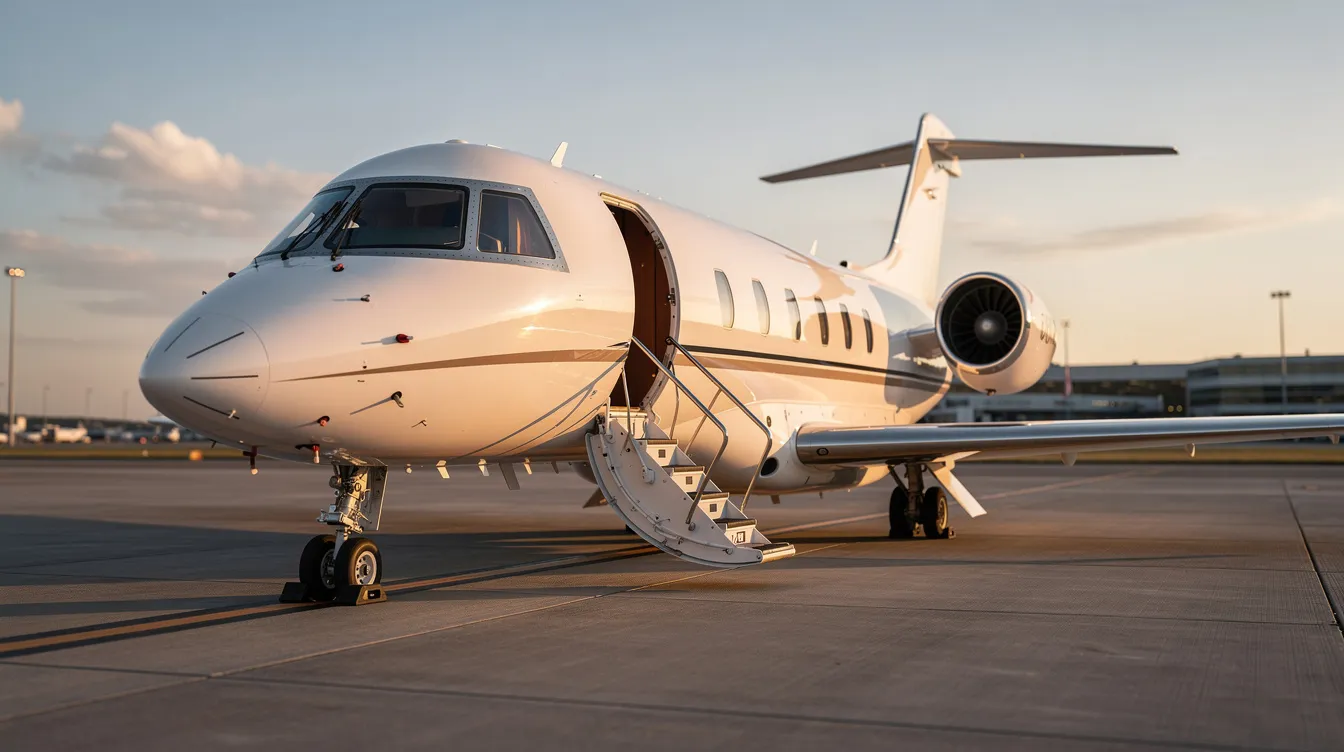
Uber does not operate an ongoing private jet service. The company has run limited promotional “UberJet” or helicopter partnerships, with flights operated by licensed charter operators in specific cities or during events. Examples include short-lived promotions around the Cannes Film Festival in France, seasonal helicopter offerings in New York, and similar campaigns in Dubai.
These were marketing campaigns rather than a scalable, global Uber for a private network. The gap between marketing buzz and operational reality created space for dedicated aviation platforms—and for structured models like fractional aircraft ownership that deliver consistent access rather than promotional novelty.
On-demand jet charter services, typically provided by charter operators, generally do not require upfront deposits or long-term contracts, allowing payment for specific trips only. This works well for occasional travelers with flexible schedules. However, frequent fliers and corporations often need guaranteed availability and predictable cost that a pure app-based charter cannot provide.
Fractional jet ownership and structured membership programs offer an alternative for travelers needing 25-150 hours per year of air travel. BlackJet Fractional Jet Ownership focuses on three core access models:
Reserve Fleet: Pay-as-you-go membership without ownership costs.
Equity Fleet: True fractional ownership with tax and scheduling advantages, often structured in share sizes such as 1/8 fractional jet ownership, providing around 100 hours per year.
The choice between models depends on usage patterns, budget predictability needs, and long-term financial goals.
Reserve Fleet functions as a membership-style, non-equity access model where members buy hours or commit to usage bands instead of booking one-off charters. This approach delivers several advantages over standard on-demand apps:
Guaranteed aircraft access within defined call-out windows (typically 12-24 hours’ notice).
Contracted hourly rates that avoid dynamic pricing fluctuations.
Priority scheduling during peak travel periods.
Consistent service standards across a managed diverse fleet.
The pricing of on-demand jet charter services can fluctuate significantly based on availability and seasonal demand. Busy executives flying routes like Chicago to Dallas or Toronto to New York can budget more accurately and avoid last-minute price spikes that plague ad-hoc bookings by comparing fractional jet ownership vs. membership programs against their actual flying patterns.
Equity Fleet represents true fractional aircraft ownership with tangible financial benefits:
Clients purchase a share (e.g., 1/8 or 1/16) of a specific aircraft type.
Jet owners receive a contracted number of flight hours per year.
Priority access and aircraft type consistency for core missions.
Residual value returned when the share is sold at program end.
Potential tax advantages: In the United States, qualifying business use may unlock tax advantages such as accelerated depreciation under current IRS rules (consult a CPA for specific guidance).
On-demand apps offer no equity buildup and no residual value. Travelers face fully variable pricing without the wealth-building potential that comes with fractional jet ownership as an investment.
The emergence of affordable private jet services suggests that some companies are offering shared flights or empty-leg deals, which can lower the cost of entry into private aviation, although it remains a premium service compared to commercial airlines. Private jets also provide access to airports not served by traditional airlines, offering greater flexibility and convenience.
Private jet rental prices typically range from $2,000 to over $20,000 per hour, depending on aircraft type, distance, and additional services. For example:
Light jet (4-6 passengers, short-range): $2,000 to $3,000 per hour.
Long-range jet (international routes, luxury amenities): $10,000+ per hour.
12-seat private jet: $5,000 to $9,000 per hour (three-hour flight: $15,000 to $27,000).
Super-midsize jets (e.g., Challenger 350): Balance of range, speed, and cabin comfort, suitable for coast-to-coast flights.
For comparison, prospective owners should understand the complete cost of fractional jet ownership.
By-the-seat offers or semi-private flights: Lower per-person cost but often involve fixed schedules and shared cabins—a trade-off some travelers find acceptable for short hops.
Empty leg flights: Discounted repositioning flights, sometimes up to 75% off regular prices, but require flexibility and typically appear within 24-72 hours of departure.
Fractional ownership spreads acquisition and fixed costs over predictable annual hours, often resulting in a lower effective hourly rate for frequent users than repetitive ad-hoc app bookings. Evaluating the total cost of fractional jet ownership helps determine whether that trade-off makes sense for your flying profile.
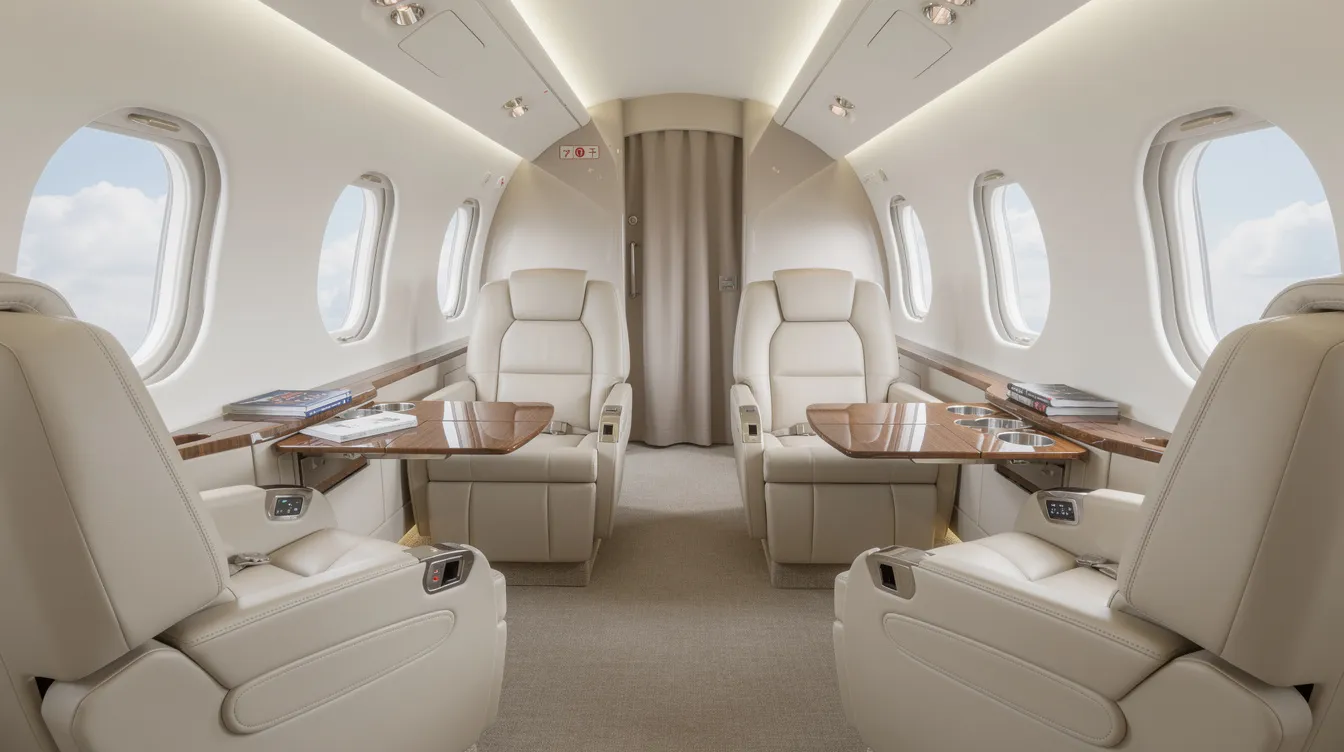
Factors influencing private jet travel costs include:
Aircraft type and age: Newer models command 10-20% premiums.
Route popularity: High-demand destinations like Aspen during ski season vs. standard business routes.
Repositioning needs: Deadhead distance can add up to 50% to your fare.
Seasonality: Holidays and major events can increase prices by 50% or more.
Optional add-ons: Catering, ground transportation services, de-icing, and Wi-Fi.
Empty leg flights, which occur when a jet is returning empty, can offer significant savings—sometimes up to 75% off regular prices—making private flying more affordable. Empty leg flights can be marketed as bargain options in private jet booking apps, though they typically appear within 24-72 hours of departure and require flexibility.
Users can benefit from market fluctuations to secure lower rates during off-peak times in on-demand private jet services. However, business travelers who need guaranteed departure times often choose contractual solutions that blend opportunistic savings with reliable access, such as programs built around floating fleet options in fractional ownership.
The Uber for private model faces challenges due to the regulatory environment, which requires compliance with strict aviation authority standards, insurance, and pilot qualifications, making it different from traditional rideshare services. Regulation ensures that all operators adhere to safety and legal requirements, providing an added layer of compliance and protection for passengers. Unlike requesting a car, every flight involves complex coordination.
All aircraft used in private jet rideshare programs must meet FAA Part 135 or 91K standards and undergo rigorous third-party safety audits. Reputable platforms and fractional programs use audits from organizations like ARGUS, Wyvern, and IS-BAO to validate operational excellence, supported by highly trained pilots and professional crews. Travelers also benefit from bypassing security lines at private terminals (FBOs), saving significant time while maintaining high standards of safety and security.
Private jets inc and other Part 135 charter operators must ensure pilots meet currency requirements, aircraft complete mandated inspections (such as 100-hour checks on light jets), and crews observe duty time restrictions. Charter operators are responsible for ensuring compliance with all safety and regulatory standards. This regulatory framework ensures safety but prevents the instant-booking experience that ground ridesharing delivers.
Creating a true global Uber for private jets network has proven more difficult than early investors anticipated:
Aggregating enough aircraft across North America and Europe to offer real-time, guaranteed inventory requires massive capital and coordination.
Aircraft cannot deadhead endlessly at low margins; repositioning costs and crew schedules limit practicality.
Kinectair aims, and similar startups face the same fundamental economics that challenged earlier entrants, while established providers in the best fractional jet ownership programs have built models around predictable demand and long-term commitments.
Many early platforms from the mid-2010s pivoted to memberships, merged, or exited entirely.
Sustainable models tend to be structured programs—fractional ownership, jet cards, and managed fleets—rather than pure instant-book apps attempting to replicate ride-hailing economics in aviation.
Choosing between models depends on travel patterns and priorities. Here’s a framework for regular people dipping their toes into private aviation versus experienced travelers expanding their access:
Infrequent private flyers (under 25 hours per year)
Leisure travelers booking occasional ski trips to Aspen or beach getaways
Flexible travelers chasing empty leg deals who can adjust schedules
Executives commuting between hubs (e.g., New York to Chicago monthly)
Companies with recurring client visits requiring reliable scheduling
Families flying 25-150 hours annually to second homes or vacation destinations who want to better understand fractional jet ownership terminology and concepts.
Consider not just headline price but reliability, scheduling control, and long-term value when choosing between models. Private planes offer privacy and convenience, but the right access model maximizes both.
BlackJet tailors solutions for diverse clients, whether they’re exploring fractional jet ownership in Atlanta, seeking shared ownership based in Orlando, evaluating fractional jet ownership options in Phoenix, or considering a fractional program out of Pittsburgh:
Business owner flying 80-120 hours per year: Might choose an Equity Fleet share on a super-midsize jet for consistent performance and tax benefits. Understanding the tax implications for fractional jet owners helps ensure those benefits are realized correctly. The company manages aircraft sourcing, crewing, insurance, scheduling, and ongoing maintenance.
Family using 30-40 hours annually: To reach destinations like Jackson Hole, Napa, or Cabo San Lucas, might prefer Reserve Fleet access—enjoying private flying without owning an aircraft outright.
BlackJet advisors help clients choose between models based on projected hours, financing structures such as fractional jet ownership financing options, contract details including essential fractional jet ownership terms and sample co-ownership agreements, liability and insurance coverage in fractional ownership, exit strategies like selling a fractional jet ownership share, and long-term plans, making the skies friendlier for each traveler’s specific needs.
Fractional jet ownership involves purchasing a share of an aircraft, providing guaranteed access, consistent service, and potential tax benefits. On-demand private jet apps offer flexible booking without ownership, ideal for infrequent flyers but with variable pricing and no guaranteed availability.
Yes, many private jet rideshare platforms allow booking individual seats on shared flights, lowering costs compared to chartering an entire aircraft. These flights often operate on popular routes or scheduled services.
Private jet rental prices vary widely depending on aircraft type and distance. Renting a 12-seat private jet typically costs between $5,000 and $9,000 per hour. For example, a three-hour flight may range from $15,000 to $27,000.
Empty leg flights are discounted repositioning flights available at up to 75% off regular prices. They require flexible travel plans and are usually booked last minute but can significantly reduce the cost of private flying.
Both fractional ownership and reputable private jet apps operate under strict FAA Part 135 or 91K regulations, with rigorous safety audits and pilot qualifications. Fractional programs often have additional operational oversight due to ownership responsibilities.
While some platforms strive to provide instant pricing and booking, the complexities of private aviation—such as maintenance, crew scheduling, and regulations—mean true instant booking comparable to Uber for cars is challenging to achieve.
Fractional ownership offers predictable costs, guaranteed availability, priority scheduling, and the potential for residual value and tax advantages, making it ideal for frequent flyers and businesses.
Working with established providers like BlackJet Fractional Jet Ownership ensures transparent contracts, professional management, and support with insurance and liability coverage to protect your investment.
The industry continues evolving with technology and environmental awareness:
AI-driven scheduling and demand forecasting are improving aircraft utilization, potentially reducing empty legs and stabilizing pricing across the most extensive fleets.
Electric and hybrid aircraft development targets short-haul routes in the 2030s, aiming to cut emissions and operating costs on sectors under 300 miles.
Many operators now offer carbon offsetting or invest in sustainable aviation fuel (SAF) for flights within North America and Europe.
Mobile apps continue improving, though the fundamental economics of aviation limit how far the instant-booking model can expand.
BlackJet Fractional Jet Ownership monitors and adopts relevant technologies while keeping safety, reliability, and owner experience as primary filters for any innovation.
The Uber for private jets concept has improved access and transparency in the world of private aviation. Digital platforms make it easier for travelers to compare options, book flights, and understand pricing without traditional brokerage hassles. For occasional travelers with flexible schedules, these apps offer genuine value.
However, frequent flyers and corporations requiring guaranteed access, predictable budgeting, and potential ownership benefits find that structured solutions deliver greater long-term value. BlackJet’s Reserve and Equity Fleets serve clients who prioritize consistency, control, and the peace of mind knowing their travel needs are covered regardless of market demand or seasonal pricing spikes.
Consider your last 12-24 months of travel and your projected future trips. How many hours did you fly? How often did scheduling flexibility—or inflexibility—affect your plans? These answers reveal whether a share program, membership, or continued ad-hoc charter makes the most financial and practical sense for your situation.
Ready to explore the smarter way to fly private? Visit FractionalJetOwnership.com to learn how fractional ownership and tailored access programs can transform your private aviation experience. Schedule a consultation to review your travel profile and model potential savings with BlackJet Fractional Jet Ownership.
