
May 6, 2026
Warren Buffett’s relationship with private planes is a story that stands out as one of the most instructive in modern business aviation. The investor who once publicly criticized corporate jets as wasteful extravagances eventually became the owner of the world’s largest private jet company. His evolution from skeptic to strategic user offers a blueprint for anyone weighing private aviation options today.
This article is for business travelers, executives, and anyone considering private aviation, offering insights from Buffett’s experience to help you make smarter decisions about private jet access and ownership.
Yes, Warren Buffett does use a private jet—though his approach differs from what most people assume. He famously nicknamed his first aircraft “The Indefensible,” later renaming it “The Indispensable” after recognizing its productivity benefits. Today, his travel is primarily supported through Berkshire Hathaway’s ownership of NetJets, the world’s largest operator of private jets.
The idea behind Buffett’s approach is to focus on the underlying value and efficiency of private aviation, rather than just the upfront cost or ownership status. Rather than maintaining a single personal aircraft he owns outright, Buffett flies on NetJets aircraft. This gives him access to a professionally managed fleet without the complications of whole aircraft ownership. His approach mirrors the logic behind fractional jet ownership and shared-use models that BlackJet Fractional Jet Ownership also advocates, making it helpful to understand key fractional jet ownership terms and concepts before evaluating different access options.

Access Model | Capital Required | Ongoing Costs | Flexibility | Best For |
|---|---|---|---|---|
Full Ownership | $20M–$70M+ | $2M–$4M/year fixed | Low (one aircraft) | 400+ hours/year |
Fractional Ownership | $500K–$5M share | Hourly + management | High (fleet access) | 50–150 hours/year |
Charter | None | Variable hourly | Moderate | Under 25 hours/year |
In the early 1980s, Buffett was a vocal critic of corporate jets. He viewed them as unjustifiable extravagances that executives used to separate themselves from shareholders’ interests. His shareholder letters were frequently aimed at CEOs who indulged in such luxuries.
Then came 1985. Berkshire Hathaway’s net worth surged by over $600 million—a 48% increase—and Buffett began reconsidering the value of his own time. He consulted a friend and executive, Walter Scott Jr., who advised him to rationalize rather than justify the purchase. In 1986, Buffett acquired a used Dassault Falcon 20 for $850,000, carefully considering what he was actually paying compared to the cost of a new aircraft, and staying true to his value-investing principles by buying at a fraction of new aircraft prices.
“The Indefensible” became “The Indispensable” once Buffett quantified the productivity gains.
By 1989, recognizing the Falcon’s limitations for longer trips, he upgraded to a Bombardier Challenger 600 for $6.7 million. Charlie Munger, his longtime business partner who preferred economy travel, disapproved strongly. But over the following years, Buffett’s experiences with private aviation allowed him to visit more businesses and maintain a productive schedule. By the mid-1990s, he had renamed the jet “The Indispensable.”
Key Milestones:
1986: First jet purchase (used Falcon 20, $850,000)
1989: Upgrade to Challenger 600 ($6.7 million)
1998: Berkshire Hathaway acquires NetJets ($725 million)
2000s–present: Continued NetJets usage for Berkshire operations
In 1998, Berkshire Hathaway acquired NetJets Inc for approximately $725 million from Richard Santulli, the entrepreneur who pioneered fractional aircraft ownership in the 1980s through Executive Jet Aviation. This acquisition marked Buffett’s transformation from a jet user to owner of a leading private aviation business, and exemplified how strategic investments in private aviation contributed to Buffett’s accumulation and preservation of wealth.
NetJets was the inventor of the fractional private jet ownership concept, which has become a standard model in the private aviation industry. The company allowed customers to purchase shares (as small as 1/16th) of specific aircraft, granting proportional access—typically 50 flight hours annually per share—while spreading fixed costs across multiple fractional owners; for example, 1/8th fractional jet ownership and its 100-hour structure illustrates how these share sizes translate into real-world flying.
By the mid-2020s, NetJets operated around 1,400 flights per day, making it the world’s largest operator of private jets. The company manages hundreds of aircraft worldwide and serves over 40% of Fortune 100 companies, with operations spanning the United States, NetJets Europe, and beyond.
This structure gives Buffett and Berkshire executives scalable, flexible access to a fleet instead of tying capital into a single personal plane. It resembles floating fleet options in fractional ownership, where access to a broader pool of aircraft enhances availability and efficiency. BlackJet Fractional Jet Ownership follows a similar philosophy: structured access to aircraft through fractional ownership and reserve-hour programs rather than traditional full ownership.
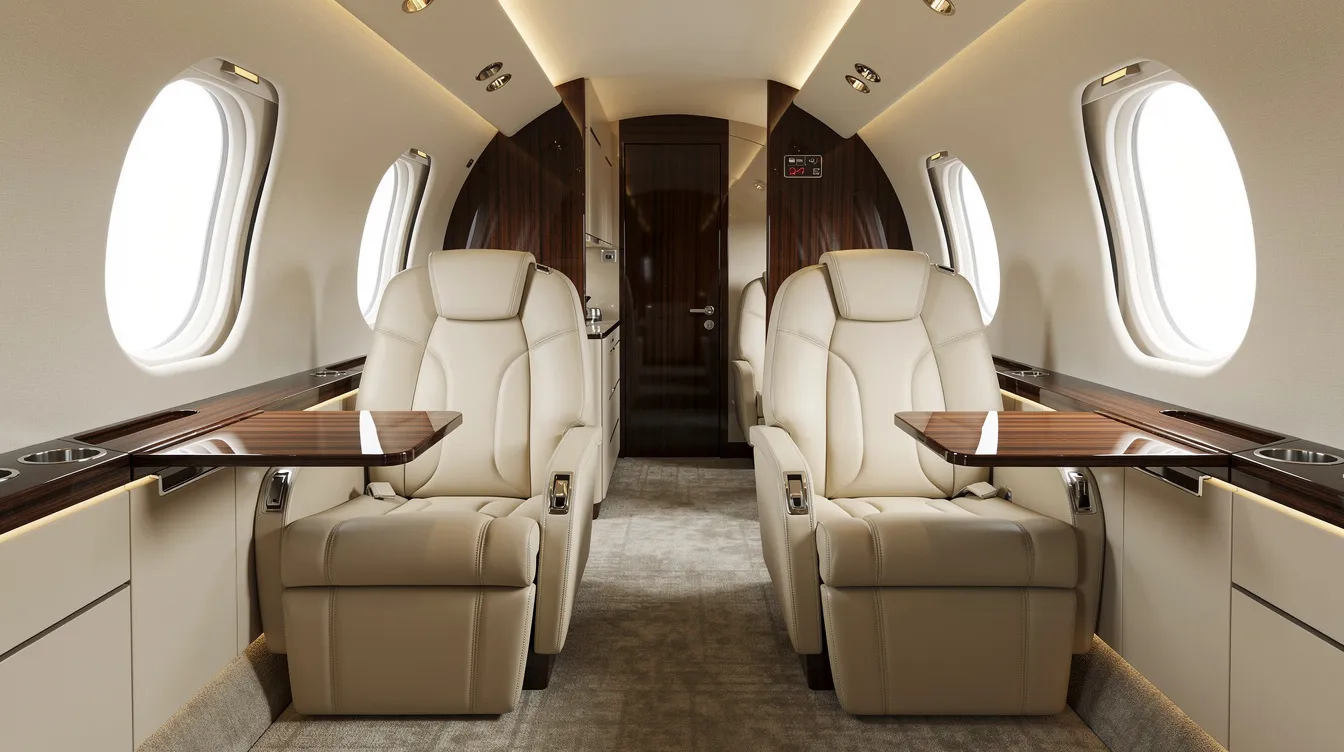
Buffett does not publicize a single favorite aircraft. As a NetJets customer, he has access to a structured fleet ranging from light jets to ultra-long-range Globals. NetJets operates a diverse fleet of private jets, including models from Embraer, Cessna, Bombardier, and Dassault, many of which are also available for sale to buyers interested in whole aircraft ownership, providing additional market opportunities for those seeking to invest through leading fractional jet ownership programs or to invest directly in private aviation assets.
The NetJets fleet is categorized into five classes: Light, Midsize, Super-midsize, Long-range, and Ultra-long-range, each serving different passenger capacities and flight ranges:
Light Jets: NetJets’ Light class includes the Embraer Phenom 300/E, which is designed for short-range flights and can carry up to six passengers. Ideal for regional hops within the United States.
Midsize Jets: Options like the Cessna Citation Latitude and Citation Sovereign handle medium-range business trips with cabin comfort and speed around 450 knots.
Super-Midsize Jets: The Bombardier Challenger 350 serves coast-to-coast flights across the US, seating up to nine passengers.
Long-Range Jets: In the Long-range category, NetJets features Bombardier’s Global 5500, Global 6000, and Global 7500, which are capable of long-haul flights between continents—routes like New York to Tokyo become nonstop possibilities.
This fleet model lets high-profile travelers like Buffett match aircraft size and range to each mission. A two-hour regional hop doesn’t require deploying a large cabin jet, saving 30–50% in fuel costs compared to overpaying for unnecessary capacity.
BlackJet Fractional Jet Ownership’s Equity Fleet and Reserve Fleet models operate on the same principle: matching aircraft class to each trip profile for clients flying 25–150 hours per year.
Buffett’s well-known investment principles translate directly into private aviation decisions. Just as he views owning a house as a long-term, value-driven investment that provides stability and personal satisfaction, his approach to flying reflects the same discipline he applies to Berkshire Hathaway’s portfolio: focus on value, understand what you’re buying, choose durable partners, and invest in what matters most.
Warren Buffett’s principle of value investing emphasizes that price and value are not the same; in private aviation, this means assessing what you truly get for what you pay, rather than just focusing on the sticker price. He prefers quality assets at fair prices over the cheapest option available.
In practice, this means avoiding the rock-bottom on-demand charter quote in favor of vetted operators or fractional providers with strong safety records. Value looks like newer aircraft (average fleet age of 5 years vs. 15+ for some charters), dispatch reliability over 99%, stable pricing, and transparent fees.
Consider a CEO flying 50 hours annually. A $5,000/hour charter rate may balloon to $9,000 effective cost after fuel surcharges, repositioning fees, and peak-day premiums. Meanwhile, a fractional share with BlackJet’s Equity Fleet delivers predictable all-in pricing without surprise add-ons, aligning with the need to understand the total cost of fractional jet ownership rather than just advertised hourly rates.
In private aviation, understanding the market and the true costs associated with different services is crucial, as many offerings can be opaque and misleading, leading to potential financial pitfalls. This mirrors Buffett’s insistence on fully understanding an investment before committing capital, including carefully reviewing essential contract terms in fractional jet ownership agreements before signing.
Questions to ask before joining any program:
What are the peak-day restrictions and blackout periods?
How are fuel surcharges calculated?
What repositioning fees apply to one-way flights?
How are maintenance reserves structured?
What are the exit terms and depreciation assumptions?
Jet card programs and jet card providers often advertise attractive hourly rates that hide high costs. A $7,000 advertised rate can effectively double to $14,000 over a 3–5 year term when accounting for these variables. Jet card customers who don’t scrutinize contracts often discover this too late, especially in emerging hubs where fractional jet ownership in Nashville and similar markets offers more transparent, asset-based alternatives.
BlackJet Fractional Jet Ownership advocates detailed scenario modeling—running the numbers at 25, 50, and 100 hours per year—before clients sign any long-term contract, with a focus on clarifying the complete cost structure of fractional jet ownership so buyers know exactly what they’re committing to.
Buffett’s approach to private aviation reflects a long-term investment mindset, where the focus is on acquiring quality assets that can withstand market fluctuations, rather than chasing short-term gains. This applies directly to evaluating private aviation partners and deciding between fractional jet ownership and membership-style access programs based on how often you fly and the level of commitment you want.
The 2008 financial crisis and the 2020 pandemic exposed weak operators. Companies that accepted large prepaid deposits but lacked balance sheet strength left clients stranded as unsecured creditors amid $100 million+ in industry-wide deposit losses, prompting many to pivot toward fractional jet ownership options in Pittsburgh and other cities with more established management structures. Some fractional providers with unsustainable pricing simply ceased operations.
Signs of durability to look for:
20+ years in operation
Diversified revenue streams
Conservative growth approach
Transparent ownership structures
Strong parent company backing
BlackJet’s model is intentionally conservative: right-sized fleets, disciplined pricing, and emphasis on long-term client relationships rather than rapid, leveraged expansion, whether structuring access for clients interested in fractional jet ownership in Orlando and Central Florida or other regional markets.
Buffett believes he can maximize productivity and quality of life by using a private plane, reducing the inefficiencies of commercial travel. Buffett views private travel as a strategic investment in productivity, treating time as the most valuable asset.
The numbers illustrate this clearly. A New York-to-Los Angeles commercial round-trip consumes 12–16 door-to-door hours. The same trip by private jet takes 5–7 hours. For executives making 50 trips annually, that’s 500+ hours reclaimed—worth $250,000 or more at $500/hour personal productivity.
Interestingly, Buffett has lived in the same house he purchased in 1958, demonstrating a contrast between his long-term commitment and personal frugality versus his willingness to invest in business productivity. He believes that too often, excessive possessions end up possessing their owner, which is why he avoids owning multiple homes. Yet private aviation passes his investment test because Buffett acknowledges that the efficiency gains from private travel outweigh the costs for his specific business needs, a mindset that also drives demand for fractional jet ownership in Phoenix among time-sensitive executives.
For many flyers in the 25–150 hours per year range, fractional ownership delivers most of the time-saving benefits of whole aircraft ownership at a fraction of the cost and complexity, which is why markets like Austin fractional jet ownership have become popular among regional business travelers.
While Berkshire Hathaway could easily afford its own private fleet, Buffett chose to own the platform (NetJets) and utilize that shared fleet rather than dedicating multiple whole aircraft exclusively to himself or Berkshire executives.
Cost Category | Annual Amount |
|---|---|
Aircraft Purchase | $20M–$70M+ upfront |
Crew Salaries | $300,000+ |
Insurance | $100,000+ |
Hangar Fees | $50,000/month |
Maintenance Reserves | Variable |
Total Fixed Costs | $2M–$4M/year |
Full owners also face depreciation risk (5–10% annually), utilization requirements (400–600 hours/year to break even), regulatory compliance burdens, and resale volatility when markets soften, which is why many high-net-worth individuals instead evaluate fractional jet ownership as an investment relative to owning an entire aircraft.
Shared capital and operating costs across multiple owners
Professional operations from an aircraft management company
Guaranteed availability frameworks
Easier scaling without sell decisions
For a hypothetical 100-hour-per-year flyer, full ownership may cost $3.5M+ annuall,y while fractional access runs $800K–$1.2M all-in with no asset risk, which is why coastal markets such as Virginia Beach fractional jet ownership increasingly favor shared models over sole ownership. Charter suits sporadic use but lacks guarantees during peak demand periods, so understanding fractional jet ownership financing, costs, and structures becomes central to choosing the right model.
Buffett’s personal behavior—leveraging a professionally managed fleet through NetJets instead of buying multiple jets outright—mirrors the logic behind BlackJet Fractional Jet Ownership’s equity-based and reserve-hour programs.
BlackJet Fractional Jet Ownership offers a modern, independent alternative for travelers who appreciate the Buffett/NetJets philosophy but want tailored, flexible access for 25–150 hours annually, supported by tools that let you compare BlackJet’s fractional, reserve, and lease programs side by side.
Equity Fleet: Fractional aircraft ownership where clients buy a share of a specific aircraft, receive priority access, potential tax benefits (subject to individual advice), and structured exit options, all governed by comprehensive aircraft fractional ownership contracts. This mirrors how Textron Aviation and other manufacturers work with fractional providers to deliver business jets to ownership programs.
Reserve Fleet: Non-equity, pay-as-you-go hours with guaranteed availability and transparent hourly rates. Ideal for buyers not ready for ownership but seeking predictability beyond ad-hoc charter.
Analyze flying patterns and required aircraft categories
Model total cost of ownership vs. fractional vs. charter
Integrate tax, depreciation, and leasing considerations with existing advisors
Create a plan matching unique needs rather than selling a one-size-fits-all product, whether that involves modeling the total cost of ownership over the full share lifecycle or planning for selling or exiting a fractional jet ownership share.
Like Buffett, BlackJet encourages rational, data-driven decisions about private aviation. The goal isn’t to sell aircraft shares to everyone—it’s to help each client find the access model that maximizes value for their specific situation, whether that means luxury travel for family or efficiency-focused business operations.
Adam Johnson, a QS Partners executive, once noted that successful aviation programs focus on matching client profiles to appropriate solutions. That same service philosophy drives BlackJet’s approach, whether someone is exploring fractional jet ownership solutions in Atlanta or other key markets.
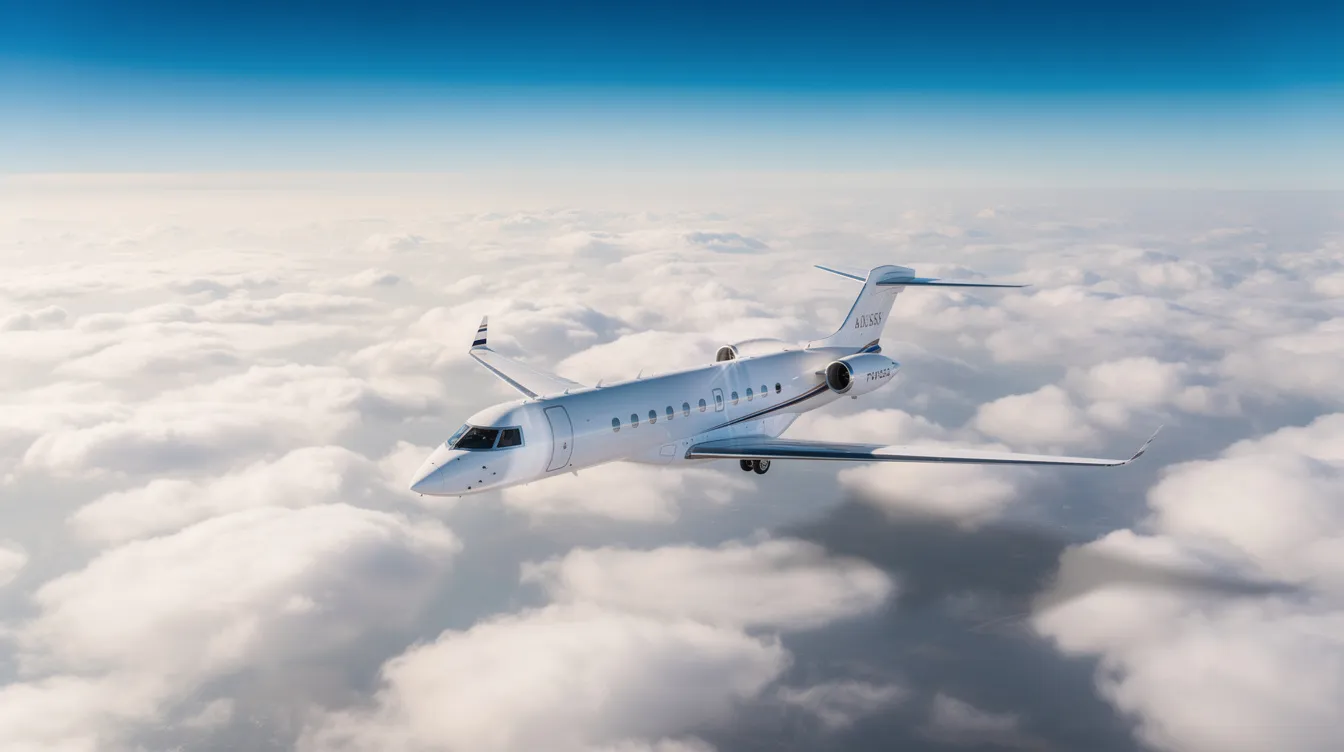
Warren Buffett initially viewed private planes as an unjustifiable extravagance before seeing them as essential business tools for maximizing time. His evolution from critic to owner of the world’s largest private jet operator demonstrates that smart aviation decisions follow the same principles as smart investing: prioritize value over price, understand what you’re buying, choose durable partners, and invest in what matters most—your time.
Whether you’re evaluating whole aircraft ownership, fractional programs, jet cards, or charter, the Buffett approach applies. Model the true costs. Scrutinize the contracts. Choose operators built to last. And calculate the ROI on your hours, not just the hourly rate.
BlackJet Fractional Jet Ownership serves as a trusted resource for modeling these options side by side, providing transparent guidance rather than pushing a single solution. The company operates with the same discipline Buffett brought to aviation: conservative, client-focused, and built for the long term.
Ready to explore the smarter way to fly private? Visit FractionalJetOwnership.com to see how fractional aircraft ownership and structured jet access programs can transform your travel efficiency.
