May 4, 2026
Understanding who stands behind a private aviation provider matters. When high-net-worth individuals and corporations entrust their travel—and their safety—to a fractional ownership program, the financial strength and long-term commitment of the owner becomes more than a footnote. For NetJets, that ownership story involves one of the most recognized names in global business.
NetJets is wholly owned by Berkshire Hathaway Inc., the multinational holding company led by Warren Buffett. Berkshire Hathaway acquired Executive Jet Aviation, NetJets’ predecessor, in 1998 in a deal valued at approximately $725 million.
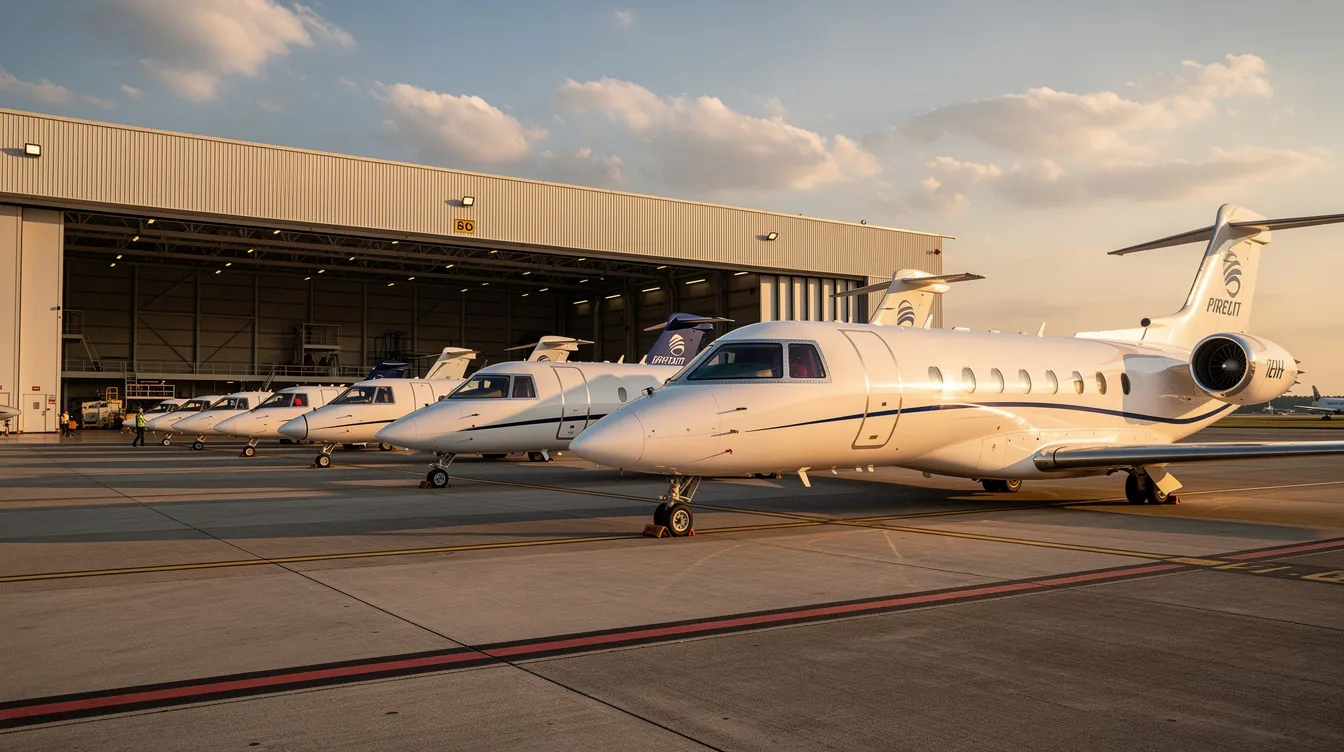
NetJets operates as a wholly-owned subsidiary of Berkshire Hathaway and is recognized as operating the world’s largest fleet of private jets. With a vast number of planes in its fleet, NetJets leverages this scale to deliver significant operational advantages, including enhanced safety, superior service quality, and exceptional reliability. The company is not publicly traded on its own—it functions entirely under the Berkshire umbrella. NetJets is often referred to as a “Berkshire Hathaway company,” highlighting its financial stability and backing from one of the world’s most respected conglomerates.
This ownership structure gives NetJets exceptional financial backing, stability, and long-term strategic support compared with many private aviation competitors. For individuals exploring fractional aircraft ownership or jet card programs, this translates to meaningful advantages in safety, consistency, and operational reliability. NetJets is the world’s largest corporate jet fractional ownership company, operating the largest fleet of privately owned aircraft—a scale made possible by Berkshire’s patient capital approach.

The private aviation history of NetJets stretches back more than six decades. NetJets was founded in 1964 as Executive Jet Airways by retired Air Force Brigadier General Olbert F. “Dick” Lassiter in Columbus, Ohio. A group of aviation and business leaders, including Air Force General Curtis LeMay, established the company to provide corporate jet transport and aircraft management services, creating what became the world’s first private jet charter and management operation.
The real transformation came two decades later. In 1984, Richard Santulli revolutionized the private aviation industry by creating the concept of fractional aircraft ownership, officially announcing the program under the name NetJets. This fractional ownership program was launched formally in 1986–1987, allowing customers to purchase a share of a specific aircraft type rather than bearing the full cost and complexity of whole ownership.
The basic fractional model worked like this: customers buy a fraction of a jet (typically one-sixteenth to one-half), pay a monthly management fee covering fixed costs like crew salaries and maintenance, and an hourly occupied flight rate for variable expenses like fuel. This fractional ownership concept gave business jets access to those who needed 50 to 400 flight hours annually, with just hours' notice for booking, with structures such as 1/8 fractional jet ownership commonly used to align share size with expected flight hours.
During the late 1980s and 1990s, the NetJets program rapidly grew its shareowner base across the United States and expanded into NetJets Europe, becoming synonymous with fractional jet ownership. The NetJets name was officially adopted in 2002 as the consumer-facing brand, while executive jet aviation operations continued through the corporate entity behind the scenes.
Warren Buffett’s path to owning NetJets began as a customer, not an investor. Warren Buffett purchased a share in NetJets in 1995, three years before Berkshire Hathaway’s full acquisition of the company. His personal experience as a fractional shareowner convinced him of the model’s viability, even as some industry observers remained skeptical about the economics of shared ownership in private travel.
Berkshire Hathaway acquired Executive Jet Aviation (EJA), the parent company of NetJets, in 1998 for $725 million, marking a significant expansion into the fractional ownership market. The deal consisted of approximately half cash and half Berkshire stock. At the time of the acquisition, NetJets already operated more than 160 aircraft and had billions of dollars in corporate jets ordered from manufacturers.
Buffett publicly praised the NetJets brand for its unique business model, citing the recurring revenue from monthly management fees and the competitive “moat” created by scale in a capital-intensive industry. He positioned NetJets within Berkshire Hathaway’s service and retailing segment, where it would benefit from the parent company’s exceptional credit rating and patient capital philosophy.
In his shareholder letters over the years, Buffett has acknowledged both the challenges and ultimate success of the NetJets investment. The early years brought financial turbulence, but the long-term trajectory validated his confidence in the fractional ownership business as a durable, defensible enterprise within the private aviation industry.
NetJets remains fully owned by Berkshire Hathaway, with no outside equity investors, private equity owners, or public listing. This Berkshire Hathaway company operates under a decentralized management structure that grants operational autonomy while leveraging the parent’s capital strength and reputation.
NetJets Inc. functions as the overarching company with several key people managing distinct operating divisions:
NetJets – Fractional ownership and jet cards for individuals and corporations
Executive Jet Management – Aircraft management and charter services
QS Partners – Aircraft brokerage for used aircraft transactions
NetJets also offers aircraft management services through its subsidiary Executive Jet Management, which operates and manages a fleet of over 100 aircraft for third-party owners seeking professional management without fractional participation.
As of 2022, NetJets operates approximately 750 jets and has more than 7,000 shareowners, conducting around 300,000 flights annually. The NetJets fleet represents the world’s largest fleet of business jets, enabling the company to guarantee access and availability that smaller operators cannot match.
Ownership resides at the Berkshire Hathaway level. NetJets customers are shareowners or cardholders with guaranteed access to aircraft capacity, but they do not own equity in the parent company. Berkshire Hathaway’s Class A (BRK.A) and Class B (BRK.B) shareholders are, indirectly, the ultimate owners of NetJets. The lack of pressure from quarterly earnings reporting allows NetJets to continually invest in fleet renewal, pilot training, safety protocols, and service infrastructure without short-term profit pressures.
Warren Buffett has discussed NetJets extensively in Berkshire’s annual shareholder letters since the 1998 acquisition, providing a candid view of both struggles and successes. His perspective offers valuable insight into how patient ownership differs from the typical private equity or venture-backed approach to private aviation.
In the early years post-acquisition, NetJets experienced rapid growth but also significant financial volatility. NetJets reported an aggregate pre-tax loss of $157 million over the eleven years following its acquisition by Berkshire Hathaway in 1998, with its debt increasing from $102 million to $1.9 billion by 2009. NetJets has faced significant financial challenges in its first decade under Berkshire Hathaway, incurring notable losses that would have sunk many standalone companies. Berkshire's guarantee was crucial in stabilizing NetJets' finances and ensuring operational reliability during this period.
Warren Buffett noted that without Berkshire Hathaway’s guarantee of its debt, NetJets likely would have gone out of business. This frank admission underscores the importance of Berkshire’s guarantee during the company’s most difficult years. Leadership changes around 2009–2010 addressed rising debt and operating costs, setting the stage for recovery.
The turnaround proved dramatic. In 2010, NetJets earned $207 million in pre-tax earnings, marking a significant turnaround from a loss of $711 million in 2009, attributed to management restructuring and improved operational efficiency. By the late 2010s and early 2020s, NetJets had become one of Berkshire’s more stable service businesses.
As of 2025, NetJets is considered a “prized asset” under the Berkshire Hathaway service group, with plans for continued fleet expansion. Buffett has consistently emphasized the company’s strengths in safety, service quality, and scale, viewing it as a worldwide leader in fractional ownership even during years with weaker financial results.
The NetJets story spans six decades of innovation, acquisition, and evolution. Throughout market cycles and economic disruptions, Berkshire’s backing has provided stability that distinguished NetJets from competitors, combined with less durable ownership structures.
1964 – Executive Jet Airways was founded in Columbus, Ohio, becoming the first private jet charter and management company
1984 – Richard Santulli creates the fractional ownership concept, laying the groundwork for the NetJets program
1986–1987 – NetJets fractional ownership program officially launches, pioneering shared ownership of private aircraft
1995 – Warren Buffett becomes a NetJets fractional shareowner, experiencing the service firsthand
1998 – Berkshire Hathaway acquires Executive Jet Aviation for $725 million; fleet includes 160+ aircraft with billions in orders
2002 – NetJets brand officially adopted as consumer-facing identity
2000s – European expansion establishes NetJets Europe operations
2009 – Financial crisis and operational challenges result in $711 million pre-tax loss
2010–2011 – Restructuring delivers profitability; $207 million pre-tax earnings achieved
2014–2019 – Fleet growth doubles aircraft count to 700+ jets through large manufacturer orders
2020–2021 – COVID-19 impact; In 2020, NetJets experienced a decline in customer flight hours of 27%, with service group revenues declining by $1.15 billion (8.5%) compared to 2019, and pre-tax earnings decreasing by $81 million (4.8%)
2022–Present – Recovery and continued growth backed by Berkshire capital; NetJets continues as the largest operator in fractional ownership
This timeline reinforces that ownership has remained stable with Berkshire since 1998, providing the financial foundation for NetJets to weather downturns better than many smaller operators in the industry.
For fractional shareowners, jet card holders, and charter clients, corporate ownership translates directly to the experience of flying private. Berkshire’s financial strength supports meaningful operational advantages that affect every flight.
NetJets maintains its own brand identity and operational focus on safety and personalized service for its owners (fractional shareholders). This unwavering commitment to high standards is enabled by Berkshire’s patient capital approach. The company’s balance sheet supports large, ongoing aircraft delivery orders with manufacturers like Bombardier, Cessna/Textron, and Gulfstream, ensuring a diverse private jet fleet with modern aircraft.
Long-term capital commitment enables NetJets to operate one of the youngest and most standardized fleets in the world, averaging under ten years old. This diverse fleet supports safety, reliability, and parts availability while ensuring pilots maintain current training on modern avionics systems. Pilot logbooks reflect rigorous in-house training programs that exceed FAA standards, similar in spirit to BlackJet’s focus on highly qualified, extensively trained pilots and crews.
Practical benefits for customers include:
Guaranteed availability provisions written into fractional contracts
Strong in-house maintenance capability through dedicated MRO facilities
Worldwide operational support backed by Berkshire’s resources
Robust contingency planning for weather disruptions, maintenance events, and peak travel periods
Consistent service standards across all destinations, ensuring timely and comfortable arrival at any destination—whether for important business meetings, leisure trips, or special events—with tailored service to meet each client’s needs
Berkshire’s conservative financial culture complements the safety emphasis that flying customers expect. Unlike operators facing pressure for quick returns, NetJets can invest in exceptional experiences over decades rather than quarters.
NetJets revenues derive from multiple streams that reflect the capital-intensive nature of aviation. Understanding this financial model helps prospective customers evaluate how their fees support fleet operations and service infrastructure and compare them with the overall cost structure of fractional jet ownership.
Revenue Source | Description |
|---|---|
Aircraft share sales | Upfront purchase of a fractional ownership stake in a specific jet type, contributing to the total cost of fractional jet ownership |
Monthly management fee | Covers fixed costs, including crew salaries, training, insurance, and hangar, and is a key element of fractional jet ownership financing |
Hourly occupied flight rate | Variable costs, including fuel, maintenance reserves, and landing fees |
Jet cards | Prepaid blocks of flight time without asset ownership |
Charter revenue | On-demand private flights for non-fractional customers |
Aircraft management | Third-party management through Executive Jet Management |
Brokerage | Used aircraft sales through QS Partners, supporting owners who are selling their fractional jet ownership share |
The company provides jet cards, which allow customers to purchase flight time in blocks, offering flexibility and access to its fleet without the commitment of share ownership. NetJets offers fractional ownership of aircraft, allowing clients to purchase a share of a jet and access a fleet of various aircraft models based on mission requirements, all built around core fractional jet ownership concepts and terminology.
From Berkshire’s perspective, NetJets is a capital-intensive but strategically valuable business that deepens relationships with high-net-worth individuals and corporations across the globe. Unlike some private aviation startups seeking fast exits or IPOs, NetJets operates for long-term cash generation and brand strength. The runaway winner in fractional ownership, NetJets holds market dominance that justifies continued investment in fleet expansion and service quality.

Several common questions arise when researching NetJets ownership. Here are clear answers to help distinguish between corporate ownership and aircraft access.
No. NetJets operates as a private subsidiary of Berkshire Hathaway. Only Berkshire Hathaway trades under the ticker symbol BRK publicly. A and BRK.B. There is no separate NetJets stock available for purchase.
No. Customers own fractional shares or jet card access to aircraft capacity, not equity in NetJets Inc. or Berkshire Hathaway. The term “shareowner” refers to aircraft fractional ownership, not corporate equity.
Buffett owns NetJets indirectly as a major Berkshire shareholder and chairman, not as a private individual separate from Berkshire. His ownership stake comes through his Berkshire holdings.
Theoretically,y yes, but historically, Warren Buffett has favored long-term ownership of core operating businesses when they perform reasonably well. Sale would be antithetical to his permanent capital philosophy for strong subsidiaries.
NetJets holds a market share of about 75% in the fractional ownership industry, significantly surpassing its three major competitors combined. This leading provider status reflects both fleet scale and operational excellence.
NetJets’ Berkshire-backed model offers distinct characteristics compared with independent charter operators, asset-light jet card providers, and boutique membership platforms. Understanding these differences helps travelers identify which approach fits their usage profile.
Fractional aircraft ownership at NetJets differs fundamentally from on-demand charter, where availability varies based on market conditions and no asset ownership exists. It also differs from full aircraft ownership, which requires substantial capital outlay, crew management, and assumption of residual value risk, and from private jet membership programs that prioritize flexibility with lower upfront commitments.
Model | Ownership | Availability | Best For |
|---|---|---|---|
NetJets Fractional | Partial aircraft equity | Guaranteed access | 50-400 hours annually |
Full Ownership | 100% aircraft equity | Owner-controlled | 400+ hours, specific mission needs |
On-Demand Charter | None | Market-dependent | Occasional travelers |
Jet Cards | None | Program-dependent | 25-100 hours, flexibility priority |
Membership Programs | Varies | Program-dependent | Moderate usage, cost sensitivity |
NetJets’ scale provides the largest operator advantages: fleet depth, global infrastructure, and operational redundancy. However, this same scale may mean less customization for low-hour flyers who need 25-150 hours annually and prefer more tailored advisory support.
For some travelers, alternative fractional providers offer more personalized structures while still providing the benefits of shared ownership and professional airline-level management, and a review of the top fractional jet ownership programs can help frame how NetJets compares in this landscape.
For individuals and companies exploring fractional jet ownership beyond the largest legacy brands, BlackJet Fractional Jet Ownership offers a focused alternative built around client-specific needs.
BlackJet Fractional Jet Ownership provides two primary models, positioning fractional jet ownership as a cost-effective investment alternative to whole-aircraft ownership:
Equity Fleet – True fractional aircraft ownership with priority access, custom aircraft sourcing, and potential tax advantages for fractional jet owners through depreciation benefits
Reserve Fleet – Flexible pay-as-you-go hours without taking on asset ownership, ideal for variable travel patterns and similar in spirit to floating fleet fractional ownership options that emphasize flexibility
BlackJet emphasizes predictable access, transparent private jet cost structures, and tailored fleet sourcing for U.S.-based and international travelers who fly roughly 25–150 flight hours per year, whether they are based in hubs like Atlanta, fractional jet ownership markets, or other major business centers. Its Reserve Fleet, Equity Fleet, and Lease Program options are structured to match different patterns of private jet usage. This focus allows for more personalized service than one-size-fits-all programs designed for thousands of owners.
For high-net-worth individuals, executives, and middle-market companies, a customized fractional solution can provide better alignment with specific route needs, aircraft preferences, and budget parameters, especially when key fractional ownership contract terms are negotiated with those priorities in mind. Both NetJets and providers like BlackJet Fractional Jet Ownership operate within the broader aviation class of fractional programs, but with different scales, ownership structures, and client focus, all governed by detailed aircraft fractional ownership agreements.
The right solution depends on how you fly—and working with advisors who take time to understand your requirements, including cost expectations and liability and insurance considerations in fractional jet ownership, before recommending a program structure.
NetJets is wholly owned by Warren Buffett’s Berkshire Hathaway, backed by a long-term investment philosophy that has supported the company through both challenges and growth over more than 25 years. This ownership provides financial stability, fleet depth, and operational scale that few competitors can match.
Understanding who owns NetJets helps clarify its service philosophy and how its programs fit within the wider private aviation landscape. For prospective fractional owners, the Berkshire backing offers meaningful reassurance about the company’s ability to honor contractual commitments and maintain high standards over time.
However, the “right” solution for any given traveler depends on flight hours, routes, budget, and appetite for ownership versus flexibility. Large programs serve many travelers well, but others benefit from more tailored advisory relationships and program structures designed around their specific needs.
Ready to explore the smarter way to fly private? Visit FractionalJetOwnership.com to learn how fractional ownership can transform your travel experience.
