June 15, 2026
Are you considering private jet travel for business or leisure, but unsure which aircraft or access model best fits your needs? This comprehensive guide is designed for prospective private jet buyers, fractional ownership candidates, and anyone evaluating smarter ways to access the world’s top private jets. We’ll compare flagship aircraft across all major categories—ultra-long-range, large cabin, midsize, and light jets—while explaining the differences between full ownership, fractional ownership, and membership programs. Understanding these distinctions is crucial: choosing the right jet and access model can dramatically impact your travel experience, cost efficiency, and scheduling flexibility. Whether you’re flying 25 or 500 hours per year, this article will help you make an informed decision and maximize the value of private aviation.
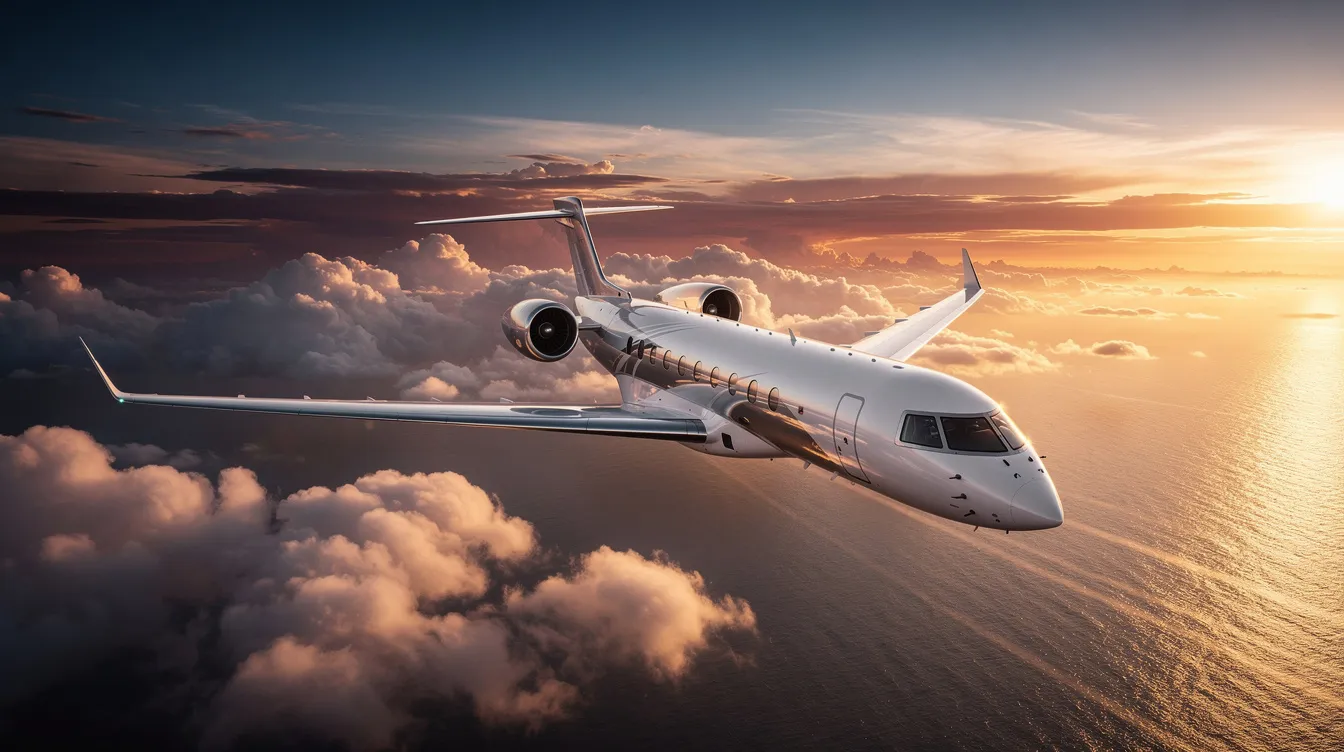
The Bombardier Global 7500, with its 7,700 nautical miles range and four-zone cabin, is widely regarded as the world's best private jet for ultra-long-range missions in 2025–2026, though the Gulfstream G700 and upcoming Global 8000 are strong rivals.
Top private jets differ by range, cabin size, and speed—the right aircraft depends on whether a traveler needs intercontinental nonstop capability, regional efficiency, or something in between.
For travelers flying 25–150 hours per year, fractional jet ownership and reserve fleet membership programs offer the most practical and cost-effective way to access these aircraft without the $70M–$400M price tag of full ownership.
Private jets eliminate the friction of commercial aviation, allowing passengers to skip crowded terminals, set their own schedules, and arrive at remote destinations that airlines simply do not serve.
Advanced technology, sustainability features like sustainable aviation fuel compatibility, and cabin wellness innovations are reshaping what "best" means across every jet category.
When private jet travelers ask which aircraft deserves the title of world's best private jet, the answer is never one-size-fits-all. A CEO flying from New York to Hong Kong nonstop has fundamentally different needs than an entrepreneur hopping between Dallas and Chicago three times a month.
That said, a handful of aircraft consistently rise to the top. The Bombardier Global 7500 has a range of 7,700 nautical miles and a four-zone cabin that sets the benchmark for ultra-long-range luxury. The Gulfstream G700 can reach a top speed of Mach 0.935 with the largest cabin in its class. And for sheer scale, Boeing Business Jets and Airbus Corporate Jets offer residential-style interiors that rival boutique hotels at 45,000 feet.
This article compares the leading aircraft categories—from ultra long range jets to light private jets—and breaks down how to actually access them. Whether through private jet charter, full ownership, or fractional aircraft ownership, the smartest approach depends on mission profile and annual flight hours. BlackJet Fractional Jet Ownership provides that middle path: structured access to the best private jets without the complexity and capital drain of buying an entire jet outright, especially once you understand the core fractional jet ownership terminology and concepts.
The phrase "world's best private jet" means different things depending on who is asking. Heads of state might consider a Boeing Business Jet—the BBJ 787 with nearly 9,945 nautical miles of maximum range—the undisputed leader. Corporate leaders often prioritize purpose-built business jet platforms like the Bombardier Global 7500 or Gulfstream G700 for their balance of range, speed, and cabin refinement. Luxury private jets in this category offer customizable cabin layouts for passengers who treat the aircraft as a mobile office, boardroom, and bedroom.
Here are the main evaluation criteria used throughout this article:
Maximum range in nautical miles under NBAA IFR reserves
Cruise speed (Mach number and high-speed cruise capability)
Cabin design: number of zones, height, width, and amenities
Passenger capacity and baggage volume
Airport performance: minimum runway length and ability to access secondary fields
Operating economics: hourly costs across charter, fractional, and full ownership
Onboard advanced technology: flight deck systems, connectivity, and safety features
Key Definitions:
Ultra-long-range jets: These aircraft prioritize lavish suites and international travel, offering the ability to connect distant cities nonstop. They are ideal for intercontinental missions and typically feature multiple cabin zones for work, rest, and entertainment.
Large jets: Designed for transcontinental travel with spacious cabins, large jets offer comfort and amenities for longer flights.
Midsize jets: Known for long ranges and access to challenging airports, midsize jets allow for coast-to-coast flights with comfort and flexibility.
Light jets: Designed for short-haul trips and remote airport access, light jets typically seat 4–8 passengers and focus on agility and cost-efficiency.
The focus here is on purpose-built business jets—Global 7500, G700, Dassault Falcon 8X, and their successors—with a look at VIP airliners and light jets for contrast. Models like the Bombardier Global 8000 and Dassault Falcon 10X are upcoming flagships shaping the private jet market through 2027 and beyond.
When industry analysts and frequent flyers are asked to name the most luxurious private jet in business aviation, the Bombardier Global 7500 appears at or near the top of nearly every list. It entered service in late 2018, and by 2025 Bombardier had delivered approximately 200 units, making it a relatively young but thoroughly proven platform.
The numbers tell the story. The Bombardier Global 7500 has a range of 7,700 nautical miles (about 14,300 km), enough to fly nonstop from New York to Hong Kong or Los Angeles to Singapore. It reaches a top speed of Mach 0.94 and cruises comfortably at Mach 0.90–0.925, giving it a standout maximum speed among jets that combine impressive range with serious performance.
The cabin is arranged into four distinct zones: a forward club suite, a conference and dining area, an entertainment lounge, and a private master suite with a full-size bed. Private jets can feature bedrooms, kitchens, and showers, and the Global 7500 delivers all three with luxurious interiors in a spacious cabin measuring roughly 16.6 meters long and 2.44 meters wide. Ultra-long-range jets prioritize lavish suites and international travel, and this aircraft is the textbook example. The cabin also includes advanced entertainment systems, a remarkably low cabin altitude of around 2,900–3,000 feet at cruise, and Bombardier's Pür Air filtration system removing 99.99% of allergens and bacteria.
Its advanced wing design and smooth-ride technology minimize turbulence impact during 15–17-hour long-haul flights, reducing passenger fatigue noticeably. The Global 7500 has set multiple long-range records and remains the aircraft favored by ultra-high-net-worth individuals and corporate flight departments who need nonstop intercontinental capability without stepping up to a full airliner platform.
Specification | Bombardier Global 7500 | Gulfstream G700 |
|---|---|---|
Range (nm) | ~7,700 | ~7,750 |
Top Speed | Mach 0.94 | Mach 0.935 |
Cabin Zones | 4 | Up to 5 |
Cabin Width | 8 ft (2.44 m) | 8 ft 2 in (2.49 m) |
Cabin Height | 6 ft 2 in (1.88 m) | 6 ft 3 in (1.91 m) |
Typical List Price | ~$78–81M | ~$78M |
Gulfstream has earned its place among the top private jet manufacturers in the United States, and the G700 represents the pinnacle of that legacy.
With a range of approximately 7,750 nautical miles at Mach 0.85 long-range cruise and a maximum operating speed of Mach 0.935, the Gulfstream G700 has a maximum speed that few competitors match, helping keep it in the conversation around the fastest private jet.
Gulfstream G700 features the largest cabin in its class—about 6 feet 3 inches tall and 8 feet 2 inches wide, with up to five living zones configurable for work, dining, entertainment, and rest within one of private aviation's most luxurious interiors. Twenty panoramic oval windows flood the interior with natural light, while 100% fresh air circulation refreshes the cabin every two to three minutes. Circadian-rhythm lighting and whisper-quiet sound levels are designed specifically to reduce fatigue on long-haul private jet missions like New York to Tokyo or Miami to Dubai.
The Gulfstream G800 extends the brand's reach to approximately 8,000 nautical miles, targeting nonstop routes such as Dallas to Dubai or Hong Kong to New York. Both models feature advanced flight decks with active sidesticks, synthetic vision, and head-up displays. The average charter price for a Bombardier Global 7500 on London-Paris is about £29,000.
Definition: Ultra-long-range jets can connect distant cities nonstop, making them ideal for global executives and travelers who require maximum reach and comfort.
Worth noting: the Gulfstream G650ER has a range of approximately 7,500 nautical miles and remains a popular choice as a proven ultra-long-range aircraft for discerning travelers who don't need the G700's extra cabin volume. While Bombardier currently edges Gulfstream on certain paper specs—particularly with the forthcoming Global 8000—Gulfstream dominates in perceived speed and cabin craftsmanship among many business aviation clients.
Beyond Bombardier and Gulfstream, Dassault Aviation, Airbus, and Boeing produce private aircraft that some consider the world's best, depending on priorities like runway performance, cabin size, or diplomatic status.
Dassault Falcon 8X: Has a range of 6,450 nautical miles and a tri-jet design enabling steep approaches into restrictive airports like London City. For business and leisure travelers who need access to challenging runways, this capability is as valuable as raw range. Midsize jets are known for long ranges and access to challenging airports.
Dassault Falcon 10X: An ultra-long-range flagship expected around 2027, with a projected 7,500 nautical miles range, the widest cabin cross-section in its category at 9 feet 1 inch, and full sustainable aviation fuel compatibility.
Boeing Business Jets and Airbus Corporate Jets occupy a different tier entirely. The BBJ 787 offers a maximum range of 9,945 nautical miles with a residential-style floorplan featuring multiple bedrooms, full offices, and conference rooms. The ACJ319neo delivers around 6,750 nautical miles of extended range in a narrow-body VIP configuration. Large jets are designed for transcontinental travel with spacious cabins.
These are the largest private jets in the sky, with passenger capacity between 19 and 50, depending on layout. Some ultra-high-net-worth owners even keep four private jets for different missions, underscoring how personalized this segment can be. On a London–Paris charter mission, a Gulfstream G550 averages about £26,100.
However, a Boeing business jet or Airbus corporate jet platform can cost from roughly $70M for a "green" narrow-body to over $400M fully completed. They are typically owned by governments, royal families, and ultra-high-net-worth individuals—not the typical fractional or corporate buyer.
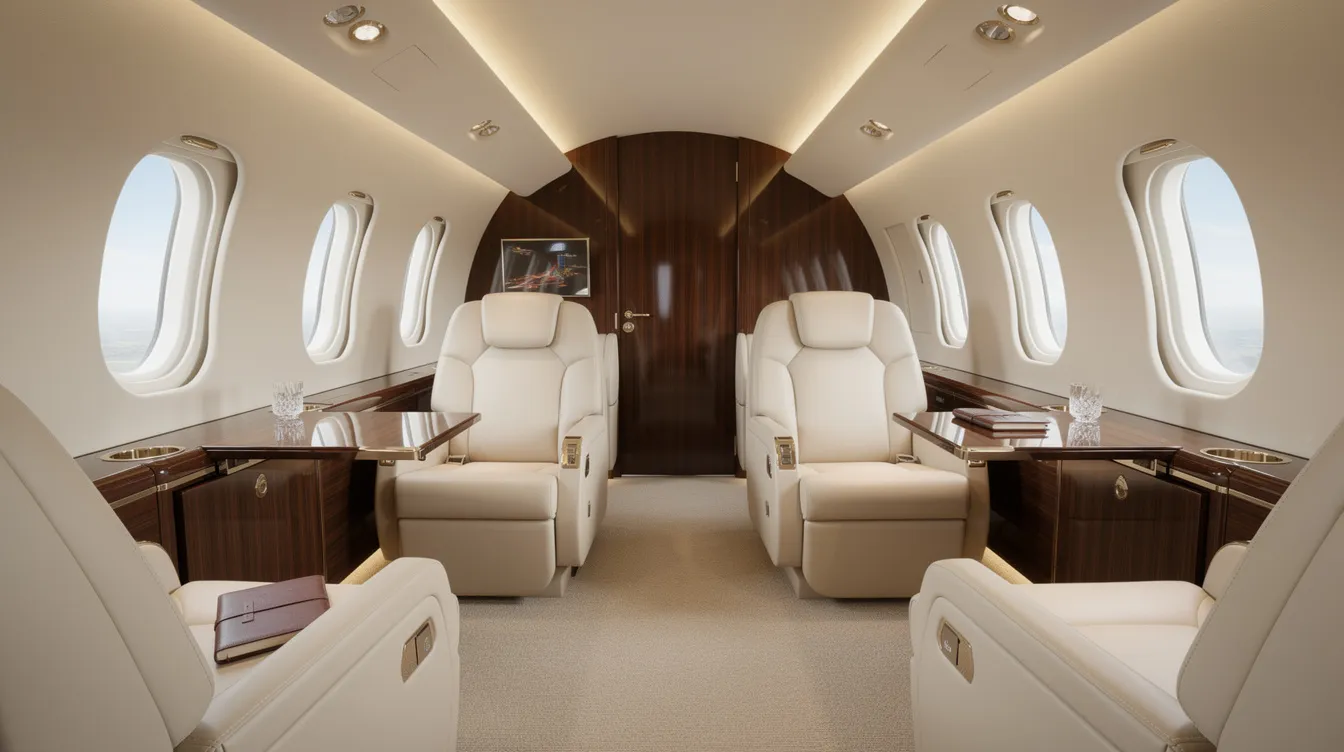
For many private flyers in the United States and Europe, the best private jet is not the one with the longest spec sheet. It's the one that most efficiently serves 1–3-hour regional missions where commercial aviation adds hours of overhead.
Definition: Light jets are designed for short-haul trips and remote airport access. They typically seat 4–8 passengers and focus on agility and cost-efficiency rather than intercontinental capability.
Very light jets and light jets typically seat 4–8 passengers, offer ranges between 1,200 and 2,500 nautical miles, and operate from shorter runways at secondary airports close to business locations.
Embraer Phenom 300E: The light jet best-seller. The Embraer Phenom 300E can fly up to Mach 0.80 with a 2,010 nautical mile range, seating up to nine passengers.
Cessna Citation Latitude: Bridges the light and midsize categories. Cessna Citation Latitude offers outstanding fuel efficiency and features quiet cabins and spacious seating.
Pilatus PC-24: A versatile light jet capable of operating from unpaved runways.
HondaJet Elite II: HondaJet Elite II reduces cabin noise significantly compared to traditional jets, making it a standout for comfort-focused regional travelers.
Consider a typical day trip: a Chicago-based executive needs a meeting in New York. A light jet departs a suburban airport at 7:00 AM, lands at Teterboro by 9:15 AM, and returns the same evening. The entire round trip avoids two commercial connections, long TSA lines, and hotel costs. For owners flying 25–150 hours per year regionally, these popular private jets deliver more value per dollar than any ultra-long-range flagship.
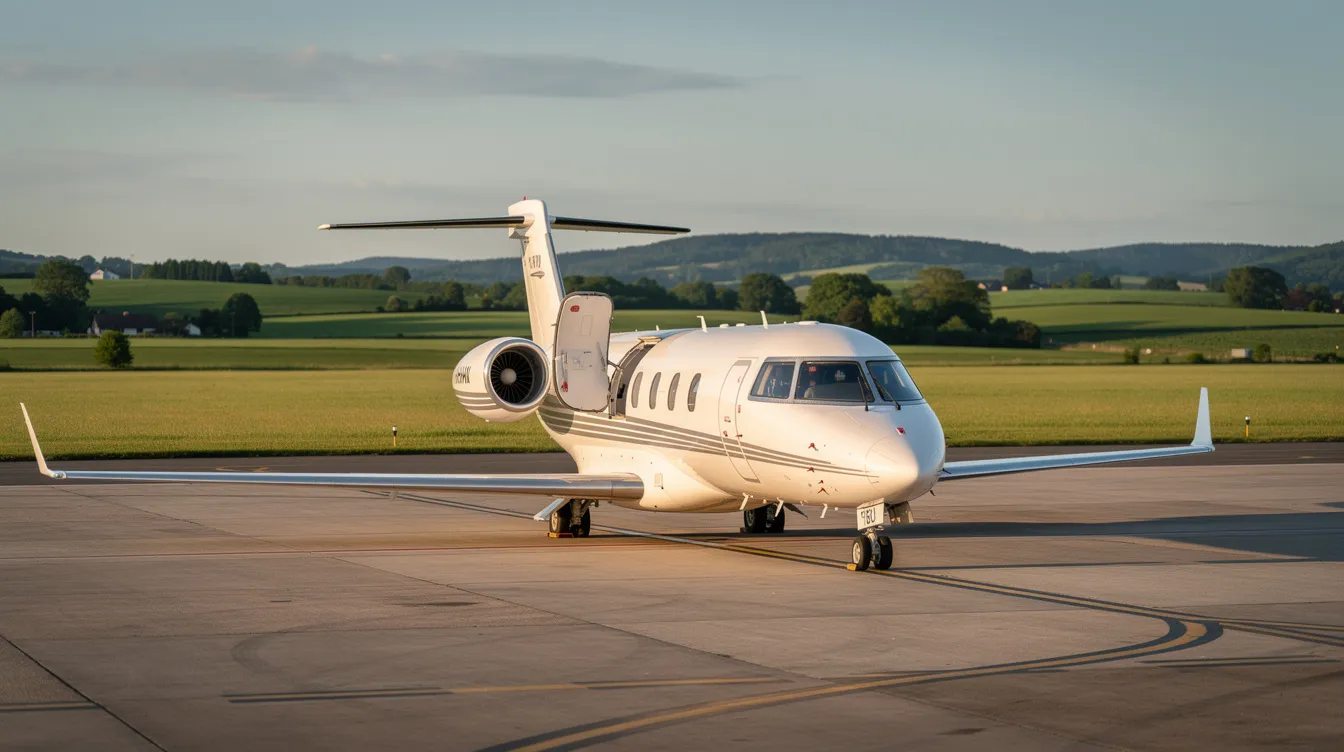
The best way to choose the right aircraft is to match aircraft category to mission profile, not just chase headline range numbers.
Category | Range (nm) | Typical Passengers | Example Aircraft | Definition |
|---|---|---|---|---|
Very Light / Light Jets | 1,200–2,500 | 4–8 | Phenom 300E, Citation CJ4 | Light jets are designed for short-haul trips and remote airport access. |
Midsize / Super Midsize Jets | 2,500–4,000 | 8–12 | Challenger 350, Citation Longitude | Midsize jets are known for long ranges and access to challenging airports. |
Large Cabin Jets | 4,000–6,500 | 10–16 | Falcon 8X, Challenger 650 | Large jets are designed for transcontinental travel with spacious cabins. |
Ultra Long Range Jets | 6,500–8,000+ | 12–19 | Global 7500, G700, G800 | Ultra-long-range jets prioritize lavish suites and international travel; can connect distant cities nonstop. |
The trade-offs are straightforward: larger cabins mean higher hourly costs and potentially longer minimum runways. An ultra-long-range aircraft is essential for a 14-hour nonstop crossing but overkill for a 90-minute domestic hop. Regional executives may find super midsize jets ideal, while global CEOs needing nonstop Asia-to-US flying gravitate toward Global 7500, G700, or future Global 8000 and G800 types.
Modern top-tier business jets share three pillars: advanced technology, rigorous safety standards, and growing sustainability features. These aren't marketing afterthoughts—they directly affect passenger well-being, operational reliability, and long-term cost.
Fly-by-wire controls (standard on the Dassault Falcon 7X/8X family)
Synthetic and enhanced vision systems like Dassault's FalconEye
Autothrottle and avionics suites that match or exceed commercial aircraft capabilities
Low cabin altitude reduces fatigue on long flights
Advanced noise reduction technologies for passenger comfort
Luxury jets often include advanced entertainment systems and high-speed internet, enabling video conferencing and streaming throughout the flight
Smartphone-controlled cabin systems manage lighting, temperature, and entertainment systems from any seat or private suites
Sustainable aviation fuel adoption is becoming mainstream in private aviation
The Dassault Falcon 10X's Pearl 10X engines are being designed to run on 100% SAF
Carbon offset programs, lighter composite materials, and aerodynamic improvements for reduced fuel burn are standard across top private jet manufacturers
Very few travelers buy a Global 7500 or G700 outright. Instead, most blend methods are based on how often and how far they fly. Private jets eliminate the friction of commercial aviation—passengers skip crowded terminals and long TSA lines, private jet scheduling ensures flexible departure times, and flight schedules on private jets are dictated by the passenger. Private aviation allows bypassing commercial airport delays, and private jet scheduling can save 5–10 hours per trip. Private jets offer ultimate privacy and security during flights. Private jets enhance comfort and productivity with various amenities.
Full ownership suits those flying 400–500+ hours per year. It delivers complete control and customization but carries high capital expenditure, ongoing crew members' costs, maintenance, insurance, and regulatory compliance, making fractional jet ownership financing options attractive for travelers who prefer shared capital outlay over buying an entire aircraft.
On-demand charter works best under 50–100 hours annually. Chartering private jets offers on-demand access to various aircraft with maximum flexibility, but pricing varies widely by route and season—especially during peak periods when the average charter price spikes and availability for a requested jet type drops. For travelers in the middle, a comparison of fractional jet ownership vs membership programs clarifies which structure aligns best with budget and usage. For more on charter flights, see this guide to affordable charter options.
Fractional ownership allows shared access to private jets with lower costs. It provides access to a curated fleet of top private jets, predictable hourly rates, guaranteed availability, and professional aircraft management. Before committing, buyers should model the total cost of fractional jet ownership, including acquisition, monthly fees, and hourly charges. Industry data from 2026 shows that between approximately 75 and 300 hours per year, fractional shares deliver lower all-in cost per hour than ad-hoc charter, with far greater scheduling certainty.
Membership programs provide fixed hourly pricing for flights and cater to high-frequency travelers needing 25–150 flight hours annually. These programs offer guaranteed availability and flexibility without the need for equity investment.
BlackJet Fractional Jet Ownership provides a structured path for individuals and companies to experience private aviation through two primary models, each designed for travelers who need 25–150 flight hours per year and underpinned by robust aircraft fractional ownership contract frameworks.
Clients acquire an equity share in a specific aircraft type—whether super midsize jets, heavy jets, or long-range private jets like the Global 6500 or Gulfstream G650ER- often through structures such as 1/8 fractional jet ownership arrangements. Fractional ownership allows shared access to private jets with priority scheduling and guaranteed aircraft availability. Private jet ownership can provide significant tax deductions, and fractional ownership allows for tax benefits on shared aircraft costs. Tax benefits can include depreciation deductions for aircraft owners, operating expenses for private jets may be tax-deductible, and tax incentives exist for using private jets for business purposes; understanding the tax implications for fractional jet owners is essential before committing capital. For a deeper breakdown of the tax implications for fractional jet owners and how to capture these advantages, see this investment guide.
The Reserve Fleet model offers pay-as-you-go hours without ownership responsibilities. No equity purchase is required. Members access a vetted floating-style fleet with flexible availability on a membership basis with fixed hourly pricing and guaranteed availability for members within defined booking windows. Reserve Fleet offers pay-as-you-go hours, making it ideal for travelers who want predictability without capital commitment. Fractional ownership reduces costs compared to full ownership, while jet membership programs offer guaranteed availability for flights. Membership programs provide fixed hourly pricing for flights and cater to high-frequency travelers needing 25–150 flight hours annually.
BlackJet aligns aircraft type with mission—matching light jets for regional trips, midsize jets for coast-to-coast, or long-range aircraft for intercontinental routes. Private jet services provide guaranteed availability tailored to usage, and the result is a more predictable private jet cost per hour, higher aircraft quality consistency, and reduced administrative burden compared to cobbling together ad hoc charter flights or juggling multiple fractional jet ownership programs.
Ready to see how it works? Visit FractionalJetOwnership.com to explore ownership and membership scenarios tailored to your travel profile.
The right choice depends on numbers as much as aesthetics. Range, payload, airport performance, and cabin configuration all affect real-world usability and total cost.
Primary specifications to evaluate:
Maximum range in nautical miles (under NBAA IFR reserves with eight passengers)
Typical cruise speed (Mach number)
Passenger capacity and spacious cabin configuration
Baggage volume
Minimum runway length for takeoff and landing
Nonstop city pairs that make range tangible:
Global 7500: New York–Hong Kong, London–Singapore, Los Angeles–Dubai
G700: New York–Tokyo, Miami–Dubai, Dallas–London
Citation Longitude: New York–Los Angeles, Chicago–Seattle
Operating economics at a glance:
Light jets: $2,500–$5,000 per hour (charter)
Ultra-long-range jets: $8,000+ per hour (charter)
Fractional ownership can lock in more predictable rates over time, especially for travelers flying consistently within a defined annual range.
Quick self-assessment checklist:
Where do you fly most often?
How many hours per year?
How many passengers typically?
How critical is nonstop capability versus acceptable fuel stops?
What's your budget sensitivity, fixed cost predictability, or lowest possible per-trip cost?
The private aviation industry is entering a new phase focused on even longer range, improved fuel efficiency, and higher cabin wellness standards.
Three aircraft define what's coming. The Bombardier Global 8000 can travel up to 14,631 kilometers (approximately 8,000 nautical miles) with a top speed near Mach 0.94, delivered in late 2025 and already setting new benchmarks for long-range capabilities. The Gulfstream G800 pushes similar range thresholds with advanced aerodynamics. The Dassault Falcon 10X, expected around 2027, will introduce the widest cabin in its category and full SAF compatibility, representing the next generation of luxurious private jet design.
Innovation areas to watch include higher SAF blend approvals, hybrid-electric propulsion experiments, improved laminar-flow aerodynamics, and next-generation cabin air filtration. Adjacent trends like electric vertical take-off and landing (eVTOL) aircraft could eventually link with long-range private jet networks for seamless door-to-door travel, covering the first and last 50 miles of a trip.
BlackJet's advisory role includes monitoring these new aircraft entrants and helping clients decide when upgrading from current models to next-generation business jets makes financial and operational sense.

Many industry analysts consider the Global 7500 the best all-around purpose-built business jet today, primarily because of its 7,700 nautical miles range, four-zone spacious cabin, and remarkably low cabin altitude that reduces fatigue on long flights. However, the Gulfstream G700 and G800, the upcoming Global 8000, and the Dassault Falcon 10X are all strong rivals. For someone flying mostly 1–3 hour domestic trips, a light jet like the Phenom 300E or Citation Latitude might deliver far more value than any ultra long range flagship.
Full ownership generally becomes economical around 400–500+ flight hours per year, when fixed costs (crew members, insurance, hangar, maintenance) are spread across enough usage to justify the capital expenditure. Ad-hoc private jet charter is typically most cost-effective under 50–100 hours annually. Fractional jet ownership and structured membership programs like BlackJet's are optimized for roughly 25–150 hours per year, balancing predictable access and cost efficiency without full ownership complexity; evaluating the total cost of a fractional share at common tiers such as 1/8 ownership blocks is a useful starting point. For a deeper dive, see this breakdown of ownership vs leasing economics.
Some fractional providers offer shares in ultra-long-range aircraft, while others focus on super-midsize jets and large-cabin jets due to demand and cost structure. BlackJet Fractional Jet Ownership can source and manage tailored Equity Fleet solutions, which may include large-cabin or long-range models depending on the client's mission profile and budget, guiding clients through the key fractional jet ownership terms and mechanics. The Gulfstream G650ER, with a range of approximately 7,500 nautical miles, is one example of an ultra-long-range platform that appears in fractional and managed fleet programs.
Charter hourly rates range from roughly $2,500–$4,000 for light jets to $8,000+ for ultra-long-range jets, with prices fluctuating by route and season. Fractional ownership typically involves an upfront share purchase plus fixed monthly management fees and a lower, more predictable occupied hourly rate. Understanding fractional jet ownership financing and cost structures helps clarify where the long-term break-even lies. For consistent flyers, this structure often reduces total cost per hour compared to ad-hoc charter. Jet cards allow access to private jets without ownership costs and can serve as a bridge for travelers not ready to commit to fractional equity.
Start with three questions: What is your typical trip length in nautical miles? What is your average passenger count? How often is nonstop capability mission-critical versus an acceptable fuel stop? From there, the categories self-select: regional trips under 1,500 miles favor light jets, coast-to-coast missions point to midsize jets or super midsize jets, and intercontinental travel demands large cabin jets or ultra long range jets. Reviewing the top fractional jet ownership programs and alternatives can then help match your preferred aircraft category to the right provider. Schedule a consultation with BlackJet via FractionalJetOwnership.com to model your last 12–24 months of trips and identify the best combination of aircraft class and access model.
There is no single universal world's best private jet. The Bombardier Global 7500 leads in ultra-long-range versatility. The Gulfstream G700 and G800 excel in speed and cabin craftsmanship. VIP airliners offer unmatched space. And for the majority of private aviation missions—regional, domestic, 1–3 hours in duration—light jets and super midsize jets deliver the most practical value per flight hour.
The best choice depends on mission profile, annual flight hours, preferred cabin experience, and budget. And the ownership model—full, fractional, or membership—matters just as much as the aircraft itself. For travelers flying roughly 25–150 hours per year, fractional aircraft ownership or a reserve fleet membership eliminates the capital burden of buying a $78M aircraft while preserving the scheduling certainty, cabin quality, and time savings that define private jet travel.
BlackJet Fractional Jet Ownership helps clients cut through complexity. Whether through Equity Fleet shares or Reserve Fleet access, the goal is to match the right aircraft and program structure to each client's definition of "best," while guiding them through essential fractional ownership contract terms, appropriate liability and insurance coverage, and eventual sale or transfer of a fractional share when their needs change.
Visit FractionalJetOwnership.com to request a personalized analysis of your travel profile and discover which aircraft and access model fits your needs.
