
May 18, 2026
Worldwide jet charter in 2026 means on-demand private aviation across the world’s most important business and lifestyle corridors. It can connect New York Teterboro to London Farnborough, Los Angeles Van Nuys to Honolulu, Dubai to Geneva, or Phoenix to Cabo with far less friction than commercial air travel.
This guide is for executives, frequent travelers, and corporate flight departments considering worldwide jet charter or fractional ownership. Understanding your options can help you save time, increase flexibility, and optimize travel costs in 2026 and beyond.
Demand increased sharply after 2020 as high-net-worth travelers, corporations, and family offices prioritized health control, schedule flexibility, and privacy. Private travel eliminates common stressors like layovers, lost luggage, and unpredictable flight cancellations, helping executives arrive refreshed and ready to work.
BlackJet, Inc., a recognized leader in private aviation and an incorporated company, sits in this global private aviation landscape as a specialist in fractional aircraft ownership and membership-style access. Instead of relying only on ad-hoc private jet charter, clients can use BlackJet’s Reserve Fleet and Equity Fleet models to create a more predictable approach to flying private.
This article compares traditional worldwide jet charter with fractional ownership, focusing on private jet cost, safety, convenience, operational excellence, and the real value behind private luxury charter.
Worldwide jet charter gives individuals and corporations the ability to rent an entire aircraft and crew for a specific trip, delivering flexibility, privacy, and time efficiency across global routes.
For travelers flying 25–150 hours per year, fractional jet ownership and structured membership programs can replace many ad-hoc charter needs with more predictable access and costs.
Redefining private luxury charter is less about excess and more about safety, operational excellence, aircraft fit, scheduling reliability, and transparent planning.
Aircraft such as the Challenger 350, Global Express, Gulfstream G650, Citation XLS, and select heavy jet options make different global missions possible, from New York–London to Los Angeles–Tokyo.
BlackJet Fractional Jet Ownership helps clients compare worldwide jet charter, jet card programs, Reserve Fleet access, and Equity Fleet fractional aircraft ownership through a tailored private aviation strategy.
Worldwide jet charter services allow individuals or corporations to rent an entire aircraft and crew for a specific trip, providing flexibility, privacy, and time efficiency. Trips are generally booked through charter brokers or directly with an aircraft operator, with brokers utilizing networks to source the best aircraft for the mission.
The process usually follows a simple path:
The client provides route, dates, passenger count, luggage needs, and preferred cabin size.
The broker or operator sources available private jets from a regional or worldwide fleet.
The quote is built around aircraft type, flight time, positioning, crew, handling, and international fees.
The operations team manages permits, customs, fuel, crew duty limits, security, and day-of-flight logistics.
Pricing for jet charter services is typically calculated using a flat hourly rate for the aircraft type multiplied by flight time, plus additional fees. Those additional fees may include repositioning, landing charges, international handling, catering, overnight crew costs, deicing, fuel surcharges, or peak-day premiums.
One-way charters are designed to transport passengers from one location to another without the need for a return flight, often utilized to reduce the costs associated with empty leg flights. Many charter companies offer discounted one-way trips as a way to mitigate the expense of flying empty aircraft back to their home base.
Transient availability in charter services refers to the option of booking flights that are not part of a round trip, allowing for more flexible travel arrangements. For example, an aircraft repositioning from Teterboro to Van Nuys, London Luton to Geneva, or Dubai Al Maktoum to Riyadh may create a discounted opportunity if the client’s schedule aligns.
A Miami–São Paulo one-way charter may involve repositioning charges if the aircraft has no return revenue. A San Francisco–Tokyo–Hong Kong multi-leg itinerary requires more complex flight planning, overflight permits, crew rest, and international handling.
Jet charter companies often provide a range of aircraft options, including light jets, midsize jets, and large jets, catering to different passenger needs and flight distances. For worldwide jet missions, the most common categories include:
Aircraft category | Typical examples | Best use case |
|---|---|---|
Light and midsize jets | Citation XLS, Hawker Aircraft | Short regional flights, smaller groups, efficient U.S. or European travel |
Super-midsize jets | Challenger 350, Citation Longitude | U.S. coast-to-coast, Caribbean, Mexico, Los Angeles–Honolulu |
Large-cabin jets | Gulfstream G450, Falcon 2000 series | Transcontinental and shorter transatlantic routes |
Ultra-long-range jets | Global Express, Gulfstream G650, Falcon 7X/8X | New York–Dubai, Los Angeles–Tokyo, Chicago–Frankfurt |
Private jets can access over 5,000 airports in the U.S. alone, compared to around 500 served by commercial airlines. That airport access is one reason travelers save an average of two hours, or 127 minutes, per flight when using jet charter services, with the ability to arrive at private terminals just 15 minutes before departure.
The jet charter industry has seen significant growth, with many companies expanding their fleets and services to meet increasing demand for private air travel. The United States accounts for approximately 75% of private jet activity among the top global regions, though rapid growth is occurring globally across Europe, the Middle East, and Asia.
In worldwide aviation, safety is not a marketing line. It is the operating foundation behind every aircraft, crew, flight plan, maintenance event, and international permit.
Worldwide operators must adhere to strict regulatory standards, such as FAA Part 135 in the U.S.. In Europe and other regions, operators also follow local civil aviation regulations, international operating requirements, and airport-specific rules.
Many jet charter companies implement safety programs and certifications, such as ARG/US and Wyvern ratings, to ensure high operational safety standards. The ARG/US Platinum rating is a recognized standard for operational safety in the aviation industry, awarded to companies that meet high safety standards. Wyvern Wingman certification is a safety designation that signifies a charter operator has met stringent safety standards and operational procedures.
IS-BAO Stage 3 approval signifies that an aviation organization has implemented a safety management system that meets international standards. Leading operators may combine IS-BAO practices, third-party audits, recurrent simulator training, and detailed maintenance tracking to support global missions.
Operational excellence shows up long before passengers board. It includes:
Operational Area | Description |
|---|---|
Aircraft maintenance | Planning and inspection control to ensure airworthiness and reliability |
Crew qualification | Recurrent simulator training and certification for pilots and crew |
Weather and route planning | Detailed planning across international airspace for safety and efficiency |
Overflight and landing | Securing permits for international operations |
Fuel planning | Analysis of fuel needs, alternatives, and payload for each mission |
Crew duty-time compliance | Ensuring legal and safe crew scheduling for long-range sectors |
Customs and immigration | Coordination of ground handling, customs, immigration, and security for seamless travel |
On a New York–Dubai or Los Angeles–Sydney mission, the team may need augmented pilots, crew rest planning, international fuel releases, oceanic routing, and contingency alternates. A director of operations, dispatch specialists, pilots, maintenance teams, and client service employees all work together to deliver the flight safely.
BlackJet Fractional Jet Ownership prioritizes operators and aircraft with strong safety records, proven global operating capability, and an unwavering commitment to responsible private aviation. Post-2020, that also includes enhanced cabin hygiene, real-time health guidance, digital pre-flight documentation, and more contactless handling procedures.
For discerning clients, the service is unparalleled when safety, privacy, timing, and execution come together without drama.

Ad-hoc private jet charter is trip-by-trip access. A traveler chooses a route, receives a quote, books the aircraft, and pays for that mission.
Fractional jet ownership is different. The client purchases an equity share in an aircraft or aircraft program and receives a defined level of access, often with guaranteed availability, fixed management costs, and predictable occupied hourly rates, supported by a clear understanding of key fractional jet ownership terms.
BlackJet’s Reserve Fleet provides a middle ground. It offers charter-like flexibility without full ownership costs, while improving cost transparency, aircraft access, and service consistency compared with purely ad-hoc air charter.
Factor | Worldwide jet charter | Fractional jet ownership | Reserve-style membership |
|---|---|---|---|
Upfront commitment | No ownership commitment | Share purchase required | No equity purchase |
Cost structure | Per-trip pricing, variable fees | Acquisition, management, and hourly occupied rates | Pay-as-you-go or structured access |
Scheduling priority | Availability can vary | Higher priority access | Enhanced access versus open charter |
Tax benefits | Generally, no equity-based benefits | Potential ownership-related benefits | Usually no ownership depreciation |
Best for | Occasional trips | Frequent flyers | Flyers needing flexibility and predictability |
Worldwide jet charter often works best for occasional flyers under roughly 25 hours per year. For travelers flying more than 25–50 hours annually, especially across repeat routes, fractional aircraft ownership vs membership-style access may become more efficient.
Between about 50 and 150 hours per year, fractional jet ownership often provides a strong balance of guaranteed availability, predictable costs, and consistent service standards, with structures such as 1/8 fractional jet ownership commonly aligning with around 100 hours per year. This is especially valuable for executives traveling between New York, Dallas, London, Toronto, Miami, and the U.S. West Coast.
BlackJet’s Equity Fleet model offers an ownership stake, priority access, custom aircraft sourcing, professional management, and potential fractional jet ownership tax benefits. BlackJet’s Reserve Fleet model provides a flexible alternative for clients who want more reliability than traditional jet charter without immediately purchasing an ownership share.
Redefining private luxury charter means shifting the conversation away from superficial luxury and toward control, time, privacy, and mission-fit aircraft. The best private luxury charter experience is not simply about catering or cabin finishes; it is about whether the aircraft, crew, schedule, and support structure match the purpose of the trip.
For a nonstop New York–Hong Kong mission, a Global Express or Gulfstream G650 may be the right solution. For New York–London, a Gulfstream G500, Gulfstream G600, or similar large-cabin jet may provide the right mix of range, cabin comfort, and efficiency. For Los Angeles–Honolulu, a super-midsize Challenger may be more appropriate than a larger aircraft.
For corporate clients, luxury travel often means uninterrupted working time in a secure cabin. Connectivity, privacy, medical readiness, discretion, and scheduling reliability matter more than theatrics.
BlackJet focuses on:
Predictable aircraft access
Streamlined ground transfers
Proactive contingency planning
Personalized catering and cabin preferences
Coordinated arrivals at Teterboro, Paris Le Bourget, Van Nuys, London Farnborough, and other key airports
Clear communication before, during, and after the flight
This is the best the air has to offer when private aviation is structured around time and trust. BlackJet’s offerings serve executives, families, entrepreneurs, and corporate flight departments that need to fly with confidence across the world.
In that sense, BlackJet is redefining private travel by helping clients create a smarter structure for access. It is redefining private luxury charter through consistency, not spectacle.
Worldwide jet charter pricing can vary significantly because every mission has a different aircraft, route, crew requirement, and operating environment. A simple quote may look like an hourly aircraft rate multiplied by flight time, but the final number often includes multiple additional charges.
Cost Component | Description |
|---|---|
Hourly rate by aircraft | The base hourly rate for the selected aircraft category |
Flight time and taxi time | Total time the aircraft is in operation, including taxiing and flying |
Aircraft repositioning | Charges for moving the aircraft to or from the departure/arrival location if not already positioned |
International handling | Fees for customs, ground handling, and international operations |
Landing fees | Charges imposed by airports for landing the aircraft |
Overflight and permit | Costs for securing necessary permits for international airspace and landings |
Crew overnight lodging | Expenses for crew accommodations and per diem on overnight trips |
Fuel surcharges | Additional charges if fuel prices exceed standard contract rates |
Catering, Wi-Fi, deicing, and peak-day fees | Charges for onboard catering, internet, deicing, and travel during high-demand periods |
A four-passenger New York–London round trip on a large-cabin aircraft may cost roughly $200,000–$400,000 or more, depending on aircraft, timing, fuel, and availability. A six-passenger Los Angeles–Honolulu trip on a super-midsize jet may fall in the $50,000–$80,000 one-way range, with the final price shaped by positioning and aircraft availability.
Fractional jet ownership converts much of that variability into a more structured cost model, but travelers should still understand the complete cost of fractional jet ownership:
Cost category | How it works in fractional ownership |
|---|---|
category: Howhare purchase | Client acquires a fractional interest in an aircraft or program, often evaluated alongside fractional jet ownership financing options |
Monthly management | Covers fixed costs such as crew, maintenance, administration, insurance, and operations, and is a major component of the total cost of fractional jet ownership |
Occupied hourly rate | Paid when the client flies |
Residual value | The client may recover value when the share is sold, depending on contract terms and market conditions |
BlackJet’s Reserve Fleet can help reduce exposure to peak-day charter surcharges while preserving flexibility for clients who do not yet want an equity stake. BlackJet’s Equity Fleet is designed for clients who want ownership benefits, priority access, and a more strategic approach to private jet ownership.
In the United States, certain aircraft ownership structures may offer potential tax benefits, including depreciation, which can be part of evaluating fractional jet ownership as an investment. BlackJet does not provide tax advice, and clients should consult their own tax, legal, and financial advisors before making any aircraft ownership decision.
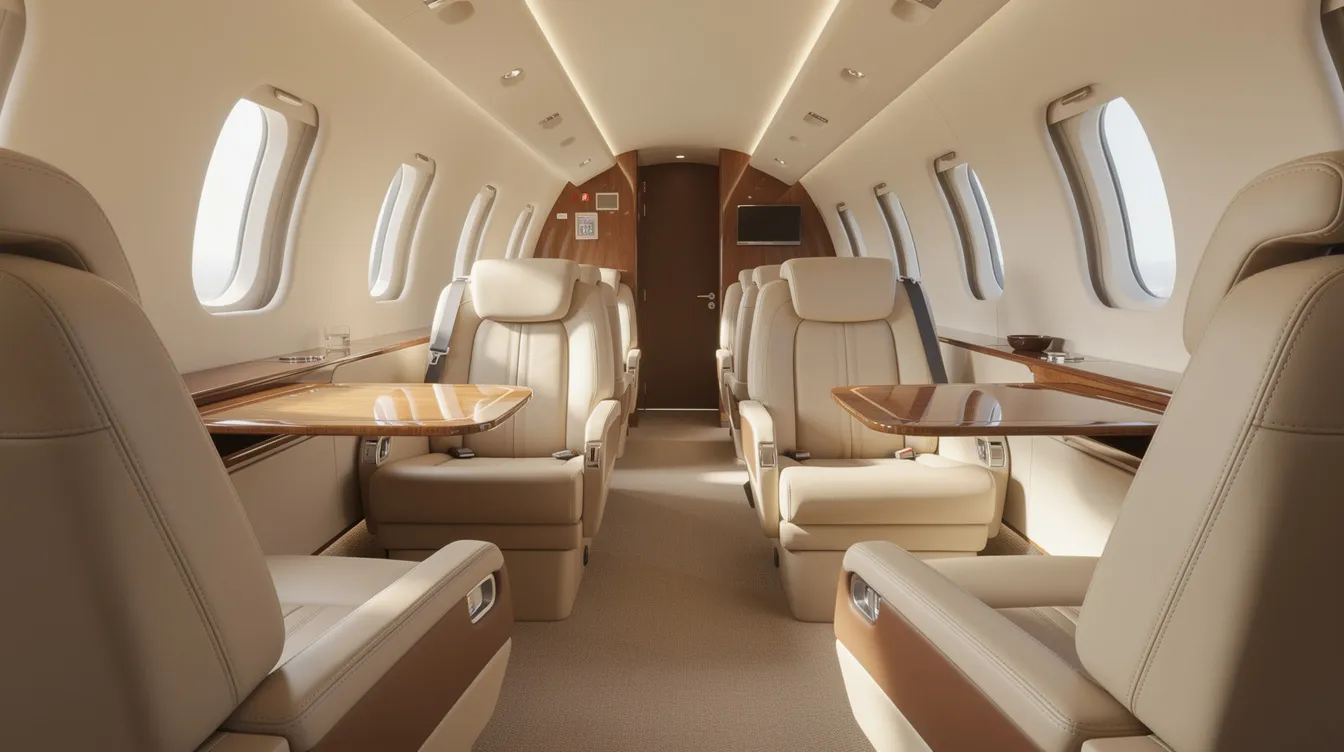
Worldwide reach matters most when time, privacy, and schedule control affect business outcomes or family experience. Typical mission profiles include quarterly board meetings in London, manufacturing site visits in Germany or Mexico, investor roadshows in Asia, and family travel to the Caribbean, Mediterranean, or Middle East.
Examples include:
Chicago–Frankfurt for manufacturing or finance meetings
New York–Riyadh for investment or energy-sector travel
Los Angeles–Auckland for long-range leisure or business
Dallas–Toronto–New York for multi-city executive travel
Phoenix, AZ, to Cabo, Aspen, or New York for mixed business and lifestyle itineraries
Ultra-long-range jets such as the Global Express or Gulfstream G650 can support many nonstop missions in the 6,000–7,500 nautical mile range under favorable conditions. Large-cabin and super-midsize jets can efficiently cover North America, the Caribbean, and many transatlantic routes.
For many BlackJet clients, the best solution is hybrid. Leading fractional jet ownership programs can serve as the core solution for North American and transatlantic travel, while vetted worldwide jet charter can supplement rare ultra-long-range trips to Asia-Pacific, Africa, or remote destinations.
This approach helps clients avoid overpaying for aircraft capacity they do not need every week. It also reduces the risk of under-specifying an aircraft for a long sector where cabin comfort, luggage capacity, crew planning, and range are required.
Choosing between worldwide jet charter, jet card programs, Reserve Fleet access, and fractional jet ownership starts with a practical review of how the traveler actually flies.
A useful first step is to create a 12-month flight plan. Include expected routes such as New York–Palm Beach, Dallas–San Jose, New York–London, Miami–Mexico City, or Los Angeles–Honolulu. Then estimate passenger counts, luggage needs, schedule flexibility, and preferred airports.
Here are the main questions to ask:
How many hours will the traveler or company fly in the next 12 months?
Are most trips domestic, transcontinental, transatlantic, or ultra-long-range?
Is guaranteed access required during holidays, major events, or peak business periods?
Is the client comfortable with variable charter pricing?
Does the client value potential ownership benefits?
Is a single accountable aviation partner more useful than sourcing every trip separately?
For occasional use, ad-hoc jet charter can work well. For regular flying, a structured membership or fractional share can improve predictability. For high-frequency use, Equity Fleet access may become the foundation of a broader private aviation strategy.
BlackJet Fractional Jet Ownership helps clients design custom strategies that balance worldwide jet capability, private jet cost control, safety, and operational excellence, including evaluating floating fleet options in fractional ownership where appropriate. The goal is not simply to book a flight; it is to build an access model that can thrive across years of business and personal travel.
Exact thresholds vary by aircraft type, route structure, and schedule sensitivity. However, many industry analyses suggest that once a traveler or company consistently flies more than 25–50 hours per year, structured options such as fractional aircraft ownership or membership programs often become more cost-effective than ad-hoc worldwide jet charter.
Between roughly 50 and 150 hours per year, fractional jet ownership often provides the best balance of guaranteed availability, predictable costs, and operational consistency for North American and transatlantic flying.
BlackJet performs individualized flight-usage analyses using prior charter invoices, projected itineraries, passenger counts, and preferred aircraft types, and can help clients interpret essential fractional ownership contract terms with their advisors.
Most fractional fleets are optimized around high-demand regions such as the United States, Canada, the Caribbean, and key European destinations. These programs often provide strong coverage for transcontinental and transatlantic missions.
For ultra-long-range or infrequent global trips, such as Asia-Pacific or Africa, fractional owners may supplement their program with carefully arranged worldwide jet charter. BlackJet can integrate both approaches so clients receive consistent support whether they fly domestically or internationally.
Long-range worldwide charter missions often use the Bombardier Global Express series, Gulfstream G500, Gulfstream G600, Gulfstream G650, Dassault Falcon 7X, and Dassault Falcon 8X. These jets can support many 6,000–7,500 nautical mile nonstop missions under favorable conditions.
For shorter international routes such as New York–Toronto, Miami–Cancún, or Phoenix–Los Cabos, super-midsize jets like the Challenger 350 or Citation Longitude may be more economical while still offering stand-up cabins and useful luggage capacity.
For complex worldwide itineraries, booking a charter at least 7–14 days in advance is advisable to secure the right aircraft, airport slots, permits, crew planning, and international handling. High-demand seasons in Europe, the Caribbean, and major event destinations can require more notice.
Fractional programs typically offer guaranteed availability within standard notice windows, often 24–48 hours for domestic trips and longer for international flights, depending on program terms. BlackJet helps clients plan recurring travel months in advance while maintaining rapid-response options for urgent needs.
A first-time client should review expected routes, annual hours, passenger count, luggage profile, schedule flexibility, budget, and tolerance for variable pricing. It is also wise to evaluate safety standards, aircraft sourcing practices, operator audits, liability and insurance coverage in fractional ownership, and service accountability.
A polished website, photos, or a 5-star review log can be helpful, but they should never replace due diligence. Clients should ask how the company screens operators, verifies pilots, handles operations, and protects privacy from start to end, and should request clarity around any aircraft fractional ownership contract samples used to structure their rights and obligations.
Empty legs can offer meaningful savings, sometimes 25%–75% below standard charter pricing, but they are not always reliable enough for fixed business obligations. Empty leg flights depend on the original aircraft movement, and schedules can change if the primary trip changes, which is important for owners considering when and how to sell a fractional jet ownership share.
For flexible leisure travel, an empty leg can be useful. For a board meeting, medical appointment, investor presentation, or security-sensitive trip, Reserve Fleet access, fractional ownership, or a confirmed private jet charter is usually more appropriate.
Corporations should evaluate safety standards, aircraft availability, cost transparency, service consistency, billing clarity, and the strength of the aviation team. The right partner should provide clear communication, documented processes, and accountability across operations.
Inside a serious aviation company, leadership matters. A president, CEO, director of operations, pilots, maintenance personnel, client service employees, and management team should share the same passion for excellence. Whether a firm was started in Arizona, expanded through Phoenix, AZ, or now operates across the coast and the wider world, the standard should be the same: deliver safe, efficient, discreet private aviation.
Corporate buyers should also consider whether the provider is investing in talent. A company that treats aviation as a long-term career path, is careful in hiring, and invites experienced professionals to join a disciplined team, is more likely to create a stable client experience.
Worldwide jet charter remains one of the most flexible ways to fly private. It can provide access to thousands of airports, reduce travel time, protect privacy, and support complex global itineraries that commercial aviation cannot easily serve.
But frequent travelers often need more than one charter. They need predictable access, cost clarity, aircraft consistency, and a trusted partner who can coordinate both everyday private travel and specialized global missions.
BlackJet Fractional Jet Ownership helps clients compare worldwide jet charter, jet card programs, Reserve Fleet access, and Equity Fleet fractional ownership with a clear view of cost, convenience, and operational requirements.
Ready to explore the smarter way to fly private? Visit FractionalJetOwnership.com to request a confidential consultation and learn how BlackJet can help structure your worldwide private jet travel.
