August 5, 2026
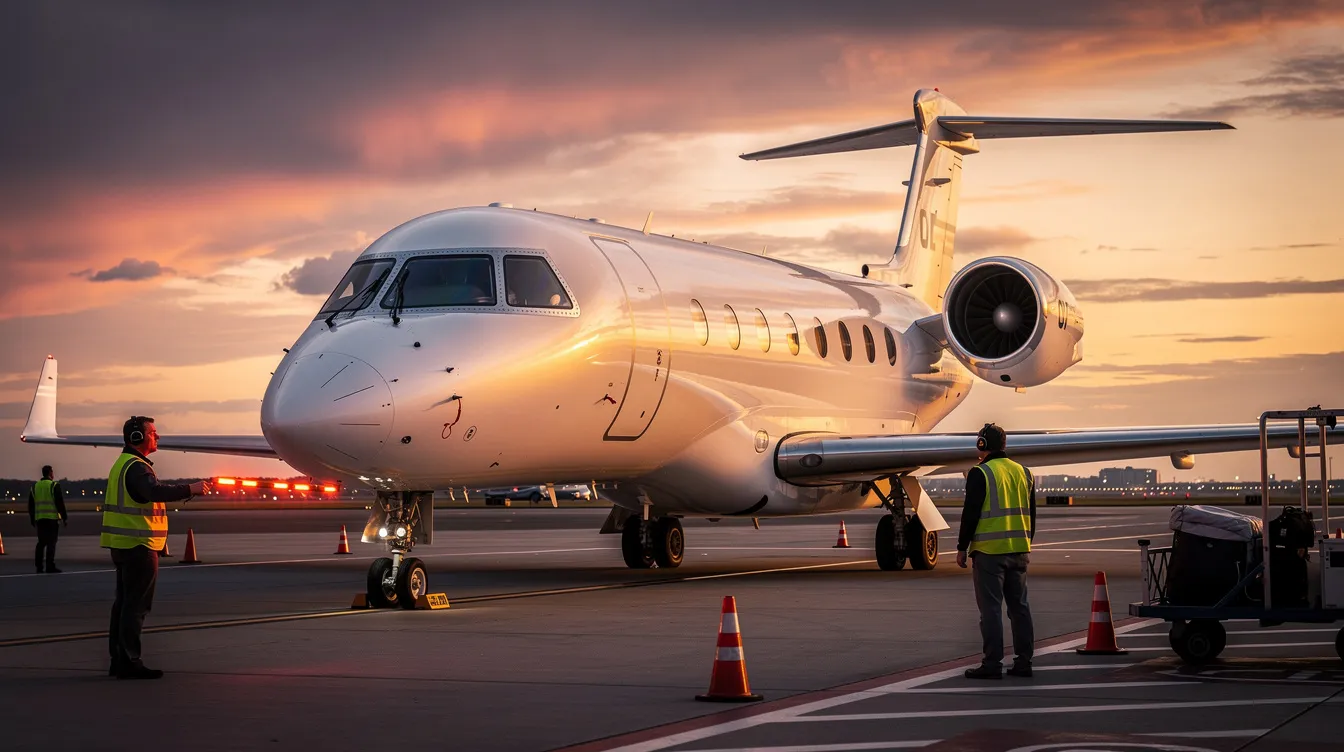
When 10 to 16 people need to travel together—whether for a board meeting in London, a family reunion in the Caribbean, or an international roadshow across three continents—a 16 seat private jet delivers the cabin space, flight range, and onboard amenities that commercial airlines simply cannot match. Private jets allow direct access to remote destinations and utilize thousands of smaller airports closer to final locations, saving total travel time compared to commercial flights. This flexibility, combined with minimal baggage handling delays and reduced travel stress, makes private aviation ideal for corporate teams, families, and other travel groups seeking privacy and convenience. But which aircraft models actually seat 16, what do they cost, and how should frequent flyers access them? This guide breaks down the leading models, real-world pricing, and fractional ownership options for large cabin private jets in 2025 and 2026.
A 16 seat private jet is typically a heavy or ultra long range aircraft designed for 10–16 passengers, with flight time endurance up to 17 hours and multiple living zones for work, dining, and rest.
Leading models include Gulfstream aircraft (G550, G650ER, G800), Bombardier Global 6000/7500, Bombardier Challenger 650/850, Dassault Falcon 8X, and Embraer Lineage 1000E, each offering distinct range and cabin features.
Hourly charter costs for these jets in 2025–2026 typically range from about $6,000 to $15,000+, while fractional ownership through providers like BlackJet Fractional Jet Ownership can lower the effective hourly cost for frequent flyers.
Fractional aircraft ownership provides guaranteed access to private jets with advance notice of 4–10 hours, combining predictable pricing, priority scheduling, and potential U.S. tax benefits compared with ad-hoc charter.
A 16 seat private jet is classified as a heavy or ultra-long-range business aircraft, typically arranged to accommodate between 12 and 16 passengers. These aircraft feature stand-up cabin heights of approximately six feet, long-range fuel tanks, and multiple living zones rather than a single-cabin layout.
Most heavy jets in this class deliver cruise speeds between Mach 0.80 and Mach 0.90 (roughly 530–610 mph), with ranges spanning from about 3,900 nm up to 7,700 nm. The longest range for 16 seat jets is approximately 7,700 nautical miles, achieved by the Bombardier Global 7500. The Gulfstream G650ER offers a similar range of 7,500 nautical miles. These jets can fly nonstop for up to 17 hours, supporting global point-to-point travel.
These jets handle missions like nonstop routes from New York to London, Los Angeles to Tokyo, and coast-to-coast U.S. trips with reserves, as well as multi-leg corporate roadshows across European capitals.
The "16 seat" description is flexible—many cabins can be reconfigured between 12 and 18 seats depending on club seating, divans, and conference tables. Most 16-seat jets accommodate 6–8 passengers for overnight sleep using lie-flat seats, convertible divans, and private staterooms with full-size beds.
These jets provide access to thousands of airports worldwide, including many regional and smaller airports that commercial airlines cannot serve, allowing travelers to fly closer to their final destinations.
These jets sit above midsize aircraft and super midsize jets (such as Citation Latitude or Praetor 500) and below VIP airliners (BBJ, ACJ320) in both scale and operating cost.
This section profiles specific 16 seat models widely used in North America and globally, focusing on real performance numbers and cabin layouts relevant to buyers and fractional owners.
Gulfstream G550, G650ER, and G800: Gulfstream jets can accommodate up to 16 passengers seated across spacious cabins. The Gulfstream G550 can fly up to 6,750 nautical miles, covering routes like New York–Dubai or London–Tokyo without fuel stops. The Gulfstream G650ER has a range of 7,500 nautical miles at Mach 0.85 cruise, and its maximum speed reaches Mach 0.925. The newer G800 pushes beyond 8,000 nm with long range capabilities and modern engines, making it the ideal aircraft for intercontinental missions. These jets feature advanced technology, high-speed Wi-Fi, Bluetooth connectivity, and cabin management systems that enhance productivity and comfort during flights.
Bombardier Global 6000/6500 and Global 7500: The Global 6000/6500 covers most corporate needs with approximately 6,000 nm range in typically configured 14–16 seat layouts. The Bombardier Global 7500 has a range of 7,700 nautical miles—the longest in class—and can fly for up to 17 hours nonstop with a spacious three-zone cabin (expandable to four zones with crew rest). These jets include full galleys for gourmet meal preparation, private staterooms with full-size beds, and advanced avionics systems.
Bombardier Challenger 650 and 850: These Bombardier Challenger models can be equipped to 16 seats for shorter-range heavy-jet missions, with typical ranges of 2,800–4,000 nm. They serve well for domestic and transatlantic flights where ultra long range is not required.
Dassault Falcon 8X: A long range tri-jet with about 5,950 nm of exceptional range, a quiet cabin, and configurations supporting 14–16 passengers with three distinct zones and an advanced technology flight deck featuring head-up displays and synthetic vision.
Embraer Lineage 1000E and Legacy 650E: The Embraer Lineage 1000E features a cabin derived from the E190 airliner, accommodating up to 16–18 passengers across five zones with approximately 4,600 nm range. The Legacy 650E offers 3,900 nm range with 13–16 passenger layouts. Both represent strong value in terms of cabin volume per dollar—a compelling proposition for groups prioritizing ample space over ultra long range.
Cabin layout is often the deciding factor for buyers choosing between Gulfstream, Bombardier Global, and Embraer Lineage 1000E platforms for 16 passenger missions.
Cabin dimensions: 16 seat jets typically feature cabin lengths from 25 to 50+ feet, widths of 7–8.5 ft, and stand-up cabin height of about 6–6.3 ft. These dimensions allow passengers to move freely and hold in-flight business meetings, meals, and rest periods without feeling cramped. The result is ample legroom and generous personal space.
Zone layouts: Standard configurations include a forward club seating area for four to six passengers, a mid-cabin conference or dining area with a table for four to six, and an aft lounge or private stateroom with divans or full-size beds. This creates multiple living zones within a single large cabin, supporting privacy and productivity.
Private spaces: Most 16-seat jets include a private stateroom with a closing door, full-size beds, and sometimes an ensuite lavatory with a stand-up shower. These features enable comfortable overnight sleep for 6–8 passengers.
Full galley: Equipped with convection ovens, microwaves, espresso machines, chillers, and storage for fine china and glassware, full galleys enable gourmet meal preparation onboard. Customized catering is typically provided, with costs ranging from $100 to $500+ per passenger.
Crew and service: Dedicated flight attendants provide personalized service throughout the flight, handling meals, beverages, and passenger needs.
Technology: Advanced entertainment systems, high-speed internet, Bluetooth connectivity, and cabin management systems allow passengers to stay connected and productive. Business amenities include power outlets at every seat and conference facilities for meetings.
Baggage capacity: These jets offer generous baggage space exceeding 100 cubic feet, supporting multi-week international travel with equipment and luggage for all passengers.
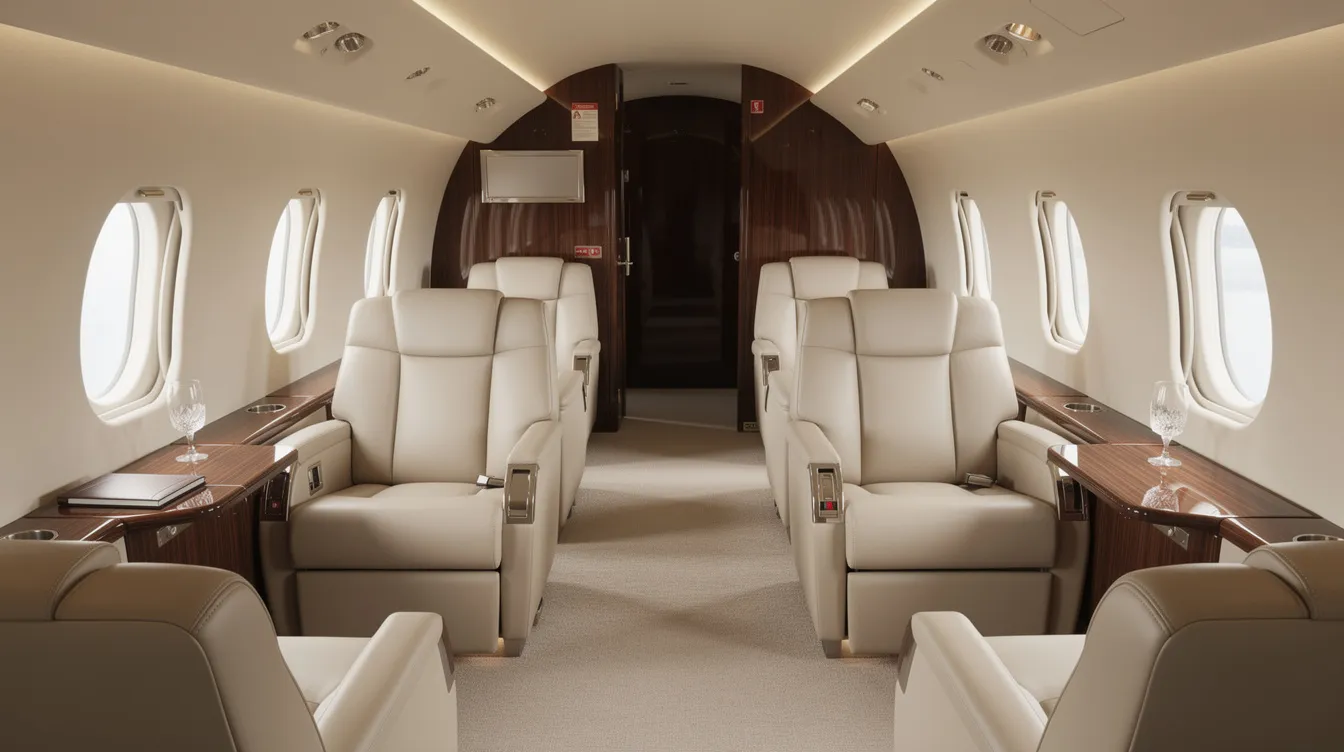
What separates a 16 seat private jet from a smaller aircraft is the presence of true private spaces and a full galley designed for restaurant-quality personalized service, with advanced amenities that further distinguish these aircraft on flights over six hours.
Private stateroom: An aft stateroom with a closing door, one or two full-length beds (or a convertible divan), additional wardrobe and storage, and in some Bombardier Global and Gulfstream aircraft, a dedicated ensuite lavatory with a stand-up shower option. Private staterooms often include full-size beds for comfort on overnight sectors.
Full galley: Forward or aft galley equipped with convection oven, microwave, espresso machine, chiller and freezer drawers, ice storage, and space for fine china and glassware—enabling multi-course fine dining during transatlantic flights and transpacific sectors. Customized catering is typically provided on private jets, with menus tailored to passenger preferences. Catering can cost $100 to $500+ per passenger depending on cuisine and service level.
Crew arrangements: At least two pilots plus one or two flight attendants staff these aircraft. Some ultra long range aircraft include a dedicated crew rest area to keep service consistent on overnight flights and 14–17 hour legs.
Real-world examples: Board dinners on a Gulfstream G650 from New York to London, or family breakfast on a Bombardier Global 7500 en route from Los Angeles to Sydney with a fuel stop, illustrate how these galley and cabin features translate into a genuinely productive and comfortable experience during long haul flights.
Technology on 16 seat private jets serves two purposes: keeping passengers productive and entertained, and giving pilots advanced tools to enhance safety and efficiency.
Cabin technology: Ku-band or Ka-band high speed Wi-Fi supports video calls, VPN connections, and streaming on international flights. HD monitors, Bluetooth audio, and HDMI inputs in conference areas ensure passengers stay connected. Advanced technology encompasses high-speed internet and entertainment systems, which are standard features in modern aircraft deliveries. Luxury private jets are typically equipped with high-end technology and amenities that rival any ground-based office.
Cabin management: Modern Gulfstream and Bombardier aircraft often include touchscreen cabin management systems allowing passengers to adjust lighting, blinds, entertainment, and temperature from smartphones or built-in panels—an expression of modern technology applied to inflight comfort.
Cockpit systems: Bombardier's Vision flight deck (on Global 5500/6500/7500) features head-up displays and synthetic vision, while Gulfstream's Symmetry and PlaneView systems offer enhanced vision and digital fly-by-wire controls for outstanding performance in challenging weather and approaches.
Sustainability technology: Many 2020-onward deliveries integrate more efficient Rolls-Royce Pearl engines on Bombardier aircraft, optimized flight profiles, and compatibility with sustainable aviation fuel (SAF). Modern engines deliver measurable fuel-burn reductions versus earlier generations.
Practical impact: This advanced technology can reduce flight time through more direct routings and smoother handling in weather, which matters for executives working or sleeping onboard during long journeys and international missions.
Performance is where 16 seat private jets stand apart from smaller aircraft, enabling nonstop routes that would otherwise require commercial airlines plus layovers.
Speed: Most heavy jets cruise between Mach 0.80 and Mach 0.90. Aircraft like the Gulfstream G650ER and Bombardier Global 7500 have maximum speed ratings up to Mach 0.925, cutting New York–Los Angeles to about 4.5–5 hours and New York–London to around 6–7 hours. These cruise speeds dramatically reduce total travel time.
Range examples: The Bombardier Global 7500's 7,700 nm maximum range enables routes such as New York–Hong Kong or New York–Singapore with around 15–17 hours of flight time. The Gulfstream G550 and Global 6000/6500 cover most corporate needs at 6,000–6,750 nm, supporting flights like London–Tokyo, New York–Dubai, or Los Angeles–São Paulo, allowing groups to fly nonstop on routes that would require connections on commercial carriers.
Runway performance: Most 16 seat jets require around 5,000–6,000 ft of runway for takeoff at typical weights and about 2,500–3,000 ft to land. This grants access to smaller airports like Teterboro (TEB) near New York, Van Nuys (VNY) near Los Angeles, and Farnborough (FAB) near London, as well as certain mountain and island airports worldwide when conditions allow. These jets can access thousands of airports worldwide. Private jet travel saves total travel time compared to commercial flights, and private aviation allows for minimal baggage handling delays and reduced travel stress.
Why it matters: The exceptional performance of long range private jets means executives arrive rested, families avoid layovers, and every trip includes seamless ground transportation connections at both ends.
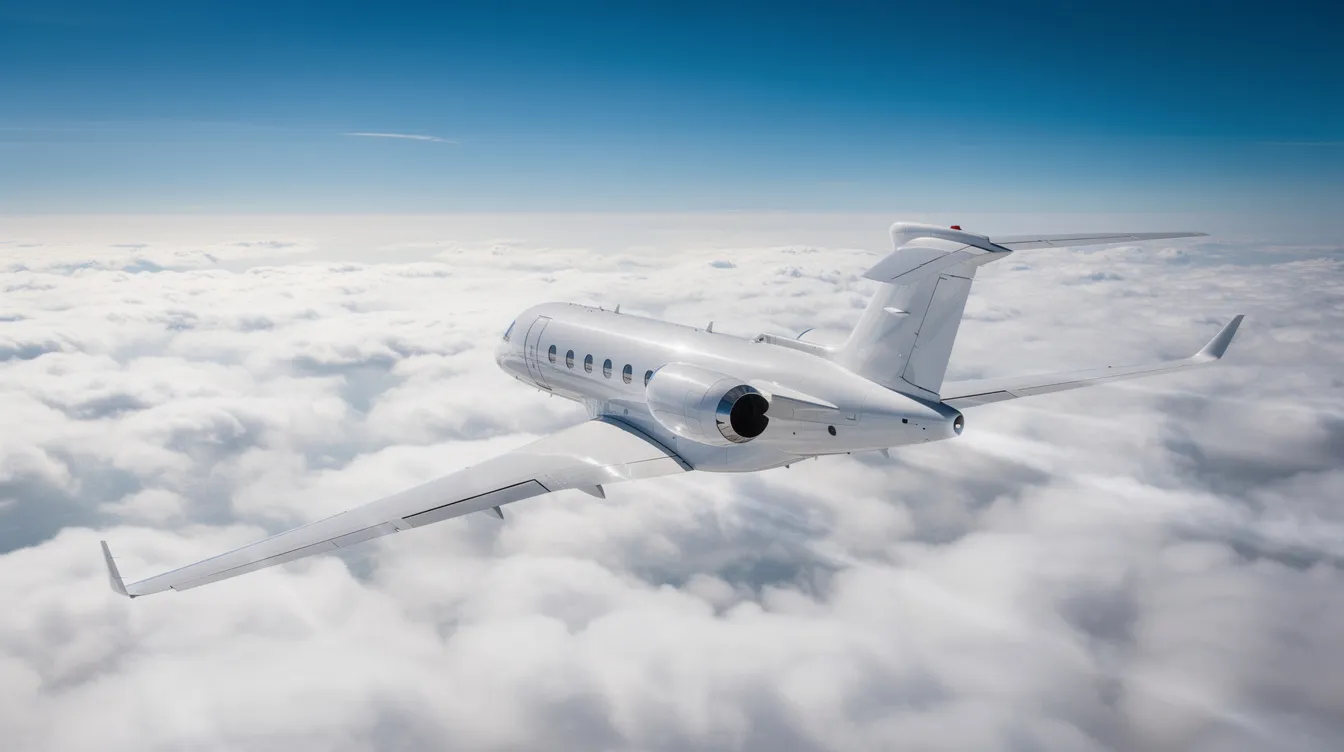
While 16 seat private jets are premium assets, understanding charter costs and cost per seat helps both individuals and companies judge value versus commercial business or first class.
Hourly charter rates (2025–2026): Charter costs range from $3,000 to $8,000+ per hour for older heavy jets, with hourly rates for large jets typically ranging from $8,000 to $14,000. Newer Gulfstream G550/G650 and Bombardier Global 6000/7500 command $10,000–$15,000+ per flight hour depending on market and region. Many charter operators price based on aircraft age, interior condition, and seasonal demand. Positioning fees can add $2,000 to $10,000+ to trip costs. Catering costs can range from $100 to $500+ per passenger. Peak travel periods can increase rates by 25% to 50%. Review the full Plane Charter Cost Guide for additional detail.
Example trip budgets: A New York–London round trip (about 12–13 block hours) on a modern Global 6000 could cost roughly $150,000–$190,000 all-in, factoring in crew, fuel, landing fees, and handling. A Los Angeles–Hawaii weekend on a Challenger 650 (10–11 block hours) might run $70,000–$100,000 including positioning and overnight fees. For European itineraries, see the Cost to Fly Private Jet to Europe guide.
Per-person economics: Dividing a $160,000 trip among 14–16 passengers brings the effective cost per seat into a range similar to last-minute international first-class tickets—making large private jets surprisingly competitive for fully utilized group travel.
Cost drivers: Positioning fees can add $2,000 to $10,000+ to trip costs. Peak travel periods can increase rates by 25% to 50%. Other variables include international handling fees, de-icing, and premium catering requests. These higher operating costs are why frequent flyers often look beyond ad-hoc charter toward fractional or membership models.
Understanding the differences between fractional ownership, charter, jet cards, and full ownership helps travelers select the right access model for their profile, especially once you grasp key fractional jet ownership terminology used in program documents and proposals.
How fractional ownership works: Clients purchase a share (for example 1/16 or 1/8 fractional jet ownership) of a specific aircraft type within an equity fleet, receiving a fixed number of hours per year and guaranteed availability. Fractional ownership provides guaranteed access to private jets and predictable scheduling. Initial investments for fractional shares range from $2–5 million for heavy and ultra long range aircraft. Fractional ownership includes ongoing monthly management fees ($8,000–$22,000+) and occupied hourly rates ($4,000–$8,000+), which are typically lower than equivalent charter rates.
Charter comparison: Ad-hoc charter involves no long-term commitment—each trip is booked individually with variable pricing. Charter suits occasional flyers under approximately 25 hours per year but lacks the consistency and priority access of ownership. Private jets allow for flexible scheduling unlike commercial flights, though charter availability during peak periods can be unpredictable.
Why fractional makes sense for 16 seat jets: High purchase prices—commonly $40–$75 million new for a Global 7500 or G650ER—plus ongoing management and maintenance make sole ownership inefficient unless flying 250–300+ hours annually. For many clients, fractional jet ownership as an investment balances capital outlay with usage. Fractional ownership typically requires 4–10 hours' advance notice for standard bookings, and members can access a managed fleet of private jets tailored to their mission needs.
Jet card and membership programs: Jet membership programs require deposits of $50,000 to 200,000 and typically offer reduced hourly rates compared to charter. Members can access a managed fleet of 16 seat private jets. These programs suit travelers needing 25 to 100 flight hours annually who want predictability without an equity commitment, and they are often compared directly with fractional jet ownership vs membership programs. Membership programs provide guaranteed access with 4–10 hours' notice.
Tax advantages: Fractional ownership offers tax benefits for jet usage when structured correctly, including possible bonus depreciation or business expense deductions for qualifying business and leisure travel. Explore tax implications for fractional jet owners in detail, and always consult a tax advisor.
Cost structure: Fractional owners pay fixed monthly management fees ($8,000–$22,000+) and occupied hourly rates of $4,000–$8,000+, which are typically lower than equivalent charter rates for the same aircraft class. For a deeper breakdown of the cost of fractional jet ownership, learn more about private jet sharing costs.
BlackJet Fractional Jet Ownership specializes in helping high-net-worth individuals and companies access large cabin aircraft, including 16 seat private jets, without the burden of full ownership.
Equity Fleet model: Clients acquire an equity share in a heavy or ultra-long-range jet type (such as a Gulfstream G550 or Bombardier Global 6000), gain priority scheduling, benefit from professionally managed maintenance and crew, and may capture tax advantages associated with fractional aircraft ownership. Understanding the total cost of fractional jet ownership is central to evaluating these options. Explore fractional jet ownership for individuals to see how the program works.
Reserve Fleet model: A non-equity, pay-as-you-go program where members pre-fund or commit to a flight-hour block, then access a diverse fleet of 16 seat and other jets with guaranteed availability and transparent, pre-agreed hourly rates. This suits clients who value flexibility without an equity commitment, similar in many respects to floating fleet options in fractional ownership.
Operational support: BlackJet coordinates 24/7 scheduling, route optimization, airport selection (for example, choosing Teterboro instead of JFK for faster ground transportation connections), catering coordination, and ground transport integration at both ends of the trip.
Advisory services: BlackJet's team helps new private aviation users compare whether a 16 seat heavy jet, a smaller super midsize, or a split into two aircraft is the best solution for their annual 25–150 hour flying profile and typical route map across the United States and internationally, including guidance on fractional jet ownership financing options.
Custom aircraft sourcing: BlackJet can assist with sourcing specific aircraft models—such as a Bombardier Global 7500 or Embraer Lineage 1000E—into an equity structure when a client's mission profile clearly demands ultra long range, multi-zone spacious cabins for long range jets. Prospective buyers often compare top fractional jet ownership programs when deciding how to structure these acquisitions.
A 16 seat private jet is not necessary for every trip. This section guides readers toward when the size, range, and cabin layout are genuinely advantageous.
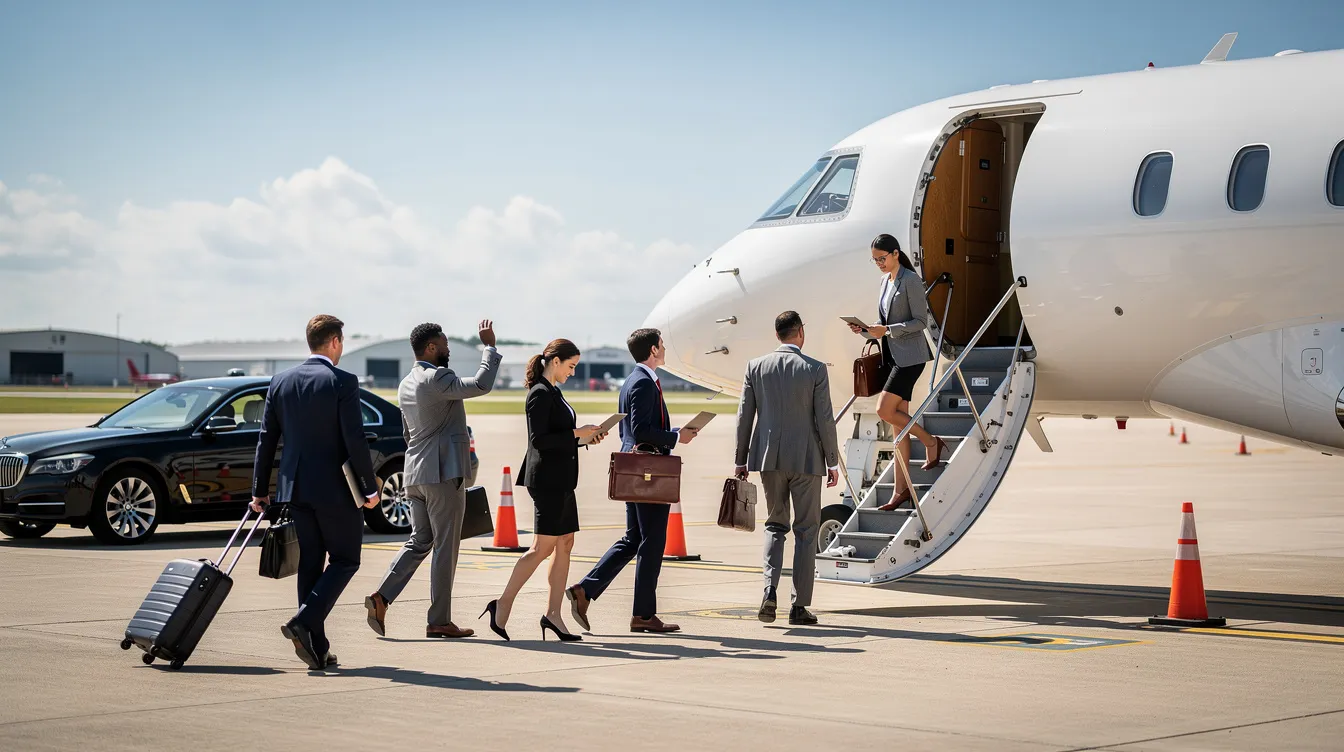
Corporate scenarios: 16 seat jets are ideal for corporate group travel—board of directors flying from New York to San Francisco for quarterly business meetings, executive roadshows across multiple European capitals in a week, or cross-border M&A teams needing an airborne "war room" with secure discussions. These jets enhance privacy during corporate travel and support productive work sessions during flights. Private jets are suitable for travel groups including corporate teams and families. Business travelers benefit from cabin identical standards across repeated trips on the same fractional share.
Family and leisure travel: Multi-generational vacations to Hawaii or the Caribbean, ski trips to Aspen with equipment, or extended family journeys from the U.S. to Europe with nannies and staff. These jets support family vacations with ample legroom and luggage space. Leisure travel with large groups is where 16 seat jets deliver maximum value per passenger.
Sports, entertainment, and VIP events: Professional teams, touring artists, or sponsor groups traveling together to events like the Monaco Grand Prix or Davos use large cabin jets to keep the group unified and the schedule tight.
Medical and humanitarian missions: These jets are suitable for medical missions with patient and staff transport, providing the cabin space and range needed for specialized international flights.
When something smaller works better: Short-haul hops under 90 minutes, runway-restricted destinations that favor super midsize jets, or groups larger than 18–20 where a private jet for 20 passengers or multiple aircraft may be more efficient. Light jets or midsize aircraft offer better economics for shorter routes with fewer passengers.
Demand for heavy and ultra long range jets has grown since 2020 as executives and families seek more control over their travel environment and schedules. The private jet market continues to expand across both business and leisure segments.
Manufacturer innovation: Gulfstream and Bombardier have released models like the Gulfstream G700/G800 and Bombardier Global 7500 with sub-5,000-ft cabin altitudes, advanced soundproofing, and longer range aircraft capabilities aimed at reducing jet lag on 12–17 hour international flights.
Continued popularity of niche models: The Embraer Lineage 1000E and Dassault Falcon 8X remain strong in the charter and fractional markets for clients prioritizing quiet cabins, efficient modern engines, and versatile cabin layouts supporting 14–16 passengers comfortably. These larger aircraft balance capability with operating cost.
Sustainability: Increased adoption of sustainable aviation fuel (SAF), airframe weight reduction through advanced composites, and engine families like Rolls-Royce Pearl deliver measurable fuel-burn improvements versus earlier generations.
Access model evolution: Growth of fractional aircraft ownership, jet card programs, and hybrid membership models like BlackJet's Reserve and Equity Fleets reflect a broader shift away from both full ownership and one-off charter in the United States and Europe. These models give clients predictable access to long range jets without the complexity of managing an aircraft. For comparisons with other providers, see the NetJets US overview.
Below are answers to common questions from first-time private aviation users evaluating 16 seat aircraft and fractional aircraft ownership.
While seating capacity may be 14–16, overnight sleeping capacity is usually 6–8 passengers depending on the cabin layout. These jets accommodate 10–16 passengers with sleeping space for 6–8 through a combination of lie-flat club seats, divans, and—in some configurations—a full bed in the private stateroom. Aircraft like the Bombardier Global 7500 and Embraer Lineage 1000E can provide a private bedroom plus several convertible sleeping spaces in the main cabin. Review specific cabin configurations and sleeping diagrams with your provider or a BlackJet advisor when planning overnight flights.
Most heavy jets require 5,000–6,000 ft of runway for safe operations, which includes many—but not all—regional airports in the United States and Europe. Popular business aviation airports accessible to 16 seat jets include Teterboro (TEB) near New York, Van Nuys (VNY) near Los Angeles, and Farnborough (FAB) near London, as well as certain mountain or island airports when conditions allow. BlackJet's operations team can evaluate runway length, elevation, and weather to recommend suitable airports and, if needed, alternative aircraft types for airports worldwide.
Not at all. While many corporate flight departments use fractional shares of heavy jets, high-net-worth individuals and family offices are increasingly using fractional jet ownership to avoid the complexity and capital requirements of owning a whole aircraft. BlackJet typically serves clients flying roughly 25–150 hours per year—a range where fractional aircraft ownership or membership often outperforms both full ownership and ad-hoc charter in cost predictability and convenience. For existing owners, understanding how to sell a fractional jet ownership share is also part of long-term planning. Discuss your expected annual routes, passenger counts, and budget with a BlackJet advisor to determine whether a 16 seat aircraft share is the right fit versus a smaller category.
Most fractional programs ask for 4–24 hours' notice for standard bookings, with longer lead times (several days or more) recommended for peak travel periods or complex multi-leg itineraries. Fractional ownership typically requires 4–10 hours' advance notice. BlackJet's scheduling team works with owners and members to secure aircraft in preferred time windows and can often accommodate last-minute changes by drawing from a managed fleet and partner operators, while also ensuring appropriate liability coverage in fractional jet ownership is in place. Predictable, priority access is one of the key advantages of equity-based fractional aircraft ownership versus pure on-demand charter.
Start by documenting your last 12–24 months of travel—routes, passenger counts, and cabin preferences—and estimate expected flight hours for the next 2–3 years. Then schedule a consultation with BlackJet Fractional Jet Ownership to compare scenarios: ad-hoc charter, Reserve Fleet membership, and Equity Fleet fractional aircraft ownership focused on 16 seat and comparable jets.
Ready to explore the smarter way to fly private? Visit FractionalJetOwnership.com to request a confidential assessment and customized private aviation plan.
A 16 seat private jet offers an exceptional blend of ample room, advanced technology, and long flight capabilities that make it the ideal choice for corporate groups, families, and special events requiring privacy, flexibility, and efficiency. These aircraft provide multiple living zones, private staterooms, full galley services, and access to thousands of airports worldwide, enabling seamless international travel with minimal stops. Whether flying nonstop on intercontinental routes or coordinating multi-leg trips, 16 seat jets deliver a productive and comfortable environment that commercial airlines cannot match.
Fractional ownership through trusted providers like BlackJet Fractional Jet Ownership makes accessing these sophisticated aircraft more attainable and cost-effective for frequent flyers, combining guaranteed availability with potential tax benefits and simplified management. For travelers seeking the perfect balance of luxury, convenience, and performance, exploring fractional ownership or membership programs is a smart step toward elevating the private aviation experience.
Ready to explore the smarter way to fly private? Visit FractionalJetOwnership.com to learn how fractional ownership can transform your travel experience.
