June 24, 2026
Every flight begins with a decision about which aircraft type to use. This guide is for business travelers, high-net-worth individuals, and anyone interested in private aviation. Choosing between airplanes and jets can save time and money and provide greater flexibility for travelers. The phrase "airplanes and jets" is central to this discussion, as understanding their differences is crucial for making informed travel decisions. An airplane is any fixed-wing aircraft capable of powered flight. A jet is an airplane powered by jet engines. All jets are airplanes, but not all airplanes are jets. This guide breaks down the differences between airplanes and jets, traces how jet engines reshaped travel, and explains how modern travelers can access private jets through fractional ownership and membership programs.
All jets are airplanes, but not all airplanes are jets. A jet is an airplane powered by jet engines (turbojet or turbofan), while many airplanes use piston or turboprop engines with propellers.
Jet engines transformed commercial, military, and private aviation from the 1940s onward, enabling aircraft to fly faster, fly higher, and cover distances over 5,000 miles nonstop.
Jets typically cruise at speeds of 400–600+ mph at altitudes of 35,000–45,000 feet, while propeller planes usually cruise at speeds of 100–200 mph below 20,000 feet, making each ideal for different mission requirements.
Fractional ownership allows shared access to private jets, giving travelers who fly 25–150 hours per year predictable costs and priority scheduling without the overhead of full ownership.
BlackJet Fractional Jet Ownership offers both an Equity Fleet (fractional ownership with priority access) and a Reserve Fleet (pay-as-you-go), plus a 25-hour Jet Card program for private jet access.
Understanding the difference between a jet plane and a propeller aircraft directly impacts how much time, money, and flexibility a traveler gains on every trip. An airplane is any fixed-wing aircraft capable of powered flight. A jet is an airplane powered by jet engines. All jets are airplanes, but not all airplanes are jets. For executives flying between San Francisco and Las Vegas or families heading coast to coast, the right aircraft can turn a full-day ordeal into a few productive hours.
Private aviation involves flying for personal or corporate use outside of airline schedules, offering travelers flexibility and convenience unmatched by commercial flights. Private jets can access over 20,000 airports worldwide, compared with roughly 500 served by major airlines. That difference, combined with private terminals and direct routing, means a New York–Los Angeles trip can save hours door-to-door. Private jets typically cruise at speeds of 400–600+ mph, providing a more personalized travel experience than commercial airlines. BlackJet Fractional Jet Ownership serves travelers flying 25–150 hours per year who want predictable private jet access without the burden of managing an entire aircraft.
Fractional ownership reduces the hassle compared to full aircraft ownership by sharing costs and management responsibilities, while offering tax benefits to jet owners. For those with less frequent travel needs, a 25-hour Jet Card provides flexible access to private jets without ownership costs, and travelers can compare fractional jet ownership vs membership programs to decide which structure best fits their usage and budget.
The sections that follow cover aviation history, military jet aircraft, commercial jet aircraft, propulsive efficiency, and the practical considerations that help high-end travelers choose between jets and propeller planes.
Next, let's explore how aviation evolved from the Wright brothers' first flight to the dawn of the jet age.
Aviation history begins on December 17, 1903, when the Wright brothers achieved the first flight of a heavier-than-air airplane powered by a simple piston engine at Kitty Hawk, North Carolina. That 12-second hop launched a new era that would reshape transportation within a single lifetime.
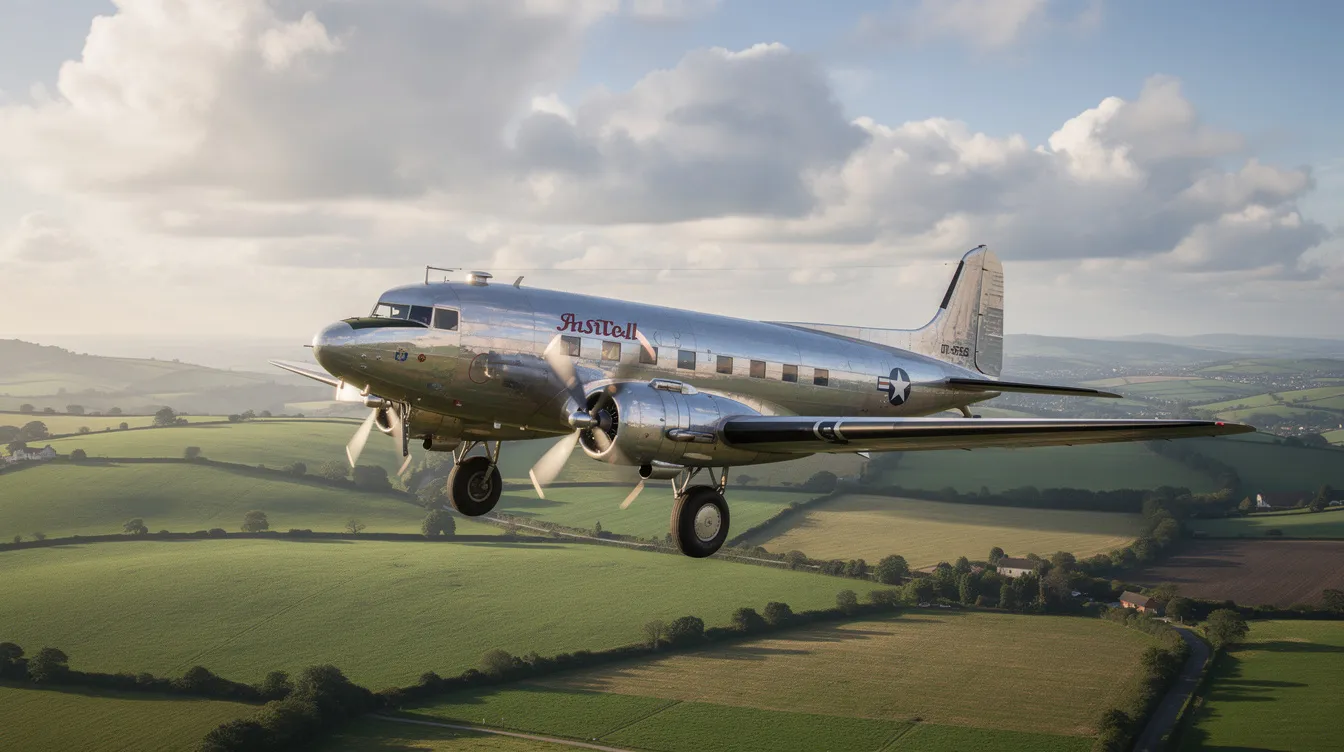
Through the 1920s and 1930s, propeller planes dominated both mail routes and early passenger service. The Douglas DC-3, with its first flight in 1935, became the workhorse of commercial air travel, carrying up to 32 passengers at roughly 185 mph. Propeller-driven airplanes are ideal for short-haul flights, and the DC-3 proved that air travel could be commercially viable.
The breakthrough came in the late 1930s when Frank Whittle in the UK and Hans von Ohain in Germany independently developed turbojet designs. Von Ohain's engine powered the Heinkel He 178 on its first jet-powered flight in August 1939. By 1944, the first operational jet fighter, the Messerschmitt Me 262, began entering service with the Luftwaffe, while the Gloster Meteor entered RAF service the same year for home-defense missions.
By the 1950s, the de Havilland Comet launched the first commercial jet service in 1952, and the Boeing 707 entered service in 1958, dominating the market and replacing most long-haul propeller routes. The Tu-144 became the fastest commercial jet at Mach 2.35 in 1975, followed by the Concorde, which operated from 1976 to 2003 and was famous for supersonic flight. Today's mix reflects that evolution: propeller aircraft handle regional access and short-haul regional flights, while jet aircraft dominate high-speed, long-distance travel for both airlines and private flyers.
With this historical context, let's examine the technical differences between jet engines and propeller planes.
Both jet engines and propeller systems generate thrust, but through fundamentally different mechanisms with distinct performance envelopes. These key differences determine how fast, how high, and how far each aircraft type can travel.
Jet engines work by drawing in air, using turbine engines to compress air, mixing it with fuel, igniting the mixture, and expelling high-speed exhaust to provide thrust. In a turbojet, nearly all thrust comes from jet exhaust. Turbojets have high exhaust speed but low efficiency for subsonic flight and are best suited for supersonic speeds. In turbofans, a large fan moves bypass air around the core, improving efficiency and reducing noise. High bypass turbofans are used by subsonic aircraft like airliners and private jets to maximize fuel efficiency.
Propeller planes use a different approach. Piston aircraft like the Cirrus SR22 drive a propeller with a traditional reciprocating engine, while turboprop planes like the Pilatus PC-12 use a gas turbine core connected to a propeller via a gearbox. Piston engines in airplanes require more specialized maintenance. Small propeller planes and piston planes are effective for regional operations, though propeller-driven airplanes are ideal for short-haul flights.
Here's how the two compare in practice:
Feature | Jets | Propeller Planes |
|---|---|---|
Cruise Speed | 400–600+ mph | 100–200 mph |
Cruise Altitude | 35,000–45,000 ft | Below 20,000 ft |
Typical Range | Over 5,000 miles | Up to ~1,500 miles |
Runway Needs | Longer paved runways | Can use shorter/unimproved strips |
Best For | Long-haul, time-critical travel | Short flights, remote airports |
Jets are designed for high speed and high altitude, utilizing swept-back or delta wings to reduce drag at transonic speeds. Airplanes typically fly at slower speeds than jets when relying on propeller propulsion. Turbojets are best for supersonic flight, while turbofans offer better efficiency at subsonic speeds, which is why modern jets overwhelmingly use turbofan designs.
For travelers, this translates to a smoother ride in most weather when flying jets, versus the ability to reach remote airports and shorter runways with propeller aircraft.
Now that we've compared the technical aspects, let's look at the main categories of jet aircraft and their roles in aviation.
Jet aircraft fall into three broad categories: military jet aircraft, commercial jet aircraft, and business or private jets. Each category pushed the boundaries of what was possible, and many advances in military aviation and the airline industry now benefit the modern jets used in fractional ownership programs.
Military aviation accelerated every aspect of jet development, from engine reliability to avionics and advanced materials. The Messerschmitt Me 262 was the first operational jet fighter, entering service in April 1944 with around 1,400 built. It achieved the first combat victory by a jet fighter against conventional aircraft, demonstrating the decisive speed advantage of jet propulsion.
The British Gloster Meteor, the first operational jet fighter for the Allies, flew home-defense missions against V-1 flying bombs in 1944. Postwar, jets evolved rapidly: the Lockheed P-80 Shooting Star entered USAF service in 1945, and the B-45 Tornado became the first US jet bomber.
The fastest military jet aircraft ever built was the SR-71 Blackbird, reaching about Mach 3.35 and altitudes above 80,000 feet in the 1960s. That military jet pushed boundaries in materials, stealth, and high-altitude aerodynamics. Technologies like reliable turbofan engines, fly-by-wire controls, and composite airframes all originated in military programs before migrating to the private jets flown today.
The first commercial jet service began in 1952, when BOAC operated the de Havilland Comet on the London–Johannesburg route. The Comet's square-windowed fuselage suffered catastrophic metal-fatigue failures in 1953–1954, but the resulting safety investigations reshaped airliner engineering standards for the passenger-carrying category of commercial jets that followed.
The Boeing 707's entry into service in 1958 was the true commercial breakthrough. Its swept wings and underslung jet engines established a design template still visible in the Boeing 737 and Airbus A320 families. Commercial aviation involves scheduled passenger airlines and cargo operations, and the 707 made jet-powered commercial flights accessible to millions while helping commercial jets expand long-haul airline travel.
The switch from pure turbojets to turbofan jet engines in the 1960s–1970s improved fuel economy and reduced cabin noise. Turbofan engines became predominant in the 1960s for efficiency. Supersonic flight entered commercial service with the Soviet Tu-144, the fastest commercial jet at Mach 2.35 in 1975, and the Concorde, which operated from 1976 to 2003, popularizing supersonic travel on select transatlantic routes.
Today's commercial jet aircraft, like the Boeing 787 and Airbus A350, use advanced composite materials and high-bypass turbofans to improve propulsive efficiency and fuel burn on long-haul routes.
Business jets bring airline-grade technology to smaller groups of travelers. The market spans several categories outlined in detail in our guide to types of jet airplanes:
Light jets like the Citation CJ4 and Embraer Phenom 300 seat 6–8 passengers with ranges around 1,500–2,000 nautical miles.
Midsize jets like the Citation XLS+ and Challenger 3500 extend range to 2,500–4,000 nautical miles with more cabin space.
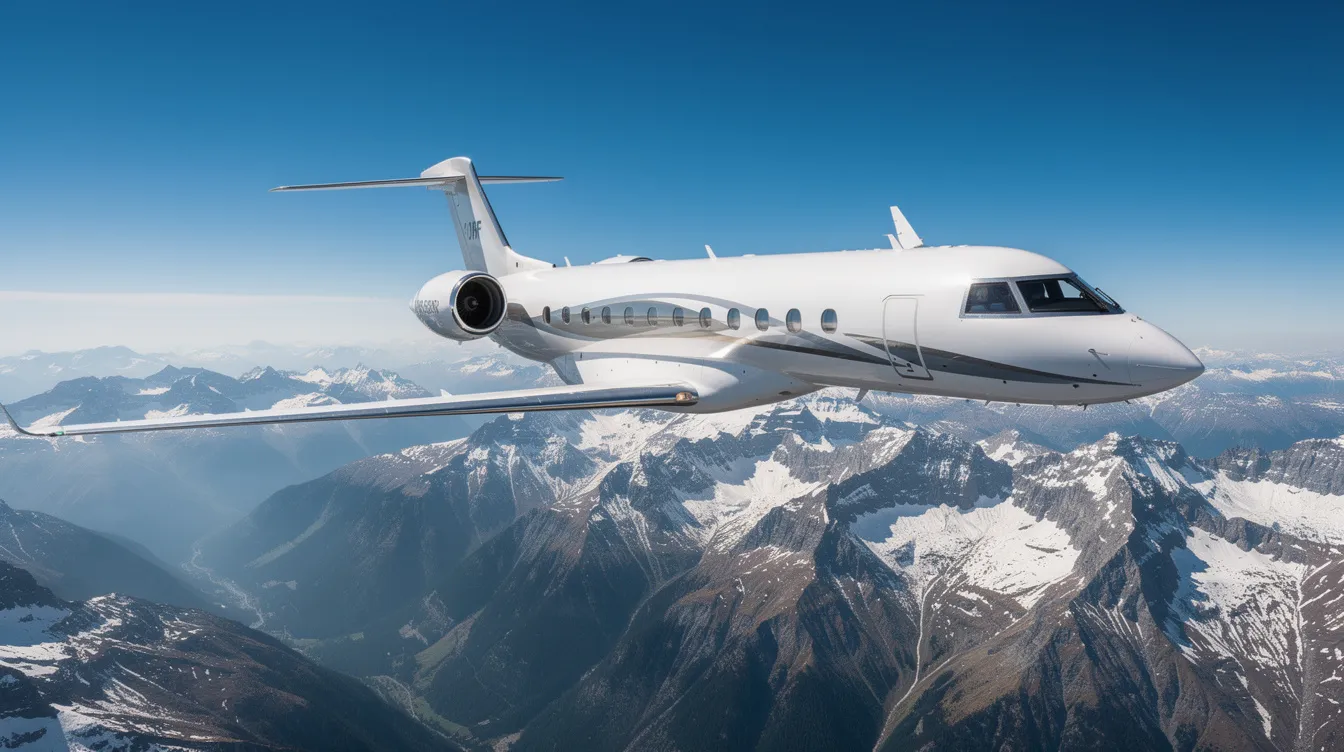
Large-cabin jets like the Global 6500 and Gulfstream G700 reach 6,000–7,500+ nautical miles, cruising near Mach 0.85–0.90.
Private jets typically cruise at speeds of 400–600+ mph and can fly over 5,000 miles nonstop on large-cabin models. Private jets can access more airports than commercial airlines, allowing access to secondary fields closer to final destinations.
BlackJet Fractional Jet Ownership helps clients access these aircraft types through its Reserve Fleet (pay-as-you-go) and Equity Fleet (fractional ownership) models. When itineraries include very short or remote runways, private jets can be paired with turboprop planes or other propeller aircraft for end-to-end flexibility.
Having explored the main types of jet aircraft, let's dive into why jet engines revolutionized aviation through propulsive efficiency and performance.
Propulsive efficiency measures how effectively an engine converts fuel energy into useful thrust and forward motion. It is the single most important factor in determining how far an aircraft can fly on a given fuel load.
Maximum propulsive efficiency occurs when the jet exhaust speed is not vastly higher than the aircraft's airspeed. High-bypass turbofan aircraft achieve this by moving a large mass of air at moderate speed through the bypass duct, rather than accelerating a small mass to extreme velocity. This is why turbofan aircraft dominate long-range routes like New York–Tokyo with lower fuel burn than older turbojet designs.
Turboprops can be more efficient on short flights, typically under 300–400 nautical miles, at lower speeds and altitudes. Range depends on propulsive efficiency, cruise speed, fuel fraction, and aerodynamic drag. For travelers, the takeaway is straightforward: efficient jets reduce fuel costs and emissions on long trips, while propeller planes may be the smarter choice for short regional legs into smaller airfields.
With a clear understanding of efficiency and performance, let's move on to how to choose the right aircraft type for your specific travel needs.
Choosing the right aircraft is a strategic decision based on distance, schedule, runway length, weather, and passenger expectations. There is no single "best" aircraft; there is only the best match for a specific mission.
Jet aircraft excel at higher speeds and altitudes, making them the clear choice for nonstop routes like New York–Los Angeles or London–Dubai. A turboprop works better for routes like Dallas–Waco or island destinations in the Caribbean, where runway length limits conventional jet operations.
Private jets are not always more expensive on a per-mission basis when factoring in time saved, multi-city meetings, and overnight productivity. During peak periods, the value gap widens further as airline schedules become unreliable.
BlackJet advisors evaluate each client's typical mission profile, including trip length, passenger count, and preferred airports, to recommend an optimal mix of available aircraft. While both jets and propeller planes meet the same regulatory safety standards, jets often provide a smoother ride and better weather avoidance for time-critical business travel.
Next, let's compare the private jet experience with commercial flights to highlight the advantages for discerning travelers.
Picture arriving at a private FBO terminal 15 minutes before departure, walking directly from your car to the aircraft steps, and taxiing out within moments. Compare that with the security lines, gate changes, and boarding delays at a major commercial terminal.
Private jets enable same-day multi-city schedules and overnight returns that commercial flights simply cannot match. Cabin features include club seating, work tables, quiet environments, Wi-Fi, and custom catering, a world apart from the standardized layout of commercial jet aircraft.
BlackJet's model provides predictable scheduling, aircraft type matching across light jets, midsize jets, and large-cabin options, and 24/7 support for both business and family travel. For some missions, clients use a mix of jet aircraft and propeller planes to reach smaller destinations without sacrificing comfort or control.
Now, let's look at how fractional jet ownership and membership programs like BlackJet's make private aviation more accessible and predictable.
Fractional jet ownership means buying a share of a specific aircraft type, such as 1/8th fractional jet ownership or 1/16th of a midsize jet, which entitles the owner to a set number of flight hours per year. Travelers who are new to this model often benefit from a fractional jet ownership glossary of key terms that clarifies concepts like share size, occupied hours, and management fees. Fractional ownership provides tax benefits for jet share owners, including potential accelerated depreciation and ownership deductions, and prospective buyers should understand the tax implications for fractional jet owners before choosing a structure.
BlackJet offers two primary models, and many clients choose to explore fractional jet ownership financing options to align capital outlay with their broader investment strategy:
Equity Fleet: Fractional ownership with priority access, custom aircraft sourcing, and potential tax advantages. For many high-net-worth travelers, this structure positions fractional jet ownership as an investment that balances utility, cost, and asset exposure. Explore how Equity Fleet works.
Reserve Fleet: Non-ownership, pay-as-you-go jet access with guaranteed availability tiers and no equity commitment, similar in spirit to floating fleet options in fractional ownership that prioritize flexibility and access across a managed fleet.
Jet Card: BlackJet offers a 25-hour Jet Card program for private jet access, suited for travelers with less predictable schedules.
Compared with other private aviation models, fractional ownership provides more cost predictability than ad-hoc charter and less overhead than full ownership. Travelers evaluating this path should look closely at the complete cost of fractional jet ownership, including acquisition, management, and hourly fees. An executive team flying 75–100 hours per year across the United States, or a family flying 25–50 hours between U.S. coasts and Europe, can both find a program that fits.
Benefits that matter most to frequent travelers include predictable hourly rates, no need to manage crew or maintenance, and access to different aircraft types within a single program. Understanding the total cost of fractional jet ownership across purchase price, monthly management, and hourly charges is essential to weighing these benefits accurately. BlackJet's team can model annual flight hours, compare fractional jet ownership with alternatives, and help identify potential tax advantages alongside a client's existing advisors.
With ownership models explained, let's address safety, reliability, and the question of whether private jets are safer than propeller planes.
Both jets and propeller planes must meet rigorous safety standards under FAA Part 91/135 and equivalent global regulations. The question "are private jets safer than small propeller planes?" comes up frequently, but the answer is more nuanced than engine type alone.
Safety depends more on operator quality, maintenance standards, pilot training, and appropriate liability coverage in fractional jet ownership than on whether the aircraft uses jet or propeller propulsion. Jet aircraft often cruise above most weather and turbulence, while turboprops are engineered for safe operations from shorter runways in diverse regional conditions.
BlackJet works only with vetted operators, applying third-party safety audits, dual-pilot requirements on applicable aircraft, and recurrent simulator training expectations. Operational support includes continuous monitoring of weather, routing, and alternate-airport planning. Clients are encouraged to raise specific concerns, whether about aircraft age, engine type, or pilot experience, during a consultation.
As aviation evolves, sustainability is increasingly important. Let's look at how modern jets and propeller planes are addressing environmental concerns.
Aviation contributes to global CO₂ emissions, but each generation of aircraft improves efficiency. Modern jets use lightweight composite materials and advanced aerodynamics to reduce fuel burn per passenger-mile significantly compared with older designs.
Sustainable aviation fuel can cut lifecycle CO₂ emissions by up to around 80% versus conventional Jet-A, depending on feedstock and production pathway. Meanwhile, turboprops and smaller propeller planes are prime candidates for early hybrid electric and full-electric propulsion, particularly on short regional routes where energy requirements are lower.
BlackJet monitors developments in SAF availability, efficient aircraft types, and routing strategies to help clients reduce the environmental footprint of private flying. Environmentally conscious travelers can ask about carbon offset options, SAF usage opportunities, and aircraft selection strategies that balance performance with sustainability goals.
The following questions address common topics about airplanes, jet aircraft, and private aviation not fully covered above. Answers are aimed at high-net-worth individuals and business decision-makers evaluating their travel options.
Every jet is indeed an airplane, meaning it is a fixed-wing aircraft. However, many airplanes are not jets because they use piston or turboprop engines with propellers. Commercial jet aircraft and private jets rely on turbojet or turbofan engines, whereas propeller planes and turboprops serve different mission profiles. Understanding this distinction helps travelers choose between jet aircraft and propeller planes when planning efficient private aviation strategies.
Both private jets and propeller planes can be extremely safe when operated by reputable, certified operators under strict regulatory oversight. Jets often cruise higher and faster, which can mean a smoother ride and more routing options around weather systems on long trips. BlackJet focuses on operator vetting, crew qualification, and aircraft maintenance standards so clients can focus on mission planning rather than parsing technical safety differences between engine type categories.
For routine travel, 3–14 days of lead time is typical. During peak periods like late December, major holidays, or large events in cities like Las Vegas, several weeks of advance notice is recommended. One advantage of BlackJet's Reserve Fleet and Equity Fleet models is the ability to secure aircraft for same-day or next-day missions, subject to availability and membership terms. Prospective clients should discuss their typical lead times and flexibility with BlackJet so that program selection matches real-world scheduling patterns.
Many light jets and midsize jets can operate from regional and executive airports with relatively short paved runways, while very short or unpaved strips may require turboprops or other propeller planes. For example, a light jet can use Teterboro for New York City access, while a turboprop might be needed to reach a small island or mountain airport with limited runway length. BlackJet evaluates runway performance, airport infrastructure, and customs requirements to match the right aircraft to each leg of a client's itinerary, allowing access to destinations that escape key commercial hubs.
Fractional jet ownership usually involves an upfront capital investment for the aircraft share plus fixed monthly and variable hourly costs, all governed by essential contract terms in fractional jet ownership that define scheduling, usage, and exit options. An ad hoc charter is pay-per-trip with no equity. Travelers often compare the best fractional jet ownership programs to understand how different providers structure these elements. For travelers flying roughly 25–150 hours per year, fractional ownership or a structured membership can lower the effective per-hour cost and increase certainty compared with sporadic charter, where rates spike during peak periods. Visit FractionalJetOwnership.com to model your annual flight hours, compare cost scenarios, evaluate potential tax benefits with your existing advisors, and review an aircraft fractional ownership sample contract with qualified counsel before you commit.
Airplanes and jets differ primarily by propulsion type, and that distinction affects speed, range, airport access, and cost structure for every trip. Private jets, accessed through fractional jet ownership or membership programs, deliver time savings, scheduling control, and flexibility that commercial jet aircraft and ad-hoc charter cannot consistently match.
Travelers who regularly fly 25–150 hours per year should evaluate whether BlackJet's Equity Fleet or Reserve Fleet provides better predictability and value than full ownership or one-off charter bookings.
Ready to explore the smarter way to fly private? Visit FractionalJetOwnership.com to request a personalized assessment of your flight profile and discover the most efficient way to use airplanes and jets in your travel strategy, including how to plan for eventually selling your fractional jet ownership share if your needs change.
