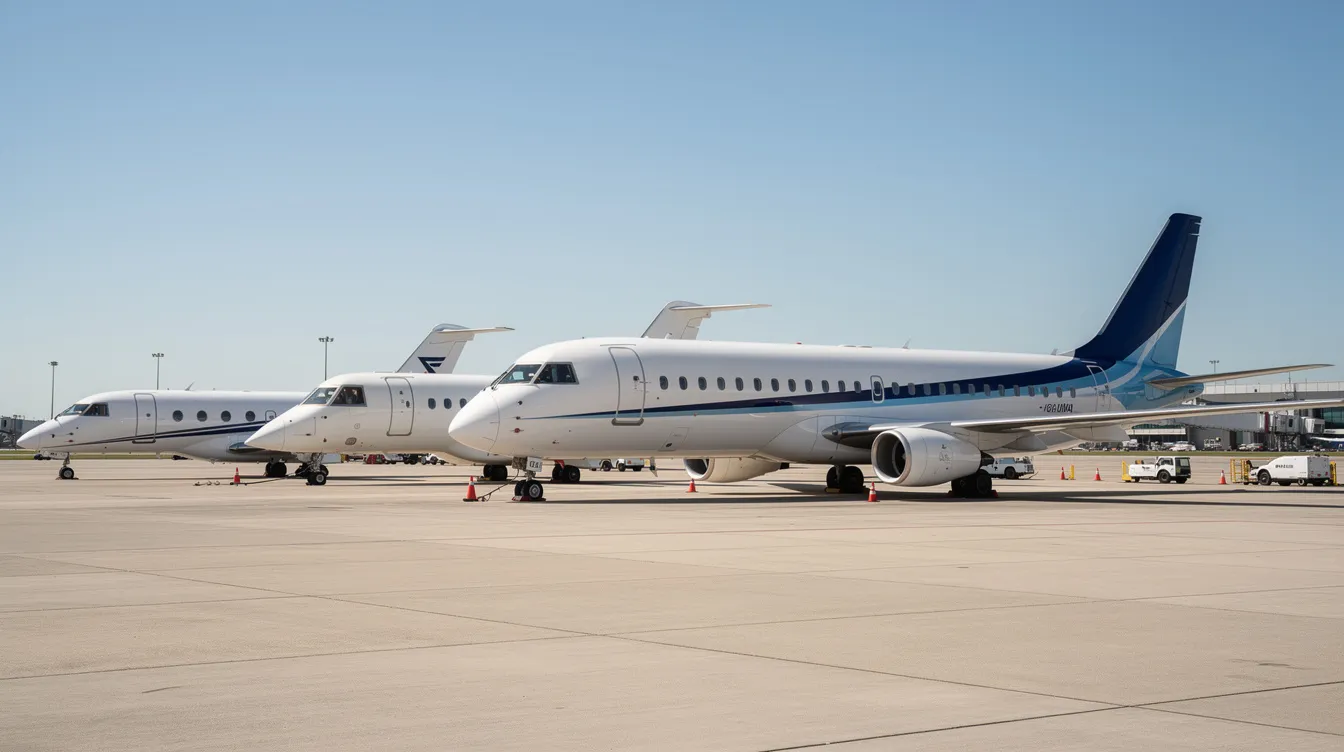
June 15, 2026
The world of aviation is vast, but jet airplanes form its backbone. From the commercial airliners connecting continents to the fighter jets defending national airspace and the private business jets transforming executive travel, jet-powered aircraft serve radically different missions while sharing a common propulsion principle. Understanding the types of jet airplanes available today is essential for anyone involved in business travel, corporate flight planning, or simply making sense of the modern aviation landscape.
This guide breaks down every major jet aircraft category, compares their capabilities with real numbers, and explains how each type fits into the broader picture of civil aviation and military operations. For executives and business owners evaluating private aviation options, it also clarifies how different aircraft types align with fractional jet ownership, jet membership programs, and on-demand charter.
Jet aircraft are powered by gas-turbine engines that generate thrust, distinguishing them from propeller aircraft and turboprops. They cruise at 400–600+ mph at altitudes of 35,000–45,000 feet, making them the dominant platform for both commercial aviation and business aviation.
Jet airplanes are grouped into four main types: commercial passenger jets, cargo jets, military jets, and private jets. Each category is optimized for a different mission, from moving hundreds of passengers across oceans to providing point-to-point flexibility for a handful of executives.
Commercial airliners such as the Boeing 737, Airbus A320, Boeing 777, and Airbus A350 move the vast majority of the world's air passengers. Business jets like the Cessna Citation family and the Gulfstream G650 prioritize time savings, privacy, and access to smaller airports.
Fighter aircraft are engineered for air superiority and combat operations, with notable examples spanning fourth-generation platforms like the F-16 Fighting Falcon to fifth-generation stealth aircraft like the F-35 Lightning II.
BlackJet Fractional Jet Ownership specializes in business aviation access to light, midsize, and heavy jets, helping clients select the right aircraft type for 25–150 hours per year of flying through both Reserve Fleet and Equity Fleet programs.
A jet aircraft is any fixed-wing aircraft powered by jet engines, which compress air, mix it with fuel, ignite the mixture, and expel high-velocity jet exhaust to produce thrust. This distinguishes a jet plane from propeller-driven aircraft powered by piston engines or turboprop turbine engines, which drive a propeller rather than relying on direct thrust.
The term "airplane" covers all fixed-wing aircraft, while "jet" refers specifically to the propulsion system. Not every powered aircraft is a jet, because some categories include aircraft intended for different purposes or operating methods. Rotorcraft includes helicopters and autogyros designed for vertical takeoff and hover. Lighter-than-air aircraft use buoyancy to achieve flight, occupying an entirely separate category. Among powered flight platforms, jets dominate modern aircraft design for speed, altitude, and range.
Core jet engine types include:
Turbojet - the original design, now largely historical in civil aircraft but foundational to the technology
High-bypass turbofan - the standard for commercial airliners and most business jets, where a large front fan moves a high volume of air around the core for greater efficiency and lower noise
Low-bypass turbofan - common in military jets where speed and thrust-to-weight ratio outweigh fuel efficiency
Afterburning turbofan - used in fighter aircraft for short bursts of extreme thrust during combat operations or supersonic flight
Jets typically cruise at 400–600+ mph, while propeller planes cruise at 100–200 mph. Jets can fly at altitudes of 35,000–45,000 feet, well above most weather and air traffic, whereas propeller aircraft operate at lower altitudes and are more susceptible to turbulence. That said, turboprops are more fuel-efficient for short flights under roughly 300 miles, which is why they remain relevant in regional aviation.
Jet aircraft operate across both civil aviation and military aviation, forming the backbone of modern global travel and air defense systems worldwide.
Jet airplanes are grouped into four main types: commercial passenger jets, cargo jets, military jets, and private jets.
Jet engines appear across several major aircraft categories, each engineered around a fundamentally different mission. Aircraft are classified into civil and military categories, with jet propulsion powering the most capable platforms in both domains, including aircraft intended for different missions and design goals. In 2020, the U.S. alone reported 46,157 registered jets and turboprops, reflecting the scale of jet-powered aviation in just one country.
The primary jet-powered aircraft categories include:
Commercial airliners - large passenger jets operating scheduled routes between airports worldwide
Cargo aircraft - freighter jets moving goods, express parcels, and oversized freight across global supply chains
Business jets - private aircraft serving corporate, government, and high-net-worth travelers with on-demand flexibility
Fighter and bomber aircraft - military jets designed for air superiority, ground attack, and strategic strike missions
Specialized platforms - air ambulances, aerial refueling tankers, maritime patrol jets, and unmanned aerial vehicles
Civil aircraft include private jets, cargo planes, and air taxis. Military aircraft include bombers, fighters, and transport planes. Each category optimizes around different priorities: capacity, logistics efficiency, flexible scheduling, or combat capability.
Later sections break down commercial airliners, business jets (including heavy jets and ultra-long-range jets), and fighter aircraft in detail with specific models and performance data.
Commercial aircraft powered by jet engines carry billions of passengers each year. Boeing and Airbus dominate the global market, with Boeing delivering 600 commercial aircraft in 2025 alone as the industry continued its post-pandemic recovery.
Commercial airliners divide into three primary tiers, each serving different route lengths and passenger volumes:
Category | Typical Seats | Typical Range | Key Examples |
|---|---|---|---|
Regional jets | 70–100 | 1,000–2,000 nm | Embraer E-Jets, E2 series |
Narrowbody (single-aisle) | 100–240 | 2,000–3,500 nm | Boeing 737 MAX, Airbus A320neo |
Widebody (twin-aisle) | 250–400+ | 7,000–8,500 nm | Boeing 777, Airbus A350, A380 |
The first commercial jet service began in 1952 with the de Havilland Comet, a British-built turbojet airliner that inaugurated the jet age for passengers. Boeing followed with the 707 in 1958, establishing jet airliners as the standard for commercial airlines across the Atlantic and beyond. For a brief period, supersonic flight entered commercial jet service when Concorde operated from 1976 to 2003, cruising at Mach 2 between London, Paris, and New York.
Commercial aircraft categories shape the passenger experience significantly. Travelers share cabins, follow fixed airline timetables, and connect through hub-and-spoke networks. This contrasts sharply with the on-demand nature of private business jets, where schedule flexibility and airport access are built into the mission profile.
Widebody jets are large twin-aisle commercial aircraft designed for intercontinental routes and high-density traffic between major hubs. Wide-body jets are capable of flying across oceans, connecting cities separated by thousands of miles of open water. Wide-body aircraft can seat from 250 to 400+ passengers and feature larger cargo holds than their narrowbody counterparts.
Key widebody models and their specifications include:
Boeing 747-8 - the iconic jumbo jet, seating roughly 400 passengers in three-class layouts, with a range around 7,700 nm
Airbus A380-800 - the world's largest passenger jet, double-deck design accommodating 500–600 passengers in typical configurations (up to ~850 in all-economy)
Boeing 777-300ER - a twin-engine long-haul workhorse, seating 300–400 passengers with ranges exceeding 7,300 nm
Airbus A350-900/1000 - a newer-generation composite widebody with ranges of 8,000–8,700 nm, powering ultra-long routes like Singapore to New York (~8,300 nm nonstop)
These aircraft differ fundamentally from heavy jets in business aviation. A Boeing 777 carries 300+ passengers in shared cabins on rigid schedules. A heavy jet in the private fleet carries 10–16 passengers in configurable cabin zones with departure times set by the client.
Cargo variants of widebody airframes serve a parallel role. The Boeing 777F carries approximately 102 tonnes of payload, while the 747-8F handles about 137 tonnes, making these aircraft central to global express logistics and e-commerce supply chains.
While widebodies dominate long-haul flights on scheduled routes, many corporate clients prefer large cabin jets for board-level travel, valuing privacy, productivity, and the ability to avoid congested hub airports.
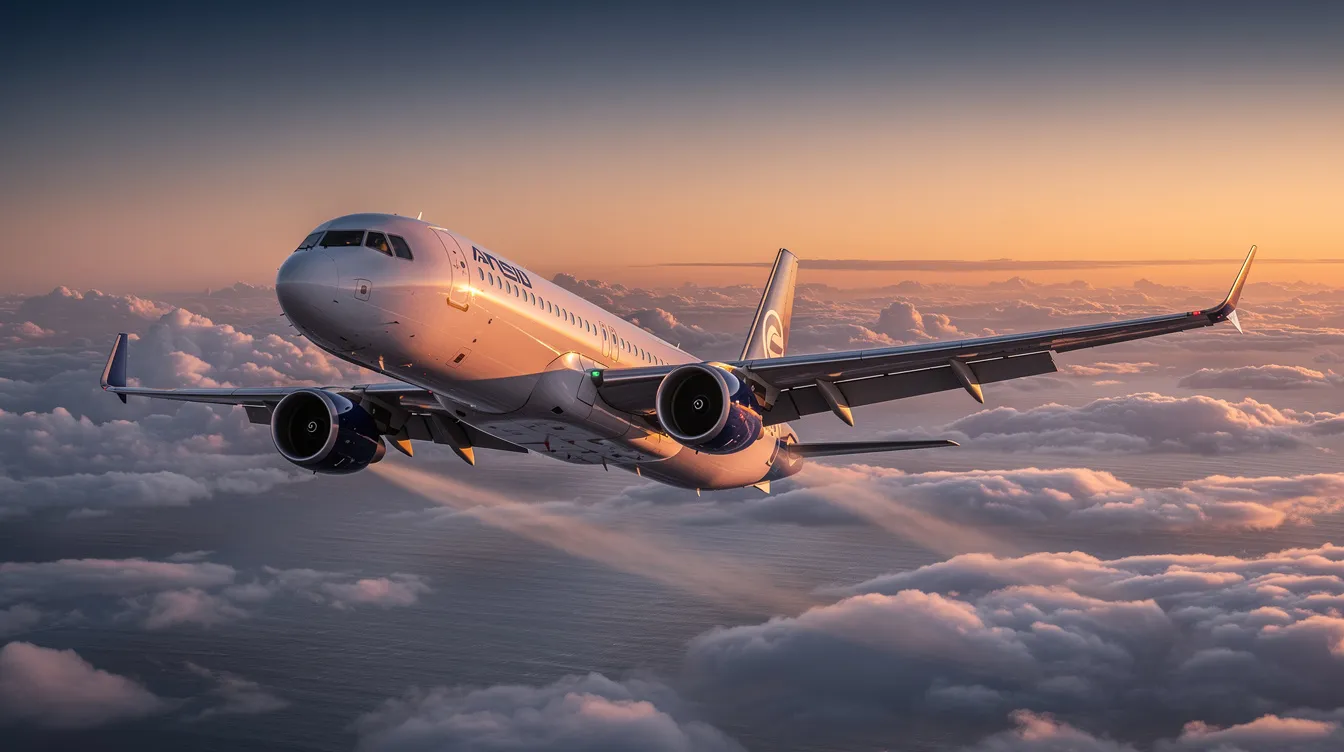
Narrowbody jets are single-aisle commercial aircraft that form the backbone of short- to medium-haul global networks. They feed hub airports and connect major cities across domestic and regional routes. Narrow-body aircraft feature a single aisle and seat up to 200 passengers in typical configurations, though stretched variants like the Airbus A321neo can accommodate up to 240.
Key narrowbody and regional jet models include:
Boeing 737 NG/MAX series - the most widely delivered narrowbody family in aviation history, with ranges of roughly 3,000–3,500 nm
Airbus A320 family (A318 through A321, plus neo variants) - direct competitors to the 737, with the A321XLR pushing narrowbody range beyond 4,500 nm into transatlantic territory
Embraer E-Jets (E170/175/190/195, E2 series) - regional jets seating 70–100+ passengers, connecting smaller cities to major hubs
Mitsubishi SpaceJet - a Japanese regional jet project that was paused but reflected growing interest in modern regional platforms
Regional jets seat 70–100 passengers and connect smaller cities to the broader airline network, filling a critical gap between turboprop routes and mainline narrowbody service.
For many business travelers, these aircraft types represent the default alternative to private jets. Commercial airlines offer lower cost per seat, but the trade-off is longer door-to-door travel time. When factoring in airport check-in, security, connections, and ground transportation on both ends, a light or midsize business jet operating point-to-point from a secondary airport can cut total travel time significantly, particularly on routes poorly served by direct commercial flights.
Business aviation uses dedicated business jets to serve corporate leaders, high-net-worth individuals, and government delegations. The core advantages are schedule flexibility, privacy, and the ability to access small airports that commercial airlines cannot serve. Private jets can access over 20,000 airports worldwide, compared to roughly 500 airports served by major commercial airlines.
Private jets typically cruise at speeds of 400–600 mph and can reduce travel time significantly compared to commercial flights, especially on multi-leg itineraries or routes between secondary cities.
The types of private jets break down into well-defined classes:
Class | Typical Passengers | Typical Range | Examples |
|---|---|---|---|
Very light jets | 4–6 | 600–1,200 nm | HondaJet HA-420, Cirrus Vision Jet, Eclipse 500 |
Light jets | 5–9 | 1,000–1,800 nm | Cessna Citation CJ3+/CJ4, Embraer Phenom 300 |
Midsize jets | 7–10 | 2,000–3,000 nm | Citation Latitude, Gulfstream G280 |
Super-midsize jets | 8–10 | 3,000–3,500 nm | Bombardier Challenger 350/3500 |
Heavy jets | 10–16 | 4,000–6,000 nm | Gulfstream G550, Dassault Falcon 7X |
Ultra-long-range jets | 12–19 | 7,000+ nm | Gulfstream G650ER/G700, Bombardier Global 7500 |
These aircraft types are central to fractional jet ownership, jet membership programs, and private jet charter. For newcomers, a fractional jet ownership glossary of essential terms can clarify key concepts like shares, flight hours, and management fees. BlackJet Fractional Jet Ownership offers access across multiple classes, helping clients match the right aircraft class to their actual mission profiles rather than defaulting to the largest or most expensive option.
Very light jets and light jets are ideal for short- to medium-range business travel, carrying small groups efficiently across distances that would otherwise require long drives or inconvenient commercial connections.
Very light jets seat 4–6 passengers and fly 600–1,200 nautical miles. Models like the HondaJet HA-420, Eclipse 500, and Cirrus Vision SF50 are sometimes certified for single-pilot operation, keeping crew costs low. They excel at regional hops of one to three hours and can access small airports with shorter runways that larger jets cannot use.
Light jets accommodate 5–9 passengers with ranges of 1,000–1,800 nautical miles. The Cessna Citation CJ3+ and CJ4 are among the most popular in this segment, along with the Embraer Phenom 300, which consistently ranks as one of the best-selling light jets globally. These aircraft cruise at 400–450 knots with cabins sized for productive work or comfortable travel.
Common use cases include:
Same-day return trips between city pairs like Los Angeles–San Francisco or New York–Boston
Visiting multiple client sites or project locations across a region in a single day
Accessing secondary airports closer to corporate headquarters, manufacturing sites, or vacation homes
For clients flying frequent regional trips, BlackJet's Reserve Fleet model provides flexible pay-as-you-go hours without ownership costs, making light jet access practical without committing to a full aircraft share.
Midsize and super-midsize jets occupy the practical center of business aviation. They offer stand-up cabins, enclosed lavatories, and enough range to handle coast-to-coast or intra-continental missions without fuel stops.
Midsize jets typically seat 7–10 passengers and fly 2,000–3,000 nautical miles. Super-midsize jets extend range to 3,000–3,500 nautical miles, opening up city pairs like New York–Los Angeles, Miami–Seattle, or London–Dubai (for upper-range models).
Leading examples include:
Cessna Citation Latitude and Citation XLS+ - midsize workhorses with comfortable cabins and reliable operating economics
Gulfstream G280 - a super-midsize jet with transcontinental range and a cabin configured for six to ten passengers
Bombardier Challenger 350/3500 - among the most popular super-midsize platforms, blending performance and cabin volume
Onboard features relevant to corporate users include Wi-Fi connectivity, conference-style seating layouts, full galleys for catering, and noise-insulated cabins that support in-flight meetings and confidential discussions. These are not luxury embellishments; they are productivity tools.
Many fractional aircraft ownership programs and jet card products center around this category because it balances operating cost, range, and cabin comfort for frequent business travel. For companies flying 25–150 hours per year across the United States or Europe, midsize and super-midsize jets often represent the optimal default choice. Understanding fractional jet ownership financing, costs, and benefits is essential at this stage. BlackJet's Equity Fleet model enables clients to purchase a fractional share in this class, gaining predictable access and potential tax benefits without full ownership complexity.
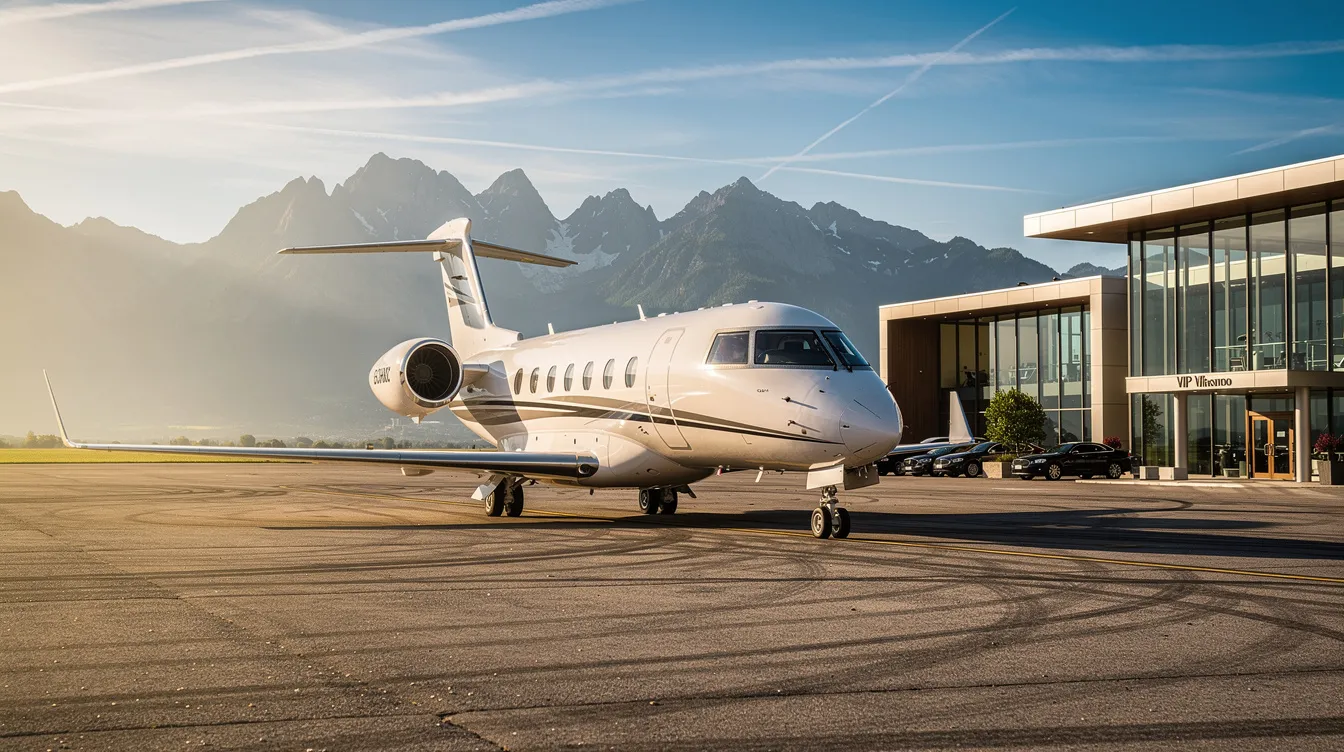
Heavy jets and ultra-long-range jets represent the top tier of business aviation. They are engineered for intercontinental routes, large delegations, and high-comfort overnight missions where executives need to arrive rested and ready to work.
Heavy jets can carry 10–16 passengers with ranges around 4,000–6,000 nautical miles. Ultra-long-range jets can fly over 7,000 nautical miles non-stop, connecting city pairs like New York–London, Los Angeles–Tokyo, or Dubai–New York without refueling. Cruise speeds approach Mach 0.85.
Flagship models include:
Gulfstream G550 - a proven heavy jet with a 6,750 nm range and a cabin that supports multiple configured zones
Gulfstream G650ER - extending range to approximately 7,500 nm with a wide-cabin layout and advanced avionics
Gulfstream G700 - the newest ultra-long-range entry, featuring up to five living areas and the tallest, widest cabin in its class
Bombardier Global 7500 - range exceeding 7,700 nm with four distinct cabin zones, a full kitchen, and a dedicated crew rest area
Dassault Falcon 7X/8X - long-range heavy jets known for their trijet configuration and short-field performance
Cabin features at this level go well beyond seating. Separate zones accommodate work areas, dining, and rest. Lie-flat beds and private suites are standard. Advanced cabin pressurization maintains a 4,000–5,000 ft equivalent altitude (compared to 6,000–8,000 ft on many commercial airliners), meaningfully reducing fatigue on long-haul flights.
For multinational boards, private equity partners, and family offices, these jets function as mobile offices and boardrooms. Fractional ownership via an Equity Fleet delivers predictable access to these aircraft without the full burden of private jet ownership, including crew management, maintenance scheduling, and hangar costs.
Fractional jet ownership and jet card programs offer scalable access models that match usage patterns without the full financial and operational burdens of outright ownership.
Military jet aircraft include fighter aircraft, bomber aircraft, and specialized support jets developed for national defense rather than civil aviation. While they share core propulsion technology with commercial and business jets, their design priorities differ radically: speed, stealth, weapons integration, and survivability in contested environments.
The evolution of jet-powered military aircraft began during World War II. The Messerschmitt Me 262 was the first operational jet fighter, entering combat in 1944 with the German Air Force. It demonstrated that jet propulsion could give a decisive advantage in air-to-air combat, even though production challenges limited its wartime impact.
Post-war development moved rapidly through jet fighter generations:
First generation (1940s–1950s) - straight-wing jets like the MiG-15 and F-86 Sabre, prominent in the Korean War
Second and third generation (1950s–1970s) - swept-wing and supersonic designs, including the F-4 Phantom II used extensively in Vietnam
Fourth generation (1970s–1990s) - highly maneuverable designs like the F-16 Fighting Falcon, F-15 Eagle, and Su-27, featuring advanced avionics and beyond-visual-range weapons
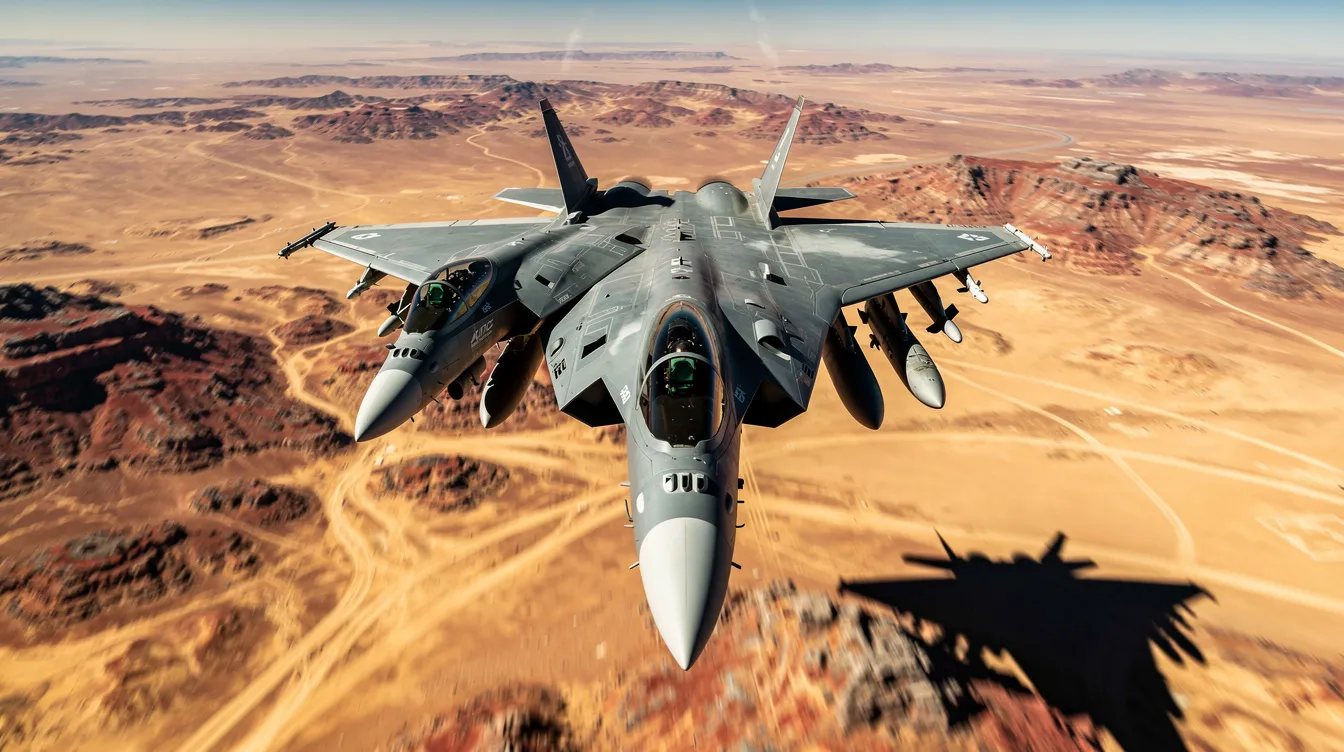
Fifth generation (2000s–present) - stealth aircraft with sensor fusion, including the F-22 Raptor, F-35 Lightning II, Chengdu J-20, and Sukhoi Su-57
Military aircraft include bombers, fighters, and transport planes, which are intended for different defense missions. The fastest military jet aircraft in service today can exceed Mach 2, though sustained supersonic cruise without afterburner (known as "supercruise") is a hallmark of fifth-generation platforms like the F-22.
While these aircraft types are not part of business aviation or fractional jet programs, technologies originally developed for fighter aircraft-fly-by-wire controls, composite materials, advanced avionics, and glass cockpit displays-have directly influenced modern commercial and business jet design.
Air superiority fighters are designed with one primary objective: maintaining air superiority over contested airspace. They prioritize maneuverability, speed, sensor integration, and advanced air-to-air weapon systems. Fighter jets in this category must detect, engage, and defeat opposing aircraft before they can threaten friendly forces.
Multirole fighters are capable of both air-to-air combat and precision ground attack, making them the prevailing design philosophy across most modern air forces. Maintaining air superiority while simultaneously projecting strike capability reduces the number of specialized aircraft types a nation needs in its inventory.
Key examples across eras and roles:
F-15C Eagle - dedicated air superiority fighter with an undefeated air-to-air combat record spanning decades of Air Force service
Su-27/Su-35 Flanker family - Russian-origin designs optimized for beyond-visual-range engagement and high maneuverability
F/A-18 Super Hornet - a carrier-based multirole fighter serving the U.S. Navy
F-16 Fighting Falcon - one of the most widely exported jet fighters in history, serving over 25 air forces
F-35 Lightning II - a fifth-generation stealth aircraft designed for multi-role combat operations, integrating sensor fusion and network-centric warfare
These military jets commonly operate at transonic or supersonic speeds (Mach 1–2+), far beyond the cruise profiles of any civil aircraft. The fighter aircraft generation model (first through fifth, with sixth-generation concepts under development for the 2030s) provides a useful framework, though it is not formally standardized across all nations.
Training aircraft and experimental aircraft also play critical roles in military aviation. Flight schools and programs like those at epic flight academy train the next generation of pilots, while experimental aircraft push the boundaries of technology before operational deployment. Recreational pilots and those engaged in recreational flying operate general aviation aircraft in a separate domain, though some aviation enthusiasts cross over from civil aviation into flight training in jet-powered platforms.
Jet engines power far more than passenger and fighter aircraft. Cargo aircraft, surveillance platforms, refueling tankers, and a range of specialized jets handle missions that keep global logistics, defense, and public safety functioning.
Dedicated freighter jets move the world's time-sensitive goods. Boeing's freighter portfolio accounts for over 90% of global dedicated freighter capacity:
Boeing 747-8F - payload approximately 137 tonnes, cargo volume ~854 m³, range ~4,400 nm, nose-door loading for outsized cargo
Boeing 777F - payload approximately 102 tonnes, range ~4,900 nm, twin-engine economics for standard palletized freight
Airbus A330-200F - a medium widebody freighter serving shorter cargo routes
Converted passenger aircraft supplement factory-built freighters, but operators increasingly prefer purpose-built cargo aircraft for efficiency and payload optimization.
Special-mission jet aircraft include:
AWACS platforms (e.g., Boeing E-3 Sentry) - airborne radar stations providing battlefield surveillance and command-and-control
Aerial refueling tankers (KC-135 Stratotanker, KC-46 Pegasus) - military transport jets used for mid-air refueling or cargo delivery, extending the range of combat operations globally
Maritime patrol jets (Boeing P-8 Poseidon) - based on the 737 airframe, combining commercial platform efficiency with military sensors
VIP and government transport - modified airliners or business jets configured for heads of state and senior officials
Medical transport - business jets reconfigured as air ambulances with medevac equipment for critical patient transfers
While these aircraft types are not typically part of fractional jet ownership fleets, they demonstrate how versatile the jet aircraft category is across mission sets. The same core propulsion and airframe engineering that powers a private jet also enables everything from disaster response to strategic airlift.
For corporate and private clients, the most relevant aircraft types are business jets. Selecting between light, midsize, and heavy jets depends on mission profile and annual usage, not prestige or brand preference. Private aviation offers flexible scheduling without fixed airline timetables, but that flexibility only delivers value when the aircraft type matches the actual travel pattern.
Key decision factors include:
Typical route length - sub-1,000 nm regional trips versus 3,000+ nm transcontinental or intercontinental missions
Passenger count - a team of 3 executives versus a board delegation of 12
Trip frequency - how many hours per year the aircraft will actually fly
Airport requirements - whether the client needs to access smaller airports with shorter runways or primarily uses major metro airports
Cabin amenities - basic seating versus stand-up cabins with beds, galley, and conference areas for long-haul flights
Simple rules of thumb:
Very light and light jets → 2–6 passengers on sub-2-hour regional hops
Midsize and super-midsize jets → 6–9 passengers on coast-to-coast or transcontinental routes
Heavy and ultra-long-range jets → 8–14+ passengers on intercontinental or overnight missions
Access models for private aviation range across a spectrum, and comparing fractional jet ownership vs membership programs helps determine which model best aligns with usage and budget:
Full private jet ownership - complete control, full cost burden, best above ~400 flight hours per year
Fractional jet ownership - shared access to private jets, optimal around 25–150 flight hours per year, with tax and investment benefits. A detailed breakdown of the cost of fractional jet ownership helps clarify the full financial commitment compared with charter and full ownership.
Jet card programs - prepaid hours at fixed rates, simpler but less flexible on aircraft type
On-demand private jet charter - pay per flight, no commitment, but variable pricing and availability
Clients typically need 25–150 flight hours per year for fractional ownership to make financial sense. For many travelers, a 1/8th fractional jet ownership structure providing around 100 hours annually can align closely with real-world usage. Below that threshold, charter or jet cards may be more cost-effective. Above it, the economics of full ownership start to become competitive.
BlackJet Fractional Jet Ownership acts as a trusted advisor in private aviation, helping clients understand aircraft types and align them with specific corporate or personal travel needs. Rather than pushing a single aircraft class, BlackJet works with each client to analyze routes, passenger loads, and frequency before recommending an aircraft type or access model.
Equity Fleet: Clients purchase a fractional share of a specific aircraft type-typically a midsize, super-midsize, or heavy jet. Equity Fleet offers fractional ownership with tax benefits under U.S. depreciation rules, along with professional aircraft management, crew coordination, and guaranteed scheduling. Understanding the tax implications for fractional jet owners is crucial when evaluating this structure. Private aviation services include aircraft management and scheduling, handled entirely by the operator. Fractional ownership reduces hassle compared to full aircraft ownership while preserving the financial upside of equity in the entire aircraft.
Reserve Fleet: A non-equity, pay-as-you-go model. Reserve Fleet provides flexible pay-as-you-go hours without ownership costs, giving members access to multiple aircraft categories-light, midsize, and heavy jets-with guaranteed availability and transparent hourly pricing. This model suits clients whose travel patterns vary significantly throughout the year.
BlackJet helps clients compare aircraft types side-by-side, including range maps, runway requirements, and cabin layouts, so decision-makers can visualize how each jet aircraft type supports their routes. Whether comparing a midsize jet for New York–Chicago against a heavy jet for New York–London, the goal is to match capability to need without overspending on range or cabin size that goes unused. A clear view of the total cost of fractional jet ownership across different aircraft types supports these trade-offs.
Among top business jet companies, BlackJet differentiates through this consultative approach, treating aircraft type selection as a strategic decision rather than a commodity transaction. For many clients, evaluating floating fleet options in fractional ownership is part of this strategy, balancing flexibility, access, and cost.
Ready to find the right fit? Visit FractionalJetOwnership.com to schedule a consultation and review your travel profile against the capabilities of each jet aircraft class.
Both commercial airliners and business jets are evolving toward higher efficiency, lower emissions, and more capable onboard systems. These changes influence every jet aircraft category, from regional jets to ultra-long-range platforms.
Engine efficiency gains continue to drive progress. Modern high-bypass turbofans, geared turbofans, and open-fan engine concepts under development promise to reduce fuel burn further. Modern jets reduce fuel burn by 15–25% compared to older models from the 1990s and early 2000s, with each new generation of powerplant pushing the margin wider. Composite airframes and aerodynamic refinements complement these engine advances.
Sustainable aviation fuel is a major trend across commercial aviation and business aviation alike. Many commercial airlines and private aviation operators now blend sustainable aviation fuel to reduce lifecycle CO₂ emissions by 50–80% on eligible flights. As SAF production scales, pricing is expected to become more competitive, accelerating adoption across the industry.
Avionics and connectivity are transforming the cockpit and cabin. Glass cockpits with synthetic vision, satellite-based internet for passengers and crew, and predictive maintenance systems that detect issues before they ground an aircraft are now common in new-generation private jets and increasingly standard on commercial aircraft. Private jets' safer operating environments benefit from these same advances in situational awareness and system redundancy.
Emerging concepts include electric aircraft and hybrid-electric propulsion for regional and short-haul routes, along with advanced air mobility vehicles designed for urban and suburban transport. While these technologies are not yet mainstream replacements for heavy jets or long-range powered aircraft, they may change short-haul business aviation over the next 10–20 years. Supersonic flight is also being revisited, though regulatory and cost hurdles remain significant.
For aviation enthusiasts and private aviation clients alike, the trajectory is clear: every type of jet airplane is getting cleaner, smarter, and more capable with each generation.
Jets are generally faster and cruise at higher altitudes than turboprops and propeller planes, enabling them to fly above most weather and cover long distances more efficiently. However, all certified aircraft types must meet stringent safety standards. Private jets must comply with FAA regulations for safety, and reputable operators maintain third-party safety certifications like ARGUS or Wyvern to verify operational standards beyond the regulatory minimum. Safety standards apply differently across aircraft categories, but the rigor of oversight is consistent. Safety depends more on operator practices, maintenance quality, and crew training than on whether the platform is a jet or turboprop. Turboprops can be better suited for very short or unimproved runways, while jets excel at higher-altitude, weather-avoiding cruise profiles critical for long-distance business travel.
Heavy jets become compelling when a team of 6–12 people needs to travel on complex routes or tight schedules that commercial airline timetables cannot accommodate. For intercontinental trips where executives must work in-flight and arrive rested for same-day meetings, a heavy or ultra-long-range jet can cut door-to-door travel time by several hours compared to the commercial alternative. On a per-productive-hour basis across a group of senior leaders, a large cabin jet may be more cost-efficient than purchasing multiple first- or business-class tickets, particularly when time-sensitive deals, confidential discussions, or multi-stop itineraries are involved. Luxury private jets in this class function less as status symbols and more as productivity tools for organizations where executive time carries a high opportunity cost.
In fractional aircraft ownership, larger aircraft types with greater range and cabin volume carry higher purchase and hourly operating costs. A very light jet share costs substantially less than a heavy jet share, both in acquisition and in per-hour fees covering fuel, crew, maintenance, and management. Clients should balance aircraft capability with their actual route profiles. Paying for an ultra long range jet share is unnecessary if most missions are under 800–1,000 nautical miles. When comparing programs, knowing the essential contract terms in fractional jet ownership helps avoid surprises around costs, scheduling, and exit options. BlackJet Fractional Jet Ownership works with clients to analyze historical travel data and propose an aircraft type-or a mix within its fleet-that optimizes both cost and mission coverage.
Some fractional programs, including flexible models like BlackJet's Reserve Fleet, allow members to fly on different jet aircraft categories by using interchange rules or variable hourly rates. A client might own equity in a specific midsize jet but still access a heavy jet within the operator's fleet when an intercontinental board meeting arises, subject to predefined terms. Owners should also understand how to sell or transfer a fractional jet ownership share if their travel needs change. This flexibility is valuable for organizations whose travel patterns include both short regional hops and occasional long-haul missions, avoiding the need to over-invest in a single oversized private aircraft type.
The best starting point is reviewing the last 12–24 months of travel data: routes flown, passenger counts, and trip frequency. Compare those patterns against the performance profiles of light, midsize, and heavy jets to identify where capability gaps or overspending exist. Reviewing an aircraft fractional ownership sample contract can also help clarify how rights and responsibilities are typically structured. Visit FractionalJetOwnership.com to access educational resources on fractional jet ownership, jet membership structures, and cost comparisons versus charter and full ownership. BlackJet Fractional Jet Ownership offers personalized consultations to help clients determine which aircraft type and access model is most efficient for their specific civil aviation and business travel requirements.
Understanding the various types of jet airplanes—from commercial airliners and cargo jets to military fighters and private business jets—is crucial for making informed decisions in aviation and travel. Each category serves distinct missions, balancing factors like speed, range, capacity, and operational flexibility. For corporate travelers and high-net-worth individuals, selecting the right jet aircraft type aligns travel needs with cost efficiency, convenience, and productivity.
Business jets, in particular, provide tailored solutions ranging from very light jets for short regional trips to ultra-long-range heavy jets designed for intercontinental travel with maximum comfort and privacy. Fractional jet ownership and jet card programs offer scalable access models that match usage patterns without the full financial and operational burdens of outright ownership.
As the aviation industry advances, sustainability, technology, and operational efficiency continue to shape jet aircraft design and service offerings. Operators like BlackJet Fractional Jet Ownership guide clients through these complexities, ensuring that aircraft selection supports strategic travel goals while embracing modern standards of safety and environmental responsibility.
Ready to explore the smarter way to fly private? Visit FractionalJetOwnership.com to learn how fractional ownership can transform your travel experience.
