October 19, 2026
Private aviation continues to attract executives and business owners who value time, privacy, and flexibility. But understanding fractional jet ownership cost requires looking far deeper than a quoted hourly rate. This guide breaks down every cost component for 2026 so readers can make confident, data-driven decisions.
For a light jet on a 1/16 share flying roughly 50 hours per year, total annual costs typically fall between $200,000 and $350,000. A midsize jet at a 1/8 share covering about 100 flight hours runs $300,000 to $500,000 annually. Large cabin jets push that range to $500,000–$650,000 or more. These figures include the acquisition cost amortized over the contract term, fixed monthly fees, variable hourly charges, and fuel surcharges - but before accounting for depreciation at resale.
Fractional jet ownership cost breaks down into three pillars. First, the acquisition cost - a one-time equity buy-in ranging from $300,000 to over $3 million depending on aircraft type and share size. Second, the monthly management fee - fixed costs of $4,000 to over $28,000 covering crew, insurance, hangar, and maintenance oversight. Third, the occupied hourly fee - variable costs of $2,000 to over $10,000 per hour when you are on board, plus fuel surcharges that often add $200 to $800 per flight hour. Federal Excise Tax of 7.5% applies to U.S. flight charges on top of these rates.
Fractional ownership typically grants between 50 and 200 annual flight hours depending on share size. BlackJet Fractional Jet Ownership structures both its Equity Fleet (true fractional ownership with asset ownership benefits) and its Reserve Fleet (a pay-as-you-go model with no initial investment) around transparent cost breakdowns, so clients understand their total cost before signing.
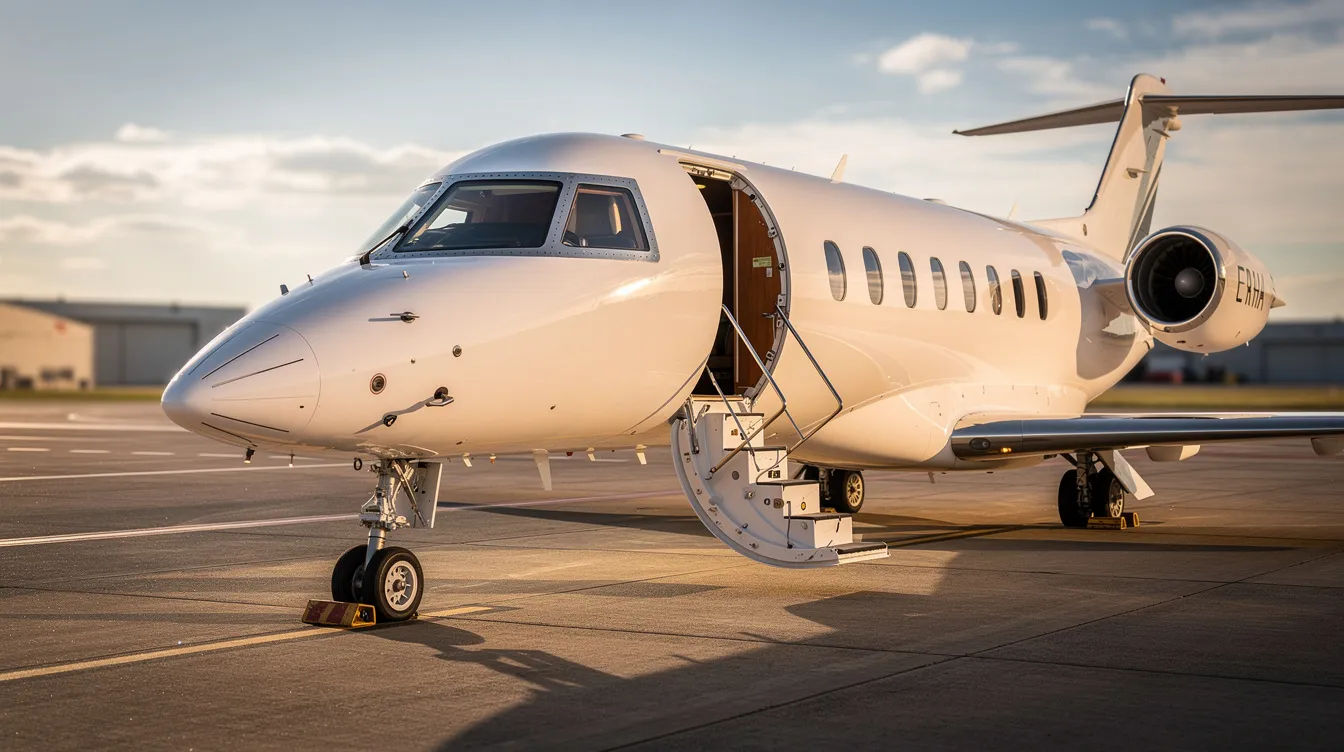
Understanding fractional jet ownership starts with a simple concept: multiple owners purchase defined shares - commonly 1/16, 1/8, or 1/4 - of a specific aircraft managed within a professional fleet. Each share entitles the owner to a guaranteed number of flight hours per year. The fractional program operator handles crew, maintenance, scheduling, insurance, and regulatory compliance, so the owner's only job is to book and fly.
Fractional ownership allows shared costs among multiple owners, which can reduce the financial burden of aircraft ownership compared to owning an entire aircraft outright. It also provides access to multiple aircraft types and a wider range of airports, and it eliminates one-way flight fees in many primary service areas.
Key usage concepts that affect cost:
Occupied vs. ferry legs - you pay the occupied hourly cost only when aboard; repositioning flights may be handled differently
Primary service areas - flights within these regions typically avoid extra repositioning charges
Peak days - holidays and high-demand periods may carry surcharges, and shared ownership can create scheduling conflicts during peak times
Minimum flight times - many fractional programs bill a one-hour minimum per leg regardless of actual flight time.
Flexible travel plans - fractional ownership allows customization of flight schedules with guaranteed availability tailored to usage levels
BlackJet combines equity fleet shares with reserve fleet access, giving clients both the stability of asset ownership and the flexibility of membership-style flying privately, while a solid grasp of fractional jet ownership terminology and concepts helps buyers evaluate these structures confidently.
The acquisition cost is the initial purchase price paid to secure a fractional share. Fractional ownership typically requires $300,000 to $3 million upfront, while full aircraft ownership can exceed $14 million even for a light jet. Here are typical 2026 ranges:
Aircraft Category | 1/16 Share | 1/8 Share | 1/4 Share |
|---|---|---|---|
Light jet | $500K–$650K | $1.0M–$1.3M | $2.0M–$2.6M |
Midsize jet | $1.4M–$2.5M | $2.8M–$5.0M | $5.5M–$10M |
Large cabin jets | $3.5M–$6.0M | $7.0M–$12M | $14M+ |
A 1/16 share typically provides about 50 flight hours annually. A 1/8 share generally includes about 100 occupied hours annually. A 1/4 share usually provides about 200 occupied hours per year, making it the closest step to whole jet ownership without bearing sole responsibility.
Aircraft age, brand, cabin size, and remaining program term all influence initial cost and residual value. Most fractional programs run 3- to 5-year contracts. Over that period, the share depreciates, and the fair market value at exit - net of remarketing fees - determines the true capital cost. Prospective fractional owners should model depreciation carefully when evaluating the upfront cost against alternatives like jet cards or charter, and many also explore fractional jet ownership financing options and structures to optimize capital outlay and cash flow.
Monthly management fees are the fixed costs of keeping a fractional share operational. They cover pilot salaries and recurrent training, maintenance programs, insurance premiums, hangar fees, dispatch, and administrative oversight. These ongoing fees are billed monthly regardless of how many hours are flown.
2026 monthly fee ranges by aircraft category:
Turboprops and light jets: $6,000–$10,000 per month
Midsize jets: $10,000–$18,000 per month
Large-cabin aircraft: $18,000–$30,000+ per month
Monthly management fees range from $4,000 to over $28,000 across the private aviation industry. Monthly fees cover pilots, maintenance, insurance, and hangarage. Contracts may increase monthly fees by 3–6% annually through built-in escalators, meaning year-five ongoing costs could be 15–25% higher than year one.
For low-usage owners, these fixed costs significantly inflate the effective hourly cost. A client flying only 25 hours on a share designed for 50 hours is effectively doubling the fixed-cost component per occupied flight hour. BlackJet's Reserve Fleet addresses this by converting most fixed costs into variable per-hour pricing, making it more cost-effective for those whose number of flight hours fluctuates year to year.
The occupied hourly fee is the variable charge applied each time the owner - or their designated passengers - are aboard. In fractional ownership, owners are billed for direct operating costs when they are in the air, including fuel burn, engine reserves, routine maintenance accruals, cabin cleaning, and onboard refreshments.
Aircraft Category | 2026 Base Hourly Rate |
|---|---|
Light jet | $2,000–$3,200 |
Midsize jet | $3,200–$4,500 |
Super-midsize jet | $4,500–$6,500 |
Large cabin jets | $6,500–$9,000+ |
These rates typically exclude fuel surcharges, taxes, and certain variable costs. Program rules matter: many fractional programs impose a one-hour minimum billable time per leg, and taxi time policies vary. Repositioning charges outside primary service areas can also add to operating costs.
Fractional ownership is generally more cost-effective for individuals flying 50 to 200 hours annually. BlackJet structures its hourly cost to be straightforward, helping corporate buyers and CFOs model annual costs with confidence. For those who fly frequently, spreading fixed costs across more hours drives the effective rate down considerably.
Fuel costs remain the most volatile input in any private jet cost structure. Base occupied hourly rates assume a benchmark Jet A price, but virtually all fractional ownership programs layer on fuel surcharges adjusted monthly based on actual market conditions.
Fuel surcharges add $200–$800 per flight hour depending on the aircraft type and current fuel prices. For a light jet, expect $200–$400 per hour in elevated markets. A midsize jet might see $400–$600, and large cabin jets $600–$800 or more.
Common variable add-ons beyond fuel:
De-icing charges (seasonal)
International operations handling and overflight fees
Overnight crew rest and hotel expenses
Catering and Wi-Fi overage
Landing fees at high-density airports
Short-notice booking premiums
Some fractional programs bundle many of these items; others unbundle aggressively, making apples-to-apples comparisons difficult. BlackJet prioritizes clarity, disclosing surcharges and providing fuel-price scenario modeling so clients can budget realistically. This is especially important for associated costs that are adjusted monthly based on market conditions.
Beyond the three headline categories - acquisition cost, monthly management, and occupied hourly cost - several less-obvious charges can significantly increase total cost.
Hidden costs to watch for:
Peak-day surcharges - peak-day fees can increase costs by 10–25% per trip during holidays and high-demand windows
High-density airport fees - landing fees and FBO charges at busy metro airports
Short-notice premiums - last-minute bookings may carry priority fees
Interchange fees - upgrading or downgrading to a different aircraft type for specific legs
After-hours crew call-out - additional charges for pilot salaries and travel outside normal duty hours
The highest hidden cost is depreciation. Fractional shares lose 35–60% of acquisition value over five years. Investors must consider depreciation and exit costs when evaluating fractional ownership contracts, and should understand the full process of selling or transferring a fractional jet ownership share when planning their exit strategy. Early exit fees range from $50,000 to $250,000+, and remarketing fees can add 7–12% to the resale value. These exit-related operational expenses make it critical to understand the fair market value trajectory before committing.
BlackJet addresses this by providing detailed pro forma projections that show depreciation curves, estimated residual value, and all hidden fees so the effective hourly cost is understood before clients sign.
Scenario 1 - Business owner, 50 hours/year (light jet, 1/16 share): Acquisition ~$600,000. Monthly fees ~$9,000. Occupied hourly ~$2,500. Over five years, with escalating fees and surcharges, total cost reaches roughly $2.5–$3.0 million. Effective cost per occupied flight hour: approximately $10,000–$12,000. For this profile, BlackJet's Reserve Fleet may deliver similar access with lower capital commitment.
Scenario 2 - C-suite team, 100–150 hours/year (midsize jet, 1/8 share): Acquisition ~$1.5–$2.0 million. Monthly fees ~$20,000. Occupied hourly ~$4,000. Five-year all-in cost: $5–$7 million. Effective hourly cost drops to $8,000–$10,000 as fixed costs spread over more hours. This is where fractional jets typically beat charter and most jet cards.
Scenario 3 - Corporate roadshow, 200+ hours/year (super-midsize or large cabin): Larger shares drive acquisition into the several-million-dollar range. However, the effective hourly cost may fall to $8,000–$12,000 for heavy aircraft. A fractional share is often more economical than full aircraft ownership for lower flying frequencies, and even at 200+ hours, fractional avoids the complete control burden - and total cost - of outright ownership.
Fractional shares can lose 35% to 60% of their value in five years, so every scenario must account for depreciation and resale and assess whether fractional jet ownership as an investment aligns with broader financial objectives. BlackJet typically conducts a customized travel analysis using clients' actual routes, cabin preferences, and frequency to recommend the optimal fractional program.
Factor | Fractional Ownership | Charter | Jet Cards | Whole Ownership |
|---|---|---|---|---|
Upfront cost | $300K–$3M+ | None | None | $5M–$75M+ |
Monthly fees | $4K–$28K+ | None | None or low | All costs borne |
Hourly cost | $2K–$10K+ | $5K–$15K+ | $4K–$15K+ | Variable |
Equity / Asset | Yes | No | No | Yes |
Same aircraft consistency | High | Low | Low | Highest |
Tax advantages | Yes | Limited | No | Yes |
Charter carries zero acquisition cost but high variable costs and no aircraft consistency. Jet cards offer fixed hourly rates without equity or depreciation benefits but typically at a higher hourly cost than fractional programs. Full aircraft ownership concentrates all operating costs on a single owner, generally requiring 200–300+ hours per year to justify the initial investment. Full ownership includes all operational responsibilities and costs.
Fractional ownership provides guaranteed availability for aircraft with short notice. BlackJet's Equity Fleet serves private flyers who benefit from ownership economics. Its Reserve Fleet targets those wanting flexible travel plans without capital lock-up, making it essential to compare fractional ownership versus membership-style programs against your actual flying profile. Prospective buyers should evaluate opportunity cost of capital, not just sticker prices, when comparing these options.
Fractional ownership allows tax deductions on depreciation, potentially qualifying for bonus or accelerated depreciation under the U.S. tax code when the aircraft is used predominantly for business. Fractional ownership can provide significant tax advantages for businesses, including deductions that meaningfully reduce after-tax cost, but owners must also ensure that liability and insurance coverage in fractional ownership is structured correctly to protect assets and manage legal risk.
Key considerations:
Federal Excise Tax: 7.5% on domestic occupied hourly cost and most surcharges, increasing effective spend
State taxes: sales/use tax and personal-use imputation rules vary by state and can affect net cost
Depreciation interaction: acquisition cost minus depreciation taken, minus remarketing fees and applicable taxes, equals the true capital cost over the holding period, and these mechanics should be clearly defined in your aircraft fractional ownership contract so there are no surprises at exit.
Owners may benefit from tax deductions on operational expenses such as management fees and hourly charges when flights qualify as business use.
Tax benefits vary based on ownership structure and usage - personal vs. business allocation must be carefully tracked
BlackJet collaborates with clients' tax and accounting teams to model after-tax fractional aircraft ownership cost but does not provide formal tax advice. The initial cost of an Equity Fleet share should always be evaluated in the context of potential depreciation benefits and clearly understood fractional jet ownership contract terms around costs, scheduling, and exit options.
Controlling costs starts before signing a contract. Prospective owners should estimate realistic annual flight hours by route, seasonality, and passenger count to avoid overbuying additional flight hours they won't use.
Actionable steps:
Build a 5-year model incorporating acquisition, monthly fees with escalation, occupied hourly cost, fuel surcharges, taxes, and likely residual value
Convert everything to effective hourly cost to compare fractional programs on an apples-to-apples basis, including all ongoing costs and hidden fees; using a complete guide to fractional jet ownership cost as a framework can help standardize your assumptions
Negotiate key terms - peak-day definitions, service area boundaries, interchange rules, early exit options, and caps on surcharges
Match your model to usage - if you fly under 50 hours, the Reserve Fleet, floating fleet-style fractional access, or a jet card program may deliver better value than an equity commitment.t
Review the used aircraft market to understand fair market trends that affect your share's residual value at exit
BlackJet's consultative approach includes transparent projections and flexible access via Reserve Fleet, helping clients keep fractional jet ownership cost aligned with real travel patterns in the private aviation industry, and complements third-party reviews of top fractional jet ownership programs when benchmarking providers and pricing.
What is the average all-in hourly cost of fractional jet ownership in 2026? Effective cost per occupied flight hour - including fixed fees, acquisition amortization, variable costs, and taxes - typically ranges from $7,500 to $12,000 for a midsize jet. Light jets run lower; large cabin jets run higher.
Is fractional ownership cheaper than a jet card if I fly under 100 hours per year? Generally not below ~75 hours. Under that threshold, jet cards or charter often cost less because you avoid the initial purchase price and recurring monthly fees. BlackJet's Reserve Fleet offers a middle path with no acquisition cost and flexible hourly pricing.
How much does a 1/8 share actually cost over 5 years? For a midsize jet: acquisition of ~$1.5M, monthly fees of ~$18,000 escalating annually, occupied hourly of ~$4,000 at 100 hours per year, plus fuel surcharges and taxes. Five-year total cost before residual: roughly 7 million dollarsars. After accounting for residual value and remarketing, true capital cost depends on the used aircraft market at exit, and a deeper dive into 1/8 fractional jet ownership benefits and costs can help confirm whether that structure fits your flying profile.
What hidden fees should I ask about before signing a fractional program contract? Ask about peak-day surcharges, fuel surcharge mechanisms, early termination penalties, de-icing charges, repositioning fees outside primary service areas, interchange fees, international operations handling, and any minimum billable leg times.
Can I control my long-term costs if fuel prices spike or my travel pattern changes? Yes - through fuel surcharge caps in contracts, flexible share sizing, and blending fractional ownership with on-demand access. BlackJet's Reserve Fleet allows clients to scale usage without being locked into fixed costs that no longer match their number of flight hours.
Fractional aircraft ownership can be highly cost-effective for the right usage profile, but it requires understanding the entire cost structure - acquisition, monthly management, occupied hourly rates, fuel surcharges, hidden fees, depreciation, and taxes. The brochure hourly rate is never the whole story.
BlackJet Fractional Jet Ownership combines Equity Fleet for clients who benefit from ownership economics and tax treatment with Reserve Fleet for those wanting flexible, no-acquisition-cost access. This dual model helps right-size cost for each traveler, whether they fly 50 hours or 200+ per year. Gather your last 12–24 months of travel data and see how the numbers work for your specific routes, cabin preferences, and frequency.
Ready to explore the smarter way to fly private? Visit FractionalJetOwnership.com to request a personalized cost comparison and start optimizing your private aviation strategy today.
