June 16, 2026
Purchasing a private jet involves significant initial capital outlay, and the total investment extends well beyond the sticker price. Whether you are exploring owning a private jet for the first time or comparing it to fractional ownership, understanding the full scope of costs is essential before writing a check. This guide breaks down what private jet ownership actually costs in 2026, from acquisition through annual expenses, and explains when alternatives like fractional jet ownership deliver better value.
Private jet purchase prices in 2026 range from about $2 million for older light jets to hundreds of millions of dollars for new large-cabin and VIP airliner conversions. New jets cost $3.5–75 million or more depending on aircraft type and configuration.
Ongoing expenses, including fuel costs, maintenance costs, crew salaries, private jet insurance, and hangar fees, often reach $500,000–$2,000,000+ per year and can exceed the original aircraft price over a decade of ownership.
Full ownership is typically economical only at roughly 200–300+ flight hours per year. Below that threshold, fractional ownership or charter access is usually the smarter financial choice.
Jets depreciate by 7% to 15% annually, meaning resale value steadily decreases over time-a critical factor in long-term cost modeling.
BlackJet Fractional Jet Ownership helps clients compare full ownership vs. fractional jet ownership and membership programs based on their annual flight hours and budget.
So how much is it to purchase a private jet right now? Initial purchase prices for private jets vary based on size and age, and in 2026, the range spans from several million dollars for a pre-owned light jet to well over $75 million for a new flagship ultra-long-range aircraft. That puts ownership in perspective against what frequent travelers may spend over time on each private jet flight.
Here is a snapshot of typical 2026 purchase price bands:
New light jets: approximately $3.5–$10 million
New midsize jets: roughly $9–$25+ million
New large-cabin jets: generally $30–$100+ million
VIP airliner conversions: above $100 million
For pre-owned aircraft, prices range considerably lower:
10–20-year-old light jets: ~$2–$5 million
Midsize pre-owned jets: ~$4–$15 million
Large-cabin pre-owned aircraft: ~$12–$45 million, depending on age, avionics, and maintenance history
The headline purchase price is only one part of the total private jet costs. Operating costs over 5–10 years often exceed the initial acquisition price, making it critical to budget beyond the upfront number.
Jet size, range capability, and cabin capacity are the major cost drivers when evaluating a private aircraft purchase. Very Light Jets are ideal for short trips and accommodate 4–7 passengers, while larger jets provide intercontinental reach. Here is what each category looks like in 2026.
A light jet typically seats 6–8 passengers and handles short- to medium-range missions up to about 1,500–2,000 miles, making it popular for regional business trips like New York–Miami or Los Angeles–Denver. They cruise near 430–450 knots with improved fuel efficiency compared to previous generations.
New light jets cost between $3 million and $9 million for well-known models like the Cessna Citation CJ3+/CJ4 Gen2, Embraer Phenom 300E, and HondaJet Elite II. A new light jet like the HondaJet Elite II starts around $5.5 million, while a CJ4 Gen2 sits closer to $10 million. Pre-owned examples trade between $2–$6 million depending on various factors like total hours and avionics condition.
Operating costs for newer aircraft run roughly $1,800–$3,000 per flight hour, including fuel, routine maintenance, and engine reserves. Even at this entry point for jet owners, annual costs for hangar fees, insurance, and crew members still require a substantial budget.
Midsize jets are suitable for cross-country flights and can carry 8–10 passengers with ranges of 2,000–4,000 miles, making them the workhorses for coast-to-coast U.S. travel. Super-midsize jets push that envelope further with higher cabin volume and range.
In 2026, new midsize jets generally fall in the $12–$25 million range, while super-midsize models run $20–$35 million depending on avionics, options, and delivery slots. Specific examples: the Embraer Praetor 500E lists at approximately $21.6 million and the Praetor 600E at around $25.8 million. The Bombardier Challenger 3500 and Cessna Citation Longitude also compete in this segment.
Pre-owned midsize jets range from $6–$18 million depending on age, total flight hours, avionics suite, and engine program enrollment. Operating costs typically land between $3,000–$4,500 per flight hour, with fuel costs representing the single largest variable cost.
These are top-tier private aircraft for global corporations and ultra-high-net-worth individuals. Heavy jets are designed for transoceanic travel and often feature sleeping quarters, full galleys, and conference spaces. New large jets can cost $25 million to over $100 million.
Flagship models carry higher prices accordingly. The Gulfstream G700/G800, Bombardier Global 7500, and Dassault Falcon 10X command $70–$100+ million new. The Global 7500 lists at approximately $75 million before customization. Pre-owned large-cabin jets aged 10–15 years typically sell for $18–$45 million depending on model year and maintenance history.
These larger jets offer 6,000–7,500+ nautical miles of range, enabling nonstop routes like New York–Tokyo or Los Angeles–London. Operating costs run significantly higher-often $5,000–$8,000+ per flight hour-factoring in fuel, crew costs, and maintenance reserves.
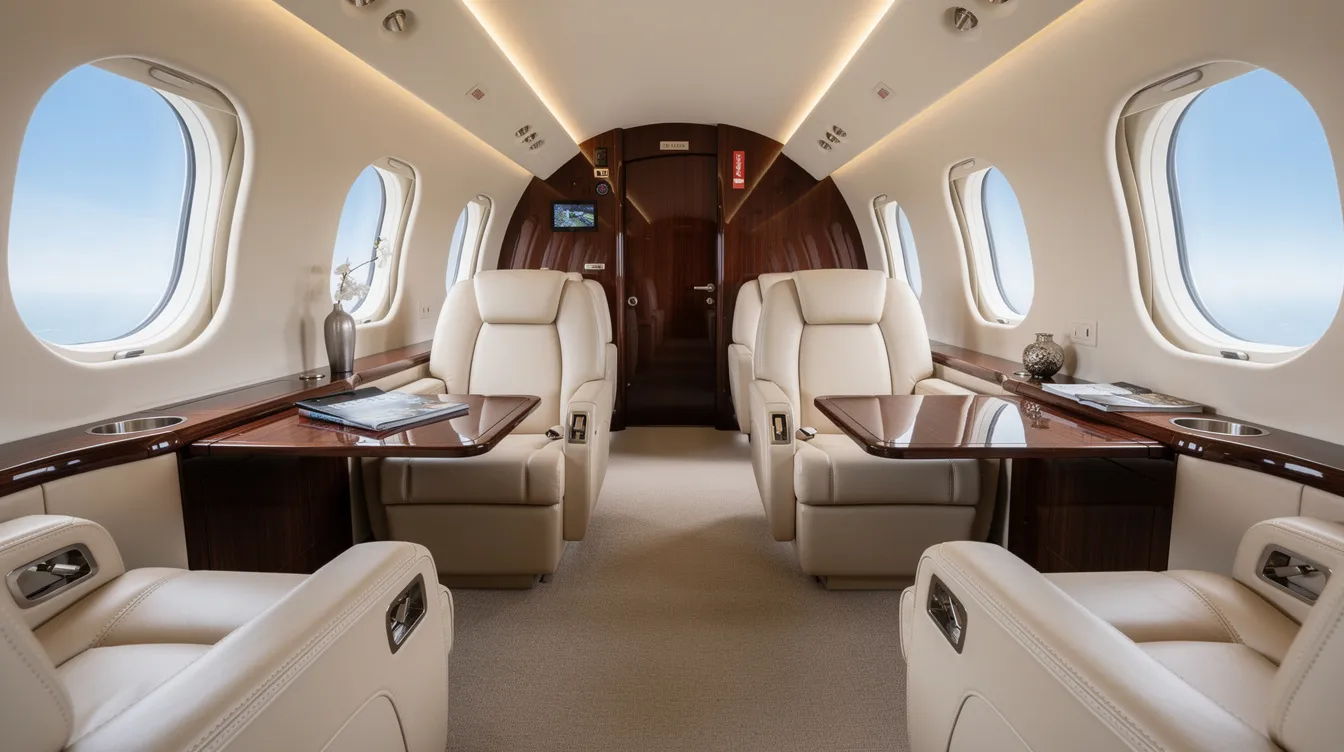
Choosing between a new jet and a pre-owned jet involves weighing cost, depreciation, and reliability. Pre-owned jets typically cost 20–50% less than new ones, but condition introduces risk. Here are the key trade-offs:
Advantages of buying new:
Full manufacturer warranties and the latest technology
Better fuel efficiency and emissions compliance
Stronger resale appeal in early years
Fresh engines with zero cycles
Advantages of buying pre-owned:
Lower upfront costs, often 20–50% below the original aircraft price
Faster availability (no 12–36-month factory wait)
Ability to selectively add a new interior or upgraded avionics
Pre-owned jets may need significant refurbishment, and older jets may require more frequent maintenance. Airframe age, total flight hours, and documented maintenance history strongly affect both pricing and future ongoing costs. A thorough pre-buy inspection is essential to avoid hidden liabilities and unplanned maintenance events. Prospective shared owners should also review independent guides to the best fractional jet ownership programs before committing.
Here are real-world examples of approximate market and list prices for popular models:
HondaJet Elite II: ~$5.5 million (new)
Cessna Citation CJ4 Gen2: ~$10 million (new)
Embraer Praetor 500E: ~$21.6 million (new)
Embraer Praetor 600E: ~$25.8 million (new)
Bombardier Global 7500: ~$75 million (new); ~$62.8 million (pre-owned)
Interior customization, avionics packages, and early delivery slots can add several million dollars to these figures. All numbers are approximate and subject to market demand and negotiation.
Ongoing ownership costs often surprise first-time buyers. Annual operating expenses for private jets typically range from $500,000 to over $3 million depending on aircraft type, utilization, and whether the aircraft is on a management program. Fixed costs pile up whether the jet flies or not, while variable costs climb with every flight hour.
Fixed operational costs are incurred regardless of jet usage. These must be budgeted every year:
Hangar fees: $25,000–$120,000+ per year in the United States; busy metro airports are at the high end
Private jet insurance: typically 1–3% of hull value annually, translating into $20,000–$400,000+, with fractional owners also needing to consider essential liability coverage in fractional jet ownership
Crew salaries: a full-time captain, first officer, benefits, and training can total $250,000–$500,000+ per year—easily several thousand dollars annually just in recurrent training alone
Aircraft management fees: often $100,000–$250,000+ yearly for scheduling, compliance, and administration
Other costs: navigation subscriptions, property taxes (in some states), and storage charges
Variable operational costs for jets are influenced by flight hours flown and can be estimated on a per-flight-hour basis:
Fuel: the single largest variable cost, ranging from $1,000 to $5,500 per flight hour depending on aircraft type and current Jet-A pricing
Maintenance reserves: engine and airframe program fees from a few hundred to several thousand dollars per hour
Crew per diem and repositioning: overnight hotels, meals, and empty leg flights to reposition the aircraft add to the effective hourly cost
Landing fees, de-icing, catering, and FBO charges: these other factors scale with usage and can cost hundreds of dollars per stop
Maintenance costs are a core factor in long-term jet ownership. Owners should expect routine maintenance to average around 1.5–3% of the aircraft's new price annually, with higher percentages for older pre-owned jets that need more maintenance. Deferred maintenance on older jets can lead to substantial post-purchase expenses.
Engine and airframe programs (JSSI, MSP, ESP, or OEM plans) help smooth cash flow and preserve resale value. Maintenance programs can stabilize costs and boost the resale value of private jets. Major engine overhauls can cost $1–$2 million per engine-a number that should be anticipated well in advance. Aircraft with complete records and enrolled in reputable programs command a resale premium and experience less downtime.
Annual flight hours are the single most important metric in deciding between full ownership, fractional ownership, and charter. Ownership of private jets is economically justified with 200 to 400+ flight hours per year, depending on aircraft category. For light and mid-size jets, the threshold sits around 200–250 hours; for large-cabin jets, closer to 300+.
At lower usage levels, fixed costs push the effective cost per flight hour dramatically higher compared with charter or membership programs. BlackJet Fractional Jet Ownership typically serves clients flying 25–150 hours per year-frequent flyers who want predictable access without the full weight of ownership. Modeling scenarios at 50, 100, and 250 flight hours annually reveals the true cost differential across access models.

Many travelers do not need or benefit from full ownership, especially below 200 annual flight hours. The main alternatives include fractional jet ownership, jet cards and membership programs, on-demand charter access, leasing, and wet leases. Leasing provides access to jets without long-term maintenance costs, while each model carries different upfront investment, ongoing obligations, and flexibility levels.
BlackJet's Reserve Fleet (pay-as-you-go) and Equity Fleet (fractional ownership) serve as solutions for different usage profiles, and choosing the right model can dramatically reduce total private aviation spend when you understand the tradeoffs in fractional jet ownership vs. membership programs.
Fractional ownership allows sharing costs among multiple owners, with fractional ownership shares typically ranging from 1/16 to 1/2 of a jet. Buyers purchase a share that entitles them to defined usage hours per year, typically 25–150 hours. Owners pay for a proportional share of acquisition and operating costs, resulting in lower upfront costs than full ownership.
Fractional aircraft ownership programs like BlackJet's Equity Fleet include professional aircraft management, crew, insurance, and maintenance-management companies that handle maintenance and scheduling for fractional owners, reducing owner workload significantly, and prospective buyers often benefit from a clear glossary of fractional jet ownership terms as they evaluate options. Fractional ownership can also offer tax benefits when structured correctly, and resources that outline the tax implications for fractional jet owners can help frame discussions; BlackJet can coordinate with clients' tax advisors to explore compliant strategies.
Private flight club memberships offer flexible booking options for those who want access without equity commitment. Jet cards typically involve pre-purchasing a block of flight hours at a fixed hourly rate, simplifying budgeting and avoiding repositioning fees.
BlackJet's Reserve Fleet model is a flexible, pay-as-you-go approach where clients pay only for the hours they use-ideal for 25–75 hours per year. Chartering offers private aviation without ownership commitments, with pricing quoted per trip based on aircraft type, routing, and market demand. These models eliminate maintenance costs, crew salaries, and hangar fees for the customer, making them attractive alternatives to full ownership.
Multiple technical and market variables shape both purchase price and ongoing costs for private jet owners. Understanding why similar-looking jets carry very different price tags helps buyers make informed decisions.
Two aircraft of the same model year can differ widely in value based on many factors-how they have been flown and maintained matters enormously. Lower total flight hours and cycles generally increase value. Consistent, well-documented maintenance at factory-authorized service centers justifies higher prices, while neglected maintenance, corrosion findings, or missing records reduce value and drive up future maintenance costs. Aircraft owners should always commission an independent pre-purchase inspection before finalizing any transaction.
Modern avionics improve safety, regulatory compliance, and pilot workload. Upgraded flight decks can cost hundreds of thousands to over a million dollars to retrofit. Customization can significantly increase a jet's purchase price-a new interior with premium veneers, connectivity, and noise insulation meaningfully affects both acquisition and resale appeal. However, heavy customization tailored to one owner's taste may limit the future buyer pool, so business-appropriate designs tend to hold value better.
Market demand and inventory levels directly affect asking prices and negotiation room. Periods of high demand and limited supply push both new and pre-owned values well above historical norms, resulting in higher prices across the board. When manufacturers have long backlogs, buyers may pay a premium for early delivery slots. Softer markets with more listings allow more aggressive negotiation. Consulting market data and aviation advisors like BlackJet before deciding whether to buy now or wait can save millions of dollars.
The right private aviation solution depends on expected annual flight hours, typical mission profiles, and tolerance for operational responsibility, and shared models should always be backed by a clear aircraft fractional ownership contract that defines rights and obligations. BlackJet Fractional Jet Ownership performs tailored analyses comparing the total 5–10-year cost of full ownership vs. fractional jet ownership vs. Reserve Fleet usage, giving prospective aircraft owners clarity before they commit.
BlackJet can also structure a path where clients start with membership or fractional ownership and later transition to full ownership if usage and needs grow, which makes it easier to weigh fractional jet ownership as an investment against outright aircraft purchase. Whether you are evaluating a new aircraft purchase or weighing a pre-owned jet against a fractional share, having a clear cost comparison is the foundation of a sound decision.
Ready to explore the smarter way to fly private? Visit FractionalJetOwnership.com to learn how fractional ownership can transform your travel experience with a confidential consultation and personalized cost comparison.
Below are answers to common questions that go beyond what is covered in the main guide.
Annual operating costs range from $500,000 to $1 million for light and midsize jets flown moderately and can exceed $2–$3 million for large-cabin jets at higher utilization. The biggest components are fuel, maintenance, crew salaries, insurance, and hangar fees. Serious buyers should work with an advisor to build a customized pro forma budget based on their specific aircraft and flying plans.
Many buyers in the United States use aviation loans or leases to manage the costs of private jet ownership, with lenders typically funding 70–90% of the purchase price. Loan terms often range from 5–15 years, with rates based on credit quality, aircraft age, and residual value projections. BlackJet can coordinate with specialized aviation lenders as part of a broader ownership or fractional ownership strategy, and buyers moving into a shared model should understand essential contract terms in fractional jet ownership before signing.
In some cases, business owners can deduct depreciation or operating expenses when the aircraft is used for qualifying business purposes. Tax rules are complex and vary by jurisdiction, so buyers should always consult their own tax advisors. Fractional aircraft ownership may also offer tax advantages when structured properly, and BlackJet can collaborate with clients' advisors to explore options.
Purchasing a pre-owned jet can often be completed within 30–90 days, depending on negotiation, financing, and pre-purchase inspection timing. Ordering a new aircraft from the manufacturer may involve lead times of 12–36 months or longer. Buyers who need lift sooner can use fractional ownership or Reserve Fleet membership with BlackJet while waiting for delivery.
Changes in travel patterns can make an owned aircraft mismatched in size or range, affecting operating efficiency and total cost. In such cases, fractional owners or full owners may sell, trade into a different model, or supplement with charter and fractional programs for missions their jet cannot perform optimally, and it is important to understand the process of selling a fractional jet ownership share. BlackJet can help evaluate when it makes financial sense to downsize, upsize, or shift from full ownership into fractional ownership or membership-based solutions.
Purchasing a private jet is a significant investment that offers unparalleled convenience, flexibility, and privacy for frequent travelers. However, the substantial upfront costs and ongoing expenses mean that full ownership is best suited for those flying 200 hours or more annually. For many executives and high-net-worth individuals, fractional jet ownership or membership programs provide a compelling alternative, delivering access to private aviation with lower financial commitment and less operational complexity.
By carefully evaluating your travel needs, budget, and desired level of control, you can choose the private aviation solution that aligns with your lifestyle and business objectives. BlackJet Fractional Jet Ownership stands ready to guide you through this decision-making process, offering expert analysis and tailored options to help you enjoy the benefits of private jet travel on your terms.
Ready to explore the smarter way to fly private? Visit FractionalJetOwnership.com to learn how fractional ownership can transform your travel experience with a confidential consultation and personalized cost comparison.
