August 21, 2026
The private aviation market is led by a few major players that dominate flight hours and global reach. But does the largest fleet automatically deliver the best experience for every traveler? This guide breaks down the biggest private jet companies by verifiable data, compares their strengths and trade-offs, and explains where fractional ownership fits for those flying 25 to 150 hours per year.
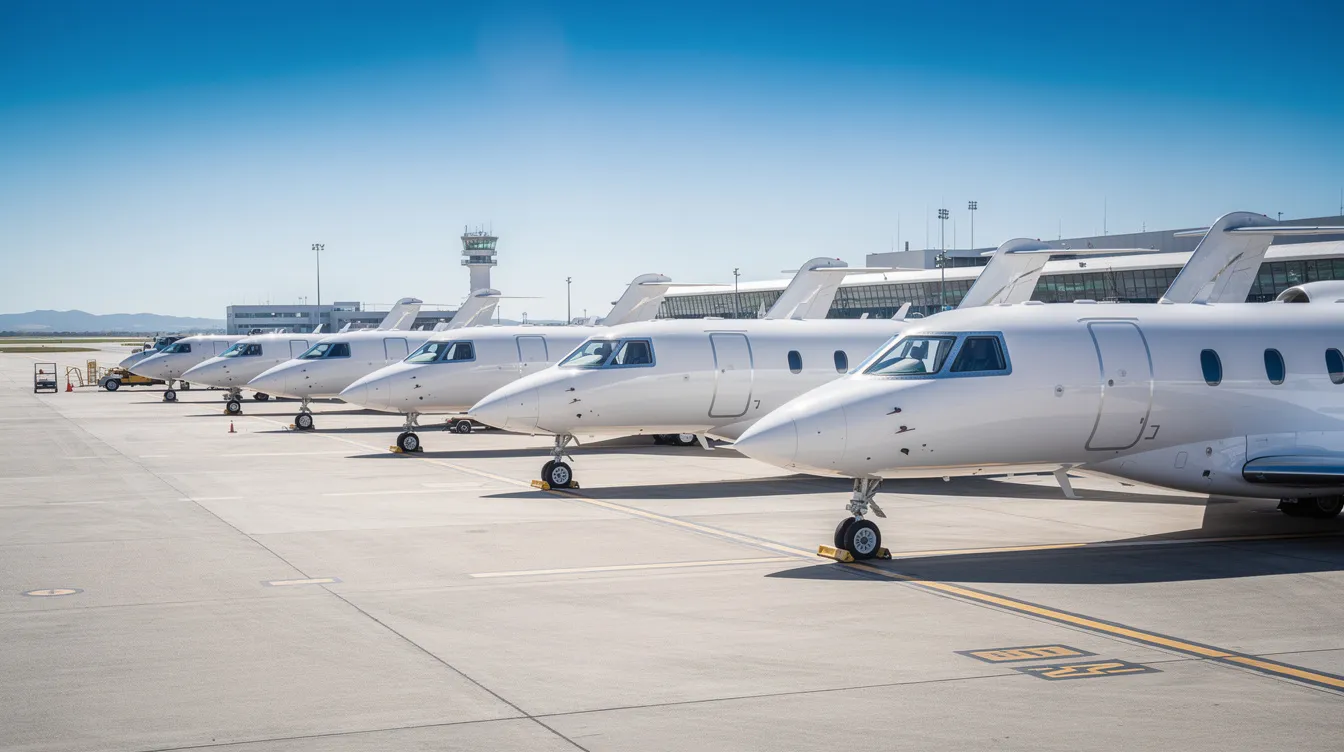
NetJets stands as the world's largest private jet operator, boasting a fleet of around 800 aircraft distributed across North America and Europe. No other single brand comes close in combined fleet size and annual flight hours. According to ARGUS TRAQPak tracking data, NetJets consistently logs more hours flown per year than any competitor, with year-over-year increases exceeding 55,000 hours in 2025 alone.
Rankings of the largest operators rely on three core metrics: total fleet size, annual flight hours, and global coverage. Here is a snapshot of how the top three compare:
Operator | Approximate Fleet Size | Primary Model | Global Reach |
|---|---|---|---|
NetJets | ~800 aircraft | Fractional ownership, jet card | North America, Europe |
VistaJet / Vista Global | ~360 aircraft (owned) | Membership, charter | 187 countries |
Flexjet | ~250 aircraft | Fractional ownership, jet card | North America, Europe |
It is worth noting that "largest" does not always mean "best" for every traveler. The best private jet companies for a given client depend on annual flight hours, route mix, and how much flexibility or ownership benefit matters. The sections below compare each major operator and explain how solutions like fractional ownership fit into this landscape.
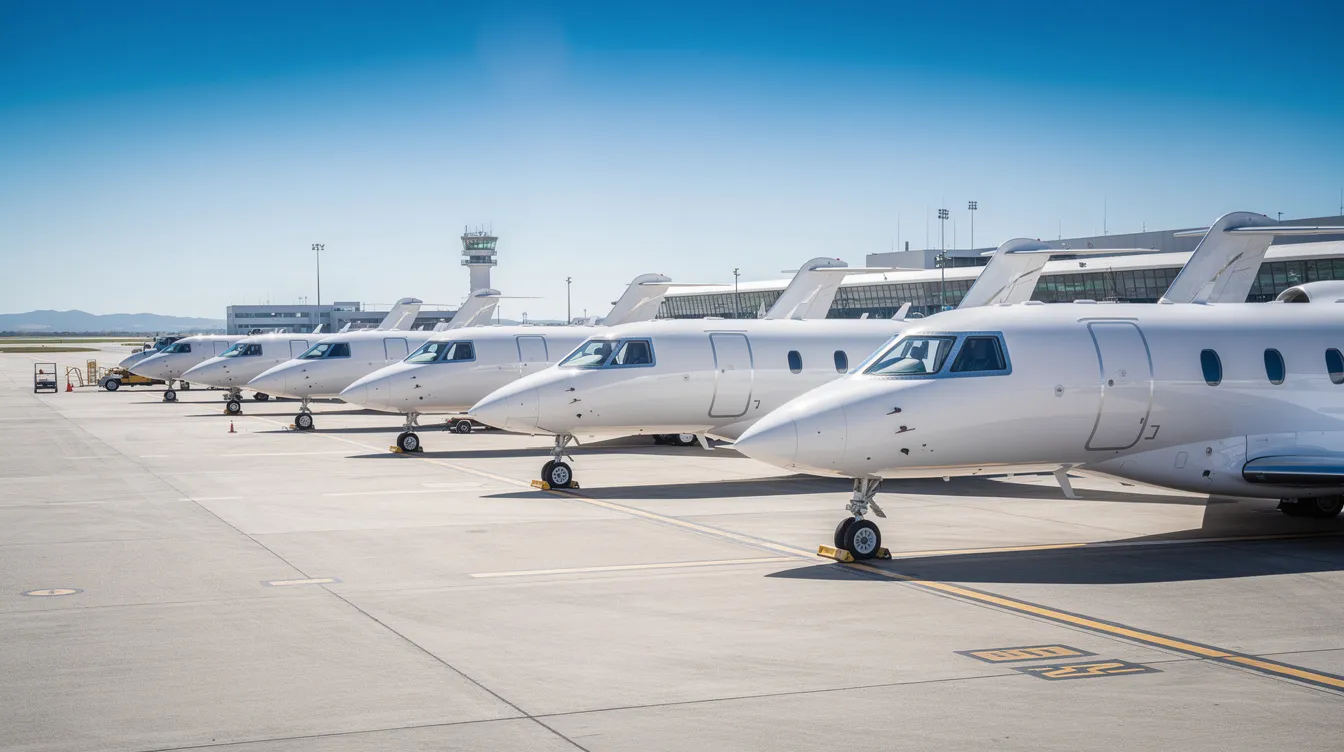
Not every "largest" claim means the same thing. Air charter services can vary based on whether companies count owned or managed aircraft, making apples-to-apples comparisons difficult. Here are the criteria used in industry rankings:
Fleet size: Total number of business jets owned, managed, or controlled, across light jets, super midsize jets, heavy jets, long-range jets, and bizliners such as Boeing Business Jets.
Annual flight hours: Total hours flown across all operations, including fractional (Part 91K), charter (Part 135), and managed aircraft. Fractional ownership operations may be regulated by FAA Part 91 or Part 135, depending on the structure.
Global footprint: Number of countries served, hub locations, and ability to support both domestic routes and international flights.
Ownership vs. brokering: Rankings weight operators that own or directly operate aircraft over pure air charter brokers who aggregate capacity from other operators.
Data sources commonly used include ARGUS TRAQPak, JETNET fleet databases, FAA registries, and company disclosures. These help analysts triangulate fleet numbers and hours flown, though definitions of "managed" versus "operated" can create discrepancies.
NetJets is the largest private jet operator with 800 aircraft, making it the undisputed leader by fleet size. Founded in 1964 as Executive Jet Aviation and now owned by Berkshire Hathaway, the company has more than six decades of operational history. Companies like NetJets primarily focus on fractional ownership and jet card programs, and it was NetJets that pioneered the fractional ownership model in 1996, transforming how executives and aircraft owners access private jets.
Key stats at a glance:
Fleet: ~800 aircraft globally (approximately 668 in the U.S., 124 in Europe)
Aircraft range: Light jets (Phenom 300, Citation XLS) through large cabin and ultra-long-range jets (Global 7500, Global 8000)
Products: Fractional shares, lease options, and jet card programs
Best suited for: Individuals and corporations flying 50–200+ hours per year who value predictable access and a global network
NetJets' strengths include unmatched scale, a deep safety culture backed by Berkshire Hathaway's financial resources, executive jet management expertise, and the ability to source the right aircraft for almost any mission. The trade-offs are real, though: fractional shares require significant capital outlay, programs come with minimum commitments and scheduling rules, and fixed hourly rates can be higher than more flexible alternatives. These constraints open the door for more tailored fractional operators like BlackJet Fractional Jet Ownership, whose Equity Fleet and Reserve Fleet models are designed for clients who want ownership benefits without legacy program rigidity.

Vista Global ranks among the largest operators in the world when you combine its family of brands: VistaJet, Jet Edge, Air Hamburg, Talon Air, and XO (formerly XOJet). VistaJet operates a fleet of around 360 aircraft, with a broader alliance network integrating access to over 2,100 additional jets through partner operators.
What sets Vista apart:
Aircraft focus: A consistent, silver-and-red fleet of Bombardier super midsize jets and long-range aircraft (Challenger 350, Global 5500, Global 7500), optimized for intercontinental missions.
Program model: Membership-based guaranteed availability rather than traditional fractional ownership, appealing to clients who fly between major hubs in North America, Europe, the Middle East, Latin America, and beyond.
Off-fleet capacity: Through XO and partner operators, Vista sells charter flights well beyond its own fleet, meaning its total market impact is larger than its owned aircraft alone suggest.
International strength: Service spans 187 countries from 35+ offices, making it a strong choice for clients prioritizing uniform cabin quality on international flights from New York to Hong Kong or Geneva to Dubai.
Compared to NetJets' deeper domestic U.S. footprint and broader fractional shares, Vista Global excels for travelers whose private flights are predominantly intercontinental. For those who mix short domestic hops with occasional long-range trips, other operators or hybrid fractional programs may offer better flexibility.
Flexjet has a fleet of approximately 250 aircraft, making it one of the top three fractional operators globally. The company focuses on premium cabins and modern business jets, including Embraer Praetor 500/600, Gulfstream G650ER and G700, and Bombardier Challenger models.
Flexjet offers fractional ownership through a fleet of around 250 aircraft, competing directly with NetJets in North America and Europe. Its positioning centers on bespoke interiors, a newer average fleet age, and personalized service for clients who value cabin quality alongside operational reliability.
Key program details:
Fractional shares typically start at 1/16 of an aircraft (roughly 50 flight hours per year), scaling up to larger fractions for higher-use clients.
Jet card and lease options are available for those who want predictable access without full fractional commitment.
Integrated brands: Flexjet's parent company also owns Sentient Jet and FXAir, illustrating how the largest operators increasingly bundle both on-fleet and off-fleet charter solutions under one corporate umbrella.
For travelers evaluating the best fractional ownership programs, Flexjet's premium positioning appeals to those willing to pay more for cabin aesthetics and service consistency. However, its program minimums and cost structure may be more than what a 25–100-hour-per-year flyer needs.
Luxaviation is one of the largest privately held aviation groups, with about 219 aircraft under management and a strong presence across Europe, the Middle East, and Africa. Its business model differs fundamentally from that of fractional operators.
How aircraft management works in this context:
Core service: Luxaviation handles crewing, maintenance, regulatory compliance, insurance, and scheduling for individual aircraft owners who want to operate aircraft without managing day-to-day operations themselves.
Charter availability: Many managed private aircraft are offered for charter when owners are not flying, adding capacity for brokers and end clients worldwide. This creates a bridge between full ownership and the charter market.
Who benefits: Ultra-high-net-worth individuals who want to own their own fleet outright but lack the desire or infrastructure to run a flight department. For those who prefer shared cost structures, fractional ownership through providers like BlackJet offers a lower-burden path to similar access, provided they review essential fractional ownership contract terms around costs, scheduling, and exit options.
Global aircraft management groups serve an important role in the industry ecosystem, but they cater to a different buyer profile than fractional or charter programs.
Several other operators consistently appear in rankings of the largest private jet companies:
Wheels Up: A membership and charter platform focused on North American domestic routes, ranking among the top five U.S. operators by flight hours in 2025.
flyExclusive: A charter-focused operator with dedicated aircraft fleets, also ranking in the U.S. top tier by hours flown.
Paramount Business Jets: A major broker that offers access to over 4,000 vetted aircraft, connecting clients with charter companies and operators globally.
PlaneSense: A fractional specialist in turboprop aircraft and small jets, including the King Air and Pilatus PC-12, serving short-haul missions across the U.S. and Canada.
AirSprint: Canada's leading fractional operator, focused on domestic and cross-border private travel.
Jet Linx: A membership-based private jet charter company with a network of local service bases across the United States.
Collectively, the top 30 private jet companies captured 30.84% of all flight hours in 2025, logging a combined 1,725,728 hours. While these other operators are smaller than NetJets or Vista Global in fleet size, they can be highly competitive for specific regions, aircraft categories like light jets, or niche usage profiles. Dassault Aviation and Textron Aviation also play significant roles as manufacturers whose aircraft populate many of these fleets.
When comparing the largest private jet companies, two metrics tell different stories:
Fleet size shows potential capacity and aircraft diversity. A large fleet means more options across light jets, super midsize jets, heavy jets, and long-range cabins. But a big fleet that sits idle doesn't help clients who need guaranteed availability during peak travel seasons.
Flight hours reflect actual demand and operational efficiency. Private jet companies logged 1,725,728 flight hours in 2025 across the top 30 operators alone, and NetJets captured a disproportionate share of that total.
NetJets leads on both metrics. However, other operators may rank higher in specific segments. Vista Global dominates intercontinental long-range missions. Regional fractional operators may outperform on short-haul light jet utilization.
Mergers and acquisitions further complicate rankings. Vista Global's integration of Jet Edge, Air Hamburg, and XO consolidated hours flown across multiple operating certificates under a single corporate entity, inflating group-level numbers without necessarily changing the client experience at any individual brand.
For prospective buyers, flight time efficiency and access reliability matter more than raw fleet count. An operator with 200 aircraft and 95% dispatch reliability may serve you better than one with 500 aircraft and scheduling bottlenecks at major hubs.
Fractional ownership allows multiple parties to share aircraft costs by purchasing an equity share-typically expressed as 1/16, 1/8, or 1/4 of a specific aircraft type. A partner pays one-fourth for a quarter share of an aircraft, receiving a proportional allocation of annual flight hours on that plane or a comparable jet in the fleet. Fractional owners can sell their equity position if necessary, providing liquidity that pure charter memberships cannot match, but they must also understand key fractional jet ownership terms that define how those rights and obligations work.
The largest private jet operators, NetJets and Flexjet in particular, were built around this model. Both offer fractional shares alongside jet card programs and lease options, operating primarily under Part 91K regulations.
Why fractional ownership works for frequent flyers:
Spreads fixed costs (aircraft purchase, crew salaries, hangarage, insurance, maintenance) across multiple owners
Provides predictable pricing through fixed hourly rates and management fees
Offers tax advantages, including depreciation on the owned share, when structured correctly and aligned with key tax implications for fractional jet owners
Delivers guaranteed availability that on-demand charter cannot consistently match
Jet card memberships provide wholesale pricing with no hidden costs, making them an adjacent option for clients who want access without equity. For a deeper breakdown, see this guide to understanding the cost of fractional jet ownership and how to evaluate the total cost of fractional jet ownership across purchase price, management fees, and resale value.
BlackJet Fractional Jet Ownership offers a modern take on this model. The Equity Fleet provides true fractional ownership with tax benefits and priority access, while the Reserve Fleet floating fleet structure gives clients pay-as-you-go access to shared-use aircraft without ownership obligations. Both are designed for travelers flying 25–150 hours annually who want more control than charter but less burden than legacy programs with rigid minimums.
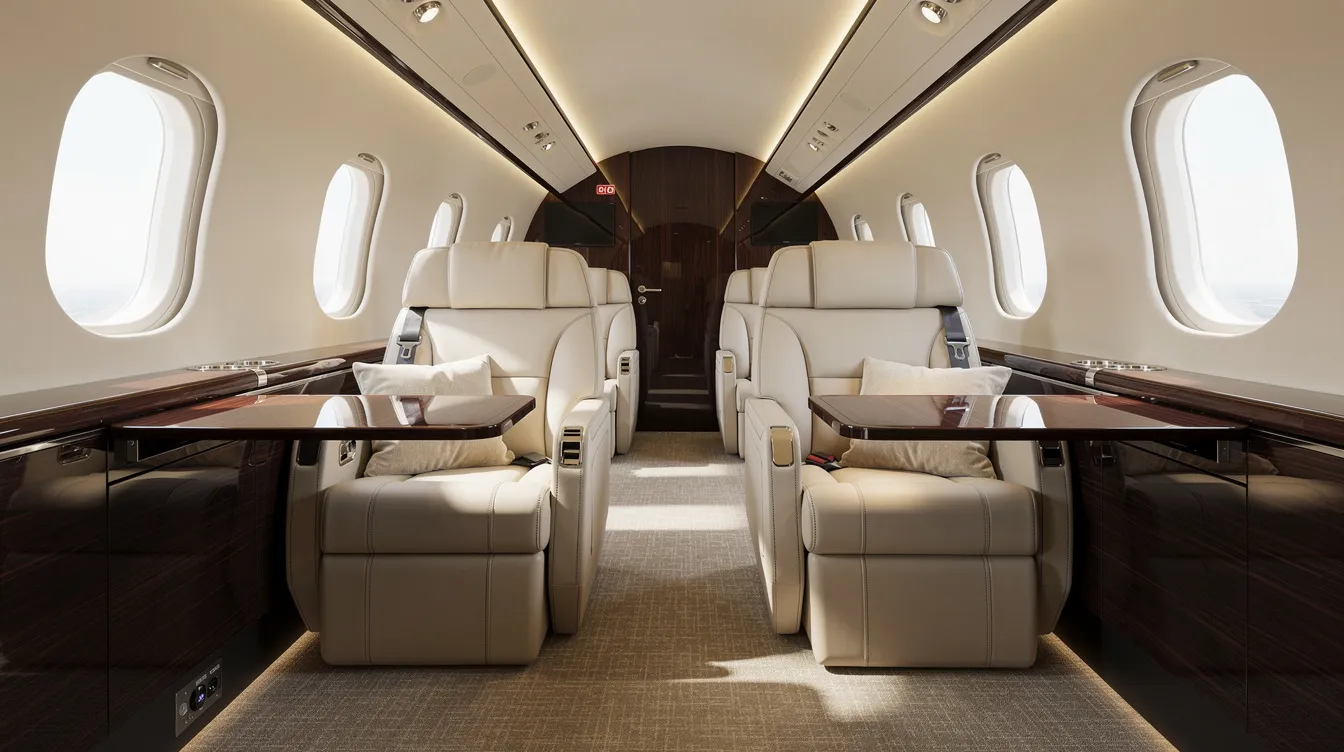
The largest private jet company is not automatically the right match for every traveler. Here are the decision criteria that matter most:
Annual flight hours: Clients flying under 50 hours may overpay for fractional shares designed for 100+ hour users. Those in the 25–150-hour range should compare program minimums carefully.
Domestic vs. international mix: A traveler flying private between U.S. cities weekly needs different fleet access than one combining domestic hops with frequent flights to South America, Central America, or the Middle East.
Aircraft preference: Light jets for short hops, super midsize jets for cross-country, or ultra-long-range jets for global missions. Not every operator offers depth across all categories.
Commitment tolerance: Large programs often require multi-year contracts and substantial upfront capital. More flexible fractional operators and membership programs lower those barriers.
Example scenarios:
An executive team flying twice weekly between major U.S. hubs would benefit from a midsize fractional share with strong domestic coverage.
A family mixing weekend domestic trips with two annual international flights needs an operator offering both short-haul light jets and long-range access.
A corporation needing predictable access for multiple departments across different aircraft sizes should evaluate programs with interchange flexibility and transparent cost structures.
Three primary models exist for accessing private aviation. Each suits a different usage profile:
Model | Best For | Typical Hours/Year | Key Trade-off |
|---|---|---|---|
On-demand charter | Occasional, variable travel | Under 50 | Higher per-flight cost, inconsistent quality |
Fractional ownership | Regular, predictable travel | 25–200 | Upfront capital, program commitments |
Full ownership | Very high usage | 200–400+ | Highest fixed costs, operational complexity |
Charter flights suit occasional travelers who want to pay only for specific private jet flights. The downside: fluctuating pricing, variable aircraft quality, and limited availability during peak periods. Ground transportation and repositioning charges can add up quickly.
Fractional ownership offers the optimal balance for high-frequency travelers. It provides predictable cost per flight hour, guaranteed availability, and potential tax advantages without the overhead of running a flight department, especially when buyers understand fractional jet ownership financing costs and options.
Full ownership makes financial sense above roughly 200–300 hours per year on a single aircraft type, but requires partnering with an aircraft management provider and absorbing crew, hangar, insurance, and maintenance costs directly.
BlackJet Fractional Jet Ownership specializes in the middle segment: clients who want the efficiency of ownership without the burden of managing an entire operation or conforming to a one-size-fits-all program from the largest operators, and who are weighing fractional jet ownership vs. membership programs for their specific usage profile.
Several forces are reshaping how the largest operators compete and how clients access private jets:
Surging demand: Demand for global private-jet charter services is expected to grow from $17.7 billion in 2026 to $25.8 billion by 2031, driven by first-time private flyers and evolving corporate travel policies.
Fleet evolution: Growing interest in fuel-efficient light jets and super midsize jets for regional and transcontinental missions, alongside continued demand for ultra-long-range aircraft with engines mounted for maximum efficiency and range.
Sustainability: Use of Sustainable Aviation Fuel (SAF), carbon-offset programs, and optimized flight planning are becoming standard expectations among clients and regulators. Operators that fail to address sustainability and liability, and insurance considerations in fractional ownership risk losing market share over the next decade.
Technology: Smarter scheduling platforms, dynamic pricing, and transparent reporting on hours flown and cost are enabling more flexible models. These advancements support programs like BlackJet's Reserve Fleet, where clients access aircraft without ownership overhead, and Equity Fleet programs with tailored share sizes.
Ownership model innovation: Legacy operators are lowering minimum share sizes, introducing lease hybrids, and offering more interchange flexibility. The industry is moving toward meeting clients where they are, rather than forcing them into rigid structures.

In many real-world scenarios, a focused fractional operator or niche specialist delivers better value than a global giant with 800 jets and a rigid program.
Consider two client archetypes:
The regional executive flies 60 hours per year between three U.S. cities, always on small jets or midsize aircraft. A national fractional operator with broad domestic coverage and a strong light jet fleet could offer this traveler lower hourly rates, faster scheduling, and less complexity than a program designed for globe-trotting VIPs.
The mixed-use family combines 40 hours of domestic weekend flying with 20 hours of annual long-range travel. A specialist offering both Reserve Fleet access (pay-as-you-go for occasional trips) and an Equity Fleet share (ownership benefits for core domestic routes) can match this profile precisely-without requiring a 100-hour minimum or locking the family into a single plane type.
BlackJet Fractional Jet Ownership is built for exactly this kind of right-sizing. Rather than maximizing fleet size for its own sake, the focus is on aligning aircraft, ownership structure, and membership model to each client's actual usage. Flying private should not require paying for capacity you do not use.
The takeaway: look beyond brand size and marketing. Evaluate private aviation partners based on transparency, flexibility, and alignment with your travel and financial objectives, and make sure any commitment is backed by a clear, well-drafted aircraft fractional ownership contract.
NetJets holds the title of largest private jet company by fleet size and flight hours, but the best solution depends on how, where, and how often you fly. Fractional ownership and shared-use models can unlock many of the same benefits as flying with the biggest operators-predictable access, consistent aircraft, and meaningful time savings-without the capital outlay and complexity of full ownership.
If you typically fly 25–150 hours per year and want to explore whether an Equity Fleet share or Reserve Fleet membership delivers a better fit than traditional large-scale programs or ad hoc charter, BlackJet Fractional Jet Ownership can help. A personalized consultation analyzes your past and projected hours flown, preferred aircraft type (from light jets to long-range options), and budget to recommend the most efficient path forward.
Ready to explore the smarter way to fly private? Visit FractionalJetOwnership.com to start your consultation and discover how fractional ownership can transform your travel experience.
