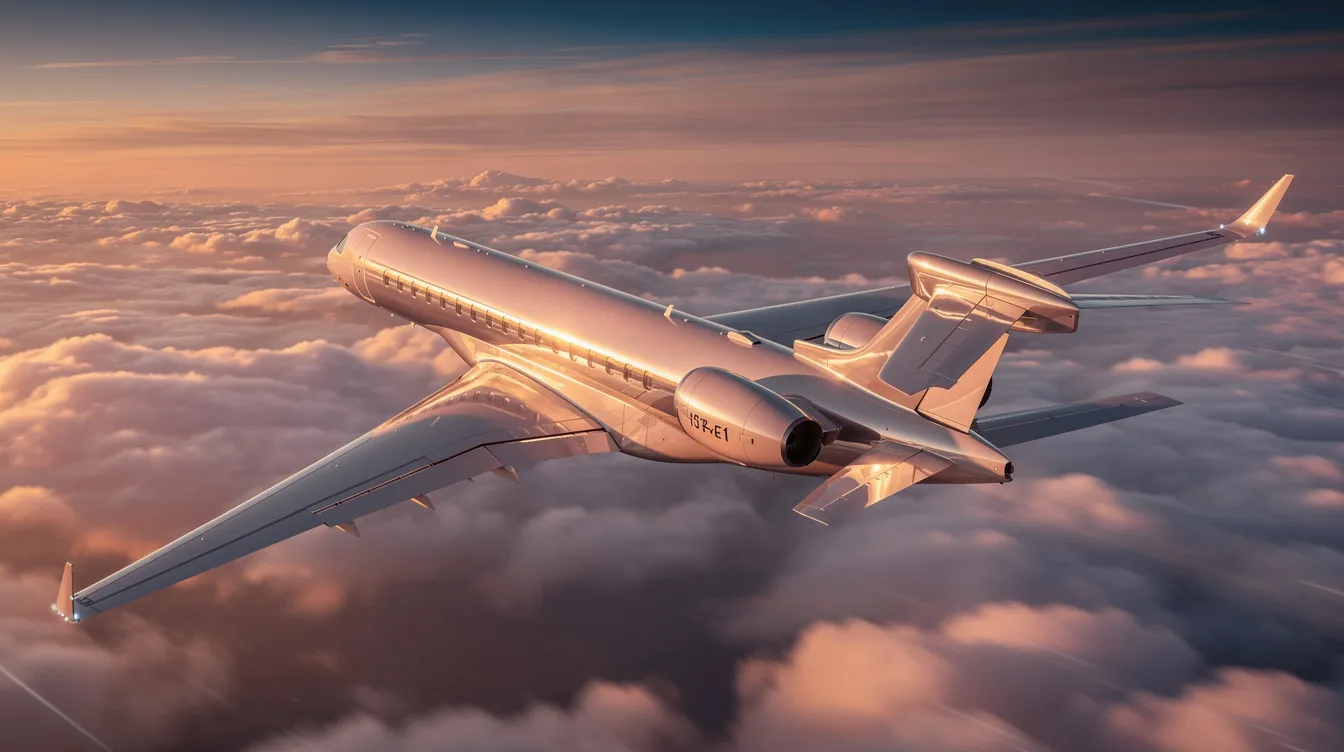
July 9, 2026
The most expensive private jet for sale today is typically a fully completed Boeing 747-8 VIP, with total acquisition costs that can reach $430 million to $500+ million once custom interiors, certification, and onboard systems are included. For ultra-high-net-worth individuals and corporations flying roughly 25 to 150 hours per year, that price point makes it essential to understand not just the aircraft at the top of the market, but what drives value across luxury business jets, VIP airliner conversions, and the pre-owned segment.
This guide breaks down the most expensive private jets for sale, the cost components behind those headline prices, ongoing operating expenses, and how fractional ownership options such as BlackJet’s Reserve Fleet and Equity Fleet compare with full ownership. Whether you are evaluating a flagship purchase or looking for a more efficient way to secure predictable private jet access with similar comfort and flexibility, knowing where the real costs and tradeoffs sit is what helps you choose the right solution.
The most expensive private jet currently available is a fully completed Boeing 747-8 VIP. The Boeing 747-8 can cost upwards of $350 million for the green airframe alone. Once custom interiors, avionics, and security systems are added, the total investment routinely pushes into the $430–$500+ million range. This aircraft represents the pinnacle of airborne opulence, with cabin space measured in thousands of square feet and intercontinental range capable of connecting major global airport pairs around the world.
Widebody VIP airliners like the 747-8, Boeing 787, and Airbus ACJ350 sit well above even the most expensive purpose-built business jet models such as the Bombardier Global 8000 (~$78 million) or Gulfstream G800 (~$72.5 million). Approximate purchase prices for aircraft categories vary between $3 million and $500+ million, depending on size, mission, and customization.
For most private flyers, owning a $400 million aircraft is rarely practical. High-net-worth individuals and corporations flying 25–150 hours per year often find that fractional jet ownership or structured access programs deliver the same benefits of privacy, speed, and convenience at a fraction of the capital outlay, and buyers can compare ownership structures on the company site.
"Most expensive" can refer to the highest list price for a new aircraft, the greatest total investment including custom interiors, or even inflated pre-owned sale prices driven by scarcity. Customization and luxury features significantly increase the cost of private jets, sometimes doubling the base airframe price. Extensive customization of private jets can involve handcrafted materials and high-tech amenities that require years to complete. Luxury private jets must also meet rigorous aviation safety and certification standards, adding further cost.
Key cost components include the green aircraft price, interior completion, avionics and communications upgrades, certification work, and optional security or defense systems. Prices for private jets start at $9.5 million for light jets and scale dramatically from there. The distinction between large-cabin business jets (Bombardier Global, Gulfstream, Dassault Falcon families) and VIP airliner conversions (Boeing BBJ series, Airbus ACJ series) matters: business aircraft are purpose-built for executive travel, while VIP airliners offer vastly larger cabins and passenger capacity for heads of state or large entourages. Increased global wealth has expanded the customer base for luxury jets across both categories.
VIP airliners are typically owned by royal families, heads of state, and a small number of ultra-high-net-worth individuals. Supply on the market is extremely limited, and jets for sale in this segment often list "price on request" due to confidentiality.
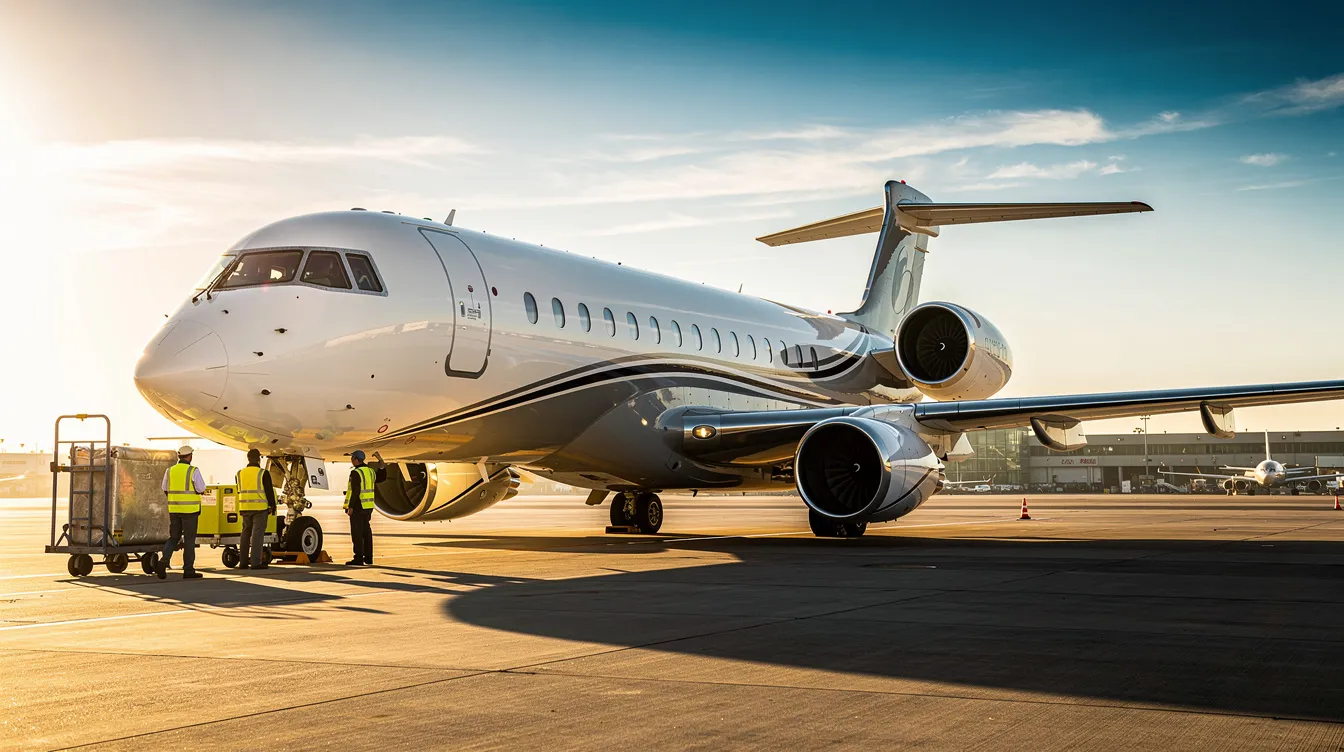
The Boeing 747-8 VIP leads this segment. A new 747-8 airframe lists at roughly $367 million, and custom interiors—featuring bedrooms, offices, lounges, and medical suites—often add $80–$100+ million, pushing total investment to $430–$500+ million. Its massive cabin, powered by four engines, delivers intercontinental range and is frequently labeled the most expensive private plane ever produced.
Airbus ACJ330 and ACJ350 conversions compete in a similar price band, with airframe plus VIP interior often reaching $300–$400+ million. These luxury aircraft excel on long-haul missions and accommodate large entourages.
High operating costs for luxury private jets are driven by maintenance programs, fuel efficiency technologies, and trained crew. A 747-8 VIP costs approximately $23,000 per flight hour in operation. These figures explain why many buyers evaluate high-end business jets or fractional options instead.
The market for ultra-luxury private jets is dominated by long-range, large-cabin aircraft designed from the assembly line as private aircraft. Premium jets offer costly performance capabilities like nonstop intercontinental range and high cruising speeds. Luxury private jets are produced in relatively small numbers compared to commercial aircraft. The high price of luxury private jets is driven by surging demand, limited inventory, and high R&D costs. Here are the top contenders, ranked by approximate price and range.
Rank | Aircraft Model | Approximate Price (Million $) | Range (Nautical Miles) | Notable Features |
|---|---|---|---|---|
10 | Gulfstream G600 | $54.5 | ~6,200 | Near-supersonic speed (Mach 0.90), first delivered in 2019 |
9 | Bombardier Global 6500 | $56 | 6,600 | High-speed cruise Mach 0.88, entered service in 2019 |
8 | Dassault Falcon 8X | $58 | 6,450 | Trijet configuration from Dassault Aviation, first delivered in 2016 |
7 | Gulfstream G650 | $65 | 7,000 | Over 500 delivered, circumnavigation record in 2013 |
6 | Gulfstream G650ER | $70 | 7,500 | Built on the G650 platform, nonstop intercontinental flights |
5 | Gulfstream G800 | $72.5 | 8,200 | Certified 2025, targets Fortune 500 companies |
4 | Bombardier Global 7500 | $73 | 7,700 | Four cabin zones, including a dedicated cabin zone for work or rest |
3 | Dassault Falcon 10X | ~$75 | 7,500 | Largest cabin volume, first deliveries expected 2027 |
2 | Gulfstream G700 | $75–80 | ~7,500 | Longest Gulfstream cabin, multiple speed records |
1 | Bombardier Global 8000 | $78 | 7,900+ | Fastest civil aircraft since Concorde, lowest cabin altitude |
While headline aircraft dominate the top of the market, several other large-cabin jets remain among the most expensive and appear frequently in global listings. The Bombardier Global Express 6000 (part of the Global Express XRS lineage) lists at near $55 million, offers 6,000 nautical miles of range, and can carry 19 passengers—popular among corporate and government operators.
The Embraer Lineage 1000 costs approximately $50 million, provides 4,500 nautical miles of range, and offers a larger cabin than many traditional business jets thanks to its Embraer 190 airframe with extra fuel tanks. The Dassault Falcon 7X, at roughly $50 million, delivers 6,000 nautical miles with a trijet layout and the ability to use shorter runways. Bombardier Challenger 850 conversions, around $32 million, provide strong value for buyers prioritizing cabin size. Even a Cessna Citation Longitude, while far less expensive, shows how manufacturers span the full spectrum of types and prices.
Unusual market conditions can push pre-owned prices above new list prices, especially for in-demand models with multi-year factory backlogs. The high price of luxury private jets is driven by surging demand, limited inventory, and high R&D costs. Current market conditions, such as rising fuel costs and supply chain disruptions, further influence private jet prices.
Core drivers include demand spikes during and after the pandemic combined with limited production slots, the desire for immediate aircraft availability versus waiting years for delivery, and the strong brand reputation of models like the G650ER or Falcon 8X. Buyers also watch program milestones such as the Falcon 10X’s first flight as a signal of when a new aircraft may move toward certification and delivery. Pre-owned aircraft may already have desirable upgrades and proven reliability. Once production catches up, pre-owned values typically drift below the new list price, restoring a traditional depreciation curve. Sophisticated buyers look at the total cost of ownership and often consider fractional aircraft ownership to avoid volatile asset values, using detailed total cost of fractional jet ownership analyses to compare options.
Owning a $100 million or $300 million private aircraft carries prestige, but the financial realities are sobering. Annual operating costs for private jets can reach hundreds of thousands or even millions of dollars when accounting for crew salaries, hangar fees, insurance, training, and scheduled maintenance. Many individuals and companies only fly 50–150 hours per year—far below the utilization levels that justify sole ownership of a business jet. Liquidity and resale risk compound the challenge, as the large-cabin and VIP airliner market is thin.
Alternatives exist across the spectrum. Private jet charter offers luxury travel without ownership commitment for occasional trips. Jet card programs provide fixed-rate access to a fleet, while buyers entering fractional shares must understand essential fractional jet ownership contract terms that govern scheduling, costs, and exit options. For many buyers, comparing fractional jet ownership vs membership programs clarifies which model aligns best with their flight hours and budget. Fractional jet ownership and equity programs deliver predictable access with shared operating costs—often the most efficiently balanced option for frequent flyers when you weigh fractional jet ownership as an investment against full ownership or charter-only strategies.
Fractional jet ownership means purchasing a share of a specific aircraft and accessing guaranteed flight hours per year, managed by a professional operator, and understanding key fractional jet ownership terms and concepts helps buyers navigate these programs confidently. BlackJet Fractional Jet Ownership offers two models: a Reserve Fleet for flexible, pay-as-you-go access without capital commitment, and an Equity Fleet for fractional ownership with priority access, potential tax advantages for fractional jet owners in the United States, and professional aircraft management.
Many clients who research the most expensive private jet for sale ultimately choose fractional or shared-use programs after reviewing leading fractional jet ownership programs for smart investors. They want privacy, schedule control, and the ability to arrive at any destination on their terms—without a $50–$400 million capital outlay, often leveraging fractional jet ownership financing options and structures to reduce upfront cash requirements. Flying 25–150 hours per year is better matched to fractional ownership than owning a Gulfstream G800 or Bombardier Global 8000 outright. Operators handle scheduling, crew, and maintenance, reducing complexity and letting owners focus on the journey rather than the operation, while robust liability and insurance coverage in fractional ownership protects their assets and mitigates legal risk. Explore the full cost breakdown to see how the numbers compare.

The right aircraft or access model depends on mission needs: typical trip length, annual flight hours, passenger count, and geographic patterns. Ultra-expensive VIP airliners suit heads of state or organizations flying hundreds of hours with large entourages. Ultra-long-range business jets like the Global 7500, G800, or Falcon 10X serve global corporations flying intercontinental routes regularly.
For executives and business owners flying 25–150 hours annually who value predictable access and cost control, large-cabin and super-mid private jets via fractional ownership or Reserve Fleet programs offer the right balance of style, performance, and efficiency, and structures such as 1/8 fractional jet ownership for around 100 hours often map neatly to these usage profiles. On-demand charter or jet card programs assist occasional flyers or those testing private aviation before committing. A professional advisor can model actual itineraries to compare the total cost of ownership versus fractional, membership, or charter solutions, including whether a floating fleet fractional ownership structure delivers better flexibility for your routes.
The skies above the private aviation market continue to evolve with improvements in range, speed, and innovation across manufacturers like Boeing, Gulfstream, Bombardier, and Dassault. While custom 747-8 VIPs and flagship business jets capture headlines, they rarely represent the most efficient solution for most private flyers.
Fractional jet ownership, Reserve Fleet access, and Equity Fleet programs deliver many of the same advantages—privacy, time savings, schedule control—at far lower capital commitment and risk. Whether your travel takes you from New York to London or across the Pacific, the right program can match your needs without tying up hundreds of millions in a depreciating asset.
Ready to explore the smarter way to fly private? Visit FractionalJetOwnership.com to learn how fractional ownership can transform your travel experience and to expect a tailored assessment of your travel profile.
