August 31, 2026
The private aviation market in 2026 offers more ways to fly than ever, and that makes the decision harder, not easier. Whether you are evaluating jet card programs for the first time or reconsidering an expiring contract, the stakes are real: tens or hundreds of thousands of dollars, dozens of flight hours, and the convenience your schedule depends on. This guide walks through what matters most when running private jet card comparisons and when an alternative like fractional ownership may actually be the smarter path.
The best jet card is the one that matches your actual flying needs, not the one with the flashiest marketing. Here is a fast breakdown by traveler profile before the deeper analysis below.
Light jet flyers (25–40 hours/year, regional trips): Look for fixed hourly rates in the $5,500–$7,000 range with transparent fuel surcharges. Sentient Jet's SJ25 card costs approximately $5,950 per hour and remains a strong benchmark. Jet card programs typically start at 25 flight hours with 12–24 month terms.
Regional business travelers (40–75 hours/year): Midsize card programs with guaranteed availability and low daily minimums. Jet cards are ideal for frequent flyers needing consistency across multiple aircraft types.
Families: Flexjet is the best jet card for families in 2026, thanks to strong large-cabin availability for family trips. Families can accommodate car seats on most jet card flights, and when making private jet card comparisons, they can request extra room for car seats and strollers in family-focused programs. Programs now feature fewer peak days for family-oriented schedules.
Corporations (100–150+ hours/year): A blended approach often works best. Fractional ownership through a program like BlackJet's Equity Fleet covers core routes, while a reserve or card program handles overflow demand.
Occasional flyers (under 25 hours/year): On demand charter may deliver better value than committing to a card.
Jet card programs generally suit travelers flying under 50 hours annually. For those consistently flying 50–150 hours per year, fractional ownership or a structured membership like BlackJet Fractional Jet Ownership can deliver better economics and predictability. The rest of this article explains exactly how to decide.
Private jet card programs offer prepaid blocks of flight hours, typically sold in 25-hour increments. You pay upfront, lock in a rate, and draw down hours as you fly. Private jet card options include fixed hourly rates or dynamic pricing, depending on the provider and aircraft size. Jet cards operate on a 12-month cycle with no long-term risk, making them appealing for travelers who want access without ownership.
Fixed-rate cards: Guarantee a set hourly rate for the contract term.
Capped-rate cards: Set a ceiling but may float lower.
Dynamic pricing cards: Tie rates to fuel or market conditions.
Regional cards: Cover a defined service area.
Global cards: Extend coverage internationally.
Operational models vary between dedicated fleet and broker networks.
Fractional ownership is a different service model entirely. Instead of prepaid hours, you purchase an equity share in a specific aircraft—say, a 1/16 share entitling you to roughly 50 occupied flight hours per year. For buyers new to the model, it helps to understand the core fractional jet ownership terminology and concepts so you can interpret proposals correctly. Fractional ownership requires a commitment of 3 to 5 years and involves monthly management fees, occupied-hour charges, and residual value at exit. Tax implications for fractional jet owners may include accelerated depreciation for qualifying business use.
Jet cards typically suit the 25–75 hour range. Fractional ownership begins to outperform jet cards economically around 50–75 hours per year. For many users, evaluating fractional jet ownership as an investment alongside jet cards clarifies whether the added commitment is justified. BlackJet Fractional Jet Ownership bridges this gap with two models: the Reserve Fleet (pay-as-you-go hours on a managed fleet) and the Equity Fleet (fractional shares with priority access and custom aircraft sourcing). Private aviation services through either model can reduce the hassle of full aircraft ownership.
Not all jet cards are created equal, and a disciplined comparison prevents expensive surprises after takeoff. Pricing transparency is important in evaluating jet card options, but it is only one dimension. Here are the factors that matter most:
All-in hourly rate: Does the quoted rate include fuel surcharges, the 7.5% federal excise tax, repositioning, de-icing, and landing fees? Most providers advertise base rates, not all-in cost.
Minimum flight times and daily minimums: Many programs charge for a minimum number of hours per flight or per day, even if your trip is shorter. Midsize jets have seen rising daily minimums in 2026.
Guaranteed availability and notice windows: Jet cards offer guaranteed aircraft availability with advance notice, but the required window varies from 10 to 48 hours. Key factors to consider include peak-day restrictions and notice requirements.
Peak day surcharges and blackout dates: Some providers impose 10–35% surcharges on holidays and high-demand weekends. Cancellation policies for jet cards are generally more lenient than charter but still vary.
Safety and operational standards: Look for ARGUS Platinum, WYVERN Wingman, or IS-BAO Stage 2/3 certifications. A closed, operator-controlled fleet tends to deliver more consistent safety culture than brokered arrangements. Broker-based cards source aircraft from third-party operators for flexibility, but quality can vary flight to flight.
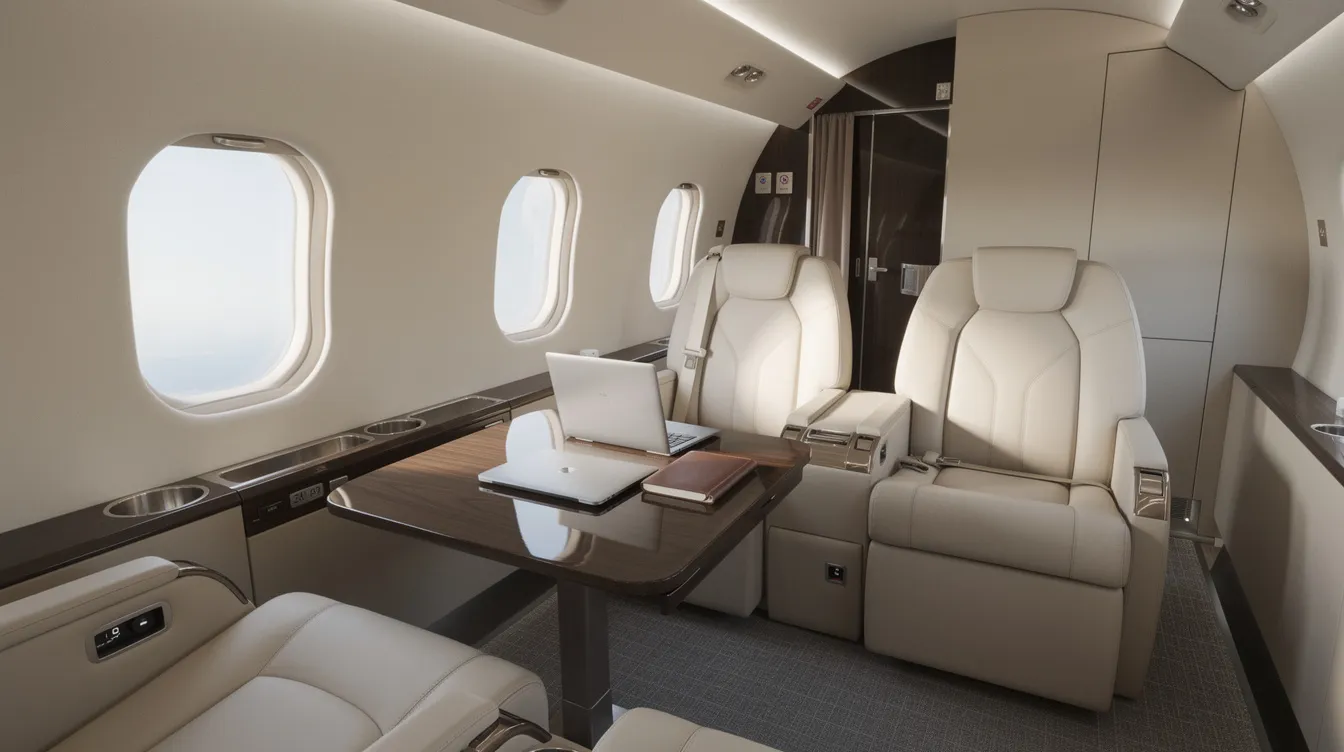
Cabin and service factors: Wi-Fi reliability, pet policies, catering, family friendliness, and the ability to work with a dedicated account manager all matter for private flyers who value convenience.
Aircraft flexibility: Jet card programs often allow clients to upgrade or downgrade aircraft categories using interchange ratios, which adds flexibility across missions of different route length and passenger counts.
Headline hourly rates can be misleading. A card quoting $6,500 per hour for a light jet may exclude fuel surcharges, taxes, and repositioning—adding $1,000 or more per flight hour to the real cost. Always compare all-in pricing.
Here are realistic 2026 benchmarks based on Q2 2026 industry data:
Aircraft Class | Typical All-In Hourly Rate |
|---|---|
Light Jet | $5,500–$7,500 |
Midsize Jet | $7,500–$9,500 |
Super-Midsize | ~$12,000–$12,500 |
Large Cabin | ~$15,000+ |
Ultra-Long Range | ~$19,000+ |
Jet card pricing ranges from $150,000 to $350,000 for 25 hours, depending on aircraft size and what the rate includes. Most jet card programs operate on a 12-month cycle. Unused hours may expire, roll over, or be refundable—terms vary widely. When you re-fund a card, providers may reset rates based on current fuel prices or market conditions.
De-icing fees
International handling
Catering
Overnight crew costs
Fuel escalation clauses
Peak day surcharges
Similar thinking applies when you analyze the total cost of fractional jet ownership, where management fees, variable charges, and exit value all shape the real economics. Jet cards often include fixed hourly rates for budgeting certainty, but ancillary fees can erode that predictability.
Jet card programs typically offer competitive pricing compared to charter costs, though charter pricing varies based on market demand and availability. Jet cards typically have fewer peak day surcharges than charter services, which is a meaningful advantage for travelers flying on holidays or event weekends. The economic feasibility of private jet cards can depend on total flight volume—the more you fly, the more you should consider whether an equity-based program like BlackJet's Equity Fleet delivers lower all-in cost over a multi-year horizon.
Light jet (1–4 passengers, 2–3 hour regional trips): Ideal for short business hops or weekend getaways. Light jet flyers should compare cabin consistency, luggage capacity, lavatory type, and runway performance for smaller airports.
Midsize jet (4–6 passengers, coast-to-coast U.S.): The workhorse for corporate flight departments and travelers flying cross-country. Offers stand-up cabins and enough range for most domestic missions.
Large cabin (6–10 passengers, international legs): Necessary for multi-generational family trips or executive delegations. NetJets provides a depth of fleet for multi-generational trips, operating over 700 owned jets globally. Flexjet offers strong large-cabin availability for family trips. Jettly allows families to select aircraft by cabin layout, adding flexibility for those with specific cabin needs.
Some card programs lock you into one cabin class. Others let you upsize or downsize between multiple aircraft categories, often with fixed interchange ratios (e.g., one super-midsize hour equals 1.5 midsize hours).
BlackJet's Equity Fleet and Reserve Fleet solutions are tailored around matching aircraft to consistent mission profiles rather than forcing members into one rigid category. For some owners, leveraging floating fleet options in fractional ownership can add even more flexibility across diverse mission profiles. This matters for travelers whose trips vary between short regional flights and longer cross-country routes.
Safety certifications: Look for ARGUS Platinum, WYVERN Wingman, and IS-BAO Stage 2 or 3.
Pilot experience and fleet age: Ask about pilot experience minimums, fleet age, and whether the provider maintains an in-house safety management system.
Liability coverage: Understand the scope of liability coverage in fractional jet ownership if you participate in equity-based programs.
Providers operating their own fleet generally deliver more consistent maintenance, cabin quality, and crew professionalism—especially during peak days when demand surges.
Jet Linx, for example, operates a dedicated base model with local teams, and many private aviation operators emphasize similar fleet-level control.
Sentient Jet has flexible pet policies for travelers.
Wheels Up accommodates pets on domestic U.S. flights.
NetJets transported approximately 37,000 pets in recent years.
Jettly allows filtering for pet-friendly operators and aircraft.
Typical cleaning fees for pet travel range from $200 to $500.
Flexjet emphasizes premium cabin experiences and service consistency, another point in its favor for families.
Dedicated account managers
24/7 operations teams
Ground transport coordination
Ability to handle last-minute schedule changes
BlackJet Fractional Jet Ownership follows a managed-fleet standard that prioritizes long-term client relationships and predictable service over ad-hoc broker sourcing.
Travelers today usually weigh three primary options. The table below summarizes the key differences:
Model | Best For (Annual Hours) | Pricing Structure | Commitment | Availability & Support | Key Benefits |
|---|---|---|---|---|---|
On Demand Charter | <25 | Variable, per trip | None | Limited, varies by provider | Flexibility, pay-as-you-go |
Jet Cards | 25–75 | Fixed/capped hourly rate | 12–24 months | Guaranteed, strong support | Predictable rates, guaranteed access |
Fractional Ownership/Membership | 50–150+ | Equity + hourly/fees | 3–5 years | Highest, dedicated fleet | Lower long-term cost, tax benefits, consistency |
BlackJet's Equity Fleet captures many jet card benefits—predictable access, safety culture, cabin consistency—while improving long-term value for higher-usage clients. The Reserve Fleet functions in the hybrid zone between a traditional jet card and a full ownership commitment, giving members the ability to scale up without locking in capital prematurely.
Real-world examples make private aviation decisions clearer than abstract rules. Here are four common profiles:
High-frequency executive (60–100 hours/year): Traveling between major U.S. business centers on a midsize jet, this traveler benefits from a structured card or fractional ownership with BlackJet. Shared flights on the same route network save time and money versus booking ad hoc charter at volatile spot rates.
Light jet flyer (25–40 hours/year): Doing short regional trips, this traveler should compare a light jet card with transparent pricing to BlackJet's Reserve Fleet. The right decision depends on whether route consistency and fleet control outweigh the flexibility of a 25-hour card from a provider like NetJets.
Family (20–30 hours/year): Flying to vacation homes and schools, peak day surcharges and school holiday availability matter enormously. A low-commitment card program combined with selective charter covers most trips. Families should research providers like Flexjet and compare cabin layouts, car seat policies, and holiday blackout terms.
Corporation (100–150+ hours/year): With multiple executives and varied missions, corporations often blend a fractional share for predictable core routes with supplemental card or charter hours for overflow. Corporate flight departments working with BlackJet as an advisory partner can optimize dollars across both Equity Fleet and Reserve Fleet models.

Buyers can impose a simple, methodical process to compare jet cards and ownership options side by side:
Define your annual flight hours, typical routes, and passenger counts from the last 12–24 months. Be honest—many travelers overestimate or underestimate by 20% or more.
Choose your desired aircraft class (light jet, midsize, large cabin) and identify whether guaranteed availability on peak days is critical to your operation.
Collect proposals from at least one jet card provider, one on-demand charter broker, and one fractional ownership or membership solution such as BlackJet Fractional Jet Ownership. It can also help to benchmark your options against the best fractional jet ownership programs from established providers in the market.
Build a comparison grid covering: hourly rate (all-in vs. base), minimums, mandatory deposits, term length, taxes, fuel surcharges, safety ratings, expiration or rollover of unused hours, and cancellation rules. For fractional proposals, review essential contract terms in fractional jet ownership and, where available, an aircraft fractional ownership sample contract so you understand rights, obligations, and exit mechanics.
Review your options with an aviation advisor. If you expect your flying to change, discuss how easy it would be to sell a fractional jet ownership share or resize your commitment, and whether a structure such as 1/8 fractional jet ownership better matches your projected utilization. BlackJet can provide a data-driven perspective on whether a private jet card, fractional ownership, or a hybrid approach offers the best value for your specific travel pattern.
There is no single "best jet card." The right program depends on how many hours you fly, where your routes take you, and how much you value predictability versus flexibility. Making the right decision starts with research and honest self-assessment of your travel data.
Jet cards shine for travelers in the 25–75 hour range who want fixed rates, guaranteed access, and minimal commitment.
Fractional ownership or structured membership programs like BlackJet's Equity and Reserve Fleets are likely to deliver better long-term value for those consistently flying 50–150 hours per year, especially when tax benefits and fleet consistency matter.
Always document your last 12–24 months of travel and projected future needs before signing any contract. Understanding all-in private jet cost—not just the headline hourly rate—is the difference between a smart investment and an expensive miscalculation.
Ready to see how your current jet card proposals stack up? Visit FractionalJetOwnership.com to explore how BlackJet Fractional Jet Ownership can benchmark card programs against fractional ownership and tailored membership options. A brief, no-obligation consultation can help clarify whether a jet card, fractional aircraft ownership, or a blended strategy is the smartest way to access private aviation in 2026 and beyond.
