June 16, 2026
The appeal of owning a private jet in 2026 is straightforward: total control over your schedule, access to thousands of smaller airports across the United States and globally, and the ability to turn dead travel time into productive hours. For executives, entrepreneurs, and family offices, private travel represents a competitive advantage that commercial airlines simply cannot match.
However, purchasing a private jet requires a thorough evaluation of travel needs and financial readiness. Typical operational expenses add significantly to the upfront costs of a jet, making it essential to engage a professional aviation advisor for expert guidance. Buying a jet involves both fixed and variable costs, including fuel, landing fees, catering, maintenance, crew salaries, insurance, and hangar fees. Annual expenses generally equal about 10% of the aircraft's total value, with ownership costs ranging from $500,000 to $1.2 million annually depending on size and usage.
Private jets for sale in the market today span everything from very light jets like the Cirrus Vision Jet and Eclipse 500 to popular large jets such as the Dassault Falcon 7X and Gulfstream G650, with costs ranging from under $2M to well over $60M.
BlackJet Fractional Jet Ownership specializes in fractional aircraft ownership and shared-use programs that often provide a better balance between cost, flexibility, and control than buying an entire aircraft outright. For many flyers, partial ownership or membership access delivers the private aviation experience without the burden of managing and financing a whole plane.
Buying a private jet involves substantial upfront capital and high annual operating expenses. Whole-aircraft ownership typically makes economic sense only above roughly 200–400 flight hours per year.
Acquisition prices span a wide range: from around $2M for an entry-level jet like the Cirrus Vision Jet SF50 to $60M+ for new large-cabin luxury private jets such as certain Dassault Falcon and Gulfstream models.
Annual operating costs for a private jet range from $500,000 to $1 million or more, covering fuel, maintenance, crew salaries, insurance, and hangar fees-regardless of how often the aircraft flies.
BlackJet Fractional Jet Ownership offers fractional jet ownership and flexible membership-style access through its Equity Fleet and Reserve Fleet programs, delivering many benefits of private jet ownership without the full capital outlay of a private jet purchase.
Before committing, evaluate whether full ownership, fractional ownership, or a Reserve/Equity Fleet program is the most cost-effective way to fly private for your specific travel needs.
Every private jet purchase decision should start with a clear mission profile: average trip length, typical passenger count, and the regions most frequently flown. A US-based executive regularly flying New York–Miami or Los Angeles–Dallas has very different aircraft needs from a multinational team crossing the Atlantic weekly.
Here are the general flight hour thresholds that guide the decision; for example, 1/8 fractional jet ownership typically corresponds to roughly 100 hours of annual access:
200–400+ hours per year: Full ownership can be justified. Owning an aircraft is cost-effective if flying 150 to 200 hours per year at minimum, though many advisors push that threshold higher for larger jets.
25–150 hours per year: Fractional ownership or membership programs typically fit best, offering access to a variety of aircraft types with monthly fees covering maintenance and crew costs.
Under 25–50 hours per year: Ad-hoc chartering provides flexible scheduling and access to smaller airports without fixed cost commitments. Chartering private jets can access 10 times more airports than airlines, with costs typically ranging from $1,200 to over $10,000 per hour, eliminating the need for maintenance and crew management.
Travel patterns also affect aircraft choice. Short regional flights under 800 nautical miles favor very light jets and light jets. Cross-country US missions point toward super-midsize aircraft. Intercontinental routes require a larger jet like a Dassault Falcon 7X or Gulfstream G650 with 5,000+ NM range, and some travelers prefer programs that use floating fleet options in fractional ownership to match aircraft type to each specific mission.
Private jets fall into four broad categories based on size and range. Understanding different types of private jets and prices helps buyers match aircraft to mission.
Category | Example Models | Seats | Typical Range (NM) |
|---|---|---|---|
Very Light Jets (VLJs) | Cirrus Vision Jet SF50, Eclipse 500 | 4–5 | 1,000–1,200 |
Light Jets | Cessna Citation CJ3/CJ4, Embraer Phenom 100/300, Learjet 45XR | 6–8 | 1,178–2,000 |
Midsize / Super-Midsize | Citation XLS+, Bombardier Challenger 300/350 | 8–10 | 2,200–3,000 |
Large-Cabin / Long-Range | Dassault Falcon 2000/7X/8X, Gulfstream G450/G650, Global 6000/6500 | 12–16+ | 5,000–7,000+ |
Each category serves a different role. Popular models in the light jet segment are a popular choice for domestic business travel, while large-cabin jets operate as global offices in the air. The King Air turboprop, while not a jet, sometimes appears in comparisons as a lower-cost alternative for short regional flights.
Very light jets (VLJs) are the most affordable private jets for buyers who want to own an entire aircraft. They serve as an affordable entry point into private aviation, designed for small groups making regional hops.
The Cirrus Vision Jet costs around $2 million new for the base SF50, making it the cheapest private jet in the new-production turbine category. As a single-engine jet, it features a compact cabin space for four to five passengers, a range of approximately 1,200 nautical miles, and a signature whole-airplane parachute system that distinguishes it from competitors. Used aircraft in the SF50 line can be found for roughly $1.8M, depending on year and total time.
Other budget-conscious options include the Eclipse 500 and older Cessna Citation Mustang, which range from $1.5 to $2.5 million pre-owned. The Embraer Phenom 100, a light jet with a range of up to 1,178 nautical miles, also fits this category. Pre-owned prices for these aircraft can drop into the $1M–$2M range depending on maintenance status and whether an engine overhaul is approaching. However, even the cheapest private jet still carries high ongoing costs—and fractional ownership or membership access to a similar aircraft can deliver comparable convenience with far less capital at risk.
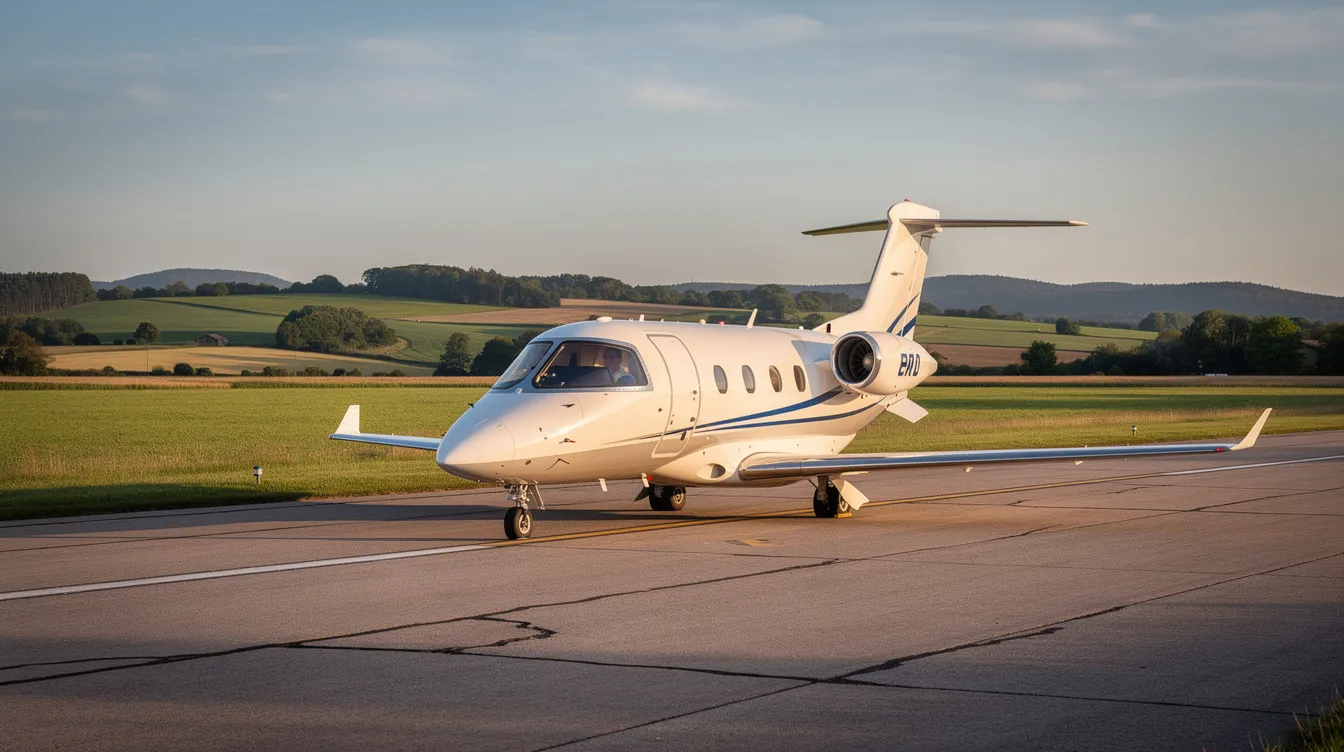
Light jets represent a key category for buyers who want more cabin comfort and performance than a VLJ but prefer to avoid the steep expenses of midsize and large jets. They are an attractive option for both personal and corporate missions.
Light jets like the Cessna Citation Mustang range from $1.5 to $2.5 million on the pre-owned market. The Embraer Phenom 100 has a range of up to 1,178 nautical miles, while the Phenom 300 extends that to nearly 2,000 NM. These aircraft seat six to eight passengers in a spacious cabin and handle medium-haul flights across the US with ease—think Chicago–New York or Los Angeles–Seattle.
Why light jets remain popular:
Hourly operating costs for ownership often fall in the $2,000–$3,000 per flight-hour range.
Ability to operate into smaller airports that commercial airlines cannot serve.
Efficient performance for short- and medium-distance routes.
Chartering costs typically range from $1,200 to over $10,000 per hour depending on aircraft size and market demand. For comparison, chartering can access 10 times more airports than airlines. Buyers flying 100–200 hours per year should weigh whether outright purchase of a light jet, a fractional jet ownership stake, or a membership-style program provides better value for their travel patterns.
Large-cabin and ultra-long-range jets sit at the top tier of luxury private jets, favored by global corporations, family offices, and ultra-high-net-worth individuals who routinely fly transcontinental or intercontinental routes. Large jets can fly longer distances and accommodate larger groups than any other private aircraft category.
Popular large jets include:
Dassault Falcon 7X/8X and Falcon 2000LXS - ranges of 5,000–6,000+ NM.
Gulfstream G450/G550/G650 - the G650 offers 7,000+ NM range with seating for up to 16.
Bombardier Global 6000/6500 - similar range and spacious cabin configurations.
Luxury private jets can cost between $50 million to $70 million for new large-cabin models in 2026 configuration. Pre-owned G650S currently list between $33M and $65M. Annual operating costs for these aircraft frequently exceed $3M when flown regularly, driven by fuel burn rates of 400–600 gallons per hour, specialized crew requirements, and heavy maintenance schedules.
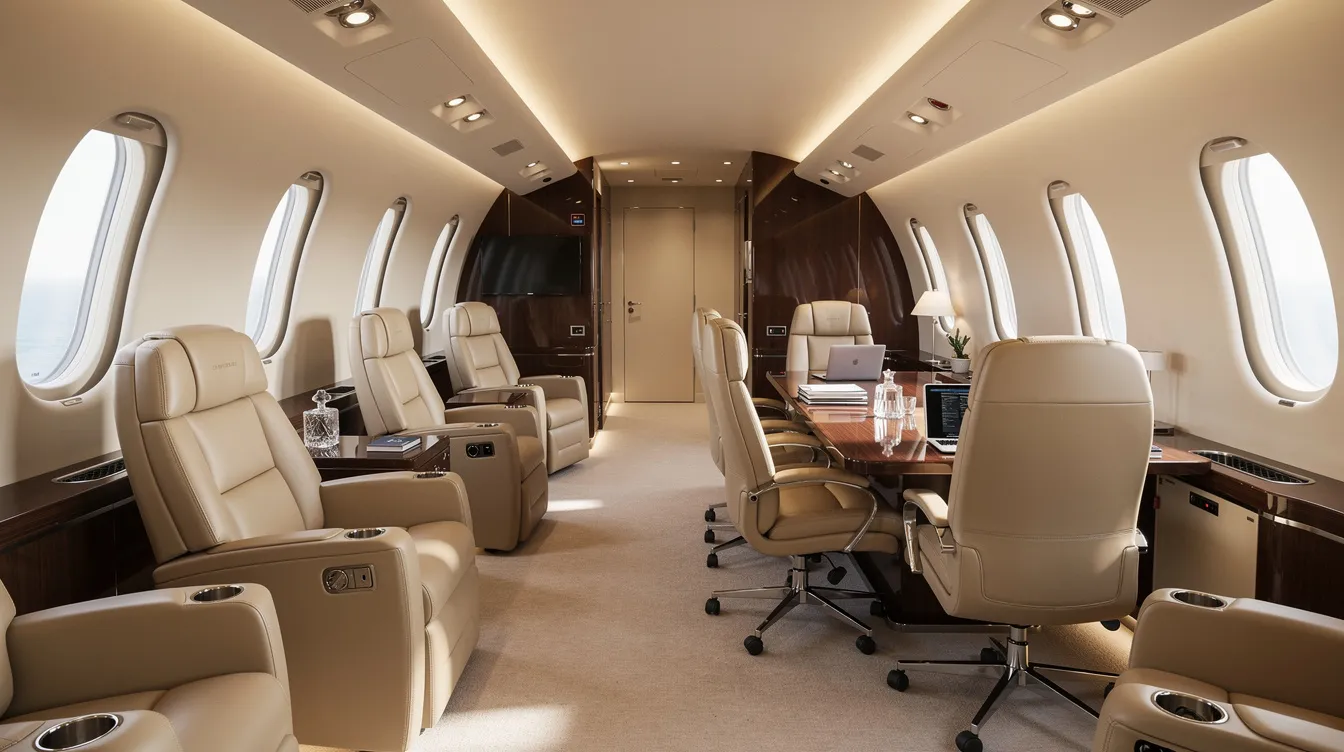
Amenities include stand-up cabins, private bedrooms, advanced technology like Starlink Wi-Fi connectivity, and new paint and interior options. Yet the capital and operating costs lead many clients to opt for large-jet fractional shares instead of whole ownership.
The initial purchase price of a private jet varies enormously. In the current market for private planes for sale, older pre-owned light jets can be found under $1M, while nearly new large-cabin aircraft exceed $70M.
New aircraft advantages: New jets offer the latest technology and better cabin altitude control, but involve waiting lists that can stretch 18–36 months for in-demand models. They come with factory warranties, the lowest airframe hours, and clean maintenance histories. A new Cirrus Vision Jet G3 lists around $3.6M; a new Gulfstream G650 historically exceeds $65M.
Pre-owned aircraft trade-offs: Pre-owned jets provide immediate availability but may require higher maintenance costs. Used aircraft in the sub-$8M bracket frequently sit near major maintenance events—engine overhauls alone can add $1M or more to the true cost of acquisition. New engines, avionics upgrades, and new paint are common additional expenses.
The purchase price is only the starting point. Buying a jet requires a thorough pre-buy inspection to avoid hidden costs, including reviewing total time on airframe and engines, engine program enrollment (Rolls-Royce CorporateCare, JSSI, Honeywell MSP), accident history, and avionics configuration. Fractional jet ownership or an equity fleet share can give a buyer access to a late-model jet without shouldering 100% of these acquisition and refurbishment costs, though it is important to understand the total cost of fractional jet ownership when comparing options.
For many buyers, ongoing costs over five to ten years can exceed the initial purchase price. Typical operational expenses add significantly to the upfront costs of a jet. Annual expenses generally equal about 10% of the aircraft's total value—so a $5M light jet may cost roughly $500K per year to operate, which is why carefully comparing the cost of fractional jet ownership against whole-aircraft ownership is essential.
Jet ownership involves both fixed and variable costs. Here is how they break down:
Fixed costs include:
Full-time pilot and crew salaries typically range from $150,000 to $600,000 annually. Hiring a qualified crew is essential for safety and convenience.
Insurance costs for a private jet can be $15,000 to $30,000 annually.
Hangar fees can range from $1,000 to $3,000 per month, with some smaller facilities charging as little as $50 per month.
Variable costs include:
Fuel costs for jets typically range from $300 to $700 per hour, varying significantly based on aircraft size and flight hours.
Maintenance costs can total $50,000 to $200,000 annually for light jets, significantly more for larger aircraft.
For a light jet flown 200–300 hours per year, total annual operating costs typically land between $500,000 and $800,000. Large-cabin jets with heavier utilization can exceed $1.5M–$3M+ per year. Management companies can handle day-to-day operations but charge additional fees, and owners participating in shared structures must also ensure adequate liability and insurance coverage in fractional ownership is in place.
A private jet purchase can be structured several ways: cash purchase, traditional aircraft financing, leasing, co-ownership, corporate ownership, or fractional aircraft ownership. Each carries different implications for cash flow, tax treatment, and operational control, and some buyers also explore fractional jet ownership financing options as a way to manage capital outlay. Understanding when it makes sense to lease versus own is critical.
Key US tax concepts for 2026:
Jet ownership can offer tax benefits and depreciation write-offs. Under current rules, you can deduct 100% of the purchase price through bonus depreciation when the aircraft is used primarily for qualified business travel.
Tax savings can make ownership more economical, and you can defer taxes through depreciation events over the aircraft's useful life.
Depreciation recapture occurs when the jet is sold.
Business aircraft under Part 91 follow a 5-year MACRS depreciation schedule.
You must operate the jet for at least 100 hours annually to support business-use claims. Personal usage over 25% raises IRS scrutiny, which closely monitors personal use of private jets for tax deductions.
These rules demand specialized aviation tax and legal advice before closing. The complexity of whole-aircraft tax structures contrasts with the relative simplicity of fractional jet ownership, where tax implications for fractional jet owners can still be favorable for business users while much of the administrative burden is handled by the program provider.
A private jet purchase can be structured as:
Cash purchase
Traditional aircraft financing
Leasing
Co-ownership
Corporate ownership
Fractional aircraft ownership
Each model carries different implications for cash flow, tax treatment, and operational control.
Fractional ownership is similar to a timeshare in real estate: a client buys a share in a specific aircraft type—commonly 1/16 or 1/8 of a light or midsize jet—entitling them to a set number of flight hours each year with guaranteed availability. A solid grasp of fractional jet ownership terminology and core concepts helps clarify how this structure can reduce the hassle of full ownership while preserving many of the benefits of owning.
Fractional ownership offers access to a variety of aircraft types through the fleet, and monthly fees in fractional ownership cover maintenance and crew costs.
BlackJet's Equity Fleet fits this model precisely. Clients acquire an equity stake in a modern private jet with priority access, potential tax advantages similar to traditional private jet ownership, and professional aircraft management included.
BlackJet's Reserve Fleet operates as a membership-style, pay-as-you-go solution. There is no aircraft equity, but clients access a vetted fleet at fixed hourly rates. Jet card programs offer prepaid flight hours at fixed rates through similar structures. This approach is designed for individuals and companies that fly private between roughly 25 and 150 hours per year. Chartering eliminates the need for maintenance and crew management, and reserve-style programs deliver that same simplicity.
To compare fractional jet ownership programs side by side—including capital commitment, annual fixed costs, scheduling control, fleet flexibility, and exit options—helps clarify which model delivers the most efficient access for a given travel profile, especially when reviewing leading fractional jet providers and program structures.
Evaluating a private jet purchase follows a disciplined process. Buying a jet typically requires hiring a professional aviation broker, and it is recommended to engage a professional aviation advisor for expert guidance throughout.
Define your mission profile and budget based on annual flight hours and routes.
Assemble an expert team: broker, technical inspector, aviation attorney, and tax advisor.
Screen aircraft on the global market and request maintenance records.
Buying a jet requires a thorough pre-buy inspection to avoid hidden costs—review total time on airframe and engines, engine program enrollment (Rolls-Royce CorporateCare, JSSI, Honeywell MSP), accident history, and avionics configuration; prospective co-owners should likewise scrutinize any aircraft fractional ownership contract framework before signing.
Complete due diligence on upcoming major inspections or overhauls before finalizing any sale, and review essential contract terms in fractional jet ownership if you are comparing whole-aircraft acquisition with shared-ownership structures.
Profile | Annual Hours | Best Fit |
|---|---|---|
Mid-market US company, one owner or small executive team | ~100 hrs/year | Fractional ownership or Reserve Fleet membership |
Global enterprise, frequent long-haul | 500–600+ hrs/year | Whole aircraft ownership, potentially managed under Part 135 |
Occasional traveler | Under 50 hrs/year | Charter or jet card |
You need to fly 200 to 400 hours annually to justify ownership of a whole aircraft. Below that threshold, fractional programs or BlackJet's Reserve Fleet almost always prove more efficient, and you should also understand how to sell or exit a fractional jet ownership share if your travel needs change.
While individual circumstances vary, most industry analyses suggest that whole-aircraft ownership tends to make economic sense starting around 200–400 flight hours per year, assuming the aircraft is well-matched to the mission and managed efficiently. Clients flying roughly 25–150 hours per year are often better served by fractional jet ownership or membership programs like BlackJet's Reserve and Equity Fleets, which deliver predictable access without tying up as much capital.
Private jets are typically depreciating assets rather than investments that appreciate in value. Their return comes in the form of time savings, scheduling flexibility, and business productivity—not resale gains. Jets can support return on investment indirectly by enabling more efficient business travel, but buyers should not expect the aircraft itself to generate capital gains over the long term.
Fractional ownership involves purchasing an equity share in a specific aircraft type, with a formal ownership interest, tax reporting obligations, and guaranteed hours. Jet cards and membership programs typically involve prepaying for or accessing flight hours without owning any part of the aircraft. BlackJet's Equity Fleet aligns with fractional ownership, while its Reserve Fleet functions more like a flexible membership solution.
Mixed personal and business use is common, but the proportion of qualified business use strongly affects available depreciation and expense deductions under US tax law. Detailed record-keeping of each flight's purpose is essential, and consulting an aviation-savvy CPA or tax attorney before relying on projected tax savings in any purchase decision is strongly recommended.
BlackJet manages aircraft scheduling, pilot coordination, maintenance oversight, and regulatory compliance, bundling traditional owner responsibilities into a turnkey service for both Equity and Reserve Fleet clients. This structure allows clients to focus on using their flight time—whether 25 hours or 150 hours per year—rather than navigating day-to-day aircraft management, insurance renewals, crew training, and FAA compliance details.
A disciplined, numbers-first approach is essential before committing to a private jet purchase. Long-term operating costs, evolving tax rules, and the complexity of aircraft management all deserve careful analysis before any capital is deployed.
For many high-net-worth individuals and corporations, fractional jet ownership or a structured membership program offers a more efficient way to fly private than acquiring and managing a 100% stake in an aircraft. BlackJet Fractional Jet Ownership serves as a trusted advisor and operator that can clarify whether full ownership, an Equity Fleet share, or Reserve Fleet access best fits your travel patterns and financial objectives.
Ready to explore the smarter way to fly private? Visit FractionalJetOwnership.com to request a personalized flight-hour and cost analysis, compare ownership models, and schedule a confidential consultation.
