August 23, 2026
With global business jet departures rising nearly 5% in the first half of 2026, more executives and families are asking the same question: which private jet companies actually fit my travel needs? This guide breaks down the major business models, compares costs, and offers a practical framework for choosing between charter, jet cards, and fractional ownership.
Private aviation in the United States has evolved dramatically since the 1990s, when fractional ownership programs first gave executives access to private jets without the burden of owning an entire aircraft. What began as a niche service for Fortune 500 companies has grown into a diverse industry serving entrepreneurs, family offices, and mid-market business owners across the country and around the world.
Today, private jet service companies differ primarily in their operational models. Private jet companies generally provide access to private aircraft through four distinct structures: on-demand charter, fractional ownership, jet card membership, and aircraft management. Private aviation offers fractional ownership and membership programs that span these categories, and many clients now blend two or more models depending on seasonal demand and trip complexity. Research suggests that roughly 40% of fractional ownership clients also use jet cards, and 32% supplement with ad hoc charters.
Compared with commercial airlines, flying private delivers measurable advantages:
Save time: Access 5,000+ smaller airports, reducing ground time and avoiding terminal delays.
Control your schedule: Depart when you want, not when airlines dictate.
Enjoy privacy: Hold meetings, make calls, and travel securely with family or crew.
Reach more destinations: Fly direct to city pairs that commercial airlines ignore or connect through congested hubs.
From BlackJet Fractional Jet Ownership's perspective, the most informed clients treat private travel as a portfolio decision, matching each trip type to the program that delivers the best balance of cost, predictability, and access.
Understanding the major business models helps you identify which providers deserve a deeper look. Here is how each one works:
Pay per flight with no long-term contract. Hourly rates for light jets typically range from $3,000 to $5,500, midsize jets from $5,000 to $10,000, and heavy jets or larger jets from $10,000 to over $22,000. On-demand charter is best for occasional flyers logging under 25 to 50 hours per year, but repositioning fees and peak-day surcharges can inflate costs.
Fractional ownership involves purchasing a deeded share of a specific aircraft-typically 1/16th or 1/8th-in a managed fleet. Prospective owners should understand essential fractional jet ownership terms, including share size, management fees, and allotted flight hours. Owners receive guaranteed flight hours per year at fixed hourly rates. Commitments usually run three to five years.
Jet card memberships prepay for blocks of hours, typically 25 hours or more, at set or capped rates. Cards offer guaranteed availability with defined call-out windows (often 24–48 hours) and avoid ownership commitments.
Companies like Wheels Up and XO blend fixed hourly pricing with dynamic components, partner fleets, and tiered membership benefits. Access can range from light jets to large-cabin aircraft depending on the program tier.
These companies manage privately owned aircraft, handling maintenance, crew hiring, insurance, and compliance. Some arrange for aircraft to be placed into charter or program fleets to offset ownership costs.
The Equity Fleet allows fractional ownership of a jet share with priority access, custom aircraft sourcing, and tax benefits, including access to floating fleet options in fractional ownership for flexible aircraft availability. The Reserve Fleet provides pay-as-you-go hours without ownership costs, designed for clients who want predictability without a capital commitment.
This is the decision point for most high-frequency flyers. Each model serves a different usage profile, and getting this choice right determines whether you overpay or underutilize your program.
Fractional ownership works for frequent flyers who typically require 50 hours or more per year. You buy a share, receive annual allotted hours (commonly 50–150 depending on share size), commit for a fixed term of three to five years, and gain guaranteed access and consistent service within a set call-out period. A common entry point is 1/8 fractional jet ownership, which typically provides around 100 hours of annual flight time. NetJets offers fractional ownership and jet card programs, and Stratos offers a Jet Card membership with fixed rates and availability, illustrating how providers often span multiple models.
On-demand charter requires no capital commitment and suits clients flying under 25 hours annually, which generally favors on-demand charter over structured programs. However, pricing and aircraft availability can vary with on-demand charter due to market fluctuations, making it harder to budget consistently.
Jet card membership programs sit between charter and ownership. Clients prepay for 25–100 hours at fixed or capped rates, receive guaranteed availability, and enjoy fixed call-out times. This model works well for 25–75 hours per year of private jet travel, and many flyers compare fractional ownership vs membership programs before committing.
From BlackJet's perspective, the Equity Fleet suits clients flying 50–150+ hours per year who want ownership economics and potential tax benefits, while the Reserve Fleet is ideal for 25–75 hours per year with flexible patterns and no long-term asset commitment.
Fractional Ownership | Jet Card | Charter | |
|---|---|---|---|
Upfront cost | Share purchase (hundreds of thousands to millions) | Deposit ($100K–$250K+) | None |
Hourly cost predictability | Fixed occupied rate | Fixed or capped | Variable |
Commitment term | 3–5 years | 1–2 years | Per flight |
Ideal annual hours | 50–150+ | 25–75 | Under 25 |
Ownership/tax benefits | Yes | No | No |
The following examples help orient readers among well-known brands. These are for illustration, not endorsement.
NetJets operates a fleet of around 700 jets worldwide. The company offers fractional ownership with over 700 jets worldwide, plus jet cards and charter access. Aircraft types span from the Citation XLS to the Global 7500.
Operates approximately 300+ aircraft, known for luxury fractional programs and strong year-over-year growth in flight hours.
A membership and subscription platform. Wheels Up offers jet cards starting at $100,000 for 20 hours, blending member benefits with access to partner aircraft.
A charter and membership hybrid. XOJET operates a fleet of only two aircraft models, supplemented by an extensive network of partner operators.
VistaJet serves 187 countries with a fleet of 70 jets and provides an on-demand subscription model for global aircraft access-a strong choice for international executives.
A European specialist operating very light jets for short-range continental flights.
Functions as an air charter broker with access to over 7,000 jets globally, offering search and booking across a wide range of operators.
An air charter broker that checks the safety and quality of over 4,000 private jets, offering curated charter services and transparent jet card options rather than ownership-based programs.
Positioned as a specialist in fractional ownership and structured programs, not an ad hoc charter. The focus is on predictable access, ownership benefits, and personalized service for clients interested in building a long-term aviation relationship.
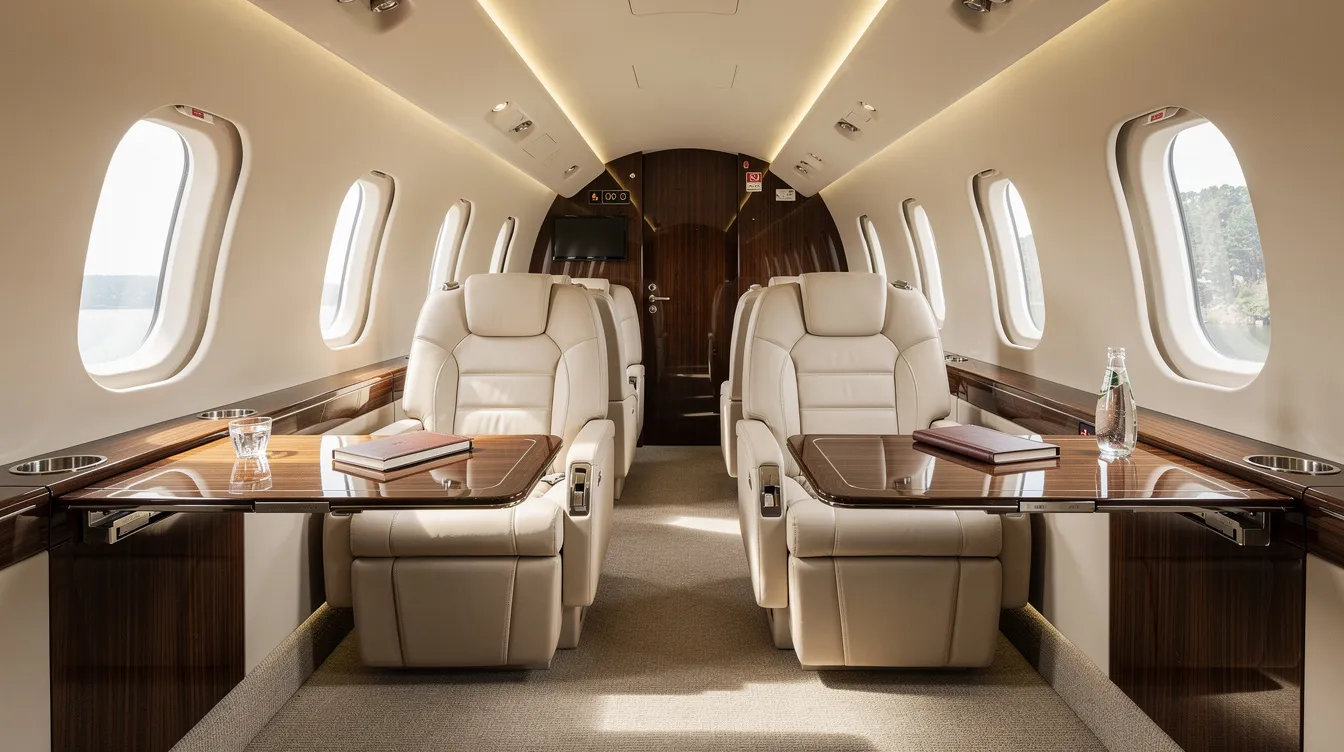
Aircraft management is essential for both whole-aircraft owners and the fractional programs that serve shared fleets. Without professional management, aircraft owners face complex regulatory, operational, and financial obligations.
Maintenance, compliance, crew hiring, scheduling, hangar, and insurance management.
Can place aircraft into charter or program fleets to offset costs while preserving owner access.
Jet Linx combines management with a base partner program and Jet Card Membership.
BlackJet and partners handle oversight, safety, and scheduling for Equity Fleet owners, removing operational burden while maintaining investment and tax benefits.
"Local service, global operations" has become a defining promise in private aviation marketing-but not every company delivers both.
The "base" model, used by providers like Jet Linx, anchors crews, support staff, and private terminals in specific cities such as Omaha, Dallas, Atlanta, and Scottsdale. Clients get a team that knows their preferences, handles catering requests, and manages ground logistics. This personalized service is hard to replicate through a centralized call center.
By contrast, globally centralized fleets like VistaJet (which offers an on-demand subscription model for private jets across 187 countries) or NetJets prioritize consistent experience worldwide.
For most clients, the ideal balance includes:
Home-base team familiar with your travel patterns and preferences
Network large enough for frequent domestic routes and transatlantic flights
Scheduling and concierge support that feels personal, even across the country
BlackJet's fractional ownership and Reserve Fleet programs are designed to deliver predictable access across major U.S. business markets with scheduling and concierge support that mirror a local service model.
Safety is the foundation of private aviation-not an add-on feature. Aviation experts and experienced clients treat safety vetting as the first filter before evaluating cost or convenience.
Verify third-party ratings: ARGUS Platinum, Wyvern Wingman, IS-BAO.
Jet Linx: Top 1% for safety, annual Safety Summit, exceeds regulatory requirements.
Victor: Requires ISO-9001 safety compliance from partners.
Paramount Business Jets: Checks the safety and quality of 4,000+ jets before offering them to clients.
Ask operators about pilot experience, maintenance intervals, Part 135/91K certification, audit history, and liability coverage.
BlackJet partners only with operators meeting high safety benchmarks and maintains top-tier policies.
Costs vary by aircraft size, route length, and usage pattern. The following benchmarks help frame the decision.
Typical hourly rates for U.S. private jets in 2025–2026:
Light jets (e.g., King Air, Citation CJ series): $4,000–$7,000/hour
Midsize jets: $6,000–$9,000/hour
Large-cabin and heavy jets: $9,000–$15,000+/hour
Charter cost components include the hourly rate, repositioning fees, overnight charges, de-icing, and international fees. These extras can add 15–30% to the base price on longer or more complex itineraries.
Fractional ownership costs include an upfront share acquisition, monthly management fees, occupied hourly rates, and potential residual value at exit. A thorough analysis of the total cost of fractional jet ownership should factor in aircraft type, share size, and variable expenses. BlackJet's Equity Fleet model can unlock aviation-related tax benefits for qualifying U.S. clients-such as depreciation under current IRS rules-and broader tax implications for fractional jet owners.
Jet card programs typically require a $100K–$250K+ deposit, offer fixed or capped hourly rates, and have 1–2-year commitments. Ideal for 25–75 hours per year.
The Reserve Fleet avoids large capital outlays entirely, offering minimal upfront costs and fixed hourly rates with flexible commitment. The Equity Fleet requires a share purchase, offers fixed rates, multi-year commitment, and is ideal for 50–150+ hours per year.
Model | Upfront Cost | Hourly Predictability | Commitment | Ideal Hours/Year |
|---|---|---|---|---|
Charter | None | Variable | Per flight | Under 25 |
Jet Card | $100K–$250K+ deposit | Fixed/capped | 1–2 years | 25–75 |
Fractional Ownership | Share purchase | Fixed | 3–5 years | 50–150+ |
BlackJet Reserve | Minimal | Fixed | Flexible | 25–75 |
BlackJet Equity | Share purchase | Fixed | Multi-year | 50–150+ |
Consider the executive who flies 90 hours per year across six U.S. cities and has outgrown first-class commercial travel but has no interest in managing a plane, hiring crew, or arranging maintenance.
An ad hoc charter or an occasional jet card usually delivers the best value. Stratos Jet Charters offers a Jet Card membership for guaranteed availability at this usage level.
Membership or Reserve Fleet programs provide predictability without ownership. This is the sweet spot for the business traveler who values consistent capacity and fixed pricing.
Fractional ownership oofBlackJet's Equity Fleet becomes increasingly cost-efficient and provides ownership, tax benefits, and priority scheduling, but you should also assess fractional jet ownership financing costs and benefits before purchasing a share.
A larger fractional share or whole-aircraft ownership with professional management makes the strongest financial case, though some clients still evaluate fractional jet ownership as an investment relative to buying an entire aircraft.
Corporate flight departments often blend models: fractional shares for executives, jet card membership for key teams, and commercial airlines for broader employee travel. When reviewing options, leaders should pay close attention to essential contract terms in fractional jet ownership and understand the process for selling a fractional jet ownership share at the end of the term. The right mix depends on demand patterns, not a single measure of annual hours.
Use this checklist when comparing charter companies, fractional providers, jet card issuers, and aircraft management firms:
Check safety ratings (ARGUS, Wyvern, IS-BAO) and pilot experience.
Confirm operator scale: routes, fleet size, managed vs. brokered aircraft.
Demand financial transparency: all-in rates, peak-day/cancellation/fuel policies.
Assess service quality: 24/7 support, dedicated managers, app booking, flexibility.
Ask about sustainability: SAF, carbon offsets, fleet modernization.
Prioritize predictable access and transparent pricing over perks.
The right private jet solution depends on hours flown, routes traveled, budget, and appetite for ownership. There is no universal answer, only the answer that fits your specific flying profile.
Start by mapping your last 12–24 months of travel in terms of flight hours, city pairs, and seasonal patterns. That data reveals whether charter, a jet card, or fractional ownership delivers the best return on your investment.
Assess your hours: Determine whether you fall into the under-25, 25–75, or 75–150+ hours per year range.
Evaluate ownership appetite: Consider whether tax benefits, residual value, and priority access justify a capital commitment, or whether a flexible Reserve Fleet arrangement better suits your needs.
Contact BlackJet: Request a personalized analysis to compare your current spending against a structured program.
Ready to explore the smarter way to fly private? Visit FractionalJetOwnership.com to request a personalized analysis of your flying profile and see whether fractional ownership or a tailored shared-use program is right for you.
