August 30, 2026
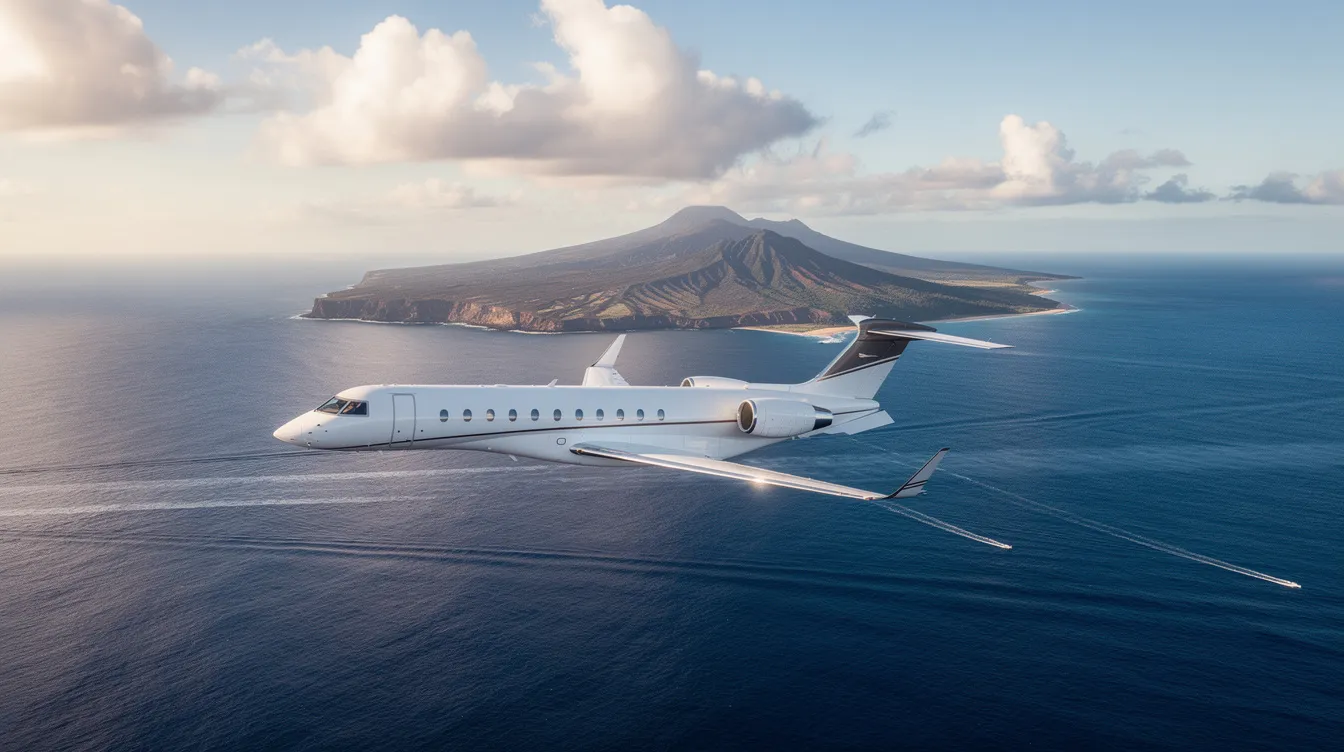
Flying a private plane to Hawaii eliminates the chaos of commercial terminals and puts travelers in control of one of the most rewarding routes in private aviation. Whether departing from the West Coast or the east coast, a private flight across the Pacific Ocean delivers time savings, privacy, and the flexibility to visit multiple Hawaiian islands on a single trip. Here is what it actually takes — and costs — to make it happen.
A private jet to Hawaii reduces total travel time significantly. From Van Nuys to Honolulu, the estimated flight time is roughly 5 to 5.5 hours nonstop. From New York, an ultra-long-range jet completes the Pacific crossing in approximately 10 to 11 hours. Compare that to commercial airlines, where door-to-door times from the West Coast often stretch to 9 to 12 hours after factoring in check-in, security, and ground transfers.
Key advantages of flying private to Hawaii include:
Boarding in just 15 to 30 minutes at private terminals, bypassing TSA entirely
Flexible departure schedules that let travelers avoid jet lag by choosing optimal flight windows
The ability to visit multiple Hawaiian islands in one itinerary without rebooking separate commercial flights
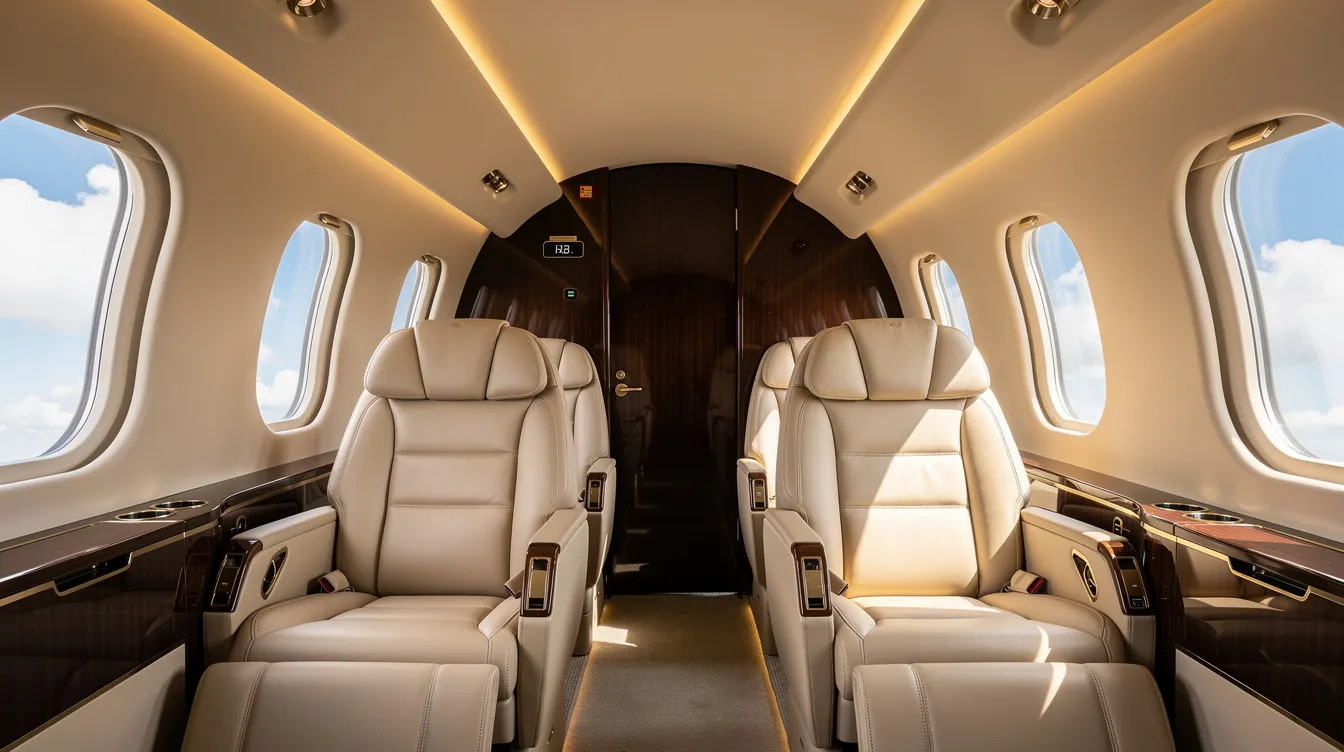
Quiet cabins with lie-flat seating where executives can work, or families can rest during longer flights
BlackJet Fractional Jet Ownership combines private jet travel convenience with predictable costs and guaranteed availability — a meaningful upgrade over ad-hoc Hawaii private jet charters that quote each trip separately. Travelers new to this model can benefit from understanding fractional jet ownership terminology and core concepts to better evaluate their options.
Private jets to Hawaii typically require a super midsize jet, heavy jet, or ultra long range jet due to range and overwater safety requirements
Flight time from West Coast departures to Hawaii is about 5 to 6 hours; East Coast origins run 10 to 12 hours nonstop
Main airports in Hawaii for private jets include Daniel K. Inouye International Airport (HNL), Kahului Airport (OGG), and Kona International Airport (KOA) - all with FBO facilities for private planes
One-way private jet charter costs to Hawaii typically range from $45,000 to $300,000 based on aircraft type, departure point, and season
Flights from the East Coast to Hawaii often exceed $90,000 each way, while West Coast departures generally cost less due to smaller aircraft classes being sufficient
BlackJet offers transparent pricing via fixed hourly rates under its Equity Fleet and Reserve Fleet programs, reducing surprises compared to traditional private jet charter quotes and making it easier to estimate the total cost of fractional jet ownership.
Commercial routes like LAX–HNL or SFO–OGG come with predictable frustrations: long TSA lines, crowded terminals, rigid schedules, and virtually no option to hop between islands without rebooking through separate carriers. Private jet travel to Hawaii solves each of these.
Travelers can bypass TSA lines by using private terminals, cutting hours early from the departure process. Private jets access over 5,000 U.S. airports compared to roughly 500 served by commercial flights
Private jets allow customized schedules to help avoid jet lag, letting passengers depart at times that align with their sleep cycles
For business travelers, secure Wi-Fi and private cabins enable confidential meetings en route to Honolulu International or Kona
Families and groups benefit from flexible departure times, easier management of children and multi-generational parties, customized catering, and cabin space for sports gear — surfboards, golf clubs, dive equipment
Private jet travel is strategic for corporate retreats on Oahu, incentive trips on Maui, or spring break celebrations across the Hawaiian Islands
Hawaii private flights are built around reliable departure point cities on the mainland and well-equipped island airports with VIP services.
Primary West Coast departures:
Van Nuys (VNY), Los Angeles (LAX), San Francisco / Oakland (OAK), San Diego (SAN), Seattle (BFI), Portland (PDX)
Central and eastern U.S. origins:
Denver (APA), Dallas (DAL), Chicago (MDW), Teterboro (TEB) near New York - these typically require a heavy jet or ultra-long-range jet
Hawaii airports for private jets:
Daniel K. Inouye International Airport (HNL) - the main gateway in Hawaii, serving Oahu
Kahului Airport (OGG) - the primary airport for Maui
Kona International Airport (KOA) - the main airport for the Big Island
Lihue Airport (LIH) - providing direct access to Kauai's attractions
All main Hawaiian airports have FBO facilities for private jets.
Sample flight times:
Van Nuys–Honolulu: ~5–5.5 hours
LAX–Kahului: ~5–6 hours
Oakland–Kona: ~5.5–6 hours
Dallas–Honolulu: ~7–8 hours
New York–Honolulu: ~10–11 hours nonstop in an ultra-long-range jet
BlackJet advisors help select the optimal combination of departure airport, final destination, and time of day to align with resort check-in times and minimize delays.
Not every private jet can make the trek to Hawaii safely due to range limitations. Chartering a private plane to Hawaii requires specific aircraft capabilities, and choosing the right aircraft category is both a safety and comfort decision.
Super midsize jets (e.g., Citation X, Challenger 350) are typically the minimum entry point for nonstop flights from the West Coast. Super midsize jets are designed for longer-range travel and can carry 6 to 9 passengers with ranges around 3,000–3,500 nautical miles — comfortable for a 5- to 6-hour crossing.
Heavy jets (e.g., Gulfstream G450, Challenger 605) accommodate 8 to 14 passengers for longer flights like Dallas–Honolulu or Chicago–Kona. Heavy jets are larger aircraft that provide lie-flat seating, larger baggage holds, and more exclusive amenities for extended journeys.
Ultra-long-range jets (e.g., Gulfstream G650, Global 6500), sometimes referred to as super long-range aircraft, are capable of nonstop flights from New York to Hawaii. Ultra-long-range jets can fly nonstop from New York to Hawaii and feature full galleys and sleeping accommodations suitable for 10- to 12-hour journeys.
These larger aircraft support full galleys and sleeping configurations for 10- to 12-hour legs
Light jets lack the range for mainland-to-Hawaii flights but can serve inter-island hops once travelers arrive. Light jets lack the overwater certification and fuel capacity needed for a Pacific crossing
Heavy and ultra-long-range jets are required for larger groups or longer distances from the East Coast
BlackJet Fractional Jet Ownership uses its Equity Fleet and Reserve Fleet models to match members to the right aircraft type with predictable access rather than one private jet trip quoted at fluctuating market rates, and travelers can compare fractional jet ownership vs membership programs to decide which structure best fits their Hawaii flying patterns.
Many travelers use one primary Hawaii private jet flight from the mainland, then add shorter segments to visit multiple Hawaiian islands in a single Hawaiian journey.
A typical 7–10 day island-hopping plan: arrive into Honolulu or Kona on a super midsize or heavy jet, then book light jet or turboprop segments to Maui, Kauai, or Lanai
Oahu serves as the main entry hub (HNL) with quick connections to Waikiki, Ko Olina, and corporate venues in downtown Honolulu
Maui's Kahului Airport (OGG) provides access to Wailea and Kapalua resorts, while smaller aircraft can reach Hana for secluded retreats
The Big Island's Kona International Airport (KOA) puts travelers near Four Seasons Resort Hualalai, Mauna Lani, and Hawaii Volcanoes National Park — home to active volcanoes and dramatic landscapes. Optional short hops to Hilo (ITO) work well for national park excursions. The Seasons Resort Hualalai remains one of the most sought-after destinations on the island
Lihue Airport (LIH) on Kauai and Lanai are ideal for shorter private flights from Oahu or Maui — perfect for privacy, world-class golf, and quieter beaches
Customized trip planning through BlackJet makes it straightforward to coordinate inter-island legs within a single itinerary.
The major cost drivers for a private plane to Hawaii include aircraft size, total flight time, seasonality, and repositioning requirements. Pricing for chartering a private jet to Hawaii varies greatly based on departure city and aircraft size, and many owners use fractional jet ownership financing to spread these costs over time.
Hourly rates for private jets vary from $2,000 to over $14,000. Charter costs for heavy jets typically range between $12,000 and $15,000 per hour
A super midsize jet from San Francisco to Hawaii costs about $49,400 one way. Los Angeles–Honolulu in a similar aircraft often falls in the $45,000–$55,000 range
A realistic budget for one private jet trip to Hawaii often ranges from $70,000 to $200,000 one way, depending on origin. One-way private jet charter pricing ranges from $45,000 to $150,000 for most West Coast departures. Private jet charter costs to Hawaii range from $45,000 to $150,000 depending on aircraft class and route
West Coast departures to Hawaii generally cost less than East Coast departures. Flights from the East Coast often exceed $90,000
Traditional private jet charters quote each trip separately. BlackJet's fractional jet ownership and membership-style access use fixed hourly rates and transparent pricing that simplify budgeting for those evaluating fractional jet ownership as an investment
A 25-hour or 50-hour program can typically cover a round-trip mainland–Hawaii itinerary plus several inter-island flights
A note on empty leg flights: booking flexibility can help secure empty leg flights, which may save money — these flights occur when aircraft return empty after drop-offs and can save travelers 25 to 75 percent. However, empty leg flights are less customizable than regular charters. Travelers may need to forfeit preferred departure times, making them ideal for flexible travelers.
Crossing the Pacific Ocean to Hawaii is one of the longest overwater segments in U.S. private aviation. Overwater flights require adherence to strict aviation rules that differ from domestic flights, and chartering requires specific aircraft capabilities and regulatory compliance.
FAA Part 135 governs charter operations and mandates proper overwater equipment: life rafts, life vests, satellite phones, survivor locator lights, and emergency beacons. Federal regulations require specialized overwater survival gear for flights to Hawaii
ETOPS certification is needed for twin-engine jets operating over water to ensure safe diversion in case of engine failure. ETOPS (Extended-range Twin-engine Operational Performance Standards) certification ensures that twin-engine aircraft are equipped and approved to fly routes that, at some points, are farther than a certain distance from an emergency airport, providing an extra layer of safety for long overwater flights such as those to Hawaii.
Aircraft must account for payload, range limits, fuel reserves, and weather conditions during planning for flights to Hawaii. Operators conduct continuous Pacific weather monitoring with contingencies for alternate airports such as Kahului or Kona
BlackJet works with rigorously vetted operators and maintains strict safety benchmarks for aircraft used under its fractional aircraft ownership programs, pairing these with robust liability and insurance considerations for fractional owners.
Sustainability options include carbon offsets and, where available, sustainable aviation fuel (SAF) - BlackJet can support carbon-neutral travel on Hawaii private jet itineraries
BlackJet is not a one-off charter broker. It provides fractional jet ownership and membership-style access suited to travelers flying 25 to 150 hours per year, including regular flights to Hawaii. For many, a 1/8 fractional jet ownership share offers around 100 hours annually, aligning well with this usage band. Booking a private jet to Hawaii usually requires 2 to 4 weeks' notice, and BlackJet's programs provide the structure to plan ahead.
The Equity Fleet model: clients own a share of an aircraft category, gain potential tax benefits, and receive priority scheduling for high-demand periods like Christmas in Honolulu or summer on Maui; understanding the tax implications for fractional jet owners is essential when modeling long-term Hawaii travel
The Reserve Fleet model: pay-as-you-go private jet travel with guaranteed access and no full-ownership complexity — suitable for annual Hawaii vacations and business trips, and complementary to floating fleet options in fractional ownership that increase flexibility across multiple aircraft.
Members consult with BlackJet to choose origin (Van Nuys, Dallas, Teterboro), preferred Hawaiian islands, dates, and passenger count, then receive customized aircraft options and routing proposals, guided by essential contract terms in fractional jet ownership that define schedules, service levels, and exit options
BlackJet coordinates mainland legs, inter-island flights, and ground transfers so clients can fly privately across multiple islands under one cohesive itinerary, supported by a clear aircraft fractional ownership contract framework that outlines responsibilities and service standards
24/7 support handles schedule changes, Pacific weather rerouting, and special requests. Bringing pets into Hawaii requires compliance with strict regulations related to quarantine and documentation — BlackJet's team manages these logistics as well, and can also assist when owners are selling a fractional jet ownership share to transition between programs or aircraft.
International travelers and corporate groups benefit from instant pricing visibility and hours' notice flexibility
These illustrative scenarios show how fractional ownership or membership hours translate into real itineraries across the Hawaiian Islands.
Los Angeles–Maui: Depart Van Nuys mid-morning on a super midsize jet. Land at Kahului Airport in roughly 5.5 hours. Spend 4 nights in Wailea, then hop via light jet to Kona for 3 nights on the Big Island before returning to California
Dallas–Kona: Use a heavy jet for a 7–8 hour charter flight to Kona International Airport. Schedule meetings and incentive events along the Kohala Coast. Add a short inter-island leg to Oahu for a final night in Honolulu
New York–Honolulu: An ultra-long-range jet departs Teterboro in the evening with lie-flat seating. The executive team arrives in Honolulu the next morning for a week-long retreat split between Oahu and Kauai, with smaller aircraft handling inter-island segments
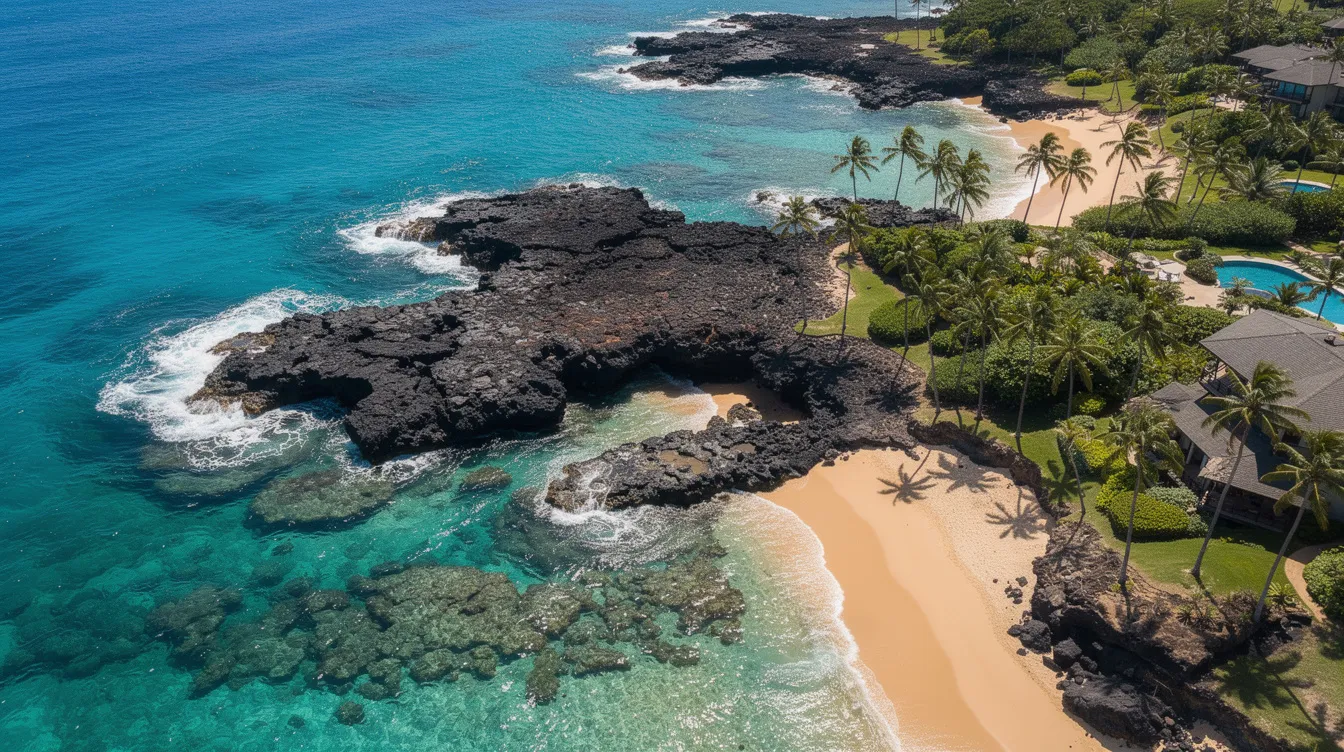
Each scenario leverages BlackJet's transparent pricing and guaranteed availability to lock in aircraft types months ahead of peak seasons. Prospective travelers comparing top fractional jet ownership programs can use these Hawaii examples to benchmark service levels and aircraft access. Hawaii ranges from tranquil Kauai beaches to the Big Island's volcanic landscapes — and these templates are starting points a BlackJet advisor can tailor to specific dates, group sizes, and resort preferences.
No. Only super midsize jets, heavy jets, and ultra-long-range jets have the necessary range and overwater safety certifications to fly nonstop from the mainland U.S. to Hawaii. Light jets lack the fuel capacity and safety equipment for this overwater route.
Booking 2 to 4 weeks ahead is ideal to secure the best aircraft and schedule, especially during peak travel seasons like holidays and summer. However, fractional ownership members often enjoy greater flexibility and shorter notice booking.
Main Hawaiian airports for private jets include Daniel K. Inouye International Airport (HNL) on Oahu, Kahului Airport (OGG) on Maui, Kona International Airport (KOA) on the Big Island, and Lihue Airport (LIH) on Kauai. All have Fixed Base Operator (FBO) facilities to support private aviation.
Yes. Many travelers fly a larger jet from the mainland to a primary island such as Oahu or Maui, then use smaller jets or turboprops for short inter-island flights to islands like Kauai, Lanai, or the Big Island.
Costs vary based on aircraft type, departure city, and season. One-way charter flights generally range from $45,000 to $150,000 for West Coast departures, with East Coast flights often exceeding $90,000. Fractional ownership programs offer fixed hourly rates that simplify budgeting.
Many private jet operators accommodate pets in the cabin, but travelers must comply with Hawaii's strict quarantine and documentation regulations. Planning well in advance is essential.
Flights to Hawaii must meet FAA Part 135 charter regulations, including specialized overwater survival gear and ETOPS certification for twin-engine jets. Operators conduct thorough flight planning with Pacific weather monitoring and alternate airport contingencies.
Fractional ownership provides guaranteed access to a suitable aircraft category, predictable hourly pricing, priority scheduling during peak periods, and the ability to customize itineraries including inter-island legs—all with dedicated support and simplified logistics.
A private plane to Hawaii delivers strategic time savings, comfort, and control that go well beyond what commercial first class or semi-private options can offer. Private jets reduce travel time to Hawaii to about 6 hours from the West Coast, and the experience from boarding to arrival is entirely on the traveler's terms.
For those who travel 25 to 150 hours per year — combining business and leisure across destinations like Hawaii — fractional jet ownership or a Reserve Fleet membership eliminates the unpredictability of ad-hoc private charter pricing.
Ready to explore the smarter way to fly private? Visit FractionalJetOwnership.com to explore BlackJet's Equity Fleet and Reserve Fleet options and request a personalized Hawaii travel consultation. An aviation advisor will outline aircraft options, expected flight times, and transparent pricing for your exact itinerary — whether you plan one annual Hawaiian journey or multiple trips across the Pacific each year.
