
June 15, 2026
In today’s fast-paced business world, time is the most valuable asset. Imagine turning what used to be a multi-day travel ordeal into a single, productive day by leveraging your personal aircraft for business. Whether it’s closing deals across multiple cities or managing urgent site visits, using a personal aircraft can revolutionize how executives and entrepreneurs approach travel. However, with great convenience comes complex tax and compliance considerations that can impact your bottom line. This guide unpacks the essential rules, tax benefits, and smarter alternatives like fractional ownership that can help you maximize efficiency while staying compliant and financially savvy.
Using a personal aircraft for business can deliver real-time savings and potential tax benefits, but only when flights are properly documented, characterized, and tied to a clear business purpose.
The IRS closely scrutinizes business aircraft use, including how owners allocate expenses between business and personal use and how they impute income for personal flights.
Tools like standard industry fare level (SIFL) rates, written policies on personal use, and robust recordkeeping are essential to stay compliant and preserve deductions after the Tax Cuts and Jobs Act (TCJA).
Fractional jet ownership through BlackJet Fractional Jet Ownership offers a practical alternative to owning a full personal aircraft-delivering access to business aviation with more predictable costs, simplified compliance, and professional management.
Readers should coordinate with their tax adviser before restructuring aircraft ownership and visit FractionalJetOwnership.com for tailored guidance.
Consider a U.S.-based CEO who needs to visit manufacturing facilities in Indianapolis, a client office in St. Louis, and an investor in Milwaukee-all in the same day. On a commercial flight schedule, that itinerary would stretch across three days of connections, layovers, and ground transfers. With a personal aircraft, it becomes a single productive day. Private aircraft allow travel to multiple cities in a single day, and flights can be scheduled according to travelers' needs rather than airline timetables. Travelers typically arrive at private terminals just 15 minutes before departure, and private flights eliminate long security lines and layovers entirely.
High-net-worth individuals and closely held businesses often consider owning their own aircraft once annual travel reaches roughly 50–150 hours of business travel per year. Core motivations include schedule control, access to thousands of smaller regional airports that reduce ground transfer times, the ability to work in a quiet private environment during flights, and enhanced privacy for sensitive meetings. Owner-flown aircraft can reduce travel time significantly while enhancing efficiency and productivity for businesses.
However, many owners first buy or consider a personal aircraft for both business and personal use, which immediately raises questions about characterising flights, allocating expenses, and imputing income. The rest of this article walks through key tax and compliance rules and then compares full ownership to fractional aircraft ownership and membership programs like those offered by BlackJet Fractional Jet Ownership.
The IRS allows deductions only for ordinary and necessary expenses incurred in carrying on an employer's trade or business, as outlined under Section 162. A flight is considered a business flight if costs are deductible under that section, meaning there must be a clear, documentable connection between the trip and the company's operations.
Examples of qualified business flights include:
Site visits to operating locations or construction projects
Client, investor, or board meetings
Travel to industry conferences with a specific agenda
Multi-city deal roadshows or due-diligence tours
Contrast these with clearly non-business purposes: vacations, family trips to second homes, or flying friends to a Grand Canyon sightseeing tour. Even if the aircraft is owned through a business entity, these remain personal flights.
Gray areas arise frequently. For instance, adding a weekend personal stop to an otherwise legitimate business trip requires proportional allocation of travel days between business and personal purposes. The IRS expects contemporaneous documentation-meeting agendas, emails, calendars, and written descriptions-to substantiate the business purpose of each business trip and each passenger's presence on the aircraft.
Each occupied seat on each leg must be characterized separately, since tax treatment and deduction disallowance depend on this classification. The IRS requires flights to be classified as business or personal at the individual-seat level. Mischaracterizing flights can lead to reclassified income, penalties, and lost deductions.
Here is how each category is defined broadly:
Business flights: A flight where the passenger has a documented, legitimate business purpose. Example: an owner flying from Dallas to Chicago for a board meeting. Costs from such flight legs are deductible under Section 162.
Personal flights: Flights primarily for personal enjoyment, family travel, or personal activities unrelated to the business. These may still be permitted on a company aircraft but trigger imputed income and potential deduction limits. A personal non-entertainment flight-say, flying a spouse to visit family-still generates a taxable benefit.
Commuting flights: Travel between an employee's residence and their regular workplace. Even by aircraft, a commuting flight is a type generally considered non-deductible, treated the same as driving to the office. A commuting passenger flight creates no deduction for the company.
Entertainment flights: Personal trips that constitute entertainment, such as flying clients or family to sporting events, resort vacations, or recreational outings. Post-TCJA, expenses for either entertainment or entertainment-related travel are generally not deductible under Section 274, even if the employer imputes income to the passenger.
Aircraft ownership involves both fixed costs-such as hangar fees, insurance, liability coverage, flight crew salaries, and management fees-and variable costs like fuel and maintenance tied to hours flown. All fixed and variable expenses must be properly allocated across business and personal use to determine what is deductible.
Four methods exist for allocating aircraft expenses. Methods include occupied-seat and flight-by-flight approaches, each measured by either hours or miles:
Occupied-seat hours: Measurement: Flight time per occupied seat. Best for: Mixed-use aircraft with varying passenger loads.
Occupied-seat miles: Measurement: Distance per occupied seat. Best for: Long-haul vs. short-hop differentiation.
Flight-by-flight hours: Measurement: Total hours per leg. Best for: Simpler tracking with consistent loads.
Flight-by-flight miles: Measurement: Total miles per leg. Best for: Route-based analysis.
Employers can change allocation methods yearly without IRS approval, though the chosen method must be applied consistently for the full tax year across all company aircraft. All flight expenses are subject to deduction disallowance rules, with both fixed and variable operating costs as the expenses subject to disallowance when tied to entertainment or commuting flights, and those amounts must be allocated separately since they generally produce nondeductible costs.
Suppose a company logs 200 occupied-seat hours annually. Of those, 150 hours are business, 30 hours are commuting, and 20 hours are personal. Using the occupied-seat hours method:
Business use percentage: 150 ÷ 200 = 75%
Deductible portion of actual costs and expenses incurred: 75%
Commuting and entertainment hours: nondeductible under §274
Businesses can deduct aircraft operating expenses for business use, but only costs incurred for qualified flights count. The remaining expenses allocable to personal or commuting use cannot reduce taxable income. Variable expenses like fuel are divided by flight time, while fixed costs are spread proportionally. Each year, the company should evaluate which of the four allocation methods legally minimizes nondeductible costs and coordinate with a tax adviser on method selection.

When employees, executives, or owners use a company or personally owned aircraft for personal reasons, the value of that personal benefit must usually be treated as taxable compensation. Companies must track and report imputed income for personal use of corporate jets, and the amount flows through to the employee's income on a W-2 or equivalent.
Two common valuation approaches exist:
Charter rates (fair market value): What it would cost to charter a comparable flight on a similar aircraft for the same route.
Standard Industry Fare Level (SIFL) rates: Published periodically by the U.S. Department of Transportation, these are generally based on mileage plus terminal charges.
SIFL rates for personal flights are usually lower than charter rates for the same itinerary. For example, a domestic round-trip valued at $18,000 under charter rates might produce only $3,500–$5,000 of imputed income under SIFL rates. Most companies elect SIFL where permitted because it reduces the employee's taxable burden.
These rules to impute income apply whether an aircraft is owned, aircraft is leased, or accessed via certain fractional programs. A leased aircraft used for personal flights still triggers the same obligations. Special rules apply to control employees and specified individuals-officers, directors, and shareholders above certain ownership thresholds-who may face higher valuations. Family members flying for personal reasons can also be pulled into these rules, adding to the employee's income.
Not every leg with fuel and crew is a passenger flight. Empty repositioning legs and maintenance flights require special handling when allocating costs and characterizing use.
Deadhead or repositioning flights: An aircraft flying empty from Miami to Atlanta to pick up an executive is a deadhead leg. Costs for these legs are typically allocated to the subsequent or preceding passenger flight they support.
Maintenance flights: Trips flown purely to reach a maintenance facility, test systems after repairs, or comply with inspection schedules. These generally support overall business use rather than being tied to a specific passenger. Pre-flight planning should include checking available Fixed-Base Operators at smaller airports where maintenance may be performed.
The IRS expects a clear, logical method for assigning these costs. Incomplete tracking of deadhead and maintenance legs is a common audit issue. Businesses using personal or company aircraft should adopt professional-level flight logs or software to capture these legs alongside passenger flights.
Strategic planning around timing, usage patterns, and ownership structure can enhance tax benefits-while missteps lead to bonus depreciation recapture or lost deductions. Owner-flown aircraft provide financial benefits for companies when the tax framework is managed correctly.
The predominant use test requires over 50% qualified business use (by hours or miles) to qualify for accelerated depreciation. When this threshold is met, 100% bonus depreciation applies to aircraft placed in service after September 27, 2017, allowing owners to deduct the full cost basis in the first year for the business-use portion. This benefit, along with other accelerated depreciation methods, can generate substantial first-year business expense deductions.
However, depreciation recapture occurs if business use drops below 50% in any year during the recovery period. The owner must repay the difference between what was claimed and what would have been allowed under the Alternative Depreciation System (ADS), which uses a longer class life and straight-line method.
Front-load business-focused flying in the first year the aircraft enters service
Carefully limit entertainment flights, which produce zero deduction
Consider electing straight-line depreciation from the start if personal use is expected to be significant
A dry lease, time-sharing agreement, or shared-use arrangement can affect whether the activity is treated as a qualified business, a passive activity under a separate entity, or potentially a hobby under IRC §183. Reviewing an aircraft fractional ownership sample contract with counsel can clarify how these structures allocate rights, responsibilities, and tax consequences. Consult a tax professional before implementing complex structures.

For business owners who don't need an aircraft 300+ hours per year, fractional aircraft ownership and jet membership programs deliver similar scheduling flexibility with lower capital outlay and more streamlined compliance. A solid grasp of fractional jet ownership terminology and core concepts helps decision-makers compare these options to full ownership and charter. Businesses can deduct expenses for operating fractional shares just as they would for a wholly owned aircraft, proportional to their share.
BlackJet Fractional Jet Ownership offers two core approaches, each positioned as a cost-effective alternative to full ownership for business and high-net-worth travelers evaluating fractional jet ownership as an investment:
Equity Fleet: Fractional jet ownership with a deeded share, potential depreciation benefits, and priority aircraft access. Owners can capture ownership benefits scaled to their share and should understand the total cost of fractional jet ownership, including purchase price, management fees, and hourly operating costs.
Reserve Fleet: Non-equity, pay-as-you-go access for businesses not ready for ownership but wanting predictable, on-demand aviation, similar in flexibility to floating fleet fractional ownership options that emphasize availability over individual aircraft control.
Fractional programs are particularly attractive for companies flying roughly 25–150 hours per year across multiple executives and locations in the United States. Leaders evaluating options can compare top fractional jet ownership programs for smart investors to understand how different providers structure access, pricing, and service tiers. Compared with owning your own plane outright, fractional ownership offers:
Professional aircraft management and guaranteed availability
Standardized tracking of business vs. personal use
Transparent cost structures that simplify allocating expenses
Owner-flown aircraft benefits-flexible scheduling and availability-without the full administrative burden
Consider a business owner evaluating a $4 million light jet purchase. If projected usage is 100 hours annually, a 1/8th fractional jet ownership structure or a comparable Equity Fleet share at a fraction of that cost meets the same business purposes and tax objectives, while BlackJet handles operational compliance. Using smaller regional airports can save significant travel time, and access to thousands of smaller regional airports remains fully available through the fractional fleet.
Whether an aircraft is personally owned, company-owned, or accessed via a fractional program, a written company policy is critical. Business use, personal use, commuting, and entertainment-hereinafter collectively referred to as the four flight categories-must each be governed by clear internal rules, which should align with the essential contract terms in fractional jet ownership agreements that govern scheduling, usage rights, and exit options.
Key elements the policy should cover:
Eligibility: Who may use the aircraft and under what approval process
Documentation requirements: How each flight's business purpose, passengers, and route will be recorded
Personal use limits: Whether personal flights will be reimbursed at fair market value, treated as imputed income, or capped at a set number of hours
Commercial flight alternatives: When employees are expected to use a scheduled commercial flight versus the company or fractional aircraft, to support the reasonableness of business travel decisions
Safety and procedures: Formalizing safety protocols is crucial for integrating private aircraft into corporate strategy; pilot employees should follow standardized flight procedures
Publicly traded companies also need oversight for disclosing executive aircraft use in compliance with SEC regulations. Robust policies should be coordinated with essential liability and insurance coverage considerations in fractional jet ownership to ensure risks are properly managed across all aircraft access models. Annual internal reviews or audits of flight logs and allocation methods are generally required to confirm ongoing compliance and adapt to IRS guidance changes.
The IRS scrutinizes business aircraft use for tax purposes, and recent enforcement initiatives have put aircraft used by executives and owners under heightened scrutiny. Contemporaneous documentation is the foundation of any defensible position.
Records to maintain include:
Flight logs with dates, routes, tail numbers, and crew details
Passenger names, roles, and whether each seat is business or personal
Written descriptions of the business purpose for each leg
Continuous records of hours flown, miles flown, and total annual operating expenses
Documentation supporting how costs were properly allocated and depreciation calculated
Detailed records also help defend the use of SIFL rates or charter-rate valuations for imputing income and support any position taken on bonus depreciation or predominant business use. Businesses can deduct aircraft operating expenses attributable to business use, but expenses related to entertainment and commuting flights are generally not deductible. The IRS requires flights to be properly characterized as business, personal, or commuting, and scrutinizes these characterizations closely for tax compliance.
To allocate expenses accurately, companies may choose among four methods: the occupied-seat method, which allocates costs by hours or miles, and the flight-by-flight method, which assigns expenses to individual flights. Employers can change allocation methods annually without IRS approval, ensuring flexibility in tax planning.
Additionally, personal use of business aircraft typically results in imputed income for employees, with SIFL rates often providing a more favorable valuation than charter rates. Pre-flight planning should consider available Fixed-Base Operators at smaller regional airports, which offer access to thousands of locations, reducing ground transfer times and saving significant travel time.
Publicly traded companies must also ensure oversight for disclosing executive aircraft use in compliance with regulations. Formalizing safety protocols and standardized flight procedures for pilot employees is crucial for integrating private aircraft into corporate travel strategies, enhancing efficiency, productivity, and financial benefits.
Private aircraft enable flexible scheduling, allow travelers to arrive just 15 minutes before departure at private terminals, eliminate long security lines and layovers, and provide a quiet environment conducive to work during flights. Owner-flown aircraft thus support multiple-city travel in a single day while delivering significant operational advantages for businesses.
Aircraft usage data should be reconciled monthly, not reconstructed at year-end. Business owners should coordinate among their flight department, accounting team, and outside tax adviser to create a unified documentation process that can withstand an IRS exam.
BlackJet's management, scheduling, and reporting systems are designed to help individuals and corporations cleanly separate business travel from personal use across all flights. Rather than building an internal flight department, owners rely on BlackJet's infrastructure.
BlackJet provides detailed trip statements showing departure and arrival points, times, passenger lists, and flight categories-supporting allocating expenses and imputing income in line with IRS expectations. The Equity Fleet model allows owners to capture aircraft ownership benefits such as potential depreciation while BlackJet manages compliance-sensitive operational issues, including adherence to essential ownership rules.
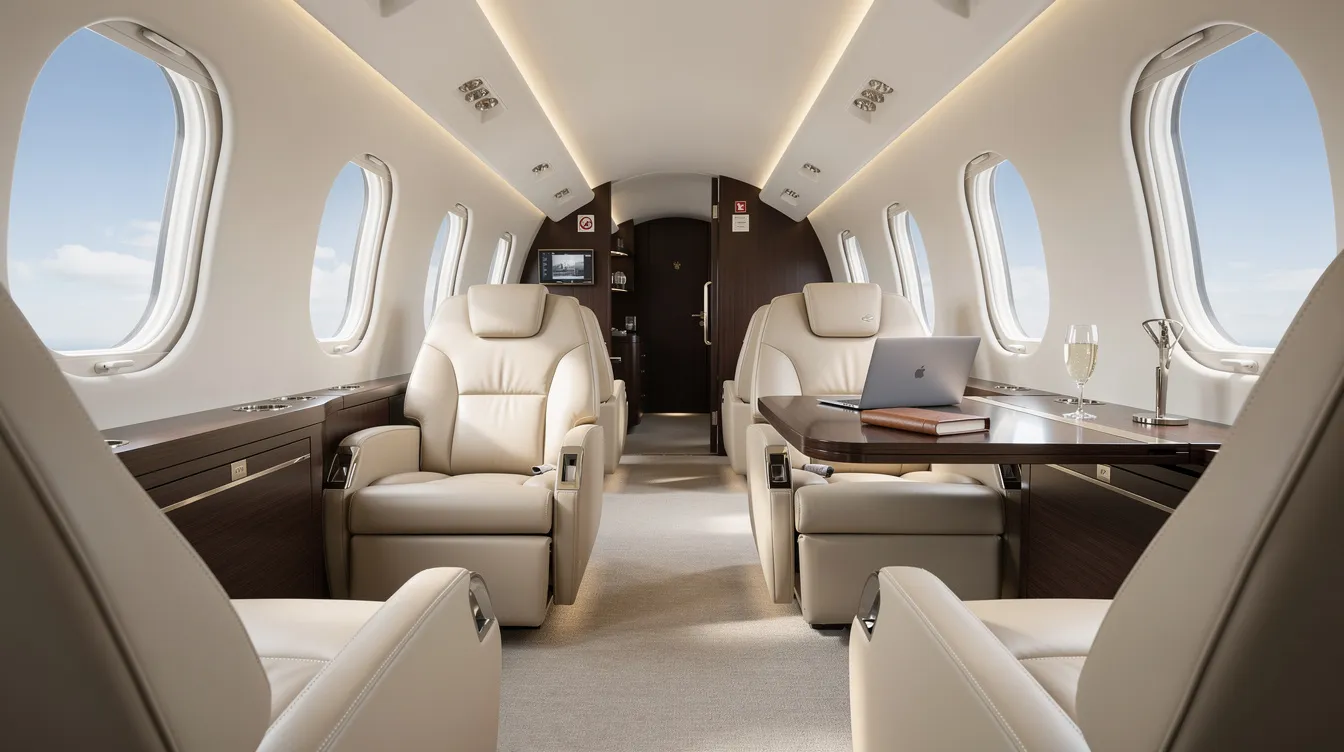
Reserve Fleet access is ideal for businesses not ready for fractional ownership but wanting predictable, on-demand aviation without the complexities of owning and operating a personal aircraft.
Ready to see how BlackJet can support your specific travel profile and compliance requirements? Visit FractionalJetOwnership.com to start the conversation.
Even if an aircraft is predominantly used for qualified business purposes, owners rarely deduct 100% of costs. Personal, commuting, or entertainment flights must be carved out, and the expenses allocable to those categories remain nondeductible. Meeting the predominant business use threshold enables bonus or accelerated depreciation on the business-use portion, but any entertainment and commuting use stays nondeductible under current law. Precise percentages depend on the actual mix of flights during the year and should be calculated with a tax professional using documented flight data.
A commercial flight ticket is a straightforward business expense when tied to a legitimate business purpose-fully deductible with a receipt. Private aircraft use is more complex: it requires detailed allocation of fixed and variable costs, potential income imputation for personal use, and special handling of entertainment and commuting legs. Many companies blend both approaches, using commercial carriers for routine trips and private or fractional aircraft for multi-stop, time-sensitive, or high-confidentiality missions where an airplane offers clear operational advantages.
Forming a separate entity like an LLC to hold title to an aircraft may help with ownership flexibility and liability coverage, but it does not by itself determine whether operating costs are deductible. Deductibility depends on whether the LLC's activity is genuinely engaged in for profit, whether flights have a documented business purpose, and how personal and entertainment use is treated under deduction disallowance rules. Dry-lease or time-sharing arrangements between an owner and their operating business require careful structuring to avoid regulatory issues, and owners should plan ahead for selling or transferring a fractional jet ownership share if their travel needs or tax situation change over time.
There is no single universal percentage, but heavy personal or entertainment use can make it difficult to qualify for bonus depreciation and may raise questions about whether the activity is a true business. Owners aiming to preserve tax benefits should keep a close eye on their ratio of qualified business to personal hours-especially during the first year the aircraft is placed in service. Review projected aircraft usage annually with your tax adviser and adjust policies or flight behavior if personal activities start to dominate. The pay-off for disciplined tracking is substantial.
Many of the same concepts-business purpose, characterizing flights, allocating expenses, and imputing income for personal use-still apply when flights are purchased through fractional programs or jet membership cards. With fractional programs like those offered by BlackJet, detailed invoices and flight summaries often make it easier to track and document business versus personal use compared with a personally managed aircraft. Clients using fractional or membership models should still maintain internal records tied to each trip's purpose and passenger list to support their tax positions.
Using a personal aircraft for business can dramatically improve efficiency, but the regulatory framework around characterizing flights, allocating expenses, and imputing income for personal use is intricate. Missteps-lost deductions, bonus depreciation recapture, and penalties-make proactive planning and professional guidance essential.
Fractional aircraft ownership and membership programs, particularly those managed by BlackJet Fractional Jet Ownership, offer a way to access business aviation benefits with clearer cost visibility and operational support. Whether you own your own aircraft or are exploring private jet sharing, the same core principles apply: document everything, classify every seat, and work with advisers who understand aviation tax law.
Consult your tax and legal advisers before changing how you operate or structure aircraft ownership, especially under post-TCJA rules and ongoing IRS scrutiny.
Ready to explore the smarter way to fly private? Visit FractionalJetOwnership.com to request a consultation and learn which BlackJet solution best fits your business travel and personal use profile.
