June 16, 2026
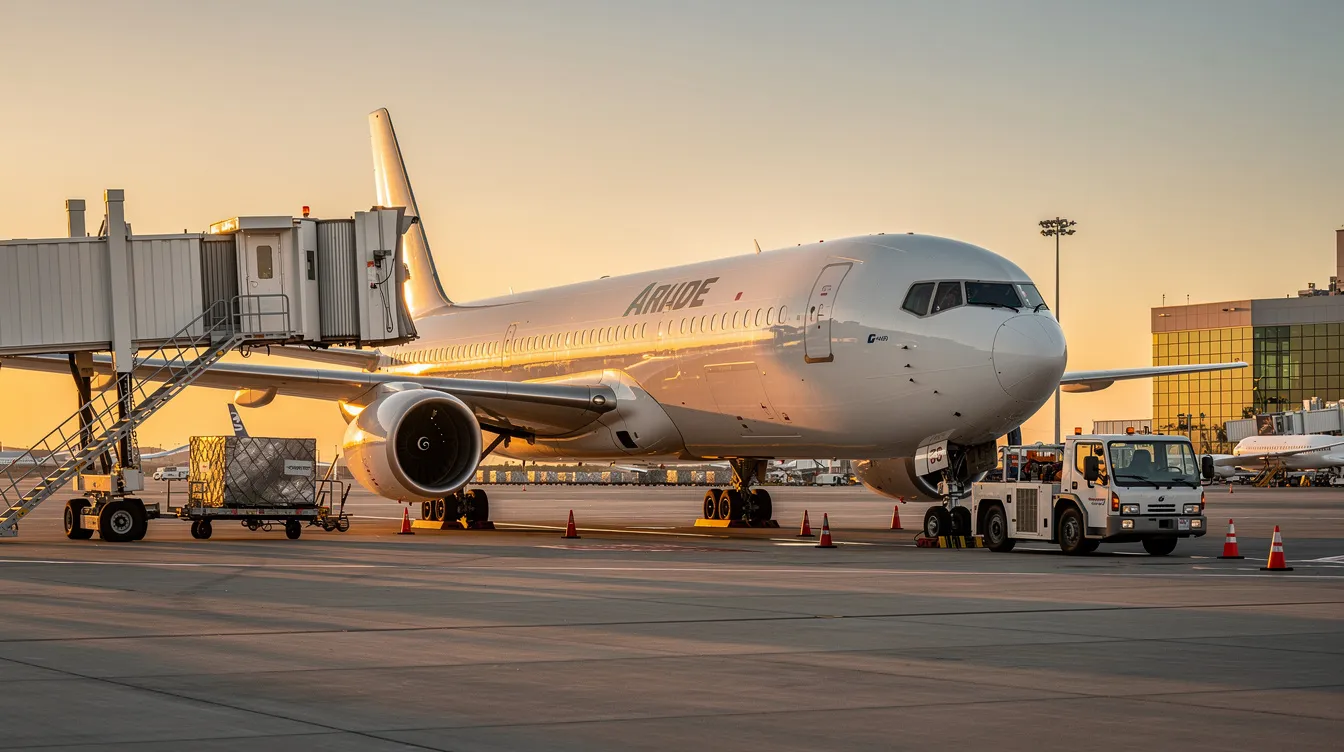
Prices for older Boeing 767-300ER models generally range from $8 million to $30 million, depending on age, cycles, and maintenance condition, while brand-new Boeing 767 variants can cost upwards of $170 million, and a new 767-300F freighter typically lists between $199 million and $220 million.
Total Boeing 767 private jet cost extends well beyond the sticker price, with operating costs ranging from $10,000 to $15,000 per flight hour for fuel, crew, maintenance, and positioning, especially on intercontinental routes.
VIP bizliner completions for a 767-200ER or 767-300ER can push all-in capital costs to $50 million–$80 million or more after interior design, engineering, and installation, making them practical only for governments, sports leagues, or ultra-high-usage corporate shuttles.
For most private flyers needing 25–150 hours per year, fractional ownership in super-midsize or large-cabin private jets through programs like BlackJet Fractional Jet Ownership is far more cost-efficient than owning a wide-body airliner.
This article breaks down current Boeing 767 market prices across different variants, explains operating economics, explores cargo conversions, and clarifies when a 767 makes sense versus smaller private jets and fractional jet ownership programs.
The Boeing 767 completed its first flight in 1981 and entered service with United Airlines in 1982 as Boeing's second wide-body airliner. Over four decades later, the aircraft has evolved from a core airline industry workhorse on long-haul routes into a highly sought-after platform for converted freighters, military tankers, and a small number of VIP private jets. Understanding the Boeing 767 price landscape is essential for anyone evaluating large-aircraft acquisition in today's market.
Rising demand for air cargo, driven by e-commerce growth and the retirement of older wide-bodies like the 747 and early A330s, has reshaped 767 pricing through 2024–2025 and into 2026. Meanwhile, a handful of governments, royal families, and large corporations continue to commission VIP bizliner conversions, keeping the 767 relevant in private aviation discussions. The market price for a Boeing 767 varies based on age and condition, making a professional appraisal essential before any purchase.
This article breaks down Boeing 767 price ranges for the 767-200/200ER, 767-300/300ER, 767-400ER, and converted freighters. It then translates those numbers into realistic private jet and corporate shuttle scenarios. BlackJet Fractional Jet Ownership serves as a trusted advisory resource throughout, helping clients evaluate whether a wide-body like the 767 or a fractional share in smaller private jets is the smarter economic choice.
Aircraft prices fluctuate with market cycles, maintenance status, and remaining airframe life. Below is a snapshot of realistic Boeing 767 price ranges based on recent public transaction data, appraisals from sources like Avialinker, and dealer listings, not inflated manufacturer list prices.
Boeing 767-200 and 767-200ER
These are the original model and the first extended range model of the 767 family. Production spanned the early 1980s through the early 1990s, meaning surviving airframes are among the oldest wide-body jetliner types still flying.
A pre-owned Boeing 767-200ER costs about $9 million in reasonable condition, though values can drop below $5 million for high-cycle airframes needing heavy overhaul.
The average purchase price of a new Boeing 767-200ER is $217 million, a figure that reflects the theoretical replacement cost rather than any active production line. Engines from Pratt & Whitney, General Electric, or Rolls-Royce further influence value depending on operator preference.
Typical roles today include niche government use, VIP operations, and a declining number of cargo conversions.
Boeing 767-300 and 767-300ER
The 767 300er is the workhorse of the family, dominating both remaining passenger service and the booming freighter conversion market. It is a stretched version of the original 767-200, offering greater capacity and range.
Prices for older Boeing 767-300ER models generally range from $8 million to $30 million. Mid-life examples (roughly 10 years old) with favorable maintenance histories and ETOPS documentation sit at the higher end, while 20-year-old airframes with high cycles can be acquired for under $15 million.
In 2019, the unit cost was $217.9 million for a 767-300ER at list price. A new Boeing 767-300F freighter typically lists between $199 million and $220 million today, reflecting current production focused on freighter and military variants.
Heavy maintenance checks significantly impact aircraft pricing. A 767-300ER approaching a D-check or landing gear overhaul may trade at a steep discount, while one with fresh heavy maintenance commands a premium. The number of pressurization cycles heavily dictates the remaining lifespan of the fuselage.
Boeing 767-400ER
The 767 400er is a newer, rarer extended range model with a stretched fuselage and updated cockpit featuring Rockwell Collins avionics. Only a limited number were built, primarily for Delta and Continental Airlines (now merged with United Airlines).
Market values are less transparent due to thin trading, but typically run 25–40% above comparable 767-300ER airframes of similar age and condition.
The aircraft's younger average age and limited supply keep residual values relatively strong.
New-Build Production
Boeing has not sold new 767 passenger variants for some time. Current new-build production mainly targets freighters and the KC-46 military tanker, with program pricing often exceeding $200 million per aircraft when outfitted to airline or military specifications. These numbers are directional-every serious buyer will require a professional appraisal, pre-purchase inspection, and lease or finance modeling before committing capital.
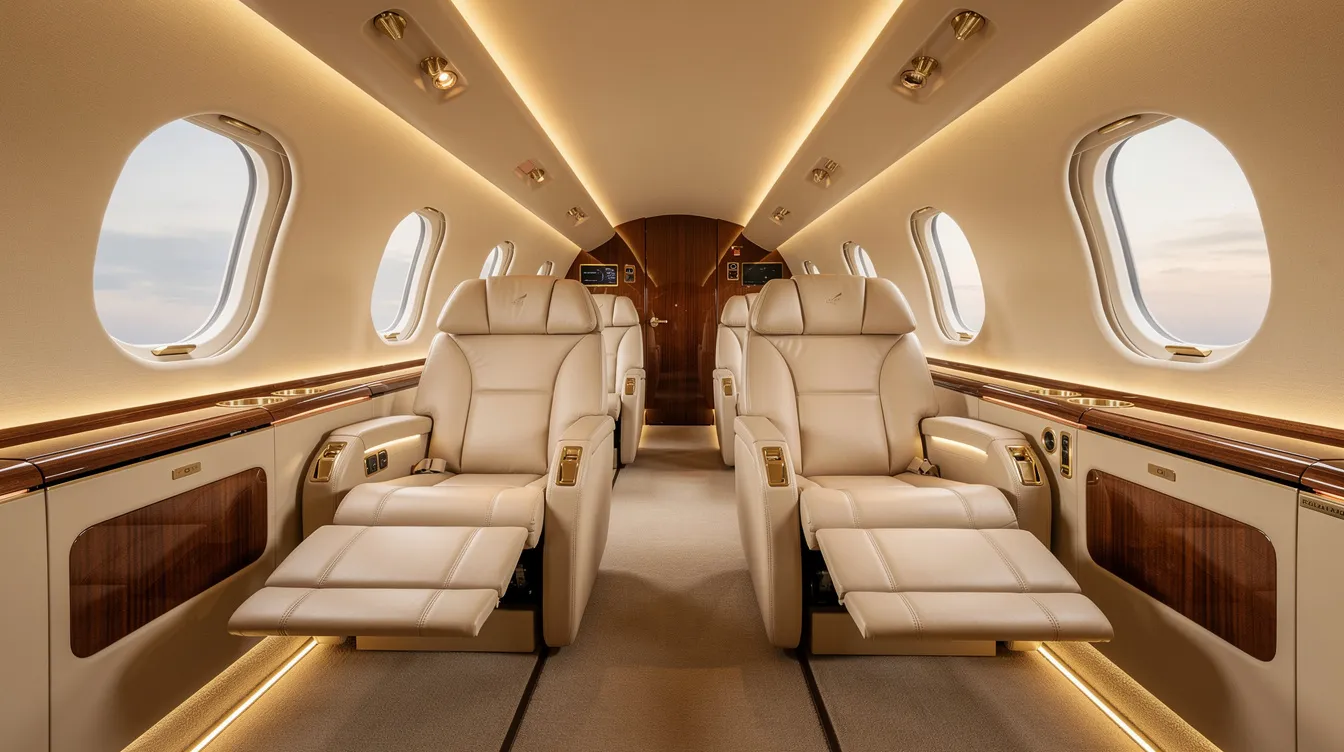
Only a small fraction of Boeing 767s are completed as VIP or bizliner aircraft. These private Boeing configurations are typically commissioned by heads of state, royal families, Fortune 100 corporate shuttles, or major sports organizations that need to move large groups in comfort across intercontinental routes.
Acquiring a green or used passenger 767-200ER or 767-300ER is only the starting point. The cost to outfit a Boeing 767 with luxury amenities can push prices into the $200 million range when starting from a new airframe. Even using a pre-owned donor aircraft, outfitting a Boeing 767 with luxury passenger accommodations can cost tens of millions on top of the acquisition price.
What VIP completion involves:
Full wide-body layouts with multiple lounges, a conference room, a dining room, bedrooms, and custom galleys
Advanced cabin management systems, satellite connectivity, and in-flight entertainment
Structural reinforcements, soundproofing, and avionics modernization
Regulatory re-certification for modified cabin layouts
Realistic VIP completion cost ranges run $25–50 million or more in interior design, engineering, and installation work spread over 18–30 months. High-spec VIP 767-200ER or 767-300ER aircraft, therefore, end up with all-in capital costs in the $50–80 million range, sometimes higher when combined with extensive structural refurbishments, range-enhancing modifications, and full avionics upgrades.
VIP refurbishments on previously operated 767 bizliners for second or third owners are typically less expensive but still run into many millions of dollars, especially when upgrading to current connectivity and cabin systems. These VIP layouts typically reduce seat capacity to 25–80 passengers in a twin aisle cabin, trading density for comfort, meeting facilities, and long-range mission capability measured in thousands of nautical miles.
BlackJet Fractional Jet Ownership typically advises private clients that such wide-body VIP ownership only makes sense for extremely high annual utilization or mission-critical government and corporate roles. For most executives, exploring the types of private jets and their prices reveals far more practical options, and a solid grasp of fractional jet ownership terminology and concepts helps them compare these alternatives confidently.
The most active pricing segment for the Boeing 767 today is converted freighters. The 767-300ER P2F (passenger-to-freighter) aircraft is a mainstay for carriers like FedEx, UPS Airlines, and Amazon Air. The price of a Boeing 767 is tied to the cargo market demand, and that demand continues to grow.
A conversion program involves structural modifications, including a large cargo door installation, reinforced floor, smoke detection systems, and cargo-handling equipment. According to market analysis from DataIntelo, the global 767-300ER P2F conversion market was valued at $4.2 billion in 2025 and is expected to reach $8.7 billion by 2034.
Indicative 2024–2025 conversion economics:
Donor aircraft acquisition: $8–18 million, depending on cycles, maintenance history, and documentation
Conversion work alone (Boeing BCF or IAI Bedek BDSF programs): $18–27 million, depending on scope
Converting a passenger 767 to a cargo model can cost upwards of $14 million, even for more basic programs
Total all-in investment: freighter conversions of Boeing 767s typically command between $30 million and $50 million
Conversion timeline: 4–6 months under normal conditions, longer with complex modifications
Payload capacity after conversion: approximately 45–52 metric tons with 24–27 main-deck pallet positions
Purpose-built 767-300F aircraft carry even higher capital values, and production-fresh freighters from Boeing's Everett line reflect the $199–220 million list price range.
Boeing 767-200 and 767-200ER freighters trade less frequently but can be attractive for niche operators at lower capital outlays, albeit with higher unit operating costs and more limited resale demand compared with 767-300ER freighters. Cargo demand on intercontinental routes, e-commerce growth, and nighttime express networks have all supported 767 converted freighter values.
Some governments and very large corporations may operate mixed-passenger and cargo configurations, but pure private jet users rarely require full freighter capability. The connection to private aviation is indirect: the robust freight market supports residual values for all 767 variants, which in turn influences the cost of acquiring donor airframes for VIP completion.
Aircraft price is only one piece of the equation. Ongoing operating costs per flight hour and per year are critical when evaluating the Boeing 767 as a private jet, corporate shuttle, or fractional-style shared asset.
Operating costs for a Boeing 767 can range from $10,000 to $15,000 per flight hour in standard airline or cargo configuration. For bespoke VIP operations with upgraded services and lower utilization, the figure climbs significantly higher. According to Simple Flying, here are the approximate 2025 block-hour costs by variant:
Variant | Block-Hour Cost (All-In) |
|---|---|
767-200 | ~$11,850 |
767-300ER | ~$12,520 |
767-400ER | ~$13,350 |
767-300F (factory freighter) | ~$12,440 |
Major cost buckets include: |
Fuel: Fuel is the largest variable expense in operating a Boeing 767. The Boeing 767-200 burns approximately 5,000 lbs of fuel per hour, while the 767-300ER and 767-400ER burn around 6,000–6,500 lbs/hour. Fuel costs account for 35-40% of operating expenses, translating to roughly $2,000–$2,200 per hour at recent Jet-A prices. Fuel consumption increases with payload and headwinds on long-range missions.
Crew: Crew costs for a Boeing 767 range from $160 to $210 per hour, covering pilots and, for VIP operations, dedicated cabin crew. Crew salaries for operating a Boeing 767 can range significantly depending on roles, seniority, and whether the operation includes a full-time flight attendant team.
Maintenance: Maintenance costs are estimated at $777 per hour for airframe upkeep, while engine maintenance costs about $1,237 per hour for the Boeing 767. These reserves accumulate toward scheduled overhauls, component replacements, and life-limited parts.
Landing, navigation, and insurance fees: Variable by airport and route, but meaningful for wide-body operations at major hubs.
Fixed annual costs:
Fixed annual ownership costs for a Boeing 767 range from $1.5 million to $2.5 million, covering hangar fees, crew training, regulatory compliance, insurance, and routine inspections. Heavy maintenance events-C-checks, D-checks, engine shop visits-can individually run into the millions and occur on multi-year cycles.
The economics of a Boeing 767 improve dramatically with high utilization. Airlines and cargo operators flying 1,500–3,000+ hours per year spread fixed costs effectively. Private users flying 100–300 hours annually face much higher effective per-hour costs, often making the aircraft uneconomical compared to chartering or understanding the cost of fractional jet ownership in smaller aircraft.
Performance characteristics-cruise speed, range in nautical miles, and payload-help explain why the Boeing 767 continues to command strong prices in certain niches despite its age.
Speed and cruise performance:
The 767 maintains a cruise speed around Mach 0.80, roughly 530–540 mph or 460–470 knots. This is comparable to many large-cabin private jets but slightly slower than the fastest new business jets, which can push Mach 0.85–0.90. The Boeing 767 can be equipped with various engine options affecting operational costs, including variants from GE, Pratt & Whitney, and Rolls-Royce, each offering different thrust and fuel burn profiles that influence performance on specific routes.
Range by variant:
767-200ER: Planning range around 5,200 nautical miles, with maximum range near 6,600 nm, well-suited for transatlantic and many transpacific segments
767-300ER: Approximately 5,200–5,700 nm with standard fuel and payload, covering approximately two-thirds of the world's intercontinental city pairs nonstop
767-400ER: Similar extended range capability with a higher maximum takeoff weight, allowing greater payload over distance
Mission examples:
Common intercontinental routes a 767 might serve include New York–London, Los Angeles–Honolulu, Atlanta–Paris, and transcontinental services linking U.S. coasts. These illustrate the aircraft's suitability for long-haul corporate shuttles and government missions. The aircraft can access more airports than larger wide-bodies like the 747, thanks to its relatively moderate wingspan and landing gear footprint.
The 767's wide-body cabin and cargo holds make it ideal for missions carrying 40–100+ passengers plus equipment and baggage, supporting sports teams, tour groups, and large corporate delegations. The ability to combine large groups and cargo on one aircraft can justify the higher Boeing 767 price versus operating multiple smaller jets or flying commercially in premium cabins-a calculation that makes sense only when passenger counts consistently demand wide-body capacity.
Each major extended range variant occupies a different niche in terms of price, capacity, and best-fit missions. Understanding the different variants helps buyers match the right aircraft to their specific operation.
767-200ER
The 767-200ER was the first extended range model in the family, historically popular for long, thin routes where passenger demand didn't justify a larger wide-body. Its maiden flight and first delivery in extended-range configuration gave airlines a twin-engine alternative for overwater operations that had previously required three- or four-engine aircraft.
Many examples are now 30+ years old, with lower acquisition prices but higher per-seat costs and a more limited role today. Current operators tend to be governments, VIP charter companies, or specialised freight outfits. These aircraft are attractive for buyers seeking a wide-body platform at the lowest entry price, but parts support and diminishing operator base are considerations.
767-300ER
The 767-300ER is the most prevalent variant across passenger, freighter, and converted freighter fleets. It dominates the P2F conversion pipeline and represents the sweet spot of capacity, range, and residual value. Mid-life passenger airframes trade in the mid- to high-teens of millions, while freighter demand keeps values firm. Its twin-aisle cabin in standard airline configuration seats 200–300 passengers, while VIP layouts drop that figure dramatically.
The 767-300ER is well-suited for operators who need a widebody range and payload without the infrastructure demands of larger aircraft. Its first year of commercial service was 1988, and the variant remained in production for decades, creating a deep pool of available airframes in recent years.
767-400ER
The 767-400ER features a stretched version of the 767-300 fuselage with raked wingtips and modernised cockpit systems. Its limited production, only 38 were built, means values are higher, and market liquidity is lower. Delta and the former Continental Airlines were the primary operators, and many remain in active commercial service on dense intercontinental routes.
Buyer alignment by variant:
Variant | Primary Buyer Profile | Typical Price Range |
|---|---|---|
767-200ER | Governments, VIP operators, niche freight | Under $10M (used) |
767-300ER | Cargo operators, airlines, VIP completion | $8–30M (used passenger); $30–50M (converted freighter) |
767-400ER | Airlines with dense trunk routes | Higher than comparable 300ER; limited availability |
Governments and VIP operators often prefer 767-200ER or early 300ERs for their lower acquisition cost, while cargo specialists focus on the 767-300ER. Airlines with dense route networks leverage the 767-400ER for its additional capacity. Understanding other variants and other aircraft in similar size categories is essential before committing to any single model.
Clients considering a Boeing 767 face a strategic choice: charter as needed, lease, or own the aircraft outright. Each path involves very different capital commitments and risk profiles.
Charter pricing:
Chartering a Boeing 767 typically costs between $18,000 and $25,000 per hour in VIP or high-density corporate configuration, varying by region, mission, and availability. The average hourly rental rate for a Boeing 767-200ER is $27,250 when fully configured for VIP service with premium amenities. These rates include crew, fuel, and basic services but can increase with positioning flights and international handling.
For context on how charter compares to ownership across aircraft types, this guide to fractional jet ownership vs charter provides a useful framework, and a detailed comparison of fractional jet ownership vs membership programs can further clarify which model best fits your usage profile.
When ownership works:
Ownership may be viable for airlines, logistics companies, national governments, or corporations running frequent intercontinental shuttles where the aircraft is utilised heavily and mission-critical reliability justifies the Boeing 767 price. Organisations flying 500+ hours annually on dedicated routes can begin to make the fixed-cost math work.
When charter is smarter:
For most private individuals or companies needing only occasional large-group travel, charter, or ACMI (aircraft, crew, maintenance, insurance) solutions provide flexibility without tying up capital in a depreciating wide-body asset. Understanding charter plane costs for 100 passengers helps frame the real economics.
There are very few true fractional ownership programs for wide-body aircraft like the 767. Instead, fractional and membership models in super-midsize and large-cabin private jets cover most executive travel, leaving only exceptional events to ad hoc 767 charter. BlackJet Fractional Jet Ownership can help clients model a hybrid approach: use fractional jet ownership for frequent executive travel and selectively charter a Boeing 767 or similar large aircraft for major events, roadshows, or team movements.
The Boeing 767 offers unmatched passenger capacity among aircraft commonly discussed in private aviation. But its acquisition and operating costs far exceed those of typical large-cabin private jets used in fractional ownership programs.
Capital cost comparison:
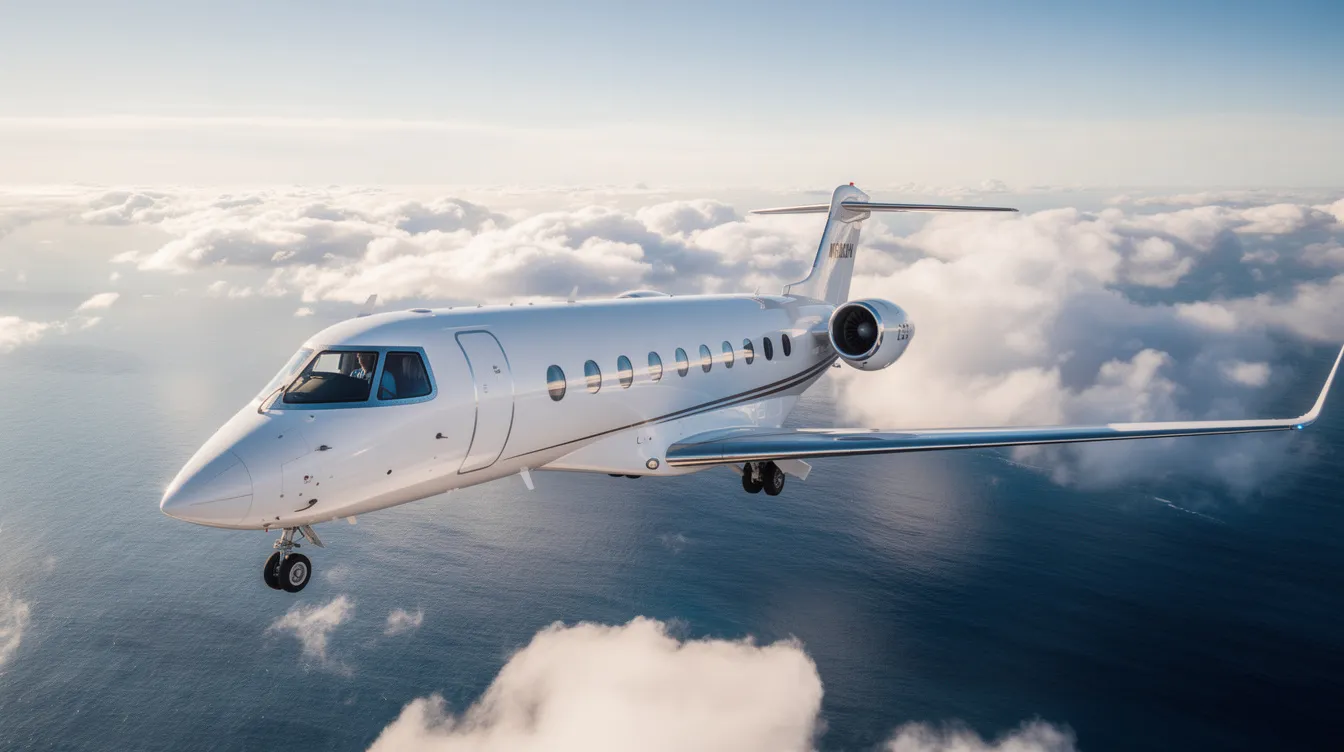
New or nearly new ultra-long-range business jets, such as the Gulfstream G700 or Bombardier Global 7500, are often priced in the $70–80 million range. That figure is similar to or below the total all-in cost of a fully outfitted VIP 767, yet these jets serve 10–19 passengers rather than 40–100+. A complete private jet price list reveals just how wide the range is across categories.
Operating cost comparison:
Per-hour operating costs for large private jets commonly fall in the $8,000–$12,000 range, substantially lower than a 767 VIP's all-in private operation rate. These jets still provide intercontinental range beyond 6,000 nautical miles and cruise speed near Mach 0.85-actually faster than the 767.
Fractional advantage:
Fractional ownership offers shared access to private jets without the full burden of direct ownership. Programs like those offered by BlackJet Fractional Jet Ownership through Equity Fleet and Reserve Fleet models allow clients to access high-performance private jets with a fraction of the capital outlay and shared fixed costs. Fractional ownership is ideal for high-frequency travellers needing 25–150 hours yearly, and structures such as 1/8th fractional jet ownership are often designed around roughly 100 hours of annual flying.
Practical scenario:
A business that flies 100–150 hours per year across transcontinental and transatlantic routes gains far more economic value from fractional aircraft ownership or a jet card-style membership on super-midsize or large-cabin jets than from purchasing a Boeing 767. Evaluating fractional jet ownership as an investment in this context often shows that a diversified fleet of smaller jets outperforms tying capital up in a single wide-body. The 767 becomes compelling only when the mission consistently demands wide-body capacity, large travelling delegations, heavy equipment, or frequent intercontinental routes where charter demand alone may justify dedicated wide-body capability. Unlike helicopters or light jets, the 767 is built for high-capacity, long-range missions that most private users simply don't need on a routine basis.
BlackJet Fractional Jet Ownership serves as a trusted advisor, helping clients evaluate aircraft economics across the full spectrum, from light jets up to wide-bodies like the Boeing 767. While the firm primarily sources smaller private jets for members, it regularly advises on when a wide-body charter or acquisition makes sense.
BlackJet Fractional Jet Ownership does not typically place Boeing 767s directly into its fractional Equity Fleet or Reserve Fleet. However, it regularly helps clients determine whether chartering a 767 or relying on fractional access to super-midsize or large-cabin jets offers better value. Equity Fleet provides fractional ownership with tax benefits, while Reserve Fleet allows flexible pay-as-you-go hours without ownership costs. Fractional ownership reduces hassle compared to full aircraft ownership, especially for clients who don't need wide-body capacity on every trip.
The company's advisory approach includes modelling per-seat and per-flight-hour economics for different aircraft types, including the Boeing 767, and comparing them to fractional ownership, jet card, and on-demand charter options. When an organisation needs to fly 200 people to a conference or move a professional sports team across the country, BlackJet can coordinate a hybrid strategy: executives travel by fractional jet while teams or equipment move via a chartered 767 or similar large aircraft.
Anyone considering large group movements or evaluating fleet strategy should consult BlackJet Fractional Jet Ownership for tailored cost and mission analysis. Understanding why fractional ownership makes sense is the first step toward building a smarter travel program, and digging into fractional jet ownership financing, costs, and benefits helps clarify the capital structure behind that decision.
For almost all private individuals, outright ownership of a Boeing 767 is impractical. Acquisition costs can exceed tens of millions of dollars, and fixed annual ownership costs for a Boeing 767 range from $1.5 million to $2.5 million before a single flight hour is logged. Adding fuel, crew, and maintenance brings annual budgets into the many millions, even at modest utilisation. Ownership typically only makes sense for governments, royal families, major sports leagues, or very large corporations with constant intercontinental travel needs and large groups on each flight. High-net-worth individuals generally achieve better value by combining fractional jet ownership or membership programs with occasional charter of a 767 when group size justifies it, often by enrolling in one of the best fractional jet ownership programs for smart investors. When performing security verification on potential aircraft purchases, buyers in this segment should engage professional appraisers and legal counsel experienced in wide-body transactions.
Many analysts expect passenger 767 operations to taper gradually through the late 2020s and 2030s as newer, more fuel-efficient types take over transcontinental services and long-haul routes. However, converted freighters and military variants such as the KC-46 tanker will likely keep flying well beyond that timeline, supported by ongoing investments in maintenance, avionics upgrades, and noise and emissions compliance. The 767 entered service more than four decades ago, and its continued production in freighter form verifies its enduring relevance. From a private buyer's perspective, residual value and regulatory outlook should be carefully modelled before purchasing an older 767, especially in regions with tightening environmental rules. Prospective owners also need to understand how different ownership structures, including fractional models, affect tax implications for fractional jet owners if they blend occasional 767 charter with equity in smaller jets. Any security verification of airworthiness records and compliance documentation should be completed before closing a transaction.
Traditional fractional aircraft ownership programs are almost always built around smaller private jets, from light jets up to large-cabin business jets, rather than wide-body airliner types like the 767. The scale of crew, maintenance, and infrastructure required for a Boeing 767 makes fractional structures more complex and economically challenging for typical private clients. Some custom corporate or governmental arrangements may resemble fractional or pooled usage of a single 767, but these are bespoke deals rather than standard retail fractional programs like those offered by BlackJet Fractional Jet Ownership for smaller jets. In those cases, referencing an aircraft fractional ownership sample contract can help stakeholders understand how rights and obligations might be structured. A security service reviewing any such arrangement would need to ensure compliance with Part 91 or Part 135 regulations, depending on the operating model.
For groups of 10–19 passengers, large-cabin private jets such as the Gulfstream G650 or G700 and Bombardier Global series provide non-stop intercontinental range at lower total cost than a 767, with cruise speed at or above Mach 0.85. For larger groups of 30–70 travellers, narrow-body airliner conversions-such as a Boeing 737 or Airbus A321 in VIP or high-density layouts-often strike a better cost balance than a wide-body 767 while still supporting many intercontinental routes. These other aircraft avoid the overhead associated with wide-body operations while still offering attractive range and comfort, especially when accessed through floating fleet options in fractional ownership that provide flexible aircraft selection. When researching aircraft listings online, buyers may encounter sites performing security verification to protect against malicious bots and automated scrapers. If your browser shows a message like respond ray id or verification successful, simply wait a moment, and the listing data will load. Consulting with BlackJet Fractional Jet Ownership to compare total trip costs across these alternative aircraft types based on typical routes and passenger counts is a practical next step.
As fuel prices rise, operators place a premium on fuel-efficient aircraft. The 767, while efficient for its generation, typically has higher fuel consumption per block hour than newer designs such as the Boeing 787 or Airbus A330neo. Higher fuel costs can exert downward pressure on the Boeing 767's market value for passenger service while supporting values for freighter-configured aircraft if cargo yields remain strong. Private buyers should factor in conservative fuel price assumptions when modelling 767 operating costs, as fuel can easily represent 35–40% or more of total hourly expenses for long intercontinental missions. The aircraft's performance remains competitive for its class, but buyers in the airline industry increasingly favour newer models for new route launches, which gradually shifts demand away from 767 passenger variants and toward other aircraft in the production pipeline.
The Boeing 767 price reflects its unique role as a wide-body workhorse for airlines, freight operators, and a select group of VIP private jet owners. From the older 767-200ER available for under $10 million to a factory-fresh 767-300F listing near $220 million, the spectrum is enormous. Operating costs compound the picture, with all-in hourly rates easily exceeding $12,000–$25,000 depending on configuration and utilisation.
While the 767 offers impressive cruise speed, intercontinental range in the 5,000–6,600 nautical miles band, and wide-body cabin comfort, it is rarely the most economical solution for private clients flying fewer than several hundred hours per year. For anyone researching Boeing 767 prices as part of a broader private aviation strategy, the math almost always points toward fractional jet ownership or membership programs in super-midsize and large-cabin jets, reserving the 767 for those rare occasions when only a wide-body will do.
Ready to explore the smarter way to fly private? Visit FractionalJetOwnership.com to learn how BlackJet Fractional Jet Ownership structures Equity Fleet and Reserve Fleet solutions that can be complemented with occasional Boeing 767 charter when needed.
