July 9, 2026
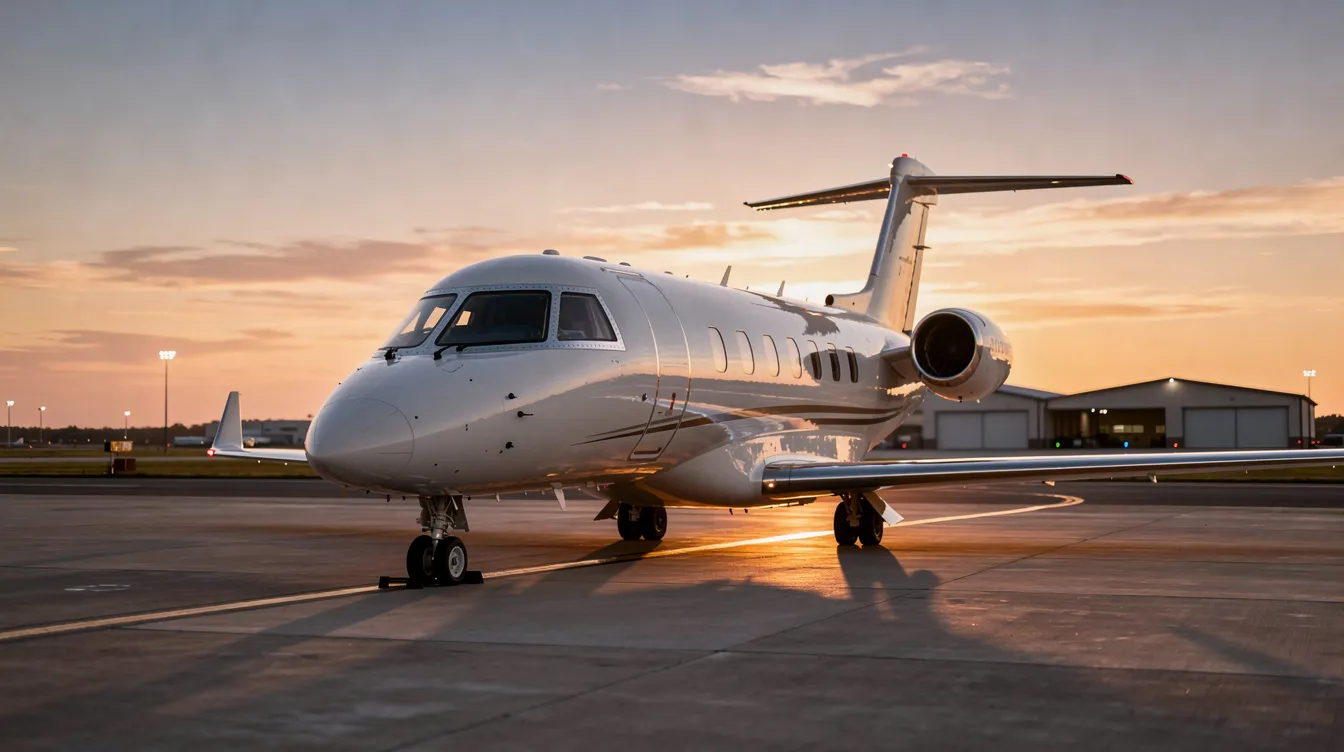
Embraer is a Brazil-based global aerospace company with one of the industry’s most versatile aircraft portfolios, spanning regional airliners, executive jets, military aircraft, and agricultural planes. For high-frequency travelers, corporations, and private flyers weighing 25 to 150 hours a year, understanding where Embraer fits in private aviation can make it easier to compare full ownership, charter, membership programs, and fractional jet ownership.
This guide looks at Embraer’s corporate background, its commercial and executive jet families, its role in fractional ownership, and the innovation, sustainability, safety, and operating factors that shape real-world aircraft decisions. That matters if you want predictable, cost-effective private flying, because Embraer’s executive jets are a popular fit for travelers seeking reliable performance and efficient access through tailored programs such as BlackJet Fractional Jet Ownership.
Embraer is a Brazil-based global aerospace company with leading positions in commercial aircraft, executive jets, defense and security, and agricultural aviation. Headquartered in São José dos Campos, São Paulo, the company was founded in 1969 and has evolved into one of the world's top manufacturers in the 80–150 seat commercial aircraft segment. Embraer is the third-largest producer of civil aircraft worldwide.
These figures show Embraer's scale and reach in the aviation industry:
More than 1,700 Embraer planes are in operation worldwide
Over 100 airline clients across 60 countries
Aircraft operate in over 100 countries, carrying over 150 million passengers annually
Over 1,000 executive jets delivered to clients in 70 countries
Embraer leads the sub-150-seat jetliner market
Embraer competes with Airbus and Boeing in the regional jet space, and with other manufacturers in business aviation. Its emphasis on efficiency and right-sized aircraft gives it a distinct edge. For private aviation users and fractional jet owners, Embraer's reliability, operating economics, and global service network make its executive jets particularly attractive platforms.
Embraer was created as part of Brazil's national aerospace strategy to strengthen sovereignty and build domestic aviation capacity. Embraer was founded in 1969 by Ozires Silva, a former Brazilian Air Force major and engineer, with operations linked to the aerospace technology center in São José dos Campos.
Early aircraft programs reflected the company's military and regional transport focus. The Bandeirante EMB 110 - a 19-seat turboprop - was certified in 1973 for regional transport. The EMB-312 Tucano served as a military trainer, establishing Embraer's presence in defense markets. Embraer has been a major Brazilian exporter since its founding.
Key corporate milestones shaped the company's trajectory. Embraer was privatized on December 7, 1994, though the Brazilian government retained a "golden share" with veto rights on strategic decisions. In 2000, Embraer conducted initial public offerings on both the NYSE and BM&F Bovespa, opening access to international capital markets. These defense and regional aviation roots cultivated the engineering excellence and systems reliability that later powered Embraer's success in commercial aviation and executive jets.
Embraer's multi-segment structure allows it to balance commercial aviation, executive aviation, defense and security, and agricultural aviation. The company specializes in commercial aviation, executive jets, and defense and security, with cross-segment engineering that supports innovation and cost-sharing.
Commercial Aviation - Regional and short-to-medium-haul airliners (ERJ and E-Jets families)
Executive Aviation - Business jets including Phenom, Praetor, and Lineage models
Defense & Security - Military trainers, transport aircraft, surveillance platforms; Embraer operates in defense for over 50 armed forces worldwide
Services & Agricultural Aviation - After-sales support, training, and the Ipanema agricultural airplane line
The Ipanema line deserves a special note: its ethanol-powered version was certified in 2004, making it one of the first general aviation aircraft designed for alternative fuel. Cross-segment engineering - shared aerodynamics, avionics, and manufacturing knowledge - helps Embraer develop solutions more efficiently across all product lines.

Embraer is a leader in regional and small narrowbody commercial jets. The ERJ family includes the ERJ 135, ERJ 140, and ERJ 145 regional jets - seating 37–50 passengers - launched in the 1990s and widely used by regional airlines across North and South America.
The E-Jet family includes E170, E175, E190, and E195 regional jets, with the E170 certified in 2004. These aircraft cover the 70–124 seat range and are particularly popular among regional airlines operating as affiliates of carriers like American Airlines, Delta, and United. Embraer has a client portfolio of over 100 airlines.
The E-Jets E2 family features advanced, fuel-efficient commercial jets powered by Pratt & Whitney PW1000G geared turbofans. The E190-E2 earned certification in 2018, and the E195-E2 positions as a competitor to the Airbus A220 in the 120–150 seat market. Embraer also aims to develop a new family of turboprop regional airliners, signaling continued commitment to the aerospace sector.
These E-Jets serve routes that many private aviation clients also travel - making Embraer's commercial and executive platforms two sides of the same coin.
Embraer's manufacturing base centers on Brazil, with its São José dos Campos headquarters and main facility supported by plants in Botucatu, Gavião Peixoto, and Eugênio de Melo. International offices in Fort Lauderdale, Amsterdam, Beijing, and Singapore expand its global footprint.
Joint ventures are central to Embraer's strategy in new markets. In 2026, Embraer and India's Adani Defence & Aerospace signed a memorandum of understanding to create an E-175 final assembly line in India, targeting the country's regional transport needs. Embraer projects demand for at least 500 aircraft in the 80–146 seat segment in India over the next two decades. These partnerships illustrate how Embraer continues to expand and deepen its presence in major aviation markets worldwide.
Embraer Executive Jets was established in 2005 to formally expand the company into business jets and executive aviation. The Legacy 600 entered service in 2002 as a business jet based on the ERJ 145 platform, predating the dedicated division. Embraer produces light to midsize business jets and has delivered over 1,000 executive jets globally.
The current lineup includes standout models for private aviation:
Phenom 100EV - Entry-level light jet, ideal for short hops; the Phenom 100 was introduced in 2008 as an air taxi
Phenom 300E - One of the best-selling light jets in the world, with strong dispatch reliability and resale values; Embraer produces the Phenom 100EV and 300E light jets
Praetor 500 - Midsize, flat-floor cabin, fly-by-wire; transcontinental range
Praetor 600 - Super-midsize with 3,500+ nm range, enabling some transatlantic missions
Lineage 1000 - Ultra-large cabin derived from the E190, announced in 2006, with approximately 4,200 nm range
For fractional jet ownership and jet membership programs, the Phenom 300E and Praetor series are especially compelling: they deliver operating cost efficiency, modern cockpit avionics, and cabin comfort that rival larger platforms at a lower cost per flight hour.
Embraer executive jets are commonly found in fractional aircraft ownership, jet card programs, and reserve fleet models across the United States and globally. For high-net-worth individuals and corporations flying 25–150 hours per year, fractional jet ownership offers a middle path between full ownership's fixed cost burden and ad hoc charter's unpredictability.
Advantages of Embraer aircraft for fractional programs include:
Lower direct operating cost per hour versus competing heavy jets
Fuel efficiency and longer maintenance intervals reducing downtime
Strong residual values in the pre-owned market
Dispatch reliability that keeps schedules predictable
A provider like BlackJet Fractional Jet Ownership can structure Equity Fleet shares around aircraft such as the Phenom 300E or Praetor 500, optimizing tax benefits and guaranteed access. Mission matching matters - a Phenom 300E handles New York–Florida or Chicago–Dallas efficiently for small groups, while a Praetor 600 covers New York–Denver or LA–Chicago nonstop with a larger cabin. Understanding the total cost of fractional jet ownership starts with matching the airplane to the mission.
Innovation is part of Embraer's daily operations and culture. The company invests nearly 10% of revenues in R&D annually and in upgrading industrial components and processes. Almost half of Embraer's revenue comes from recent innovations - products or improvements introduced within the previous five years.
Embraer holds around 800 patents globally as of 2023, built through active use of WIPO's PCT system after shifting from a trade-secret-focused strategy pre-2007. Embraer collaborates with universities for cutting-edge R&D, investing in new technologies across fly-by-wire systems, wing engineering, cabin design, and digital predictive maintenance tools. These advances directly benefit both commercial and executive fleets, reducing operating costs and improving the experience for private aviation users.
Embraer is committed to developing sustainable aviation technologies across all segments. The ethanol-powered Ipanema, certified in 2004, was among the first prototype production aircraft designed for alternative fuel in general aviation.
The E-Jets E2 family is certified for SAF blends up to 50%, and in the same year, it flew a test with 100% sustainable aviation fuel (June 2022). Embraer's sustainability agenda also extends to urban air mobility: Eve Air Mobility is Embraer's subsidiary focused on eVTOL aircraft development. Embraer collaborates with other companies for military and urban air mobility projects, staying at the forefront of low-carbon flight.
For private aviation clients who increasingly value sustainability, choosing newer Embraer aircraft through fractional ownership can reduce per-passenger emissions relative to older jets or half-empty large-cabin planes, aligning with broader decarbonization priorities across the aviation industry. As CORSIA and corporate ESG requirements tighten, flying on modern, efficient platforms becomes both a practical and reputational advantage.
Embraer is a key supplier to air forces around the world, not just a commercial aviation manufacturer. Embraer manufactures aircraft for military aviation,n including the KC-390 and A-29 Super Tucano. The C-390 Millennium is a military transport aircraft that entered Brazilian Air Force service in 2019 and has been exported to several countries.
The STOUT light military transport program, launched in 2019, aims to replace older EMB-110/120 aircraft in the Brazilian fleet. Specialized variants of commercial platforms serve VIP and government transport - the E190-based VC-2 is used by the Brazilian Air Force for official operations. This defense work feeds directly back into the ruggedness, avionics, and systems reliability that also benefit Embraer's commercial and executive fleets.
Embraer has a history of partnerships with global aerospace companies. In 2018, Boeing agreed to acquire 80% of Embraer's commercial aviation division - a firm order of strategic intent valued at approximately US$5.26 billion - positioned as a response to Airbus's acquisition of the Bombardier CSeries (now A220). A separate 2019 joint venture aimed to promote the C-390 Millennium in military markets.
Boeing cancelled the commercial partnership in 2020 amid COVID-19, 737 MAX challenges, and a global commercial aviation downturn. The financial impact on Embraer was significant, but the company pivoted back to independence and pursued local partnerships such as the Adani deal in India. For airlines and private operators, these major OEM alliances and their outcomes affect fleet choices, long-term support, and the broader industry landscape.
Like all major aircraft families produced over decades, Embraer's E-Jets have experienced incidents that drive design and training improvements. Around two dozen notable incidents have occurred since the E-Jet's entry into service, with fatal accidents being relatively rare. Non-fatal examples include runway overruns and the well-known Aeroméxico Connect Flight 2431 in 2018, where all 103 people onboard survived despite a hull loss.
Embraer's support network - service centers in the United States, Brazil, Europe, and Asia - along with digital maintenance tools, helps operators manage safety and reliability. For private jet users and fractional owners, Embraer's safety performance is in line with other major OEMs; operational safety is most strongly influenced by operator standards, maintenance quality, and crew training.
Embraer supports operators with extensive technical documentation and regulatory resources:
MMEL (Master Minimum Equipment List) - Defines required operational equipment for safe flight
Airport Planning Manuals - Firefighting information, ground operations documentation
Predictive Maintenance Tools - Integrated in E2 aircraft, reducing unscheduled downtime
Compliance Frameworks - Aligned with FAA, EASA, ANAC, and other authorities
For fractional aircraft ownership programs, robust OEM support reduces cost risk, improves dispatch reliability, and strengthens insurance and valuation - all critical factors when management companies operate Embraer fleets on behalf of share owners.
Embraer's role in both scheduled commercial aviation and private executive jets gives it unique insight into the travel choices facing business owners. A typical E-Jet commercial flight carries 80–120 passengers on a regional route with low per-seat cost but limited schedule control. A Phenom 300E or Praetor private jet mission offers total schedule flexibility, airport access, and privacy - at a higher per-hour cost.
Embraer's efficient executive jets can offer a lower hourly cost basis than some competing business jets, making them well-suited to fractional jet ownership and jet card programs. Some travelers blend both worlds - flying commercially on Embraer E-Jets for certain legs and privately on Embraer executive jets for others, coordinated through a provider like BlackJet Fractional Jet Ownership.
For 25–150 hours per year of private flying, fractional aircraft ownership often strikes a better balance of cost, tax treatment, and access than full ownership or ad-hoc charter.
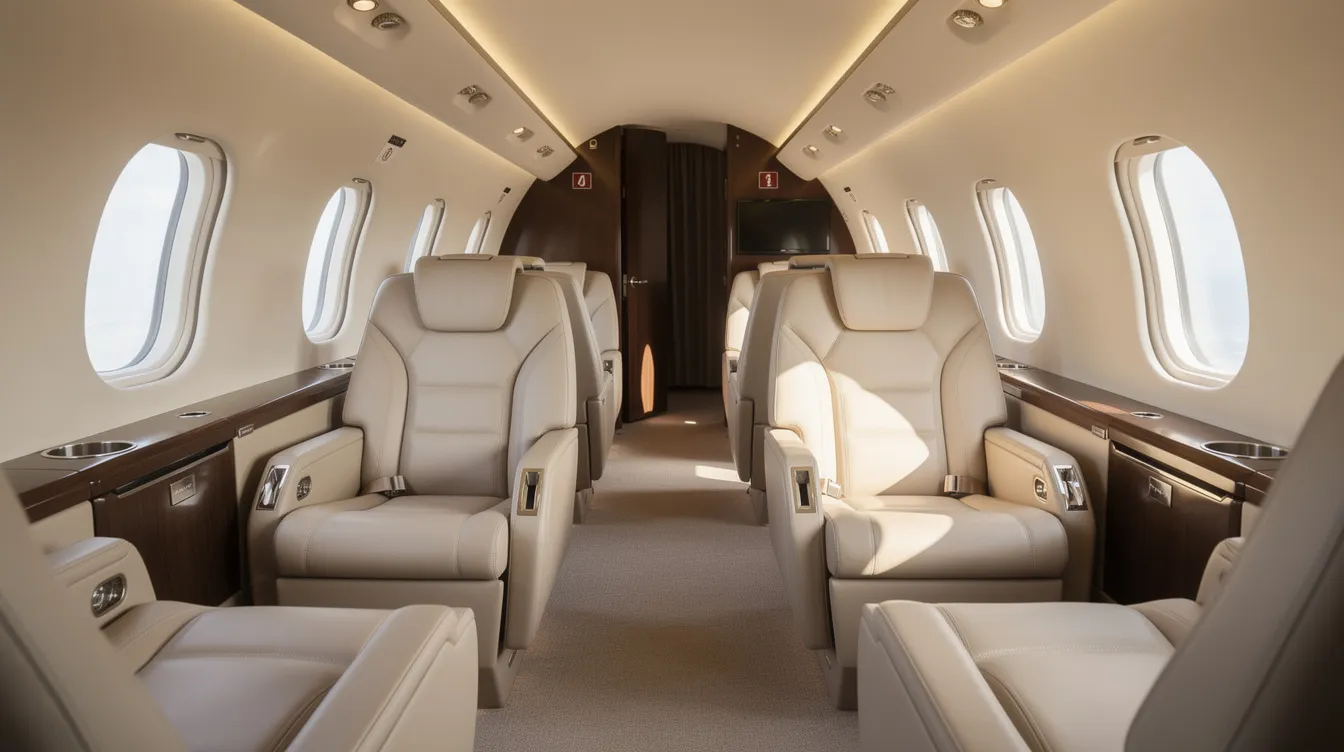
Embraer's reputation for innovation, reliability, and efficiency spans both commercial aircraft and executive jets. For travelers evaluating private aviation, the question isn't just which aircraft - it's which access model.
BlackJet Fractional Jet Ownership helps clients evaluate whether Embraer executive jets match their mission profile, typical passenger loads, and route patterns:
Equity Fleet - Purchase a fractional share of a specific aircraft (e.g., Phenom 300E or Praetor 500), with guaranteed hours, tax depreciation benefits, and residual value
Reserve Fleet - Pay-as-you-go access without ownership commitment, ideal for travelers flying fewer than 40–50 hours per year
Mission Matching - BlackJet's team analyzes your flight history to recommend the right aircraft size and share structure.
Whether you're a seasoned private flyer or exploring private aviation for the first time, the right Embraer platform - paired with the right ownership structure - can transform how you travel.
Ready to explore the smarter way to fly private? Visit FractionalJetOwnership.com to schedule a consultation, compare aircraft options, and discover tailored fractional jet ownership solutions built around Embraer's world-class fleet.
