July 9, 2026
Empty leg flights offer a unique opportunity to fly private at a fraction of standard charter rates. This guide is for private aviation travelers, corporate flyers, and anyone interested in saving on private jet travel. Understanding empty leg flights can help you access private jet experiences at a fraction of the usual cost. For travelers willing to adapt their schedules, these repositioning segments can unlock savings of up to 75% on costs that would otherwise run into the tens of thousands. This guide breaks down how empty legs work, where to find them, and how BlackJet Fractional Jet Ownership helps clients use them strategically alongside guaranteed aircraft access.
Empty leg flights are one-way flights without passengers, occurring when jets reposition for their next charter.
An empty leg flight is a one-way repositioning trip that a private jet must fly without passengers, typically before or after a booked charter or owner leg. Because the aircraft needs to get from Point A to Point B regardless, operators sell these segments at a significant discount rather than absorbing the full cost of fuel, crew, and handling. Industry professionals also refer to them as deadhead flights, ferry flight segments, or positioning legs.
Nearly 30% of all private flights are empty legs. The NBAA estimates that repositioning flights account for roughly 30–40% of all private jet flight hours in the United States, while the figure reaches approximately 40% in Europe. That translates to thousands of discounted opportunities each month across popular routes.
On an empty-leg private flight, the traveler typically has access to the entire aircraft rather than purchasing a single seat. Some charter operators experiment with by-the-seat models on high-volume corridors, but whole-aircraft access remains the standard. This stands in contrast to conventional private jet charter, where clients pay full market rates for complete route flexibility, or jet card programs that offer prepaid hours at fixed rates. Empty leg flights are opportunistic by nature. They work when schedules align but cannot guarantee availability. That is precisely why BlackJet Fractional Jet Ownership helps clients layer empty legs on top of Reserve Fleet and Equity Fleet access, creating a balanced approach that captures lower prices without sacrificing reliability.
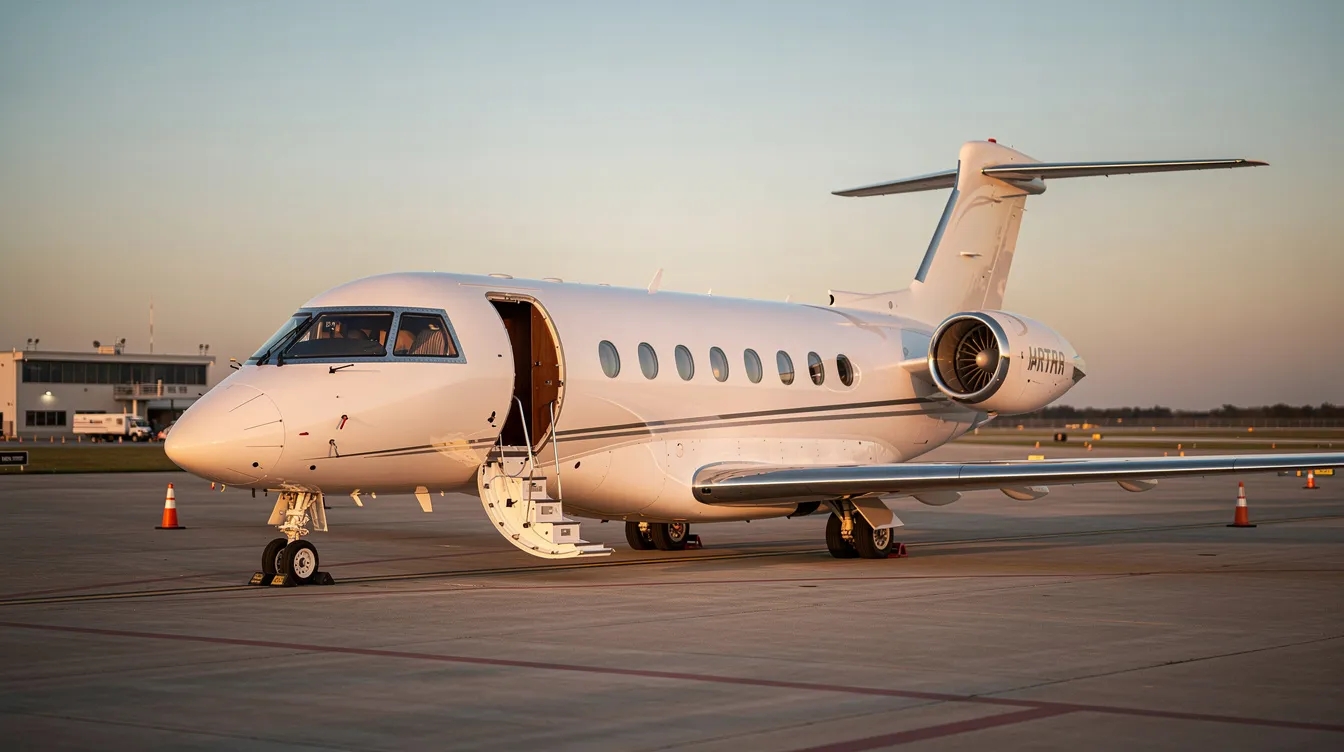
Empty legs exist because private aircraft must reposition between missions. Here is a typical scenario:
Flight A is sold: A client charters a midsize jet from New York (Teterboro) to Miami.
Next mission is elsewhere: The following morning, the same aircraft must be in Dallas for Client B.
The repositioning sector becomes an empty leg: The Miami-to-Dallas segment has no paying passenger, so the operator lists it at a reduced cost.
Operators sell empty leg flights at a discount to offset costs since the flight would occur regardless of passenger presence. The main reasons these flights exist include returning to home base, moving for scheduled maintenance, or optimizing aircraft utilization across a charter company's fleet.
Routes, departure times, and aircraft type on an empty leg journey are already fixed by the original customer's itinerary. A traveler cannot easily shift airports or timing without converting the segment to a full-price charter. These flights often become available within 24 to 72 hours of departure, and some appear same-day as last-minute schedule changes solidify. BlackJet's operations team continuously monitors charter operators' schedules and proprietary networks to surface relevant legs for clients on their preferred routes.
Available empty-leg flights concentrate along corridors where private aviation traffic is densest. These flights are often available on short notice, particularly near major hubs.
High-traffic U.S. corridors: New York–South Florida, Los Angeles–Las Vegas, Dallas–Aspen, and Miami–Teterboro rank among the most popular routes for repositioning flights.
European corridors: London–Nice, Paris–Geneva, Geneva–Ibiza, and routes along the Italian Riviera generate frequent empty leg deals during peak leisure seasons.
Hub proximity: Passengers based near New York, Los Angeles, Chicago, Dallas, or Miami have the most frequent access to attractive legs.
Private airports: Secondary fields like Teterboro (instead of JFK) and Van Nuys (instead of LAX) see the highest empty leg volume because they are primary bases for charter operators.
Seasonality: Availability spikes around winter holidays, ski season (December–March for Aspen and Jackson Hole), spring break, and June–August summer travel.
Event-driven spikes: The Super Bowl, Art Basel Miami Beach, CES in Las Vegas, and Formula 1 races create temporary surges of empty legs inbound and outbound from host cities.
BlackJet uses historical flight data and member travel patterns to anticipate peak empty leg opportunities on the routes clients fly most often.
Empty leg flights function as a tactical way to reduce private air travel spend while still enjoying the core perks of flying privately. When paired with fractional jet ownership or a Reserve Fleet solution—and an understanding of essential fractional jet ownership terms—they can meaningfully lower effective hourly rates across a client's annual flying profile. Corporations can use them for non-critical trips, team retreats, and staff repositioning, while reserving guaranteed aircraft access for mission-critical travel.
Average empty leg flights cost up to 75% less than charters. Typical private jet flights can cost $20,000 or more for a one-way segment, while platforms like SkyAccess offer empty leg flights for as low as $3,800 on select routes. Flying an empty leg can be cheaper than business class tickets on certain commercial flight routes.
Concrete comparisons illustrate the range:
A light jet New York–Miami charter might cost $14,000–$18,000. The same route as an empty leg: $5,000–$8,000.
A London–Nice leg drops from roughly €14,000–€20,000 to €5,000–€9,000.
Charter operators use several pricing models for empty legs: a flat rate for the entire aircraft, a discounted hourly rate, or inclusive fixed-sector pricing on common routes. Because the aircraft was already scheduled to fly empty, most charter operators prefer some revenue over none. BlackJet models these savings against a client's projected 25–150 annual flight hours to demonstrate how empty legs reduce average cost per hour alongside fractional ownership, drawing on a detailed view of the total cost of fractional jet ownership.
Empty leg passengers receive the same aircraft, crew, and luxury experience as a full-price private charter. Passengers can bypass crowded commercial terminals when taking empty leg flights, departing instead from private terminals (FBOs) at airports like Teterboro, Van Nuys, or Farnborough. Typical show-up time is 15–20 minutes before departure, and in most cases, clients get the entire cabin to themselves or their invited guests-ideal for confidential calls or quiet downtime.
Convenience extends to direct routing to smaller regional airports closer to final destinations, customized catering if arranged in advance, and the ability to bring food, travel with pets, or carry specialized baggage subject to aircraft limits. BlackJet coordinates ground transfers and onboard details so the door-to-door premium experience feels seamless even on a discounted leg.
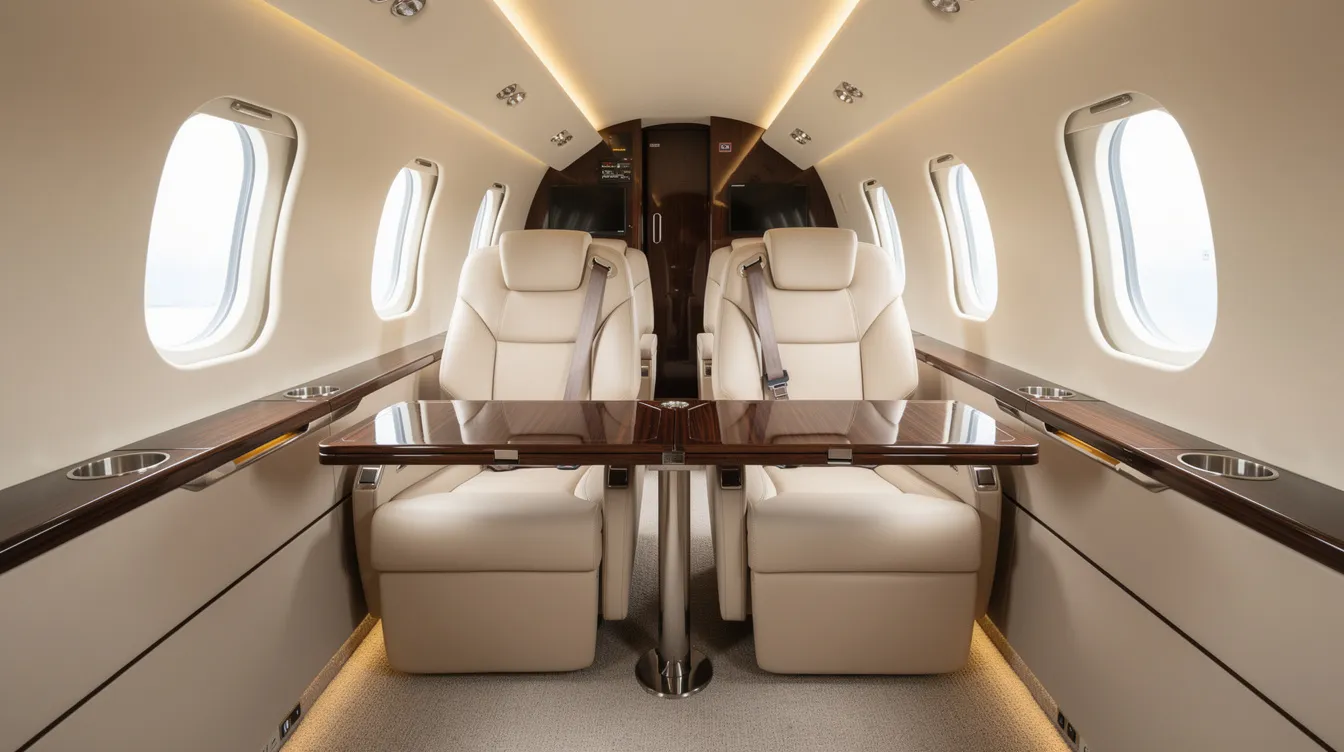
Flying an empty leg does not mean compromising on quality. Empty legs are flown on the same aircraft used for owner and charter missions, from very light jets to large-cabin Gulfstreams and Globals. Cabin features include fully reclining seats, club configurations, Wi-Fi on many aircraft types, and quiet cabins suited for productivity or rest.
Some empty flight segments might offer simplified catering unless the client requests enhancements. Clients considering fractional ownership can use empty legs to compare aircraft types and cabin sizes-moving from a light jet to a super-mid cabin, for example-before committing to a long-term share. BlackJet works only with vetted aircraft management companies, ensuring maintenance and service standards remain consistent.
When passengers board a flight that would have operated empty, the net environmental impact per traveler drops compared with scheduling an additional dedicated private flight. Many operators now invest in sustainable aviation fuel (SAF) and carbon offset programs. Better matching of empty legs with travelers contributes to more efficient fleet utilization across the private jet market. BlackJet can help environmentally conscious clients combine fractional ownership with selective empty leg use and carbon offset partnerships.
Empty legs are attractive in price but are not a complete solution for business-critical or time-sensitive private jet travel. Empty leg flights are typically one-way and non-customizable, and route coverage on certain days can be sparse. For frequent flyers who must be in a specific city at a fixed time, fractional aircraft ownership or guaranteed access programs are usually more appropriate than chasing leg deals, especially when you evaluate fractional jet ownership as an investment.
Empty leg flights are one-way flights without passengers on the outbound or inbound positioning segment. Travelers must arrange separate transport for the return journey-whether via a commercial flight, another empty leg, or a regular charter at full price. Empty leg flights are usually non-negotiable on timing and require travelers to adapt to pre-scheduled routes.
A leg listed from Fort Lauderdale to White Plains at 3:00 p.m. cannot easily shift to Miami–Teterboro at 6:00 p.m. without full repricing.
The spontaneous nature of availability means empty legs work best for flexible leisure travel or extended stays.
Departure date, destination, and flight time are dictated by the original paying customer's schedule and crew duty limits.
Empty leg availability is tied directly to the primary charter client or aircraft owner's plans. If that booking changes or is canceled, the associated empty leg may move, disappear, or shift to a different city pair. Industry observations suggest roughly 20–25% of posted empty legs experience some form of schedule changes before departure.
Travelers should maintain backup options-flexible hotel bookings, commercial tickets, or alternative charter arrangements. BlackJet mitigates this risk by monitoring active legs in real time, proactively communicating updates, and re-protecting clients on Reserve Fleet or partner aircraft when a critical trip is disrupted.
Safety and performance rules strictly govern how many passengers and how much baggage can travel on any empty leg flight. Each aircraft type has certified maximum passenger counts and weight limits that cannot be exceeded. Golf trips, ski trips, or equipment-heavy corporate events can be challenging on light jets. An empty leg may not always match the ideal aircraft-a small cabin for a tall executive, or a short-range aircraft on a route requiring a fuel stop. BlackJet advisors evaluate each offered leg against group size, baggage, and comfort requirements before presenting it to clients.
Empty legs sit within a broader ecosystem that includes on-demand charter, jet card programs, fractional jet ownership, and full aircraft ownership, often delivered through the best fractional jet ownership programs. The core trade-off is the lowest possible price versus predictability and guaranteed access. High-frequency flyers (25–150 hours per year) often blend solutions, using fractional ownership as their foundation and adding empty legs opportunistically.
On-demand jet charter lets the client specify route, timing, and aircraft type at market rates. Empty legs are opportunistic leftover segments where the operator sets non-negotiable parameters but offers a steep discount. Charter is almost always more expensive but significantly more reliable, ideal for board meetings, investor roadshows, or tight connections. Empty legs suit flexible vacations or exploratory trips where schedule changes are tolerable.
Jet card and membership models provide pre-paid hours or deposit-based access with fixed or capped hourly rates and guaranteed availability. While empty leg prices can undercut jet card hourly rates dramatically, availability is inconsistent. BlackJet's Reserve Fleet offers flexibility and transparent pricing similar to premium membership programs, with empty legs as an optional enhancement layered on top.
Fractional jet ownership involves purchasing a share of a specific aircraft type, gaining predictable access, potential tax benefits under U.S. rules, and professional aircraft management. Structures such as 1/8 fractional jet ownership give many private flyers a practical entry point into this model. Fractional owners can still benefit from empty legs: accepting substitute aircraft on certain days, using empty legs for repositioning family or staff, or booking additional leisure trips at favorable rates. For many of BlackJet's clients, the most efficient plan treats empty legs as opportunistic upside on top of a well-structured Equity Fleet schedule. BlackJet advisors can model how a blended approach affects total annual cost, utilization, and tax efficiency.
Empty leg data is fragmented across operators, brokers, and platforms. Relationships and technology both matter. Travelers typically discover available empty-leg flights through direct charter operator relationships, digital marketplaces, a charter broker, or advisory firms like BlackJet.
Building direct relationships with reputable operators-each acting as a direct air carrier-can provide early notice of repositioning flights on preferred routes. Operators may prioritize higher-volume clients when offering scarce legs. Focus on operators with robust safety records and diverse fleets rather than just the lowest apparent price. Operators list empty leg flights directly on their websites in many cases. BlackJet maintains relationships with multiple vetted operators rather than relying on a single fleet.
Modern jet charter marketplaces aggregate empty leg listings from many operators, offering quick visibility. Typical features include route alerts and app-based push notifications. You can receive alerts for available empty-leg flights matching specific city pairs. However, not all published legs are still available or accurately priced-some may be placeholders. BlackJet overlays human review and operational due diligence on top of raw marketplace data to filter low-suitability options.
BlackJet Fractional Jet Ownership functions as a strategic advisor rather than another listing platform. The team maintains detailed traveler profiles-preferred airports, typical party size, aircraft preferences, time windows-to automatically flag legs that genuinely fit. BlackJet pre-negotiates rate structures and aircraft operator insurance requirements with charter operators so members receive consistent pricing and safety levels, aligned with essential liability coverage in fractional jet ownership. For corporate clients, BlackJet incorporates empty leg planning into annual travel budgets, specifying when it is acceptable to rely on empty legs and when guaranteed exclusive access is required. Operators must carry additional liability insurance and meet Federal Aviation Administration standards before BlackJet will present their legs to clients.
Booking an empty leg is straightforward, but timing and communication are critical. Competition from other travelers and brokers can be high, so moving quickly matters.
Filter by departure region, destination, date window, and approximate departure time. Check whether departure and arrival airports are within a practical distance to the city center, preferred FBO, and customs availability for international one-way flights. With BlackJet, clients share upcoming trips in advance so the team can search for matching leg flights directly before the travel window opens.
Review aircraft details: make and model, cabin layout, year of manufacture, and refurbishment history. Confirm maximum passenger count, baggage capacity, Wi-Fi availability, and any constraints like runway length at the destination. For fractional owners, understanding floating fleet options in fractional ownership can further expand flexibility on which aircraft actually shows up for a given trip. BlackJet pre-screens operators for safety accreditations (ARG/US, WYVERN), pilot experience, and insurance coverage-including additional liability insurance verification-before offering a leg to clients. Every operator must operate aircraft under Part 135 certification.
Clarify whether pricing is a flat rate for the entire aircraft or a discounted hourly rate, and what is included: taxes, landing fees, de-icing, catering. Review cancellation policies, including what happens if the primary charter schedule shifts. Ask about options if a flight is canceled: credit toward a future flight, conversion to a full-price charter, or alternate aircraft. The same discipline applies when you calculate the total cost of fractional jet ownership to compare against empty leg savings. BlackJet negotiates these contingencies in advance for members, much like the protections embedded in a well-drafted aircraft fractional ownership contract.
Submit passenger names, dates of birth, and passport information for international legs. Confirm FBO location, recommended arrival time, baggage limits, and pet policies at least 24 hours before the departure date. BlackJet's team remains on call on travel day to coordinate real-time updates, driver timing, and any last-minute adjustments.
While empty legs are discounted, pricing remains dynamic. Several operational and market factors shape each leg's flight cost.
Larger aircraft types-super-midsize, large-cabin, ultra-long-range-carry higher base operating costs. Even at significantly reduced rates, a heavy jet empty leg may cost more in absolute terms than a full-fare light jet charter. For groups of 6–10 passengers, however, a discounted large jet leg can deliver a lower per-person cost than multiple first-class commercial tickets. The same aircraft in a lighter category will carry lower empty leg prices overall.
Popular routes like New York–Chicago, Los Angeles–San Francisco, and Los Angeles–Las Vegas influence both the frequency and pricing of empty legs. When an aircraft must reposition urgently, operators offer deeper discounts. During peak holiday periods, discounts may be less aggressive because demand for repositioning capacity is high. BlackJet advises clients when it makes sense to wait for an empty leg versus locking in a standard charter or using fractional hours. Foreign law considerations and overflight permits can also affect pricing on international routes, whether flying to destinations near the Caicos Islands, Saint Martin, or other Caribbean points. Even less common destinations such as Saint Pierre and Miquelon, South Sudan, Western Sahara, or Equatorial Guinea may generate repositioning legs when aircraft serve charter clients in those regions.
Empty leg flights provide exclusive use of the entire aircraft and can deliver remarkable savings, but booking an empty leg flight generally requires flexibility in travel plans. Ideal candidates include flexible leisure travelers, corporate teams handling non-mission-critical trips, and curious flyers exploring private aviation for the first time.
Executives with inflexible schedules, legal or medical professionals on call, and anyone with immovable event commitments should avoid relying solely on empty legs. For many of BlackJet's clients, empty legs become a bonus tool layered onto a reliable base of fractional jet ownership or Reserve Fleet hours, often structured through leading fractional jet ownership programs. The smartest approach is a portfolio of access methods rather than a single solution.
BlackJet's core offerings-Equity Fleet (fractional aircraft ownership) and Reserve Fleet (pay-as-you-go access without ownership)-pair naturally with empty leg flights. A well-designed travel program assumes guaranteed aircraft access for critical missions and opportunistic empty legs for flexible trips at lower prices.
Empty leg segments used for business travel may qualify for deductions similar to other charter or fractional hours, subject to review by the client's tax advisor. The same documentation and planning considerations appear in the tax implications for fractional jet owners, where business versus personal use must be carefully tracked. BlackJet helps clients track usage-fractional share hours, Reserve Fleet hours, and empty leg segments-in a single view to understand true annual private jet cost and utilization. During an initial consultation, BlackJet models sample 12-month scenarios showing how often empty legs realistically appear on each client's core routes and how much they could save.
Yes. Empty leg charter flights are whole-aircraft bookings. There is no seat sharing with strangers, giving travelers full privacy throughout the leg journey.
Often 48–72 hours before departure, and sometimes same-day. The closer to departure, the more motivated the operator may be to offer lower prices.
Safety standards are identical to regular leg charter flights when using reputable Part 135 operators. BlackJet only works with providers holding recognized safety accreditations such as ARG/US or WYVERN.
Catering, Wi-Fi preferences, and ground transport can usually be arranged with advance notice. For last-minute legs, catering may be limited to standard options.
Generally, yes, subject to operator policy and aircraft limits.
Absolutely. Many travelers fly empty leg outbound and return via a scheduled airline, or vice versa. This hybrid approach balances savings with schedule certainty.
Because the flight depends on the primary charter client's plans, cancellations can occur. BlackJet communicates changes proactively and, where possible, re-protects members on Reserve Fleet or partner aircraft.
Empty leg flights used for documented business purposes may be deductible as a travel expense under standard IRS rules, similar to other charter expenses and structured fractional jet ownership financing. Consult a qualified tax advisor for details.
Empty leg flights are a powerful tool to reduce private aviation spend and experience diverse aircraft types at significantly reduced rates. Nearly 30% of private flights are flown empty, creating a steady stream of opportunities for travelers who know where to look and how to act quickly. However, empty legs deliver the most value when used within a structured strategy rather than as a standalone solution.
High-frequency travelers and corporations gain the most when empty legs complement predictable access through fractional jet ownership or Reserve Fleet programs, supported by a clear grasp of essential contract terms in fractional jet ownership and how to sell a fractional jet ownership share when needs change. BlackJet Fractional Jet Ownership specializes in designing blended plans that capture opportunistic savings without compromising reliability.
Ready to explore the smarter way to fly private? Visit FractionalJetOwnership.com to speak with an aviation advisor and discover how empty leg flights can fit into your overall private aviation strategy.
