
September 6, 2026
Private jet travel has never offered more choices, but clarity on what a 25-hour jet card actually costs remains elusive. This guide cuts through the noise with real 2026 numbers, category-by-category breakdowns, and a candid look at when a jet card makes sense versus fractional ownership or flexible fleet access.
Pricing varies drastically depending on the aircraft category. Here are the current 2026 benchmarks for a 25 hour jet card purchased through major U.S. jet card programs, assuming fixed hourly rates, 7.5% federal excise tax, and standard fees:
Light jets: approximately $210,000–$260,000 total
Midsize jets: approximately $250,000–$325,000 total
Super midsize jets: approximately $275,000–$375,000 total
Heavy jets / large cabin aircraft: approximately $400,000–$525,000+
These figures represent typical all-in pricing for continental U.S. coverage. Specific offers can land above or below these bands depending on the provider, aircraft size, and what the quoted rate includes. A 25-hour jet card is the benchmark product for flyers logging 20–60 private hours per year, and it is frequently measured against fractional ownership and on-demand charter as competing access models.
BlackJet Fractional Jet Ownership can often achieve similar or better effective hourly cost through its Reserve Fleet and Equity Fleet models, without locking clients into traditional jet card membership structures.
A 25-hour jet card is a prepaid program that gives the holder 25 hours of flight time on a specified aircraft type or aircraft category at a predetermined fixed rate. Private jet cards generally cater to high-frequency travelers or corporations that want structured, repeatable access to private air travel without full asset ownership.
Most jet card programs work like this:
Pre-funding: The buyer deposits the full cost of 25 hours upfront, calculated at the contracted hourly rate for the chosen aircraft category.
Booking windows: Programs promise guaranteed availability with a set call-out window, typically 24–72 hours before departure. Guaranteed access often comes with higher costs compared to ad hoc charter.
Usage rules: Hours are debited based on occupied flight time, though many programs add taxi time or enforce minimum leg durations. Flexibility in scheduling affects the overall value of these programs.
Expiration: Most contracts require hours to be used within 12–24 months. Unused hours at the contract end date increase the effective cost per flight.
Unlike ad hoc charter, jet cards eliminate per-trip negotiation and provide a single blended rate. And unlike fractional ownership, there is no aircraft on the balance sheet, no depreciation schedule, and far less complexity. However, jet card holders also forgo the tax benefits and equity that come with owning a share, and understanding the core fractional jet ownership terms and concepts is essential before comparing options.
The distinction between aircraft type (e.g., Embraer Phenom 300, Citation Latitude) and broader aircraft categories such as light jets, midsize, super midsize jets, and large cabin jets is important because it directly determines jet card pricing.
Jet card cost for 25 hours scales primarily with aircraft category and the effective hourly rate baked into the contract. Jet card hourly rates range from $3,000 to $17,000+ per hour across the full spectrum, from turboprop cards covering aircraft like the Pilatus PC-12 and King Air 350, all the way up to ultra-long-range heavy jets.
Here are 2026 benchmark ranges:
Light jets (2–6 passengers, regional missions):
~$210,000–$260,000 total, or roughly $8,400–$10,400 per hour all-in.
A 25-hour light jet card costs approximately $125,000 to $175,000 at the low end of the charter market, though most branded jet card programs with guaranteed availability price higher.
Midsize jets (midsize jet models typically accommodate 6–8 passengers, U.S. transcon capable):
~$250,000–$325,000 total, or ~$9,500–$12,500 per hour.
Super midsize jets (e.g., Challenger 350 class): for many travelers flying 50–150 hours per year, evaluating the top fractional jet ownership programs in this category is a logical parallel step to pricing jet cards.
~$275,000–$375,000 for 25 hours. Super midsize jets serve coast-to-coast missions effectively.
Heavy jets (8–14 passengers, long haul):
heavy jet cards can cost around $400,000 for 25 hours and scale to $525,000+ for newer aircraft or premium programs. Heavy jets can carry up to 14 passengers over 3,000+ nautical miles.
These ranges reflect aircraft operating costs, crew expenses, maintenance reserves, and provider margin. They broadly align with industry-tracked figures from Q4 2025, which showed average occupied-hour rates of $8,320 for light jets, $9,577 for midsize, and $15,264 for large cabin aircraft. Certain niche programs advertise lower base numbers by quoting rates "plus FET" or excluding fuel surcharges and peak day premiums, which raises the real effective price.
Concrete numbers help. Here are realistic 2025–2026 price scenarios based on published market data:
Example 1 - Phenom 300 (light jet): 25 hours at approximately $8,600 per hour including FET, total around $215,000. Light jets include models like the Embraer Phenom 300, ideal for regional routes like New York–Palm Beach or Los Angeles–Las Vegas.
Example 2 - Citation Latitude (midsize): 25 hours at roughly $10,500 per hour, total around $262,500. Well-suited for missions like Dallas–Seattle or Chicago–Miami.
Example 3 - Challenger 350 (super midsize): 25 hours at $11,500–$12,000 per hour, total approximately $287,500–$300,000. Optimal for transcontinental flights such as Los Angeles–New York.
Example 4 - Gulfstream-class large cabin: 25 hours at $16,000–$18,000 per hour, total around $400,000–$450,000+, with international flights pushing the upper range further.
NetJets offers a 25 hour card starting at approximately $205,000 for light jets through their program. Some programs bill actual flight time plus fixed taxi (6–12 minutes per leg), while others round up to minimum flight legs, impacting effective cost per usable hour. Cards may charge for minimum flight times regardless of actual flight duration, which matters most on short hops.
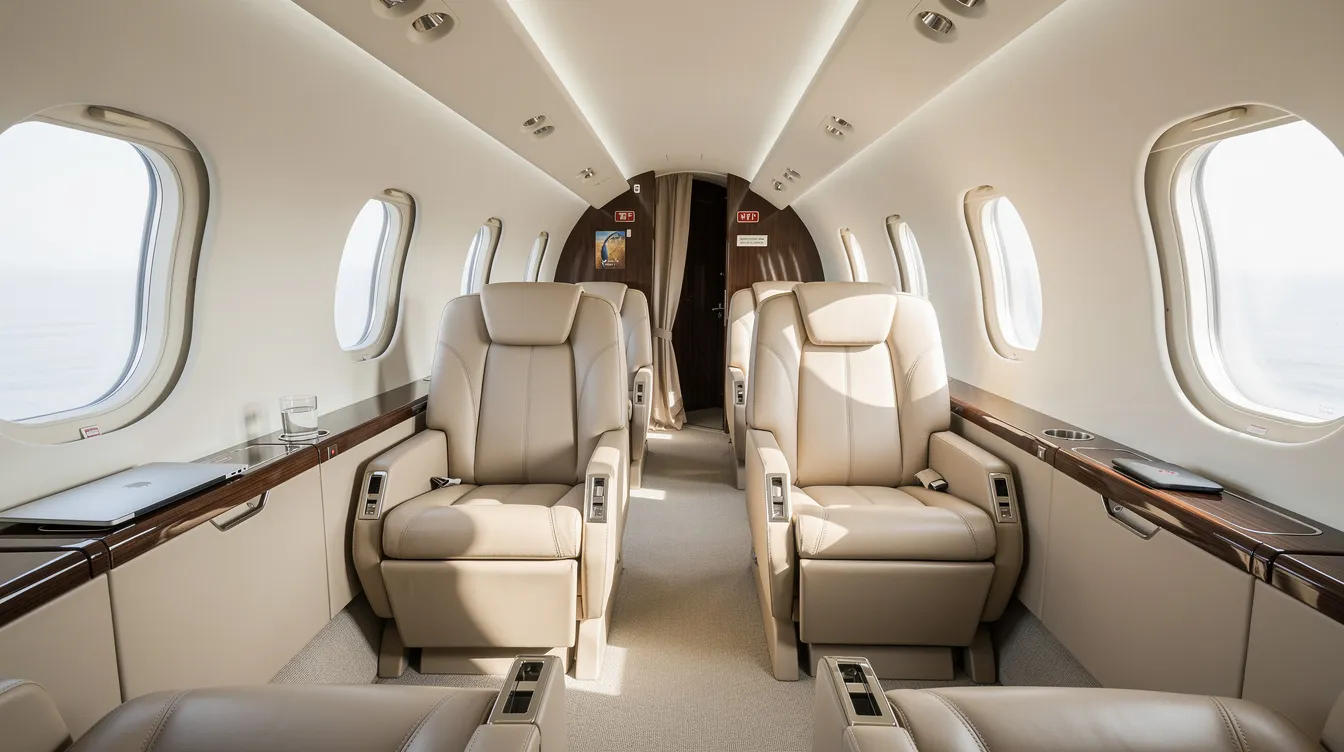
BlackJet Fractional Jet Ownership typically structures Reserve Fleet access by aircraft category and mission profile, letting clients pick the most cost effective aircraft for each trip rather than being locked into one jet type for all 25 hours.
Beyond the headline price, what you actually pay for a 25-hour jet card is shaped by aircraft category, hourly rate structure, geography, and fine-print fees. Key factors influencing jet card pricing include:
Aircraft category and type: The gap between a light jet and a heavy jet is driven by fuel burn, crew requirements, and maintenance costs. Hourly rates can be affected by included services like taxes and fees, so always confirm what the quoted rate covers.
Fixed hourly rates vs. dynamic pricing: True fixed rates protect against seasonal spikes but are typically set at a premium to cover average conditions across the year. Market conditions can also impact pricing for private aviation services over time.
Repositioning fees: Larger programs bundle repositioning into the hourly rate within core service areas. Smaller or regional providers may charge separate repositioning fees for flights originating or ending outside their network zones.
Service area: A North America–only card is generally cheaper than one offering global access. International handling, overflight charges, and overnight crew costs all layer onto the base rate.
Program structure: Membership fees, minimum deposit requirements, minimum flight time rules, and whether hours expire or roll over all shift the real economics. Safety audits are also important for verifying provider standards before committing capital, and comparing fractional ownership versus membership program structures can clarify which economics fit your usage.
Turboprop vs. jet: Some programs include turboprop cards covering aircraft like the Pilatus PC-12 and King Air 350 at significantly lower hourly rates, offering a cost effective alternative for shorter legs.
The sticker price for a 25-hour jet card often excludes certain variable charges. Overlooking these can add 10–25% to expected spend, and transparency in quoting is crucial for understanding the full cost of service. Comparing total value rather than just the headline price is always recommended.
Fuel surcharges: Many providers add a per-hour fuel surcharge indexed to jet fuel prices, updated monthly or quarterly. Fuel surcharges can add $300 to $1,000+ per flight hour, with the impact more pronounced on heavy jets due to higher fuel burn.
Federal excise tax: The 7.5% U.S. FET applies to domestic charter and jet card flights. Fees like federal excise tax may be included in the advertised rate by some providers, while others quote "plus FET" pricing that looks cheaper at first glance. The difference is material on a $200,000+ commitment.
Peak day surcharges: High demand periods around major holidays, big sporting events, and seasonal migration weekends can trigger peak surcharges. Peak day surcharges can increase costs by 5% to 40% during busy periods. Providers like Sentient Jet and other top-tier programs maintain varying peak calendars, and blackout dates may further restrict guaranteed availability on the busiest days.
Repositioning fees: Smaller or regional providers may charge additional fees when the aircraft is based far from the origin airport. Jet card programs often include hidden fees like fuel surcharges and repositioning that are easy to miss.
Other charges: Common add-ons include de-icing, premium catering, hangar fees, ground transportation surcharges, pet cleaning, landing fees, and international handling. These are typically billed per trip and not baked into the hour jet card headline figure, which is why understanding fractional jet ownership financing, costs, and benefits alongside jet card pricing can be helpful.
A savvy buyer compares effective hourly cost after all surcharges, not just the base number. For a deeper look at how different programs stack up on total pricing, reviewing multiple quotes side by side is essential.
The main private aviation options span a spectrum: on demand charter at one end, full aircraft ownership at the other, with jet cards and fractional ownership in between. A 25-hour jet card sits squarely in the "structured access, no equity" zone. Here is how the alternatives compare:
Jet cards vs. on-demand charter: Jet cards offer predictable budgeting with fixed hourly rates and guaranteed availability, while ad hoc charter may offer lower pricing on off-peak dates but introduces variability and occasional availability risk. Jet cards provide access to a diverse fleet of aircraft, whereas charter availability depends on the charter market at the moment of booking.
Jet cards vs. fractional ownership: Fractional ownership typically requires hundreds of thousands upfront and becomes attractive at 50–100+ hours per year, where potential tax benefits and equity appreciation offset the higher entry cost. Unlike fractional ownership, jet cards require no long-term commitment or acquisition cost. However, fractional ownership limits users to specific aircraft types, while jet card options can span multiple aircraft classes.
Fractional ownership vs. full ownership: Full ownership makes sense at 200–300+ hours per year with predictable usage. Fractional aircraft ownership via an equity fleet, like BlackJet's model, delivers many of the same benefits at a lower capital outlay, and exploring fractional jet ownership as an investment highlights how those trade-offs compare.
Jet cards vs. BlackJet Reserve Fleet: Reserve Fleet access offers pay-as-you-go or smaller pre-funded structures that mimic the predictability of a private jet card without fixed blocks of 25 hours or rigid expiration rules.
Blended strategies: Some corporate users combine a fractional share for core routes with a 25 hour jet card or Reserve Fleet access for overflow, peak periods, or missions requiring a different aircraft category.

Two jet cards with similar hourly rates can have very different economics once minimum deposits, upfront fees, and expiration rules are factored in. Here is what to scrutinize:
Minimum deposit: Most jet card programs require minimum deposits between $100,000 and $250,000 for light and midsize jets, and $400,000+ for heavy jets, typically corresponding to 25 hours funded at the contracted rate; in contrast, models like 1/8 fractional jet ownership often align capital outlay to around 100 hours per year.
Membership and initiation fees: Some programs charge separate annual access or initiation fees on top of the hour jet card deposit. Others bundle everything into the hourly rate with no additional fees or dues.
Hour expiration: Many jet card programs have expiration policies for unused hours, typically 12–24 months after purchase. Unused hours at the contract end date directly increase the effective cost per flight, sometimes dramatically, just as specific fractional ownership contract terms can materially affect long-run economics.
Minimum flight time and daily minimums: Programs commonly enforce minimum leg times of 60 or 90 minutes per segment, meaning short hops are billed at the minimum regardless of actual flight duration. This raises the real cost for frequent travelers making brief regional trips.
Transferability: Private aviation cards may allow transfer of hours between users, such as named executives or family members. Others restrict usage to a single account holder, which can be a dealbreaker for business owners with multiple principals traveling; similar constraints appear in aircraft fractional ownership sample contracts that define who can use the share.
For occasional flyers who may not consume all 25 hours, the risk of expiration alone can make a flexible structure like BlackJet's Reserve Fleet a more cost-effective alternative to traditional cards.
The best way to evaluate a 25 hour jet card is to match expected flight hours, routes, and passenger loads against alternatives like fractional ownership or flexible fleet access. There is no universal answer, but there is a clear framework:
Ideal for a 25-hour jet card: Individuals or companies flying roughly 15–50 hours per year, mostly within one region such as the continental United States, who value simple, predictable budgeting and transparent pricing more than absolute lowest cost. Frequent flyers on consistent routes with a single preferred aircraft category benefit most.
When fractional ownership may be better: Flyers consistently logging 50–150+ hours per year on similar routes and aircraft categories, who can benefit from depreciation and other tax advantages through asset ownership via an equity stake. The cost breakdown of fractional ownership clarifies where the break-even falls.
When flexible solutions shine: Users with variable yearly hours, fluctuating aircraft needs across aircraft classes, or those wanting annual access to multiple aircraft types without committing to a single 25 hour block. BlackJet's Reserve Fleet is designed for exactly this profile.
Calculate your own effective hourly cost: Divide the full expected spend, including FET, surcharges, and fees, by realistic flight hours actually flown, not nominal card hours purchased. That single number is the clearest comparison tool across all private aviation options.
BlackJet Fractional Jet Ownership operates as both an advisor and a provider of structured private aviation solutions, not a generic jet card seller. The focus is on matching the right access model to each client's travel pattern.
Equity Fleet (fractional ownership): Clients acquire a fractional share aligned to 25–150 hours per year, with predictable access, fixed rates by aircraft category, personalized service, and potential tax benefits comparable to traditional fractional programs.
Reserve Fleet: A flexible, pay-as-you-go or smaller pre-funded structure providing access to multiple aircraft categories, from light jets to large cabin aircraft, without committing to a single prepaid program on one aircraft type. Pricing clarity and cost certainty are built into the model.
Compared to typical jet cards: BlackJet's models reduce capital lock-up relative to large prepaid blocks, offer more tailored aircraft selection by mission, and provide dedicated scheduling and aircraft sourcing support.
Blended strategies: Many clients who initially consider a 25-hour jet card ultimately find better long-term value combining a modest fractional ownership position with Reserve Fleet access for overflow, peak days, or special trips.
To determine whether a traditional hour jet card, fractional ownership, or a hybrid structure fits best, reviewing the last 12–24 months of travel data with BlackJet's advisory team is a practical first step, especially if you are weighing floating fleet options within fractional programs or planning ahead for eventually selling a fractional jet ownership share.
How much is a 25-hour jet card in 2026? A 25-hour jet card ranges from roughly $210,000 for light jets to $525,000+ for heavy jets, depending on aircraft category, included taxes, surcharges, and program rules. The NetJets program, for example, starts at about $205,000 for light jets, while large cabin programs from providers with a diverse fleet and the NetJets fleet run considerably higher.
What is the minimum deposit for a 25 hour jet card? Most programs require a minimum deposit of $100,000–$250,000 for light and midsize jets. Some providers now offer smaller starter blocks with higher effective hourly rates for occasional flyers who want to test the experience. A NetJets card or comparable program typically requires the full 25-hour block funded upfront.
Do 25-hour jet cards include repositioning fees? Large national programs, such as the NetJets program or Magellan Jets, often bundle repositioning fees inside core service zones. Smaller or regional jet card programs may charge additional repositioning fees for flights outside their standard coverage area, increasing the effective cost.
When does fractional ownership make more financial sense? Fractional ownership generally becomes more cost effective at 50+ hours per year, particularly for frequent travelers who fly similar routes, prefer a specific aircraft type, and want tax depreciation through asset ownership. Understanding the tax implications for fractional jet owners is key to evaluating that break-even. Below that threshold, jet cards and flexible access models typically offer better value.
How do I compare a 25-hour jet card to BlackJet's options? Focus on effective hourly cost across realistic booking windows, flexibility across aircraft categories, risk of unused hours, total time savings in scheduling and management, and how liability and insurance coverage in fractional ownership compare to card-based models. BlackJet's team can model both scenarios using actual travel data.
A 25-hour jet card in 2026 typically ranges from roughly $210,000 for light jets to over $500,000 for heavy jets, with aircraft category, taxes, and fees driving most of the difference in jet card cost. While private jet cards are an excellent entry point into structured private aviation, they are only one of several viable models alongside fractional ownership, Reserve Fleet access, and tailored corporate solutions.
The smartest move is to gather the last 12–24 months of travel data, including routes, passenger counts, and trip frequency, and model at least two or three scenarios: a 25-hour jet card, fractional ownership with an appropriate aircraft category, and a hybrid built around BlackJet's offerings.
Ready to find the right structure for how you actually fly? Visit FractionalJetOwnership.com to explore how BlackJet Fractional Jet Ownership can deliver predictable costs, flexible aircraft access, and professional management without the complexity of full aircraft ownership.
