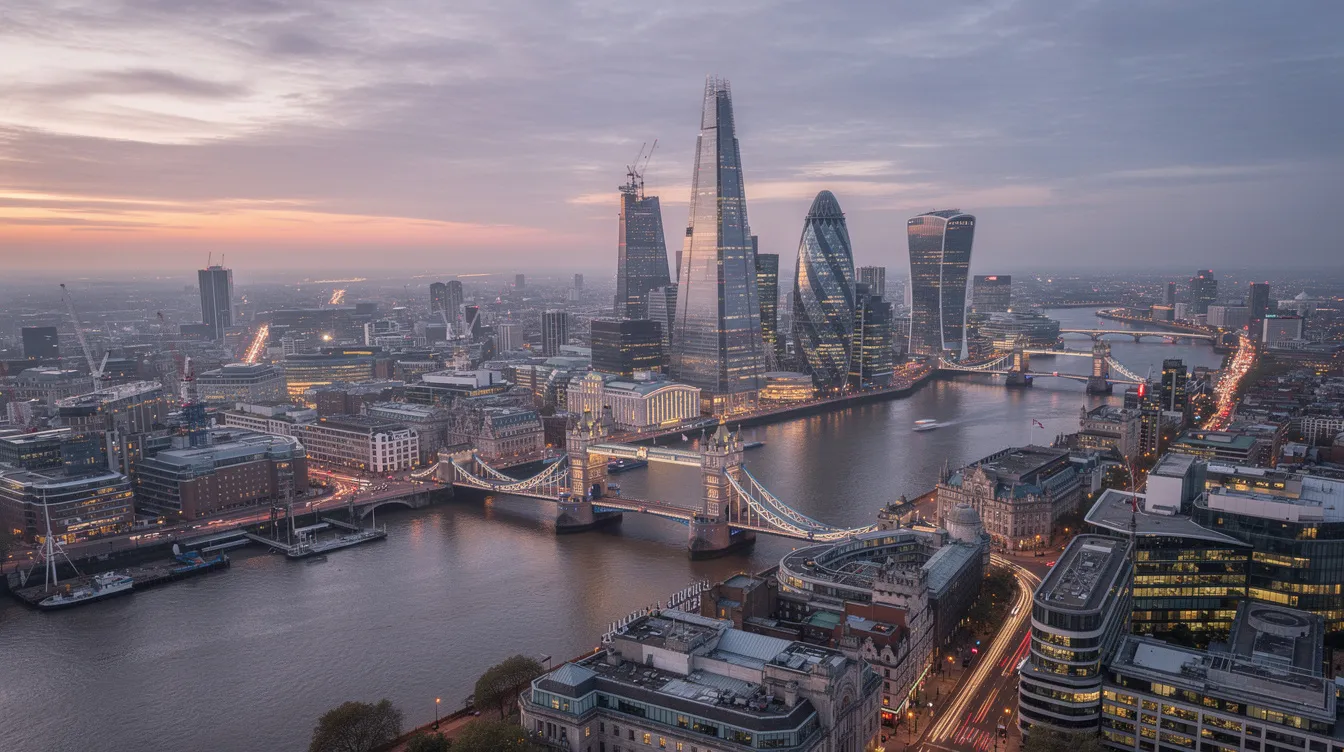
July 5, 2026
London is one of the world's busiest hubs for private jet travel. The city sits at the intersection of global finance, technology, media, and culture, generating consistent demand from executives, entrepreneurs, and high-net-worth travelers who need fast, flexible access to and from the UK capital. When people search for "jet London," they're typically asking one question: how do I fly privately into or out of this city quickly and efficiently?
The answer depends on three connected decisions - which airport, which access model, and which aircraft. London's six core private jet airports handled more than 75,000 business aviation movements last year, a total exceeding the combined figures for Paris, Nice, and Geneva. Demand peaks sharply during events like Wimbledon in late June through mid-July, Royal Ascot in June, and key financial calendar dates across the City and Canary Wharf.
This guide covers which private jet airports in London to use based on your destination and aircraft type, approximate charter pricing on popular routes like New York to London and Geneva to London, and when fractional ownership with BlackJet Fractional Jet Ownership offers a smarter, more predictable way to access London than ad-hoc charter alone. Whether you're a seasoned private flyer or evaluating private aviation for the first time, the information here is designed to help you make an informed decision - not just book a flight.
One of the key advantages of flying by private jet is the ability to utilize smaller airports around London that commercial airlines don't serve. London offers several dedicated or highly used private jet airports, each with different strengths depending on whether you're arriving for business, leisure, or an international connection requiring customs and immigration.
Here's what you need to know about each option:
London Biggin Hill Airport (BQH): London Biggin Hill Airport is popular for private air travel and is located roughly 14 miles southeast of central London. It has a rich history as a former Royal Air Force station and now serves as a dedicated business aviation facility. Runway length is approximately 1,806 meters, accommodating light, midsize, and some super-midsize jets. Heavier aircraft face payload restrictions, particularly in wet or warm conditions. Drive time to Canary Wharf or the City is typically 35–45 minutes. Operating hours typically run from approximately 6:30 AM to 11:00 PM on weekdays, with slightly reduced hours on weekends.
Farnborough Airport (FAB): Farnborough Airport is dedicated almost entirely to business aviation, making it a top choice for travelers who want a seamless, private experience. Its runway stretches approximately 2,440 meters - long enough to handle the largest business jets in the world, including the Bombardier Global 7500 and Gulfstream G700. Located about 35–40 miles southwest of central London, the drive time to Mayfair runs approximately 55 minutes off-peak but can exceed 90 minutes during rush hour. Customs and immigration processing at its TAG terminal is consistently fast, often under 10 minutes for a group of six passengers.
London Luton Airport (LTN): London Luton Airport is one of Europe's busiest private jet hubs, handling approximately 23,000 private aviation movements last year alone. London Luton Airport is also a recommended private jet airport for midsize to super-midsize jets, with a runway of roughly 2,162 meters. It sits about 32 miles north of the City, with drive times of 35–50 minutes and a direct rail link via Thameslink into St Pancras in about 25 minutes. Night landing restrictions apply between 23:00 and 06:00.
London City Airport (LCY): London City Airport is convenient for access to financial districts, situated just a few miles from Canary Wharf and the Square Mile. However, its 1,508-meter runway and steep 5.5-degree approach angle limit the types of aircraft that can operate there. Only multi-engine fixed-wing jets certified for steep approaches are permitted, which rules out most large-cabin and ultra-long-range types. Operating hours are restricted, particularly on weekends.
London Stansted (STN): Frequently used for heavier, large-group, and ultra-long-range flights. Its longer runway and full customs/immigration capabilities make it practical for flights from the Middle East or Asia, though it sits 45–60 minutes from the West End.
London Heathrow Airport (LHR): London Heathrow Airport is one of the main private jet airports in terms of overall traffic, but it operates primarily as a commercial hub. Slots are extremely constrained, fees are higher, and the experience differs significantly from a dedicated FBO environment.
London Gatwick (LGW): London Gatwick is a good option for private jet travel, particularly for travelers arriving from or departing to southern destinations. It offers private handling facilities, though it is used less frequently than Farnborough or Luton for dedicated business aviation.
Some London airports have restrictions on operating hours and aircraft sizes, so choosing the right field depends on your aircraft type, your schedule, and where in London you ultimately need to be. Private jet travel enables direct access to final destinations, reducing overall transport time compared to routing through congested commercial terminals.
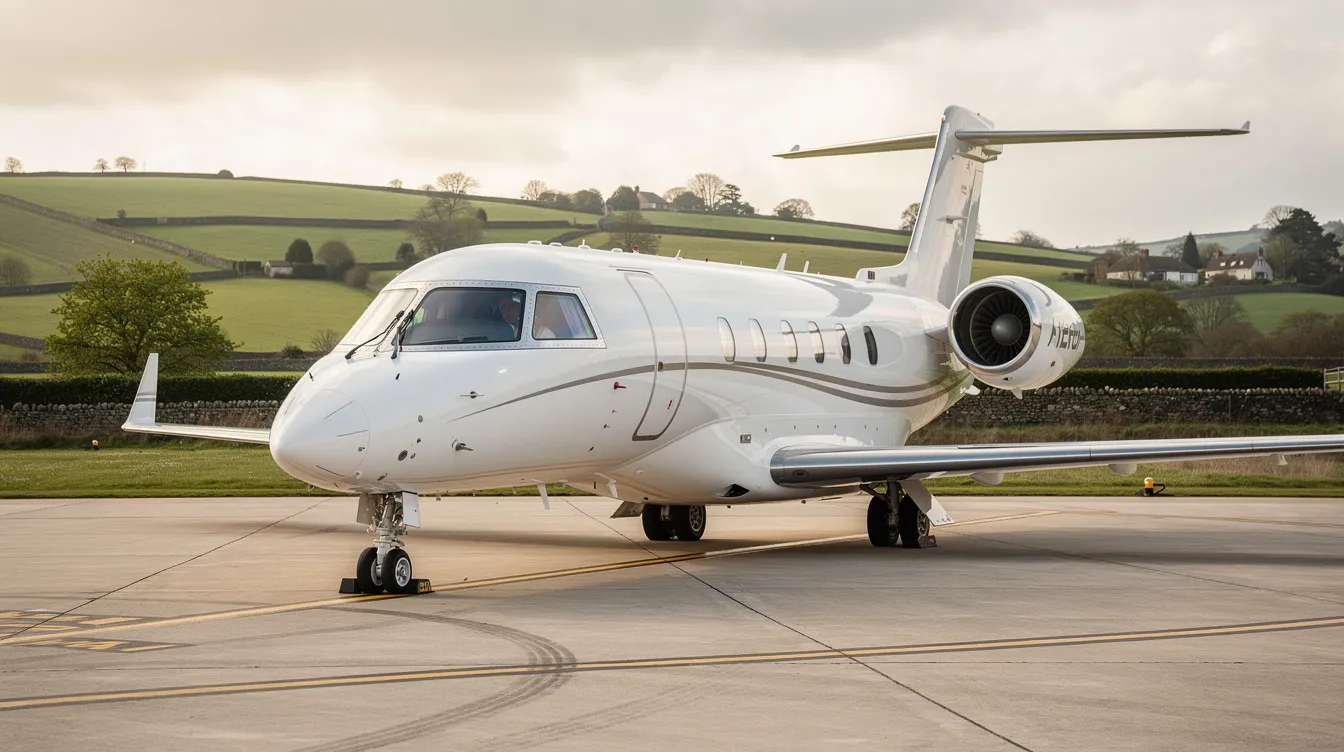
Canary Wharf and the City of London form the heart of global banking, fintech, and professional services. These districts generate some of the highest-frequency private jet traffic in Europe, with executives regularly flying between London and financial centers like Geneva, Zurich, Frankfurt, and New York.
For travelers whose meetings are concentrated in East London, two airports stand out:
London Biggin Hill Airport is popular for private air travel to and from the financial districts. Driving time from Biggin Hill to Canary Wharf runs approximately 35–45 minutes in normal traffic. For executives who need to move faster, dedicated helicopter transfers from Biggin Hill to central London take around 6 minutes in the air, connecting to Battersea heliport before a short car transfer onward.
London City Airport is preferred for private jets to London when the mission profile allows it. Its proximity to Docklands means taxi or DLR connections to Canary Wharf take as little as 10–15 minutes. Private Jet Centre provides 90-second departure checks, and London City Airport offers 90-second departure checks through its dedicated VIP handling facility - a level of speed that makes a real difference on tight schedules.
Private terminals at these airports allow for expedited security and privacy, with dedicated lounges, meeting rooms, and chauffeur coordination that feel purpose-built for the pace of London's financial world. Travelers can arrive as little as 15–30 minutes before departure, a stark contrast to the hours of buffer time required at commercial terminals.
BlackJet Fractional Jet Ownership can pre-coordinate ground transfers, helicopter links, and aircraft scheduling so that London-based executives move door-to-door between office and aircraft with minimal downtime. For people who fly this corridor regularly, that kind of integration is not a luxury - it's an operational requirement.

Private jet charter is the on-demand rental of an entire aircraft for a specific trip. Unlike fractional ownership or jet card programs, there's no long-term commitment - you book one flight at a time, pay for that flight, and move on. For a detailed breakdown of how plane charter costs are structured, BlackJet Fractional Jet Ownership provides a comprehensive guide.
Common private jet routes include London to New York and London to Paris, but charter demand from London spans every direction - European financial centers, Mediterranean leisure destinations, Middle Eastern business hubs, and transatlantic corridors to the eastern United States.
Here's how the booking process typically works:
Select your departure airport from the available private jet airports around London (Biggin Hill, Farnborough, Luton, etc.)
Choose your aircraft category - very light jet, light, midsize, super-midsize, large-cabin, or ultra-long-range - based on passenger count, range requirements, and cabin preferences
Receive a quote that includes fuel, landing and handling fees, positioning (if the aircraft isn't based nearby), crew overnight stays, catering, overflight permits, and customs processing
Confirm and fly, with private jets providing tailored schedules based on passenger needs rather than airline timetables
Private jet charter offers real advantages for London travelers:
Flexibility - no long-term financial commitment; book only when you need to fly
Aircraft variety - access to everything from light jets for a Paris day trip to ultra-long-range cabins for New York
Airport choice - depart from whichever London field best suits your ground logistics on that particular day
Workspace and privacy - private jets can provide quiet workspaces for business travelers, and smaller passenger environments offer less interaction with crowds
But jet charter also has limitations worth understanding:
Pricing can be unpredictable, especially during peak London events or on busy Friday and Monday corridors
There's no guarantee you'll get the same aircraft or crew from trip to trip
Last-minute availability during high-demand periods (Wimbledon week, Royal Ascot, year-end) can be tight and expensive
Private jet travel can accommodate larger groups more easily than commercial flights, but charter pricing scales significantly with cabin size.
Many London-centric flyers eventually adopt a blended strategy: occasional on-demand jet charter for irregular trips, complemented by fractional ownership hours for their most predictable, high-frequency routes. For those evaluating this path, understanding the cost of fractional jet ownership in detail is essential to structuring an efficient long-term solution. Private jet travel offers significant advantages in efficiency and comfort, and private jet services offer world-class service and luxury amenities - but managing costs over time requires a more structured approach than booking every flight ad hoc.
The New York to London corridor - typically Teterboro or White Plains to Biggin Hill, Farnborough, or Luton - is one of the world's busiest private jet routes. It's also one of the most expensive, because it requires aircraft with genuine transatlantic range. For broader context on pricing, see this guide on the cost to fly private to Europe.
Light jets and most midsize jets generally cannot fly from New York to London nonstop under standard conditions. Most flights require super-midsize or large-cabin types - think Gulfstream G450/G550, Bombardier Global 5500/6000/7500, or Dassault Falcon 7X/8X. Larger aircraft types are recommended for NYC to London flights due to the range, payload capacity, and cabin comfort required for a 6.5- to 7.5-hour crossing.
Private jet charter from NYC to London costs vary significantly based on several variables:
One-way charter pricing typically falls in the range of approximately $85,000 to $185,000 USD, depending on aircraft size, age, and configuration
Specific aircraft examples: a Legacy 600 (approximately 13 passengers) quotes around $113,500 one-way; a Falcon 7X around $121,800; Boeing Business Jet or VIP airliner configurations can reach $172,000 to $270,000+
Flight time: approximately 6.5 to 7 hours eastbound (aided by jet stream tailwinds) and 7 to 8 hours westbound
Factors affecting private jet costs include jet type and amenities, but several other drivers matter just as much:
Departure and arrival airports - handling fees, slot access, and parking vary between York-area fields and London airports
Repositioning charges - if the aircraft isn't based near your departure point, you pay for the empty ferry leg
Crew overnight and standby costs - particularly relevant for multi-day trips abroad
Peak-season surcharges - demand during major London events inflates pricing
Fuel cost volatility - a significant line item on any transatlantic crossing
Private jet costs can be estimated based on past departures for similar missions, and a good broker or operator will provide transparent breakdowns. Private jets enhance comfort with personalized service and amenities that make a seven-hour crossing productive rather than exhausting.
Example scenario: A 6–8 passenger executive team flying from Teterboro to London Biggin Hill for a three-day series of board meetings, with an approximate flight time of 6.5 hours eastbound and 7.5 hours westbound, could expect to pay $130,000 to $200,000+ one-way for a large-cabin jet, all fees included.
For executives and corporations making this trip multiple times per year, fractional ownership can significantly smooth costs compared to repeated ad-hoc charter bookings. The per-hour blended rate in a fractional program is typically lower, and priority access during peak periods eliminates the risk of being priced out or unable to secure an aircraft.
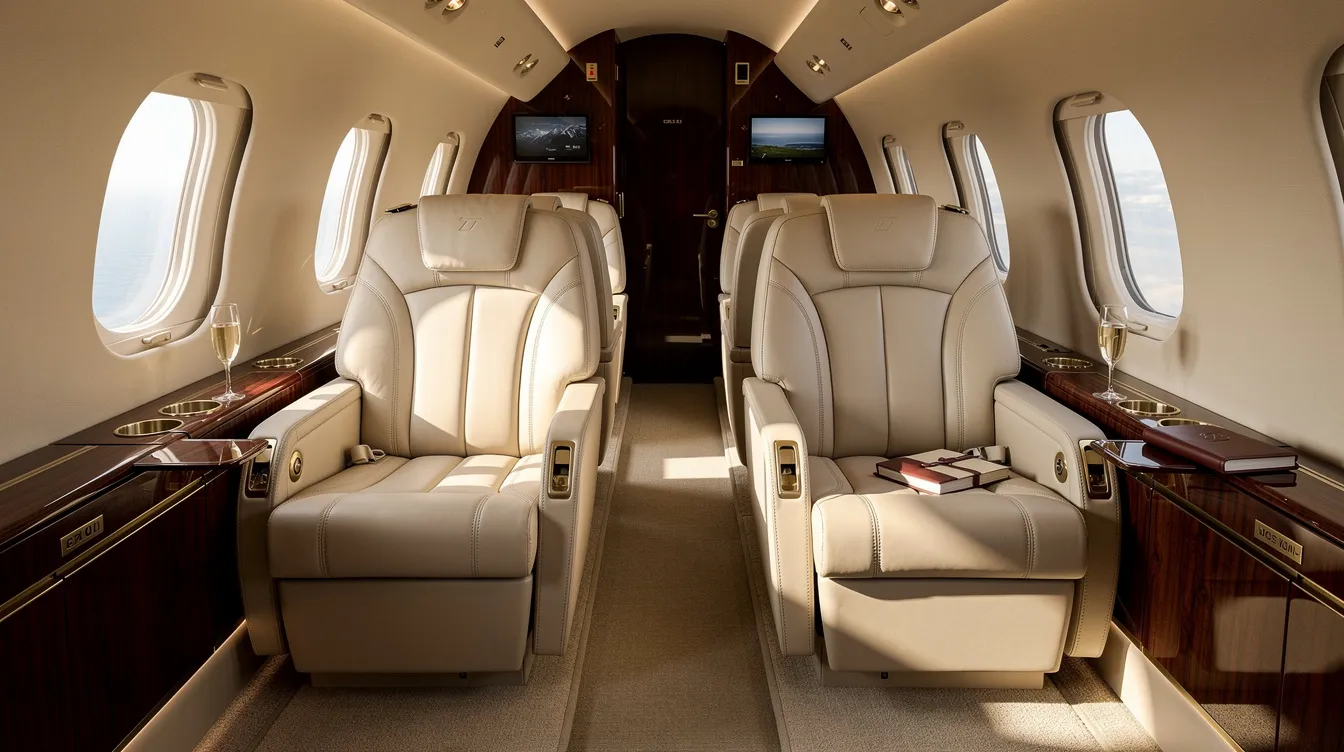
The "best" airport for your London arrival depends on three factors: your origin city, your aircraft type, and your final destination within London. There is no single correct answer - only the right answer for a specific mission.
For transatlantic flights from New York, Boston, Washington, or Chicago: Farnborough, Luton, and Biggin Hill are strong options. Farnborough's 2,440-meter runway handles the largest ultra-long-range jets without restriction, and its FBO infrastructure and customs capability are built for international arrivals. Luton accommodates many heavy jets with some payload considerations. Biggin Hill works well for super-midsize transatlantic aircraft but may restrict heavier types. For a deeper look at choosing the best private plane to Europe, BlackJet has published a dedicated comparison.
For Middle East and Asia flights from Dubai, Doha, Riyadh, or Singapore: Ultra-long-range jets typically use Farnborough, Stansted, or Luton. These airports offer the long runways and handling capacity needed for aircraft arriving with heavy fuel loads after 6- to 14-hour flights.
For European short-haul flights from Paris, Geneva, Milan, or Zurich: Any London private jet airport can work, depending on where in London you need to be. London City Airport's limitations - steep approach, short runway, restricted aircraft types - make it impractical for many missions, but its outstanding convenience for Canary Wharf and the City makes it worth considering when the airside profile fits.
High-frequency London travelers should work with a provider like BlackJet Fractional Jet Ownership that can recommend the optimal airport on each trip, balancing drive time, slot availability, handling, and overall mission profile. The right airport choice can save 30 to 60 minutes on the ground - time that matters when you have a meeting in two hours.
Fractional jet ownership means purchasing a legal share of a specific aircraft type - typically in increments from 1/16th to 1/2 - which provides guaranteed flying hours per year, defined service levels, and structured economics. For London-based or London-frequent travelers, this model becomes compelling once flying hours cross a meaningful threshold.
Here's how the two models compare:
Private jet charter works best for travelers flying fewer than 25 hours per year, or those with irregular, unpredictable schedules. There's no capital commitment, and you pay only when you fly. But you're exposed to variable pricing, peak surcharges, and availability risk during London's busiest periods.
Fractional aircraft ownership typically makes sense for travelers flying 25 to 150 hours per year on repeat corridors - London to Geneva, London to Milan, London to New York. Fixed costs are spread across guaranteed hours, and the per-hour occupied rate is often meaningfully lower than equivalent charter pricing over time. For a side-by-side analysis, see private jet charter vs fractional ownership.
Key advantages of fractional ownership for London flyers — especially when you account for the total cost of fractional jet ownership:
Predictable cost structure - less exposure to peak surcharges and last-minute price spikes that hit charter hard during events like Wimbledon or year-end
Priority access - contractual guarantees on aircraft availability, even when London air traffic demand surges
Potential tax benefits - depending on jurisdiction and usage structure, ownership of an equity share may offer depreciation and other advantages that a pure charter does not provide; understanding the tax implications for fractional jet owners is a critical part of any evaluation
Consistency - fly the same aircraft category with trained crews, rather than adapting to a different cabin and service standard each trip
Practical example: A London-based company flying executives to continental European cities three to four times per month logs roughly 60–80 flight hours per year. At ad-hoc charter rates of $3,500–$6,000 per hour for a midsize jet (plus fixed fees per leg), annual charter spend could reach $300,000–$500,000+. A fractional share in a comparable aircraft category spreads the upfront investment across years of usage, locks in an occupied hourly rate, and guarantees access - often reducing the effective per-hour cost by 15–30% compared to repeated charter bookings, especially when you view fractional jet ownership as an investment rather than a series of one-off expenses.
Charter remains an important complement even for fractional owners. When all share hours are allocated, when an unusual cabin configuration is needed, or when a one-off mission falls outside normal patterns, on-demand charter fills the gap. The smartest approach for most London flyers is not choosing one model exclusively - it's building a strategy that uses both, supported by robust fractional aircraft ownership contracts and clear plans for selling or exiting a fractional share if needs change.
BlackJet Fractional Jet Ownership specializes in helping both individuals and corporations who fly 25 to 150 private hours annually, with frequent travel into and out of London and other major global hubs. For prospective clients, a clear grasp of core fractional jet ownership terms and concepts is essential to comparing options effectively. The company offers two primary models designed to match different usage profiles and commitment levels.
Equity Fleet: Clients purchase a fractional share in an aircraft category matched to their London and European usage patterns. This provides priority access, custom aircraft sourcing, structured ownership economics, and potential tax efficiencies and may be supported by specialized fractional jet ownership financing solutions. For London-centric travelers, shares in super-midsize or large-cabin categories cover the most common mission profiles - European day trips, Mediterranean weekends, and transatlantic crossings.
Reserve Fleet: Pay-as-you-go access without the capital commitment of ownership. This model is ideal for London-based travelers who are building their private flying profile but want the reliability and consistency of a structured program over pure ad-hoc charter, and are weighing fractional jet ownership vs membership programs as their usage evolves. While providers like VistaJet offer 24/7 concierge service for clients, BlackJet's Reserve Fleet combines similar around-the-clock scheduling support with the flexibility to transition into equity ownership as flying hours increase.
Key service elements that matter for London trips — especially in programs built on floating fleet fractional ownership models:
Guaranteed availability windows, even during peak London traffic periods like Wimbledon week and financial year-end, comparable to leading fractional jet ownership programs
Coordinated ground transport to Canary Wharf, the City, and Mayfair, pre-arranged for each flight
Proactive slot management across London's constrained airport network, underpinned by clearly defined fractional ownership contract terms
24/7 scheduling support across time zones, critical for travelers flying between London and New York or the Middle East
Use case 1: A UK-based fund manager commuting between London and Geneva every other week, with occasional trips to Milan and Zurich. Annual flying hours: approximately 50–70. An Equity Fleet share structured around something like 1/8th fractional jet ownership in a super-midsize jet provides guaranteed access on the routes that matter most, at a predictable cost that makes quarterly budgeting straightforward.
Use case 2: A US-based executive with four to six annual London board meetings and investor roadshows, flying from New York or Boston. Annual transatlantic hours: approximately 35–50. A fractional share in a large-cabin aircraft covers each crossing at a blended rate lower than repeated charter bookings, with priority scheduling that removes availability anxiety during peak demand, provided that liability and fractional ownership insurance coverage are structured appropriately.
London City Airport and London Biggin Hill Airport are the top choices for travelers visiting Canary Wharf and the City of London. London City Airport offers unparalleled proximity and 90-second departure checks, while Biggin Hill provides flexibility for a wider range of aircraft and helicopter transfers to central London. For more details, see our section on Canary Wharf & the City of London: Fastest Private Jet Access.
Generally, light and most midsize jets lack the range for nonstop transatlantic flights between New York and London. Super-midsize and large-cabin jets such as the Gulfstream G550 or Bombardier Global series are recommended for these routes. Refer to What Does a Private Jet Charter from New York to London Cost? for more information.
Fractional ownership offers predictable costs, guaranteed aircraft availability during peak London demand, potential tax benefits, and consistent service standards. It is typically more cost-effective for travelers flying over 25 hours annually on regular routes. Learn more in our comparison of Private Jet Charter vs Fractional Ownership for London Flyers.
Yes, airports like London Luton have night landing restrictions, and London City Airport has limited operating hours. Choosing the right airport depends on your schedule, aircraft type, and destination within London. See Private Jet Airports in London: Which One Should You Choose? for details.
BlackJet offers tailored fractional ownership and reserve fleet programs with guaranteed availability, coordinated ground transport, proactive slot management, and 24/7 scheduling support designed specifically for London-centric travel needs. Explore our full explanation in How BlackJet Fractional Jet Ownership Supports London-Focused Travelers.
London offers multiple private jet airports, each optimized for different aircraft types, destinations within the city, and traveler profiles. Private jet charter provides flexibility for occasional or unpredictable trips, and fractional ownership with a partner like BlackJet Fractional Jet Ownership delivers predictability, cost efficiency, and guaranteed access for frequent London flyers.
To determine which model fits your needs, start by assessing three things:
Your annual private flying hours - below 25, charter or a jet card likely makes sense; above 25, fractional ownership deserves serious consideration
Your primary routes - London to New York, London to Geneva, London to Dubai, or a mix - and which London airports serve those routes most efficiently
Your tolerance for variability - if you need guaranteed access during London's busiest weeks without paying peak surcharges, a structured ownership program will give you a taste of what reliable private aviation access actually feels like in practice
The difference between a good experience and a frustrating one often comes down to planning. Executives whose business depends on reliable access to and from London benefit most from building a strategy rather than booking reactively. Learn how fractional ownership can transform your London travel by starting a conversation with people who understand both the air side and the ground side of flying privately into one of the world's most complex aviation markets.
Ready to explore the smarter way to fly private? Visit FractionalJetOwnership.com to request a consultation, discuss your London travel patterns, and receive a tailored comparison of private jet charter, fractional ownership, and membership-style access.
