July 9, 2026
The true cost of private jet ownership extends far beyond the sticker price. Between purchase, crew salaries, fuel costs, hangar fees, insurance, and depreciation, owning a private jet can demand several million dollars in annual commitments that many prospective owners underestimate. This guide breaks down every major expense category so that individuals and businesses can make informed decisions about whether whole jet ownership, fractional ownership, or a membership program best fits their flying needs.
Purchase prices for private jets range from $2 million to over $100 million, and the cost to buy a private jet varies widely based on size and age, while annual operating costs for private jets typically range from $500,000 to over $4 million depending on aircraft type and utilization. Private jet operating costs generally equal 10% to 15% of the aircraft's purchase value each year.
Here is a snapshot of 2024–2025 U.S. market ranges:
Aircraft Category | Purchase Price Range | Annual Ownership Cost (200 Flight Hours) | Operating Cost Per Flight Hour |
|---|---|---|---|
Very Light Jets | $3.5M – $5.7M | $500,000 – $1,000,000 | $1,800 – $3,200 |
Light Jets | $3M – $9M | $500,000 – $1,000,000 | $1,800 – $3,200 |
Midsize Jets | $9M – $25M | $800,000 – $1,500,000 | $2,500 – $4,000 |
Large Jets | $25M – $100M+ | $1,500,000 – $4,000,000+ | $4,000 – $7,600+ |
For many travelers flying 25–150 hours per year, fractional jet ownership or jet cards with a provider like BlackJet Fractional Jet Ownership often deliver a better cost-to-use ratio than full aircraft ownership.
The aircraft purchase is the biggest upfront commitment in the broader decision around private jet ownership, with the initial price driving capital costs, depreciation, financing, and insurance for years to come. In 2024, new aircraft prices break down roughly as follows:
Very light jets cost between $3.5 million and $5.7 million new
Light jets typically range from $3 million to $9 million (e.g., Citation CJ4 Gen2 at approximately $10 million)
Midsize jets generally cost between $9 million and $25 million (e.g., Praetor 600 at roughly $21 million)
Large jets can range from $25 million to over $100 million (e.g., Gulfstream G700 starting around $75 million)
When comparing new and used aircraft, pre-owned jets typically cost 20–50% less than new jets. A 7–10-year-old light jet might sell for $3–5 million versus $7–9 million new, though pre-owned aircraft may require interior refurbishment, avionics upgrades, and enrollment in engine maintenance programs. For corporations, the first aircraft purchase also involves financing structures, loan covenants, and fractional ownership contract frameworks with loan covenants and balance sheet considerations that shape the long-term economics of owning a private jet.
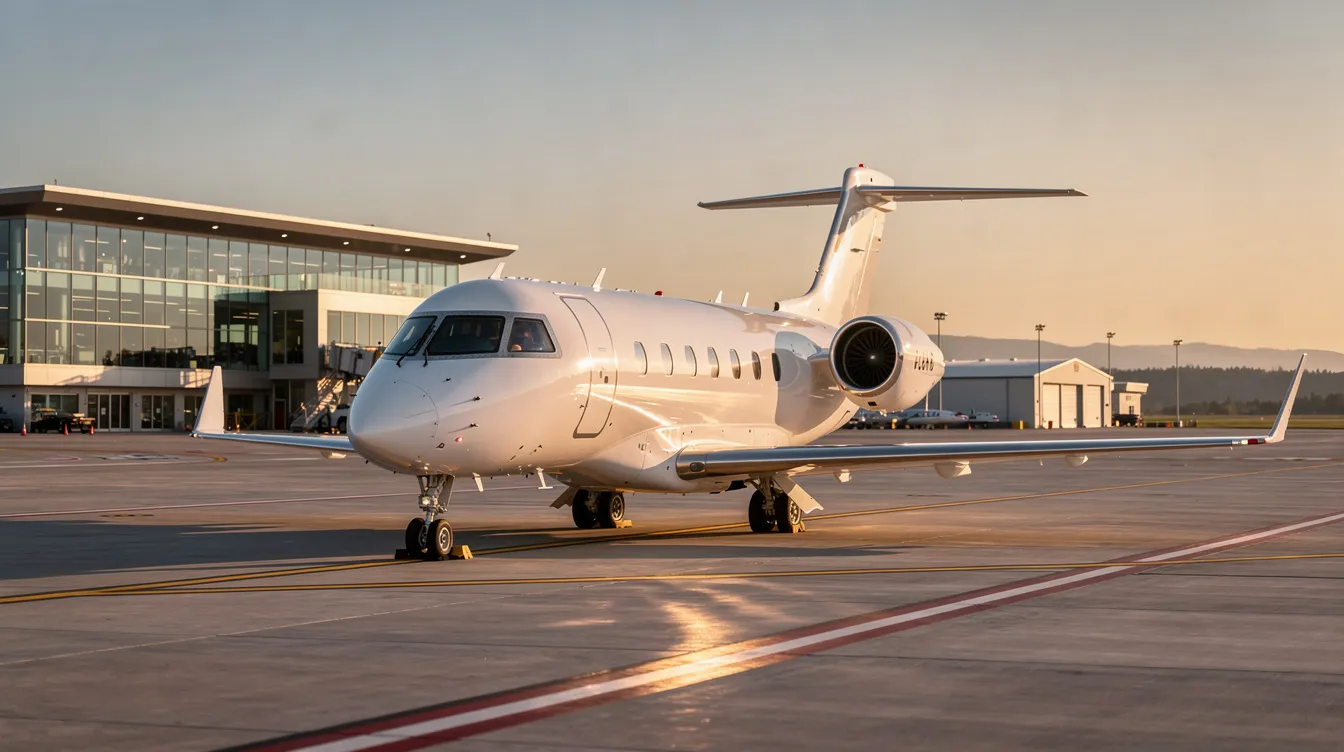
Private jet ownership generally incurs fixed and variable expenses. Fixed costs include crew salaries, insurance, and hangar fees-charges that recur whether the owned aircraft flies 400 hours or sits idle all year. These high fixed costs are why low-utilization owners often reconsider whole jet ownership.
Key fixed cost line items in the 2024 U.S. market:
Cost Category | Annual Cost Range | Notes |
|---|---|---|
Hangar Fees | $30,000 – $200,000+ | Varies by location and size; premium airports cost more |
Insurance | $20,000 – $500,000 | Hull and liability insurance; depends on aircraft value and claims history |
Crew Salaries | $200,000 – $600,000+ | Pilots $85,000–$300,000 each; cabin crew adds more |
Management Fees | $75,000 – $200,000 | Covers scheduling, compliance, and maintenance coordination |
Private jets typically require substantial compliance and operational management. For private jet owners flying under 150–200 hours annually, these ongoing costs make fractional ownership or jet cards a more efficient path to private jet travel.
Variable costs depend on flight hours and include fuel and maintenance. More flight hours increase total variable spend but lower the effective cost per hour as fixed costs spread wider.
Variable Cost Category | Cost Range Per Flight Hour | Notes |
|---|---|---|
Fuel | $500 – $3,500 | Largest variable expense; fuel consumption varies by aircraft size |
Maintenance | $500 – $1,500+ | Includes routine and unexpected repairs; reserves set aside for overhauls |
Landing Fees | $500 – $3,000+ | Airport fees vary by size and location |
As an example, a midsize private jet flying 250 flight hours per year at $2,500 per flight hour in variable costs can easily exceed $600,000 annually just in variable spend-before fixed costs are added.
Aircraft type directly affects the purchase price, operating costs, and ongoing expenses. Larger private aircraft demand higher crew salaries, burn more fuel, and require costlier hangar space.
Aircraft Size | Purchase Price Range | Passengers | Operating Cost Per Flight Hour | Notes |
|---|---|---|---|---|
Light Jets | $3M – $8M | 6–8 | $1,800 – $3,200 | Lower fuel burn, fewer crew requirements |
Midsize Jets | $9M – $25M | 8–10 | $2,000 – $3,500 | Transcontinental range, moderate crew |
Large Jets | $25M – $100M+ | 12–19 | $4,000 – $7,600+ | Intercontinental range, multiple crew |
The gap in aircraft ownership cost between categories is not just the purchase price. Large jets require two pilots with premium credentials plus cabin crew, burn tens of thousands of dollars more in fuel per trip, and occupy larger hangars at higher monthly rates. This makes the private aviation industry's size spectrum a critical factor in total cost modeling.
Annual utilization is the single most important variable when evaluating jet ownership cost versus alternatives. The more hours flown, the more fixed costs get diluted across each flight hour.
Scenario | Aircraft Type | Flight Hours | Fixed Costs Range | Variable Costs Range | Total Annual Cost Range |
|---|---|---|---|---|---|
Scenario 1 | Light Jet | 200 | $400,000 – $600,000 | $360,000 – $500,000 | $750,000 – $1,100,000 |
Scenario 2 | Large Jet | 400 | $1,000,000+ | $1,600,000 – $2,000,000 | $2,800,000+ |
Annual operating costs for many private jets range from $500,000 to $1,000,000 for smaller categories, scaling sharply upward with size and hours. High-net-worth individuals who need only 25–150 flight hours per year often find that fractional ownership or Reserve Fleet access delivers better economics than flying private through full ownership.
Many prospective owners making their first aircraft purchase underestimate secondary ongoing costs beyond the headline items.
Upgrades: avionics upgrades, Wi-Fi, in-flight entertainment, and interior refurbishments can reach six or seven figures over time. Aircraft cleaning and cabin refreshes add tens of thousands annually.
Regulatory compliance: mandatory inspections, navigation database subscriptions, mandated avionics updates for evolving airspace rules, and understanding essential contract terms in fractional jet ownership create ongoing expenses and obligations.
Positioning flights: ferrying the private aircraft to pick up passengers or to maintenance facilities incurs fuel and crew time without passengers onboard, increasing aircraft downtime
Soft costs: spending on catering and cabin services can add significant costs depending on usage. Ground transportation, recurrent simulator training for crew, and premium concierge services compound the total. Maintenance scheduling during downtime reduces labor charges, and strategic basing decisions impact hangar and operational costs.
Unplanned maintenance events: unscheduled maintenance and unexpected repairs can arise at any time; conservative private jet owners allocate an extra 10–20% above projected annual budget for such events.
Revenue offsets: charter revenue can offset ownership costs through third-party use, though this introduces additional complexity and may affect how and when you sell or transfer a fractional jet ownership share
Aircraft ownership includes a capital asset that depreciates significantly in the first 5–10 years. Depreciation rates for private jets can reach 5% to 15% annually. Jets lose 10% of their value in the first year, with subsequent annual depreciation typically running 5–8%. Private jets depreciate 20–30% over five years under normal market conditions.
Resale value depends on make, model, and condition. Factors that support stronger original aircraft price retention include:
Popular models with current avionics and enrolled engine programs
Low total flight hours and meticulous maintenance records
Attractive cabin configurations appealing to secondary buyers
Owners planning to upgrade within 5–7 years should factor residual value into total capital costs. Some frequent flyers avoid this complexity entirely by choosing fractional jet ownership or membership programs rather than absorbing full depreciation risk on pre-owned jets.
Few buyers pay cash for a private jet. Most use financing structures to spread capital costs and unlock potential tax advantages.
Common loan terms for an aircraft purchase in the United States range from 5–12 years, with the aircraft serving as collateral.
Operating leases keep the asset off the balance sheet, while finance (capital) leases treat it as an owned asset with different residual risk profiles.
U.S. tax rules may allow bonus depreciation or Section 179 deductions when the private aircraft is used predominantly for business, subject to IRS guidelines
Specialized aviation tax and legal counsel is essential for navigating personal versus business use, imputed income, and proper flight hour record-keeping
Equity-based fractional programs such as BlackJet's Equity Fleet may also offer depreciation opportunities, while Reserve Fleet access focuses on predictable operating costs without private jet ownership on the balance sheet.
Full ownership becomes economical around 200–400 flight hours annually, depending on aircraft category.
For light and midsize jets, whole jet ownership often becomes reasonable at approximately 200–250 flight hours per year.
For large jets, many advisors point to 300–400+ flight hours per year as the benchmark.
Beyond hours, full ownership appeals to those needing absolute schedule control, last-minute departures, and custom cabin configurations
Corporate branding and privacy demands may also favor outright ownership models.
For individuals or businesses flying 25–150 hours annually, accessing aircraft through fractional ownership or jet cards typically reduces total outlay while retaining most benefits of flying private.

Fractional aircraft ownership means purchasing a share-fractional ownership share; typically range from 1/16 to 1/2 of an aircraft, entitling the owner to a proportional number of flight hours per year, and understanding fractional jet ownership terminology and key concepts helps prospective owners evaluate these options with confidence.
The cost structure includes:
Share purchase: one-time capital scaled to share size and aircraft type
Monthly management fees: covering hangar, insurance, crew salaries, and administration, detailed in BlackJet's management fee guide
Occupied hourly fee: per flight hour charges covering fuel, maintenance, and variable costs
Fractional ownership is more cost-effective when flying between 200 and 500 hours per year for shared programs, and comparing fractional jet ownership with membership programs clarifies when each delivers better value, while fractional ownership typically offers more consistent access than chartering. BlackJet's Equity Fleet allows clients to own a share with potential aviation tax benefits for fractional jet owners, while the Reserve Fleet model provides pay-as-you-go hours without long-term capital commitment.
Jet cards offer prepaid blocks of flight hours on a given aircraft category without any ownership stake. Chartering provides private aviation benefits without ownership commitments, and jet cards sit in a similar category.
Fixed or capped hourly rates, often valid for 12–24 months
Guaranteed availability within set notice periods, typically 24–72 hours
No aircraft purchase or depreciation risk; clients pay per flight hour plus membership fees
Ideal for travelers who fly 10–50 hours per year and value transparent pricing
Programs like BlackJet's Reserve Fleet align with or improve upon traditional jet cards by offering flexible, on-demand access with professional management and no long-term ownership risk, similar in some ways to floating fleet options in fractional ownership that optimize aircraft availability and cost efficiency.
Selecting the right ownership models depends on usage, budget, and desired control. Here is a decision framework for 2024–2025:
On-demand charter: under ~50–75 flight hours per year; maximum flexibility, minimal commitment
Jet cards and memberships: roughly 25–75 flight hours per year; predictable pricing, guaranteed access
Fractional jet ownership: about 25–150 flight hours per year; consistent experience, higher availability, possible tax benefits
Full jet ownership: 200–400+ flight hours per year; high control, custom configuration, willingness to absorb high fixed costs and depreciation
Private flying typically offers more flexibility and access to smaller airports, while commercial aviation is often seen as having a lower accident rate in scheduled service.
BlackJet Fractional Jet Ownership specializes in helping clients in the 25–150 flight hour range design a tailored mix of fractional shares and Reserve Fleet access. A detailed program comparison can clarify which combination minimizes total cost while preserving flexibility.
BlackJet Fractional Jet Ownership serves as a trusted aviation advisor for high-net-worth individuals and businesses across the United States and internationally. Professional management can secure volume discounts on services such as fuel, hangar space, and maintenance contracts.
Key offerings include:
Equity Fleet: customized fractional jet ownership matched to specific annual flight hour requirements and preferred aircraft types
Reserve Fleet: pay-as-you-go private aviation access without full aircraft ownership or long contracts
Cost modeling: detailed analyses comparing aircraft ownership, fractional ownership, and jet cards over 3–10-year horizons
Typical client profiles include executives needing 50–120 flight hours per year across North America and business owners consolidating ad hoc charter spending into a structured fractional program to stabilize their private aviation budget.
Private jet ownership costs range from $500,000 to $1 million annually for light jets at this utilization level, combining fixed costs of roughly $400,000–$600,000 with variable costs of $360,000–$500,000 based on $1,800–$2,500 per hour.
Fractional ownership requires lower upfront capital and shares fixed expenses across multiple owners, while whole ownership gives full control at the expense of bearing all ongoing costs, depreciation, and unplanned maintenance events alone; reviewing the top fractional jet ownership programs for investors can help identify which structures best align with these trade-offs.
Fuel consumption jumps from 150–200 gallons per hour in light jets to 400–500+ in large jets. At current fuel prices, that means fuel cost per hour climbs from roughly $1,000 to $3,500+. Crew costs increase similarly as large jets demand higher-credentialed pilots and dedicated flight attendants.
Generally, for light and midsize jets, full ownership starts becoming more economical at 200–250 hours per year. For large jets, the threshold is often 300–400+ hours. Anyone evaluating these options should review a detailed cost breakdown with a provider like BlackJet before committing.
Jet ownership cost is a combination of the aircraft purchase, fixed annual expenses, variable per-flight-hour costs, and long-term depreciation. Full aircraft ownership suits those flying 200–400+ flight hours per year who are ready to manage complex operational and financial obligations. For many individuals and companies in the 25–150 flight hour band, fractional ownership, Reserve Fleet access, or jet cards deliver most of the benefits of the private aviation industry at a lower overall cost and with far less risk.
Ready to find the right structure for your travel profile? Visit FractionalJetOwnership.com to request a personalized jet ownership cost consultation and explore how BlackJet's Equity Fleet and Reserve Fleet programs can transform the way you fly private.
