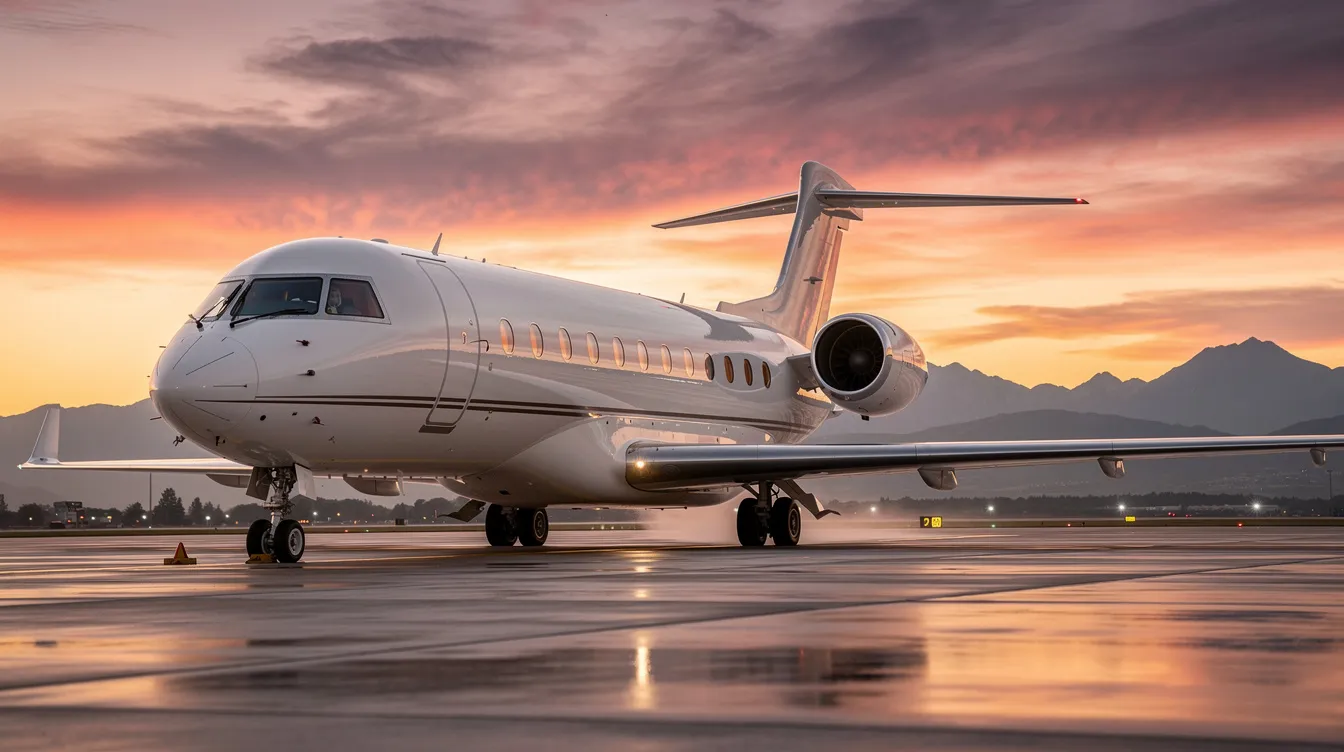
August 9, 2026
The private jet market spans everything from single-engine jets like the Cirrus Vision Jet to ultra long range aircraft capable of connecting distant cities nonstop. Popularity in private aviation is driven by cabin comfort and operational range, but also by delivery volume, charter demand, fleet reliability, and residual value. Private jets save 5–10 hours per trip compared to commercial alternatives, offering direct access to regional airports, eliminating commercial check-in delays, providing flexible departure times, and allowing faster boarding with immediate takeoff readiness. For business and leisure travelers evaluating how to fly privately, understanding which models dominate today's skies is the first step toward making a smarter access decision. This guide breaks down the most popular private jets across every category and explains how fractional ownership makes flying them more practical than ever.
The most popular private planes span light jets, midsize jets, super midsize jets, and ultra long range jets, each optimized for different missions and passenger counts.
The Bombardier Global 7500, Gulfstream G700, Gulfstream G650ER, and Dassault Falcon 8X set the benchmark among long range and ultra long range heavy jets in modern business aviation.
Light jets like the Embraer Phenom 300E — a best-selling light jet known for its efficiency — and midsize jets like the Cessna Citation Latitude, which offers a spacious flat-floor stand-up cabin, balance speed, exceptional fuel efficiency, and cost for frequent regional travel.
The Bombardier Challenger 3500 is recognized for its smooth ride and eco-friendly materials, with super-midsize jets like it averaging approximately 3,400 nautical miles of range.
BlackJet Fractional Jet Ownership offers a smarter way to access these best private jets through fractional ownership and membership programs instead of full ownership.
Clients typically need 25–150 flight hours per year, making fractional programs a natural fit for predictable, cost-efficient private jet travel.
Popularity in private aviation is driven by cabin comfort and operational range, but also by delivery volume, charter demand, fleet reliability, and residual value. The market for private aviation is evolving with new jet models offering enhanced capabilities, and private jet demand spans performance classes from light aircraft to ultra long range jets. Between 2020 and 2025, business aviation saw strong growth as executives prioritized nonstop global connectivity and the time savings that come with flying privately. Private jets save 5–10 hours per trip compared to commercial alternatives, offer direct access to regional airports, allow flexible departure times, eliminate commercial check-in delays, and provide faster boarding and immediate takeoff readiness.
This article starts with flagship heavy jets, steps through super midsize and light jet categories, and then explains how BlackJet Fractional Jet Ownership helps clients pick and access the right aircraft through fractional and membership models.
Ultra long range jets carry 12–19 passengers across 7,000 or more nautical miles, connecting city pairs like New York–Hong Kong or Los Angeles–Sydney without a fuel stop. These large jets feature multiple cabin zones, advanced avionics, and pressurization systems that maintain a remarkably low cabin altitude even at cruise altitudes above 45,000 feet. Ultra-long-range jets can connect distant cities nonstop, which is why they are often considered the best private jets in the world for heads of state, global CEOs, and ultra-high-net-worth families. Heavy jets often quote from $10,000 to $25,000 per flight hour on the charter market, reflecting their intercontinental capability and unmatched luxury.
The Bombardier Global 7500 stands as the flagship of the Bombardier Global family and a reference point for ultra long range performance. With a maximum range of 7,700 nautical miles, a top speed near Mach 0.925, and seating for up to 19 passengers, the Global 7500 has anchored global business aviation fleets since entering service in late 2018.
What sets this private aircraft apart is its four zone cabin layout, which includes:
A main lounge
A conference room and dining area
A master suite with a stand up shower option
A dedicated crew suite
The cabin stretches roughly 54 feet in length with a width of approximately 8 feet and a height of 6 feet 2 inches, offering a luxurious cabin environment with advanced noise reduction and cutting edge technology including the Nuage seat and modern cabin management systems. The whisper quiet cabin and low cabin altitude reduce fatigue on extended flights spanning 15–17 hours.
Many fractional and corporate fleets prioritize the Bombardier Global 7500 for its long range reliability, strong OEM support, and the ability to conduct business meetings or rest in a private bedroom while crossing oceans.
Gulfstream dominates the long range and ultra long range segment with two standout models favored by multinational corporations and governments worldwide.
The Gulfstream G700 has a range of 7,500 nautical miles at Mach 0.85 long-range cruise, with a maximum operating speed of Mach 0.935. Its cabin is the widest and tallest in Gulfstream's lineup:
Approximately 56 feet 11 inches long
8 feet 2 inches wide
6 feet 3 inches tall
The G700 offers up to five distinct living spaces including an ultragalley and a grand suite. Twenty panoramic oval windows flood the spacious cabin with natural light, and advanced technology in the flight deck ensures precise operations on routes like Dubai–New York or London–Buenos Aires nonstop.
The Gulfstream G650ER can travel 7,500 nautical miles nonstop at Mach 0.85, with proven reliability and one of the largest installed fleets among ultra long range jets in the world. Its extended range, cabin volume of approximately 2,138 cubic feet, and dense global availability make it one of the most chartered ultra long range aircraft on the planet. The Gulfstream G650ER can reach speeds of Mach 0.925, making it one of the fastest in its class. The Gulfstream G550, a predecessor, still holds a strong position with a maximum range of 6,750 nautical miles.
Both models are strategic choices inside fractional or membership fleets for clients who need predictable access to ultra long range heavy jets without full private jet ownership.
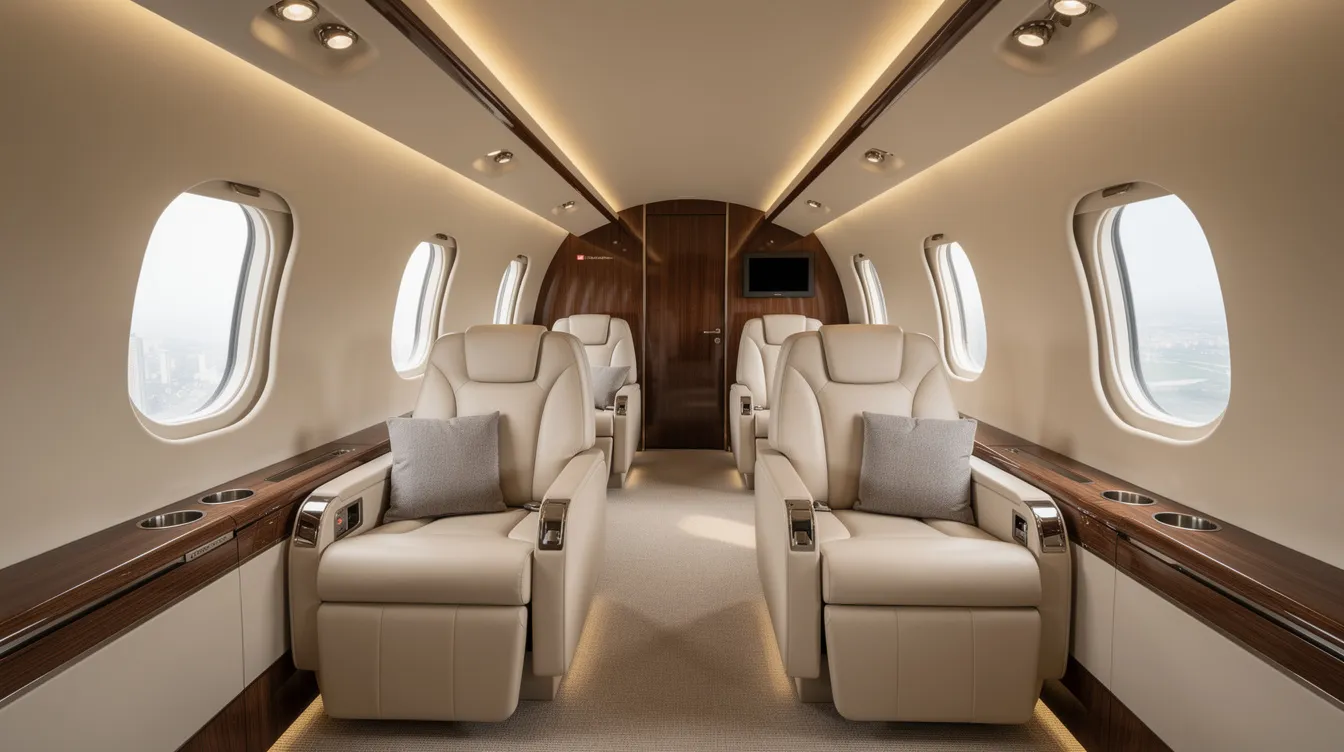
Dassault Aviation's Falcon 8X and 7X are long range large jets known for exceptional fuel efficiency, advanced technology, and the ability to access challenging airports with short runways or steep approaches-including destinations like London City Airport.
The Falcon 8X provides around 6,450 nautical miles of range while cruising near Mach 0.90. Its tri-jet configuration provides redundancy and performance on demanding runways that many twin-engine competitors cannot serve. The quiet cabin accommodates up to 16 passengers across a customizable, three-lounge layout with a fully equipped galley, private lavatory, and optional shower. With a cabin volume of roughly 1,695 cubic feet, the 8X is a highly versatile aircraft that combines long range with lower operating costs than comparably ranged competitors.
The Falcon 7X delivers approximately 5,950 nautical miles of range with similar tri-jet versatility, often deployed where airport performance and flexibility matter as much as raw distance. The Dassault Falcon 10X, set for its first flight in 2026, will offer a range of 7,500 nautical miles, positioning Dassault for the next generation of ultra long range competition.
A fractional program might assign Falcons for routes into challenging airports or missions where passenger count and runway conditions favor their advanced wing design and lower fuel burn, compared to Global or Gulfstream alternatives.
Large cabin jets based on airliner-derived platforms offer residential-style interiors for 15–30 passengers. These VIP airliners serve as flying residences for heads of state, global brands, and high-profile corporate roadshows. Large jets are designed for transcontinental and intercontinental travel, and their bespoke amenities set them apart from purpose-built business jets.
The Embraer Lineage 1000E offers approximately 4,600 nautical miles of range with a multi-zone cabin including:
A bedroom
Stand up shower
Conference room
Fully equipped galley
It seats up to 19 passengers with unparalleled luxury. Boeing Business Jets such as the BBJ 787 and Airbus ACJ319neo represent ultra-large, ultra long range options with ranges nearing or exceeding 9,000 nautical miles and fully customized, multi-bedroom layouts.
These aircraft carry higher operating costs and are less common in fractional fleets. BlackJet-style clients typically encounter them through ad-hoc private jet charter for special events or multi-leg international itineraries where ample storage space, passenger capacity, and cabin space outweigh cost sensitivities. For reference, even a short charter like London–Paris averages £7,600, while the same route on a Gulfstream G550 averages £26,100—illustrating how aircraft size directly impacts pricing.
Super midsize jets offer a sweet spot: transcontinental range, stand-up cabins, and lower operating costs than heavy jets—making them some of the most popular aircraft for frequent business aviation missions. Midsize jets commonly price between $5,500 and $12,000 per flight hour on the charter market.
The Bombardier Challenger 350 has a maximum range of 3,200 nautical miles, while the updated Bombardier Challenger 3500 is recognized for its smooth ride and eco-friendly materials, with an average range of approximately 3,400 nautical miles. Both seat 8–10 passengers in a quiet cabin optimized for U.S. coast-to-coast routes like New York–Los Angeles. Super midsize jets offer long-range capabilities and upgraded interiors compared to their midsize counterparts.
The Cessna Citation Longitude delivers approximately 3,500 nautical miles of range at near Mach 0.84 cruise, combining operating efficiency, cabin comfort, and advanced avionics in a strong package for transcontinental missions with fewer than 10 passengers.
The Gulfstream G500 bridges super-midsize and large jet capabilities with approximately 5,300 nautical miles of range, advanced technology, and a spacious cabin that appeals to clients needing extended range without stepping up to a full heavy jet.
Super midsize jets are often the backbone of fractional aircraft ownership fleets because they handle 4–8 hour missions, support multiple city pairs in a single day, and deliver a luxurious cabin without heavy-jet hourly costs.
Light jets and midsize jets are the workhorses of regional and medium-haul business aviation—ideal for 1–4 hour flights, 4–9 passengers, and airports closer to clients' homes or offices. Light jets typically seat 4–8 passengers and charter for $3,500 to $5,500 per flight hour.
The Embraer Phenom 300 is the best-selling light jet since 2012, with the Embraer Phenom 300E recognized as the most popular light jet for its efficiency. Over 900 units are in service across 70 countries, accumulating more than 2.9 million flight hours. The Phenom 300E offers approximately 2,010 nautical miles of range, a high-speed cruise near 464 knots, and a refined cabin with luxurious amenities in the light jet category.
The Cessna Citation Latitude offers a spacious flat-floor stand-up cabin with approximately 2,700 nautical miles of range, seating up to 9 passengers. It has been the best-selling midsize jet for nine consecutive years. Midsize jets allow for coast-to-coast flights comfortably, and the Latitude's flat floor, baggage capacity of roughly 127 cubic feet, and Garmin G5000 avionics make it a popular private jet in its class. The Citation XLS+ serves as a versatile crossover with light-jet operating economics and midsize comfort.
The Pilatus PC-24 is a highly versatile aircraft with around 2,000 nautical miles of range and the ability to use short or unimproved runways, making it a popular aircraft for remote destinations. The HondaJet Elite and similar newer-generation very light jets demonstrate how advanced aerodynamics and efficient engines continue pushing the light jet space forward, appealing to owners and fractional programs needing low operating costs and high utilization. The private aviation market includes single-engine jets to ultra-long-range jets, giving clients options at every level.
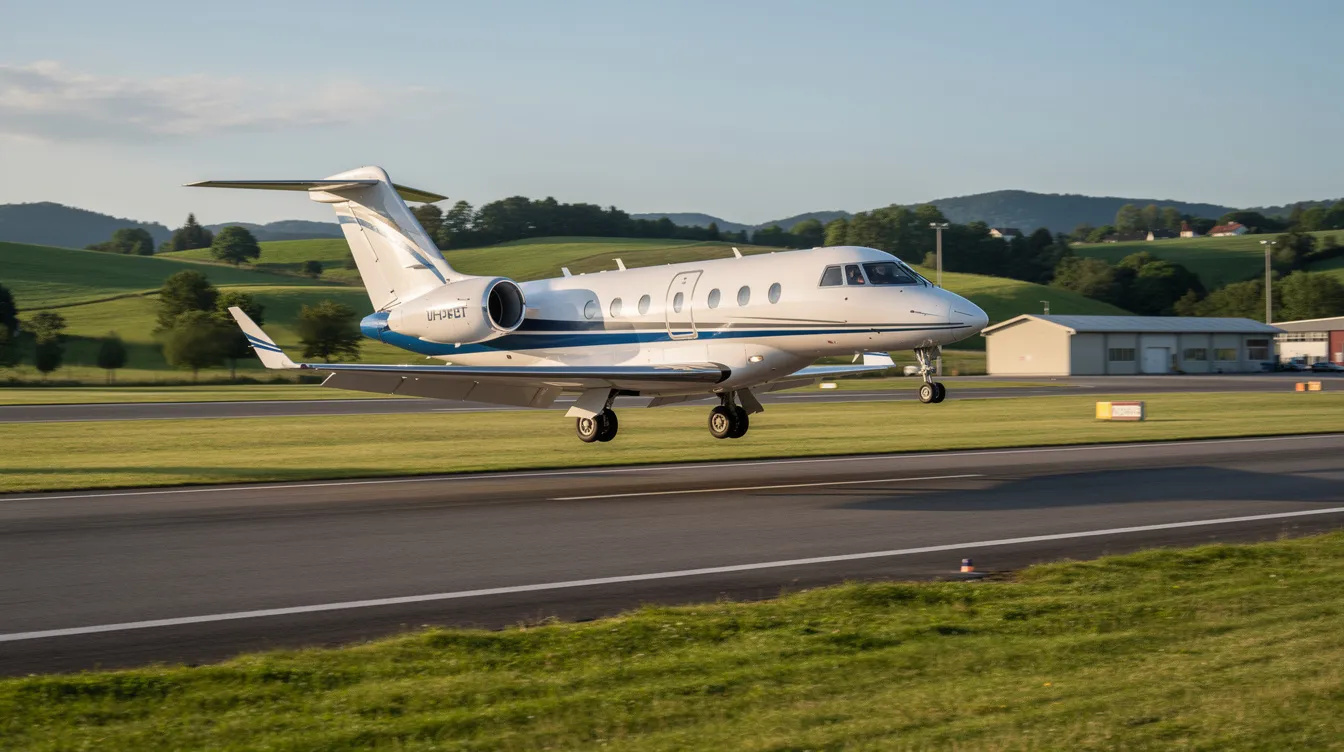
Fractional ownership allows shared access to private jets by purchasing a share—typically 1/16 or 1/8 fractional jet ownership—of a specific aircraft, entitling the owner to a fixed number of flight hours per year with professional aircraft management and guaranteed availability. In private aviation, higher operational economics leads to increasing demand for fractional ownership as the smarter alternative, and understanding core fractional jet ownership terminology helps prospective users compare programs effectively. Private aviation services often target high-frequency travelers or corporations with specific flight hour needs.
BlackJet Fractional Jet Ownership offers two core models:
Equity Fleet - fractional ownership of specific aircraft types, including popular light jets and large jets, with priority access, custom aircraft sourcing, and tax benefits. Fractional ownership provides tax benefits for jet owners through depreciation and business-use deductions.
Reserve Fleet - a membership-style model offering flexible pay-as-you-go hours without ownership costs, ideal for clients who value flexibility and no asset risk.
The most popular private planes anchor these programs because they offer easier maintenance, parts availability, standardized crew training, and predictable performance. BlackJet helps clients match aircraft category to mission profile based on annual flight hours, typical routes, and passenger count—whether the requested jet is a light jet for regional hops or an ultra long range flagship for intercontinental missions, while also advising on fractional jet ownership financing options when clients choose to purchase shares. Private jet ownership makes sense for those flying over 400 hours annually, but for most travelers in the 25–150 hour range, understanding the total cost of fractional jet ownership confirms that fractional ownership or membership delivers better economics.
"Most popular" does not mean "best for everyone." The right aircraft depends on trip length, group size, baggage capacity, and preferred airports.
Light jets - ideal for 2–3 hour regional flights with 2–6 passengers, frequent business hops, lower hourly cost, and nimble access to smaller airports.
Midsize and super midsize jets - best for coast-to-coast flights in the United States, U.S.–Caribbean, or U.S.–Central America routes with 6–9 passengers who need more baggage and a larger, quiet cabin.
Heavy and ultra long range jets - the right choice for intercontinental business trips, board-level travel, and family journeys where nonstop range, multiple cabin zones, and dedicated rest areas justify higher operating costs.
Weather conditions, passenger count, and runway requirements all influence the selection. BlackJet recommends that clients review their last 12–24 months of travel to map the most suitable aircraft category and access model—whether that is a fractional share, membership, or occasional charter.
Popularity tracks closely with modern expectations: advanced avionics suites, strong safety standards, high-speed connectivity, and growing focus on sustainability across business aviation. Private jet features often include large cabins and advanced technologies that rival or exceed commercial airline standards.
Key innovations found across the highlighted private jet models include:
Cockpit technology:
Synthetic and enhanced vision systems
Autothrottle
Multiple redundant flight systems
Cabin technology:
Remarkably low cabin altitude systems
Active noise reduction
High-speed Wi-Fi
App-based cabin management for lighting and temperature
Multi-zone layouts enhancing both productivity and rest during extended flights
Sustainability:
Sustainable aviation fuel is now a standard in private aviation
Carbon offset programs
More efficient engines reducing per-passenger emissions compared with earlier-generation business jets
BlackJet works with operators that prioritize modern aircraft, rigorous maintenance regimes, and sustainability initiatives, aligning high-end private aviation with responsible travel expectations.
The most popular private planes represent proven performance, reliability, and cabin comfort across every mission profile. Whether the need is a Phenom 300 for a two-hour regional hop or a Bombardier Global 7500 for a nonstop transatlantic crossing, the question is not which jet is best—it is how to access it efficiently.
BlackJet's Equity Fleet places clients into fractional shares of popular jet types matched to their typical mission profile, from light jets to long range private jets, aligning with the broader fractional jet ownership investment benefits and considerations that many high-frequency travelers evaluate. The Reserve Fleet model provides business jet access with pay-as-you-go hours, ideal for leisure travelers and executives flying 25–150 hours per year who value flexibility without asset risk.
Key benefits include:
Predictable hourly costs
Professional aircraft management
Guaranteed availability windows
Access to multiple aircraft categories under a single relationship
These are similar to the advantages highlighted in leading fractional jet ownership programs for smart investors. For those exploring the cost of fractional jet ownership, BlackJet provides transparent breakdowns tailored to each client's travel patterns and helps owners plan ahead for eventual sale or transfer of a fractional share.
Ready to explore the smarter way to fly private? Visit FractionalJetOwnership.com to schedule a consultation, compare options, and design a personalized private aviation strategy built around the most popular private planes on the market.

Popularity varies by category. In the light jet category, the Embraer Phenom 300 has led deliveries since 2012. The Cessna Citation Latitude and Bombardier Challenger 350/3500 dominate the midsize and super-midsize segments. Among ultra long range heavy jets, the Bombardier Global 7500, Gulfstream G650ER, Gulfstream G700, and Dassault Falcon 8X lead global charter demand and fleet counts. These models consistently rank as the most popular private jets because they balance range, reliability, and cabin comfort.
Leading ultra long range jets offer ranges of 7,500–8,000 nautical miles. The Bombardier Global 7500 has a range of 7,700 nautical miles, while the Gulfstream G700 has a range of 7,500 nautical miles. These distances cover most nonstop intercontinental pairs such as New York–Hong Kong or Singapore–San Francisco. Actual range varies with payload, weather conditions, and routing.
Some newer light jets may technically reach certain coast-to-coast routes with favorable winds and light loads, but most travelers prefer a midsize jet like the Citation Latitude or a super midsize jet like the Challenger 350 for U.S. east–west missions. These offer more comfortable cabins, better baggage capacity, and fewer fuel stops, making them the practical choice for cross-country private jet travel.
Frequent flyers in the 25–150 hour per year range often find fractional aircraft ownership or structured membership programs more predictable and cost-efficient than ad-hoc charter. Fractional programs offer guaranteed access to popular jets, fixed hourly pricing, and professional management. Occasional flyers under 25 hours per year may still find on-demand charter more economical, though with less consistency in aircraft type and availability compared with floating fleet fractional ownership options that emphasize flexibility over dedicated aircraft control.
BlackJet works with clients to align them with appropriate aircraft categories and, where possible, specific private jet models within its Equity and Reserve Fleets. Availability depends on share structure, fleet composition, and mission requirements. Clients interested in a particular model are encouraged to contact the team at FractionalJetOwnership.com to discuss detailed aircraft preferences, liability and insurance coverage considerations, and design a tailored access plan.
Choosing the right private jet is about matching your travel needs with proven performance, comfort, and operational efficiency. From the versatile and efficient Embraer Phenom 300E light jet to the ultra-long-range Bombardier Global 7500 flagship, the most popular private planes offer a range of options tailored to diverse missions and passenger requirements. Fractional jet ownership through BlackJet Fractional Jet Ownership provides a practical, cost-effective way to access these top-tier aircraft without the full financial and operational burdens of sole ownership, especially when owners understand the essential contract terms in fractional jet agreements that govern rights and responsibilities.
With fractional ownership and membership models, clients gain guaranteed availability, predictable costs, and expert management, supported by well-structured fractional ownership contracts and sample agreements that define how costs and usage are shared. Whether flying regionally or across continents, these popular jets deliver the flexibility, privacy, and efficiency that modern travelers demand.
Ready to explore the smarter way to fly private? Visit FractionalJetOwnership.com to learn how fractional ownership can transform your travel experience and provide seamless access to the world’s most popular private jets.
