July 11, 2026
Private jet rental costs range from $2,000 to $14,000 per hour depending on aircraft size, route, and timing. For travelers flying more than a handful of trips each year, the math behind on-demand charter versus fractional jet ownership shifts quickly. This guide breaks down what private jet rental prices actually look like in 2026, how pricing works beneath the surface, and when it makes financial sense to move from renting to owning a share of a private jet through a program like BlackJet Fractional Jet Ownership.
The short answer: it depends on the aircraft. Private jet rental costs in 2026 typically range from roughly $2,000 per hour for a turboprop to well over $14,000 per hour for a large-cabin jet. VIP airliners, configured for 16–50 passengers, can cost $16,000 to $23,000 per hour. These are rates for the entire aircraft—not per seat—and generally include the plane, crew, fuel, and standard insurance.
Here is how hourly rates break down by category:
Turboprops: $2,000–$3,000/hr
Turboprops are propeller-driven aircraft that are cost-effective for short regional flights of 300–800 miles. They typically seat 6–8 passengers, access short runways at regional airports, and keep hourly rates in the $2,000–$3,000 range.
Light jets: $3,000–$4,500/hr (light jets typically cost between $4,000 and $6,000 per hour on popular routes with add-ons factored in)
Light jets are suitable for short regional flights and typically cost between $4,000 and $6,000 per hour. Very Light Jets typically seat 4–6 passengers. Standard light jets accommodate up to 7 passengers on legs of 1.5–3 hours.
Midsize jets: $4,500–$6,500/hr (midsize jets are priced around $6,000 to $8,000 per hour on high-demand corridors)
Midsize jets can accommodate 6–8 passengers and fly cross-country with stand-up cabins and meaningful luggage capacity.
Super midsize jets: $6,500–$9,000/hr
Super Midsize Jets offer more cabin space and range, filling the gap between midsize and heavy jets for transcontinental routes.
Large cabin / heavy jets: $9,000–$15,000+/hr
Large Jets typically seat 10–19 passengers and are ideal for long-haul flights.
VIP airliners: $18,000–$25,000+/hr
Ultra Long Range Jets can fly over 6,000 nautical miles non-stop, enabling routes like New York–London or Los Angeles–Tokyo without fuel stops.
Practical example: A one-way flight from New York (Teterboro) to Miami on a light jet takes about 2.5–3 hours. Expect a total cost of roughly $12,000–$18,000 once you add positioning, landing fees, and taxes. The same trip on a midsize jet runs closer to $15,000–$25,000, but with a stand-up cabin, more luggage space, and room for 6–8 passengers.
For frequent flyers logging 25 to 150 hours per year, these per-trip costs add up fast. That is where fractional jet ownership or a structured membership through BlackJet Fractional Jet Ownership can reduce the effective hourly rate and bring predictability to what is otherwise a highly variable expense.
On-demand private jet charter and fractional aircraft ownership solve the same problem-getting you from point A to point B privately-but the financial structures are fundamentally different. Private jet rental means paying per trip with no long-term commitment. Fractional jet ownership means purchasing a share of a specific aircraft type, securing a fixed number of flight hours per year, and sharing proportional costs with other owners.
BlackJet bridges these two models through its Equity Fleet (fractional ownership with priority access and tax advantages) and Reserve Fleet (pay-as-you-go membership without equity). Rental services provide flexibility to try different styles without a long-term commitment, while ownership locks in rates and availability.
Key decision factors:
Annual flight hours: Under ~25 hours/year, charter is often the best value. Between 25–150 hours/year, fractional or membership programs deliver better economics. Above 150 hours/year, a large fractional share or wholly owned aircraft deserves evaluation.
Guaranteed availability: Fractional programs provide priority scheduling; charter depends on aircraft availability at booking time.
Tax benefits: Ownership may allow depreciation; charter is a straight operating expense.
Predictable pricing: Fractional and membership programs stabilize costs; charter rates fluctuate with seasonal demand and fuel prices.
Quick comparison:
Factor | On-Demand Charter | Fractional Ownership | Membership / Reserve Fleet |
|---|---|---|---|
Upfront cost | None | Equity purchase | Deposit or commitment |
Rate predictability | Low | High | Moderate–High |
Aircraft consistency | Varies | Your aircraft class | Program fleet |
Tax depreciation | No | Potentially yes | No |
Best for | <25 hrs/yr | 25–150 hrs/yr | 25–75 hrs/yr |
Private jet pricing is not a simple ticket price. It is built from hourly rates layered with trip-specific fees that can add 20–40% above the base quote. Understanding this structure is essential before comparing any private jet charter to a fractional program.
The main pricing inputs:
Hourly rates by aircraft type (see ranges above)
Minimum flight times: Most operators enforce a 2-hour daily minimum per leg, even if the actual flight is shorter
Taxi and positioning time: If the aircraft must reposition to your departure airport, that ferry leg is billed
Overnight charges: Crew hotel, hangar fees, and aircraft parking for multi-day trips
Common add-ons that increase your bill:
Private jet rentals incur a 7.5% US Federal Excise Tax on the transportation charge
Domestic segment fees of $5.30 per passenger per leg
International head tax of $23.40 per passenger on international flights
Fuel surcharges can add 10–15% to rental costs
Airport handling and landing fees at FBOs
De-icing charges during winter months
Overnight crew expenses can increase total rental costs significantly on multi-night itineraries
Numeric scenario: You book a light jet for a 3-hour flight. The operator needs 1 hour to position the aircraft to your departure airport. After adding the 2-hour daily minimum on arrival day and positioning, your billable time becomes roughly 4–5 hours. At a $4,000/hr base, that is $16,000–$20,000 before taxes, fuel surcharges, and segment fees push the total closer to $19,000–$24,000. Charter costs can increase for multi-night stays and itinerary changes.
Busy travel windows-Christmas through New Year, Art Basel Miami, Davos, and other major holidays-drive rates higher and tighten availability. Membership and fractional programs convert many of these variable costs into predictable hourly rates and known monthly obligations.
Aircraft selection is the single largest driver of both cost and comfort on private flights. Choosing the right category for your typical mission avoids paying for excess capacity.
Turboprops (e.g., King Air 350) are cost-effective for short regional flights of 300–800 miles. They seat 6–8 passengers, access short runways at regional airports, and keep hourly rates in the $2,000–$3,000 range. Ideal for regional charter hops.
Light jets (e.g., Citation CJ3, Learjet 45XR). Light jets are suitable for short regional flights and typically cost between $4,000 and $6,000 per hour. Very Light Jets typically seat 4–6 passengers. Standard light jets accommodate up to 7 passengers on legs of 1.5–3 hours. Light jets are the workhorses of domestic private jet travel for smaller groups.
Midsize jets (e.g., Citation XLS+, Gulfstream G280) can accommodate 6–8 passengers and fly cross-country with stand-up cabins and meaningful luggage capacity. Hourly rates typically range from $4,500–$6,500. For trips requiring coast-to-coast range or onboard productivity, midsize jets offer strong value.
Super midsize jets offer more cabin space and range, filling the gap between midsize and heavy iron for transcontinental routes like New York–Los Angeles.
Large and ultra-long-range jets. Large jets typically seat 10–19 passengers and are ideal for long-haul flights. Ultra-long-range jets can fly over 6,000 nautical miles non-stop, enabling routes like New York–London or Los Angeles–Tokyo without fuel stops. For groups needing 20 or more seats, VIP airliners serve as flying conference rooms.
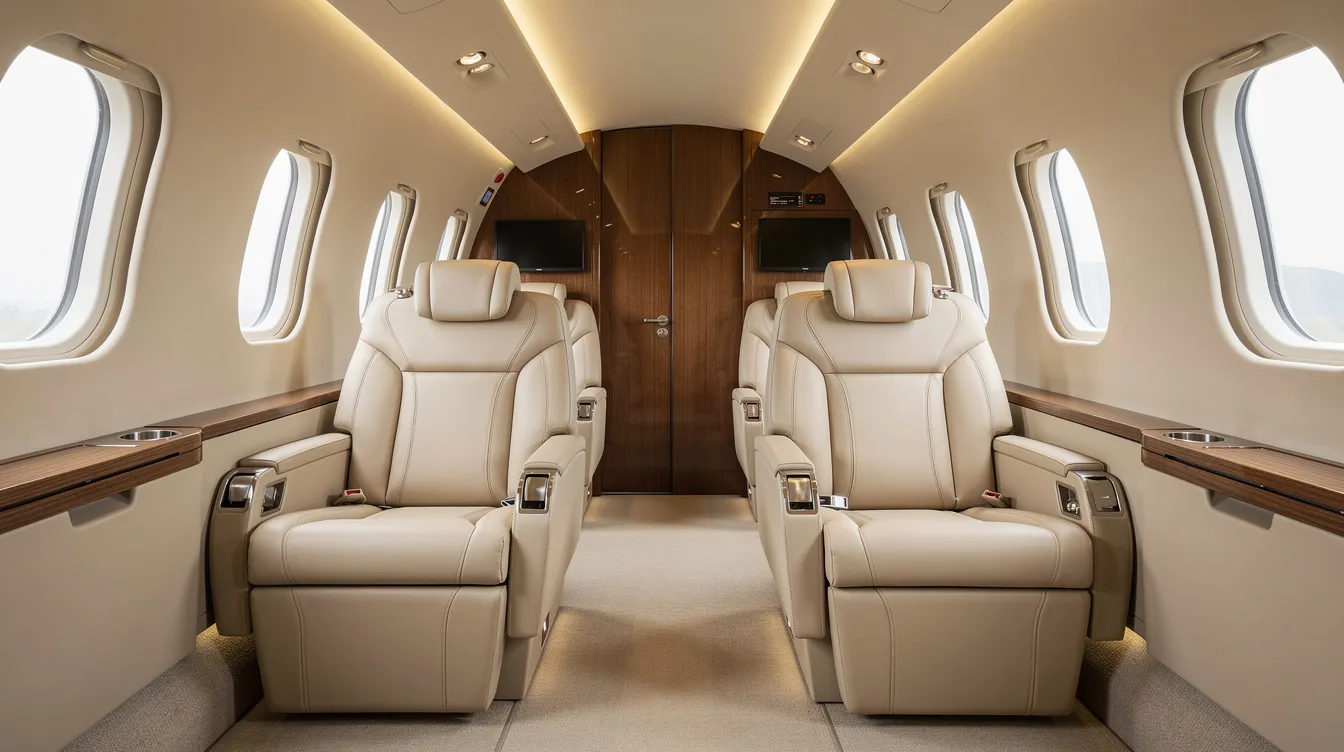
BlackJet helps clients match mission profile-passenger count, luggage volume, nonstop range, and runway requirements-to the most cost-effective aircraft category.
Concrete examples help demystify private jet pricing. Below are representative 2026 charter scenarios. All figures are approximate and reflect fully loaded costs including fees, taxes, and fuel surcharges.
New York (TEB) → Miami (OPF), same-day round trip, light jet
Flight duration: ~2.5–3 hours each way
Estimated total: $28,000–$40,000 round trip
Best for: 4–6 passengers, moderate luggage
Los Angeles (VNY) → Aspen (ASE), weekend trip, midsize jet
Flight duration: ~2 hours each way
Estimated total: $25,000–$38,000 round trip (including overnight crew and parking)
Best for: 6–8 passengers, ski equipment
Chicago (PWK) → Dallas (DAL), midweek day trip
Light jet: ~$14,000–$20,000 round trip
Midsize jet: ~$18,000–$28,000 round trip
Best for: Executive meetings, same-day return
Peak vs. off-peak impact: Friday afternoon departures and Sunday evening returns carry premium pricing. Midweek travel can reduce costs 10–20% and dramatically improve aircraft availability.
Flying any of these patterns 10–12 times per year puts you in the 50–75 hour range-exactly where evaluating fractional ownership or a Reserve Fleet membership with BlackJet starts to make financial sense.
Annual flight hours are the single most important variable in deciding whether to keep renting or transition to fractional ownership. The math is straightforward.
Under ~25 hours/year: On-demand charter, occasional jet cards, or empty leg flights remain the most efficient approach. The overhead of a fractional share or membership does not justify the usage.
25–150 hours/year: This is the sweet spot where fractional jet ownership and structured membership programs reduce effective hourly rates, guarantee availability, and remove the friction of quoting every trip. You gain schedule flexibility and transparent pricing, and a detailed breakdown of fractional ownership vs. membership programs can help clarify which structure fits your flying profile.
Above 150–200 hours/year: A large fractional share or whole aircraft ownership becomes financially attractive, especially for corporations that can spread fixed costs across departments and benefit from depreciation; at these volumes, evaluating fractional jet ownership as an investment helps clarify long-term tradeoffs versus traditional charter.
75-hour comparison: For travelers near this usage level, a detailed breakdown of the cost of fractional jet ownership can help benchmark Equity Fleet pricing against ad-hoc charter.
Ad-Hoc Charter | BlackJet Equity Fleet | |
|---|---|---|
Effective hourly rate (midsize) | $5,500–$8,000+ | ~$3,500–$5,500 (occupied hour) |
Annual flight spend (est.) | $412,000–$600,000+ | ~$260,000–$410,000 + share acquisition |
Rate predictability | Low | High |
Tax depreciation on aircraft | No | Potentially yes |
Guaranteed availability | No | Priority windows |
The total cost of fractional jet ownership depends on share size, aircraft type, and usage patterns. Before committing, audit your last 12–24 months of air travel: routes, passenger counts, trip frequency, and seasonal patterns.
BlackJet's Equity Fleet is a fractional aircraft ownership solution for travelers who fly enough to justify an ownership stake. The mechanics are simple: you purchase a fraction (typically 1/16 or 1/8) of a specific aircraft type and receive a fixed number of flight hours per year—if you're new to the space, a fractional jet ownership glossary can clarify the key terms you’ll encounter.
Core benefits: Beyond a dedicated aircraft class, some programs use a floating fleet fractional ownership model to increase availability and optimize fleet utilization across multiple regions.
Priority access to your aircraft class with guaranteed availability windows
Predictable hourly rates locked at program entry, reducing exposure to market volatility
Potential tax advantages under US law when the aircraft is used primarily for business
BlackJet handles aircraft management, crew salaries, maintenance, scheduling, and regulatory compliance
Custom aircraft sourcing matched to your typical routes and mission profiles
Typical Equity Fleet aircraft include:
Light jets (e.g., Citation CJ3) for domestic hops and short regional flights
Midsize jets (e.g., Citation XLS+) for cross-country and multi-city business travel
Super midsize jets (e.g., Gulfstream G280) for transcontinental and select international routes
Example: A business owner based in Atlanta flies regularly to New York, Chicago, and Dallas-roughly 80 hours per year. With a 1/16 share of a midsize jet in the Equity Fleet, they secure priority scheduling, consistent cabin configuration, and a known cost structure—similar principles apply when evaluating 1/8 fractional jet ownership benefits for higher-usage flyers. No broker calls, no quoting each trip, no surprises on the invoice.
Not every traveler is ready for an equity commitment. BlackJet's Reserve Fleet offers a structured, pay-as-you-go access model that sits between ad-hoc charter and fractional ownership. Members commit to a program level or deposit and receive guaranteed hourly rates, simplified booking, and priority over ad-hoc customers.
Advantages over standard private jet charter:
Reduced exposure to peak pricing and seasonal demand surcharges
Dedicated aviation advisors who know your preferences and travel patterns
Access to a curated fleet of light jets, midsize jets, and larger aircraft
No equity purchase or long-term asset commitment
Reserve Fleet is ideal for individuals and companies flying 25–75 hours per year who want the predictability of a program without the capital outlay of ownership. It also works as a complement to an Equity Fleet share, handling overflow trips or routes outside your primary region.
Feature | Standard Charter | Reserve Fleet | Equity Fleet |
|---|---|---|---|
Upfront investment | None | Deposit | Share purchase |
Rate lock | No | Yes | Yes |
Availability priority | None | Program priority | Highest priority |
Aircraft consistency | Varies | Program fleet | Your aircraft class |
Ideal hours/year | <25 | 25–75 | 50–150+ |
For a deeper look at how membership programs compare, BlackJet's advisors can model your specific usage against each option.
Side-by-side, the differences between renting and owning come down to predictability, consistency, and control.
On-demand private jet rental (charter):
Maximum flexibility-any aircraft, any route, any time
No long-term financial commitment
High variability in hourly rates, aircraft age, and cabin configuration
Each trip requires quoting, contracting, and coordination
No equity or depreciation benefits
Fractional jet ownership (Equity Fleet):
Locked-in hourly rates and priority scheduling
Consistent cabin layout and known maintenance history for your aircraft class
Single aviation partner instead of multiple brokers
Potential for depreciation and business expense deductions
Requires upfront capital and ongoing management fees
Where BlackJet improves upon pure rental:
Reserve Fleet adds rate stability and booking simplicity without ownership
Equity Fleet delivers ownership economics with professional management
Both models provide a single point of contact, eliminating the fragmentation of dealing with different operators trip by trip.
For a structured comparison of fractional ownership programs across the industry, including how BlackJet stacks up, consult with an advisor who can model your specific travel patterns, or review an overview of the best fractional jet ownership programs for additional context.
US-based business users should factor tax treatment into any private jet access decision. The differences between charter and ownership are meaningful.
Charter (on-demand rental): Typically treated as a straightforward business expense in the year flown, subject to IRS rules distinguishing business use from entertainment or personal travel.
Fractional jet ownership: May allow depreciation of the aircraft share, including potential bonus depreciation, when the aircraft is used primarily (more than 50% of hours) for qualified business purposes. The IRS classifies aircraft as "listed property," requiring careful documentation of business versus personal use. If business use drops below threshold levels, deductions are limited and recapture rules apply; a dedicated guide to the tax implications for fractional jet owners explores these rules in more depth.
Example: A corporation acquires a 1/8 share of a midsize jet and uses it 85% for business travel across the United States. The share cost, along with proportional maintenance, insurance, and management fees, may be eligible for accelerated depreciation-potentially reducing the after-tax cost per hour by 15–25% compared to the same flights booked as charter.
Tax treatment depends entirely on facts and circumstances. BlackJet coordinates with clients' tax advisors to ensure proper documentation and compliance, but does not provide tax advice.
How you define " cost-effective" changes depending on whether the trip is corporate or personal.
Business-focused benefits:
Multi-city day trips that eliminate overnight hotel stays
Productive flight time for confidential meetings and preparation
Access to secondary airports closer to client offices and manufacturing sites
Time savings that translate directly to executive productivity and ROI
Family and lifestyle use-cases:
Ski weekends in Aspen, summer in the Hamptons, college visits across the country
Multi-generational travel with privacy and comfort for elderly or young family members
Private jets allow for flexible scheduling and last-minute bookings around school and family calendars
Private jets provide a higher level of privacy compared to commercial flights, which matters equally for sensitive board discussions and family vacations. Many BlackJet clients blend business and personal travel and need clear documentation and expense tracking to satisfy internal policies, auditors, and the IRS.
Sophisticated flyers rarely rely on a single access model. The most efficient private aviation strategy blends multiple tools based on trip type, frequency, and geography.
How the pieces fit together:
Core hours on an Equity Fleet fractional share for regular domestic routes
Overflow and ad-hoc trips on Reserve Fleet or curated charter partners
Specialty missions (large group, ultra-long range, international) through on-demand private jet services
Block-hour jet card programs for departments or executives who travel sporadically
BlackJet helps clients map annual needs into a portfolio rather than treating each trip as an isolated transaction. The goal is to build a multi-year strategy where cost, convenience, and access are optimized across all travel patterns, whether you’re drafting an aircraft fractional ownership contract for a new share or planning ahead to sell your fractional jet ownership stake later in the program lifecycle.
Think in terms of three to five years, not single trips, when comparing private jet costs and value. Private aviation market conditions evolve, and the right mix today may shift as your business grows or travel patterns change.
Asking the right questions upfront prevents surprises in private jet pricing and service quality.
Safety and compliance:
What safety ratings does the operator hold? Look for Argus Platinum, Wyvern Wingman, or IS-BAO certification.
What is the average age of the fleet, and are aircraft equipped with advanced avionics?
How does the operator handle crew fatigue management and weather-related cancellations?
Cost-specific questions:
What is included in the quoted hourly rate? (Crew, fuel, insurance, or are those additional costs?)
How is aircraft positioning billed-full hourly rate or discounted?
What minimum flight times apply per leg and per day?
What is the cancellation policy, and are deposits non-refundable?
Operational questions:
Is a backup aircraft available if the assigned plane has a mechanical issue?
What are the policies on pets, smoking, and Wi-Fi availability?
How are catering, ground transportation, and customs handled?
BlackJet standardizes these answers for clients, acting as a single point of contact and due diligence layer across all private flights, while specialized guidance on essential fractional ownership contract terms helps future owners avoid surprises.
Safety and regulatory compliance come before price in every responsible private aviation decision.
In the United States, on-demand charter operations operate under FAA Part 135 certification, which governs pilot licensing, crew duty and rest limits, maintenance standards, operational control, drug and alcohol testing, and safety management. Fractional ownership programs operate under Part 91 Subpart K with additional oversight requirements.
Third-party safety auditing frameworks add another layer of accountability:
ARGUS: Rates operators as Gold, Platinum, or unrated based on safety history and operational standards
Wyvern Wingman: Evaluates pilot qualifications, training, and operational practices
IS-BAO: International Standard for Business Aircraft Operations, a code of best practices
BlackJet vets operators across its Reserve Fleet and manages safety standards within its fractional programs, including recurrent training, maintenance monitoring, and conservative dispatch practices. Safety culture means more than paperwork-it includes fatigue management, weather decision-making, and a willingness to delay or cancel when conditions demand it.
Even if it means bypassing the lowest-priced quote, always prioritize operators with verified safety credentials. A secure flight is worth more than a few thousand dollars saved.
Many new private flyers are upgrading from airline business or first class. The comparison is more nuanced than sticker price alone.
Non-price advantages of private jet travel:
Bypassing TSA lines and commercial terminal congestion
Private jets offer direct access to over 5,000 airports in the US, many unreachable by airlines
Departing on your schedule, not the airline's
True privacy for calls, meetings, or family time
Private jet charters can be customized to meet specific passenger needs
Group cost example: Six executives flying from New York to Dallas round trip in early 2026. Commercial first class runs roughly $1,800–$2,500 per person round trip, totaling $10,800–$15,000 for the group. A midsize jet charter for the same route costs approximately $22,000–$32,000 round trip-but saves each executive 4–6 hours of total travel time by eliminating check-in, security, connections, and ground transfers. Private jet travel reduces total travel time significantly when measured door-to-door.
For a group of six or more, the per-person premium over commercial flights narrows considerably. When you factor in the productivity gained and hotel nights eliminated, private air travel often delivers the best value for senior teams.
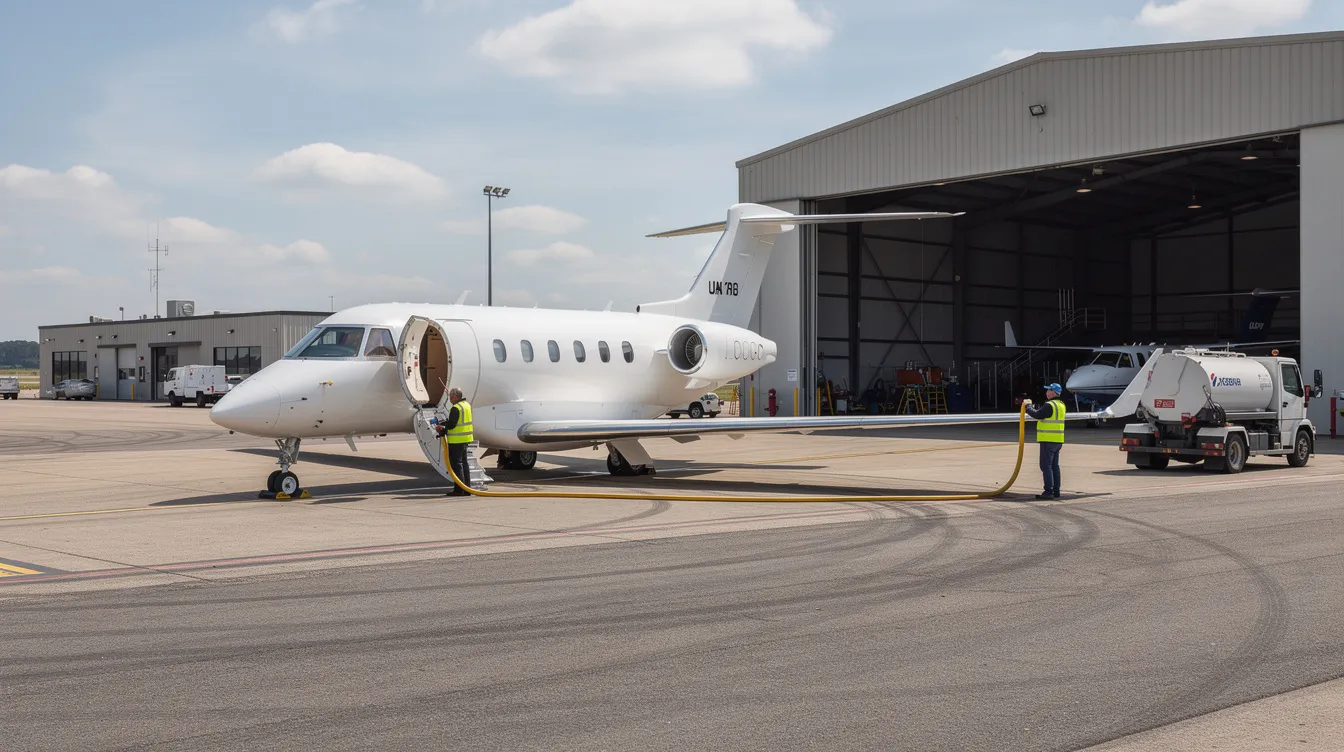
Domestic US private flights and long-haul international private jet travel require different aircraft, planning, and budgets.
Popular domestic routes (light jet or midsize jet):
New York–Chicago: ~2 hours, light jet adequate
Los Angeles–Seattle: ~2.5 hours, light or midsize
Dallas–Miami: ~2.5 hours, light or midsize
Popular international routes (super midsize, heavy, or ultra long range):
New York–London: ~7 hours, large cabin jet required
Los Angeles–Hawaii: ~5.5 hours, super midsize or heavy jet
Miami–São Paulo: ~8 hours, ultra-long range or heavy jet with tech stop
International flights add complexity: overflight permits, customs and immigration clearance, international handling fees, crew visas, and potential fuel stops. These additional costs and logistics are layered on top of higher hourly rates for the larger aircraft required.
BlackJet structures solutions for both US-centric executives flying between major hubs and globally mobile families or corporate teams. For dedicated options on long-range aircraft, BlackJet's advisors can match aircraft capability to specific route demands.
Empty leg flights are repositioning flights sold at a discount when an aircraft must fly without revenue passengers, either returning to base or heading to its next pickup. They can provide significant discounts on charters, often 25–75% below standard rates.
How to leverage empty legs:
Monitor busy corridors: New York–Florida, Los Angeles–Las Vegas, Chicago–East Coast
Maintain flexibility on exact departure times and dates
Let BlackJet track and propose suitable empty legs that align with your calendar
Combine empty legs with a broader fractional or membership strategy for frequent flyers
Other scheduling strategies for better rates:
Fly midweek instead of Friday/Sunday to avoid peak pricing
Choose secondary airports when possible (e.g., Teterboro over JFK, Van Nuys over LAX)
Book 24–72 hours in advance for the best aircraft selection and pricing
Avoid major holidays and events when seasonal demand peaks
Caveat: Empty legs are less reliable. Departure times can shift, routes may change if the underlying charter changes, and last-minute adjustments are harder to guarantee. They are best for leisure and non-critical trips where schedule flexibility is not a constraint.
Here is what the typical private jet rental process looks like from first inquiry to wheels-up.
1. Trip request: Specify dates, times, departure and arrival airports, passenger count, luggage requirements, and any special needs (pets, catering, medical equipment). Instant quotes require specific travel details for accuracy.
2. Quote and selection: Receive quotes from your advisor or platform. Compare aircraft type, total cost, and aircraft positioning requirements. Private jet charters are often booked on-demand, not pre-scheduled.
3. Contract and payment: Sign the charter agreement, wire funds or draw from your membership balance, and confirm the tail assignment. Booking a private jet typically requires 3–6 hours' notice for short-notice trips, though 24 to 72 hours in advance offers the best selection of aircraft and pricing.
4. Day of flight: Arrive at the FBO (private terminal) 15–30 minutes before departure. No TSA lines, no boarding groups. Your luggage is loaded directly onto the aircraft. Ground transportation can be arranged to meet you on the ramp.
5. In-flight and arrival: Enjoy the flight with your passengers. On arrival, deplane directly to your ground transportation at the destination airport. No baggage carousel, no customs lines (for domestic flights).
BlackJet clients work through a dedicated aviation advisor who manages scheduling, confirmations, and any last-minute changes-removing the logistical burden from the traveler.

Corporate groups, sports teams, and touring executives use private jet rental differently from leisure travelers. The focus is on time savings, reduced hotel nights, and productivity-not luxury.
Common corporate use-cases:
Investor roadshows hitting three to four cities in two days
Regional office visits for senior leadership
Board meetings across multiple US cities
Event-related team shuttles (conferences, product launches, client summits)
Multi-city example: A CFO and three executives need to visit Detroit, Chicago, and Dallas over two days, departing from New York. Commercial flights would require three separate bookings, two overnight stays, and roughly 16 hours of total travel time. A midsize jet charter completes the same itinerary in approximately 8 hours of flight time, with same-day returns and zero hotel nights.
BlackJet can design recurring shuttle programs, fractional solutions, or blended fleet strategies for firms flying between major US business hubs. For organizations with regular multi-city needs, a fractional share or Reserve Fleet membership often delivers the best combination of schedule flexibility and cost predictability.
Private jets carry a higher per-passenger carbon footprint than commercial flights. Many clients and corporations increasingly factor environmental impact into their aviation decisions.
Current industry tools and trends:
Sustainable Aviation Fuel (SAF): A drop-in replacement for conventional jet fuel that reduces lifecycle carbon emissions. Adoption is growing, but SAF remains a premium product in 2026.
Carbon offset programs: Third-party verified programs that fund emissions reduction projects proportional to flight carbon output.
Fleet modernization: Newer light jets, midsize jets, and super-midsize aircraft are significantly more fuel-efficient than older models. Aircraft with advanced avionics and modern engines burn less fuel per nautical mile.
Optimized routing and higher load factors: Reducing empty legs and filling seats lowers per-passenger impact.
BlackJet prefers newer, fuel-efficient aircraft across its fleet and can facilitate offset programs through partner organizations. Readers should include environmental criteria alongside cost and convenience when building a private aviation strategy.
Booking 24 to 72 hours in advance typically offers the best aircraft selection and competitive pricing. Same-day booking is possible with as little as 3–6 hours' notice, though options may be limited.
Yes. Private jet charters are often booked on-demand, not pre-scheduled. A dedicated advisor can secure an aircraft within hours for urgent travel.
Most operators welcome pets in the cabin. Confirm any breed or size restrictions with your operator or BlackJet advisor before booking.
One of the core advantages of private jet access options is schedule flexibility. Depending on crew duty limits and subsequent bookings, departure times can often be adjusted on the same day. Fractional and membership programs typically offer more latitude than an ad hoc charter.
Jet cards involve prepaying for a block of flight hours at a fixed rate, with no equity in an aircraft. Fractional ownership through BlackJet's Equity Fleet means purchasing a share of a specific aircraft type, with the potential for depreciation, residual value, and priority scheduling. Jet cards are simpler; fractional ownership is more cost-effective for consistent, higher-volume travelers.
For solo travelers, rarely. But for groups of 6–8 passengers, the per-person cost of a midsize jet charter on routes like New York–Dallas or Chicago–Miami can approach or match first-class airline fares-while saving hours of travel time and offering far greater privacy and convenience.
Policies vary by operator and program. Some deposits may be non-refundable within 24–72 hours of departure. Weather disruptions are typically handled with rebooking rather than penalties. BlackJet's programs include clear cancellation terms communicated at booking.
Moving from researching private jet rental to designing a long-term private aviation solution starts with understanding your actual travel patterns. BlackJet's advisors provide bespoke flight hour and cost analyses, modeling whether on-demand charter, Reserve Fleet membership, or Equity Fleet fractional ownership delivers the most value for your specific routes, frequency, and passenger needs.
The goal is not to chase the lowest hourly rate. It is to maximize time efficiency, cost predictability, and peace of mind across every trip-business and personal.
Ready to explore the smarter way to fly private? Visit FractionalJetOwnership.com to request a private aviation strategy session. Bring your last 12–24 months of travel data, and a BlackJet advisor will map the options that fit your life and your business
