July 9, 2026
Private jet owners have seen their role shift from symbols of extravagance to strategic decision-makers focused on time savings, business efficiency, and operational control. This guide is for high-net-worth individuals, business executives, and anyone interested in understanding the realities of private jet ownership. Understanding the evolving landscape of private jet ownership is crucial for making informed decisions about business travel and investment. The global active fleet reached approximately 21,979 business aircraft by the end of 2025, with roughly 70% registered in North America and departures surpassing 3.5 million flights annually. Private jet owners like Bill Gates, Donald Trump, John Travolta, and Jay Z are the visible tip of a much larger, quieter owner base of CEOs, investors, and family offices who treat private planes as strategic infrastructure.
This article examines who private jet owners really are, what aircraft types they fly—from the Bombardier Global Express to the Gulfstream V—the true cost of aircraft ownership, and why an increasing number of wealthy individuals are choosing fractional ownership solutions like BlackJet Fractional Jet Ownership over outright ownership.
Global active fleet: ~21,979 business jets
North America: ~70% of registered private jets
Average owner net worth: ~$1.66 billion globally
Rising trend: 29% of large jet buyers are now under 45
Light jet owners typically have a net worth of $60–70 million, while large jet owners often possess a median net worth of $270 million. Private jet ownership correlates directly with aircraft size.
The global average age of private jet owners is 63.6 years, 97% of private jet owners are men, and 93% of private jet owners are over 50—though the number of private jet owners increases among younger demographics, with 29% of new buyers under 45 in 2026.
Most private jets sit idle more than they fly, increasing ownership costs. Annual operational costs can easily exceed $1 million, and for large jets these figures climb to $1–3 million.
Fractional ownership occupies the sweet spot for 25–150 flight hours per year, offering predictable access and lower capital outlay compared to full ownership.
Private aviation is not reserved solely for celebrities; 22% of owners work in banking and finance, 13% in business and consumer services, and nearly 9% in real estate development.
Modern access models—fractional jet ownership, jet cards, and reserve-hour fleets—allow high net worth individuals to fly private without absorbing the full burden of whole-jet ownership costs.
With these key takeaways in mind, let's dive deeper into the specifics of who private jet owners are and how they approach ownership.
A private jet owner is typically an individual or corporation holding title to a business aircraft used primarily for private travel—whether business, personal, or a blend of both. The spectrum of ownership spans from very light jets used for short regional hops to ultra-long-range aircraft such as the Bombardier Global Express and Dassault Falcon 8X that connect continents nonstop.
Ownership takes several forms. Some buyers choose outright ownership of a single aircraft. Others purchase a fractional share—commonly 1/16 or 1/8—in a managed fleet, receiving a guaranteed allocation of annual flight hours and navigating a specific set of fractional jet ownership terms and concepts. Fractional ownership is defined as purchasing an equity share in a managed fleet, which provides guaranteed hours and professional management without the full capital outlay of whole ownership. Charter, on the other hand, refers to pay-per-trip or pre-purchased blocks of hours, offering access to private jets without any equity stake or long-term commitment. Many jet owners opt for fractional ownership or chartering instead of full ownership, depending on how many hours they fly per year, with options such as 1/8 fractional jet ownership for around 100 hours annually fitting frequent travelers particularly well.
In the United States, aircraft are commonly registered through LLCs or trusts for privacy, liability protection, and tax planning. The high-profile celebrity owners who appear in tabloids represent a small fraction of the total. The much larger group consists of low-profile executives, tech co-founders, and family offices treating jets as business tools rather than status symbols.
Whole ownership: Full title to a specific aircraft
Fractional ownership: Equity share in a managed fleet with guaranteed hours
Charter/Membership: Pay-per-trip or pre-purchased blocks of hours, no equity
Now that we've defined what it means to be a private jet owner in 2026, let's examine the typical profile of these individuals.
Private jet ownership is generally reserved for ultra-high-net-worth individuals. According to Wealth-X research, the global average age of owners is approximately 63.6 years, with 93% over age 50. About 97% are male, and roughly 75% built their wealth themselves rather than inheriting it. Very light jet owners typically start with a net worth of $60 million, midsize jet owners usually have a net worth around $120 million, and large jet owners often possess a median net worth of $270 million.
Private jet owners work in a variety of industries, including:
Banking and finance: 22%
Business and consumer services: 13%
Real estate: 8.6%
Hospitality and entertainment: 5.3%
Manufacturing and industrials: 5.2%
A notable generational shift is underway. Jetcraft's 2024 market report found that in 2026, 29% of new private jet buyers will be under 45—nearly double the share from a decade ago. These younger buyers, many from tech and digital ventures, gravitate toward flexible models like fractional jet ownership at a young age rather than committing to whole aircraft.
Now that we've explored who private jet owners are, let's look at where they live and base their aircraft.
Geography plays a decisive role in private aviation. North America hosts roughly 70% of all registered private jets, with approximately 15,492 aircraft on the U.S. FAA registry alone. The region also accounts for about 74.6% of global business jet departures.
Key ownership hubs within the United States include Texas (Dallas, Houston), Florida (Miami, Palm Beach), and California (Los Angeles, San Francisco). These states offer favorable tax treatment, robust hangar space availability, and proximity to smaller business airports like Teterboro for New York-area owners and Van Nuys for Los Angeles travelers.
North America: ~70% of global fleet; U.S. dominates with ~63% alone
Europe: ~13–15% of fleet; major hubs in London, Geneva, Paris, and the Isle of Man for registry
Middle East: Growing rapidly, led by Dubai, Riyadh, and Doha
Asia-Pacific: ~1,168 jets with Greater China (332), Australia (218), and India (188) leading the region
Emerging markets in the Middle East and Asia-Pacific are seeing ultra-high-net-worth individuals increasingly invest in aircraft or fractional shares as global business networks expand.
With an understanding of where private jet owners are based, let's explore how their net worth, industry, and lifestyle influence their aircraft choices.
The connection between wealth and aircraft choice is direct. Regional executives typically operate a light jet or super-midsize for domestic routes, while billionaires and global corporations favor large jets like the Bombardier Global 7500 or Gulfstream G700 for intercontinental schedules.
Many owners come from finance, private equity, technology exits, large private companies, and multi-generational family businesses.
Their lifestyles demand compressed schedules: philanthropy trips spanning multiple continents, multi-home living circuits (New York–Aspen–Palm Beach), and global business commitments that make commercial flying impractical.
Owners flying 200+ hours annually often maintain multiple aircraft or supplement with a charter option.s
More than half of UHNW jet owners list philanthropy as a top interest
Family trips between distant properties are a primary driver for many owners
Owners flying routes like New York–London, Los Angeles–Tokyo, or Dubai–London frequently gravitate toward ultra-long-range platforms such as the Bombardier Global Express XRS, often accessed through floating fleet options in fractional programs that maximize utilization and flexibility.
Now that we've seen how net worth and lifestyle shape ownership, let's look at some of the most famous private jet owners and the aircraft they choose.
Many celebrities and public figures illustrate the range of motivations behind private jet ownership. While tabloid coverage often frames jets as extravagance, the underlying logic—time savings, security, operational flexibility—mirrors what drives every serious aircraft owner. These profiles use concrete aircraft types and approximate costs to connect celebrity visibility with real ownership patterns.
Oprah progressed from a Bombardier Global Express XRS (BD-700), purchased in the mid-2000s for approximately $40–45 million, to a Gulfstream G650-class aircraft valued in the $60–70 million range. Her jets support Harpo's business operations, OWN's network travel, and philanthropy, emphasizing privacy and security over spectacle.
The Bombardier Global platform seats 12–14 passengers with an intercontinental range exceeding 6,000 nautical miles. Annual operating costs for aircraft of this class typically exceed $1–2 million. Oprah's usage mirrors that of many media executives: global schedules, multiple homes, and a heavy focus on business efficiency.
Bill Gates has long operated multiple aircraft in the Bombardier Global Express and Global 6000 series, based primarily in the Pacific Northwest. These jets serve as a logistics backbone for both post-Microsoft business interests and the Bill & Melinda Gates Foundation's global health missions.
Each Bombardier Global costs $50–70 million new.
Annual operating budgets run $2–3 million per aircraft when flown regularly.y
Primary routes span Europe, Africa, and Asia for foundation and investment work.
Gates has invested in climate technology and carbon offsets to address emissions criticisms.
Donald Trump's customized Boeing 757-200, originally built in the early 1990s and later refitted with private suites, office space, and distinctive livery, represents an entirely different ownership philosophy. Estimated aircraft value after upgrades sits near $100 million, with several million dollars per year in operating costs driven by the aircraft's size and fuel burn.
The 757 functioned as a campaign and branding platform during the 2016 presidential race and subsequent political events. Most business aircraft owners, by contrast, choose more efficient platforms like the Gulfstream V or Bombardier Global for similar range at significantly lower total cost.
John Travolta is a certified pilot who has owned and personally flown large aircraft, ft including a Boeing 707. He lives in a Florida home with a private runway and aircraft parking—a setup that reflects aviation as a deeply personal passion rather than purely a business tool.
Fleet has included business jets for practical travel to film sets and events.
Vintage aircraft like the 707 require specialist maintenance and careful regulatory compliance.
Travolta represents a smaller subset of aircraft owners for whom the jet is an extension of identity.
Jay Z reportedly gifted Beyoncé a Bombardier Challenger 850 valued at around $35–40 million, configured with seating for roughly 15 passengers, a bedroom, and a full galley. The aircraft supports world tours, last-minute global appearances, and family trips between hubs like New York, Los Angeles, and international venues.
The Challenger 850 is based on a regional jet platform, offering spacious cabins and reliable range for North American and transatlantic flights. Artists and entertainment executives increasingly use jets not only for comfort but also as mobile offices and production planning spaces.
Tom Cruise has been linked to premium aircraft, including Gulfstream models, using private travel for film productions and personal schedules across continents. Mark Cuban famously purchased a Gulfstream V in 1999 for approximately $40 million—cited by Guinness World Records as one of the largest e-commerce transactions at the time. He uses it for Dallas Mavericks operations and business meetings nationwide.
Additional frequent flyers among tech founders and hedge fund managers typically choose Gulfstream or Bombardier Global aircraft for speed and range. Jim Carrey has also been associated with Gulfstream V ownership for quiet, low-profile travel. These examples show how similar aircraft types serve very different purposes depending on owner priorities.
With these examples in mind, let's review the most popular aircraft among private jet owners and what makes them stand out.
The business aviation market is shaped by a handful of dominant manufacturers. Bombardier Global series jets remain popular among private jet owners who need intercontinental range. The Gulfstream G650 is favored for ultra-long-range travel, offering 7,000+ nautical miles nonstop. Dassault Falcon jets are known for fuel efficiency and short runway access, while Cessna Citation models dominate regional private jet missions. Bombardier Challenger jets are common for transcontinental flights.
Private jet buyers assess aircraft performance, including range and fuel efficiency. Cabin comfort and passenger experience are key considerations for owners selecting among these platforms. For a detailed comparison, explore this guide to the best business jets.
Bombardier Global 6500/7500: 6,000–7,700 nm range, $50–75M new
Gulfstream G550/G650/G700: 6,000–7,500 nm, similar pricing
Bombardier Challenger 350: Super-midsize, ~$27M, transcontinental range
Dassault Falcon 7X/8X: Tri-engine efficiency, versatile airport access
Cessna Citation Latitude/Longitude: $10–20M, strong for regional missions
Now that we've covered the aircraft themselves, let's explore why high-net-worth individuals choose to become private jet owners.
The decision to buy a private jet is influenced by potential time savings and productivity, not prestige alone. Private jets allow owners to bypass commercial airline schedules and congestion, converting wasted travel days into working hours. For many, jets function as a productivity tool that reduces multi-day trips to single-day itineraries.
Private jet owners skip TSA lines, board within minutes, and use smaller airports closer to final destinations—eliminating airport chaos and commercial delays that cost hours on every trip. An executive can complete a three-city U.S. trip (Chicago–Dallas–San Francisco) in a single day using a super-midsize jet, something impossible on commercial schedules.
Owners who travel frequently and log 200–300+ hours per year find that some form of ownership or fractional program becomes more cost-effective than ad-hoc charter. Same-day schedule adjustments, mid-flight reroutes, and added stops for additional meetings are routine capabilities.
Privacy is essential for CEOs handling sensitive deals, entertainers moving with families, and public figures avoiding crowds. Onboard features include secure communications, private meeting areas, and vetted crews. For some, custom paint schemes, tail logos, and bespoke interiors serve as branding platforms—though this visibility can intensify public and environmental scrutiny, pushing certain owners toward anonymous fractional or managed fleets.
With these motivations in mind, it's important to understand the true cost of private jet ownership.
Understanding the true cost of private jet ownership requires examining three layers. Buyers must evaluate fixed and variable costs when assessing the total cost of ownership. Owning a private jet incurs costs for fuel, crew, and insurance before a single revenue-generating trip takes place. Private jet owners consider operational and financial factors when purchasing an aircraft, and resale value is an important factor in every acquisition decision, just as understanding the total cost structure of fractional jet ownership is critical when evaluating shared-access programs.
Cost Category | Light Jet | Midsize Jet | Large-Cabin Jet |
|---|---|---|---|
Acquisition | $3–10M | $10–25M | $50–75M+ |
Annual Fixed (crew salaries, hangar, insurance) | $500K–$1M | $800K–$1.5M | $1.5–3M+ |
Variable Per Hour (fuel, landing fees, maintenance) | $2,000–3,500 | $3,500–5,500 | $6,000–10,000+ |
Annual costs for large-cabin jets exceed $1–3 million before factoring in administrative costs, regulatory compliance expenses, and capital depreciation.
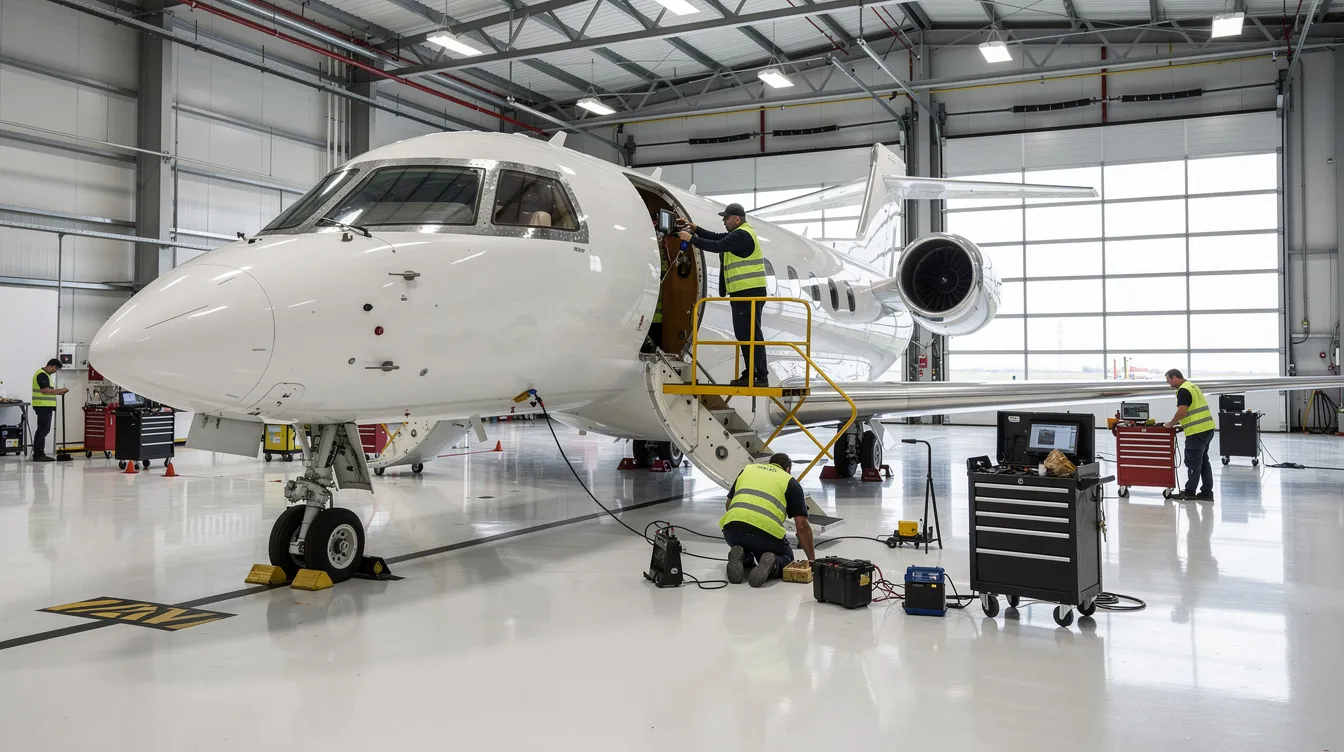
Private jet ownership demands compliance with rigorous safety and maintenance regulations. Scheduled inspections (A, B, C checks), unexpected repairs, and avionics upgrades create variable downtime. Maintenance costs vary based on tasks and parts, and annual operational costs for large jets can exceed $1–3 million when flown 300 hours per year.
Aircraft management companies often help owners with logistics and compliance, handling crew management for pilot and staff hiring and scheduling, maintenance coordination, and hangar space arrangements, all of which are formalized in essential fractional ownership contract terms when jets are shared among multiple owners. Most private jets sit idle more than they fly, increasing ownership costs per hour dramatically. This underutilization is a primary reason many owners shift toward fractional models where fleet utilization is optimized.
Growing public scrutiny—fueled by flight-tracking apps and social media—has put high-frequency private jet usage under a spotlight. High-profile criticism aimed at Taylor Swift, Elon Musk, and Bill Gates has pushed sustainability to the forefront of private aviation discussions. Sustainable aviation fuel compatibility is increasingly a consideration for buyers.
Owner responses include investing in carbon offset programs, selecting more efficient aircraft, and optimizing routing. Some owners offset fixed costs by making aircraft available for charter services when not in personal use, or by moving into fractional fleets where shared utilization reduces per-owner environmental impact, while carefully structuring liability and insurance coverage in fractional arrangements.
With a clear understanding of costs, let's compare the main models of private jet access.
The three primary access models—whole aircraft ownership, fractional jet ownership, and on-demand charter—serve different usage profiles. The right choice depends on annual flight hours, capital preferences, and operational appetite.
Whole ownership: Best above ~250–300 hours/year
Fractional ownership: Ideal for 25–150 hours/year
Charter/Jet cards: Suited to under 25–50 hours/year or occasional use
Full ownership is financially sensible above 200–300 flight hours yearly, where fixed costs are spread across high utilization. Corporations with global operations, family offices managing properties worldwide, and sports teams with tightly controlled schedules represent the ideal profile for owning two private jets or more.
Benefits include absolute control over cabin configuration, guaranteed availability (subject to maintenance), and long-term asset planning for depreciation. The tradeoffs are significant: highest upfront capital, exposure to aircraft resale market cycles, and full responsibility for all ownership costs regardless of how many hours the jet flies.
In fractional ownership, buyers purchase a share—typically 1/16 to 1/4—of an aircraft in a managed fleet, receiving guaranteed annual flight hours. The cost structure includes an initial buy-in, predictable monthly management fees, and hourly occupied-flight charges, all typically lower than whole ownership's total cost for the same usage band, and many buyers use fractional jet ownership financing options to spread these costs over time.
Benefits valued by private jet owners include guaranteed availability within specified notice windows, fleet flexibility to choose different cabin sizes per trip, and professional aircraft management, making fractional jet ownership as a cost-effective investment alternative attractive for many UHNW travelers. U.S. customers may explore potential tax advantages such as accelerated depreciation. For a detailed comparison, see Fractional Jet Ownership vs Whole Ownership.
Charter provides pay-per-trip access without ownership. Typical charter costs range from $2,000 to $14,000 per hour, depending on aircraft size and route. Chartering avoids maintenance, crew management, and depreciation costs entirely.
Jet card and membership programs pre-sell blocks of hours at fixed pricing, offering predictable cost without equity commitment, and many travelers weigh fractional jet ownership vs membership programs to match their flying patterns and budgets. For clients flying fewer than 25–50 hours annually, charter options often remain the most financially sensible path. Many UHNW individuals use a hybrid approach: fractional shares for core routes and charter for overflow or specialized missions. Compare all models on the program comparison page.
With these models in mind, let's see how BlackJet Fractional Jet Ownership fits into the landscape.
BlackJet Fractional Jet Ownership is a specialized provider designed for high-frequency travelers and corporations needing approximately 25–150 private flight hours annually. The company offers two primary models: an Equity Fleet for fractional ownership of premium aircraft and a Reserve Fleet for flexible, pay-as-you-go access without equity commitment.
BlackJet manages aircraft operations, scheduling, crew, and maintenance—allowing clients to focus on their business rather than aviation logistics. This approach delivers lower upfront capital requirements, diversified fleet options, and professional management while preserving ownership-style benefits like potential tax advantages and priority access.
Equity Fleet clients purchase a fractional share in a specific jet type aligned with their typical mission profile—whether super-midsize for domestic routes or large-cabin for intercontinental travel. They receive guaranteed annual flight hours, priority booking windows, and the ability to customize their travel experience.
Ideal for CEOs, family offices, and mid-size corporations flying 50–150 hours/year
BlackJet coordinates aircraft sourcing, fleet rotation, maintenance, and crew training.
Clients may explore depreciation and other aviation-related tax benefits in consultation with their advisor.s
The Reserve Fleet serves clients who want predictable, guaranteed access to private jets without equity investment. This pay-as-you-go model locks in service standards and availability while charging only for hours flown.
Suited for executives with variable travel patterns or project-based needs
No capital lock-up, simplified budgeting, and concierge-level scheduling
An effective on-ramp for families testing private aviation before graduating to fractional aircraft ownership
With these options available, how do you decide if private jet ownership is right for you?
The decision framework comes down to matching flying habits with the right access model. A pre-purchase inspection by independent experts is essential before buying a jet, and a typical buyer evaluates mission fit, economics, operational reliability, and long-term value, often reviewing an aircraft fractional ownership sample contract in detail and planning ahead for selling or transferring a fractional ownership share when needs change. Owners typically prioritize mission profile and financial commitment when buying a jet.
Ask yourself these questions:
How many hours per year do you realistically fly private?
Do you need a specific aircraft type (e.g., Bombardier Global vs. Gulfstream V)?
What is your tolerance for capital commitment and operational complexity?
Do you fly consistent routes, or does your schedule vary significantly?
Would you benefit from fleet flexibility across multiple aircraft types?
Are tax advantages through depreciation relevant to your financial planning?
Under ~25 hours per year, charter typically wins. Between 25 and 150 hours, fractional programs like BlackJet deliver the strongest alignment of cost, access, and flexibility, and prospective buyers often benchmark options using guides to the best fractional jet ownership programs. Above 250–300 hours, whole ownership—supplemented by charter for overflow—often makes the most sense economically.
With these considerations, you're ready to take the next step toward smarter private aviation.
Private jet owners today span a wide spectrum—from billionaires operating multiple aircraft across continents to entrepreneurs and executives leveraging fractional shares for 50–100 hours of annual flying. What unites them is a shared priority: converting travel time into productive time. The cost and complexity of full ownership remain substantial, but smarter models have made private aviation accessible to a broader range of high-net-worth individuals than ever before.
Full aircraft ownership is not the only—or even the most efficient—path for many frequent flyers. Fractional and membership-based solutions often deliver better alignment of usage, cost, and flexibility, particularly for those in the 25–150-hour range.
Ready to explore the smarter way to fly private? Visit FractionalJetOwnership.com to learn how BlackJet's Equity Fleet and Reserve Fleet programs can transform your travel experience—or speak with an aviation advisor for a personalized analysis of your current travel patterns.
