August 23, 2026
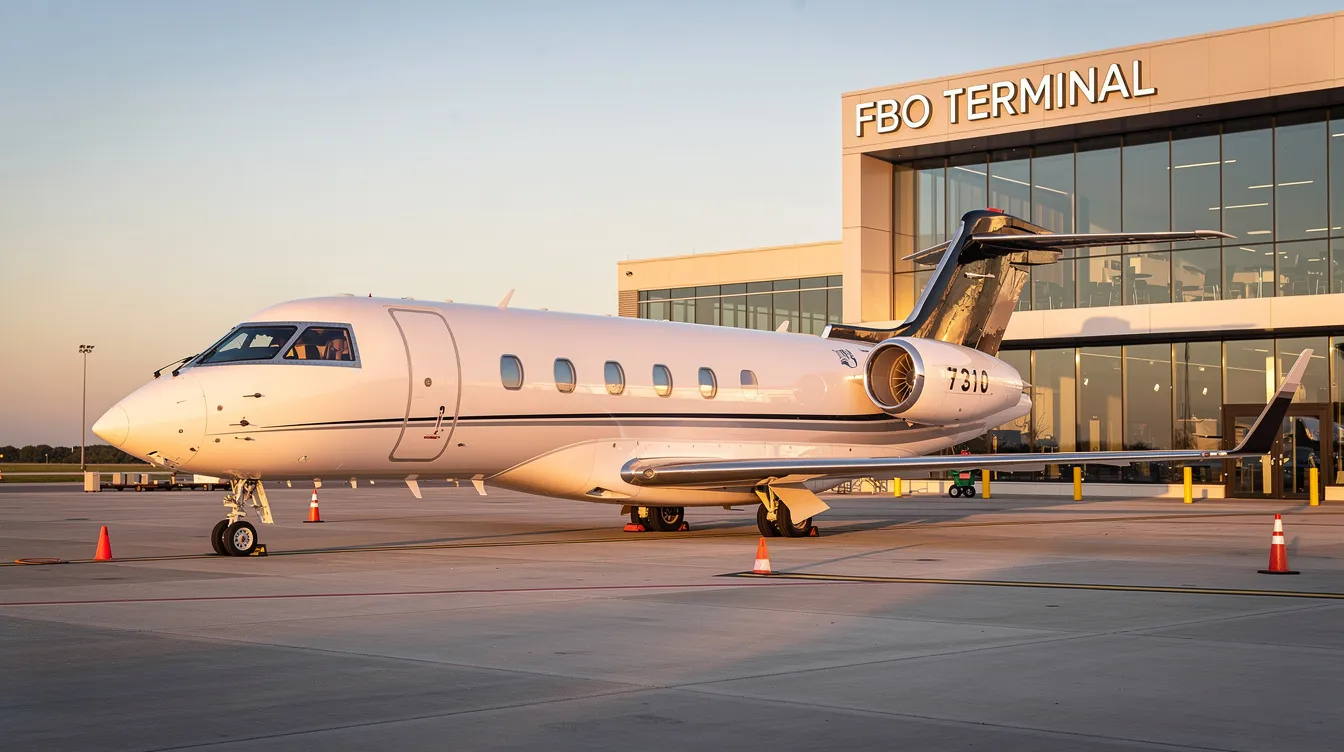
Flying private across the Atlantic is no longer reserved for heads of state and Fortune 50 CEOs. But how much does it cost to charter a private jet to Europe in 2026? The answer depends on aircraft type, route, season, and how you structure your access. This guide breaks down real numbers, route-by-route pricing, and the strategies that experienced travelers use to manage private jet costs on transatlantic missions.
Estimated costs for transatlantic private jet flights typically range from $100,000 to $250,000 one way, depending on the aircraft category and departure city. For a New York–London mission, expect roughly $85,000–$120,000 one way on a heavy jet and $120,000–$165,000 on an ultra-long-range jet. A round trip on a long-range or ultra-long-range aircraft generally falls between $170,000 and $320,000 or more.
These figures reflect the cost of the entire aircraft, not a per-seat fare. Chartering a private jet often involves renting the entire aircraft, so when 8–12 travelers share a flight, the per-person cost works out to approximately $10,000–$20,000 each way. That puts private jet travel in a range comparable to first-class commercial flights on the same routes, while adding flexibility, privacy, and schedule control.
Prices vary significantly depending on four main variables:
Aircraft category - light jet, midsize jet, super midsize jet, heavy jet, or ultra long range
Route and flight distance - East Coast departures cost less than West Coast departures
Season - European summer, Christmas, and major events push rates higher
Access model - ad-hoc charter, jet card, or fractional jet ownership
For travelers flying between the United States and Europe 25–150 hours per year, BlackJet Fractional Jet Ownership offers programs designed to reduce per-hour and per-trip costs compared to repeated on demand charter bookings.
Total private jet charter costs for a transatlantic mission are shaped by several predictable variables. Understanding each one helps avoid surprises on the final invoice.
Core cost drivers include:
Aircraft category and size - Heavy or ultra-long-range jets are commonly used for transatlantic flights. Ultra-long-range jets like the Global 7500 or Gulfstream G650ER cost more per hour but may be cheaper overall by eliminating fuel stops and crew changes.
Route and great-circle distance - Eastbound flights benefit from the jet stream and are shorter; westbound legs are longer and costlier. Transatlantic flights generally require larger and more expensive jets than domestic flights.
Seasonality and booking lead time - Booking during peak seasons increases private jet rental costs. Summer, Christmas, and major European events compress aircraft availability.
Airport selection - Secondary airports like Farnborough or Le Bourget carry lower landing fees and less congestion than Heathrow or CDG.
Repositioning legs - If the aircraft must fly empty to your departure airport, those hours are billed.
Total cost includes the hourly rate, fees, and surcharges. Fuel surcharges may apply based on market fluctuations. International taxes, handling, and regulatory fees add materially for Europe flights compared with domestic U.S. private jet rental. Fractional jet ownership and membership programs can stabilize these variables into more predictable per-hour pricing, especially when you understand the total cost structure of fractional jet ownership.
Private jet pricing for Europe missions typically starts with midsize or super midsize jets, since the range limitations of a light jet or very light jet make them impractical for crossing the Atlantic without multiple fuel stops.
Here are the average 2026 hourly rate ranges for transatlantic-capable categories:
Aircraft Category | Example Models | Hourly Rate (USD) |
|---|---|---|
Super midsize jet | Citation Longitude, Challenger 350 | $7,000–$10,000/hr |
Large / long-range jets | Falcon 900LX, Gulfstream G450 | $10,000–$14,000/hr |
Ultra long-range jets | Gulfstream G650ER, Global 7500 | $13,000–$18,000/hr |
Ultra-luxury VIP airliners | ACJ319, BBJ | $18,000–$25,000/hr |
For context, private jet hourly rates range from $2,300 to $23,000 across all categories. Hourly rates for light jets vary from $2,500 to $5,000, and turboprop jets typically have hourly rates ranging from $1,500 to $3,500 - but neither category is practical for transatlantic work. Large jets cost between $8,000 and $14,000 per hour, making them the standard choice for nonstop U.S. East Coast to Western Europe flights.
What is usually included in the hourly rate: aircraft, crew fees, fuel, and basic insurance. What is typically excluded: international handling, de-icing, certain taxes, and airport-specific charges. Private jet charter prices often exclude additional operational and hidden fees, so the per-hour rate is only a starting point. The actual invoice reflects total billable flight hours plus trip-specific operational costs.
BlackJet's fractional programs can secure fixed or capped per-hour rates for long-range jets used regularly on U.S.–Europe missions, removing much of the rate volatility that charter clients face.
There is a meaningful difference between "flight time on the map" and billable flight time in a private jet rental quote. Understanding this distinction prevents sticker shock.
Billable time includes taxi, climb, descent, and any necessary positioning flights to or from the aircraft's base. Private jets are often reported at hourly rates multiplied by flight and positioning hours. For a New York–London mission, scheduled flight time runs 6.5–7.5 hours, but the billable flight hour total is typically 7–8 hours each way once taxi, routing, and winds are factored in.
Key billing considerations:
Daily minimums: Many charter operators enforce 2–3 billable hours per day, even for shorter European side-hops like London–Nice–London.
Short-leg fees apply to flights under 60 minutes, adding cost to quick repositioning
Positioning flights can significantly affect the cost of chartering a private jet. If the aircraft must fly empty to reach your departure city, those hours appear on your invoice.
BlackJet's Equity Fleet and Reserve Fleet models treat positioning and minimums differently than an ad hoc charter. Under a fractional ownership structure, fleet positioning is managed across the global network, often reducing or eliminating repositioning fees for regular transatlantic travelers—particularly once you understand the key fractional jet ownership terms and concepts.
How much does it cost to fly between specific city pairs? Here are real-world ballpark ranges for 2026 by aircraft category:
Route | Long Range Jet (One Way) | Ultra Long Range (One Way) | Round Trip Range |
|---|---|---|---|
New York (TEB) – London (Luton) | $85,000–$120,000 | $120,000–$165,000 | $170,000–$320,000+ |
Miami – Paris (Le Bourget) | $100,000–$140,000 | $140,000–$200,000 | $200,000–$380,000+ |
Los Angeles – Geneva | $130,000–$170,000 | $180,000–$230,000 | $300,000–$450,000+ |
Chicago – Frankfurt | $90,000–$130,000 | $120,000–$160,000 | $190,000–$310,000+ |
Dallas – Rome | $100,000–$145,000 | $135,000–$175,000 | $210,000–$340,000+ |
Los Angeles–Geneva may require a fuel stop on smaller aircraft, adding time and ground handling costs. Choosing smaller airports on the European side can reduce landing fees significantly - for example, using Biggin Hill or Farnborough instead of Heathrow, or Le Bourget instead of CDG.
Airport landing fees range from $200 to $2,000 depending on the facility. Intra-European flights once you arrive - say, London to the French Riviera - can cost significantly less than transatlantic flights, often $15,000–$40,000 on an efficient aircraft in the midsize or super midsize category.
Not every aircraft category is suitable or economical for a private jet to Europe. Here is what each class offers for transatlantic work:
Light jets and very light jets (Citation CJ2, Phenom 100, King Air turboprops): Light jets seat 4–8 passengers with a range of 1,000–2,000 miles. Very light jets are not suitable for direct flights to Europe. A super light jet or light jet is best reserved for domestic flights and short regional hops.
Midsize jets (Citation XLS+, Hawker 800XP): Midsize jets accommodate 6–10 passengers and have a range of 2,000–3,500 miles. They can reach Europe from the East Coast with fuel stops, but the added time and handling costs often make a larger aircraft more cost-effective.
Super midsize jets (Challenger 350, Praetor 600): These offer stand-up cabins, longer range, and greater payload. East Coast–Europe is feasible under ideal conditions, though payload restrictions may apply.
Heavy jets (Gulfstream G450, Falcon 900LX): Heavy jets can carry 10–16 passengers over 4,000–6,000 miles. They are the standard for comfortable nonstop New York–Western Europe private jet flights with full baggage.
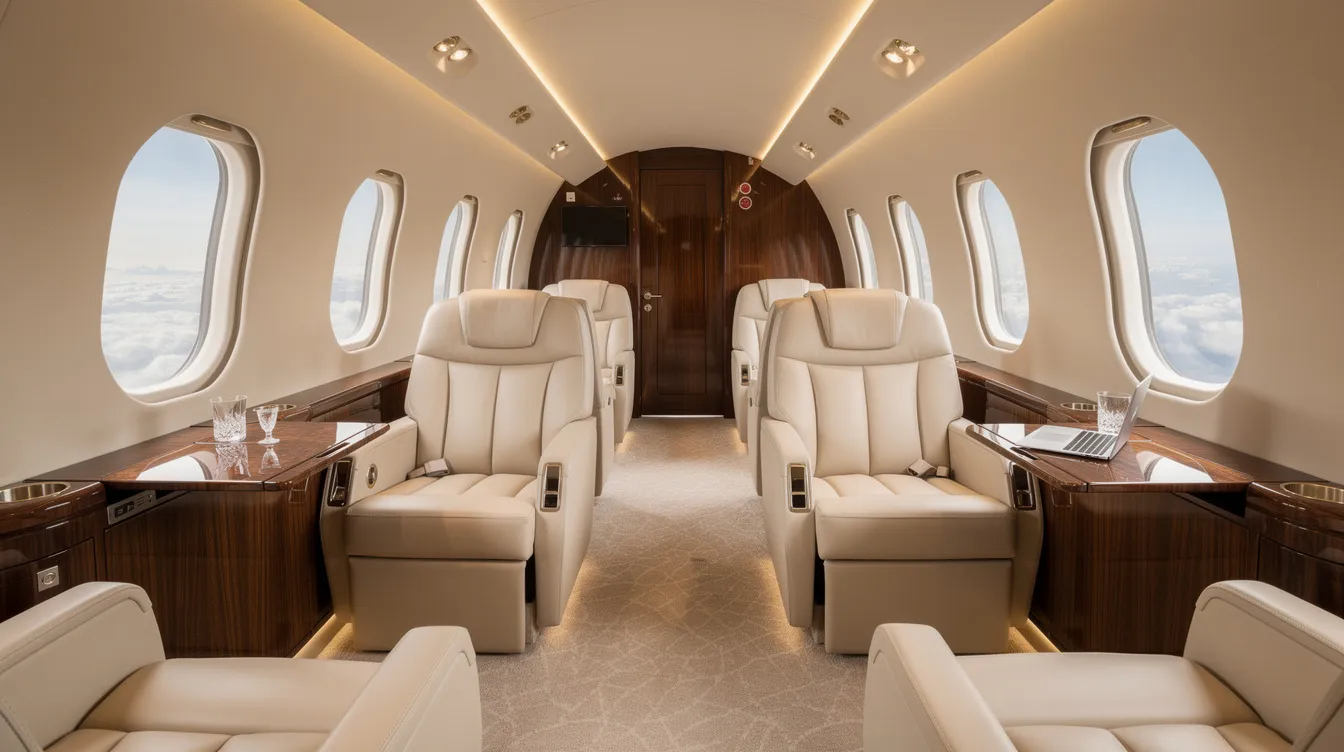
Ultra long-range jets (Gulfstream G650ER, Global 6500, Global 7500): Ultra long-range jets seat 12–19 passengers with a range over 6,000 miles. They handle coast-to-coast-to-Europe missions nonstop and are ideal for long-haul flights where time savings justify higher private jet costs.
International trips add several layers of operational costs beyond basic per-hour rates. These extras can increase the final bill by 15–30%.
Typical operational costs include:
Crew overnights: Crew overnight expenses can cost $200 to $600 per crew member per night. Crew costs, including accommodations and per diem, contribute meaningfully to charter expenses on multi-day international missions.
International handling: Ground services, VIP customs, and immigration processing at European FBOs.
Overflight permits and navigation charges: Eurocontrol fees for crossing European airspace, plus permits for Greenland and Iceland overflights.
De-icing: De-icing fees are necessary in winter months for flights from northern European airports, adding several thousand dollars per departure.
Hangar fees: Parking or hangaring the aircraft during your stay in Europe.
Fuel surcharge: Fuel surcharges may apply due to fluctuating fuel prices. Europe's SAF (Sustainable Aviation Fuel) mandates add further cost to fuel uplifted at EU airports.
Airport fees vary substantially between major international hubs and smaller airports. Landing fees can range from $200 to $2,000 per airport.
On the tax side, the federal excise tax is 7.5% for U.S. domestic flights, but it does not apply to international legs. Instead, European countries impose their own mix of VAT, Air Passenger Duty (UK), and environmental levies. BlackJet and its management partners handle these operational logistics as part of turnkey aircraft management in fractional ownership programs, where understanding essential fractional jet ownership contract terms helps avoid surprises.
The comparison between flying private and commercial flights on a transatlantic route comes down to total trip time, per-person cost, and what you value beyond the seat.
Time savings: Private aviation typically saves 2–4 hours each way. There is no commercial airline check-in queue, no TSA line, and no connection at a departure airport hub. Arrival at a private terminal in Europe means clearing customs in minutes, not queuing at passport control. A flight attendant and cabin crew on a private aircraft are dedicated solely to your group.
Cost comparison: For a group of 8–12 passengers sharing a heavy jet one way at $100,000–$150,000, the per-person cost is roughly $10,000–$18,000. Compare that to 8–12 first-class tickets from commercial airlines on the same New York–London route, which run $8,000–$15,000 per seat depending on the date. The gap narrows quickly, especially for larger groups.
Non-monetary advantages: Private jet flying offers privacy for confidential meetings, flexible departure times, direct access to regional airports near European resorts or corporate headquarters, and the ability to bring pets or oversized equipment without cargo restrictions.
For certain team sizes and trip frequencies, fractional jet ownership can narrow the gap between private jet costs and premium commercial flight budgets even further.
Frequent transatlantic travelers face a strategic choice: continue booking ad hoc private jet charter flights or lock in access through a structured program.
On-demand charter offers maximum flexibility. An air charter broker can source a specific aircraft for any route on short notice. However, private jet rental prices are subject to market pricing, seasonal demand, and aircraft availability swings. Private jet rental cost per hour can spike during peak European travel windows.
Fractional jet ownership provides contracted hourly rates and guaranteed access to suitable long-range jets. For many frequent flyers, it functions as a cost-effective private jet investment with shared ownership benefits. BlackJet offers two models:
Equity Fleet: Fractional ownership of a jet share with priority access, custom aircraft sourcing, and potential tax benefits. Ideal for clients flying 50–150+ flight hours per year.
Reserve Fleet: Flexible pay-as-you-go hours without ownership costs, suited for 25–75 hours per year.
The crossover point where fractional ownership becomes more economical than repeated chartering typically falls around 25–50+ hours per year on U.S.–Europe routes, once you factor in all major costs of fractional jet ownership. Beyond that threshold, fixed monthly management fees and per-hour occupied charges are amortized across enough usage to beat spot charter rates consistently.
BlackJet advisors can source a specific aircraft optimized for an owner's most common European missions, stabilizing both price and experience over time.
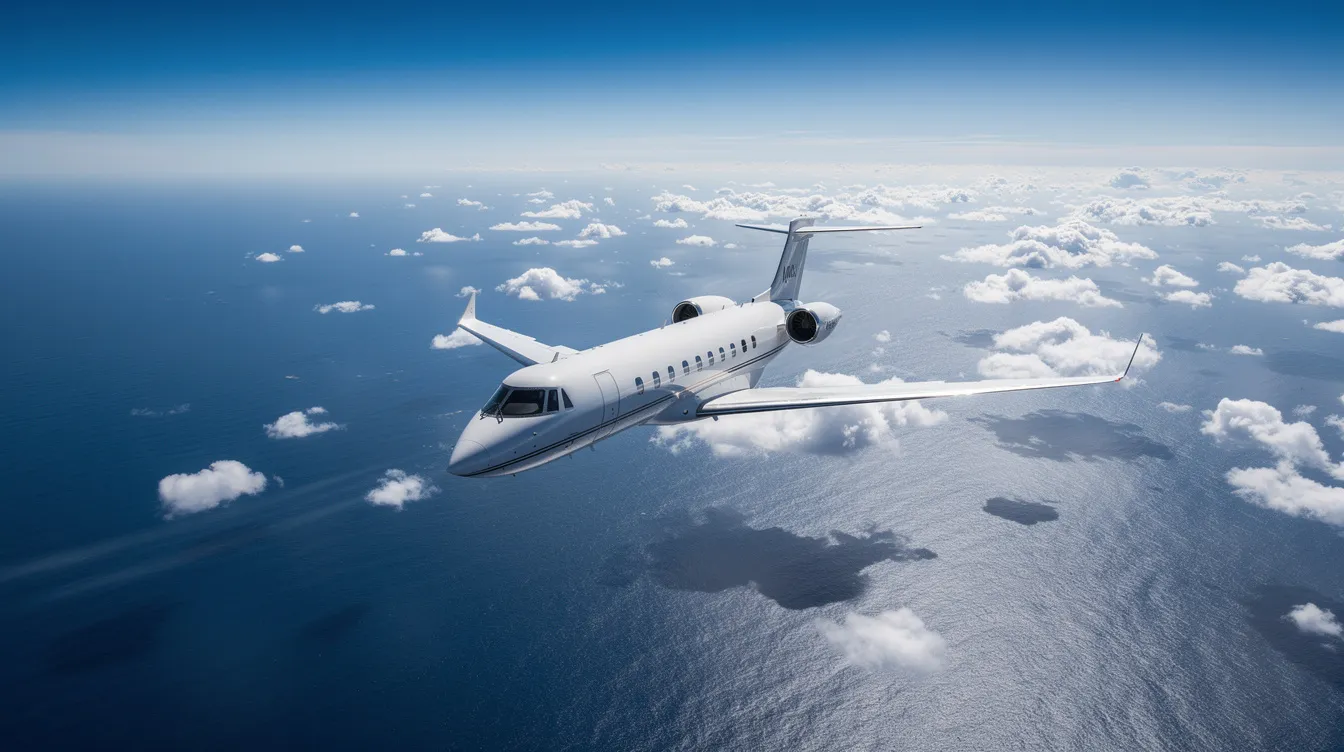
Here is a realistic scenario: a 5-day business trip for 10 passengers, New York (Teterboro) to London (Luton) round trip in October 2026, on a Gulfstream G650ER.
Base flight cost:
Component | Estimate |
|---|---|
Total billable hours (round trip) | 15–16 hours |
Hourly rate (G650ER) | $14,000–$16,000/hr |
Base subtotal | $210,000–$256,000 |
Typical add-ons:
Fee | Estimate |
|---|---|
London landing and parking fees | $1,500–$3,000 |
Handling and customs (both ends) | $3,000–$6,000 |
Eurocontrol navigation charges | $2,000–$4,000 |
Crew overnights (5 nights, 2–3 crew) | $2,000–$9,000 |
De-icing contingency (October) | $0–$2,000 |
Fuel surcharges and SAF uplift | $3,000–$8,000 |
Estimated all-in total: $230,000–$288,000
Per passenger (10 travelers): approximately $23,000–$28,800 round trip.
Note that transatlantic round trips often exceed double the one-way cost due to repositioning requirements and crew layover expenses. Under a BlackJet fractional ownership structure with fixed per-hour rates, a client flying this route quarterly could lock in predictable costs and avoid the premium that ad hoc charter clients pay during busy periods.
Timing has a clear impact on private jet charter prices to Europe. Seasonal demand significantly impacts private jet charter pricing across all aircraft categories.
High-demand periods:
June–August: European summer holidays and Mediterranean travel
Late December–early January: Festive season
Event windows: Fashion Weeks, Formula 1 Grand Prix, World Economic Forum in Davos
Peak travel windows drive up aircraft scarcity and hourly rates. During these periods, per-hour and total trip prices can rise 10–30% above shoulder-season levels, and aircraft availability for heavy and ultra-long-range jets tightens considerably.
Booking windows: Book private jets 30 to 60 days in advance for the best rates during summer or major events. In shoulder seasons (spring, autumn), 1–3 weeks of lead time is often sufficient for competitive private jet charter service quotes.
Fractional owners with BlackJet enjoy more predictable access and pricing even in peak European travel periods, since their contracted flight hours and aircraft share guarantee availability that pure charter clients cannot count on.
Private jet cost is substantial, but careful planning can reduce total spend per trip. Here are the most effective strategies:
Right-size the aircraft category: A super midsize jet at $7,000–$10,000 per hour may be sufficient for 6 passengers from the East Coast if a fuel stop is acceptable, saving significantly over an ultra-long-range jet.
Select cost-efficient airports: Using Farnborough or Biggin Hill instead of Heathrow, or Le Bourget instead of CDG, reduces landing fees, handling charges, and congestion-related delays.
Leverage empty leg flights: Empty leg flights can save up to 75% on standard rates when repositioning flights align with your itinerary. These leg flights offer deep discounts for flexible travelers.
Book in shoulder season: Flexibility in travel dates can lead to better pricing options. Avoid peak windows when possible.
Lock in rates through ownership or cards: Jet cards and fractional jet ownership can lock in per-hour pricing and avoid last-minute premium rates for frequent Europe flyers.
Ground transportation to and from secondary airports is sometimes slightly less convenient, but the savings on airport fees and handling typically outweigh the minor extra drive time.
Matching the aircraft category to the actual mission profile is one of the biggest levers on private jet rental costs. Selecting the wrong aircraft size - too large or too small - wastes money either through excess capacity or through costly fuel stops.
Key considerations:
Passenger count and seating configuration
Nonstop requirement vs. acceptable fuel stop
Baggage volume (ski gear for the Alps, golf bags, production equipment)
Desired onboard amenities (bedrooms, conference seating, Wi-Fi bandwidth)
Best-fit pairings:
Mission | Recommended Aircraft |
|---|---|
6 executives, New York to London | Super midsize or long-range jet |
12-person board, Chicago to Zurich | Heavy or ultra-long-range jet |
Family of 4, Miami to Lisbon with pets | Long-range jet with generous baggage and pet-friendly cabin |
Aircraft age and interior configuration can slightly affect private jet cost per hour. Newer, more efficient aircraft may carry higher hourly rates but offer better fuel economy, updated avionics, and stronger resale value for owners. BlackJet advisors help clients select - and in Equity Fleet programs, custom-source - a specific aircraft optimized around their most frequent European routes, drawing on many of the same criteria used to evaluate the best fractional jet ownership programs for smart investors.
Beyond a certain usage level, owning a share of a private aircraft becomes more efficient than repeated charter. The private aviation industry has matured enough that fractional programs now rival full ownership in terms of access while distributing costs across multiple owners.
Usage thresholds: For travelers logging 25–50+ flight hours per year across U.S.–Europe and other long-haul routes, fractional aircraft ownership becomes compelling. Below 25 hours, ad-hoc charter or jet cards are usually more economical. Above 150 hours, full ownership or a larger fractional share may be warranted.
Cost structure of fractional ownership:
Acquisition cost: Share purchase (typically 1/16th), ranging from roughly $354,000 to $705,000+ depending on aircraft type
Monthly management fee: Covers maintenance, insurance, crew, hangar, and scheduling
Per-hour occupied flight charge: A fixed or capped rate when you operate aircraft on your missions
U.S. business users may benefit from depreciation rules when aircraft usage qualifies, potentially offsetting a meaningful portion of effective private jet costs; understanding tax implications for fractional jet owners is critical before committing. For details on financing structures, this guide on fractional jet ownership financing covers the mechanics, including options such as 1/8 fractional jet ownership for around 100 hours a year.
BlackJet's Equity Fleet and Reserve Fleet are tailored for clients who routinely fly long-range jets or ultra-long-range jets across the Atlantic, providing both the direct cost advantages and the scheduling predictability that ad hoc charter cannot match—similar in spirit to floating fleet fractional ownership options that maximize flexibility and utilization.
Common questions from travelers evaluating private jet charter services for transatlantic missions:
How much does it cost to rent a private jet from New York to Europe? One-way on a heavy jet: $85,000–$120,000. Ultra long range: $120,000–$165,000. Round-trip budgets typically start at $170,000 and can exceed $320,000 depending on aircraft type and season.
Can I book a one-way private jet to Europe? Yes. However, one-way flights are often priced to include repositioning, so they are not simply half the round-trip price unless an empty-leg opportunity is available.
Are pets allowed on private jet flights to Europe? Most private jet service operators accommodate pets in the cabin. Specific quarantine and documentation requirements vary by European destination country.
How far in advance should I book? For peak season (summer, holidays, major events), 30–60 days are recommended. Shoulder seasons allow shorter lead times of 1–3 weeks.
Can I offset carbon emissions? Many operators and fractional programs now offer voluntary carbon offset options or SAF purchasing to reduce the environmental footprint of private flights.
What payment and documentation are required? Expect a deposit at booking (typically 50%), with the balance due before departure. For Schengen and non-Schengen entries, passengers need valid passports, and the operator typically coordinates customs and immigration at the departure and arrival airports.
BlackJet's advisory team provides tailored private jet cost scenarios based on each client's itinerary and aircraft preferences.
Understanding the true cost of flying private to Europe puts travelers in a stronger position to choose the right aircraft, timing, and access model. Whether the need is a single transatlantic charter or a quarterly schedule of U.S.–Europe missions, the right program transforms private jet travel from a variable luxury expense into a strategic, predictable investment.
For travelers who regularly fly between the United States and Europe for business or family, fractional jet ownership deserves serious consideration alongside pure charter. BlackJet offers two paths:
Reserve Fleet: Flexible, pay-as-you-go hours without full ownership costs
Equity Fleet: Fractional ownership with priority access, tax advantages, and custom aircraft sourcing
Ready to see what your specific Europe missions would cost under a structured program? Visit FractionalJetOwnership.com to request a personalized cost comparison or scheduling consultation.
The smartest way to cross the Atlantic is with expert guidance, the right aircraft, and a pricing structure that works trip after trip.
