June 24, 2026
A private plane lease sits at the crossroads of flexibility and commitment, offering dedicated aircraft access without the multimillion-dollar purchase price of owning a jet outright. For executives, corporations, and family offices evaluating their next move in private aviation, understanding how leasing works, what it costs, and when it makes more sense than fractional ownership or charter is the difference between a strategic advantage and a costly miscalculation.
This guide is designed for executives, corporate travel managers, and high-net-worth individuals considering private jet leasing as an alternative to ownership or charter.
A private plane lease grants access to private jets for a defined period, typically one to five years, through fixed monthly lease payments and variable hourly operating costs, avoiding the significant upfront costs associated with ownership.
BlackJet Fractional Jet Ownership serves travelers flying roughly 25–150 flight hours per year and often recommends fractional ownership or membership over a traditional long-term lease for this usage level.
Lease agreements vary widely: a wet lease bundles aircraft, crew, maintenance, and insurance, while a dry lease delivers only the aircraft, and hybrid "damp" models blend elements of both.
Cost is driven primarily by aircraft type, lease duration, and contracted annual flight hours, with monthly lease payments ranging from around $75,000 for light jets to over $700,000 for larger jets.
Leasing typically requires monthly payments based on flight hours, with fixed monthly lease payments generally ranging from 0.8% to 1.5% of the aircraft's value.
Lease agreements often specify minimum annual flight hours, commonly between 400 and 500, to justify pricing, with maintenance costs ranging from $200 to $500 per hour flown.
Leasing provides predictable operating expenses and aircraft access with short booking notice, making it most cost-effective for travelers flying between 200 and 500 hours annually.
For those flying under 200 hours per year, chartering often remains the more cost-effective private aviation option.
This article compares leasing against fractional ownership and outright ownership, and closes with guidance on when to contact BlackJet for a tailored assessment.
A private jet lease is a medium- to long-term contract, typically 12–60 months, where the lessee gains access to a specific aircraft in exchange for predictable monthly payments plus variable hourly operating costs such as fuel, crew, and maintenance. Leasing allows access to a private jet for a set period, typically one to five years, without taking title to the aircraft.
Unlike outright ownership, the lessee avoids tying up $5–$30 million in capital and shifts residual value risk to the lessor, enhancing cash flow. Leasing converts aircraft access into predictable operating expenses, with lease payments often fully deductible under IRS Section 162 when the aircraft is used predominantly for business. Leased jets may also offer depreciation benefits for capital improvements made during the lease term.
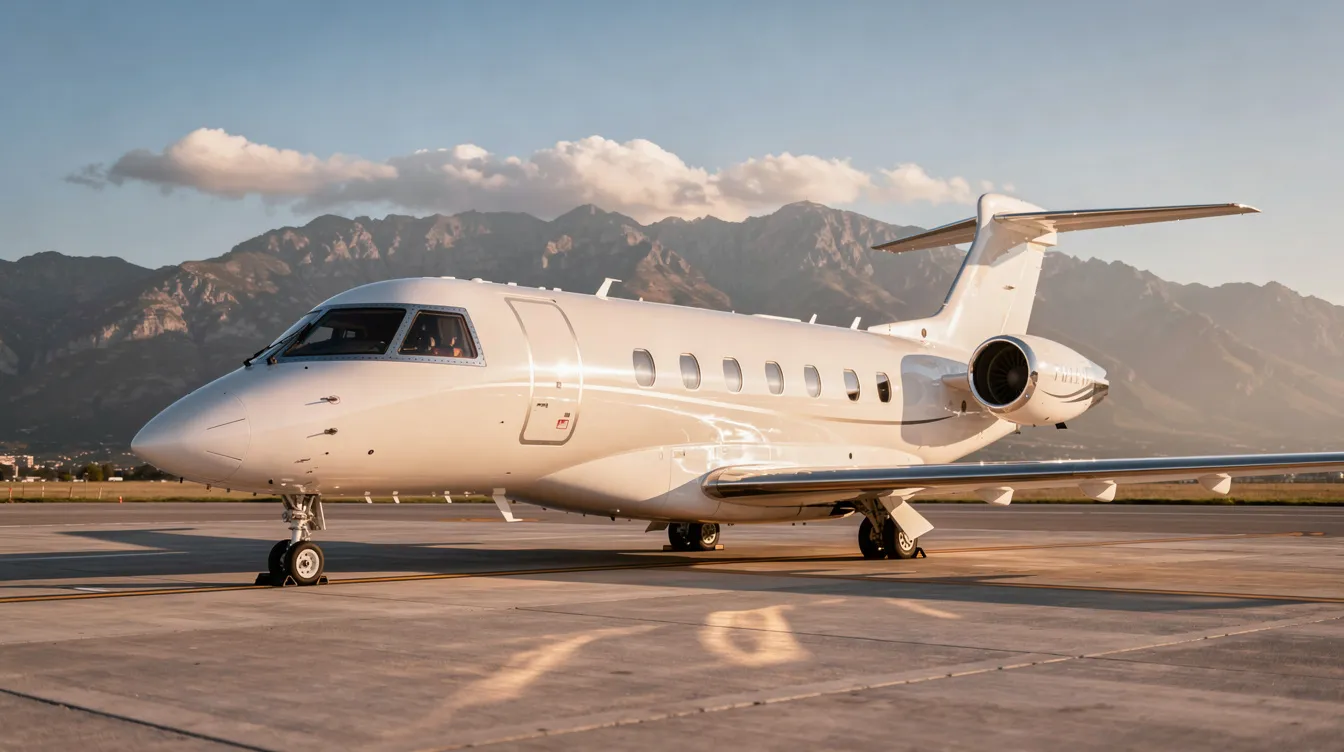
Unlike ad-hoc private jet charter, the client commits to a specific aircraft or fleet access structure for a defined term, creating predictable schedules and reliable availability. A Bombardier Challenger 350, for example, might be leased by a corporate flight department running regular routes between New York, Miami, and Dallas.
The typical user profile includes US-based executives and business owners flying 100–400 annual flight hours on consistent routes. BlackJet's core clientele, however, often flies 25–150 hours per year, sitting just below the sweet spot where a full dedicated lease becomes cost-effective. For these travelers, fractional ownership or jet membership programs typically deliver better value per hour, and a clear grasp of fractional jet ownership terminology and concepts helps them compare options accurately.
Private plane leasing typically falls into two categories: wet lease and dry lease. In a wet lease, the lessor provides the aircraft, crew, maintenance, and insurance. In a dry lease, only the aircraft is provided, and the lessee manages maintenance and crew. Damp leases combine elements of both, such as the lessor providing the aircraft and maintenance, while a third party supplies the crew.
Not all leasing arrangements are structured the same. Responsibilities for crew, maintenance, insurance, and operational control shift dramatically depending on the lease type. Leasing typically falls into two primary categories, wet lease and dry lease, with hybrid structures bridging the gap. Long-term leases span several months to years, while short-term options serve more specific needs.
Understanding the right structure is as important as choosing the right aircraft type, because it directly affects total cost, liability protection, and day-to-day convenience.
In a wet lease, the lessor provides the aircraft, crew, maintenance, and insurance. The lessee pays fuel, airport fees, landing charges, and sometimes catering. Wet leases include crew, maintenance, and insurance responsibilities, making them the lowest-burden option for the lessee. Monthly lease fees in these arrangements typically cover crew salaries, hangar, and insurance costs as part of the bundled price.
A practical example: a US company arranging a 12-month wet lease on a super midsize jet like a Bombardier Challenger 350 for 50–70 flight hours per month during a Latin American expansion phase. The advantages include minimal operational burden, clear division of responsibility, and rapid deployment without building a flight department. The trade-off is a higher effective hourly cost and less operational control over crew selection and maintenance vendors.
Under a dry lease, the lessor provides only the aircraft. Dry leases require the lessee to manage maintenance, crew, and insurance, either through an in-house flight department or a third-party management company operating under Part 91 or Part 135 in the United States. Typical dry lease terms run three to seven years with minimum annual flight hours often set at 400–500.
Consider a family office arranging a five-year dry lease on a 2017 Cessna Citation XLS+ and contracting a management company to handle pilots and maintenance. Dry leasing usually offers the lowest base hourly cost and maximum control, but unlike aircraft owners who may capture depreciation and other ownership-related tax benefits, lessees face more complex regulatory and tax structuring, so they typically work with aviation counsel before signing.
Damp leases combine elements of wet and dry leases. The lessor may provide the aircraft and maintenance while a third-party operator supplies crew. In the private jet market, many "program leases" resemble a fractional ownership or membership structure, with guaranteed access to a fleet rather than a single tail number.
Short-term leases offer flexibility for limited-time needs, such as a December-through-March ski season block of flight hours to Aspen and Jackson Hole. BlackJet typically steers clients needing fewer than roughly 200–300 hours per year toward flexible shared-use solutions, and will often compare fractional jet ownership versus membership programs rather than bespoke leasing options.
Private jet lease cost combines fixed monthly lease payments and variable hourly operating costs. Monthly lease payments typically range from 0.8% to 1.5% of the aircraft's market value, and operating costs can add 30–60% on top of the base monthly lease payment for fuel, crew, and reserves. Monthly lease payments vary based on aircraft type and age, with annual lease costs ranging from $500,000 to over $1 million, depending on the jet category. Large cabin jets, for reference, lease for $400,000 to $700,000 per month.
All figures below are 2025–2026 US market estimates. Actual pricing varies by aircraft age, condition, and specific lease terms.
Leasing a light jet costs $75,000 to $150,000 monthly on a dry lease basis, assuming 150–200 contracted flight hours per year.
All-in occupied hourly costs, including fuel, maintenance (ranging from $200 to $500 per hour), crew, and reserves, commonly fall between $2,500 and $3,500 per flight hour.
Light jets seat 6–8 passengers with ranges around 1,500–2,000 nautical miles, covering US domestic trips like Chicago–New York or Los Angeles–Aspen.
These aircraft suit clients with short-haul regional missions and moderate annual usage below 250 hours. Compare these lease figures with fractional ownership and jet card pricing for the same cabin classes.
Midsize jets lease for $150,000 to $300,000 per month on a 36–60 month term, assuming 250–350 annual flight hours.
Fully burdened hourly operating costs land between $3,500 and $5,000 per occupied hour, depending on fuel prices and maintenance programs.
Midsize jets carry 7–9 passengers with 2,000–2,700 nautical mile range and stand-up cabins, suited for routes like Dallas–New York or Los Angeles–Chicago.
When annual utilization is closer to 100–150 hours, BlackJet would often recommend fractional ownership of a midsize jet share instead of a dedicated lease.
Super midsize jets cost $250,000 to $400,000 monthly to lease on a dry basis, based on 300–400 contracted flight hours and a 3–5 year minimum commitment.
Fully allocated hourly costs range from $4,500 to $7,000 per flight hour.
These aircraft seat 8–10 passengers with a 3,200–3,600 nautical mile range, enabling nonstop flights like New York–Los Angeles or Miami–San Francisco.
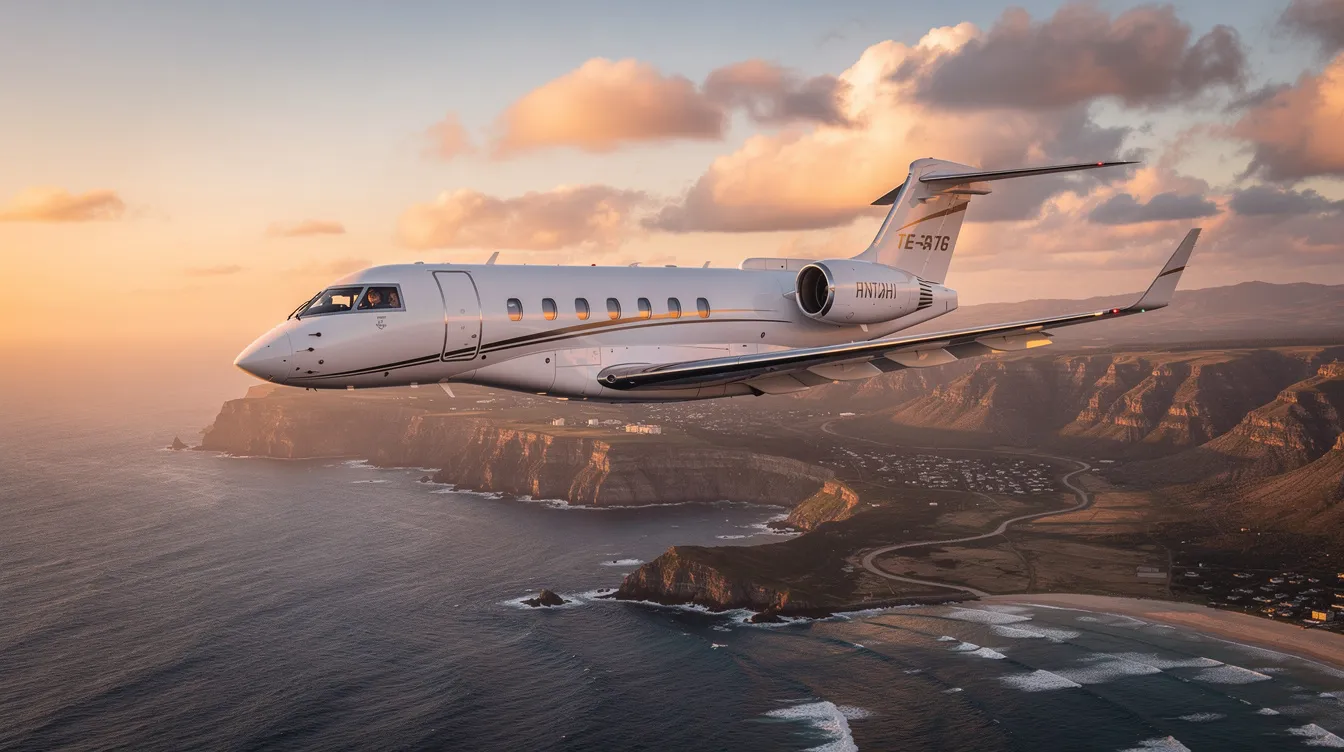
The Bombardier Challenger series remains a popular choice for North American corporate flyers who want large-cabin passenger comfort without the cost of an ultra-long-range jet. Use these ranges as a sanity check when evaluating quotes.
Aircraft Category | Monthly Lease Payment Range | Typical Annual Flight Hours | Passenger Capacity | Range (Nautical Miles) | Estimated Hourly Operating Cost (Incl. Fuel & Maintenance) |
|---|---|---|---|---|---|
Light Jets | $75,000 – $150,000 | 150 – 200 | 6 – 8 | 1,500 – 2,000 | $2,500 – $3,500 |
Midsize Jets | $150,000 – $300,000 | 250 – 350 | 7 – 9 | 2,000 – 2,700 | $3,500 – $5,000 |
Super Midsize Jets | $250,000 – $400,000 | 300 – 400 | 8 – 10 | 3,200 – 3,600 | $4,500 – $7,000 |
Large Cabin Jets | $400,000 – $700,000 | 400 – 500+ | 10 – 16 | 6,000+ | $7,000+ |
Beyond price, the structure depends on how term length, annual flight hours, and return conditions are negotiated. These elements determine the true total cost and flexibility of any private jet leasing solution. Operators must comply with FAA regulations for leasing agreements, and the FAA reviews lease agreements to ensure operational control is clearly defined.
Typical private jet dry lease terms range from 36 to 84 months, with five-year terms common for newer aircraft and three-year terms for older airframes. Look for renewal options at pre-defined rates or formulas. Leasing requirements vary by jurisdiction and operator structure, so confirm documentation, permitted use, and compliance obligations before execution. Early termination provisions often include penalties tied to remaining months or make-whole clauses that can amount to several hundred thousand dollars. Clients whose travel plans may shift rapidly, such as startups, may be better suited to fractional ownership programs with shorter long-term commitment windows.
Many lease agreements specify minimum annual flight hours, often 400–500, to justify pricing. Lease shares typically start at 100 annual hours in structured programs, similar to 1/8 fractional jet ownership structures offering around 100 hours per year. Lease agreements can incur additional charges for exceeding contracted flight hours, with overage rates sometimes significantly above the base hourly rate. Analyze at least 12–24 months of historical travel data before committing. BlackJet often helps many clients model these scenarios, and when utilization is uncertain, it recommends fractional or Reserve Fleet-style usage instead.
Leasing requires the lessee to enroll the aircraft in manufacturer-approved maintenance programs and engine reserves for newer jets. Maintenance checks are essential for aircraft safety and longevity. Lessees must maintain specific hull and liability insurance levels, naming the lessor as additional insured and loss payee. Operator reputation impacts reliability and safety standards, so verify that any operator holds FAA Part 135 certification and third-party audits like ARGUS or IS-BAO. Return conditions at lease end, such as minimum remaining engine time or interior standards, can cost hundreds of thousands of dollars to remediate if neglected. Schedule pre-return inspections 6–12 months before lease end.
The best value and the right structure depend primarily on annual flight hours, capital preferences, and desired flexibility. BlackJet's core expertise is fractional aircraft ownership and membership programs, including evaluating fractional jet ownership as an investment with shared costs and benefits, making it well-positioned to compare leasing against these alternatives.
Leasing is an attractive option for travelers flying over 200–500 hours per year on relatively predictable routes who want predictable access and budgeting without buying an aircraft. A private jet leasing solution converts aircraft access into an operating expense via regular lease payments, simplifying budgeting. Leasing provides predictable monthly payments without asset ownership, and leasing allows access to newer aircraft models more frequently than buying.
For example, a manufacturing firm flying executives between Houston, Detroit, and Mexico City 30–40 times per year might benefit from a five-year lease on a super midsize jet. Trade-offs include reduced ability to downsize quickly if demand falls, and exposure to return condition costs. A lease can complement fractional ownership when a corporation needs both a dedicated aircraft and overflow capacity. For deeper analysis, review BlackJet's breakdown of the 400-hour rule.
Fractional ownership is ideal for 25–150 flight hours annually. Fractional ownership offers guaranteed aircraft availability, access to multiple aircraft types, and typically requires fewer upfront costs than full ownership. Fractional ownership can provide tax benefits for business use, including potential depreciation on share value. BlackJet's Equity Fleet model allows clients to purchase a share and receive guaranteed access with predictable costs.
A New York-based private equity partner flying 80–100 hours per year to US and European financial centers would likely find a fractional share far more efficient than a five-year lease on a single jet. Benefits include fleet access, shorter contract terms, and fewer worries about residual value or crew management. Explore how fractional costs compare.
Outright ownership generally makes sense at very high utilization, often 400–600+ hours per year, or for highly specialized missions. Ownership ties up significant capital and incurs depreciation risks, plus ongoing fixed costs including hangar, insurance, crew salaries, and training. A Challenger 350 acquisition runs approximately $25.9 million new, with total annual operating costs near $2 million at 300 hours/year. Leasing avoids substantial upfront costs associated with this level of initial capital outlay. BlackJet often advises clients to validate true utilization using fractional or membership solutions before committing to full ownership.

Once leasing is the right fit, smart structuring can save hundreds of thousands of dollars over the term. BlackJet frequently helps clients run side-by-side analyses of lease offers against fractional and membership costs.
Map your top 10–15 routes with actual stage lengths and passenger counts before selecting an aircraft. For US domestic coast-to-coast private travel, super midsize jets like the Bombardier Challenger 350 or Gulfstream G280 hit the best balance of range, comfort, and cost. Oversizing means unnecessary lease payments and inflated hourly costs. Leasing provides predictable aircraft access with short notice when the aircraft is properly matched to the mission.
Negotiate caps on annual rate escalations for both lease payments and hourly fees. Include substitution rights, ensuring guaranteed access to a comparable aircraft during downtime. Seek transparent formulas for end-of-lease repair obligations, including a security deposit structure that accounts for normal wear. A well-structured jet lease program or lease agreement reduces friction and preserves relationships across corporate flight departments.
Implement monthly dashboards tracking flight hours used versus contracted levels. At 12, 24, and 36 months, assess whether utilization still supports a lease or if a shift to fractional ownership would be more cost-effective. Consider changes in your business, new offices, acquisitions, or hybrid work patterns that may alter private jet travel needs. Engage BlackJet or a similar advisor for a periodic fleet strategy review comparing lease, charter, and fractional scenarios. Private individuals and companies alike benefit from flexibility and willingness to pivot rather than treating a lease as a set-and-forget arrangement.
Understanding the broad tax and accounting treatment of a lease agreement helps frame smarter decisions. This section does not constitute tax or legal advice; always consult qualified advisors before acting.
Leasing payments can be fully deductible under IRS Section 162 when used for qualifying business travel, and leasing can offer tax-deductible operating expenses for businesses more broadly. Depreciation benefits may apply to capital improvements made during the leasing period, and leasing shifts residual value risk to the lessor, enhancing cash flow.
Personal use of the aircraft introduces complexity, including potential imputed income, so track business versus personal flight hours meticulously. BlackJet clients often work with aviation-savvy CPAs who compare leasing versus fractional ownership tax profiles, drawing on guidance similar to key tax implications for fractional jet owners. International fees and cross-border leases may invoke additional regulatory and tax regimes beyond US rules.
Under modern accounting standards, many long-term leases appear on the balance sheet as lease liabilities, affecting leverage ratios. However, leasing avoids high upfront costs and preserves cash flow compared to outright ownership, allowing capital to be directed toward core business investments. Some companies use sale-and-leaseback structures to free up capital from existing aircraft while retaining access, while others explore fractional jet ownership financing options and costs as an alternative capital-efficient path. Administrative expenses tied to lease management should be factored into multi-year financial planning. BlackJet can model how fractional ownership or membership programs compare from a balance sheet perspective against a traditional lease.
Below are common questions from first-time private aviation users and seasoned flyers alike who are evaluating whether to lease, book flights through a membership, or explore fractional programs.
Yes, private individuals can sign lease agreements directly, but most high-net-worth clients create an LLC or similar entity for liability protection, privacy, and tax planning. Personal use rules and imputed income considerations make consultation with aviation-focused counsel essential. For individuals flying under 150–200 hours per year, fractional ownership or membership programs may offer similar benefits with far less complexity than a full private plane lease.
Traditional dry leases usually start at 24–36 months, but some operators offer short-term wet or hybrid leases for peak seasons or specific projects. These shorter leasing arrangements carry higher hourly rates and fewer customization options. For a 3–6 month window with 40–80 projected hours, structured fractional or block-hour programs—especially those using floating fleet options in fractional ownership for flexible access—often rival or beat lease economics. Ask any prospective lessor about minimum commitment requirements, deposits, and cancellation penalties.
It is common for users to evolve from charter or membership into fractional ownership, and eventually consider leasing as annual flight hours increase. Exiting a lease early can be costly, so planning a transition path at the outset is critical, particularly if you may later sell or transfer a fractional jet ownership share when shifting structures. BlackJet frequently works with clients mid-lease, modeling whether adding a fractional share for overflow or planning a shift at lease end will reduce long-term costs in emerging markets and established routes alike.
Safety depends on the operator's maintenance practices, crew training, and regulatory compliance, not on whether the aircraft is leased or owned. Verify that any operator holds appropriate FAA certifications and third-party audits. Review maintenance records, pilot experience levels, and SMS documentation before finalizing a lease agreement, and understand how liability and insurance coverage work in fractional jet ownership structures if you operate across multiple models. With the right partners, leased aircraft meet the same safety benchmarks as owned fleets.
Start by compiling 12–24 months of actual or projected travel data, including routes, dates, and passenger counts. Run a side-by-side comparison of the total five-year cost across a private plane lease, BlackJet-style fractional ownership, and a flexible Reserve Fleet model, and, where appropriate, review an aircraft fractional ownership sample contract and its key provisions. Some clients also weigh low hourly rates on jet card programs or carbon offset programs against lease structures, and carefully review essential contract terms in fractional jet ownership agreements to align with broader corporate priorities.
Ready to explore the smarter way to fly private? Visit FractionalJetOwnership.com to learn how fractional ownership or the right leasing structure can transform your travel experience, and schedule a consultation to see which model fits your situation.
Leasing a private jet offers a compelling balance between access, flexibility, and financial predictability for travelers flying 200 to 500 hours annually on consistent routes. It eliminates the substantial upfront capital required for ownership and shifts residual value risk to the lessor, while providing reliable aircraft availability and operational control tailored to your needs.
However, for those flying fewer than 150–200 hours per year, fractional ownership or jet membership programs often deliver better value and flexibility without long-term commitments. Conversely, outright ownership makes sense primarily for very high utilization or specialized missions.
A well-structured lease agreement, aligned with your mission profile and negotiated for flexibility, can unlock significant cost savings and convenience. Partnering with an experienced advisor like BlackJet Fractional Jet Ownership ensures you select the optimal aircraft, lease type, and terms to maximize your private aviation experience.
Ready to explore the smarter way to fly private? Visit FractionalJetOwnership.com to learn how fractional ownership or the right leasing solution can transform your travel experience. Schedule a consultation today and take the next step toward seamless, efficient private jet access.
