July 9, 2026
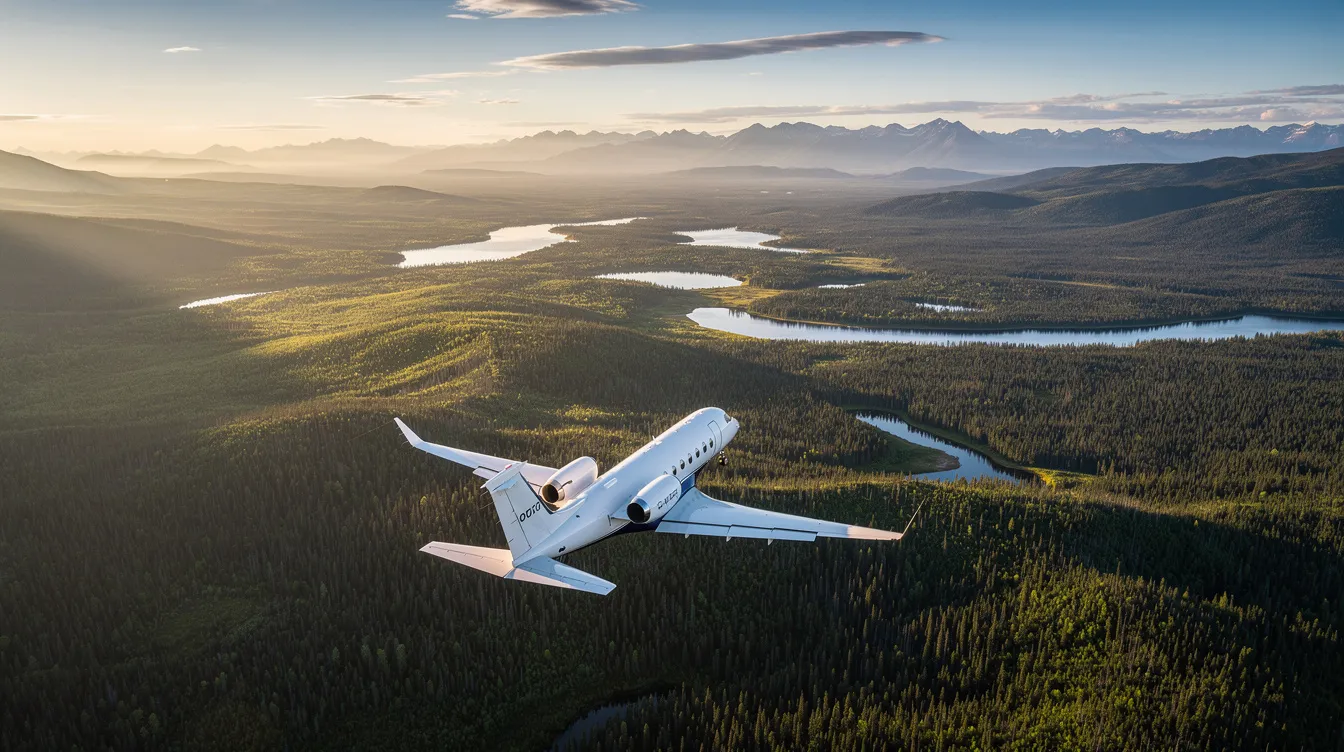
Private planes in Canada give frequent travelers a faster, more reliable way to move across a country where commercial service reaches only a fraction of the map. For executives, business owners, corporate flight departments, and families who need dependable access to major cities and remote regions, private aviation cuts 50–70% of typical travel time, avoids airline delays and connections, and turns travel into productive time rather than lost hours.
Getting started with flying private through BlackJet Fractional Jet Ownership is straightforward. A quick consultation identifies your flight profile, typical routes, and annual hours, then maps you to the right solution, whether that means pay-as-you-go access through a reserve fleet or fractional ownership through an equity fleet. This guide explains the main private aviation options in Canada, including charter and ownership models, aircraft categories, pricing, safety standards, booking, popular routes, and the sustainability efforts shaping the market. Private jet travelers avoid long security lines and crowded terminals, and they can use smaller airports like Calgary Springbank, Toronto Buttonville, or Montreal Saint-Hubert for more direct, predictable travel despite winter weather and limited commercial routes.
Contact BlackJet for a complimentary flight profile review
Estimate your annual hours (most clients fly 25–150 hours per year)
Receive an aircraft category recommendation and pricing overview
Begin flying on a schedule built around your unique travel needs
Private aviation in Canada operates across four models. On-demand private jet charter lets you book a single trip with a certified operator. Jet Card programs offer prepaid access to private jets without ownership, typically ranging from 25 to 100 flight hours annually. Fractional jet ownership provides an equity share in a specific aircraft, with priority access and predictable costs. Full ownership suits travelers flying 200+ hours annually but carries the full burden of maintenance, crew, and hangar costs. Booking a private jet typically requires 24–48 hours' notice, and private jet charter services operate 24/7 for flexible scheduling.
Dedicated charter specialists assist throughout the booking process, coordinating with Transport Canada–certified operators who hold valid Air Operator Certificates. BlackJet Fractional Jet Ownership acts as both a fractional provider and an air charter service, giving clients direct access to a diverse fleet without managing the operational complexity themselves. Private jet charters allow you to choose departure times and locations, whether the trip is business or leisure.
Occasional charter flights: Under 25 hours per year, variable pricing, ideal for sporadic trips
Frequent private flights: 25–150+ hours per year, predictable costs, guaranteed availability - this is where fractional ownership becomes cost-effective
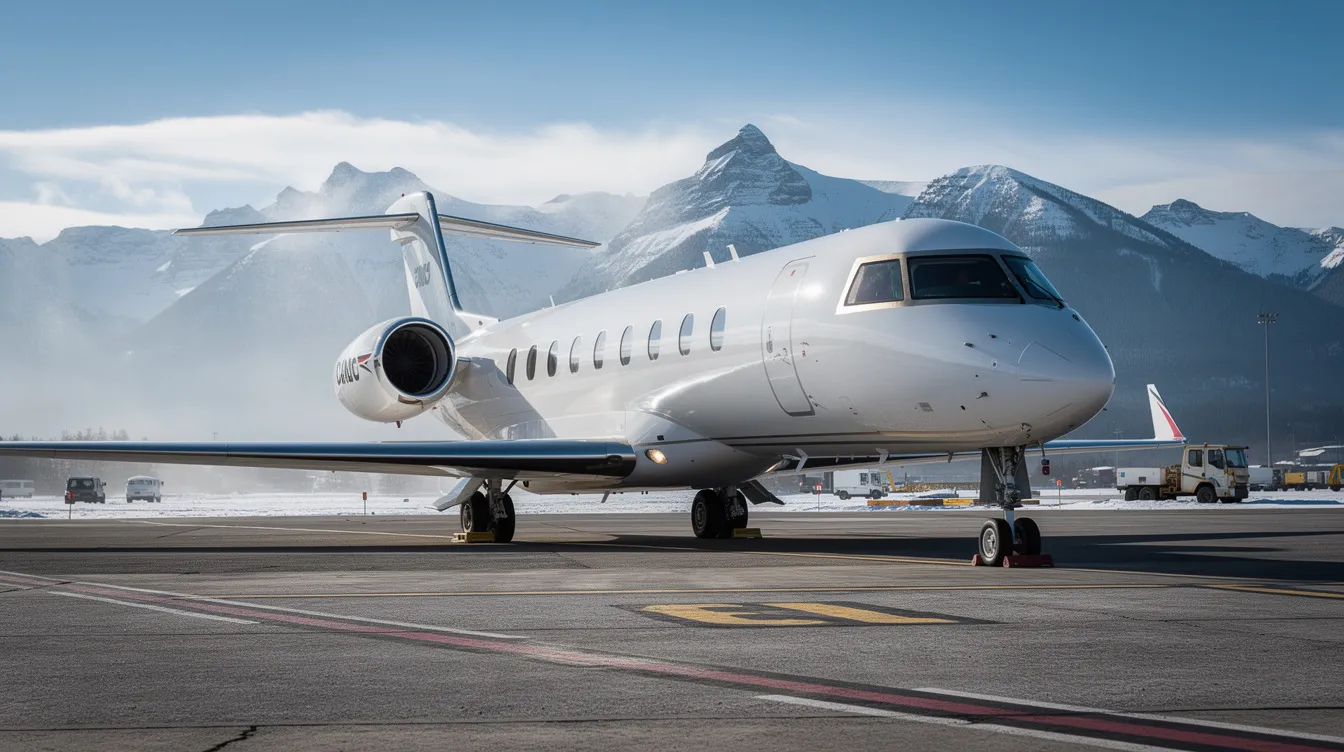
Private planes for charter in Canada include turboprops, piston aircraft, light jets, midsize jets, super-midsize jets, and heavy jets. Private jet charters provide access to over 45 aircraft types, and the right choice depends on your route, passenger count, and personal preferences.
Category | Sample Aircraft | Range | Passengers | Sample Route |
|---|---|---|---|---|
Turboprop | Pilatus PC-12, King Air 350 | Up to 1,800 NM | 6–8 | Calgary → Fort McMurray |
Light Jet | Citation CJ3+, Phenom 100 | Up to 1,900 NM | 4–6 | Toronto → Halifax |
Midsize Jet | Citation XLS+, Learjet 60 | ~2,200 NM | 6–8 | Montreal → Chicago |
Super-midsize | ~3,200 NM | 8–10 | Toronto → Vancouver | |
Heavy Jet | Challenger 650, Global 6000 | Up to 4,000 NM | 10–14 | Vancouver → London |
Ultra-long-range | Gulfstream G650, Global 7500 | Up to 7,700 NM | 10–16 | Toronto → Dubai |
Very light jets provide jet speed while remaining affordable for shorter domestic and international trips. Executive turboprops are ideal for short distances and accessing smaller airports with unpaved or short runways. Light jets and very light jets are suitable for short trips and smaller groups, while heavy jets cater to larger groups and provide a premium cabin experience with spacious cabins. Canadian-built Bombardier Challenger jets and Global series aircraft are particularly prevalent due to strong domestic service infrastructure and cold-weather performance.
Typical users include corporate clients in mining, energy, tech, and finance. Medical specialists, professional sports teams, touring entertainers, and ultra-high-net-worth families also rely on private aircraft. Private aircraft can reach remote communities not served by commercial airlines, and private charters allow direct flights to worldwide destinations without layovers.
Even Canada's prime minister and federal cabinet use dedicated government aircraft - Bombardier Challenger 650s and an Airbus A330 - for time-critical leadership travel, illustrating that private aviation is a standard tool for operational excellence at the highest levels.
Toronto → Vancouver and back in one day for board meetings
Halifax → Ottawa → Montreal in a single trip without overnight stays
Calgary → Fort McMurray for energy-sector site inspections
Montreal → New York for same-day financial meetings
Kelowna or Whistler for weekend ski trips through Canada's stunning landscapes
Private aviation saves 50–70% in door-to-door travel time. Private jets provide access to over 5,000 airports worldwide - and thousands of smaller local airports across Canada that commercial airlines never serve. Arriving at a private terminal just 20–30 minutes before departure, you walk directly to the aircraft. No long security lines, no crowded terminals.
Example: A Toronto executive flies to downtown Montreal for a meeting. Commercial via Toronto Pearson International Airport requires 2+ hours of airport time, plus ground transportation on both ends - easily 8 hours door-to-door. A private flight from Billy Bishop departs at 7:30 AM, lands at Saint-Hubert by 8:45 AM, and the executive is in the meeting by 9:15 AM. Return by mid-afternoon. Total trip: under 5 hours.
Private jets allow more luggage than commercial flights - no weight restrictions typical of commercial airlines.s
Private jet travel improves productivity and comfort during flights with complete privacy
Bring pets, request custom catering, and enjoy stress-freeee, seamless experience.
Private travel in Canada allows access to smaller local airports near cottages, ski resorts, and remote sites.s
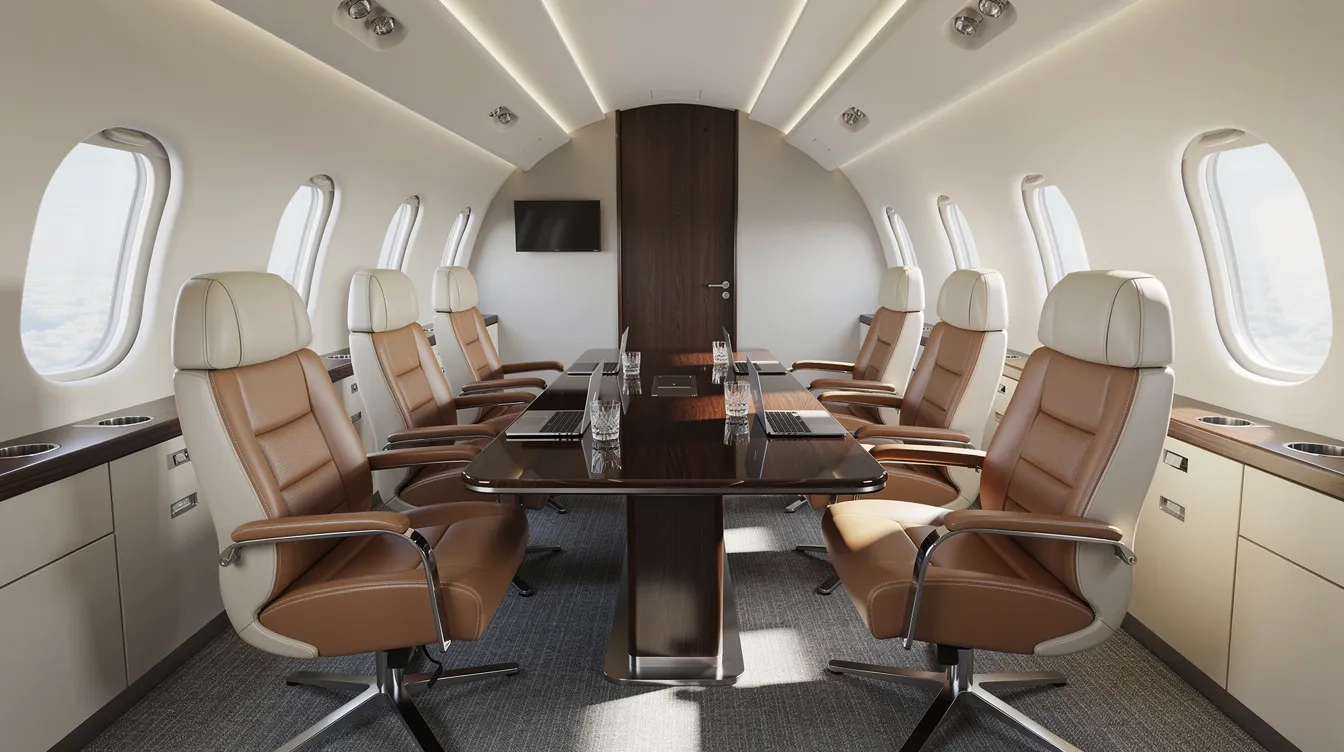
BlackJet offers two core models. The Equity Fleet provides true fractional ownership - you buy a share in a specific aircraft, gaining priority access, predictable hourly rates, and potential tax benefits. The Reserve Fleet offers pay-as-you-go hours with guaranteed access and no asset ownership, ideal for those who want flexibility without a capital commitment.
Acquisition costs for fractional ownership range from $5–50 million depending on aircraft type and share size, with annual fixed costs that can reach $1–2 million. This makes fractional ownership best suited for individuals or corporations flying 25–150+ hours per year over consistent routes. Jet Card members can book flights with guaranteed availability, often with 24–48-hour notice, but lack the same level of scheduling priority or equity upside.
For a deeper program comparison, consider how monthly Toronto–Calgary trips favor fractional ownership's predictability, while sporadic leisure flights to Kelowna might suit on-demand charter or Jet Card programs.
Understanding private jet costs starts with hourly aircraft rates, then adds repositioning, landing fees, de-icing, fuel surcharges, and overnight fees. Here are approximate 2026 one-way charter benchmarks in CAD:
Toronto → Montreal (light jet): ~$6,000–$9,000
Calgary → Vancouver (midsize jet): ~$10,000–$15,000
Toronto → Vancouver (super-midsize): ~$22,000–$30,000
Toronto → Miami (heavy jet): ~$35,000–$50,000
Prices spike during Christmas, March Break, and summer cottage season. Fractional ownership smooths these fluctuations with fixed hourly rates and known monthly management fees - fewer surprises for travelers who value predictable budgeting. For frequent flyers, the effective hourly cost drops significantly compared to ad-hoc charter pricing.
All commercial operators in Canada must hold valid Air Operator Certificates under Transport Canada's Canadian Aviation Regulations. Every aircraft in Canada must maintain a 406 MHz emergency locator transmitter. Pilots hold type ratings, meet minimum flight-hour requirements, and complete recurrent simulator training to international standards.
BlackJet partners with operators meetinARGUSUS Platinum andISBAOO certifications. Skyservice's Toronto operations are ARGUS Platinum-certified. Chartright holds an IS-BAO Stage 3 certification. NovaJet is one of Canada's first ARGUS Platinum-rated companies. Cross-border flights benefit from CANPASS Private Aircraft, which streamlines customs between Canada and the U.S.
Ask any operator for their safety audit status and fleet maintenance records
Verify pilot qualifications and recurrent training schedules
Confirm the operator's commitment to the highest standards in safety management
Every private flight with BlackJet is carbon-neutral by default. A Toronto–Vancouver round-trip produces approximately 10 tons of CO₂, and offsets are calculated using ICAO-standard emissions factors. Carbon offsets fund verified projects like BC reforestation and renewable energy initiatives. BlackJet's carbon-neutral flights incur no extra cost for members.
Choose newer, fuel-efficient aircraft types.
Consolidate legs and optimize flight planning to reduce empty repositioning.
Request ESG reporting suitable for corporate sustainability teams
Explore fleet options that use Sustainable Aviation Fuel where available
Private aviation's greatest advantage is reaching any destination - from international airport hubs to remote airstrips. Key routes include Toronto–Vancouver, Toronto–Calgary, Montreal–New York, Calgary–Vancouver, and seasonal favorites like Toronto–Kelowna and Toronto–Muskoka.
Toronto: Pearson (CYYZ), Billy Bishop (CYTZ), Buttonville (CYKZ)
Montreal: Trudeau (CYUL), Saint-Hubert (CYHU)
Vancouver: YVR South Terminal, Abbotsford
Calgary: YYC, Springbank
Other hubs: Ottawa (YOW), Winnipeg (YWG), Yellowknife, Thunder Bay
BlackJet optimizes fleet selection based on these routes, matching the right aircraft to each trip for minimal repositioning and maximum efficiency - whether domestic or international.
Empty leg flights are repositioning flights with no passengers, often available at 30–75% discounts. Discover discounted options when aircraft need to return to base - for example, a heavy jet empty leg from Toronto to Miami or a super-midsize leg from Calgary to Palm Springs during winter.
The trade-offs: fixed departure windows, limited route flexibility, and typically one-way only. Empty legs are excellent for flexible leisure travelers but rarely provide the reliability corporate clients need. For business travelers, a dedicated charter specialist or fractional program from BlackJet delivers exceptional service with guaranteed scheduling. A personal charter specialist can advise when these discounted options make sense alongside your main ownership solution.
Government leaders use private charter when commercial schedules cannot meet operational demands. The federal government maintains Bombardier Challenger jets and an Airbus A330 for the prime minister and cabinet. Provincial premiers use charter flights selectively for remote or time-critical travel arrangements.
Private aviation is justified when time savings create measurable ROI
Multi-stop trips across remote regions are impractical on commercial schedules
Transparency about travel costs builds stakeholder confidence
Flying private is a productivity tool - not simply unparalleled comfort
BlackJet Fractional Jet Ownership specializes in structured access programs for clients flying 25–150+ hours per year. The Equity Fleet model lets you charter a private jet share - for example, in a super-midsize or Bombardier Challenger aircraft - with guaranteed availability, predictable rates, and potential capital cost allowance and fractional jet ownership tax implications discussions with your tax advisor.
The Reserve Fleet model offers non-equity, pay-as-you-go hours with high-priority access and no ownership responsibility. Both models include comprehensive aircraft management, a dedicated account manager, and exclusive access to a fleet maintained to the highest standards of operational excellence.
Modern private aviation demands both digital convenience and high-touch human support. With BlackJet, submit a request via the website or your dedicated account manager and receive itinerary confirmation within hours. Catering, ground transportation, and special needs - children, pets, equipment - are coordinated automatically.
Inquiry: Submit flight details online or by phone, 24/7
Confirmation: Receive aircraft assignment and itinerary within hours
Pre-flight: Briefing on FBO location, weather, and any customs requirements
In-flight: Real-time updates and complete data privacy for every passenger
Post-flight: Trip reporting for expense management and ESG tracking
No. Anyone can fly on private flights within or into Canada, provided they meet standard immigration and customs requirements. Your operator or fractional provider handles flight planning and regulatory filings.
Canada Border Services Agency processes passengers at designated private terminals, typically taking 10–25 minutes. Programs like CANPASS expedite the process for frequent flyers on private charter routes between Canada and the U.S.
Most private jet bookings require 24–48 hhours'notice. Jet Card programs offer guaranteed availability within that window. Fractional owners often enjoy same-day or next-day access depending on fleet availability.
Yes. Pets fly in the cabin with you. Cross-border flights may require vaccination records and health certificates. Your personal charter specialist handles these details as part of your travel arrangements.
Light jets run approximately $3,000–$5,000 CAD per hour. Midsize jets range from $5,000–$8,000. Super-midsize and heavy jets range from $7,000–$18,000 depending on the aircraft type.
Toronto alone offers Pearson, Billy Bishop, and Buttonville. Montreal has Trudeau and Saint-Hubert. Vancouver offers YVR South Terminal. Calgary has Springbank. This network of airports gives private jet travelers direct access to destinations closer to where they actually need to be.
Factor in ground transportation, security, boarding, and connections, and a 4-hour commercial journey often becomes 8–10 hours door-to-door. The same flight privately takes 4–5 hours total, delivering the same level of comfort with far greater time efficiency.
In a country as vast as Canada, private aviation - especially through fractional jet ownership - is often the most efficient way for leaders and entrepreneurs to move. The difference between ad-hoc jet charters and structured fractional ownership comes down to predictability, control, and reduced hassle over time.
Review your past 12–24 months of travel. If you are flying 25–150 hours per year across repeated routes, fractional ownership likely delivers better value and a better experience than piecing together individual charter flights. Explore what a customized Canadian travel plan looks like for your specific flight profile.
Ready to explore the smarter way to fly private? Visit FractionalJetOwnership.com to request a consultation, review Equity Fleet and Reserve Fleet options, and discover how BlackJet Fractional Jet Ownership can serve as your trusted long-term partner for private aviation in Canada and beyond.
