June 15, 2026
Every private jet trip starts with a single question: how much does it cost? Whether planning a last-minute business trip or a cross-country family getaway, getting an accurate quote for a private jet is the critical first step toward flying on your own terms. The challenge is that private jet pricing varies dramatically based on aircraft, route, timing, and dozens of operational details that many providers don't explain upfront.
This guide is for business travelers, families, and anyone considering private jet travel who wants to understand how quotes are calculated and how to get the best value.
This guide breaks down exactly what goes into a private jet quote, what ranges to expect in 2026, how to avoid hidden fees, and when it makes sense to move beyond one-off charter quotes into a structured solution like fractional ownership.
Private jet charter quotes are based on aircraft type, flight hours, route, dates, and extras like catering and ground transportation.
Hourly rates in 2026 range from about $2,000 per hour for turboprops to $12,000–$18,000+ for heavy and ultra-long-range jets.
Flight pricing is influenced by billable flight hours, cruising speed, aircraft size, and trip distance.
Private jet rental prices typically range from $1,800 to $18,000 per hour.
International flights can exceed $100,000, often incurring customs and landing fees.
Online calculators provide rough estimates, but detailed quotes require specifics such as travel dates and passenger count.
Charter flights offer flexibility, time savings, and access to over 10,000 airports, including smaller executive airports.
One-way flights may incur repositioning fees if the aircraft must relocate empty.
Empty leg flights can offer discounts of 25% to 75% off standard rates for flexible travelers.
Chartering a private jet requires an FAA Part 135-certified operator for safety and compliance.
Fractional ownership is ideal for those flying over 100 hours annually, requiring a capital commitment of $400,000 or more.
Jet cards offer a flexible, pay-as-you-go model for private flying.
Booking a private jet typically takes 3–6 hours from request to takeoff.
An "all-in" quote should itemize taxes, landing fees, crew overnight expenses, and positioning flights to avoid surprise charges.
Frequent flyers (25–150 hours/year) often benefit from fractional jet ownership or membership programs for predictable costs.
Always request multiple aircraft options in each quote to compare comfort, range, and total trip cost.
The lowest price is not always the best value—consider safety, aircraft age, fee transparency, and cancellation terms.
A private jet quote is a written, itinerary-specific price proposal-typically delivered as a PDF or email-that covers the aircraft, crew, fuel, fees, and all expected costs for a particular trip. Unlike the generic "starting from" prices found on many websites, a proper quote reflects the actual route, dates, and passenger count, so there are no surprises at departure.
Quotes serve three main purposes. First, they price out one-off private jet charter needs, such as a weekend charter flight from New York to Miami. Second, they support recurring business travel plans-monthly board meetings or weekly commutes on the same route. Third, they act as a benchmarking tool, allowing travelers to compare the cost of chartering a private jet against alternatives like jet cards and fractional ownership.
Consider two scenarios. A New York–Miami weekend on a light or midsize jet typically involves about 2.5 flight hours each way, with all-in quotes often landing between $14,000 and $24,000 one way depending on the aircraft category. An ultra-long-range flight from Los Angeles to London, by contrast, requires a completely different aircraft capable of nonstop transatlantic range, and quotes for that mission can reach $100,000–$150,000 or more.
The takeaway: serious buyers should always request a detailed written quote rather than relying on ballpark figures. BlackJet Fractional Jet Ownership, for example, uses charter quotes as a comparison tool to demonstrate when a Reserve Fleet arrangement or an Equity Fleet share becomes more cost-effective than repeated on-demand charter.
Private jet charter cost is structured around the billable flight hour, but several operational factors can push a quote up or down by tens of thousands of dollars on any given trip. Understanding these variables is the difference between budgeting accurately and being caught off guard.
The main cost drivers include:
Aircraft type and size (determines hourly rate, range, cabin volume, and baggage capacity)
Route distance and total flight time (longer missions mean more billable hours and potentially different aircraft requirements)
Dates and peak demand (holidays, major events, and business-travel peaks inflate charter rates)
Departure and arrival airports (airport landing fees, ramp charges, and local handling costs vary widely)
Positioning flights and overnight stays (moving an empty aircraft to the client or keeping crew on location adds cost)
Here are approximate 2026 U.S. hourly rate bands by aircraft category:
Aircraft Category | Typical Hourly Rate (2026) |
|---|---|
Turboprops | $2,000–$4,500 |
Very light jets | $2,500–$5,500 |
Light jets | $4,500–$7,000 |
Midsize jets | $6,500–$9,500 |
Super-midsize jets | $8,000–$12,000 |
Heavy jets | $10,000–$16,000 |
Ultra-long-range jets | $12,000–$18,000+ |
On top of these hourly rates, quotes must account for the 7.5% Federal Excise Tax on domestic air transport, per-segment fees, and crew expenses-collectively adding 10–20% to the aircraft hourly rate alone. For frequent flyers, fractional aircraft ownership smooths out many of these variables by locking in predictable hourly rates and fixed monthly fees across 25–150+ hours per year. |
Every minute the engines run-including taxi time and any positioning segments-contributes to the billable flight hours used to calculate a quote. Flight distance is the most intuitive cost driver, but routing decisions matter too.
A 2-hour hop like Dallas to Aspen in a light jet might price around $14,000–$18,000 all-in, while a 5-hour leg from Teterboro to Los Angeles in a super-midsize jet could reach $45,000 or more depending on dates and demand. Routing changes-direct versus a tech stop for fuel-alter both flight time and cost, especially when weather or restricted airspace forces detours.
Ultra-long-range routes (such as New York to Dubai at 12–13 flight hours) require ultra-long-range aircraft specifically designed for nonstop capability. These carry higher hourly rates but eliminate the added expense and logistics of a fuel stop en route.
Aircraft type is the single biggest driver behind any private jet quote. It shapes the hourly rate, range, cabin size, and baggage capacity-essentially defining the travel experience.
Here is a breakdown of common categories with example models and typical 2026 hourly rates, which you can explore further in this guide to types of private jets and prices:
Turboprops (King Air 350, PC-12): ~$2,000–$4,500/hour. Best for short runways and regional missions.
Light jets (Citation CJ3+, Phenom 300): ~$4,500–$7,000/hour. Ideal for 2–3-hour domestic flights with 4–7 passengers.
Midsize jets (Citation XLS+, Hawker 800): ~$6,500–$9,500/hour. A popular choice balancing range, cabin comfort, and cost.
Super-midsize jets (Praetor 500, Citation Longitude): ~$8,000–$12,000/hour. Stand-up cabins and coast-to-coast range.
Heavy jets (Gulfstream G450, Challenger 604): ~$10,000–$16,000/hour. Long-range jets are designed for large groups and international flights.
Ultra-long range (Global 6500, Gulfstream G600): ~$12,000–$18,000+/hour. Nonstop transatlantic and transpacific capability.
Choosing a larger aircraft is not always better. A right-sized private plane can cut total trip cost significantly without sacrificing comfort on a 2–3-hour leg. BlackJet Fractional Jet Ownership typically structures Equity Fleet shares around popular midsize, super-midsize, and large-cabin aircraft that balance hourly rate, comfort, and range for both U.S. domestic flights and transatlantic missions.
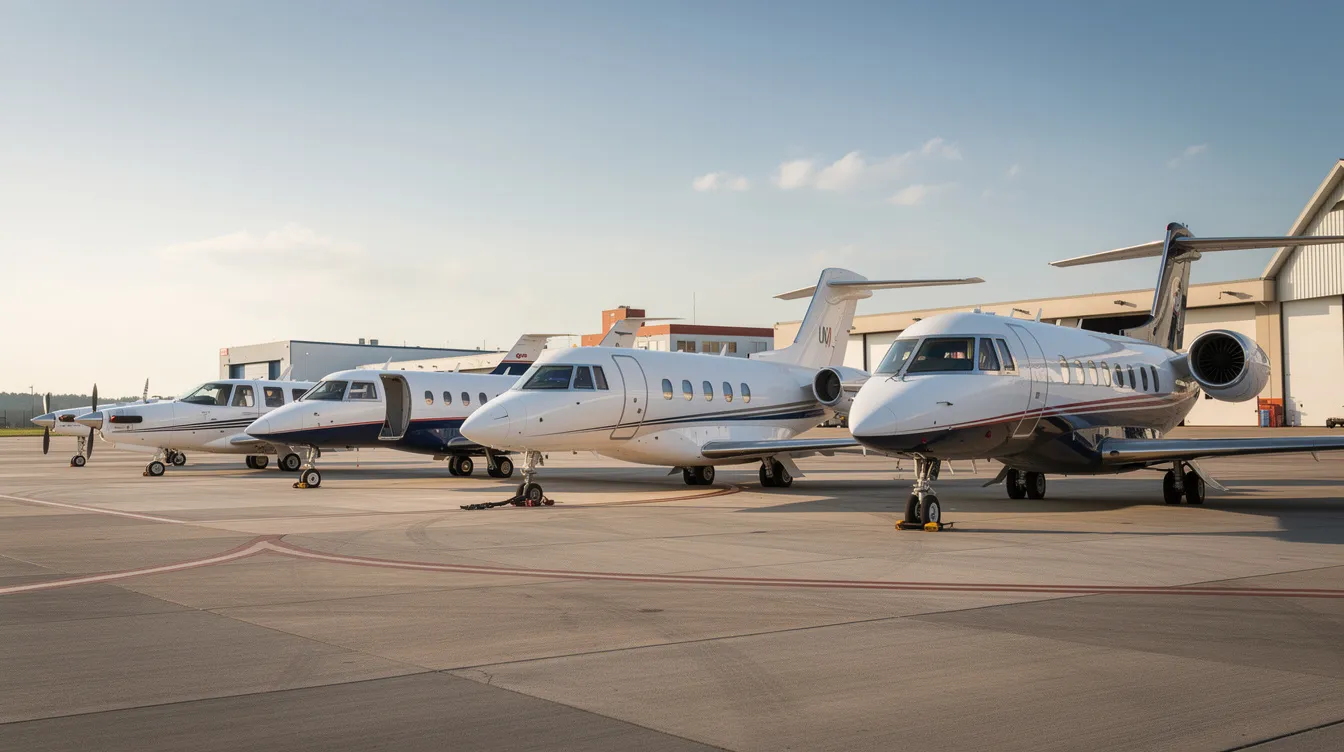
Private jet pricing is not static. Charter rates fluctuate with seasonal demand-holidays, major events, and Monday-morning/Thursday-evening business peaks consistently drive prices higher.
Peak periods that regularly tighten aircraft availability and inflate costs include:
Thanksgiving and Christmas–New Year's week
Super Bowl weekend
Art Basel in Miami and Fort Lauderdale
Major global events like the World Economic Forum and the Cannes Film Festival
During these windows, rates can spike 20–40% above baseline for many aircraft categories, with repositioning fees and overnight expenses rising in tandem.
Many operators also apply "daily minimum" billing-typically 2 billable flight hours per day for smaller jets and 3–4 hours for heavy jets. A one-hour leg may appear as two hours on the invoice. Fractional ownership programs counter this by offering guaranteed availability and fixed hourly rates even during peak travel days, which is a primary reason discerning travelers migrate away from pure on-demand charter.
Using smaller airports closer to a final destination can sometimes lower a total quote by reducing ground transport time, but it may trigger repositioning or handling fees if the specific aircraft is based elsewhere.
Positioning flights are empty legs needed to bring the aircraft to the departure city or return it to base after a trip. These segments are often billed at the same hourly rate as occupied legs and can add several thousand dollars. Savvy travelers watch for empty leg flights in the opposite direction, which some operators discount significantly.
Typical fee ranges at different airports:
Fee Type | Range |
|---|---|
Landing fees | $150–$1,500+ (based on aircraft weight and airport) |
Ramp/handling charges | $100–$600+ per stop |
Crew overnight costs | $200–$600 per crew member per night |
Busier facilities like Teterboro (TEB), Van Nuys (VNY), and Miami Executive often sit at the higher end of airport landing fees. Crew members required to stay overnight when an itinerary involves a multi-day stop or international layover add further cost. |
Clients should always ask quote providers how much of the total price reflects positioning and overnights-this can often be reduced by adjusting departure date, choosing different airports, or building flexible travel plans.
This section provides ballpark quote ranges for common U.S. routes and aircraft categories so readers can sanity-check any proposal they receive. For a comprehensive breakdown, see this private jet price list.
All quotes below are for the entire aircraft, not per seat. Filling more seats on a private charter lowers cost per passenger dramatically compared to premium commercial fares, making group charters particularly compelling. Frequent repeat itineraries (such as monthly New York–Chicago business trips) are strong candidates for fractional aircraft ownership because predictable flying patterns allow better cost optimization across a full year.
Short-haul missions cover routes like Los Angeles–Las Vegas, Dallas–Houston, or similar regional hops typically flown on turboprops and light jets.
Turboprop quotes for 1–2-hour missions generally range from $3,000–$10,000 all-in one way, depending on aircraft location, fees, and the specific route. They make sense for cost-sensitive trips, short runways at smaller airports, and quick regional connections. For more details, see this guide to turboprop charter rates.
Light jet quotes for similar sectors typically fall between $9,000 and $16,000 one way, offering significantly faster cruise speeds and pressurized cabins with more room.
Some operators apply "short leg" fees on sub-60-minute private flights to cover the disproportionate wear from takeoff and landing cycles relative to actual flight distance. This line item is worth watching for when reviewing any quote.
This range covers popular business and leisure routes: New York–Miami, Chicago–Aspen, Los Angeles–Cabo San Lucas, and family vacations to the Caribbean. These missions are typically flown on light, midsize, or super-midsize jets.
Indicative round-trip quotes for a New York–Miami 3-day weekend (assuming standard dates, no severe peak demand):
Aircraft Category | Round-Trip Estimate |
|---|---|
Light jet | $28,000–$40,000 |
Midsize jet | $35,000–$50,000 |
Super-midsize jet | $45,000–$65,000 |
Midsize and super-midsize jets often offer better value per seat for 6–8 passengers thanks to larger cabins and faster cruise speeds, which reduce total billable time on longer legs. |
Repeated 2–4-hour missions are exactly where BlackJet's Reserve Fleet (pay-as-you-go) and Equity Fleet (fractional shares) are designed to flatten costs and guarantee access.
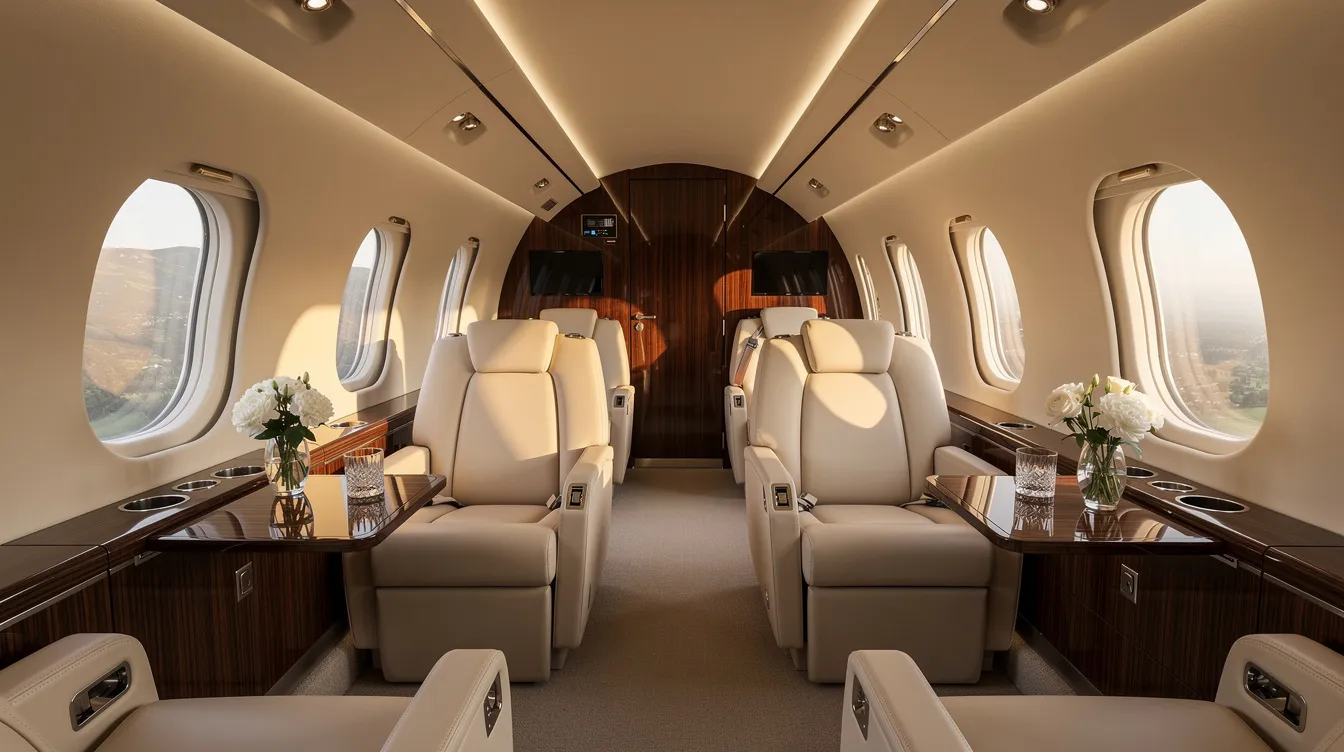
Long-haul quotes are where ultra-long-range aircraft prove their value, enabling nonstop flights between continents at the highest hourly rates in private aviation.
Coast-to-coast U.S. (e.g., New York–Los Angeles, roughly 5 hours one way) in a super-midsize jet might quote at $45,000–$70,000 all-in, while a heavy jet charter on the same route pushes higher due to both rate and aircraft size.
Transatlantic (e.g., New York–London, approximately 7 flight hours one way) in a large-cabin or ultra-long-range jet (Global 6500, G600) can easily range from $90,000 to $150,000+, including positioning, applicable taxes, and handling. These are the kinds of quotes where long-distance travel costs can exceed what many travelers expect.
Companies or families flying several such missions each year often save meaningfully by owning a fractional share in an ultra-long-range aircraft, gaining predictable hourly rates and priority access for complex international itineraries.
Not all private jet charter services structure quotes the same way. What one provider calls "all-in" may exclude items another considers standard. Clients need to understand exactly what they are approving before confirming a trip.
Standard inclusions typically cover:
Aircraft and crew (pilots and, on larger aircraft, a flight attendant)
Fuel (usually built into the hourly rate)
Standard catering (snacks, beverages)
Base operational fees and known taxes (U.S. Federal Excise Tax, segment fees)
Common exclusions or variable charges:
Premium or custom catering
De-icing and winter hangar storage
Wi-Fi/satellite connectivity charges
Ground transportation or rental car arrangements
Concierge services and personalized service requests
Last-minute rerouting or weather-related diversions
BlackJet Fractional Jet Ownership encourages clients to request itemized quotes that break out the hourly rate, estimated flight hours, taxes, landing fees, and optional extras—ensuring comparisons happen on an "apples to apples" basis. For frequent travelers, fractional ownership programs bundle many of these variables into predictable monthly and hourly structures, making private jet pricing far simpler to manage.
Regulatory charges can add meaningful cost and should always appear explicitly in a quality private jet quote.
Key U.S. examples include:
7.5% Federal Excise Tax (FET) on domestic charter legs under IRC §4261
Per-segment fee of approximately $5.30 per passenger per domestic flight segment (2026)
International arrival/departure taxes of roughly $23.40 per person per leg on qualifying international routes
For cross-border international flights, the quote should also include:
Overflight and landing permits
Customs and immigration handling
Any international fees specific to the destination country
These costs can range from a few hundred to several thousand dollars depending on the route.
Reputable providers estimate all foreseeable taxes and regulatory fees upfront rather than passing them through as surprise "after-trip" invoices. It is worth noting that fractional ownership structures are generally exempt from §4261 FET on management fees, instead paying fuel surtaxes under §4043-a, a distinction that can produce meaningful savings for high-usage clients, especially when paired with robust liability and insurance coverage in fractional ownership.
Any provider holding an air carrier certificate should be transparent about how these charges are calculated and presented, and prospective owners should ensure that essential contract terms in fractional jet ownership clearly explain how such costs are allocated.
Certain extras only appear on quotes depending on the weather, the airport, and the timing.
De-icing: Can run from $1,500 to $15,000+ depending on aircraft size and conditions. Winter flights into airports like Aspen, Teterboro, or Denver are frequently subject to this.
Winter hangar fees: $500–$1,500 per night to shelter the aircraft and avoid repeated de-icing.
Wi-Fi charges: Some aircraft bill satellite connectivity on a per-megabyte or flat-rate basis, especially for international flights. Clients should clarify whether unlimited Wi-Fi is included.
Special cleaning fees: For pets, heavy usage, or unique onboard events—typically $250 and up, appearing as a separate line item.
These are the types of hidden fees that catch first-time charter clients off guard. Asking about them before confirming the booking process eliminates surprises.
Private jet quote requests require details like travel dates and passenger count.
High-quality quotes start with clear trip details. The more specifics a client provides—dates, passenger count, luggage, preferences—the more accurate the private jet pricing and the better the aircraft match.
A straightforward sequence to follow:
Define trip requirements: destination, purpose, and any special needs.
Choose preferred dates and times: include flexibility windows if possible.
Share passenger and luggage details: number of travelers, children, oversize items (golf bags, skis).
Specify aircraft preferences: cabin size, range, or a specific aircraft model.
Send to one or more providers: request at least two or three aircraft options (e.g., light jet vs. midsize vs. super-midsize) so that total cost per seat and comfort can be compared.
BlackJet Fractional Jet Ownership uses this same information to model whether clients would be better served by on-demand private charter, Reserve Fleet hours, or an Equity Fleet fractional share. Well-established providers can often turn around a standard domestic quote within 30–60 minutes during business hours, with more complex international quotes ready within a few hours.

The more complete the initial request, the fewer revisions and surprise costs later.
Critical items:
Exact departure and arrival airports (or city pairs)
Preferred travel dates and time windows, including departure date flexibility
One-way, round-trip, or multi-leg itinerary details
Number of passengers including children and infants
Additional helpful details:
Approximate luggage volume (golf bags, skis, musical instruments)
Need for pets on board
Special catering or dietary requests
Whether onboard Wi-Fi is essential for the flight
Clients should also disclose whether the trip is part of a recurring pattern—monthly board meetings, seasonal relocations, frequent routes—so the provider can propose longer-term solutions like jet cards, fractional ownership, or even flexible floating fleet fractional ownership options rather than quoting each trip individually. This is where private aviation experts can add significant value by structuring a program around a client's actual travel behavior.
The lowest headline price is not always the best value once safety ratings, aircraft age, and cancellation terms are factored in.
Key comparison points to evaluate across quotes:
Operator safety credentials: Look for ARGUS Platinum or Gold, Wyvern Wingman ratings, and current insurance documentation.
Aircraft age and refurbishment status: A lower rate on a 25-year-old cabin may not deliver the experience expected from private jet travel.
Itemization of fees: Ensure every line item (positioning, overnights, taxes) is visible so comparisons are meaningful.
Cancellation and change policies: Understand penalties for schedule changes, especially close to departure.
Calculate cost per seat and cost per flight hour across all quotes to identify outliers. Experienced travelers and corporations often build an annual travel budget and then compare charter quotes to what the same hours would cost under a fractional ownership model, drawing on market overviews of the best fractional jet ownership programs. A program comparison can clarify which approach delivers the best long-term value.
Many travelers start with ad-hoc private jet rental, sourcing individual quotes for each trip. But at around 25–150 flight hours per year, it often makes financial sense to compare chartering a private jet repeatedly against fractional jet ownership or structured membership.
Fractional ownership means buying a share of a specific aircraft type—such as a 1/16 or 1/8 fractional jet ownership share—which entitles the owner to a fixed number of flight hours per year with guaranteed access and predictable hourly rates. Unlike charter, the owner holds a real asset interest in the aircraft.
BlackJet Fractional Jet Ownership offers two models, which can be compared to broader fractional jet ownership vs membership programs:
Reserve Fleet: Pay-as-you-go hours without ownership costs. Ideal for lighter usage or overflow trips.
Equity Fleet: True fractional ownership with potential tax benefits, asset interest, and priority access. Designed for 50–150+ hours per year.
A practical scenario: a business flying 75–100 hours per year on U.S. domestic routes could compare last year's stack of charter invoices—including all the positioning, peak surcharges, and varied charter rates—against a BlackJet Equity Fleet share to determine whether predictable fixed hourly rates and guaranteed availability reduce total cost and administrative burden.
Fractional ownership can also deliver tax advantages in the United States. The "One Big Beautiful Bill" Act of 2025 restored 100% bonus depreciation for qualifying business aircraft, and the IRC Section 179 expensing cap was raised to $2.5 million. These benefits are available to fractional share owners with qualifying business use but are not accessible through ad hoc charter invoices. Clients should always discuss specifics with a tax advisor and review dedicated resources on the tax implications for fractional jet owners. For a deeper look at the financial structure, see this guide to understanding the cost of fractional jet ownership.
The primary advantage of fractional ownership over repeatedly chartering a private jet is cost predictability paired with guaranteed access—especially on peak days when the rest of the charter market tightens.
Core benefits include:
Fixed hourly rate for a defined aircraft category, insulated from the 20–40% rate spikes common during holidays and events
Guaranteed aircraft availability within a contracted call-out window (typically 10–24 hours, and sometimes on very short notice)
No need to source, compare, and negotiate multiple quotes for each trip
Potential for the right plane to be consistently available without repositioning from across the country
A client paying $600,000+ per year in scattered charter invoices might move to a fractional aircraft ownership structure with a known annual budget combining share acquisition cost, monthly management fees, and occupied flight hours, often financed through tailored fractional jet ownership financing structures. BlackJet's Reserve Fleet complements the Equity Fleet by covering overflow travel, one-off missions outside the share's profile, and special routing needs without breaking the predictable pricing framework.
For executives, founders, and family offices, time and certainty often matter more than shaving the last 5–10% off a single trip quote. The booking process for each ad-hoc charter—requesting quotes, comparing aircraft options, verifying safety credentials, and negotiating terms—consumes hours that multiply across dozens of trips per year.
Fractional ownership streamlines this entirely:
Centralized trip scheduling with a dedicated aviation team
Standardized aircraft cabins and consistent personalized service across all private flights
No last-minute scramble for the best aircraft during peak periods
A single relationship replacing dozens of broker interactions
Fractional owners can typically secure peak-day flights without the rate spikes or aircraft scarcity that regularly appear in on-demand charter markets during the aviation industry's busiest weeks. BlackJet Fractional Jet Ownership positions itself as a partner that helps clients step back from individual charter quotes and instead design a multi-year private aviation strategy built around their actual needs—whether that is domestic flights, transatlantic crossings, or a blend of both, while also planning for future transitions such as selling a fractional jet ownership share if their travel profile changes.
This section helps readers translate hourly charter rates and individual quotes into an annual cost picture, then compare that to a typical fractional share structure. To estimate annual charter spending, multiply total expected flight hours by the average hourly rate for the usual aircraft category, then add 10–20% for fees and extras.
Estimated annual charter spending by usage level (midsize jet, ~$7,000–$9,000/hr average all-in):
Annual Hours | Estimated Charter Cost | Notes |
|---|---|---|
25 hours | $200,000–$250,000 | Charter or jet card often sufficient |
50 hours | $400,000–$500,000 | Gray zone-worth comparing to fractional |
100 hours | $800,000–$1,000,000+ | Fractional ownership typically wins |
Fractional ownership cost components include a mix of concepts—such as ownership shares, management fees, and occupied hours—that are easier to digest with a clear fractional jet ownership terminology guide:
Initial share acquisition: e.g., 1/16 of a midsize jet at $175,000–$300,000
Monthly management fees: ~$10,000–$20,000/month covering crew, maintenance, insurance, and hangar
Occupied hourly rate: ~$4,000–$6,000/hour for a midsize jet, lower than equivalent charter rates
The break-even point often lies around 50 hours per year for midsize and super-midsize categories. Under 25 hours, on-demand private jet rental or jet cards usually deliver a lower total cost. Between 25 and 50 hours is a gray zone where the right jet card or a Reserve Fleet program may be optimal. Above 50 hours, fractional aircraft ownership increasingly wins on both cost and convenience, especially when you consider its role as a structured fractional jet ownership investment. For a detailed walkthrough, see how to calculate your total cost of fractional jet ownership.
Readers who want clarity on where they fall should request a no-obligation cost comparison from BlackJet, using their real flight history, preferred routes, and current charter quotes or private jet rental prices as inputs.

For straightforward domestic routes within the United States, reputable providers can often deliver a detailed quote within 30–60 minutes during normal business hours.
More complex itineraries—multi-leg trips, international flights requiring landing permits, or flights during major peak periods—may take several hours to quote accurately.
Providing complete trip details (dates, airports, passenger count, luggage, and special requests) in the first message significantly shortens turnaround time.
Many charter quotes are valid for a limited window—often just 24–72 hours—because fuel prices and aircraft availability shift quickly, especially for one-off private jet rentals.
Some providers and jet card programs offer fixed hourly rate structures for a defined period (12–24 months) in exchange for pre-funding or membership commitments.
Fractional ownership programs like BlackJet's Equity Fleet are specifically designed to provide multi-year pricing visibility through contracted hourly rates and management fees, offering the strongest long-term cost stability in the private charter market.
Consider flexible departure times or shifting travel by a day on either side of peak dates to avoid the highest demand windows and reduce positioning costs.
Accepting nearby alternate airports can lower landing and handling fees while keeping ground time reasonable—choosing a smaller field over a congested hub often saves hundreds or thousands per leg.
Travelers with recurring routes should discuss block-hour purchases, jet cards, or fractional jet ownership with providers like BlackJet to access lower, more stable hourly rates over time.
Using a jet charter cost estimator or charter flight cost calculator during initial planning can also help set realistic expectations before requesting formal quotes from the global fleet.
A comprehensive international private charter quote should account for customs, immigration, and required permits, but line items may be grouped under "international fees" or similar wording.
Clients should ask their provider to confirm which cross-border costs—such as overtime customs services, international ground transport, or last-minute routing changes—are included and which could be billed after the trip.
Experienced providers handle all documentation and coordination so passengers experience a streamlined arrival process, often faster and smoother than commercial fast-track services, with the return flight handled just as seamlessly.
Some charter agreements bill on actual flight time flown, meaning extended taxiing, weather reroutes, or ATC delays can modestly change the final cost compared to the quoted estimate.
Other programs—including some fixed-rate jet cards and fractional ownership structures—charge based on scheduled or block times, shielding clients from minor operational variances.
Clients should review contract terms regarding "actual vs. quoted" flight hours and ask how providers handle significant deviations caused by factors beyond the client's control, such as unexpected weather or airspace restrictions.
Getting a quote for a private jet is the first step, but building a long-term private aviation plan—whether through charter, a jet card, or fractional jet ownership—is where meaningful savings and predictability emerge. Every traveler's profile is different, and the perfect jet solution for 25 hours per year looks nothing like the right answer for 100 hours.
Start by tracking private jet travel over the next 12 months: routes, aircraft types, hours flown, and total spend. Then compare recurring charter quotes against structured solutions like BlackJet's Reserve Fleet and Equity Fleet. The data often reveals that what initially seemed like a series of isolated quotes can be transformed into a strategic asset for business productivity and personal quality of life.
Ready to explore the smarter way to fly private? Visit FractionalJetOwnership.com to request a personalized consultation and a side-by-side comparison of chartering a private jet versus fractional aircraft ownership. Whether planning your next trip or rethinking your entire approach to private aviation, BlackJet's team is built to help discerning travelers and organizations find the right plane, the right program, and the right price.
