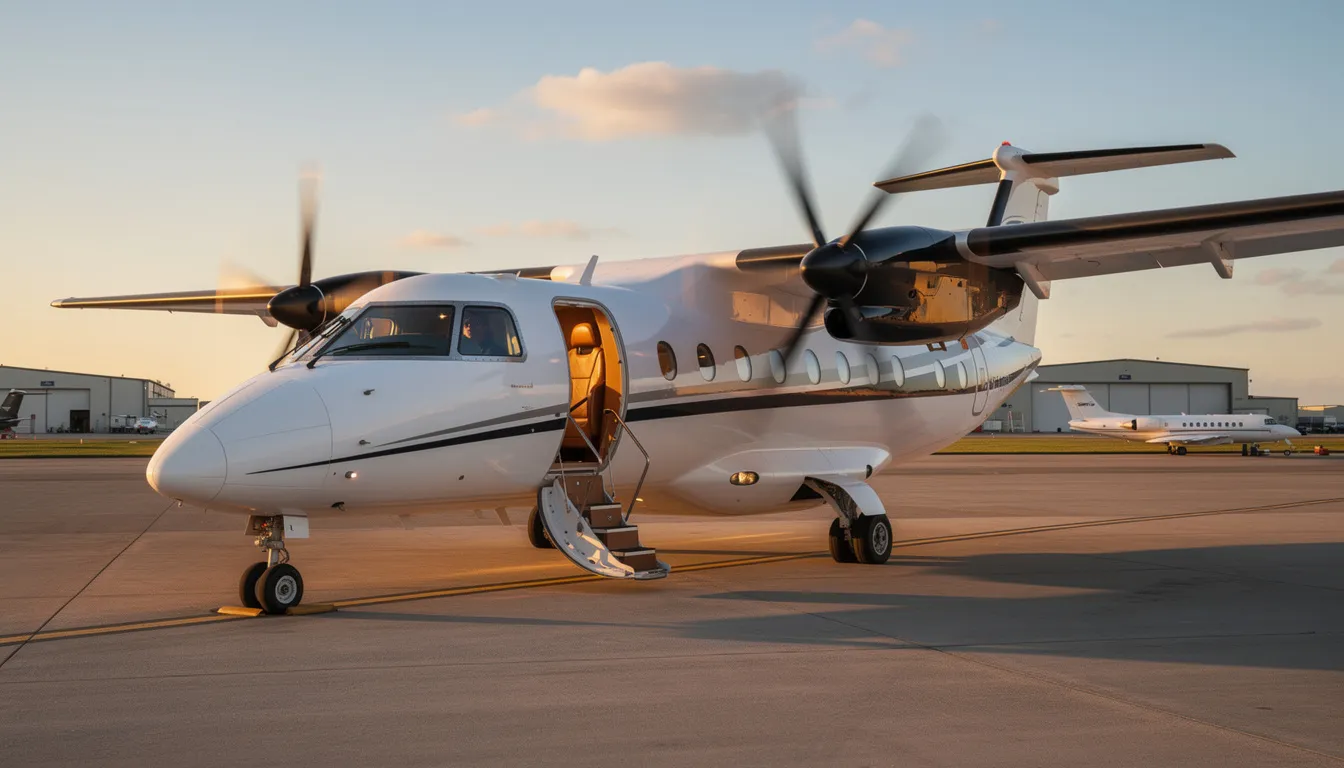
February 26, 2026
Private aviation in the United States continues to expand as business leaders and high-net-worth travelers seek efficient alternatives to commercial air travel. While light and midsize jets often receive the spotlight, turboprop charter flights remain one of the most practical and cost-efficient solutions for regional and medium-haul flights.
For flights under 1,500 nautical miles, turboprop aircraft deliver a compelling combination of access, flexibility, and lower operating costs. Turboprops offer the unique ability to comfortably seat 5 to 12 passengers in executive-style cabins configured for business meetings or leisure travel. This guide explains how turboprop charter works, compares leading aircraft models, outlines pricing, and details how to book private flights with confidence.
Turboprop charter flights offer efficient regional travel at lower hourly rates than most private jets, thanks to their superior fuel efficiency and lower operational costs. Hourly charter rates for turboprops typically range from $1,600 to $3,000, compared to $2,500 to $5,800 for light jets. This makes turboprop charters generally 30% to 50% cheaper than jets, ideal for regional trips. Turboprop charter costs are roughly half the cost to charter a Light or Midsize Jet, providing significant savings for cost-conscious travelers.
They also offer access to smaller airports with shorter runways that jets cannot use, ensuring convenience and direct access to your desired destination. Additionally, turboprops offer comfortable cabins with luxury amenities, making them ideal for trips of one to two hours or up to three hours in duration.
Turboprop charter appeals to a wide range of private aviation clients:
Corporate executives traveling between regional offices, including those based in Austin, and fractional jet ownership markets
Business owners visiting multiple cities in one day
High-net-worth families traveling to second homes
Investors attending site visits in remote locations, such as those served by Pittsburgh's fractional jet ownership solutions
Sports teams and collegiate programs
Leisure travelers flying to island or mountain destinations
First-time private flyers evaluating alternatives to full private jet ownership
For many of these travelers, turboprops serve as a practical entry point into private aviation before considering fractional jet ownership programs or other long-term access models.
This guide covers:
Turboprop aircraft fundamentals, including turboprop engine and propeller aircraft basics
Charter pricing and cost drivers
Benefits compared to jets and jet engines
Aircraft profiles: King Air, Pilatus PC-12, and Cessna Caravan
Operational and safety standards
Booking procedures and legal considerations
Use cases and FAQs
Call to action
A turboprop aircraft uses a turbine engine to drive a propeller, combining the power of jet engines with the efficiency of propeller aircraft. This configuration provides:
Strong fuel efficiency at lower altitudes, ideal for medium-haul flights
Short takeoff and landing capability on shorter runways
Reliable performance in varied weather conditions
Turboprops typically cruise between 280 and 350 mph (240 to 320 knots) and operate efficiently at altitudes between 20,000 and 30,000 feet, with many King Air models reaching cruising altitudes up to 35,000 feet.
The capacity of turboprop aircraft varies widely depending on the model and configuration, typically accommodating 5 to 12 passengers. Modern turboprops often feature spacious cabins that comfortably seat 6 to 11 passengers in executive layouts configured for business meetings or leisure. Optional belted lavatory seats may be available depending on the model.
Popular turboprop models for charter include the King Air 300, Pilatus PC-12, and Cessna Caravan. The latter sometimes offers optional belly pods that expand storage capacity, enhancing baggage flexibility.
Turboprops offer versatile baggage capacity, typically hovering around 50 cubic feet of storage. External cargo compartments accessible via large cargo doors allow for oversized items such as skis and golf clubs. The Pilatus PC-12 is especially noted for its large cargo door, making it convenient for carrying bulky luggage.
Turboprops provide the significant benefit of operating from runways under 4,000 feet, granting access to thousands of small airports, including mountain destinations, island airports, rural business centers, and private airfields. This ability to land on shorter runways provides unmatched convenience and reduces total travel time by bringing you closer to your desired destination.
In contrast, many light jets require longer paved runways, limiting access to these smaller airports.
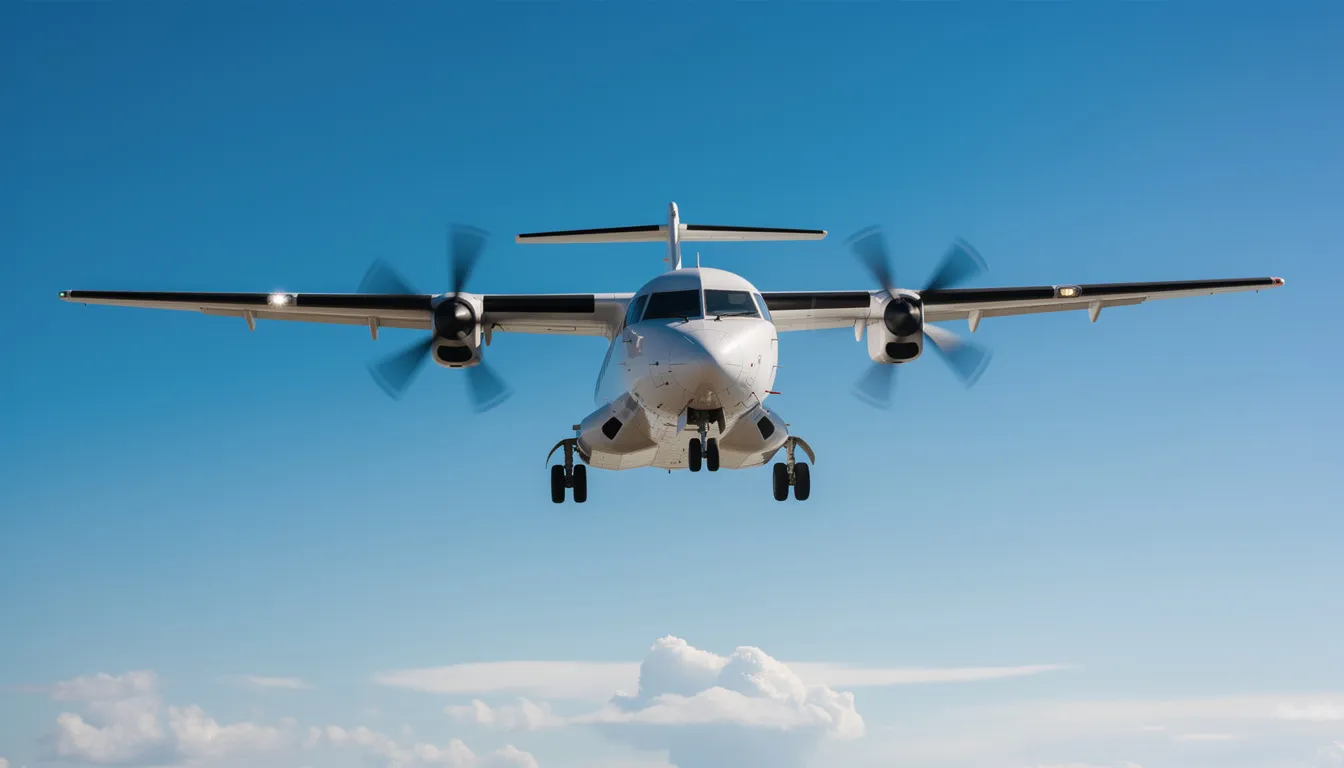
Turboprop charter pricing typically ranges between $1,600 and $3,000 per flight hour, with many starting around $2,000 per hour. For instance:
King Air models often range from $2,200 to $3,000 per hour
Pilatus PC-12 charters typically range from $1,800 to $2,800 per hour
Cessna Caravan rates vary based on configuration and availability
Several variables influence turboprop charter costs:
Aircraft availability and configuration
Flight distance and repositioning requirements
Airport landing and handling fees
Crew overnight expenses
Fuel prices and market demand
Empty-leg availability can significantly reduce pricing when the routing aligns.
Turboprops offer 30% to 50% savings compared to light jets, whose hourly rates range from $2,500 to $5,800. On short routes under 500 nautical miles, turboprops consume up to 40% less fuel, resulting in lower operational costs and a reduced environmental impact.
However, for longer trips exceeding 1,000 nautical miles, jets may provide time savings that offset the cost difference.
Travelers can optimize expenses by:
Booking round-trip itineraries
Utilizing empty leg flights
Flying during off-peak periods
Selecting appropriately sized aircraft
Avoiding repositioning-heavy routes
Frequent flyers may benefit from jet card programs or fractional jet ownership costs analysis to achieve greater cost efficiency.
With over 5,000 public-use airports in the U.S., turboprops unlock access to thousands of regional and municipal airports underserved by commercial airlines, dramatically reducing ground transfer times.
Turboprops burn significantly less fuel per hour than jets on short routes, offering:
Lower charter costs
Reduced environmental footprint
Efficient cruise performance under 300 knots
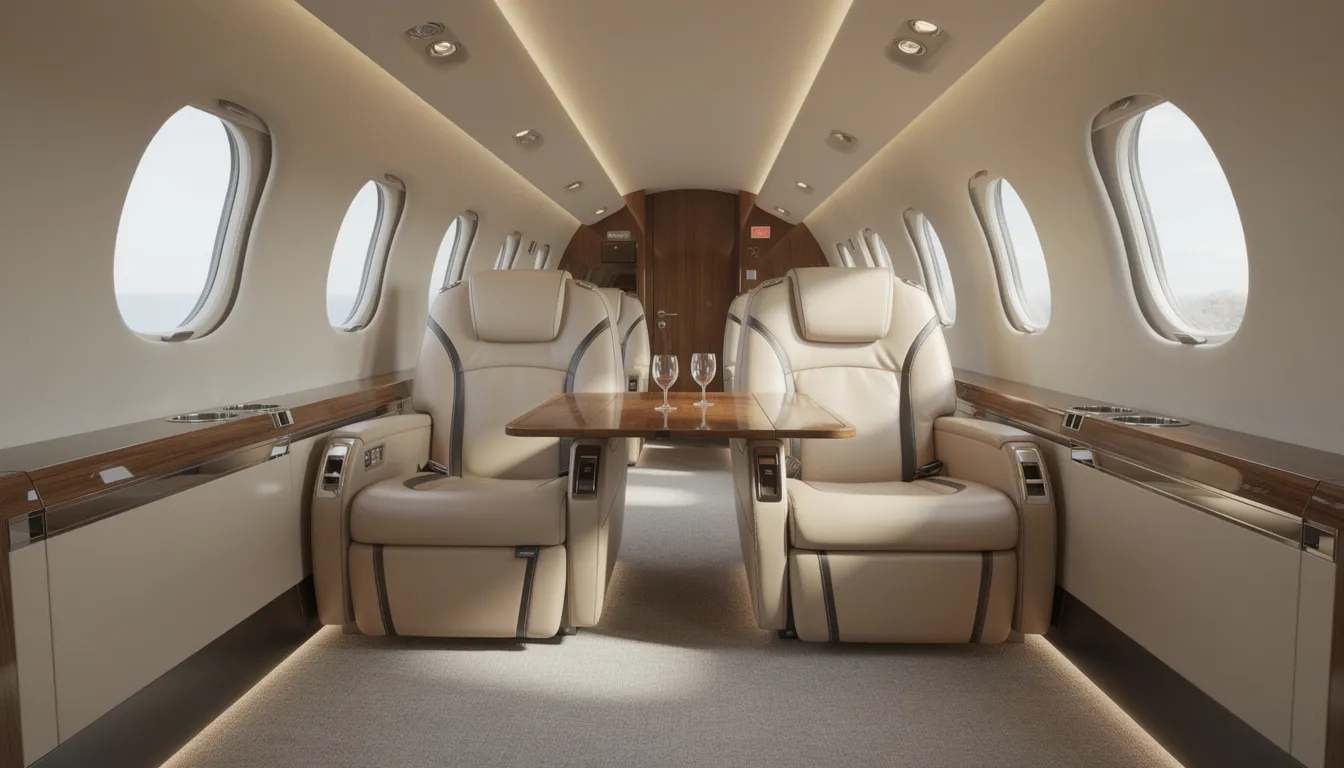
Modern turboprops provide luxury amenities such as:
Pressurized cabins with climate control
Executive leather seating configured for business meetings or leisure
Fold-out worktables
Quiet interior upgrades and advanced noise-dampening technology for a smoother ride, despite turboprops generally being noisier than jets
While cabin height may be slightly lower than that of midsize jets, turboprops offer a comfortable journey for flights up to three hours.
Amenities often include:
Wi-Fi (select aircraft)
USB and power outlets
Refreshment centers
Enclosed lavatories (model dependent)
Entertainment systems
The Beechcraft King Air 250 and 350i are among the most popular turboprops for charter, offering:
Seating for 6–9 passengers in club layouts
Aft lavatory and spacious baggage compartments
Range up to approximately 1,500 nautical miles
Twin turboprop engines provide reliability and safety
Ability to reach cruising altitudes up to 35,000 feet
The Pilatus PC-12 NGX is known for:
Single turboprop engine with jet engine efficiency
Large cargo door for oversized items
Advanced avionics and strong short-field performance
Seating for 6–8 passengers in executive configuration
Range up to approximately 1,800 nautical miles
The Cessna Caravan is a versatile turboprop offering:
Seating for up to 12 passengers depending on configuration
Optional belly pods that expand cargo capacity
Capability to operate from short and unimproved runways
Ideal for charter flights needing flexible cargo and passenger arrangements
King Air 350i: ~1,500 nautical miles
Pilatus PC-12 NGX: ~1,800 nautical miles
Cessna Caravan: approximately 900 to 1,200 nautical miles depending on configuration
The PC-12 offers slightly greater range, while the King Air appeals to those preferring twin-engine reliability. The Caravan excels in cargo flexibility and access to rugged airports.
Turboprops offer:
Lower hourly charter rates
Reduced fuel burn and landing fees
Ability to carry more passengers and cargo compared to similarly sized jets
Jets provide:
Faster cruise speeds (450–550 mph)
Higher cruising altitudes
Shorter total flight times on longer routes
Turboprops operate from shorter runways, often as short as 3,000 feet, and can land on unimproved surfaces like grass or gravel, providing access to remote locations.
Jets generally require longer, paved runways, limiting their operational flexibility.
While light jets may offer larger cabins and higher cruising altitudes, turboprops comfortably seat passengers with luxury amenities suitable for trips under three hours, combining style and convenience.
Ideal for:
Flights under 1,000 nautical miles
Regional business travel and medium-haul flights
Destinations with short runways or smaller airports
Cost-conscious travelers seeking luxury and convenience
Charter turboprops typically operate with two pilots certified under FAA Part 135, holding Airline Transport Pilot certificates and maintaining recurrent training to ensure safety, similar to the standards upheld for highly qualified private aviation pilots and crews.
Operators comply with:
Manufacturer-scheduled inspections and airworthiness directives
Routine maintenance and engine trend monitoring
FAA Part 135 safety regulations and drug/alcohol testing
Turboprops cruise between 25,000 and 30,000 feet efficiently, with some models, like the King Air, reaching 35,000 feet, providing safe, comfortable altitudes for regional flights.
Turboprop private planes are just as safe as their jet counterparts, benefiting from reliable turboprop engines and experienced pilots.
To rent a turboprop charter, provide:
Departure and arrival airports
Preferred dates and times
Passenger count and baggage details
Special requests (pets, catering, ground transport)
Preferred aircraft model (e.g., King Air, Pilatus PC-12, or Cessna Caravan)
Standard bookings: 24–72 hours in advance
Last-minute charters: Possible same-day bookings as little as four hours before departure, subject to availability
Peak travel periods: 1–2 weeks recommended
Charter agreements include itinerary, cancellation terms, payment schedules, and operator certification details. Accepted payments often include wire transfers, ACH, credit cards, and prepaid accounts. Deposits typically range from 25% to 50%, and cancellation fees vary depending on timing.
Private charters are known for their flexibility, including accommodating pets with advance notice. Turboprop charter services often provide 24/7 support and monitoring before, during, and after the trip, ensuring a seamless travel experience.
Executives traveling between cities such as Dallas–Houston or New York–Boston benefit from direct regional access and time savings.
Turboprops provide convenient access to Caribbean islands, Florida Keys, and mountain resorts with short runways.
With seating for 6–12 passengers, turboprops efficiently accommodate corporate retreats, investment teams, family travel, and sports teams.
Yes, with proper turbine transition training and ratings. Commercial charter flights require professionally certified crews under FAA regulations, and understanding key fractional jet ownership terminology can further clarify how professional operations are structured.
Yes. Turboprops operate under the same FAA safety standards as jets, featuring reliable turboprop engines and experienced pilots.
Most operators allow pets with advance notice. Policies vary by operator.
Baggage capacity depends on aircraft model; soft-sided luggage is recommended for optimal storage flexibility.
More than 72 hours: Lower penalties
24–72 hours: Partial forfeiture possible
Within 24 hours: Higher cancellation fees
Terms vary by operator and peak season.
Turboprop charter represents an efficient, cost-effective, and luxurious entry point into private aviation. For regional and medium-haul flights, turboprops offer unmatched airport access, fuel efficiency, and operational flexibility compared to many private jets.
In 2026, turboprop availability remains strong in the charter market, offering options for same-day, multiple-city itineraries that cater to dynamic travel needs.
For frequent flyers evaluating long-term private jet ownership or fractional jet ownership programs for smart investors, turboprop aircraft offer a versatile and practical solution.
Ready to rent a turboprop charter flight tailored to your schedule? Visit https://www.fractionaljetownership.com/ to request a personalized quote. Include your preferred aircraft model—such as a King Air, Pilatus PC-12, or Cessna Caravan—for a precise estimate.
Explore smarter private aviation solutions with expert guidance from Fractional Jet Ownership today.
