June 24, 2026
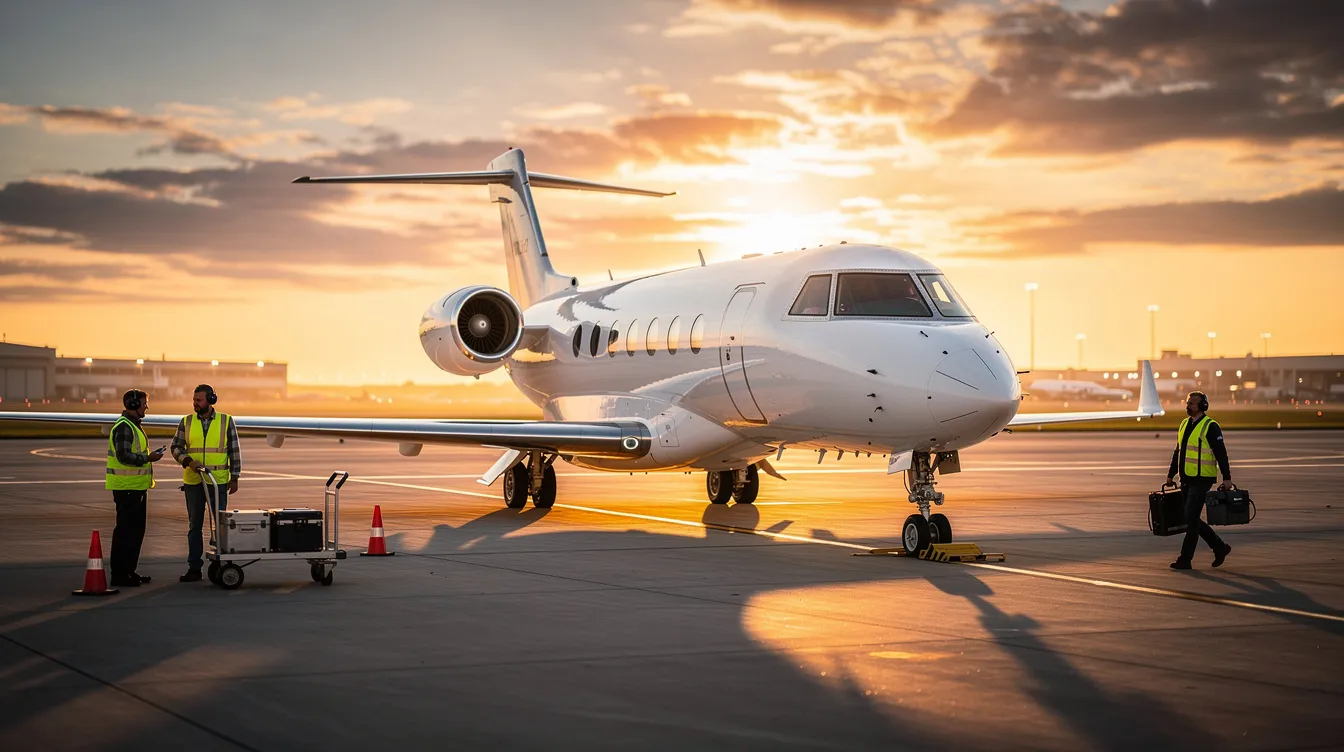
But how much does it cost to actually buy and operate one? The answer depends on whether you purchase new, buy pre-owned, or skip ownership entirely in favor of fractional or charter models. This guide breaks down every layer of the 8-seater private jet price equation with hard numbers, real aircraft examples, and clear guidance on when each access model makes the most financial sense.
This guide is for executives, families, and business owners considering the costs of owning or accessing an 8-seater private jet. It covers purchase prices, operating costs, and alternative access models, helping you determine the smartest financial approach for your travel needs. Whether you’re evaluating full ownership, fractional shares, or on-demand charter, this article provides the essential numbers and comparisons to help you make an informed decision.
For executives, families, and business owners who fly regularly, the 8-seater private jet sits in a sweet spot: enough cabin space for a team or an extended family ski trip, enough range for coast-to-coast hops, and enough efficiency to avoid the sticker shock of heavy jet territory. Classified as light-to-midsize jets, these aircraft typically accommodate 8 to 10 passengers comfortably, featuring spacious cabins with stand-up height and fully enclosed lavatories for added comfort.
Popular models include the Gulfstream G200, which boasts a range of about 3,400 nautical miles; the Bombardier Challenger 300, seating eight to ten passengers; the Embraer Legacy 450, known for modern technology and fuel efficiency; the Citation XLS+ with a 2,100-nautical-mile range; and the versatile Pilatus PC-24, capable of landing on short and unpaved runways. Generally, 8-seater jets have a range between 2,000 and 3,500 miles, making them ideal for regional and transcontinental flights.
Ownership costs are substantial, with annual operating expenses ranging from $1.25 million to $1.5 million. This includes fuel costs of $1,400 to $2,100 per hour—accounting for 25–35% of total operating costs—annual maintenance between $500,000 and $1 million, crew salaries from $200,000 to $500,000, and hangar fees ranging from $30,000 to $100,000 per year. Operating an 8-seater jet also consumes 200 to 300 gallons of fuel per hour.
Purchase prices vary widely, from $3 million to $12 million for new jets, and pre-owned models typically range between $3 million and $7 million. Chartering an 8-seater jet costs between $3,000 and $15,000 per hour, with hourly rates commonly falling between $7,500 and $12,500. Chartering is generally more economical for those flying fewer than 200 hours annually, as it eliminates fixed costs like maintenance and crew salaries and offers flexibility to choose different aircraft per trip. Fractional ownership requires a commitment of 50 to 400 flight hours yearly, allowing shared access with defined usage hours, while full ownership becomes economical at 200+ flight hours per year. Leasing offers an alternative by eliminating high upfront costs and depreciation risks. Additionally, empty leg flights can provide discounts of up to 75% off standard rates.
Airport fees, crew costs, and repositioning flights can significantly impact the total cost of a charter flight. Larger jets provide increased speed and comfort but typically come with higher operating expenses. This balance of cost, flexibility, and performance makes the 8-seater private jet a popular choice for discerning travelers seeking efficient and private air travel.
Purchase prices for 8-seat jets can range from $3 million to $25 million based on specifications, with new light jets starting around $3M–$9M and midsize or super-midsize models reaching $10M–$18M. Quality pre-owned options typically cost 25–40% less than new equivalents.
Annual operating costs for an 8-seater jet range from $1.25 million to $1.5 million when flying 200–300 hours per year, representing roughly 10–15% of the aircraft's current market value.
For most individuals and companies flying under 150–200 flight hours annually, fractional jet ownership or premium private jet charter is usually more economical than buying a private jet outright.
BlackJet Fractional Jet Ownership specializes in fractional and membership solutions that provide access to 8-seater private jets with predictable hourly rates and none of the headaches of full private jet ownership.
This article includes detailed examples of specific aircraft, hard numbers for operating costs per flight hour, and clear guidance on when to buy versus when to use fractional or charter.
An 8-seater private jet costs between $3 million and $12 million new for light jets, and $10M–$18M+ for new midsize and super midsize jet models as of 2024–2025 market data. An 8-seater private jet can be classified as a light-to-midsize jet, meaning this aircraft category spans a wide price range depending on range, cabin size, and engine performance.
When private aviation professionals refer to an "8 seater," they typically mean 7–9 passengers plus 2 pilots. These are popular light jets and midsize aircraft rather than large-cabin or ultra-long-range aircraft. An 8-seater jet typically has a range of 2,000 to 3,500 miles, covering everything from regional hops to transcontinental flights.
On the pre-owned market, 8-seat jets around 7–12 years old often trade between $4M and $10M depending on model, total flight hours, and maintenance history. This article will break down both the acquisition cost and ongoing operational costs, then compare full aircraft ownership to fractional ownership programs and private charter for 8-passenger missions.
All prices quoted are in U.S. dollars and generally reflect the U.S. and wider global private aviation market through 2024–2025.
Not all 8-seater jets are created equal. The private jet cost varies dramatically based on whether the aircraft is a light jet optimized for speed and efficiency or a midsize private jet built for longer flights and a more spacious cabin. Below are concrete, in-demand models across both categories.
Cessna Citation XLS+
This midsize jet seats 8–9 passengers and remains one of the most popular owner-flown and charter aircraft in the United States. The Citation XLS+ has a range of 2,100 nautical miles. New examples list around $13M–$14M, while pre-owned 2012–2018 models typically trade between $6M and $10M, depending on hours and condition.
Embraer Praetor 500
A super midsize jet configured for 8–9 passengers with 3,340 nautical miles of range, the Praetor 500 lists new in the $17M–$20M range. Pre-owned examples (2019–2022 builds) are available starting around $14M–$16M. Buyers pay a premium for its fuel-efficient engines and modern Collins Pro Line Fusion avionics.
Bombardier Challenger 3500
The successor to the popular Challenger 350, this aircraft seats eight to ten passengers comfortably and features a redesigned cabin. New pricing sits in the $27M–$28M range, with pre-owned Challenger 350 models (2015–2020) trading between $12M and $18M. For more on why super midsize jets dominate fractional fleets, see BlackJet's dedicated guide.
Gulfstream G200
A well-known super-midsize cabin jet seating 8–10 passengers. The Gulfstream G200 has a range of about 3,400 nautical miles, making it capable of nonstop flights between most major international hubs. Pre-owned examples from the mid-2000s trade for approximately $4.4M–$6.0M, offering solid value for their cabin size and range.
Embraer Legacy 450
The Embraer Legacy 450 features modern technology and fuel efficiency, seating 8 passengers in a flat-floor cabin with stand-up height. Pre-owned examples (2015–2019) range from $9M to $13M, while newer Legacy 500 variants push higher.
Pilatus PC-24
A versatile light jet seating 8 passengers. The Pilatus PC-24 can land on short and unpaved runways, giving access to smaller airports and a nearby alternative airport that larger aircraft cannot reach. New pricing hovers around $11M–$12M, with early pre-owned examples starting near $8M.
These jets often feature spacious cabins with stand-up height and can accommodate 8 to 10 passengers comfortably. Most 8-seater jets typically include a fully enclosed lavatory, adding comfort on longer flights. Buyers pay a premium for newer aircraft with advanced avionics, fuel-efficient engines, and enrolled engine programs, which reduce long-term maintenance costs and support higher resale value.
Light jets like the Embraer Phenom 300 and Citation CJ4 often seat 7–8 in high-density layouts, with new prices in the $10M range and pre-owned options from roughly $6M–$8M.
Many private jets in the 8-seat class are bought pre-owned to manage capital outlay and depreciation. For buyers who do not require a custom interior or the very latest technology, a well-maintained pre-owned aircraft often delivers significantly better total cost of ownership.
A new light jet in this class typically runs $8M–$11M, while comparable 2015–2018 pre-owned examples often transact between $5M and $8M, depending on total flight hours and maintenance records. Pre-owned 8-seater jets typically range from $3 million to $7 million at the lower end of the market for older but reliable aircraft.
Midsize and super-midsize 8-seat jets—Challenger 350, Gulfstream G200, Legacy 450, Praetor 500—generally cost $15M–$28M new but can be found pre-owned in the $7M–$16M range for aircraft built between 2010 and 2020.
Depreciation is a key consideration. Most private jets lose 20–30% of value in the first five years and roughly 50% by around year ten, with market demand, avionics upgrades, and engine program enrollment influencing the curve. According to industry depreciation data, annual depreciation rates tend to slow to 5–10% per year beyond the first five years.
A thorough pre-buy inspection and complete logbooks are critical for pre-owned jet acquisitions. Hidden maintenance costs and overdue inspections can add hundreds of thousands of dollars in the first year alone—turning what appeared to be a bargain into an expensive lesson. The same care applies when reviewing fractional jet ownership contract terms and agreements, which govern costs, scheduling, and exit rights.
The private jet cost conversation must go beyond the purchase price. An 8-seater jet typically incurs operational costs, including fuel and maintenance, that can easily reach $1M–$2M per year. Annual fixed costs for owning an 8-seater jet can exceed $1 million before a single flight is logged.
Crew salaries for private jets can range from $200,000 to $500,000 annually, covering a captain and first officer, plus benefits and recurrent training.
Hangar fees for private jets can cost between $30,000 and $100,000 per year, depending on the airport and aircraft size.
Private jet insurance typically runs $50,000–$250,000 annually for an 8-seat jet.
Professional aircraft management and scheduling can add $80,000–$200,000 per year, particularly if the jet is chartered under Part 135 when not in use by the owner.
Fuel costs for an 8-seater jet are $1,400 to $2,100 per hour, depending on fuel prices, engine type, and flight duration.
Annual maintenance costs for an 8-seater jet typically range from $500,000 to $1 million, encompassing scheduled inspections, unscheduled repairs, and maintenance reserves.
Landing fees, handling charges, and catering vary widely but can add $200–$800 per flight segment.
Fuel costs can account for 25–35% of total operating costs for private jets, making fuel prices one of the most volatile components of private aircraft expenses. Airport fees and crew costs can significantly impact the total cost of a charter flight or owner-operated mission.
A realistic planning rule: budget annual operating costs at 10–15% of the jet's current market value, assuming around 250 annual flight hours. Flying fewer hours raises the cost per hour because fixed costs are spread over fewer trips. Hangar fees typically range from the low end for shared facilities to six figures for premium locations near major metropolitan areas.
To make these numbers concrete, consider a 2018 Cessna Citation Latitude—a midsize aircraft configured for 8 passengers—based in the United States and flying 250 hours per year.
Annual Fixed Costs (Estimated)
Category | Annual Cost |
|---|---|
Flight crew (captain + first officer) | $300,000–$400,000 |
Hangar | $50,000–$90,000 |
Insurance | $80,000–$150,000 |
Management & scheduling | $100,000–$180,000 |
Training, subscriptions, misc. | $30,000–$60,000 |
Total Fixed | $560,000–$880,000 |
Variable Costs Per Flight Hour
Operating an 8-seater jet consumes 200 to 300 gallons of fuel per hour. At $5.50–$7.50 per gallon (typical Jet-A pricing in 2024–2025), fuel alone runs $1,100–$2,250 per hour. Add engine and airframe maintenance reserves, landing fees, and handling charges, and the per-flight-hour variable cost reaches approximately $3,500–$4,800.
All-In Cost Per Flight Hour
Dividing total annual costs (roughly $1.25M–$1.5M for fixed plus variable combined at 250 hours) by 250 flight hours yields an all-in cost of approximately $5,000–$7,000 per flight hour.
These numbers do not include financing interest or the opportunity cost of tying up $8M–$15M in a single private aircraft, nor the impact of occasional heavy maintenance events that can temporarily spike annual maintenance costs.
These benchmarks help private jet owners compare the economics of full ownership with fractional programs, jet cards, and on-demand charter for similar 8-passenger missions.
Full private jet ownership is typically justified only once annual flight hours pass specific thresholds, given the high fixed operating costs involved. Full ownership is economical for 200+ flight hours per year for most midsize aircraft in this class.
For most 8-seat light and midsize jets, full ownership starts to make economic sense around 200–250 flight hours per year, while super-midsize aircraft often require 250–300+ hours to compete with fractional and charter on a cost-per-hour basis. For a deeper analysis of these thresholds, see BlackJet's guide on private jet ownership vs leasing and the 400-hour rule.
Typical full-ownership profiles include:
Large corporations with regional offices
Ultra-high-net-worth families with frequent multi-leg trips
Executives flying private weekly between fixed city pairs
Owners also value non-financial benefits: guaranteed access to a specific aircraft, deep customization of cabin and avionics, and total control over flight crew selection and service standards.
Many first-time buyers overestimate their likely flight hours. BlackJet's advisors help prospects rigorously forecast annual usage before committing capital, often revealing that chartering is ideal for travelers flying less than 200 hours annually.
Prospective buyers flying under approximately 200 hours annually often achieve better outcomes with fractional jet ownership or a high-quality membership program instead of owning a private jet outright.
Modern private aviation offers multiple ways to access 8-seat aircraft without bearing the full burden of ownership. On-demand charter, jet cards, and fractional aircraft ownership each deliver distinct cost and flexibility profiles, and evaluating fractional jet ownership as an investment alternative is an important part of that analysis.
Private jet charter costs for 8-seat aircraft generally run around $2,000 to $10,000 per hour, depending on the trip. For midsize 8-passenger jets specifically, these costs vary by aircraft type, route, and flight time, with charter costs for an 8-seater private jet ranging from $3,000 to $15,000 per hour and hourly charter rates for 8-seater jets typically falling between $7,500 and $12,500 for peak-demand routes.
Chartering Advantages:
Significantly less expensive than owning a private jet for lower-usage travelers
Eliminates fixed costs like maintenance and crew salaries
Flexibility to choose different aircraft for each trip
Repositioning costs may apply if a jet needs to fly from a different location to pick up a passenger, increasing the total price
Empty leg flights can cut rates by up to 75% off standard pricing for flexible travelers
Chartering is typically more economical for fewer than 200 flight hours per year. A charter operator can also provide access to a nearby alternative airport or an unsuitable aircraft swap when schedules change.
Jet cards and membership programs lock in hourly rates in exchange for a deposit or annual fee. These are often favored by clients flying 25–75 hours a year who want predictable pricing and guaranteed availability.
Jet Card Benefits:
Predictable pricing
Guaranteed aircraft availability
No long-term ownership commitment
Travelers weighing these options against fractional shares should understand the fractional jet ownership vs membership trade-offs. For a comparison of the best private jet memberships, BlackJet has published a detailed review.
Fractional ownership allows shared aircraft access with defined usage hours, sitting at the midpoint between charter and full ownership. Buyers acquire an aircraft share—for example, 1/16th to 1/2—that grants 25–200 hours per year on a fleet of similar jets.
Fractional Ownership Features:
Shared purchase price, maintenance costs, and operating overhead across multiple owners
Many of the tax benefits and scheduling certainty of full private jet ownership
Specialized fractional jet ownership financing options to further smooth capital outlay
Leasing a jet through fractional structures eliminates high upfront costs and depreciation risks compared to buying outright.
BlackJet Fractional Jet Ownership focuses specifically on fractional ownership and shared-use programs for 8-seat light- and midsize jets, making it a natural fit for travelers in the 25–150-hour range, including those evaluating 1/8 fractional jet ownership structures as a starting point.
BlackJet Fractional Jet Ownership is a specialist in fractional aircraft ownership and private aviation membership programs for clients who need 25–150 flight hours per year on 8-seat private jets.
Equity Fleet Model
Clients buy an equity share in a specific aircraft category of 8-seater private jets
Provides priority access, potential tax advantages, and predictable hourly rates
BlackJet handles aircraft management, scheduling, and maintenance
For a detailed look at how to calculate your total cost of fractional jet ownership, BlackJet's cost calculator guide walks through the math.
Reserve Fleet Model
Flexible, pay-as-you-go option on 8-seat light and midsize jets without owning the aircraft
Ideal for clients who value simplicity and low commitment but still want guaranteed availability for private jet travel
Similar in spirit to floating fleet-style fractional programs that maximize aircraft utilization and trip flexibility
Both programs are designed for individuals and corporations flying 25–150 hours annually, bridging the gap between sporadic ad hoc private charter and the high fixed costs of full private jet ownership. Instead of bearing 100% of fixed operating costs and maintenance risks, BlackJet owners pay a smaller upfront investment plus predictable monthly management and hourly usage fees.
Readers can work with BlackJet's advisors to model side-by-side comparisons of outright purchase, fractional ownership, and charter for their specific 8-passenger mission profile.
Several technical, market, and operational factors influence both the purchase price and ongoing costs for 8-seat jets.
Newer jets with fewer cycles and hours command significantly higher prices and tend to have lower near-term maintenance costs, while older airframes may require major inspections and refurbishments. A reliable aircraft with complete maintenance records will always outperform a cheaper airframe with gaps in its logbooks.
Super-midsize 8-seat jets with 3,000+ nautical miles of flight range and high cruise speeds cost more to acquire and operate than shorter-range light jets, but they reduce travel time and fuel stops on longer flights. For international flights spanning major international hubs, range becomes a critical consideration.
Modern flight decks (Garmin G5000 or Collins Pro Line Fusion) and refreshed interiors can add hundreds of thousands of dollars in value, while outdated systems can depress resale value significantly.
During periods of high demand (such as post-2020), both new and pre-owned 8-seat private jets have seen price increases and longer lead times, affecting how much it costs to secure a specific aircraft quickly. Larger aircraft and longer-range models tend to see the most price pressure during tight markets. Larger jets also provide increased speed and comfort, typically resulting in higher costs.
Enrollment in engine maintenance programs (JSSI, MSP, or ESP) and comprehensive maintenance records are major determinants of resale value and can add 10–25% to what buyers are willing to pay for an otherwise similar 8-seater jet.
Choosing the right access model depends on how often the aircraft flies, what routes are typical, and how much capital and complexity an owner is willing to absorb.
Factor | Full Ownership | Fractional Ownership | Private Charter |
|---|---|---|---|
Upfront cost | $3M–$18M+ | $500K–$2M (share) | None (per-flight) |
Annual fixed costs | $700K–$1.2M+ | Shared across owners | $0 |
Variable cost/hr | $2,200–$4,500 | $4,000–$9,000 (all-in) | $3,000–$12,500 |
Best for | 200–400+ hrs/year | 50–200 hrs/year | Under 75 hrs/year |
Flexibility | One aircraft type | Fleet of similar jets | Any aircraft size |
Capital risk | High (depreciation) | Moderate | None |
Scenario Comparisons:
50 flight hours per year:
A traveler flying privately 50 hours annually would spend heavily on fixed costs per hour under full ownership. Private charter or a jet card is almost always the most cost-effective path, keeping annual spend well under $500K with no capital outlay.
120 flight hours per year:
At this level, fractional ownership through a program like BlackJet's Equity Fleet typically delivers the best balance of cost, guaranteed access, and simplicity. Full ownership remains difficult to justify on pure economic grounds.
300 flight hours per year:
A corporation or family flying this volume can often justify owning their own private jet. The all-in hourly cost drops significantly as fixed costs are spread over more trips, and having a specific aircraft on standby provides scheduling certainty that charter and fractional cannot always match.
BlackJet's advisors routinely run these comparisons for prospective clients based on concrete trip histories and projected flight hour needs.
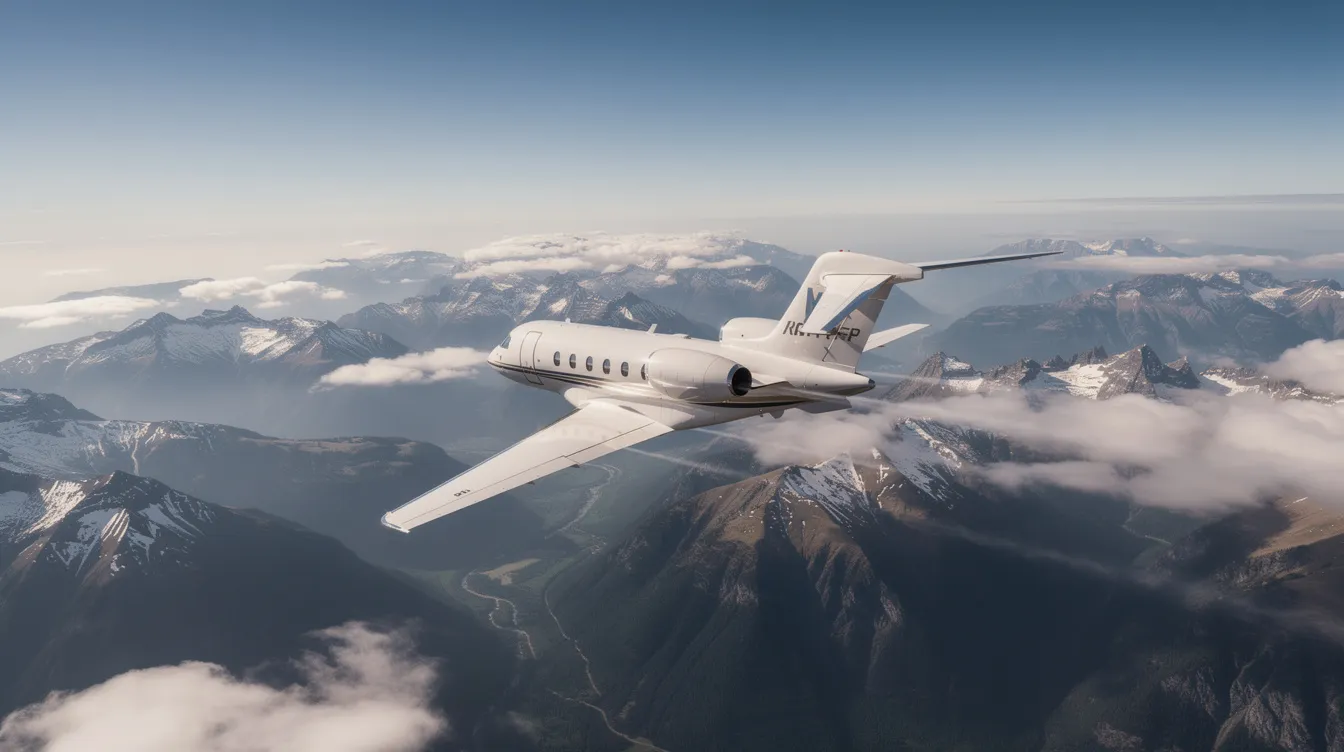
For many U.S.-based business owners, the decision to purchase or share an 8-seater private plane is strongly influenced by tax treatment and how the aircraft will be used within their company.
Under current U.S. tax rules (as of 2024–2025), business use of a jet may qualify for accelerated depreciation via the Modified Accelerated Cost Recovery System (MACRS), with Part 91 aircraft depreciated over five years and Part 135 aircraft over seven years. Bonus depreciation rules, when available, can allow very high first-year write-offs. However, rules change and require consultation with aviation-savvy tax professionals.
Financing an 8-seater private jet—typically via a 5–10-year loan or lease—can spread capital costs but adds interest expenses and lender requirements on maintenance and private jet insurance. Lenders often require engine program enrollment, minimum insurance levels, and certain aircraft condition standards, and fractional buyers face their own tax implications of fractional jet ownership that must be modeled alongside financing.
Corporate governance is another layer. Companies must carefully document business versus personal use, charge imputed income where required, and ensure compliance with SEC and IRS rules when executives use the private aircraft. Robust liability and insurance coverage in fractional ownership structures is equally critical to protect corporate and personal assets. Fractional ownership through BlackJet's Equity Fleet can simplify some of these complexities by providing clear monthly and hourly cost structures tied directly to business flight hours.
Readers should coordinate with their CFO, legal counsel, and a specialist private aviation advisor before finalizing any ownership structure for an 8-seat jet, and many will benefit from reviewing an aircraft fractional ownership sample contract to understand how rights and responsibilities are typically structured.
BlackJet Fractional Jet Ownership acts as a strategic advisor, not just an aircraft provider, helping clients choose between full ownership support, equity shares, and reserve-hour programs for 8-passenger missions.
BlackJet's team reviews historical travel patterns—routes, group sizes, frequency—to model realistic flight hour usage and compare total cost of ownership versus fractional and membership options. Whether a client needs access to a light jet for regional trips or a super midsize jet for coast-to-coast travel and international flights, BlackJet sources specific aircraft or aircraft classes to align with preferred cabin layout, flight range requirements, and operating cost targets. For a broader look at the best fractional jet ownership programs, BlackJet's comparison guide is a helpful starting point.
BlackJet manages day-to-day logistics, crew, maintenance scheduling, regulatory compliance, and dispatch—so that both individuals and corporate clients simply request private flight access and focus on their business or family travel. Whether it is ground transportation coordination or ensuring access to a global fleet of 8-seat jets, the operational burden stays with BlackJet.
Ready to see real numbers? Schedule a consultation to review a personalized 8-seater private jet cost plan based on your real-world travel profile at fractionaljetownership.com.
The following questions address common concerns not fully covered in the main body, focusing on practical, price-related queries with 2024–2025 pricing. They are also relevant for owners who may later decide to sell a fractional jet ownership share and transition to a different access model.
While very old or high-time aircraft sometimes appear below $3M, a realistic entry point for a safe, supportable 8-seater light or midsize jet with a solid maintenance history is usually $4M–$6M on the pre-owned aircraft market. Buyers should also be prepared for at least $800K–$1.2M in annual operating costs, meaning the decision is as much about ongoing cash flow as the initial purchase price. Those not ready for that level of commitment should consider fractional shares or BlackJet's Reserve Fleet access for low-cost private jet travel instead.
For a pre-owned jet, the process—search, offers, pre-buy inspection, closing, registration, and onboarding with a management company—typically runs 60–120 days in the U.S. and Europe. New aircraft may involve 12–24-month lead times depending on manufacturer backlogs and chosen customization options. Joining a BlackJet fractional or membership program can often deliver access to 8-seat aircraft within weeks rather than months because the fleet is already in operation.
Fractional owners pay a proportion of the aircraft's purchase price (for example, a 1/8 or 1/16 share), plus fixed monthly management fees and an hourly usage rate that covers fuel costs and operating costs. While the per-hour rate may be higher than the "bare" cost of full ownership at very high usage levels, fractional programs eliminate the need to fund 100% of the purchase price and fixed overhead. BlackJet's Equity Fleet programs target clients flying 25–150 hours per year, where fractional ownership often yields a more favorable cash-flow profile than buying outright.
Historically, well-maintained business jets in this class retain 35–50% of their original value after 10–12 years, depending on total flight hours, maintenance records, and market conditions. Major avionics upgrades, engine program enrollment, and consistent professional maintenance can materially improve resale value, while neglected maintenance or damage history can depress it. Residual value should be viewed as one part of the total private jet cost equation, alongside financing, operating costs, and tax treatment.
Single- and twin-turboprop aircraft like the Pilatus PC-12 and King Air 250/350 generally have lower fuel burn and maintenance costs per flight hour than comparable 8-seat jets, often in the $1,200–$2,500 per hour range. Jets, however, are faster and better suited for longer sectors and flying privately between distant cities, so total trip cost and flight duration must be weighed together when choosing between turboprops and light or midsize jets. BlackJet can help clients test both turboprop and jet options via its Reserve Fleet or fractional programs to determine which profile best fits their typical missions—whether that is a heavy jet for ultra-long-range aircraft requirements or a lighter option for shorter regional legs.
Owning an 8-seater private jet involves both a multi-million-dollar purchase price and substantial annual ongoing costs, making it a strategic decision rather than a simple luxury purchase. The gap between commercial airlines and flying private narrows each year as fractional and membership models bring predictable pricing to a market that once required full capital commitment.
For many individuals and businesses flying 25–150 hours annually, fractional jet ownership or structured membership programs with BlackJet provide the most balanced mix of flexibility, predictable costs, and access to modern 8-seat private jets. Review your last 12–24 months of travel and consider how many of those trips—whether a family ski trip to Aspen or a multi-city client tour—could have been consolidated into efficient 8-passenger private jet missions using a commercial airliner alternative..
Ready to explore the smarter way to fly private? Visit FractionalJetOwnership.com to request a personalized 8-seater private jet cost analysis and explore BlackJet's Equity Fleet and Reserve Fleet solutions. BlackJet's role is that of a long-term private aviation partner, not a one-time seller, and the first step is understanding your numbers.
