
July 21, 2026
If you have ever searched "how much to book a private jet," you already know the answer is never a single number. Private jet charter prices depend on the aircraft, the route, the season, and a long list of fees that rarely appear in headline rates. This guide breaks down exactly what private jet travel costs in 2025–2026, with real route examples, a clear explanation of every fee category, and a look at when fractional jet ownership or membership models beat ad-hoc charter on both price and predictability.
Private jet rental costs range from $2,000 to $14,000 per hour, with private jet charter prices generally ranging from $1,200 to over $20,000 per flight hour depending on route and aircraft type. Here are the average hourly ranges by aircraft size in 2025–2026:
Turboprops: ~$2,000–$2,300 per hour
Very light jets: ~$2,000–$3,000 per hour
Light jets: ~$2,500–$4,500 per hour
Midsize jets: ~$4,000–$6,500 per hour
Super midsize jets: ~$6,500–$10,000 per hour
Heavy jets: ~$8,000–$14,000 per hour
Ultra long range jets: ~$12,000–$20,000+ per hour
Pricing is per aircraft, not per seat. Whether two passengers or eight board a light jet, the total cost stays the same.
To put those hourly numbers into context, here are three common trips:
New York to Miami on a light jet (~3 hours each way): approximately $25,000–$40,000 round trip, all-in.
Los Angeles to Aspen on a light jet (~2-hour legs): roughly $28,000–$35,000 all-in.
New York to London on an ultra-long-range jet (~7-hour flight): approximately $75,000–$115,000 one-way.
What pushes the final invoice above or below these ranges? Aircraft category, flight distance, aircraft positioning, seasonal demand, and extras like in-flight catering and ground transportation. For travelers flying 25–150 flight hours per year, BlackJet Fractional Jet Ownership offers more predictable—and often lower—effective hourly private jet cost compared with booking ad-hoc private jet charters trip by trip.
Private jet cost is never a flat menu price. It is the product of an hourly rate multiplied by billable flight time, plus taxes and trip-specific fees layered on top. The main cost pillars include:
Larger aircraft burn more fuel and require larger crews, driving higher hourly rates.
Longer flights consume more fuel, increasing costs proportionally.
May include positioning flights (moving the jet empty to your departure point), minimum daily charges, and return legs.
A 7.5% federal excise tax on domestic flights, segment fees, and international surcharges.
Landing fees, ramp use, and FBO services.
Premium catering, Wi-Fi, special cleaning, and ground transfers.
Private jet travel pricing is also dynamic. Prices often increase during holidays and major events, and fuel surcharges fluctuate based on current market fuel prices. Total trip costs can increase by 20–40% due to additional fees beyond the base hourly rate.
Understanding the difference between "block time" (pre-purchased hours in a membership or jet card) and "billable time" (actual hours charged on a specific trip, including positioning) is essential to comparing offers accurately. Many prospective owners benefit from reviewing a dedicated glossary of fractional jet ownership terms before committing. BlackJet's advisors model all these elements when building a quote or fractional ownership proposal, providing itemized, transparent pricing.
Chartering a private jet means paying for on-demand use without acquiring an asset. Full private jet ownership means purchasing an aircraft—and absorbing every fixed cost that comes with it. For most travelers, the math strongly favors booking over buying.
Purchase price: from roughly $4 million for a light jet to $70 million or more for a large-cabin or Boeing Business Jet
Annual fixed overhead: $700,000–$1.5 million per year in crew salaries, hangar fees, insurance, maintenance reserves, and regulatory compliance
Larger jets typically cost significantly more than smaller turboprops or very light jets, both to acquire and to operate. For travelers flying under approximately 200–250 hours per year, charter, jet cards, or fractional jet ownership tend to produce a lower all-in private jet cost than buying an entire private plane.
BlackJet's fractional aircraft ownership and reserve fleet programs offer a middle ground: predictable access, equity, and potential tax benefits, with costs aligned to actual usage rather than full ownership overhead, which aligns with the broader benefits and considerations of fractional jet ownership as an investment.
Quick scenario: A company flying 50 hours per year is almost certainly better served by a fractional share or reserve fleet membership. A company flying 400 hours per year with dedicated mission profiles may consider full ownership with professional management—but that is a narrow population.
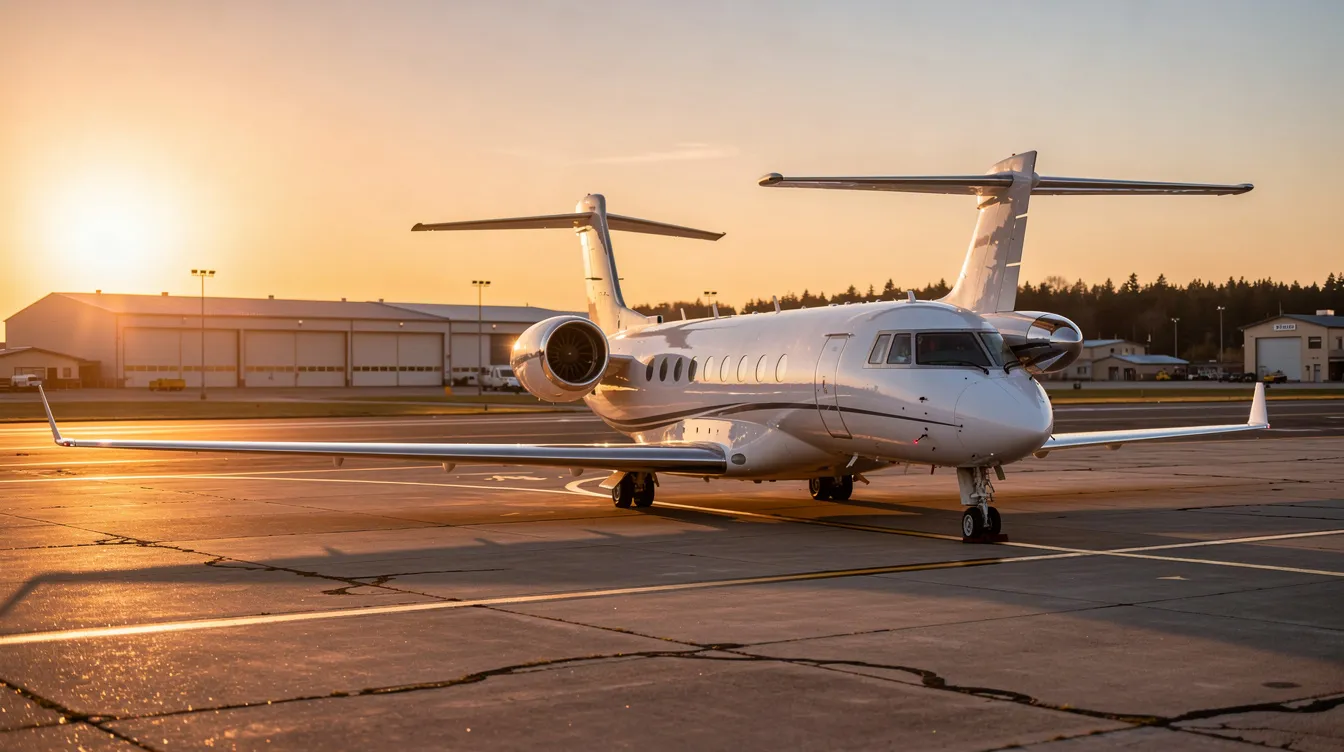
The basic formula behind every private jet charter invoice is straightforward:
Total trip price ≈ (hourly rate × billable flight hours) + taxes + airport/handling fees + trip-specific extras
Rates for charter flights are calculated mostly on an hourly basis. Charter flights are billed by the flight hour, making longer trips more expensive. A standard charter quote covers the use of the aircraft and basic services, but billable hours often include more than just the time passengers are onboard.
Billable flight time may include:
Positioning (ferry) flights to move the aircraft to the departure airport
Minimum daily flight hour requirements (commonly 1–2 hours per day)
Return or repositioning legs after drop-off, even on a one-way itinerary
Federal excise tax (7.5% on domestic flights)
Segment fees
Landing and handling fees
Here is a step-by-step example. Suppose a traveler books a light jet for a 3-hour one-way flight:
Line Item | Calculation | Amount |
|---|---|---|
Base flight time | 3 hours × $3,800/hr | $11,400 |
Positioning flight | 1 hour × $3,800/hr | $3,800 |
Subtotal (flight) | $15,200 | |
Federal excise tax (7.5%) | $15,200 × 0.075 | $1,140 |
Segment fees | $5.30 × 4 passengers | $21 |
Landing and handling fees | $600 | |
Total | $16,961 |
That is how a seemingly simple three-hour private flight becomes a $17,000+ invoice. Travelers should always request an itemized cost breakdown from any charter operator or private jet charter service.
BlackJet's advisors model total annual private aviation cost the same way—rate × hours + fees—then compare on-demand private jet rental against fractional jet ownership and jet card alternatives to find the lowest effective cost structure.
Aircraft size is usually the single largest determinant of hourly rate and total private jet cost. Choosing "enough airplane, but not too much" is one of the most effective levers for controlling spend without compromising safety or comfort.
Here are the major categories at a glance:
Turboprops: 4–8 seats, short-range, economical for hops under 500 miles
Very light jets: 4–5 seats, ideal for quick city pairs under 1,000 miles
Light jets: 6–8 seats, the workhorse for U.S. domestic routes up to ~1,500 miles
Midsize jets: 7–9 seats, stand-up cabin, coast-to-coast capable
Super midsize jets: 8–10 seats, transcontinental range, full amenities
Heavy jets: 10–16 seats, intercontinental range, full galley and lavatory
Ultra long range jets: 12–19 seats, nonstop transatlantic and beyond
VIP airliners: 20–50+ seats, converted commercial aircraft for heads of state or large groups
BlackJet typically focuses fractional jet ownership on light, midsize, and super midsize jets where business users find the best value per hour relative to cabin comfort and range, similar to the aircraft favored by many of the top fractional jet ownership programs in the market.
Here are the concrete hourly rate ranges so readers can quickly benchmark how much it costs to rent a private jet by size. Typical charter costs vary by aircraft size and distance, but these ranges reflect the current private aviation market:
Light jets run approximately $2,500–$4,000 per hour. Light jet costs fit routes like Dallas to Chicago or Los Angeles to Aspen. A two-hour flight on a turboprop costs about $4,000, while the same distance on a light jet runs $5,000–$8,000.
Midsize jets range from $4,000 to $6,000 per hour, suitable for routes such as New York to Miami or Denver to San Francisco. The step up in cabin height, range, and baggage capacity justifies the premium for most business travelers.
Heavy jets cost between $8,000 and $14,000 per hour, while ultra-long-range jets charge $12,000 to $20,000 per hour. These categories serve longer legs like Los Angeles to New York nonstop or New York to London.
Older aircraft at smaller regional airports may sit at the low end of these bands, while the newest models during peak periods can push well above. Aircraft availability tightens during holidays, further inflating quotes.
When six to ten people travel together, the per-passenger cost of a private jet flight begins to approach—and sometimes undercuts—the per-person cost of business class tickets on commercial airlines for the same route. BlackJet uses these market benchmarks to advise members on whether to charter ad hoc, draw on a reserve fleet hour, or commit to an equity fleet share.
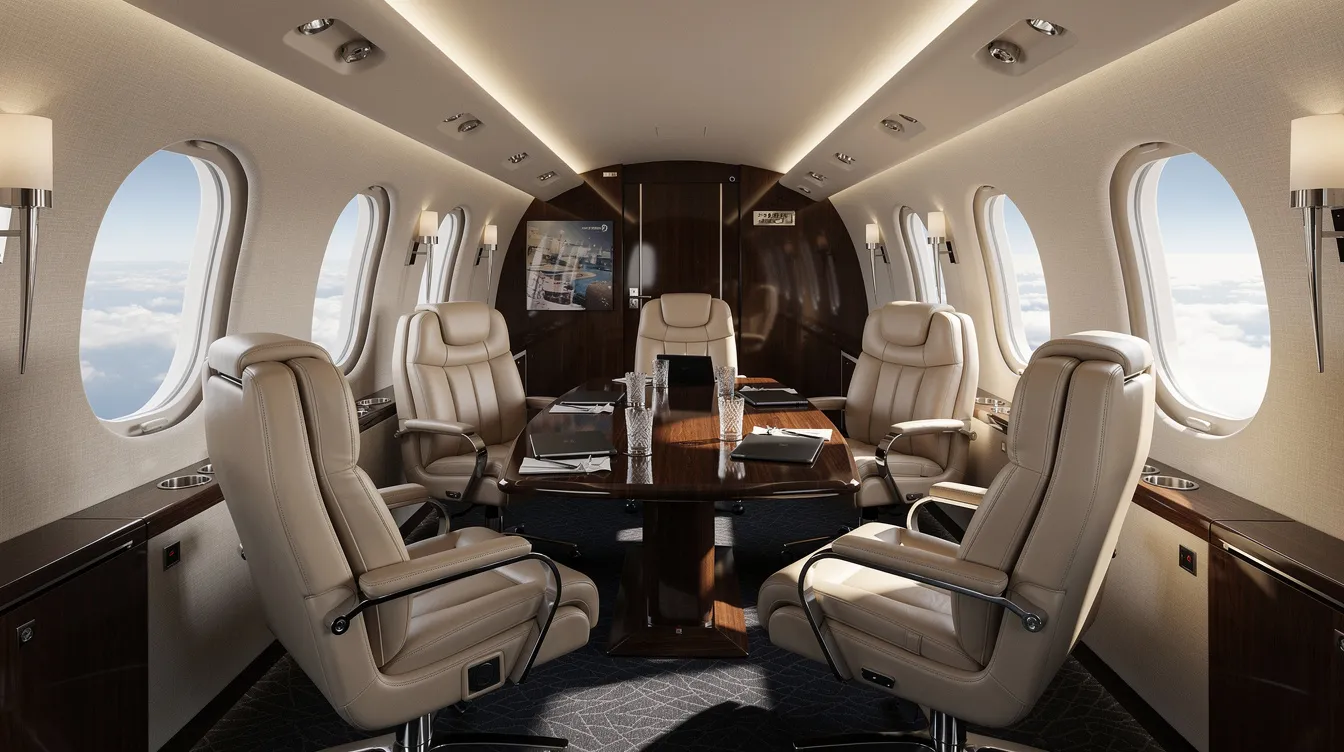
Flight distance determines which aircraft type is suitable and how many billable flight hours will be charged. But distance alone does not tell the whole story.
Short hops of 60–90 minutes on a midsize jet or larger aircraft may trigger short leg fees or minimum daily billable time requirements. These minimums exist because operators cannot fill the remaining time with another trip. The result is that a one-hour leg might be billed as two hours—disproportionately raising the effective per-hour cost.
Longer nonstop sectors (New York to Los Angeles, Paris to Dubai) favor midsize, super midsize, or ultra long range jets. The hourly rate is higher, but fewer total segments and less repositioning often result in a more efficient total price.
Multi-leg itineraries add complexity. A three-city U.S. business roadshow in 48 hours can generate additional aircraft positioning fees even when each individual leg is short, because the jet must ferry between cities or wait on the ground.
A knowledgeable private aviation advisor—or a BlackJet consultant—can re-sequence cities, consolidate legs, or match the right aircraft type to each segment to reduce empty miles and minimize short leg fees.
Government levies are not optional and appear on nearly every U.S. private jet charter invoice.
The most significant is the federal excise tax: a 7.5% charge applied to the base transportation cost on domestic charter flights operated under FAR Part 135. This tax alone can add thousands of dollars to a transcontinental round trip.
US Domestic Segment Fees: $5.30 per passenger per leg, adding up quickly on multi-stop itineraries
International head taxes: international flights involve additional charges for customs and permits, plus overflight fees when crossing foreign airspace
Alaska and Hawai'i surcharges: special levies and longer over-water routing increase costs on these routes
These charges are standard across the industry. However, fractional jet ownership programs such as BlackJet's equity fleet may be taxed differently from on-demand private jet charters depending on how the Federal Aviation Administration and IRS classify the arrangement. Any traveler considering fractional aircraft ownership should evaluate the tax treatment with a qualified aviation tax advisor.
Where you fly from—and to—can swing the total private jet cost by thousands of dollars on a single trip. Landing fees typically range from $150 to $1,500 per flight, and fees for landing and airport handling vary by airport and aircraft weight.
Landing fees: charged by the airport authority, often scaled by maximum takeoff weight. Landing fees can range from $100 to $1,500 per flight depending on facility and aircraft.
Ramp and handling fees: charged by fixed base operators (FBOs) for ground services, typically $150–$500+ per visit. These may be waived or reduced with minimum fuel purchases.
Overnight parking and hangar: if the aircraft stays at the destination, expect parking or hangar fees, especially at congested airports.
Using smaller airports can lower landing fees significantly. For New York departures, many private travelers choose Teterboro (TEB) over JFK—saving on fees, avoiding commercial airline congestion, and cutting drive times to Manhattan. The same logic applies in Los Angeles (Van Nuys over LAX) and Chicago (Midway or DuPage over O'Hare).
BlackJet advisors routinely propose alternative airports near major cities to reduce fees and avoid bottlenecks while keeping ground transportation distances reasonable.
Non-flight fees can add 5–20% to the total private jet rental cost, especially on winter or multi-day trips. These are the charges most often overlooked when comparing quotes.
Crew overnight fees range from $200 to $600 per crew member per night, covering hotel and per diem.
A two-night layover with two pilots adds $800–$2,400 to the invoice.
Deicing fees can vary from $1,500 to $15,000 depending on aircraft size.
The highest charges occur at cold-weather hubs like Denver, Chicago, and Zurich.
Hangar fees sometimes offset deicing costs by keeping the aircraft warm before departure.
Fuel surcharges can add $300 or more per hour.
During price surges, fuel surcharges start at around $300 per hour.
On a six-hour heavy jet leg, that alone can mean $1,800+ in additional cost.
Premium catering services can range from $230 to $2,000+ per leg.
This covers gourmet menus, premium beverages, and custom dietary accommodations for a luxurious private jet experience.
Some jets include basic Wi-Fi; others charge per megabyte.
Heavy streaming or VPN use can raise costs.
Pet hair removal, red wine stain treatment, or onboard celebrations may trigger additional cleaning charges built into operator contracts.
BlackJet clients receive clear estimates of these ancillary items during trip planning, avoiding surprise charges after the private flight, which is critical when evaluating the total cost of fractional jet ownership alongside ad-hoc charter pricing.
While this article focuses on how much it costs to book a private jet trip, frequent flyers should also assess structural options that change their long-term per-hour cost.
Trip-by-trip booking with no upfront commitment.
Maximum flexibility, but variable private jet charter rates and no guaranteed aircraft availability.
Best for travelers flying fewer than approximately 25 hours per year.
Booking a one-way flight can reduce overall costs when return timing is uncertain.
Prepaid block hours at a fixed hourly rate.
Jet cards offer fixed hourly pricing for frequent flyers, with more predictable budgeting than spot charter.
Some programs carry peak-day restrictions or blackout periods.
Generally effective for 25–75 annual flight hours.
For a deeper comparison, see this breakdown of jet card programs.
Buying a share of a specific aircraft type through a program like BlackJet's equity fleet.
Provides an equity position, guaranteed aircraft availability, potential tax benefits, and a lower effective hourly rate above certain annual usage thresholds.
A common entry point is 1/8 fractional jet ownership, which typically delivers around 100 hours of annual access.
Here is a simplified scenario:
Annual Usage | Best Structure | Why |
|---|---|---|
~15 hours/year | On-demand charter | Low commitment, pay only when flying |
~40 hours/year | Jet card or BlackJet reserve fleet | Predictable rates, no equity needed |
~100 hours/year | Fractional jet ownership | Lower effective cost, guaranteed access, tax advantages |
BlackJet specializes in designing a mix of equity fleet and reserve fleet access to reduce the long-term private jet cost per hour for 25–150-hour flyers. Learn more about fractional ownership vs. jet cards.
Private jet cost will almost always exceed a standard commercial flight ticket on a per-person basis. But the comparison changes when multiple travelers fly together and when you factor in the total cost of a trip—not just the airfare.
Consider eight executives flying from New York to Dallas round trip. Business class commercial flights might cost $1,500–$3,000 per person, totaling $12,000–$24,000 for the group. A midsize jet for the same route runs approximately $28,000–$40,000 total. The gap narrows dramatically—and group travel can make private jet costs comparable to first-class tickets when four or more passengers are onboard.
Time savings further shift the equation. Flying private eliminates TSA security lines, layovers, and rigid schedules. Passengers arrive 15 minutes before departure, use smaller regional airports closer to their final destination, and can visit multiple cities in a single day. The cabin doubles as a private meeting room—something no commercial airline seat offers.
When a private jet allows a team to complete in one day what would otherwise require two days, one hotel night per person, and meals, the total trip economics can favor private aviation for certain business missions.
BlackJet's advisors often frame recommendations in terms of cost per productive hour saved, not only raw dollar outlay versus a commercial flight. That perspective changes the conversation from "expensive" to "efficient."
Concrete route examples help sanity-check quotes and online calculators. Here are realistic 2025–2026 charter estimates:
New York (TEB) → Miami (OPF) on a light jet: ~2.75 hours each way, approximately $25,000–$40,000 round trip all-in including positioning, taxes, and landing fees.
Los Angeles (VNY) → Aspen (ASE) on a light or midsize jet: ~1.5–2 hours each way, roughly $28,000–$35,000 all-in. Peak ski season can push prices higher due to limited aircraft availability and slot restrictions at Aspen's airport.
Chicago (MDW) → Napa (APC) on a super midsize jet: ~4 hours each way, approximately $55,000–$75,000 round trip. The super midsize category provides coast-to-coast range with a full stand-up cabin.
New York (TEB) → London (LTN) on an ultra-long-range jet: ~6–7 hours flight time, approximately $75,000–$115,000 one-way all-in. Return positioning or a same aircraft commitment for the return leg will add to this figure.
Paris → Ibiza on a light jet (intra-European): ~2–3 hours, approximately €13,500–€19,500 one-way, subject to European fuel taxes and handling fees.
Multi-city U.S. business roadshow (3 cities in 48 hours) on a midsize jet: Total cost across multiple leg flights depends heavily on routing efficiency and crew overnight requirements. Budget $60,000–$100,000+ depending on cities and repositioning needs.
These are directional estimates based on typical 2025–2026 market rates. Actual quotes will vary by aircraft, charter operator, and season. BlackJet can benchmark a prospect's recent or prospective trips against fractional or membership models, sometimes reducing per-trip costs 10–25% over pure on-demand private jet rental.

Online private jet cost estimators are a useful starting point, but they rarely capture all real-world variables. Most calculators multiply flight time by a category-average hourly rate and return a number that looks clean—but leaves out critical cost components.
Estimated flight time based on great-circle distance
Average hourly rate for the selected aircraft category
Federal excise tax and segment fees
Short leg fees and minimum daily charges
Actual aircraft positioning fees from the jet's current location
Specific airport landing and handling fees
Deicing, crew overnight, and catering costs
Use calculators to compare general aircraft categories (light jet versus midsize jet versus heavy jet) and to evaluate route options. Do not treat the output as a binding quote.
BlackJet performs a deeper "flight profile" analysis that includes traveler patterns over a 12-month period, not just one trip, to recommend whether chartering, a reserve fleet membership, or fractional aircraft ownership yields the best total private jet cost outcome.
Preferred dates and times (with flexibility windows)
Passenger count and luggage volume
Pet or special equipment needs
Catering preferences
Whether ground transportation is needed at either end
While flying private is inherently premium, smart planning can meaningfully lower the effective price per hour or per trip.
Do not book a heavy jet for a two-hour domestic hop with four passengers. Matching aircraft to mission is the single most impactful cost lever.
Using smaller regional airports near major metros (Van Nuys instead of LAX, Teterboro instead of JFK) reduces landing fees, handling costs, and often taxi time.
The peak travel periods can cause prices to increase significantly. Shifting a Friday departure to Thursday—or avoiding holiday weekends—can save thousands.
Re-sequencing a multi-city itinerary to minimize empty repositioning and short leg fees is one of the highest-value services an advisor provides.
Morning departures with same-day returns often reduce or eliminate crew overnight expenses.
Booking empty-leg flights may provide substantial discounts. Empty leg flights can save 25–75% off standard rates when a jet is repositioning without passengers. These work best for flexible travelers whose dates and routes align with available legs.
Sharing the same aircraft among partners or business units under a fractional ownership structure maximizes utilization and dilutes fixed costs across multiple users.
BlackJet can also structure reserve fleet access for occasional supplemental hours beyond a client's fractional share, avoiding outsized spot charter premiums during demand spikes.
Above a certain annual usage threshold, the economics of fractional jet ownership often beat standalone private jet rental prices—especially for consistent U.S. domestic and transcontinental missions.
Under 25 hours/year: On-demand charter is usually the most economical path.
25–50 hours/year: Jet card programs or BlackJet's reserve fleet memberships begin to offer savings over spot charter and better rate predictability.
50–150 hours/year: Fractional jet ownership becomes compelling, delivering lower effective hourly costs, equity in an asset, and potential tax advantages.
Equity fleet shares from BlackJet can unlock potential U.S. bonus depreciation or other aviation tax advantages when structured and used correctly under current IRS and Federal Aviation Administration guidelines, and specialized guidance on the tax implications for fractional jet owners helps ensure those benefits are fully realized. These benefits can materially reduce the after-tax cost of private jet service for qualifying corporate users.
Any decision about fractional aircraft ownership versus charter should include both financial modeling and qualitative factors: guaranteed aircraft availability, familiarity with the same aircraft and crew, and full scheduling control versus relying on whatever the charter market has open on a given day.
For first-time private aviation clients, the booking process is straightforward when working with an experienced provider. Whether chartering a single trip or accessing a fractional program, the steps follow a logical sequence.
Initial inquiry: Provide dates, route, passenger count, luggage requirements, and any special needs (pets, catering, equipment).
Aircraft options and quotes: The provider presents one or more aircraft options with itemized pricing, including positioning, taxes, and fees.
Selection and contract: Choose an aircraft, review the charter operator agreement or membership terms, and sign.
Payment or escrow: Funds are collected or drawn from a prepaid account (jet card or fractional balance), and clients using financed shares should factor in the costs and benefits of fractional jet ownership financing when planning cash flow.
Trip confirmation: Final details confirmed 24–48 hours before departure, including FBO location and arrival instructions.
Day-of logistics: Arrive at the fixed base operator's terminal 15–20 minutes before departure. No security lines.
Same-day or next-day departures are possible for urgent trips, but better private jet charter prices and aircraft availability come with 5–10 days of lead time—especially during U.S. holiday peaks.
Changes—date shifts, extra passengers, weather diversions—can affect the final private jet charter costs through added hours, fees, or repositioning. Reputable providers communicate these adjustments before they hit the invoice.
BlackJet's operations team manages scheduling for both reserve fleet and equity fleet clients, often guaranteeing aircraft availability within defined notice periods under the program terms outlined in the membership agreement, which functions much like an aircraft fractional ownership contract in defining rights and responsibilities.
Cost should never be evaluated in isolation from safety, regulatory compliance, and operational quality. The cheapest quote is not always the best value if it comes from an operator cutting corners.
Every provider offering charter flights in the United States must hold an air carrier certificate under FAA Part 135. This certification ensures baseline standards for pilot training, aircraft maintenance, and operational procedures. Fractional operators maintain similarly rigorous standards, often exceeding the minimums.
Organizations like ARGUS, Wyvern, and IS-BAO evaluate aircraft operators on maintenance records, pilot experience, insurance coverage, and management systems. Their ratings help distinguish serious operators from low-cost, low-oversight providers.
A slightly higher hourly rate from a well-run operator can deliver better reliability, fewer disruptions (cancellations, mechanical delays), and lower hidden costs over time. The "savings" from a bargain-basement quote evaporate when a trip is disrupted and a last-minute replacement aircraft costs double.
BlackJet partners with and manages aircraft that meet stringent safety and maintenance benchmarks, providing long-term value beyond headline private jet pricing alone, complemented by careful attention to liability coverage in fractional jet ownership to protect clients’ interests.
"Worth" depends on the reader's time value, risk tolerance, and travel patterns—not just net worth. A CEO whose time is valued at $2,000 per hour will view a private jet flight differently than someone taking a once-a-year vacation trip.
Start by quantifying the hourly value of time for yourself or key executives. Then compare that to the time saved by flying private on your most frequent routes. If a private flight saves four hours per round trip and you make that trip twenty times per year, that is 80 hours reclaimed—hours that can be spent in meetings, with family, or simply not sitting in an airport terminal.
Privacy for sensitive business conversations
Ability to work or rest productively en route
Reduced travel fatigue across multi-city weeks
Full control over schedule—departures when you need them, not when commercial airlines offer them
Those flying once or twice per year may be best served by targeted private jet charters or empty leg flights. Those with regular multi-city trips should at least model fractional ownership, including flexible floating fleet options in fractional programs, or membership economics before defaulting to spot charter.
BlackJet offers consultative reviews of a prospect's last 6–12 months of travel to determine whether private jet travel is delivering enough ROI relative to its cost—or whether a structural change could improve both access and economics, including planning ahead for selling a fractional jet ownership share if needs change.
The cost to book a private jet in 2025–2026 typically ranges from a few thousand dollars per billable flight hour on turboprops and light jets to well over $12,000–$20,000 per hour on ultra-long-range aircraft. Total trip costs are shaped by flight distance, federal excise tax, airport and short leg fees, crew expenses, and the level of private jet service requested.
Understanding these components—hourly rates, taxes, positioning fees, and structural options like charter, jet card, and fractional aircraft ownership—is the key to making smart, predictable decisions about private aviation spend. The difference between overpaying and flying efficiently often comes down to how access is structured, not just how much each trip costs.
BlackJet Fractional Jet Ownership serves as a trusted private aviation advisor for high-net-worth individuals and companies seeking predictable access, potential tax advantages, and lower long-term private jet costs through equity fleet and reserve fleet solutions.
Ready to explore the smarter way to fly private? Visit FractionalJetOwnership.com to request a personalized cost analysis and speak with a BlackJet specialist about the best structure for your 25–150 annual flight hours.
