July 5, 2026
Booking a private jet is less complicated than most first-time flyers expect. The process comes down to defining your trip, choosing the right access model, selecting an aircraft, and confirming with a vetted operator. Whether you need a same-day hop between two cities or a recurring monthly route for your executive team, private aviation offers a level of control that commercial airlines simply cannot match. This guide walks through every step of how to book a private jet, from initial trip planning through wheels-up, so you can make informed decisions and avoid costly mistakes.
Consider a CEO who needs to hold meetings in New York, Dallas, and Miami in a single day. On commercial airlines, that itinerary is essentially impossible. Between connection times, security lines, layovers, and inevitable delays, chartering a private jet can save 4–6 hours of waiting time on even a straightforward two-city trip. A three-city day becomes routine when you control the schedule.
Private jet travel turns dead time into productive time. Instead of sitting in crowded terminals, executives can hold confidential calls, prep for board presentations, or finalize deals in a private cabin. Charter flights provide access to over 5,000 airports worldwide, including smaller regional airports closer to headquarters, manufacturing plants, and client sites. That means shorter ground transfers, fewer overnight stays, and direct routing to smaller airports that commercial carriers don't serve.
Flying privately isn't limited to one-off luxury trips. Business travelers increasingly treat private aviation as a strategic tool, choosing from on-demand private jet charters for occasional trips, jet card memberships for mid-frequency travel, or fractional ownership for consistent, predictable access. Each model offers different levels of cost control, flexibility, and commitment.
Key strategic benefits of private jet travel:
Travelers can customize departure times and routes, eliminating dependency on fixed schedules
Private jet travel eliminates long TSA lines and crowded terminals
Access to over 5,000 airports means proximity to nearly any final destination
Confidentiality for sensitive discussions, deal negotiations, and board-level meetings
Same-day multi-city itineraries that are impossible on commercial flight options

The private jet booking process includes defining trip details and contacting a provider. For those considering shared ownership, understanding an aircraft fractional ownership sample contract can clarify long-term obligations. Here is a quick-reference checklist covering the core steps:
Define your trip: Gather flight details like dates, route, and passenger count, plus luggage and special requirements.
Choose an access model: On-demand charter, jet card, fractional ownership, or full aircraft ownership based on your annual flight hours and budget.
Select the right aircraft type: Match passenger count, baggage, and flight distance to the appropriate category (light jet through ultra long range).
Request and compare quotes: Get all-in pricing from 2–3 vetted operators or brokers for your private jet rental.
Verify safety credentials: Confirm FAA Part 135 certification, pilot experience, and independent safety ratings.
Finalize booking and payment: Review the charter agreement, pay, and coordinate ground logistics.
Private jets allow departure within three hours of booking in many cases, making same-day travel possible. However, planning 3–7 days ahead is ideal for the best aircraft availability and pricing on most private jet flight itineraries.
Accurate trip details are the foundation of realistic pricing and the right aircraft match. Overestimating luggage, specifying the wrong airport, or missing a required time window can lead to surprise costs or an unsuitable private plane.
Researching local and regional airports can reduce travel time for private flights. Private jets can access smaller airports, reducing travel time significantly compared to departing from a congested commercial airport. Being flexible on departure and arrival airports often lowers both cost and aircraft positioning time.
Trip details checklist:
Departure city and preferred FBO or terminal
Destination(s) and alternate airport options
Exact dates with the earliest departure and the latest arrival times
Number of passengers
Luggage type and volume (golf clubs, skis, board materials, equipment samples)
Special needs: pets, medical equipment, privacy requirements for meetings, or same-day round-trip scheduling
Gather this information before calling a provider or submitting an online quote form. The more precise you are, the faster you'll receive an accurate, apples-to-apples comparison and help the operator build an accurate flight plan.
There are four primary ways to access a private jet, and the right choice depends on how often you fly, what routes you cover, and how much predictability you need.
On-demand charter is the simplest entry point, using a private jet charter service for trip-by-trip access with no long-term commitment. It works well for business travelers flying fewer than roughly 25 hours per year or with irregular travel patterns. For those new to private aviation, it's wise to avoid high-commitment programs like fractional ownership initially and start with on-demand charter to understand your actual usage patterns. Private jet travel offers flexible scheduling without rigid timetables, making charter a natural first step.
Jet card or membership programs involve pre-purchasing hours or credits, often at fixed hourly rates with priority access. These suit frequent travelers logging roughly 25–75 hours per year who want more price certainty. You can explore private jet card comparisons to evaluate leading programs.
Fractional jet ownership means buying a share (such as 1/16 or 1/8) of a specific aircraft or fleet, entitling you to a fixed number of hours annually. Fixed costs like maintenance, insurance, and management are shared among owners. This model suits travelers needing 25–150 flight hours per year with consistent routes and a preference for guaranteed availability. BlackJet Fractional Jet Ownership focuses on this model, serving mid- to high-frequency flyers in the United States; review this resource for fractional jet ownership terminology and concepts.
Full aircraft ownership means acquiring and managing an aircraft outright. It's typically justified only at 200 or more hours per year. You gain maximum control but also assume all fixed overhead, crew salaries, maintenance, and depreciation risk.
When choosing, consider your expected annual flight hours, primary city pairs, financial budget, and non-financial priorities like privacy and cabin consistency.
Private jets range from very light to ultra-long-range models, and choosing the right aircraft size depends on the number of passengers and luggage. Selecting the wrong category can mean paying for unnecessary capacity or, worse, arriving at the airport to find the cabin too small for your team's needs.
Here is a quick reference of the major categories:
Turboprops: 4–8 seats, range up to roughly 1,000–1,200 nautical miles, lowest hourly cost. Examples include the King Air 350 and Pilatus PC-12. Best for regional trips under two hours.
Very light jets: Very light jets accommodate up to 4 passengers for short trips, with a range of around 1,200 nautical miles and minimal cabin height. Learn more about very light jet pricing.
Light jets: 6–8 seats, range of 1,500–2,000 nautical miles, improved speed and comfort for domestic flights.
Midsize jets: Midsize jets typically seat 6 to 9 passengers and fly over 3,000 miles. Stand-up cabins and more baggage space make them popular for cross-country work.
Super midsize jets: 8–10 seats, 3,500–4,500 nautical miles of flight range, capable of coast-to-coast range across the United States nonstop.
Heavy jets: Heavy jets are ideal for 10–16 passengers on international routes, with ranges of 4,000–6,000 nautical miles and multi-zone cabins.
Ultra-long-range jets: 12–19 seats, 6,000+ nautical miles. Ultra-long-range jets can fly nonstop for over 6,000 miles, covering routes like New York to Tokyo or Los Angeles to London without fuel stops.
Beyond category, consider cabin height for standing and conference layouts, baggage capacity for oversized items, and Wi-Fi availability for working in flight. For a deeper breakdown, review this guide to types of private jets and prices.
To request quotes, submit your complete trip requirements to a reputable charter operator or broker via online form, phone, or email. Comparing charter providers involves looking at fleet size and service quality, not just the lowest number on a proposal.
Confirm aircraft details, including make, model, and seating layout for each quote you receive. A strong quote should also include the year of manufacture, estimated flight time, and total trip price.
Request all-in pricing that includes fees and surcharges. Quotes that list a low base hourly rate but add fuel surcharges, positioning fees, crew overnight costs, landing fees, and taxes separately can end up exceeding a higher all-in quote from another provider. Quotes should cover all expected costs, including fuel and landing fees,s to prevent surprises.
Questions to ask every provider:
What happens if weather forces a delay or diversion?
What backup aircraft options are available if the primary jet goes into maintenance?
What are your cancellation and change fees?
How is repositioning (deadhead) handled and billed?
Is Wi-Fi in-flight catering, and ground transportation coordination included or extra?
Compare 2–3 quotes on total value: safety record, aircraft age, schedule reliability, and customer reviews alongside price.
Safety vetting is critical when booking a private jet and should never be sacrificed for a lower price. Third-party safety ratings from organizations like ARGUS and WYVERN are important for evaluating private jet operators.
At minimum, ensure the operator has FAA Part 135 certification for U.S. charter flights. Part 135 governs on-demand and commuter operations, covering maintenance programs, pilot qualifications, and safety oversight. For IFR operations, the primary pilot must hold at least 1,200 hours total flight time with specific cross-country, night, and instrument minimums, and fractional programs should also address robust liability and insurance coverage for fractional jet owners.
BlackJet partners only with vetted operators that meet or exceed industry standards, reinforcing trust for clients who may not have the expertise to audit operators themselves.
Safety questions to ask before committing:
Is the charter operator FAA Part 135 certified?
Does the operator hold independent safety ratings (ARGUS, Wyvern, or IS-BAO)?
Are pilots current on the specific aircraft type, including instrument and night recency?
What is the age and last heavy maintenance date of the aircraft?
Does the operator maintain a Safety Management System (SMS)?
Are two-pilot crews standard on all jet operations?
What backup options exist if the assigned aircraft becomes unavailable?
Once you've selected an operator and accepted a quote, the booking process moves quickly. Review the charter agreement carefully, confirm the itinerary (airports, departure and arrival times), verify passenger names and IDs, and approve any additional services, taking a cue from the key contract terms common in fractional jet ownership agreements.
Reviewing cancellation policies is essential when securing a charter. Pay close attention to how far in advance you can cancel without penalty, what change fees apply, and what happens if the specific aircraft becomes unavailable (typically a substitute aircraft or credit).
Payment methods for private jet charters:
Wire transfer (most common for charter)
Credit card (sometimes with processing fees)
Pre-funded jet card or membership account drawdown
For fractional owners, hours are debited from the ownership share balance
Finalization checklist:
Accept the quote in writing
Sign the charter agreement
Submit passenger details and identification
Pay the deposit or the full amount per the contract terms
Confirm special services (catering, ground transportation, pets)
Receive final confirmation with crew contact and FBO details
Fractional owners and members often enjoy a simplified version of this process, with hours automatically debited and preferences already on file.
Customizing in-flight experiences can include arranging catering and entertainment tailored to the trip. On a morning domestic flight, that might mean fresh coffee and a light breakfast. On an overnight transatlantic leg, it could include a full dinner service, sleep arrangements, and in-flight entertainment systems.
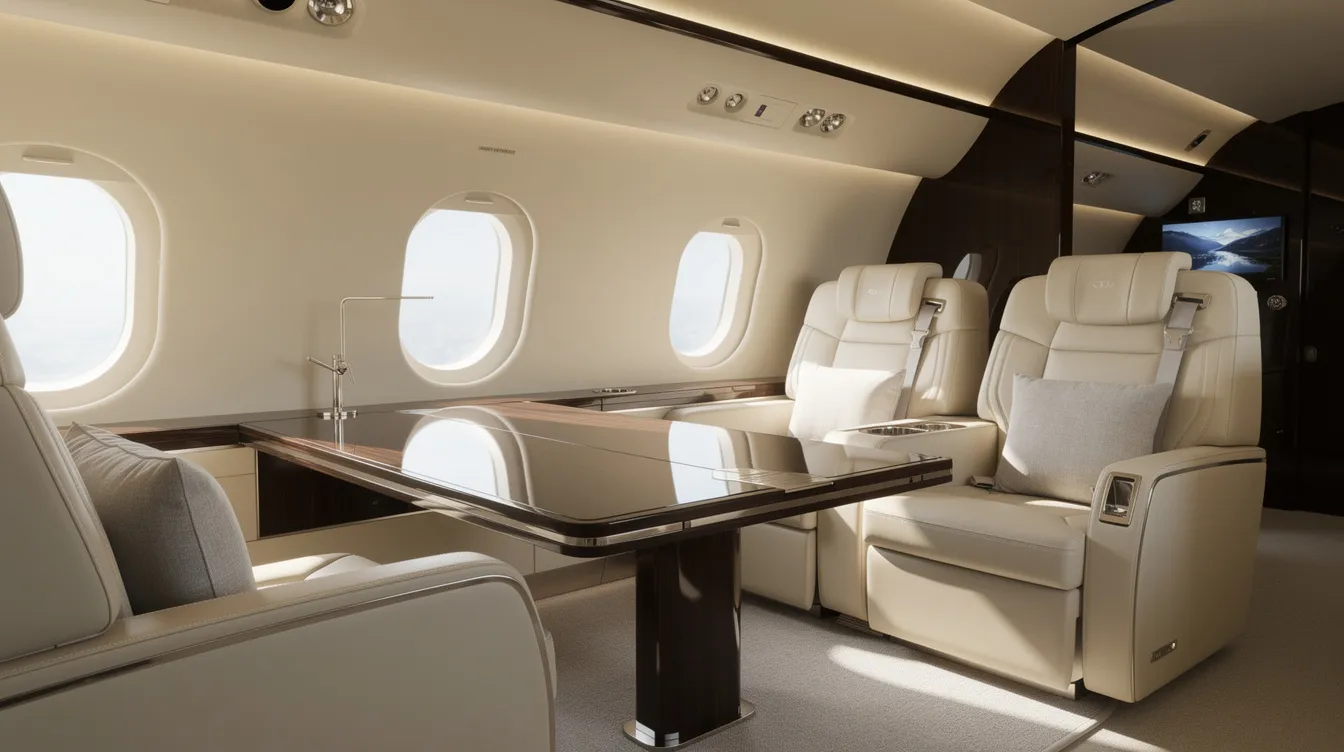
Different aircraft types support different service levels. A light jet may have a compact galley and limited storage, while larger aircraft offer full galleys, enclosed lavatories, ambient lighting, and dedicated conference or sleeping zones. In-flight amenities like Wi-Fi, power outlets, and audio-visual systems vary by model and age, so confirm what's available before departure.
Arrange ground transportation in advance at both ends. Executive sedan or SUV service, hangar access, or even helicopter transfers in congested cities can be coordinated through concierge services. Teams can sync real-time flight tracking with chauffeur arrival so drivers are waiting planeside when the aircraft parks.
These additional services impact the final private jet charter cost, but they transform travel from a logistical burden into a seamless extension of the workday.
Private jet flights often operate from Fixed-Base Operators rather than commercial terminals. FBOs are private aviation facilities located at or near airports, offering dedicated parking, lounges, and direct ramp access to your aircraft. There are no long TSA lines, no crowded gates, and no boarding groups.
Travelers can arrive just 15–30 minutes before departure for most domestic flights. For international flights requiring outbound customs processing, plan to arrive earlier. Your crew members and FBO staff will greet you, handle luggage, and walk you directly to the aircraft.
A typical day-of timeline:
Arrive at FBO: Park or be dropped off at the private terminal. Check in with the front desk or flight crew.
Brief security and ID check: Minimal compared to a commercial airport experience.
Board the aircraft: Walk directly from the lounge or your vehicle to the plane.
Departure: The crew briefs passengers, and the aircraft taxis for takeoff.
En route: Work, rest, or hold meetings in a private cabin with flight amenities configured to your preferences.
Arrival: Deplane at the destination FBO. Ground transportation is waiting.
Last-minute adjustments for weather, slot times, or air traffic flow programs are handled by the operator. BlackJet's operations team or partner operator coordinates with the crew to manage timing and any route changes, keeping passengers informed throughout.
Private jet pricing is driven by several interconnected factors. Understanding them helps you budget accurately and avoid sticker shock.
Charter rates range from $2,000 to over $14,000 per hour depending on aircraft type. Turboprop charter rates typically range from $1,200 to $3,000 per hour. Light jets run approximately $4,000–$6,500 per hour, super midsize jets $7,500–$12,000, and heavy to ultra long range aircraft $9,000–$18,000 or more. Chartering a Boeing 737 costs between $15,000 and $30,000+ per flight hour for large-group or corporate shuttles.
To put this in perspective, a 2-hour private jet flight can cost between $8,000 and $37,000, depending on the aircraft category and route. For those considering full aircraft ownership, annual operating costs for private jets can reach $500,000 to $2 million before factoring in acquisition or depreciation.
Major cost variables:
Aircraft type and size: Larger aircraft with longer flight range cost more per hour
Flight distance and time: Longer flights cost more overall, but short flights carry disproportionate costs due to minimum billing and repositioning
Route complexity: Airport fees, overflight charges, and handling vary by location
Timing: Same-day or last-minute requests carry premium charter pricing due to limited aircraft options and higher aircraft positioning costs
Demand: Peak seasons, major events, and holiday periods drive prices up
Example route: New York (Teterboro) to Los Angeles on a super midsize jet, approximately 5 hours of flight time at $8,000–$10,000/hour, yields a one-way cost of roughly $40,000–$50,000 before taxes and fees. For a detailed pricing breakdown, see this private jet price list.
The hourly aircraft rate is only part of the total charter costs. Several line items can significantly affect the final invoice.
Landing fees: Charged by the airport; vary widely from $50 at smaller airports to $1,000+ at major hubs
Handling fees: FBO charges for ramp access, parking, and ground support
Federal excise tax: The U.S. imposes a 7.5% federal excise tax on most domestic charter segments
Fuel surcharges: Adjustments based on current fuel prices, which fluctuate
Repositioning/deadhead fees: Cost to fly the aircraft empty to your departure point if it's not already positioned nearby
Crew overnight fees: Hotel and per diem for pilots on multi-day trips or when duty time limits require rest
Overflight and customs fees: For international flights, permits to cross foreign airspace and customs/immigration processing
De-icing charges: Seasonal cost during winter operations
Always request an itemized quote showing every anticipated fee, and ask which charges are fixed versus variable. Fuel cost volatility, weather-related de-icing, and unexpected crew overnights are the most common sources of post-trip adjustments. For more on charter flight costs, this guide covers the essentials.
Aircraft availability is shaped by operator fleet size, prior bookings, scheduled maintenance, and where aircraft are currently positioned. Last-minute booking can mean fewer choices, higher positioning costs, or using a different airport than originally preferred.
Seasonality compounds the challenge. December in Aspen, early summer in the Mediterranean, Super Bowl weekend, and major industry conferences all create demand surges. During these periods, premium aircraft book out weeks in advance, and spot charter pricing climbs sharply. Private jet travelers who wait until the last week may find only less suitable aircraft or significantly inflated rates.
With access to over 20,000 aircraft worldwide through operator networks, availability improves when you work with providers who maintain a diverse fleet or relationships across multiple operators. BlackJet's Reserve-style programs leverage a broader network to find optimal solutions when local aircraft are limited.
Strategies to improve your aircraft options:
Be flexible on departure and arrival airports (smaller regional airports often have better availability)
Consider off-peak departure times (midweek, early morning)
Plan ahead: 3–7 days for domestic, 2–4 weeks for international or holiday travel
Explore empty leg flights for discounted one-way repositioning segments
Use membership or fractional programs that offer guaranteed availability during peak periods
Choosing the right access model is one of the most consequential decisions in private aviation. Here's how the three core models compare for executives and corporate travel managers:
Factor | On-Demand Charter | Jet Card / Membership | Fractional Ownership |
|---|---|---|---|
Commitment | None (trip-by-trip) | Medium (prepaid hours) | High (capital investment, multi-year) |
Cost structure | Variable per flight | Semi-fixed (locked hourly rates) | Fixed + variable (share cost + operating fees) |
Cost predictability | Low | Moderate | High |
Aircraft control | Limited (available fleet) | Moderate (category guaranteed) | High (specific aircraft, cabin config) |
Guaranteed availability | No | Often during defined windows | Yes, with priority scheduling |
Ideal annual hours | Under ~25 | 25–75 | 25–150+ |
A private charter works well for occasional or exploratory use. A jet card offers better rate certainty for mid-frequency flyers. Fractional ownership provides the most predictable access for business travelers with consistent routes and recurring schedules.
BlackJet Fractional Jet Ownership specializes in providing predictable access for clients needing 25–150 hours per year without full ownership complexity. For a detailed comparison, see this analysis of fractional ownership vs membership programs.
When evaluating charter options, consider internal travel policies, budgeting cycles, and which city pairs your team flies most frequently.

Fractional ownership means purchasing a percentage share (such as 1/16 or 1/8) in a specific aircraft or managed fleet. That share entitles the owner to a fixed number of flight hours annually, with fixed costs like maintenance, insurance, and management split among all shareholders. A common entry level is 1/8 fractional jet ownership with about 100 hours per year.
Ideal scenarios for fractional ownership:
A corporation flies executives between Houston and Chicago several times per month, logging 80–120 hours per year
A tech executive travels to Europe monthly and wants consistent access to ultra-long-range aircraft
Multiple departments share private jet access under one company relationship, requiring predictable budgeting
Key benefits:
Guaranteed aircraft availability, even during peak travel periods
Consistent cabin experience across every flight
Potential tax advantages: owners may depreciate their share, deduct maintenance, and write off management costs when properly structured under the U.S. tax code; understanding the tax implications for fractional jet owners is essential before committing
Professional management without the operational burden of full ownership (no direct crew salaries, maintenance oversight, or hangar logistics), which is a core advantage when evaluating fractional jet ownership as an investment
Compare the math: if a company charters a super midsize jet 10 times per year on the same route at $45,000 per trip, that's $450,000 annually with no equity, no depreciation benefit, and no availability guarantee. A fractional share on the same aircraft type may deliver a lower effective cost per hour once fixed costs are amortized, plus ownership economics. For a full cost breakdown, review this guide to the total cost of fractional jet ownership and this guide to the cost of fractional jet ownership.
BlackJet Fractional Jet Ownership offers two distinct models designed for different usage profiles, including options that function similarly to floating fleet fractional ownership programs:
Reserve Fleet is a pay-as-you-go model for private jet access without capital ownership. Clients gain access to a network of aircraft across multiple categories, from light jets for regional hops to larger cabins for coast-to-coast and international missions. There's no share purchase, minimal upfront commitment, and costs are treated as operating expenses. This model works well for clients with variable travel patterns or those transitioning from ad hoc charter services.
Equity Fleet is BlackJet's fractional ownership model. Clients purchase an ownership share in a specific aircraft or managed fleet, receiving priority access, predictable annual hours, and a consistent cabin configuration. BlackJet handles all aircraft management, crew, maintenance, and scheduling, so clients focus on their business rather than aviation operations. Equity Fleet owners may also benefit from aviation tax advantages, including depreciation of their shares.
Reserve vs Equity at a glance:
Capital commitment: Reserve requires none; Equity requires an upfront share purchase
Cost type: Reserve is primarily variable (per-flight); Equity combines fixed ownership costs with lower variable per-hour rates
Aircraft control: Reserve provides access by category; Equity allows selection of a specific aircraft and cabin layout
Availability: Equity owners receive priority scheduling; Reserve clients access the broader network
Both fleets span aircraft options from light jets to ultra-long-range aircraft, supporting domestic flights, coast-to-coast routes, and international flights. Prospective owners should also understand fractional jet ownership financing, costs, and benefits. For more on BlackJet's fractional aircraft types, explore the full fleet overview.
Beyond selecting a category, individual aircraft models vary in range, baggage capacity, cabin dimensions, and performance characteristics. The right specific aircraft depends on the mission profile-not just the number of seats.
Mission-matched examples:
New York to Boston, day trip, 4 passengers + luggage: A light jet like a Citation CJ4 covers this 200-nautical-mile hop efficiently with low cost and quick turnaround.
Chicago to San Francisco, 8 passengers, presentation materials: A super midsize jet like a Citation Longitude provides coast-to-coast range, a stand-up cabin for pre-meeting prep, and ample baggage capacity.
New York to London, overnight, 10 passengers: An ultra-long-range jet like a Gulfstream G650 handles the transatlantic flight nonstop with a full galley, sleeping capability, and in-flight entertainment.
Share detailed mission profiles with your advisor: meeting times at your final destination, equipment being transported, whether you need a conference layout or sleeping arrangements. BlackJet's advisory team uses historical trip patterns to recommend a core aircraft type for fractional owners and frequent Reserve users, ensuring the right fit every time.
International flights introduce layers of complexity that domestic flights don't require. Overflight permits must be obtained for each country's airspace your route crosses. Customs and immigration processing are required on both ends. Slot restrictions at foreign airports may limit departure and arrival windows. Crew duty rules can differ by jurisdiction, potentially requiring rest stops or crew swaps on very long routes.
Ultra-long-range and some heavy jets are designed specifically for nonstop intercontinental missions, eliminating fuel stops and the delays that come with them. For routes like New York to Dubai or Los Angeles to Tokyo, these aircraft are essential.
Documentation requirements expand significantly for international private jet flight itineraries: passports for all passengers, visas where required, health documentation if applicable, and specific paperwork for pets or medical equipment crossing borders.
Extra questions to ask when booking international flights:
Does the operator handle overflight and landing permits?
Is customs and immigration processing arranged at destination FBOs?
What additional fuel, ramp, or exit taxes apply?
What crew rest rules govern this route, and will a crew swap be needed?
Are ground handlers at foreign airports vetted for safety and service quality?
Working with an experienced provider who manages this complexity behind the scenes is one of the clearest advantages of a structured private aviation relationship.
Private charter and fractional programs support a wide range of travel scenarios across both business and personal needs.
Business use cases:
Multi-city roadshows: A CEO visiting investors in three cities in one day, covering regional trips that would take three days on commercial airlines
Manufacturing or site tours: Accessing remote facilities near smaller airports with no commercial service
Board meetings: Confidential strategy sessions in a private cabin while en route
Team travel: Moving 8–12 people between offices more efficiently than coordinating commercial business class for the entire aircraft, often as a cost-effective alternative to booking multiple premium seats
Personal and leisure use cases:
Family ski trips to Aspen in February, departing on your schedule
Wine country retreats in Napa Valley during the October harvest
Caribbean island getaways over winter holidays
Sporting events where last-minute schedule changes are common
For group travel, chartering a larger aircraft often outperforms economy class or even business class tickets when you factor in total cost: commercial fares for 10 people, hotel overnights, lost productivity, and ground transfers. A single charter flight can consolidate all of that.
Approximate annual hours by use case: regional hops (10–30 hours), cross-country domestic travel (40–80 hours), international travel (60–120+ hours).
Timing directly impacts both price and aircraft availability. Here are practical guidelines:
Trip Type | Ideal Booking Window | Minimum for Reasonable Cost |
|---|---|---|
Short domestic (1–3 hours) | 3–7 days | Same day possible with premium |
Cross-country domestic | Book a private jet 1–2 weeks in advance for domestic flights | A few days if flexible on airports and times |
International/transcontinental | Book at least 2 to 3 weeks in advance for better aircraft availability and pricing | At least 1 week, more if multiple destinations or permits are needed |
Last-minute bookings (same-day or next-day) are possible. Many operators maintain aircraft ready for short-notice departures. However, the aircraft selection narrows, positioning costs rise, and you may not get your preferred cabin type.
Fractional owners and membership holders benefit from guaranteed availability during busy periods, which is a significant advantage when holiday schedules, major conferences, or peak-season destinations reduce the open charter market.
Corporate travel planners should map recurring travel patterns (monthly board meetings, quarterly site visits) and block time in advance to lock in aircraft and pricing.
Technology accelerates the booking process but works best alongside expert human advisors for complex trips or fleet planning.
Online quoting tools and mobile apps allow clients to submit trip details and receive near-real-time availability and pricing. Some membership and Reserve programs expose live inventory through dedicated platforms, making it possible to compare charter options in minutes.
Digital flight tracking and notification systems automatically update ground transport providers, executive assistants, and receiving teams when departure or arrival times shift.
Data points to save in a corporate travel profile:
Preferred aircraft classes and specific models
Typical passenger count and frequent flyers' names and IDs
Standard luggage types and volume
Preferred departure and arrival airports
Flight amenities preferences (Wi-Fi, in-flight catering standards, conference layouts)
Past charter providers and account terms
Budget thresholds by trip type
Maintaining this profile reduces friction for repeat bookings. Instead of re-entering details every time, your provider matches the trip to your saved preferences automatically.
For companies with multiple executives or departments booking private aviation, centralization creates efficiency and cost control.
Best practices for corporate travel managers:
Centralize requests: Route all private aviation bookings through a single travel manager or preferred provider to standardize service quality and negotiate better rates
Define thresholds: Establish when private charter or fractional ownership is justified over commercial alternatives (e.g., three or more connecting flights, time-sensitive meetings, routes without direct commercial service)
Track utilization: Monitor flight hours by department, cost per hour, and time savings versus commercial options for reporting to finance and compliance teams
Integrate into travel policy: Specify approval workflows, preferred aircraft types, and maximum per-trip budgets.
BlackJet helps corporate clients standardize aircraft types and personalized service levels across flights, providing reporting tools that align with corporate budgeting and compliance requirements. A well-managed private aviation program improves employee productivity, reduces overnight stays, and provides access to remote facilities or clients that commercial airlines don't serve.
Managing private jet charter costs doesn't require sacrificing the experience. It requires making informed choices.
Actionable cost optimization techniques:
Right-size your aircraft: Choose the smallest suitable aircraft for each mission. A light jet at $4,500/hour beats a super midsize at $9,000/hour when the route and passenger count allow it. Review turboprop charter rates for shorter regional trips.
Use smaller regional airports: Lower landing fees, faster ground time, and often better positioning for the operator.
Schedule day trips: Avoiding crew overnights eliminates hotel and per diem charges
Fly off-peak: Midweek departures and avoiding holiday Sundays can significantly reduce charter pricing.
Book round trips vs two one-ways: Reduces or eliminates repositioning costs
Explore empty leg flights: Discounted leg flights when an aircraft is repositioning empty after another client's trip.
Leverage membership or fractional programs: Bulk purchasing through a jet card or fractional share reduces the effective per-hour rate for frequent travelers.
Request multiple scenarios: Ask for quotes with different aircraft types or departure times to make data-driven decisions.
Corporate ESG programs and individual environmental awareness are increasingly influencing private aviation decisions. While private jet travel produces higher emissions per passenger than commercial airlines, there are meaningful mitigation strategies.
Sustainable Aviation Fuel (SAF) is available through a growing number of operators and FBOs, reducing lifecycle carbon emissions. Carbon offset programs allow travelers to compensate for emissions from each private jet charter or ownership flight hour. Modern ultra-long-range and super-midsize aircraft are engineered with greater fuel efficiency, lighter materials, and improved aerodynamics compared to older fleets.
When evaluating providers, ask how they measure and report emissions per flight hour and per passenger. Corporations subject to sustainability reporting can integrate this data into their ESG disclosures. Choosing newer, fuel-efficient aircraft from a diverse fleet is one of the simplest steps toward more responsible private aviation planning.
Most operators impose a minimum billing period of 1–2 hours, even for shorter flights. Short hops carry a premium due to positioning and fixed minimums.
Ultra-long-range aircraft can fly 6,000–8,000+ nautical miles nonstop, covering routes like New York to Tokyo or Los Angeles to Sydney.
Generally, yes, with advance notice. Documentation, crate requirements, and possible cleaning fees apply. International pet travel requires additional import/export paperwork.
Weight and space limits vary by aircraft. Over-sized or heavy items (skis, golf bags, equipment) need advance notice. Larger aircraft offer significantly more baggage bay volume.
Not always. Lighter or older jets may have limited connectivity. Heavy and ultra-long-range jets are more likely to have robust satellite Wi-Fi suitable for video calls and file transfers.
On certain routes, the per-person cost of a private plane exceeds that of first or business class. However, for teams of 6–12, the total cost (fares, overnights, lost time, ground transfers) can make charter competitive, especially on routes requiring connections.
Private jet cabins are less formal than commercial first class. Business casual is standard, though VIP or client-facing travel may warrant more polished attire.
Private jet flights from FBOs typically involve a brief ID check rather than full TSA screening. No long lines, no shoe removal, no liquid restrictions. You'll also bypass the commercial terminal entirely.
Many private charter agreements allow schedule adjustments with reasonable notice. Fractional and membership models often offer more flexibility for same-day changes. Discuss this with your provider before committing.
BlackJet Fractional Jet Ownership operates as a strategic partner, advising clients on the right mix of fractional ownership, membership, and on-demand private charter based on their actual travel patterns.
Core strengths include predictable aircraft access, efficient scheduling, transparent pricing, and comprehensive aircraft management. BlackJet serves both individuals and corporations flying roughly 25–150 hours per year who want stability without full ownership complexity.
Beyond booking, BlackJet provides advisory support including route analysis, aircraft selection for specific missions, and long-term private aviation planning across both U.S. and international travel. For clients evaluating the best fractional ownership programs, BlackJet's combination of Reserve Fleet flexibility and Equity Fleet ownership positions it as a comprehensive solution for private jet company needs.
This guide has covered the complete process: define your trip needs, choose an access model, understand aircraft types, compare quotes, prioritize safety, and evaluate long-term solutions like fractional ownership that align with your travel volume.
Start by reviewing your last 12–24 months of travel. Count the commercial flights that involved connections, overnight stays, or schedule compromises. Estimate your forward-looking annual flight hours. That number determines whether on-demand charter, a jet card, or fractional aircraft ownership delivers the best value.
Private aviation is a productivity and control tool, not a luxury splurge. The right structure turns unpredictable travel into a competitive advantage, giving you back hours that would otherwise be lost in terminals, on layovers, and in transit.
Ready to explore the smarter way to fly private? Visit FractionalJetOwnership.com to schedule a consultation, review BlackJet's Reserve and Equity Fleet options, and request a personalized private aviation assessment tailored to your routes, budget, and corporate travel goals.
