July 21, 2026
Private jet charter costs range from $2,000 to $23,000 per hour depending on aircraft size, and light jets sit squarely in the sweet spot for most domestic business and leisure travelers. But what does a light jet charter actually cost once taxes, fees, and surcharges are factored in? This guide breaks down every line item - from hourly rates and fuel surcharges to landing fees and repositioning charges - so you can budget with confidence and decide whether chartering, jet cards, or fractional ownership makes the most sense for your flying patterns.
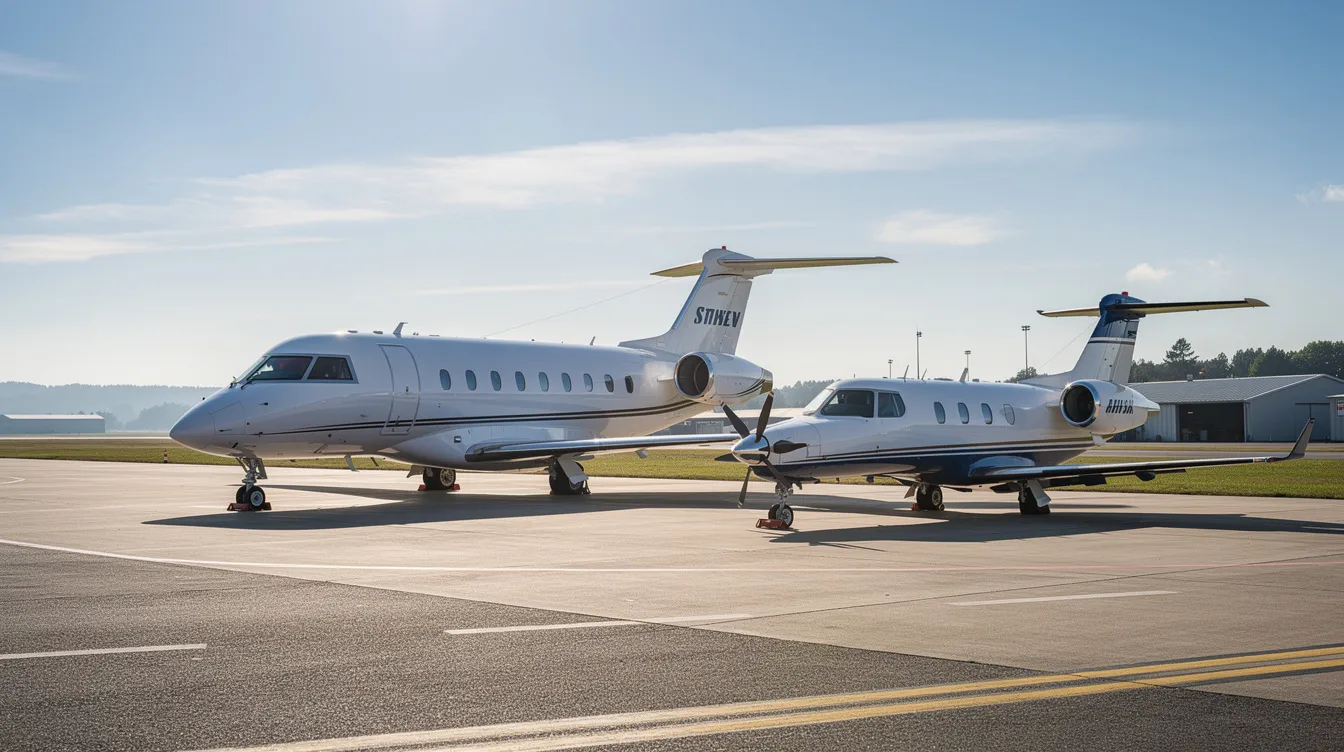
A light jet is a twin-engine turbine aircraft typically seating six to nine passengers, designed for trips ranging from 500 to 1,500 nautical miles. Very light jets (VLJs) are their smaller cousins - four to seven seats, shorter range, single-pilot capable. Both categories dominate short regional flights and medium-haul flights across the United States.
The cost of chartering a light jet typically ranges from $3,000 to $6,000 per flight hour. Here are the 2025–2026 average hourly rate ranges for U.S. domestic charter:
Very light jets: approximately $2,750–$3,500 per billable flight hour
Light jets: approximately $2,900–$4,000 per flight hour
Super light jets: approximately $4,000–$5,500 per flight hour
These rates reflect air time only and exclude taxes, airport fees, and most surcharges. Private jet rentals cost $2,000 to $14,000+ per hour across all aircraft categories.
Typical total trip costs on a light jet:
New York (Teterboro) to Chicago (Midway), round trip same day, 5 passengers: ~$18,000–$24,000
Los Angeles to Aspen, 3-day weekend, 6 passengers: ~$24,000–$32,000
Miami to Nassau, day trip, 5 passengers: ~$10,000–$15,000
For context, midsize jets run $4,300–$7,500 per hour, while ultra-long-range jets command $10,000–$14,000+ per hour. Light jets deliver meaningful savings on regional and short cross-country routes without sacrificing the core benefits of flying privately.
While BlackJet Fractional Jet Ownership focuses on fractional jet ownership and membership programs rather than one-off charters, understanding light jet charter cost is essential for comparing charter, jet cards, and fractional solutions - and determining which approach best fits your travel volume.
The private aviation market divides smaller jets into three subcategories based on passenger capacity, range, and cabin size:
Very light jets seat 4–5 passengers (occasionally up to 7) with ranges around 500–1,100 nautical miles. Popular models include the Cirrus Vision SF50, Eclipse 500, and Embraer Phenom 100.
Light jets carry six to nine passengers comfortably with ranges of 1,200–1,600+ nautical miles. Examples include the Cessna Citation CJ2, CJ3, and CJ4; Learjet 45XR; Beechjet 400A/Hawker 400XP; and HondaJet Elite II.
Super light jets push the boundaries of the light jet category with enhanced cabin space, speed, and range. The Embraer Phenom 300E, Citation XLS+, and Pilatus PC-24 all fall here.
Compared to turboprop aircraft ($1,800–$3,000 per hour, slower cruise speeds), light jets offer pressurized cabins, faster transit, and a more refined experience. Compared to midsize jets and larger aircraft, they cost less per hour and are perfectly suited for trips of 1–3 hours.
Routes where a light jet is the ideal match: New York–Boston (~200 nm), Dallas–Denver (~650 nm), Los Angeles–San Francisco (~350 nm), Chicago–Toronto (~500 nm), and Miami–Nassau (~350 nm). On these legs, booking a larger aircraft is simply overkill.
The sweet spot: 4–6 passengers, under 1,500 nautical miles, wanting a meaningful step up from commercial air travel without heavy jet pricing.
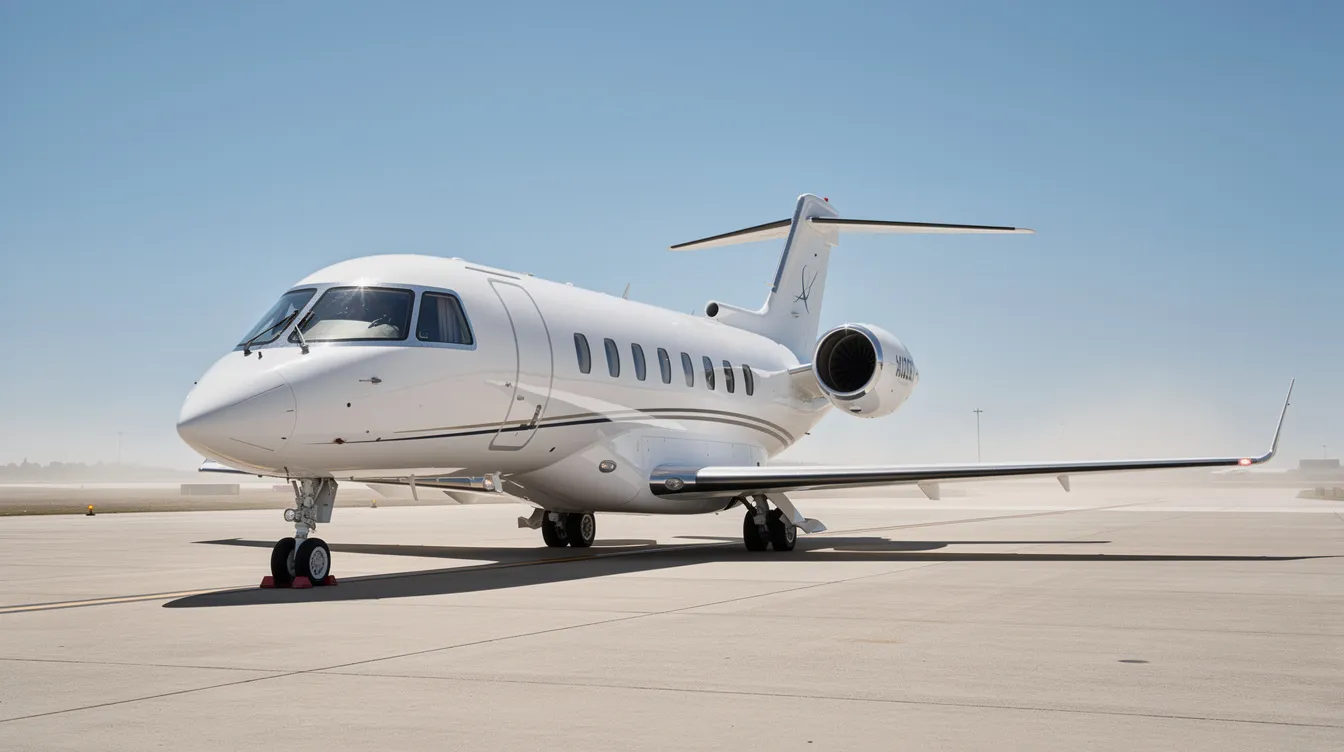
Private jet charter flights are priced by multiplying the aircraft's hourly rate by the total billable flight hours, then layering on government taxes, airport fees, and optional services. It sounds simple, but the line items add up quickly.
Here is what typically appears on a light jet charter invoice:
Base hourly aircraft rate (e.g., $3,200/hr for a Citation CJ3) covering aircraft, flight crew wages, and standard maintenance reserves
Fuel surcharge - often 10–15% of the base flight cost in high fuel markets
Federal excise tax (FET) at 7.5% applied to the base charter amount on domestic flights
Segment fees - approximately $4.50–$5.30 per passenger, per leg
Airport landing and handling fees - variable by location
Aircraft positioning/deadhead legs - charged if the private plane must reposition empty to reach you
Optional services - Wi-Fi, in-flight catering, de-icing, ground transportation
A concrete example:
3.0 flight hours × $3,200/hr = $9,600 base. Add 7.5% FET (~$720) + segment fees (~$50) + $600 in airport and handling fees = approximately $11,000–$12,000 total.
The difference between "air time" (wheels up to wheels down) and minimum billable hours matters. Many operators enforce daily minimums of 1.0–2.0 hours per day or per leg, meaning a 45-minute hop may be billed as a full hour or more.
For frequent flyers logging 25–150 flight hours per year, this trip-by-trip pricing model creates unpredictable costs. That is one reason many transition to fractional ownership or membership models - like BlackJet's Equity Fleet and Reserve Fleet - where hourly rates are more transparent and total costs more predictable, especially when you understand the total cost of fractional jet ownership.
This section serves as a quick-reference guide to current market averages for hourly pricing in North America as of 2025–2026. These are typical ranges, not guaranteed quotes.
Category | Hourly Rate Range | Example Aircraft |
|---|---|---|
Very light jets (VLJs) | $2,750–$3,500/hr | Phenom 100, Eclipse 500, Vision SF50 |
Light jets | $2,900–$4,000/hr | Citation CJ3+, HondaJet Elite II, Learjet 40XR |
Super light jets | $4,000–$5,500/hr | Phenom 300E, Citation XLS+, PC-24 |
Key drivers within those ranges include aircraft age, cabin refurbishments, Wi-Fi availability, operator overhead, and seasonal demand. A freshly refurbished CJ3+ with high-speed connectivity will sit at the top of its band, while an older Beechjet 400A may come in near the bottom.
How light jets compare to other classes:
Turboprop (Pilatus PC-12, King Air 250): ~$2,000–$2,300/hr
Midsize (Citation Latitude, Hawker 800XP): ~$4,300–$7,500/hr
Ultra long range (Gulfstream G650, Global 6000): ~$10,000–$14,000/hr
The per-hour difference between a VLJ and a standard light jet is often just a few hundred dollars. But that modest gap translates into meaningful differences in cabin space, baggage capacity, range, and overall comfort - factors that matter on any trip longer than an hour. For a comprehensive look at private jet pricing across all categories, BlackJet maintains detailed cost guides.
The following estimates assume 2025–2026 U.S. pricing, standard fuel surcharges, and inclusive of the 7.5% federal excise tax. No repositioning charges are assumed unless noted.
New York (Teterboro) → Chicago (Midway), round trip same day 5 passengers on a Citation CJ3. Flight time: 2.0–2.2 hours each way. Total estimate: ~$18,000–$24,000.
Los Angeles (VNY) → Aspen (ASE), 3-day weekend, 6 passengers on a Phenom 300E. Flight time: 1.8–2.0 hours each way, plus crew overnight costs. Total estimate: ~$24,000–$32,000.
Dallas (DAL) → Miami (OPF), 2-day business trip, 4 passengers on a Learjet 45XR. Flight time: 2.5–2.8 hours each way. Total estimate: ~$26,000–$34,000.
London (Luton) → Geneva, same-day ski scouting 4 passengers on a CJ2+ (European market, typically 10–25% above U.S. rates). Flight time: 1.4–1.6 hours each way. Total estimate: €12,000–€18,000.
Miami (OPF) → Nassau (MYNN), day trip, 5 passengers on a HondaJet. Flight time: 0.8–1.0 hours each way. Total estimate: ~$10,000–$15,000. Note that fees have a larger proportional impact on very short legs.
When you fill 4–7 seats, the per-person cost can approach - or even beat - last-minute domestic first class tickets on commercial flights, especially on business-heavy routes where walk-up commercial fares spike above $1,500 per person each way.
Even within the same aircraft type, two trips that look similar on paper can differ by thousands of dollars. Several cost drivers explain the gap.
Flight distance and time - distance is a major factor affecting light jet charter pricing. Longer routes mean more hours, more fuel, and more engine cycles billed.
Aircraft type and age - newer, more efficient, or premium models command higher rates. Hourly rates for light jets are affected by aircraft type and age.
Airports used - busy hubs like JFK and LAX charge higher landing and handling fees than secondary fields like Teterboro or Van Nuys.
Peak travel seasons - peak travel seasons can increase private jet charter prices. Holidays, major sporting events, and the Monday-morning/Thursday-evening corporate rush all create demand spikes.
One-way vs. round trip - one-way trips may incur additional repositioning costs when the aircraft must deadhead to its next assignment.
Number of passengers and baggage - a group of seven with ski gear may force a move from a VLJ to a full light jet or super light jet, changing the aircraft size and hourly rate.
Amenities and special requests - additional services like catering can raise charter costs, as can pets, medical equipment, or premium ground transportation.
Fuel prices - fuel prices significantly influence charter costs and may incur surcharges, especially in remote or island markets.
Scenario comparison: A Friday afternoon one-way private jet flight from New York to Miami during Christmas week on a CJ3 might quote $16,000–$20,000. The same aircraft on a Tuesday midday in February? Likely $11,000–$14,000.
Flexibility with travel dates can reduce charter costs. For frequent flyers, locking in predictable hourly rates through fractional jet ownership or jet card memberships mitigates these seasonal swings.
The advertised hourly rate for a light jet rarely equals the final amount paid. Government taxes and airport charges typically add 10–25% or more to the base quote.
U.S. government charges:
A 7.5% Federal Excise Tax applies to all domestic flights - calculated on the base charter amount
Domestic segment fee: ~$4.50–$5.30 per passenger per leg (for 2026, the rate is $5.30)
International head tax: $19.70 per passenger for international flights departing or arriving in the U.S.
Alaska/Hawaii head tax: $9.90 per passenger
Airport and operator fees:
Landing fees range from $100 to $1,500 per flight, depending on the airport authority and aircraft weight
Ramp and handling fees: ~$100–$500 per stop, sometimes waived with minimum fuel purchase
Overnight parking or hangar fees: ~$500–$1,500 per night, especially in harsh-weather markets where hangar fees protect the aircraft
How it adds up: A $15,000 base charter on a light jet can grow to approximately $17,000–$19,000 once FET ($1,125), segment fees, and airport costs are added. Landing and handling fees vary depending on airport location and popularity, making the choice of departure and arrival fields a real cost lever.
Fractional owners and members through programs like BlackJet often enjoy clearer, more predictable fee structures with fewer line-item surprises - one of the practical advantages of moving beyond transactional charter.
Very light jets offer lower hourly rates, but the savings come with trade-offs in cabin comfort and mission capability.
Feature | Very Light Jets | Light Jets |
|---|---|---|
Passenger capacity | 4–5 typical (up to 7) | 6–8 typical (up to 9) |
Range | 500–1,100 nm | 1,200–1,600+ nm |
Baggage | Limited (60–70 cu ft) | More generous |
Cabin height | ~4.9 ft, rarely stand-up | Near stand-up or full stand-up |
Hourly rate | $2,750–$3,300/hr | $3,200–$4,000/hr |
Very light jets accommodate four to seven passengers. Light jets can carry six to nine passengers comfortably. The hourly difference of $400–$700 is meaningful on a single short hop - a solo executive flying Boston to New York for a board meeting saves real money on a Phenom 100. But for a family of five with luggage on a 2-hour leg from Boston to Atlanta, a CJ3+ provides the cabin space, baggage capacity, and range to make the trip practical.
For clients flying privately 25–50 hours per year primarily on short routes, fractional ownership of a light jet can achieve similar or better economics than repeatedly chartering VLJs, with more predictable access and a consistent cabin standard when you evaluate fractional jet ownership as an investment.
Modern turboprop aircraft like the Pilatus PC-12 and King Air 250 are cost-effective alternatives to light jets for sub-500-mile missions. Turboprop charters start at around $2,000 per hour, with typical rates running $2,000–$2,300 per hour. Turboprop aircraft typically cost $2,000 to $2,300 per hour.
How the numbers compare on a 1.0–1.5 hour leg:
Turboprop: $2,000–$3,450 total base cost
Light jet: $2,900–$6,000 total base cost
Difference: $1,000–$3,000 per flight
The trade-offs:
Speed: Turboprops cruise at 260–320 knots; light jets at 380–450+ knots. On a 500-mile route, the jet saves 20–40 minutes.
Cabin comfort: Turboprops have improved significantly, but jets are generally quieter and more refined.
Runway performance: Turboprops can use shorter, remote airfields - an advantage for island hops or mountain strips.
When each makes sense:
Dallas–Houston business day trip (~240 nm): A turboprop often delivers better economics with lower operating costs.
Los Angeles–Aspen ski weekend (~600 nm, high altitude): A light jet is preferred for speed, altitude performance, and comfort.
Short island hops in the Caribbean: Turboprops shine due to shorter runway capability at regional airports.
BlackJet Fractional Jet Ownership helps clients evaluate whether turboprop aircraft, light jets, or a mix within a Reserve Fleet or floating fleet fractional ownership model best matches their trip patterns and cost expectations.

Choosing the right aircraft size is one of the biggest levers for managing private jet costs, especially on U.S. coast-to-coast and transcontinental routes.
Category | Hourly Rate | Best Range | Typical Seating |
|---|---|---|---|
Light jets | $2,900–$4,000/hr | Up to ~1,500 nm | 6–9 passengers |
Midsize jets | $4,300–$7,500/hr | ~2,000–2,400 nm | 7–9 passengers |
Super midsize jet | $5,100–$6,500/hr | ~2,500–3,500 nm | 8–10 passengers |
Heavy jet | $7,200–$9,500/hr | ~3,500–5,000 nm | 9–16 (Large Cabin Jets) |
Ultra long range jets | $10,000–$14,000/hr | 6,000+ nm | 10–19 passengers |
Heavy jets can cost between $7,200 and $9,500 per hour. Midsize jets typically seat seven to nine passengers, while super midsize jets offer seating for eight to ten passengers. Large cabin jets can accommodate nine to sixteen passengers, and ultra-long-range jets typically seat ten to nineteen passengers.
Scenario comparisons:
New York–Miami on a light jet (~2.5 hrs, ~$12,000 base) vs. midsize (~2.3 hrs, ~$14,000 base): The light jet saves $2,000+ with only marginally more flight time.
Chicago–San Francisco on a super light jet (~4 hrs with fuel stop, ~$20,000) vs. super midsize jet (~4.2 hrs nonstop, ~$25,000): The super midsize jet flies nonstop but costs significantly more.
London–Dubai: Light jets simply cannot make this leg. Long-range jets and ultra-long-range options are the only viable choice for long-haul flights.
Putting a short regional trip on a larger aircraft dramatically increases cost per hour and total spend. Structured programs like fractional ownership help align the right aircraft type with typical missions.
For groups of 4–7 travelers, light jet charter can be surprisingly cost-competitive on a per-person basis compared to last-minute domestic first-class tickets. Private jet rentals are priced per aircraft, not per passenger - which means adding a fifth or sixth traveler changes nothing.
Side-by-side comparisons:
New York–Chicago, 5 executives, booking 3 days out: Walk-up first-class tickets at ~$1,800 each = $9,000 one-way. A light jet charter for the same one-way leg: ~$9,500–$12,000 total. The private jet service delivers door-to-door time savings and privacy for strategic meetings en route, at a comparable per-person cost.
Los Angeles–Seattle, 6-person leadership team, day trip: Commercial airlines don't conveniently serve a same-day round trip on this route. Chartering a light jet at ~$16,000–$20,000 round trip enables a schedule impossible on scheduled flights.
Dallas–Nashville, high-demand event weekend: Commercial fares spike above $2,000 per person. Sharing a private jet can lower individual costs significantly when split across six passengers.
Beyond dollars, private jet travel saves 60–90 minutes per departure by skipping commercial terminals, enables multi-city itineraries in a single day, and offers complete privacy for sensitive business discussions. For frequent travelers doing similar trips multiple times per year, fractional aircraft ownership or a structured membership often yields better value than repeated ad hoc charter flights.
How charter operators plan aircraft utilization directly affects pricing for one-way versus round-trip itineraries.
Round-trip pricing: When the aircraft and crew wait for your return, you typically pay for daily minimum hours (often 2.0 hrs/day) plus crew overnight expenses. This keeps the private aircraft available but adds to your total cost.
One-way pricing: Booking one-way charters can sometimes save money, but the quote may include hidden aircraft positioning costs - the deadhead leg the plane must fly empty to reach its next assignment. One-way trips may incur additional repositioning costs depending on where the aircraft needs to be next.
Multi-leg itineraries: Efficiently planned multi-stop trips can reduce per-leg costs if a charter company or broker optimizes routing to minimize deadhead flying.
Empty leg flights on light jets:
Empty leg flights are repositioning flights sold at a discount when the aircraft would otherwise fly empty. Empty leg flights can reduce costs by 30–75% off standard private jet charter prices. For example, a repositioning CJ3 from Palm Beach to Teterboro might be listed for ~$7,000–$9,000 instead of the standard $14,000–$16,000.
Key limitations of leg flights:
Fixed route and timing with little flexibility
Short notice - often 24–72 hours
Subject to cancellation if the primary charter changes
Typically one-way only
While great for opportunistic travelers, empty legs are not a reliable strategy for executives who need guaranteed schedules - one reason many high-frequency users migrate to fractional ownership models.
Beyond the base hourly rate and taxes, several add-on costs can move a quote from "base" to "all-in."
De-icing: ~$1,500–$8,000 per event depending on airport and conditions
In-flight catering: Standard snacks are usually included, but specialized catering incurs extra fees. In-flight catering can cost between $230 and $2,000 per leg for premium meals and beverages.
Ground transportation: Can range from $180 to $1,000 or more depending on city and vehicle class
Wi-Fi and data: Sometimes included; other times billed at $2 to $9 per megabyte or a flat fee per private flight
Pet cleaning fees: ~$250+ for deep cleaning after pets travel
Crew overnight expenses: Crew expenses arise if the pilots must stay overnight or require per diem, typically ~$200–$600 per crew member, per night
Flight attendants: A flight attendant may be required based on aircraft size, adding to crew costs on larger aircraft
Concierge services: Can include hotel and spa bookings, event tickets, and other arrangements at additional cost
Some operators quote "all-inclusive" packages while others itemize every charge. Always request a transparent, itemized estimate before confirming a charter.
Structured programs like fractional ownership and jet cards typically include many of these elements within a known hourly rate, improving cost predictability for businesses that need to manage aviation budgets tightly and making it easier to structure fractional jet ownership financing around clear, all-in costs.
Light jet charter is ideal for occasional flyers. But beyond a certain annual flight hours threshold, fractional ownership or equity-based programs become more economical.
Industry benchmarks:
Under ~25 hours/year: Ad hoc private jet rental or on-demand memberships are usually the simplest path.
~25–50 hours/year: Jet cards and Reserve Fleet-type programs become attractive, offering stable pricing and guaranteed availability.
~50–150 hours/year: Fractional aircraft ownership can reduce effective hourly costs and improve access reliability.
A numeric scenario:
A company flying 75 hours per year on light jets at an average charter rate of $3,500/hr spends approximately $262,500 annually on private charter - and that is before taxes, fees, and surcharges push the figure higher.
Compare that to a fractional 1/8 share in a light jet. The combination of upfront capital cost, monthly management fees, and a lower occupied hourly rate may bring the effective cost per hour down significantly. Add potential tax implications for fractional jet owners, including depreciation benefits under U.S. tax code (consult a tax advisor for specifics), and the math shifts further in favor of ownership for high-frequency users.
BlackJet Fractional Jet Ownership advises clients on exactly where they fall along this continuum - and whether continuing to rent a private jet, joining a membership program, or acquiring an equity share delivers the best long-term value for their specific pattern of business and leisure travel.
Fractional jet ownership means purchasing a share in a specific light jet or fleet that entitles the owner to a set number of flight hours per year, with professional management handling all operations. It eliminates the need to solicit multiple charter quotes for every trip and makes it essential to understand core fractional jet ownership terms and concepts.
How it compares to chartering for frequent light jet users: Travelers often weigh these benefits against leading fractional jet ownership programs for smart investors when deciding how to structure their private aviation strategy.
Predictable hourly rates and fewer market-driven price swings
Guaranteed or priority access to a defined aircraft type
Ability to structure ownership for tax benefits (e.g., depreciation under U.S. tax code when qualifying as a business asset - readers should consult their own tax advisors) and to secure appropriate liability and insurance coverage in fractional ownership
A consistent onboard experience across every private flight
BlackJet's Equity Fleet model:
Equity ownership in a specific aircraft or fleet
Customized sourcing of light jets matching the client's primary mission profile
Professional aircraft management, maintenance, and scheduling handled by BlackJet
Ownership-level visibility into safety, maintenance, and operational standards, supported by clearly defined fractional ownership contract terms
The Reserve Fleet alternative:
For businesses and individuals not ready to commit capital, BlackJet's Reserve Fleet offers a pay-as-you-go membership with access to a curated fleet, guaranteed availability, and predictable pricing - more structure and consistency than pure on-demand private jet charter service, without the ownership commitment. Understanding the differences between fractional ownership and membership programs helps clients choose the right fit.
Jet card and membership programs allow travelers to pre-purchase flight hours at fixed or capped hourly rates on specific aircraft categories - such as light jets - with guaranteed availability under defined terms.
How they compare to ad hoc charter:
More predictable private jet charter prices, particularly during high-demand periods
Potentially higher hourly rate than the absolute cheapest spot charter, but far less volatility
Defined service standards, safety protocols, and scheduling support
No need to solicit competing quotes for every trip
A Reserve Fleet-style membership from BlackJet complements or replaces reliance on one-off light jet charters. Clients gain access to a known quality standard and a dedicated scheduling team, suitable for both individual executives and corporate flight departments needing 25–100+ hours per year of private jet charter flights.
Traveler profiles and best fit:
A regional CEO flying privately to client sites monthly (~30–40 hours/year): A jet card or Reserve Fleet membership provides consistency and eliminates the friction of shopping for each trip.
A family that flies private 6–8 times per year (~15–25 hours): On-demand charter may still be the most cost-effective option, with occasional empty leg flights offering savings on flexible trips.
The right model depends entirely on frequency, route predictability, and how much premium a traveler places on guaranteed access versus lowest possible direct cost.
Even within the "light jet" label, not all aircraft worldwide are priced the same. Aircraft type significantly influences charter pricing, and performance, age, and cabin features all play a role.
Factors that move the needle:
Newer models like the Phenom 300E or Citation CJ4 Gen2 command higher hourly rates than older legacy airframes
Upgraded interiors - club seating, modern entertainment, refreshed upholstery - increase demand and price
Performance capabilities matter: short-field operations at airports like Aspen or Telluride require specific aircraft, and that specialization carries a premium
Model-based contrasts:
Citation CJ2+ vs. CJ3+: Similar category, but the CJ3+ may carry a $200–$400/hr premium for its improved range and cabin
Learjet 45XR vs. Beechjet 400A/Hawker 400XP: The Learjet's speed and range advantages come with higher fuel burn; the Hawker often charters for less but with trade-offs in passenger capacity and cabin comfort
Pilatus PC-24 vs. traditional light jets: The PC-24's ability to operate from unpaved runways makes it uniquely versatile for challenging fields, which commands its own pricing tier
The best light jet for any trip is the one that fits the flight distance, passenger count, and airport constraints at a rational cost - mission first, brand second.
Light jet charter pricing is not uniform worldwide. Local demand, operating costs, and regulatory environments create meaningful regional differences.
Regional generalizations:
United States: The most competitive market for private aviation, with the ranges cited throughout this article ($2,900–$4,000/hr for light jets). Deep operator competition keeps rates relatively accessible.
Western Europe (UK, France, Germany, Switzerland): Often 10–25% higher per hour than U.S. equivalents due to higher fuel costs, regulatory and environmental taxes, and landing surcharges.
Middle East and Asia: Smaller fleets with proportionally fewer light jets; charter costs are higher, and aircraft positioning from distant bases adds expense.
Caribbean and Mexico: Strong seasonal demand from the U.S. means light jets are frequently repositioned from major U.S. hubs, increasing charter costs during peak tourism months.
Operating into certain high-cost airports - London City, Nice Côte d'Azur, Aspen, Jackson Hole - can significantly increase handling and landing fees regardless of region.
Clients who fly regionally within North America should factor these geographic cost patterns into decisions about whether to rely on charter or consider fractional ownership with a U.S.-based fleet that optimizes domestic flights, guided by an aircraft fractional ownership sample contract that clearly outlines rights and obligations and by a plan for eventually selling a fractional jet ownership share when travel needs change.
Higher-quality operators with stronger safety records and certifications often charge more per hour - but the premium reflects investments that directly protect passengers.
Key factors impacting cost:
FAA Part 135 certification is mandatory for legal, insured on-demand private charter in the United States. Compliance costs are built into pricing.
Third-party safety audits - ARGUS, Wyvern, IS-BAO - require investment in training, maintenance documentation, and operational procedures.
Crew experience standards, such as requiring two pilots on light jets and recurrent simulator training, increase operator overhead.
Insurance premiums for well-maintained, properly crewed aircraft add to the hourly rate.
Ultra-low charter offers may reflect compromises in aircraft age, maintenance schedules, safety culture, or service levels. High-net-worth individuals and corporations typically prioritize safety and reliability over minimal private jet rental prices.
BlackJet Fractional Jet Ownership builds its programs around high safety and operational standards comparable to leading fractional providers, giving clients ownership-level control and visibility into safety that short-term charter may not consistently offer.
For executives and families who fly private regularly, building an annual aviation budget prevents each trip from feeling like a standalone expense.
A step-by-step framework:
List expected trips for the year - routes, estimated hours, passenger counts
Apply realistic hourly rates ($3,000–$4,000/hr for light jets) and add 15–25% for taxes and fees
Sum total hours and total spend
Evaluate whether charter, jet cards, or fractional ownership makes the most financial sense.
Sample annual plan:
An executive team expects 10 trips averaging 6 hours of flight time each - 60 total hours on light jets. At an average all-in cost of $4,000/hr, the annual aviation budget reaches approximately $240,000. At this threshold, a fractional share begins to offer meaningful advantages in both cost predictability and access priority.
Revisit the plan annually as travel patterns evolve. A shift toward more international flights might justify a mix of light jets and long-range jets through a diversified fleet program rather than a single-class commitment.
Use this analysis as the starting point for a strategy conversation with a private aviation advisor - not as a static spreadsheet gathering dust.

For travelers outgrowing purely ad hoc charter, BlackJet Fractional Jet Ownership offers two models designed to bring structure, transparency, and long-term value to private aviation.
Equity Fleet:
Fractional ownership of a share in a specific aircraft or fleet
Priority access and tailored aircraft sourcing - including specific light jet types matching your primary mission profile
Potential tax advantages through depreciation (consult your tax advisor)
Professional aircraft management, maintenance, and scheduling handled entirely by BlackJet
Reserve Fleet:
Flexible, pay-as-you-go membership with guaranteed availability
Predictable pricing across a curated fleet of aircraft worldwide
No capital outlay - ideal for businesses and individuals who want more structure than pure on-demand charter without the ownership commitment
How these models address light jet charter cost pain points:
Transparent, published hourly rates that minimize surprise surcharges and fuel surcharges
Professional scheduling that reduces costly repositioning and idle flight time
Consistent cabin standard and onboard experience - including additional services like in-flight catering - across every trip
Client scenarios:
A mid-market private equity firm flying deal teams between U.S. cities 40–60 times per year consolidates its luxurious private jet access through BlackJet's Equity Fleet, locking in predictable costs and guaranteed scheduling. A family with homes in New York and Florida uses the Reserve Fleet for 30 annual round trips, replacing the uncertainty of calling multiple brokers with a single point of contact and consistent pricing.
BlackJet serves as an expert partner helping clients design a multi-year private aviation strategy - not just chase one-off charter deals.
How much does it cost to charter a light jet for a 2-hour flight in the U.S.? A 2-hour light jet charter typically costs $8,000–$12,000 all-in, including base rate, 7.5% FET, segment fees, and airport handling. The exact figure depends on aircraft type, airports used, and seasonal demand.
Is it cheaper to charter a very light jet instead of a light jet? Yes, but only marginally. VLJs save $400–$700 per hour versus standard light jets, but offer less cabin space, shorter range, and fewer baggage options - trade-offs that matter for groups of five or more.
Do I pay more per seat if I don't fill all the seats on the jet? No. Private jet rental costs are quoted per aircraft, not per passenger. Whether two people or seven fly, the charter costs remain the same. Filling more seats lowers your per-person cost.
How far can a light jet fly nonstop before I need a larger aircraft? Most light jets cover 1,200–1,600 nautical miles nonstop, equivalent to about New York to Miami or Dallas to Los Angeles. Beyond that, midsize jets or a fuel stop become necessary.
Can I reduce my costs with flexible dates or airports? Absolutely. Shifting departure by a day or using a secondary airport can reduce landing fees and hourly rates. Off-peak flying consistently yields better private jet charter costs.
At what point does fractional ownership become more economical than chartering light jets? Industry data suggests the crossover begins around 50 flight hours per year. Between 25 and 50 hours, jet card or membership models offer a compelling middle ground.
How does federal excise tax affect my final price? The 7.5% FET applies to the base charter amount on all domestic flights. On a $15,000 charter, that adds $1,125 to the bill.
Can light jets handle overnight transcontinental or ultra long range flights? No. Light jets are designed for short regional flights and medium-haul flights up to roughly 1,600 nautical miles. For transcontinental or intercontinental travel, you need long-range jets or ultra-long-range jets with the cabin space and fuel capacity for longer flights.
For personalized guidance beyond these general ranges, working with a private aviation advisor who understands your routes, frequency, and tax situation is essential.
Light jet charter delivers the core benefits of flying private - speed, privacy, flexibility, and access to thousands of regional airports - at hourly rates of $2,900–$4,000 in the current U.S. market. Total trip costs typically range from $10,000 to $35,000 depending on flight distance, aircraft type, and the specific airports involved. Compared to turboprop aircraft, light jets offer faster, smoother travel at a moderate premium. Compared to midsize jets, heavy jets, and ultra-long-range options, they provide meaningful savings on routes under 1,500 nautical miles.
For occasional flyers, on-demand charter remains the simplest way to charter a private jet. But for executives and families logging 25–150 hours per year, the cumulative cost of ad hoc charter - including unpredictable pricing, repositioning charges, and inconsistent service - adds up. That is where a structured approach pays off.
BlackJet Fractional Jet Ownership helps high-net-worth individuals and companies move beyond transactional charter into a more predictable, optimized private aviation plan. Whether through Equity Fleet ownership or Reserve Fleet membership, BlackJet aligns aircraft access with your actual travel patterns - reducing waste, improving scheduling, and building long-term value.
Ready to explore a smarter way to manage your light jet costs? Visit FractionalJetOwnership.com to schedule a consultation. Review your past 12–24 months of travel, model different ownership and membership scenarios, and find the structure that gives you control, efficiency, and confidence every time you fly.
