August 21, 2026
Private jet travel is no longer reserved for billionaires or Fortune 100 companies. This guide is designed for business travelers, executives, and families who want to maximize their travel efficiency and flexibility. Understanding your options in private aviation can help you save time, reduce hassle, and make smarter financial decisions. Today, executives, entrepreneurs, and families across the United States are discovering that private air charter and fractional jet ownership offer practical, time-saving alternatives to commercial airlines. This guide breaks down how each model works, what they cost, and how to determine which approach fits your travel profile - whether you fly 25 hours a year or 150.
Private jet charter refers to booking an entire aircraft for a specific trip on an ad hoc basis. You pay for the flight, use the plane, and walk away with no ongoing obligation. Charter flights are operated under FAA Part 135 regulations, which govern on-demand commercial aviation in the United States. Private air charter is a charter service that allows full aircraft rentals for customized flights and offers flexible control over timing, routing, and passenger lists.
Fractional jet ownership is a different model. Instead of renting an aircraft per trip, you purchase a share - commonly 1/16th or 1/8th fractional jet ownership - of a specific aircraft. That share entitles you to a set number of guaranteed flight hours per year, along with professional aircraft management and predictable costs. To navigate terminology like share size, occupied hours, and management fees, many travelers rely on a fractional jet ownership glossary of key terms. Fractional jet ownership offers clients priority access and tax benefits that ad hoc charters cannot match.
A jet card sits between these two options. With a jet card, you pre-purchase a block of hours (often 25 or 50) at a fixed or capped hourly rate without buying equity in an aircraft.
BlackJet Fractional Jet Ownership specializes in two distinct programs. The Reserve Fleet functions as a membership or pay-as-you-go model that provides prioritized access to aircraft, providing access without equity investment. The Equity Fleet is a true fractional ownership structure with guaranteed hours, custom aircraft sourcing, and ownership advantages. Both models are designed for high-frequency travelers and businesses flying 25–150 hours per year who want more predictability and less hassle than pure private charter.
Booking a private charter flight takes three steps: request a quote, confirm the aircraft and itinerary, and pay. Here is how the process typically unfolds, beginning with a trip plan.
Consider a client who needs to fly from Miami to Aspen. They contact a charter broker or operator and provide travel dates, passenger count, and luggage requirements (in this case, ski gear for a family of four). The broker evaluates aircraft positioning, runway constraints at Aspen's high-altitude airport, and available fleet options, builds the flight plan, and then returns one or more quotes within hours.
Once the client selects an aircraft - say, a super-midsize jet with the range and short-field performance needed for Aspen - the operator confirms the crew schedule, FBO locations, catering preferences, and final pricing. A contract is signed and payment is secured. Private charter flights operate at your desired time and route, meaning departures align with the client's schedule rather than an airline timetable. Customized departures can be adjusted quickly based on travel needs.
On the day of travel, the client arrives at a private FBO - typically a separate facility from the main commercial terminal - about 20–30 minutes before departure. There are no long security lines. Boarding begins within roughly 15 minutes, and the aircraft is wheels up shortly after.
It is important to understand the roles involved. The aircraft is operated by a Part 135 certificate holder responsible for crew, maintenance, and safety compliance. A charter broker may arrange the flight but does not necessarily own the aircraft. In BlackJet's fractional model, the company manages both scheduling and aircraft operations directly, providing a more integrated experience than a typical brokerage.
Expected lead times vary by situation:
Urgent business flights: Airshare can have you in the air within three hours of booking. Most charters can be arranged with 24 hours' notice.
Standard private jet charter: 24–48 hours provides optimal aircraft selection, crew scheduling, and weather planning.
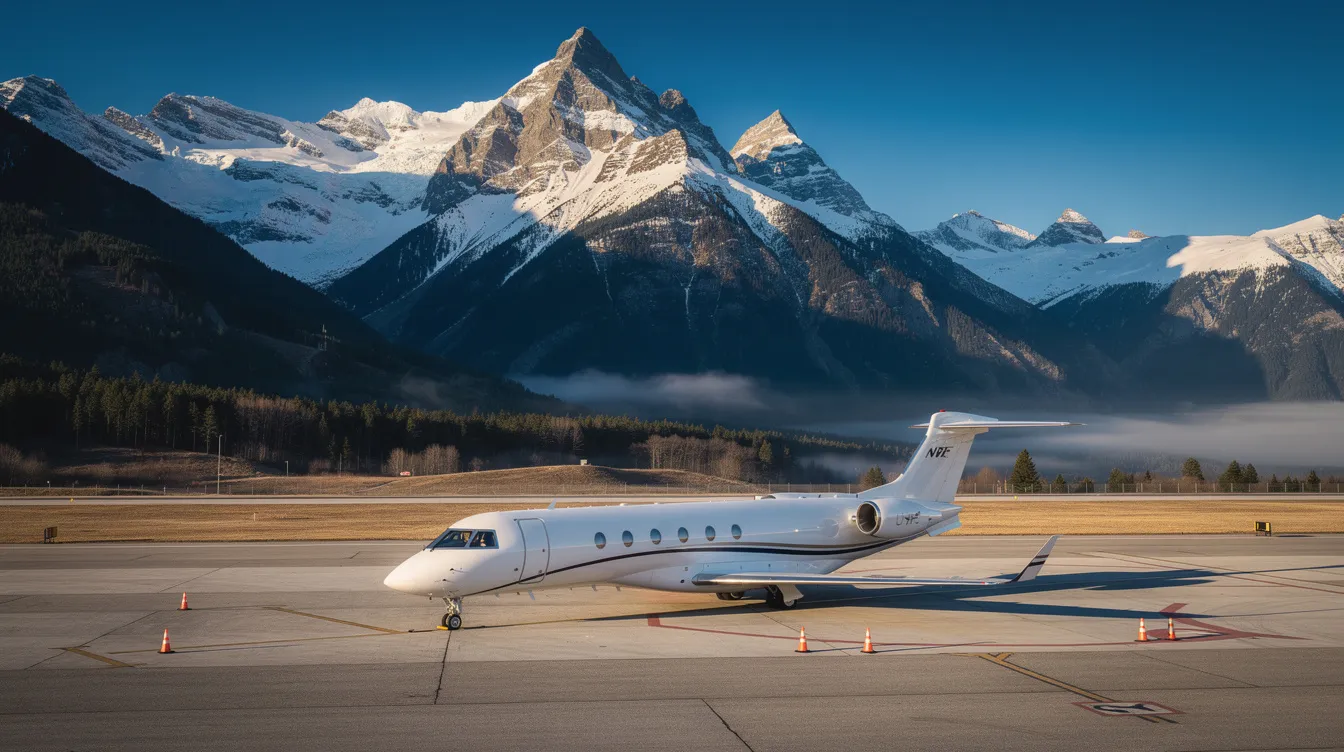
Private aviation can provide substantial benefits regarding time and flexibility - two resources that executives and families value most.
Private charters can cut travel time in half compared to commercial alternatives on many domestic routes. Business air travel may save an average of 2 hours per flight using private charters by eliminating check-in queues, connections, and layovers. On routes like Dallas–Chicago or Los Angeles–Boise, private flights can reduce total door-to-door travel time by 30–60%.
Charter flights connect travelers to over 3,000 airports that commercial airlines simply do not serve. In fact, private air charters access over 5,000 airports in the U.S., including smaller airports near factories, offices, estates, and resort towns. Private charters can significantly reduce ground transits compared to commercial flights, connecting travelers directly to their final destination.
Key advantages include:
On-demand scheduling: Private charters provide on-demand scheduling rather than fixed timetables, so you depart when you are ready - not when the airline says so.
Privacy and confidentiality: Chartered flights offer complete cabin privacy for meetings, sensitive discussions, or simply uninterrupted family time.
Productivity: Using private charters can lead to increased productivity for business travelers, thanks to quiet cabins, Wi-Fi, and dedicated work tables.
Luggage flexibility: Private charters can accommodate specialized luggage not allowed on commercial airlines - from golf clubs to medical equipment. Private charters allow flexible luggage policies based on aircraft capacity.
Personalized service: Chartered flights offer personalized convenience with customizable in-flight services, including tailored catering and cabin configurations.
High-frequency travelers benefit from predictable access to private jets, especially when combining charter with fractional ownership or jet card programs for recurring routes.
Matching mission to aircraft types is one of the most important decisions in private aviation. Choosing the wrong category means overpaying, sacrificing comfort, or - worse - being unable to reach your destination safely.
Here is a breakdown of major categories and the diverse fleet of aircraft available in private aviation:
Turboprops are propeller-driven aircraft ideal for regional trips under approximately two hours. Tradewind operates Pilatus PC-12 aircraft with a range of 1,700 miles, making the PC-12 a popular choice for accessing remote or short-runway airports. Seating is typically 6–8 passengers. For more on turboprop charter rates, refer to our detailed guide.
Light jets typically accommodate 4 to 7 passengers with a range of 1,875 miles. Models like the Citation CJ3+ are well suited for short domestic flights - Miami to New York, for instance. Light jets offer a comfortable cabin for regional business travel without the cost of a larger aircraft.
Midsize and super-midsize jets deliver more range, speed, and cabin space. The Challenger 350 handles coast-to-coast U.S. flights with ease. Super mid-size jets can carry 6 to 10 passengers over 3,500 miles, making them ideal for cross-country legs or Caribbean destinations.
Heavy jets serve long-haul missions. Large jets can accommodate 10 to 16 passengers with a range of 8,000 miles. The Gulfstream G450 and Bombardier Global 6000 cover routes like New York–London or Los Angeles–Honolulu nonstop, with full cabin amenities for overnight flights.
For reference, even smaller general aviation aircraft like the Cessna 172 have a service ceiling of 14,000 feet, though these are not typically used for charter purposes. The distinction matters: private jet services use purpose-built, pressurized aircraft designed for speed, range, and passenger comfort.
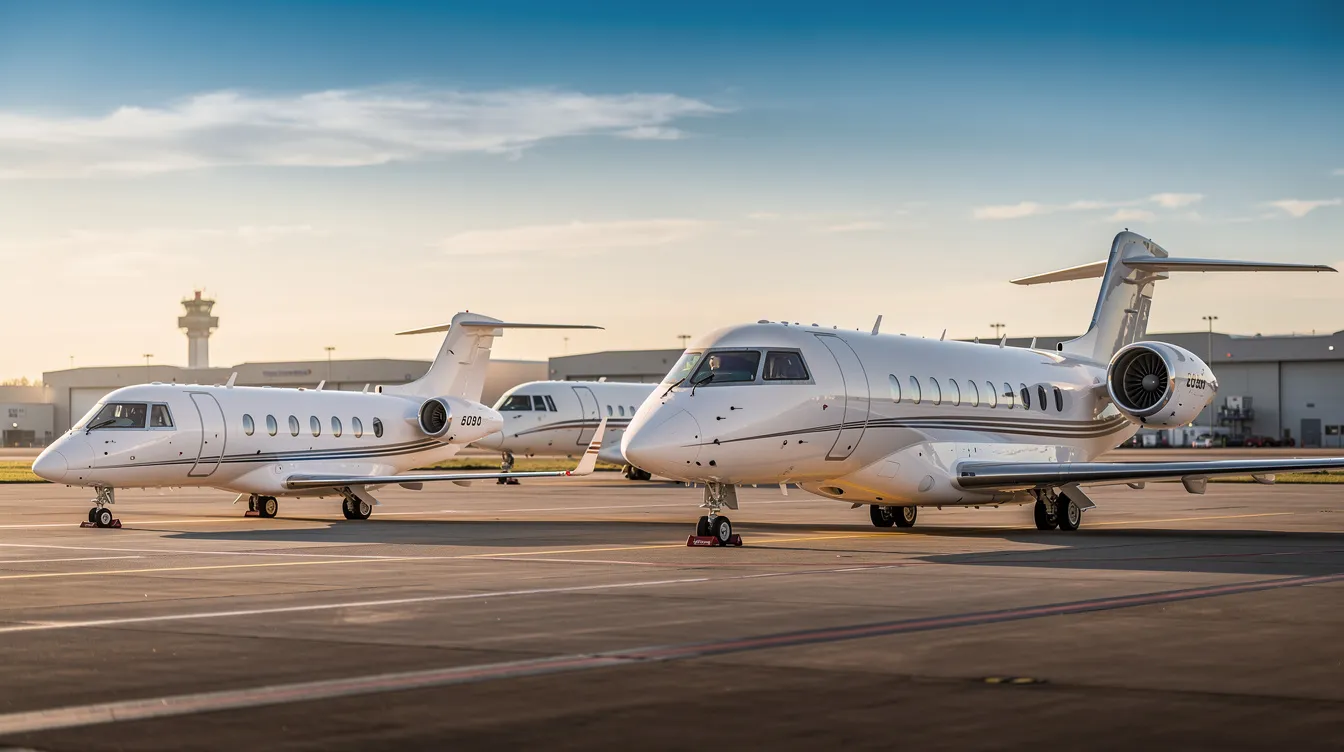
Private aviation adapts to a wide range of travel requirements. Here are the scenarios where charter and fractional access deliver the most value.
Executive roadshows often require multiple same-day stops. A CEO visiting New York, Boston, and Washington, D.C., in a single day can accomplish all three meetings without overnight stays. Private flights eliminate the wasted hours between scheduled flights on commercial airlines.
Board meetings and fundraising events demand privacy, precise timing, and the ability to transport principals together. A private charter ensures the team arrives at the same time, ready for the agenda, with no risk of a missed connection derailing the schedule.
Family vacations and ski trips benefit from access to smaller airports near resort destinations like Aspen, Jackson Hole, or Telluride. Flexible luggage policies mean skis, snowboards, and gear travel in the same aircraft. Leisure travel becomes seamless rather than stressful.
Golf groups and cultural events often involve parties of 8–12. Charter services can accommodate groups larger than 8 passengers on midsize or heavy jets. You can book multiple aircraft at a time, subject to availability, when groups larger than a single cabin allow.
Large groups - corporate retreats, sports teams, or incentive trips - may need VIP-configured airliners. For organizations chartering for 100 passengers, purpose-built large aircraft become more efficient than booking several smaller jets.
Hybrid usage is common among BlackJet clients. A company might use its Equity Fleet fractional share for twice-weekly flights between headquarters and a regional office, then book ad hoc charter flights for occasional outlier trips - an international journey or a one-off site visit.
Private charter pricing starts at $5,700 per hour and scales significantly based on aircraft category, route, and timing. Understanding what drives the final invoice helps travelers budget accurately and compare options.
The main cost drivers include:
Aircraft size and category: Larger, faster, longer-range jets cost more per hour.
Flight time and positioning: Pricing includes occupied flight hours plus any repositioning (empty) legs where the aircraft flies without passengers.
Peak dates and seasonality: Holiday travel, major events, and ski season inflate rates.
Airport fees and landing charges: International airports and popular private terminals carry higher fees.
Crew overnights and expenses: When crew must stay overnight away from base, hotels and per diems add to the total.
Taxes: The U.S. imposes a 7.5% Federal Excise Tax (FET) on chartered flights.
International fees: Overflight charges, customs, and landing fees abroad.
Here are realistic hourly ranges as general industry guidance:
Aircraft Category | Approximate Hourly Rate (USD) |
|---|---|
Turboprops | $4,000+ per hour |
Light jets | $6,000+ per hour |
Midsize / Super-midsize | $7,000–$10,000+ |
Heavy jets | $8,500–$14,000+ |
Turbo prop charters start at $4,000 per hour, while light jets typically start at $6,000 per hour. For a specific route, chartering a private jet to Florida costs between $5,000 and $50,000 depending on origin, aircraft type, and timing. For a complete private jet price list, see our detailed breakdown.
Empty leg flights offer significant savings. Empty leg flights are repositioning flights without passengers - also known as dead-heads or ferry flights. These flights occur when an aircraft returns to base after a one-way trip. Empty leg flights can save 30% to 75% off standard rates. Popular routes for empty leg flights include Las Vegas and Aspen, where one-way demand creates frequent repositioning opportunities. Travelers can save 30% to 75% on empty leg flights, though schedules are less flexible.
The difference between paying retail charter rates per trip and locking in predictable effective hourly costs via fractional ownership, Reserve Fleet, or jet card models can be substantial - especially above 50 flight hours per year, and this is where understanding fractional jet ownership financing costs and options becomes crucial.
Frequent flyers access private aviation through three primary models: on-demand jet charter, jet card programs, and fractional aircraft ownership. Each has a distinct cost structure, commitment level, and set of trade-offs.
Jet card programs pre-sell blocks of flight hours - typically 25 or 50 - long-termor capped hourly rates. They offer guaranteed availability up to a certain notice window and standardized aircraft cabin classes. Jet cards reduce the price unpredictability of ad-hoc charter without requiring equity investment. For a deeper comparison, review our guide on fractional jet ownership vs. jet cards.
On-demand private jet charter is best suited for travelers flying fewer than approximately 25 hours per year or whose flight routes and timing are highly unpredictable. There are zero long term commitments and no fixed costs. However, cost per flight can fluctuate widely, and availability during peak periods is not guaranteed.
Fractional ownership - including BlackJet's Equity Fleet - becomes more cost-effective as annual usage climbs above 50 hours. Fractional owners gain tax benefits and depreciation advantages (such as U.S. bonus depreciation where applicable), predictable access to consistent aircraft, and full aircraft management. Charter flights, by contrast, trade predictability for maximum flexibility and no ongoing obligation. BlackJet's Reserve Fleet offers a middle path: fractional ownership vs. membership-based access with priority scheduling and transparent pricing, without the capital commitment of equity ownership.
Safety is non-negotiable in private aviation and serves as a key differentiator between reputable operators and discount options. Private air charter operators must comply with FAA regulations and certification standards governing on-demand commercial operations.
FAA Part 135 certification requires operators to maintain rigorous maintenance schedules, employ qualified crews, follow crew duty-time limits (approximately 14 hours), and maintain detailed operational manuals. Private charters operate with two pilots for safety on virtually all jet charter flights, adding a critical layer of redundancy.
Beyond FAA requirements, reputable operators hold third-party safety certifications such as ARGUS, Wyvern, or IS-BAO. These voluntary audits evaluate maintenance practices, pilot training, incident records, and operational discipline. When evaluating top private jet charter companies, these certifications are an important filter.
Typical safety practices include proactive weather monitoring, strict adherence to duty-time limits, and advance handling of Temporary Flight Restrictions (TFRs). BlackJet partners only with vetted operators whose industry standards align with or exceed these benchmarks, whether flights are dispatched through the Reserve Fleet, Equity Fleet, or occasional charter arrangements.
The journey begins at the FBO, where you arrive 20–30 minutes before departure. There is no security theater - just a brief check-in, a walk across the ramp, and you are boarding. Wheels-up follows within minutes.
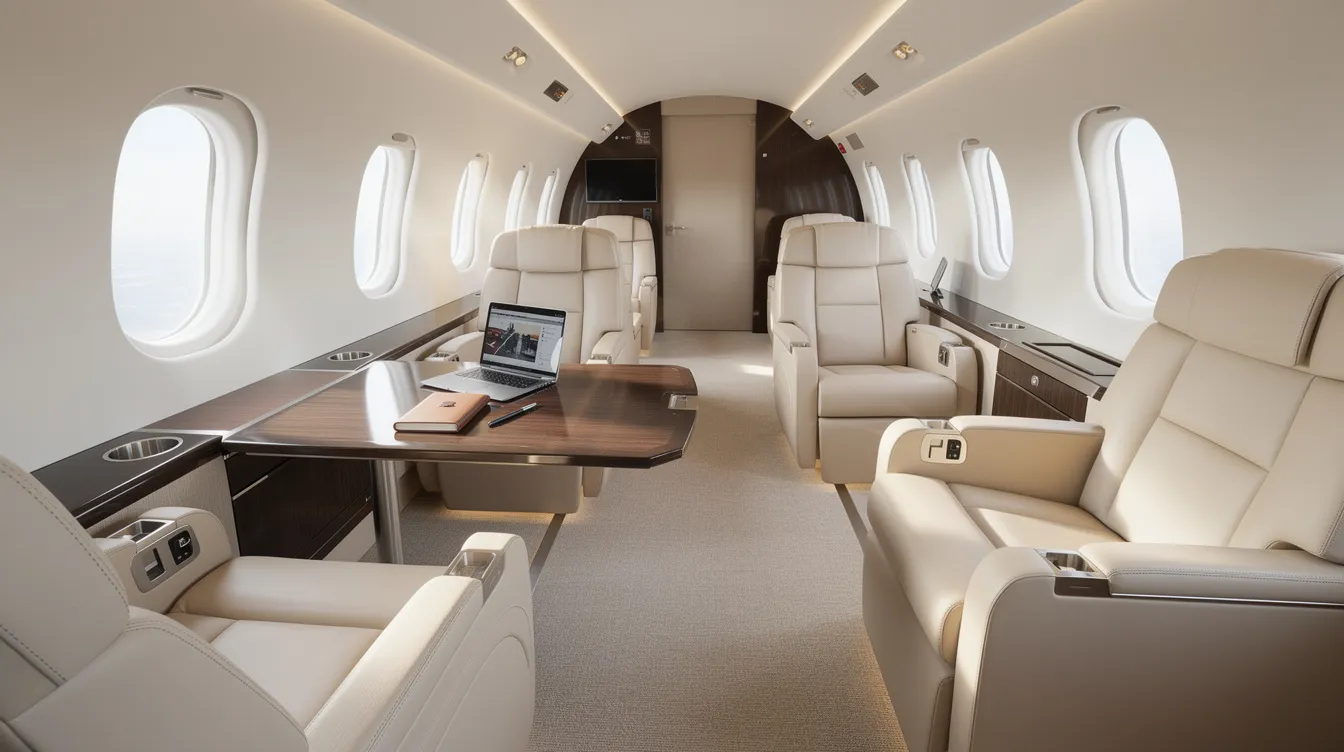
Inside the cabin, expect an enclosed lavatory, Wi-Fi, club-style seating with work tables, full climate control, and dedicated baggage areas. Catering ranges from light snacks and beverages to full multi-course meals, customized to your preferences before departure. The seamless travel experience extends to every detail: crews handle confidentiality for high-profile passengers, and personalized itineraries mean your trip unfolds exactly as planned.
Pet-friendly flights are standard on most private charters. Special requests - golf clubs, skis, medical equipment, oversized luggage - are accommodated based on aircraft capacity. The global network of platforms like Jettly gives travelers access to aircraft across the world, expanding options for travelers who need specific configurations or last-minute bookings.
The emphasis here is practical: productivity, privacy, and comfort without the overblown luxury travel marketing. A quiet cabin at 45,000 feet, with room to work or rest, is the real value proposition.
Private jet charters offer flexibility for last-minute trips and one-off missions. But above a certain annual usage threshold - often 25–150 hours - repeated charter becomes less efficient and more unpredictable.
The pain points are concrete. Hourly rates fluctuate with demand and fuel prices. Peak-day availability dries up during holidays and major events. Aircraft quality varies from trip to trip when booking through different operators. Each flight requires a separate quotingcontracting g, and payment cycle — administrative overhead that compounds quickly for frequent flyers.
Fractional jet ownership and BlackJet's Equity Fleet mode address these issues directly. Owners receive guaranteed access to consistent aircraft types, professional aircraft management (maintenance, crew, insurance, scheduling), and potential tax advantages such as U.S. bonus depreciation. The cost structure of fractional ownership becomes predictable: a known acquisition cost, fixed monthly management fee, and set occupied hourly rate.
Consider a mid-market CEO based in Chicago who flies to Denver twice a month for site visits. For two years, she charters ad-hoc - spending roughly $12,000–$14,000 per round trip on a midsize jet, with occasional peak-season surcharges pushing costs higher. After analyzing 24 months of invoices, she moves to a fractional share for that primary route, locking in consistent pricing and guaranteed availability. She still uses charter flights for occasional outlier trips - a board meeting in London, a family vacation to the Caribbean - but her core travel runs through the Equity Fleet at a lower effective hourly cost. The result: significant savings, less hassle, and better air travel overall.
Successful private aviation - whether charter or fractional - depends on expert aircraft management and scheduling that most travelers never see.
Aircraft management encompasses maintenance oversight (100-hour and annual inspections, continuous airworthiness programs), crew hiring and recurrent training, hangar arrangements, insurance procurement, regulatory compliance, and day-to-day trip scheduling. It also includes managing relationships with FBOs, fuel providers, and ground transportation services at each destination, along with structuring essential liability and insurance coverage in fractional ownership so that risks are properly managed across all co-owners.
Individual aircraft owners rarely want to manage all of this themselves. The administrative burden is substantial and requires specialized aviation expertise, especially when reviewing essential contract terms in fractional jet ownership and ensuring that the underlying fractional ownership agreements and sample contracts accurately reflect each party's rights and responsibilities. This is why owners and frequent flyers turn to companies like BlackJet for both aircraft management and access programs.
BlackJet's Reserve Fleet and Equity Fleet structures relieve owners and members of these operational burdens. Equity Fleet owners benefit from full management of their fractional share - every maintenance event, crew assignment, and regulatory filing is handled by BlackJet's team. Reserve Fleet members receive priority access to managed aircraft without any ownership responsibilities. In both cases, the client's role is simple: decide where and when to fly.
Selecting between private jet charter, a jet card, and fractional ownership comes down to how often you fly, where you go, and how much predictability you need, which is why many travelers study top fractional jet ownership programs and providers before committing to a specific solution.
As a practical framework:
Under 25 hours per year: On-demand charter typically offers the best value. No fixed costs, maximum flexibility, access to a vast network of operators and aircraft.
25–75 hours per year: A jet card or BlackJet's Reserve Fleet membership provides discounted rates, guaranteed availability, and less price volatility than booking individual charter flights.
50–150 hours per year: Fractional ownership through the Equity Fleet becomes compelling. The combination of guaranteed access, consistent aircraft quality, tax benefits, and professional management often delivers a lower effective cost per hour than repeated charter. For a deeper look at the financial picture, explore our guide on understanding the cost of fractional jet ownership.
Beyond raw cost, consider: Do you need guaranteed availability during peak travel dates? Do you have preferred aircraft sizes for your typical flight routes? Does your corporate travel policy favor asset ownership for tax purposes? These factors often matter as much as the hourly rate.
BlackJet offers personalized consultations to analyze your recent flight history - typically the last 12–24 months - and model scenarios for charter, jet card, and fractional options side by side.

How far in advance do I need to book a charter flight? Most charters can be arranged with 24 hours' notice. For peak travel periods or specific aircraft requests, 48–72 hours is recommended. Urgent business flights can sometimes be a large cabin in three hours.
What is the shortest and longest charter flight I can take? Charter flights range from 30-minute hops between nearby cities to 14+ hour intercontinental journeys on heavy jets. Crew duty limits of approximately 14 hours set the practical ceiling for a single flight segment; longer routes may require a fuel stop of roughly 30–40 minutes.
How many passengers can a private jet carry? It depends on the aircraft. Light jets seat 4–7 passengers, super-midsize jets carry 6–10, and large cabin heavy jets accommodate 10–16. For groups larger than 16, VIP-configured airliners or private airliners for 20 passengers may be the better option.
Can I bring pets on board? Yes. Most private charter operators welcome pets in the cabin. There are no cargo holds or breed restrictions typical of commercial airlines.
What amenities can I expect? Depending on cabin classes and aircraft size, amenities include Wi-Fi, enclosed lavatories, full catering, climate control, entertainment systems, and dedicated luggage space. Larger aircraft may offer sleeping accommodations and shower facilities.
When should I move from charter to fractional ownership? When your annual usage consistently exceeds 50 hours and your routes are somewhat predictable, fractional ownership typically delivers a lower effective cost per hour, guaranteed availability, and operational consistency. Analyze your last 12–24 months of travel to identify patterns, and remember that your long-term plan should also account for how to sell or exit a fractional jet share when your needs change.
How do jet cards differ from BlackJet's Reserve Fleet? Both offer pre-committed access without equity ownership. The Reserve Fleet provides prioritized scheduling within BlackJet's managed fleet and transparent pricing, while standard jet cards may draw from a broader - and less consistent - pool of third-party operators.
Can I combine charter flights with my fractional share? Absolutely. Many BlackJet clients use their Equity Fleet share for recurring routes and supplement with ad hoc charters for occasional outlier trips to less common destinations.
Whether you currently book flights throughad hocc charter or are exploring private aviation for the first time, the smartest path forward starts with understanding your actual travel patterns and matching them to the right access model.
BlackJet Fractional Jet Ownership serves as a trusted advisor in private aviation, helping clients compare private jet charters, jet cards, and fractional aircraft ownership for both U.S. and global travel. The team of aviation experts works with each client individually to evaluate the booking experience, cost structure, and operational fit of every option.
Schedule a consultation to review your past 12 months of travel and build a tailored mix of Equity Fleet and Reserve Fleet access - potentially supplemented by strategic use of on-demand charter flights. The goal is not to sell you one model over another, but to help you explore the configuration that delivers the best balance of cost, availability, and convenience.
Ready to explore the smarter way to fly private? Visit FractionalJetOwnership.com to learn how fractional ownership can transform your travel experience and give you control over your schedule, your aircraft, and your budget.
