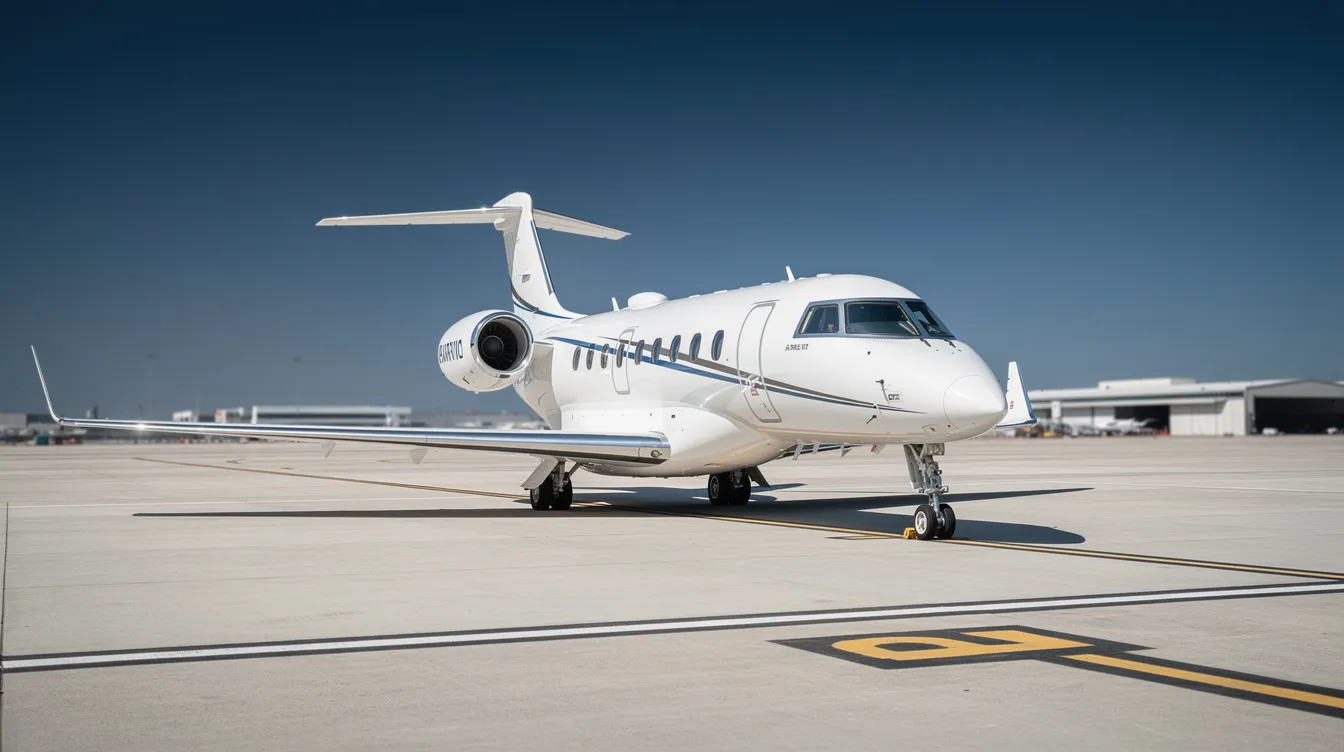
June 24, 2026
Prices for new private jets range from $2 million to over $100 million, with very light jets starting around $2M–$8M, light jets at $3.5M–$9M, midsize jets from $9M–$30M, and ultra-long-range jets often selling for $75 million to over $100 million.
Total cost goes far beyond the purchase price. Hangar fees, crew salaries, insurance, maintenance reserves, and engine program enrollment can push annual ownership costs past $1 million for larger aircraft.
Full ownership is economical at around 200–250 flight hours annually for light and midsize jets; below that threshold, fractional ownership, jet cards, and charter services often deliver better cost-efficiency per flight hour.
BlackJet Fractional Jet Ownership helps serious buyers compare full ownership vs. fractional ownership vs. Reserve Fleet access using actual flight data and mission analysis.
Before committing capital, buyers should factor depreciation risk, resale value, maintenance status, and long-term mission profile - regional versus long range - into every purchase decision.
The private jet market in 2026 spans an enormous price range - from older light jets listed below $3 million to new large cabin, long-range aircraft from Gulfstream and Dassault Falcon exceeding $80 million. Purchasing a private jet involves significant capital investment, and understanding where that capital goes is the first step toward a sound decision.
This article breaks down the real cost of a private jet for sale: acquisition prices by jet category, the ongoing ownership costs that accumulate year after year, and where alternatives like fractional ownership fit into the picture. Whether a buyer approaches the market as a first-time entrant or a seasoned corporate flight department, the economics work the same way - and the numbers deserve scrutiny.
The audience for this guide includes business owners, executives, and high-net-worth individuals evaluating whether to buy a private jet outright, share one through a fractional program, or simply access one through a membership. All examples and price ranges reflect current U.S. and global private aviation norms as of 2024–2026.
Sticker prices for a private jet vary dramatically based on jet category, age, and configuration. New private jets cost between $3 million and $660 million at the extreme high end of VIP airliner conversions, while the realistic range for most buyers falls between $3 million and $80 million. Pre-owned jets typically trade 20–50% below new list prices, depending on airframe age, avionics package, and total flight hours.
Here are the broad 2026 purchase price bands:
Very light and light jets: roughly $3M–$9M new; late-model pre-owned from approximately $2M.
Midsize jets: about $6M–$25M, with popular 8–9 seaters in the $8M–$18M band. Midsize Jets usually range from $9 million to $30 million for newer models.
Large cabin, long-range jets: from mid-$30Ms to above $80M, with VIP airliners exceeding $100M.
Specific aircraft examples help anchor these ranges. An Embraer Phenom 300E sits in the upper light jet band. A Cessna Citation CJ4 falls in the $6M–$9M range. A Bombardier Challenger 3500 lands in the mid-teens to low-$20Ms. And Gulfstream aircraft like the G600 or G700 - along with the Dassault Falcon 8X or upcoming Falcon 10X - define the large cabin segment above $50M.
The pre-owned market offers meaningful savings but demands careful attention to airframe condition, avionics upgrades, and upcoming inspection cycles.
Understanding jet category is essential because each class suits a different mission profile. A disciplined buyer matches aircraft capability to actual travel needs rather than defaulting to the largest or most expensive option. Choosing the most unsuitable aircraft for the mission - say, a long-range heavy jet for 90-minute domestic hops - wastes capital and inflates operating costs. An unsuitable aircraft selection is one of the costliest mistakes in private aviation.
Light jets: price range of $3.5M–$9M new. Light jets typically seat 4–7 passengers with a 1,200–2,000 nm range. Examples include the Citation CJ3+, HondaJet Elite, and Phenom 300E. They fit regional business travel - city pairs under three hours.
Midsize jets: $9M–$25M for new models, with 7–9 passenger layouts and 2,000–3,500 nm range. Midsize jets can accommodate 8–10 passengers in some configurations. Popular models include the Praetor 500/600, Citation Latitude/Longitude, and Learjet 75. These handle coast-to-coast U.S. missions comfortably.
Large cabin and long-range jets: $30M–$80M+ for new aircraft. Heavy jets typically seat at least 10 passengers in cabins configured for 10–16, with a 6,000+ nm range. Ultra-long-range jets can travel over 6,000 nautical miles nonstop. Models like the Gulfstream G650/G700, Bombardier Global 7500, and Dassault Falcon 7X/8X/10X serve intercontinental corporate missions and transatlantic missions.
Very Light Jets typically cost between $2 million and $8 million and are designed for trips under 1,500 nautical miles - ideal for short hops without the overhead of larger aircraft.
Interior configuration, connectivity, and bespoke finishes can add millions across all categories. Customization and upgrades can significantly increase the price of a private jet, whether that means a new interior, premium materials, or enhanced connectivity systems.
BlackJet primarily focuses on access to the most in-demand light and midsize categories for 25–150 annual flight hours and partners for large-cabin jet missions as needed.
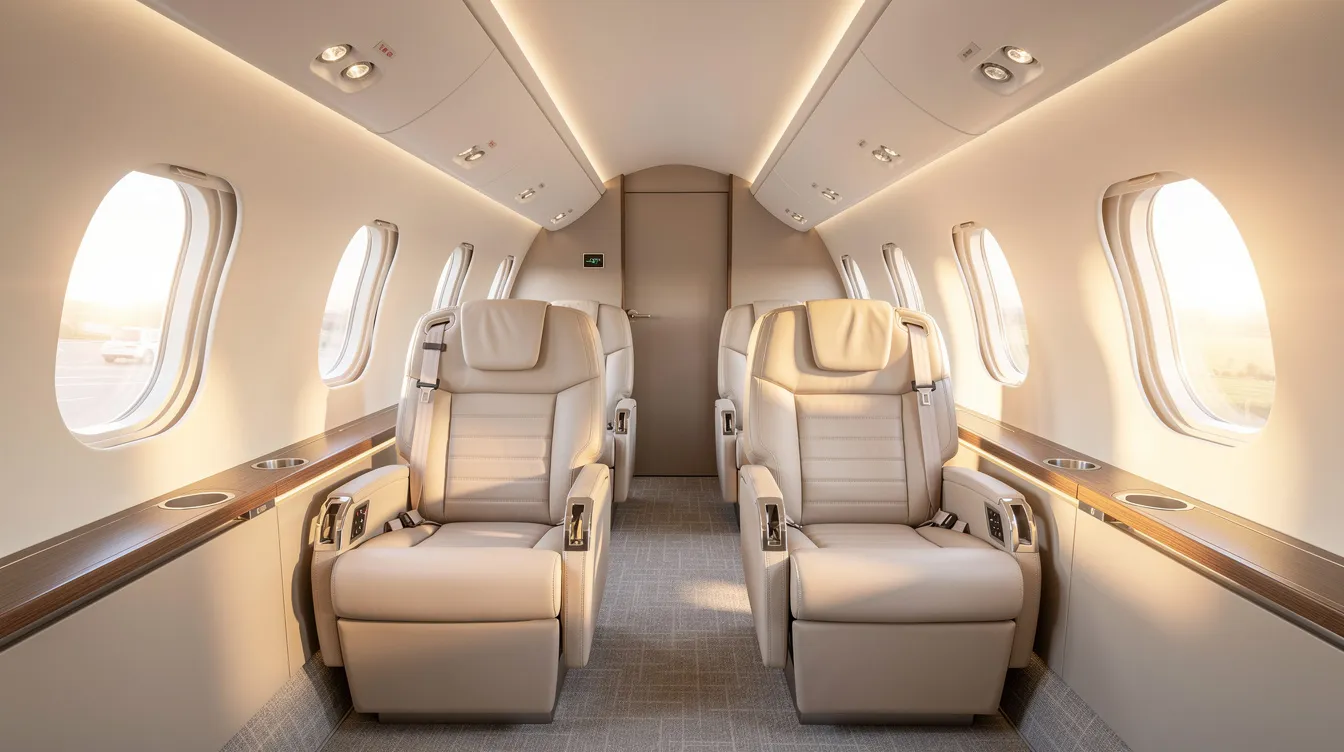
Buyers compare new aircraft against used models because the trade-offs are significant: upfront capital versus warranty coverage, modern aircraft technology versus depreciation exposure.
New jet specifics:
A new light jet runs approximately $3.5M–$9M; mid and large-cabin jets range from the low teens to $70M+.
Advantages include factory warranty, the latest avionics suites, modern interiors, better fuel burn, and known maintenance history from day one.
Pre-owned specifics:
5–10-year-old light jets often trade at $2M–$5M. Older jets with older airframes may list under $2M but carry higher operating and refurbishment costs.
Buyers need thorough due diligence on airframe cycles, corrosion, scheduled inspections, and logbook completeness. ADS-B compliance is another consideration - older jets may require avionics work to meet current ADS-B mandates, and ADS-B retrofits can cost tens of thousands of dollars.
Typical refurbishment budgets - paint, interior, avionics - run from mid-six figures to several million, depending on jet category. A full avionics stack replacement with modern flight displays can alone cost hundreds of thousands of dollars.
For many flyers under 200–250 hours per year, fractional aircraft ownership delivers a like-new cabin experience without taking depreciation risk on a whole aircraft, and understanding key fractional jet ownership terms helps clarify exactly what is included in those programs.
The purchase price of a private jet is only the entry point. Annual expenses commonly reach 10–20% of aircraft value, and private jet owners quickly learn that ownership costs extend well beyond the initial check. Annual operating costs for private jets can exceed $1 million for larger jets, and annual maintenance costs range from $500,000 to $4 million, depending on aircraft type and age.
Core annual fixed costs (2026 ranges):
Cost Category | Light Jets | Midsize Jets | Large Cabin Jets |
|---|---|---|---|
Hangar Fees | $30,000–$100,000 | $50,000–$150,000 | $100,000–$200,000 |
Crew Salaries & Training | $150,000–$350,000 | $250,000–$600,000 | $400,000–$800,000 |
Insurance | $20,000–$100,000 | $50,000–$200,000 | $100,000–$400,000 |
Management Fees | $75,000–$150,000 | $100,000–$250,000 | $150,000–$300,000 |
Total Fixed Costs | $275,000–$700,000 | $450,000–$1.2M | $750,000–$1.8M |
Variable costs per flight hour:
Light jets: approximately $1,700–$2,500 per flight hour, depending on fuel prices, maintenance reserves, landing, and handling fees. Fuel costs for jets can range from $800 to $3,000 per flight hour across categories.
Midsize: variable costs for midsize jets add $2,200 to $2,800 per flight hour.
Large cabin / long range: variable costs for large-cabin jets are $3,500 to $4,500 per hour, with some ultra-long-range models pushing higher.
Engine program enrollment - through providers like JSSI, Honeywell MSP, or Rolls-Royce CorporateCare - shifts unpredictable overhaul expenses into stable per-hour fees and materially improves resale value. Some operators opt for RRCC Enhanced coverage for additional component protection. Without such programs, engine overhauls can cost between $1 million and $2 million per engine, creating large repair bills that hit without warning.
Under BlackJet's fractional and membership models, owners pay for guaranteed flight hours without bearing full hangar, crew, and maintenance infrastructure. For a detailed breakdown, see Understanding the Total Cost of Fractional Jet Ownership.
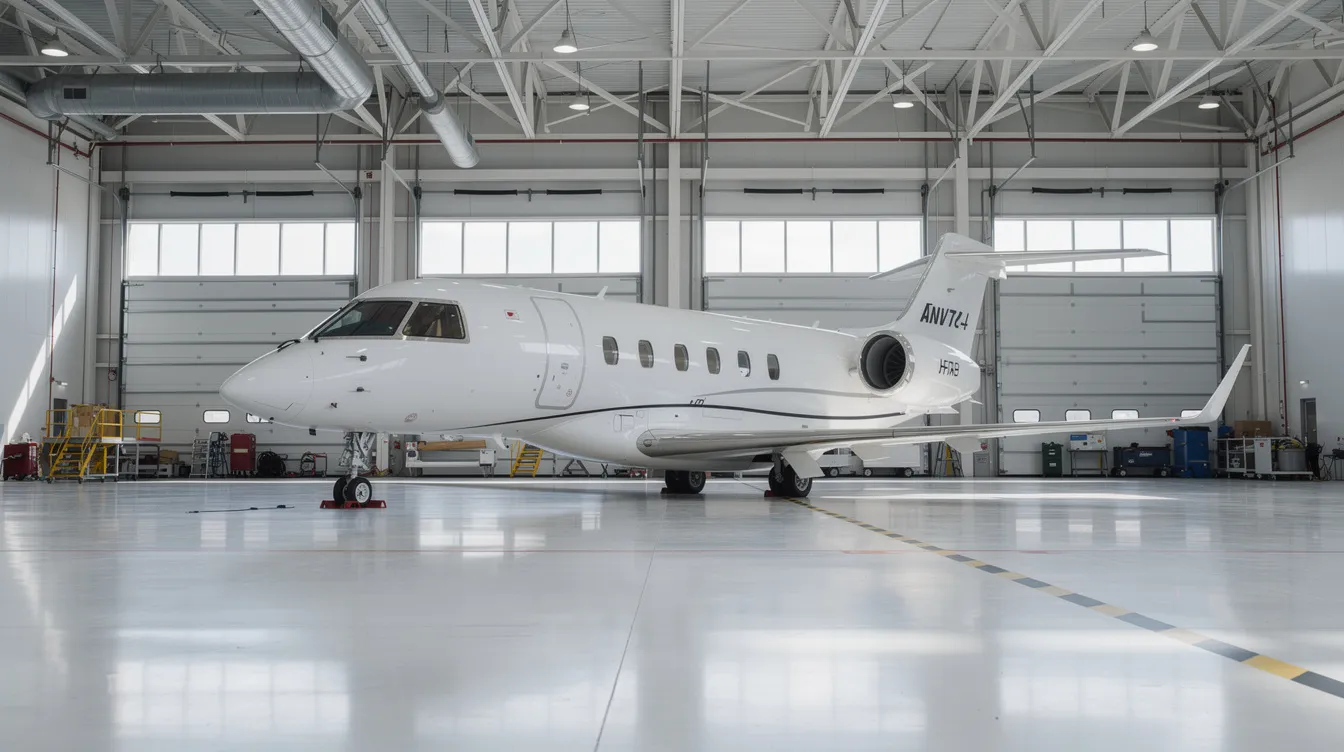
Two jets of similar size can differ by millions in price due to many factors spanning specification, condition, and market dynamics. Market demand influences the pricing trends in private aviation - manufacturer backlogs and delivery slot scarcity push new aircraft prices higher, while economic cycles can temporarily soften the pre-owned segment.
Manufacturer and model reputation: Gulfstream aircraft, Dassault Falcon models, and Bombardier Challenger variants tend to hold residual value strongly due to robust support networks.
Cabin size and configuration: standard versus large cabin layouts matter - a 6-seat light jet versus a 14-seat long-range cabin commands a vastly different price.
Range capability: regional jets versus true long-range aircraft able to fly New York–London nonstop. Larger aircraft with intercontinental reach carry a premium.
Avionics suite and options: synthetic vision, head-up displays, and satellite connectivity affect both safety and resale. Avionics upgrades on older frames can add $500K–$2M.
Airframe age, total flight hours, and maintenance status: last major inspection, landing gear overhauls, engine time remaining, and logbook integrity all drive pricing. Enrollment status in engine programs is scrutinized heavily.
Engine program enrollment and APU program status: engines enrolled in programs like Honeywell MSP or Rolls-Royce CorporateCare increase buyer confidence and command premiums.
Market demand, delivery slot scarcity, and macro factors like interest rates and business jet cycles drive up or discount list prices.
The recommendation for any buyer is to match these cost drivers to an actual mission profile. A thorough mission analysis - examining routes, passenger counts, and frequency - prevents overspending on capability that goes unused. Regulatory compliance requirements, including ADS-B mandates, upcoming emissions standards, and tax implications for different ownership structures, add another layer to the evaluation.
The number of annual flight hours is the single biggest determinant of whether full ownership makes financial sense. Whole ownership suits high-frequency travelers needing consistent access, but only when the math works.
Light and midsize jets: full ownership often becomes competitive at roughly 200–250 flight hours per year.
Large cabin and long-range jets typically need 300+ annual hours to justify full ownership economics.
Below those thresholds, fixed costs like hangar fees, crew salaries, and insurance dominate, making each flown hour disproportionately expensive. For example, a midsize jet owner with $1 million in annual fixed costs who flies only 100 hours absorbs $10,000 per hour in fixed overhead alone - before adding variable costs. At 250 hours, that same overhead drops to $4,000 per hour. Chartering is often more cost-effective for under 200 hours per year.
BlackJet uses a client's 12–24 months of real or projected travel data - routes, passengers, flight hours - to model whether full ownership, fractional ownership, or flexible Reserve Fleet access is the better fit. Frequent flyers above the threshold benefit from owning; those below it benefit from sharing.

Private jet ownership alternatives include fractional ownership and charter services, and the spectrum of options has expanded considerably. For those who do not need full aircraft control, these alternatives reduce capital exposure while preserving the core benefits of private aviation.
Fractional ownership:
Definition: buying an equity share (e.g., 1/8 or 1/16) of a specific aircraft type, usually tied to a guaranteed number of flight hours per year. Fractional ownership offers lower upfront costs than full ownership and, as outlined in this guide to fractional jet ownership as an investment, spreads operating expenses and management responsibilities across multiple owners.
Cost profile: lower upfront capital versus whole aircraft, predictable monthly management and hourly rates, no need to manage hangar or crew directly.
BlackJet's Equity Fleet model provides customized share structures and potential tax advantages while outsourcing operations and maintenance, and prospective owners can also explore fractional jet ownership financing options and costs when evaluating how to fund their share. Each aircraft is professionally managed.
Jet cards and membership programs:
Jet cards and membership programs offer pre-paid or contract-based access to a fleet at fixed hourly rates - no ownership stake, no depreciation risk, and they differ in important ways from fractional jet ownership vs membership programs in terms of commitment and control.
BlackJet's Reserve Fleet model provides pay-as-you-go access with guaranteed availability across light jets, midsize, and large cabin aircraft without the capital outlay of full ownership, and it can be an attractive next step for those selling a fractional jet ownership share and seeking more flexibility.
Charter and leasing:
Charter fits occasional flyers below approximately 50–75 hours per year who prioritize flexibility over guaranteed aircraft type, while some fractional programs rely on floating fleet structures for added flexibility. Charter services eliminate long-term asset risk and storage costs.
Operating leases offer another route for corporations that prefer not to hold aircraft on their balance sheets, alongside well-known fractional jet ownership programs for frequent flyers.
The right model depends on flight hours, need for control, desire for capital efficiency, and tolerance for maintenance and resale risk. A private jet listing that looks attractive on paper may cost hundreds of thousands more annually than a fractional share delivering equivalent access.
Actual listings illustrate how dramatically prices vary between categories, brands, and conditions. Every buyer approaches these listings differently, but the patterns are consistent: newer aircraft with clean maintenance histories and engines enrolled on programs command premiums, while older frames with deferred maintenance sell at steep discounts - and for good reason.
A late-2010s light jet, such as a 2018 Embraer Phenom 300E with low flight hours and engines on a program, typically lists in the $8M–$12M range. These modern aircraft deliver strong performance for regional missions. Required refurbishment and avionics upgrades may still add $500,000–$2M before delivery is fully serviceable.
A mid-2010s midsize jet - a Citation Latitude or Bombardier Challenger 350 - trades in the $10M–$15M band depending on avionics and interior condition. Engine time remaining and enrollment status on maintenance programs heavily influence asking price, just as essential contract terms in fractional jet ownership influence long-term costs and exit flexibility.
A large cabin Dassault Falcon 7X or 8X illustrates $30M+ pricing for long-range capability and quiet tri-jet performance, serving both domestic and transatlantic missions. These are among the best business jets for global operations.
An early-2000s light jet offered under $3M may look like a bargain, but serious buyers should expect higher upcoming maintenance events and likely refurbishment needs. A pre-buy inspection through certified mechanics is essential - it costs between $25,000 and $200,000 depending on aircraft size and complexity, but it can uncover issues that justify price renegotiation or even deal termination. Seller-funded repairs may be negotiated based on inspection findings.
The buying process typically takes 60 to 120 days from initial interest to closing. A letter of intent typically takes one to two weeks to negotiate, followed by the pre-buy inspection phase. Closing involves a title search and FAA registration transfer. Fuel prices, insurance quotes, and hangar availability at the home base should all be confirmed before the final commitment.
BlackJet helps clients analyze these details even when they ultimately decide on fractional ownership rather than full purchase, including whether a structure like 1/8 fractional jet ownership with around 100 hours aligns with their actual travel profile.
BlackJet Fractional Jet Ownership serves as both advisor and provider, helping clients find the smartest path to private aviation - not simply pushing a sale.
Equity Fleet fractional ownership: clients purchase an equity share aligned with 25–150 annual flight hours, benefiting from predictable scheduling, professional management, and potential U.S. tax advantages, including depreciation benefits for business use, typically documented in a detailed aircraft fractional ownership contract that allocates rights and responsibilities among owners.
Reserve Fleet flexible access: a pay-as-you-go model with guaranteed availability across light jets, midsize, and large cabin aircraft without the capital outlay of full ownership, and it can be an attractive next step for those selling a fractional jet ownership share and seeking more flexibility.
Mission and cost analysis: BlackJet models scenarios comparing full ownership vs. fractional ownership vs. jet cards vs. charter on a per-flight-hour and annual cost basis, ensuring every decision is backed by data.
BlackJet handles aircraft management, flight scheduling, crew, hangar, and maintenance oversight - removing the operational burden entirely. This approach often delivers the core benefits of private aviation - flexibility, privacy, and time savings - without tying up tens of millions of dollars in a depreciating asset. For those ready to fly rather than manage, this distinction matters.
Beyond the $3M–$9M purchase price for a modern light jet, owners commonly see $500,000–$1M in first-year annual fixed and variable costs depending on usage, location, and crew structure. This includes hangar fees, insurance, crew, routine maintenance, and fuel based on expected flight hours. Those not committed to at least approximately 200 hours per year should seriously consider fractional ownership or Reserve Fleet access with BlackJet instead, as the cost per flight hour, depending on utilization, can be dramatically lower.
Jets with engines enrolled in recognized programs such as JSSI, Honeywell MSP, or Rolls-Royce CorporateCare often command 10–25% higher resale values and sell faster. Enrolled engines reduce the risk of unexpected multi-million-dollar overhaul bills and are especially important for older or higher-flight-hour airframes. Buyers should verify program details, covered components, and hours paid in full during due diligence - enrollment status is one of the first items a knowledgeable buyer checks on any private jet listing.
Hangar fees are a significant but often underestimated fixed cost, ranging from roughly $30,000 per year at smaller regional airports to well over $150,000 at major hubs for larger jets. Costs vary with jet size, location (coastal versus inland), and whether the facility offers heated or premium hangar space. Under fractional and membership models with BlackJet, clients do not bear direct hangar expenses - those costs are absorbed into the program's management structure.
Large cabin, long-range jets like Gulfstream and Dassault Falcon models deliver exceptional comfort and nonstop intercontinental capability, but at a much higher purchase price and operating cost. For primarily U.S. domestic missions with 4–8 passengers, a light or midsize jet usually offers better cost-efficiency per flight hour. A disciplined buyer considers on-demand large cabin access through BlackJet's network only when transatlantic or other long-range missions truly demand it, rather than owning such an aircraft outright for occasional use.
The best approach is to track all private and business travel over 12–24 months using charter, membership, or fractional programs instead of immediately buying a specific aircraft. BlackJet can review this data - including routes, passenger loads, and actual flight hours - to model total cost per hour under different ownership or access structures. This data-driven approach helps avoid overbuying capacity or committing to full ownership before needs are fully understood.
Private jets for sale in 2026 span from relatively affordable older light jets to ultra-premium long-range flagships, but the acquisition price is only one piece of the financial equation. Between hangar fees, crew salaries, insurance, fuel, maintenance reserves, and depreciation, the true cost of jet ownership often surprises even experienced private jet owners.
Long-term flight hours, mission profile, and appetite for operational responsibility should determine whether full ownership, fractional ownership, or a membership model is right. Every buyer's situation is different, and the numbers should drive the decision, not aspiration alone.
Ready to explore the smarter way to fly private? Visit FractionalJetOwnership.com to schedule a consultation and receive a personalized cost comparison for full ownership versus BlackJet's Equity Fleet and Reserve Fleet programs.
